Unusual cause of paraplegia in a child of 5 years
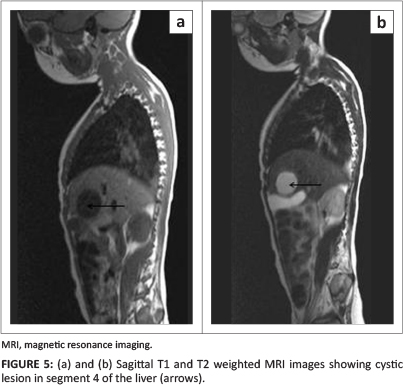
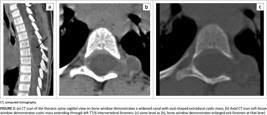
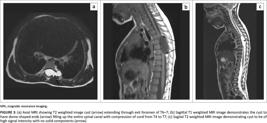
'Hydatid' originates from the Greek word meaning 'watery vesicle'. It refers to a cyst formed as a result of infestation by larvae of the tapeworm Echinococcus granulosus, endemic to sheep-raising areas of the world. Humans are an accidental intermediary host, with lungs and liver most commonly affected. Hydatid involvement of the spine accounts for less than 1% of the total cases of hydatid disease and isolated extradural involvement is even rarer. We report a case of extradural hydatid cyst involving a boy of 5 years.
SA Journal of Radiology
 Thumbnail
 Thumbnail
 Thumbnail
 Thumbnail
 Thumbnail