Interventionalists' perceptions on a culture of radiation protection
Abstract
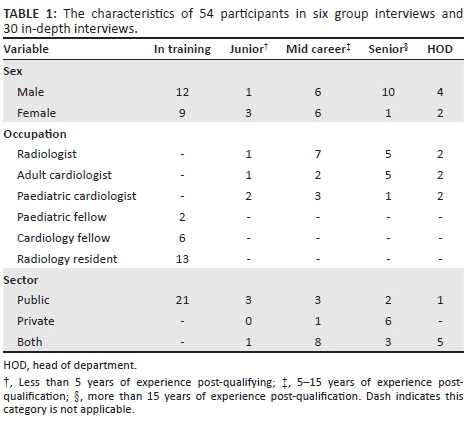
BACKGROUND: Occupational exposure to ionising radiation poses potential health risks to radiation workers unless adequate protection is in place. The catheterisation laboratory is a highly contextualised workplace with a distinctive organisational and workplace culture. OBJECTIVE: This study was conducted to understand the culture of radiation protection (CRP). METHODS: This study was a qualitative study and data were collected through 30 in-depth and 6 group interviews with 54 purposively selected South African interventionalists (interventional radiologists and cardiologists). The participants included a diversity of interventionalists who varied in sex, geographic location and years of experience with fluoroscopy. The transcribed data were analysed thematically using a deductive and inductive approach. RESULTS: 'Culture of radiation protection' emerged as a complex theme that intersected with other themes: 'knowledge and awareness of radiation', 'radiation safety practice', 'personal protective equipment (PPE) utilisation' and 'education and training'. CONCLUSION: Establishing and sustaining a CRP provides an opportunity to mitigate the potentially detrimental health effects of occupational radiation exposure. Education and training are pivotal to establishing a CRP. The time to establish a culture of radiation in the catheterisation laboratory is now.