The efficacy of injury screening for lower back pain in elite golfers
Abstract
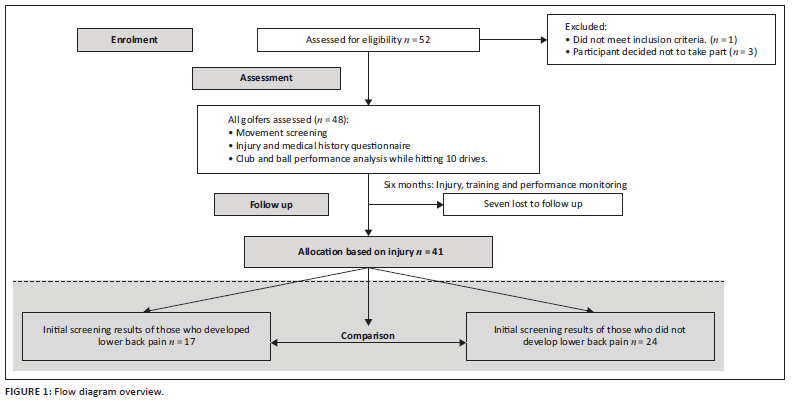
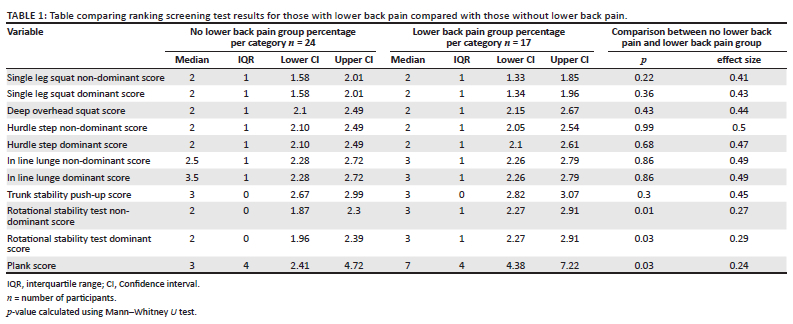
BACKGROUND: Injury prevention is a growing focus for golfers in general and for elite golfers in particular. Movement screening has been proposed as a possible cost-effective means of identifying underlying risk factors and is widely utilised by therapists, trainers and coaches OBJECTIVES: Our study aimed to establish whether results from movement screening were associated with subsequent lower back injury in elite golfers METHODS: Our prospective longitudinal cohort study with one baseline time point included 41 injury-free young elite male golfers who underwent movement screening. After this, the golfers were monitored for 6 months for lower back pain RESULTS: Seventeen golfers developed lower back pain (41%). Screening tests that were able to differentiate golfers who developed and those who did not develop lower back pain, included: rotational stability test on the non-dominant side (p = 0.01, effect size = 0.27), rotational stability test on the dominant side (p = 0.03; effect size = 0.29) and plank score (p = 0.03; effect size = 0.24). There were no differences observed in any other screening tests CONCLUSION: Out of 30 screening tests, only three tests were able to identify golfers not at risk of developing lower back pain. All three of these tests had weak effect sizes CLINICAL IMPLICATIONS: Movement screening was not effective in identifying elite golfers at risk of lower back pain in our study
golf; back; injury; prevention; lumbar; spine; rehabilitation; junior; sport; physiotherapy
 Thumbnail