Vulnerability to anxiety and depression symptoms co-occurring among adult patients at family medicine clinics in Najran University Hospital, Saudi Arabia
Abstract
BACKGROUND: Depression and anxiety are pervasive mental health concerns worldwide that pose significant challenges to individuals and societies AIM: The aim of the study is to investigate the prevalence of co-occurring depression symptoms and anxiety among adult patients receiving care SETTING: Primary clinics within the Family and Community Medicine Department, in Najran University Hospital, Saudi Arabia METHODS: A cross-sectional study was conducted in February 2024, recruiting 300 adult patients across seven primary care clinics serving diverse populations. Data were collected using a comprehensive questionnaire that included socio-demographics, medical history, and screening for anxiety and depression symptoms. Multivariate regression analysis was employed RESULTS: Most participants were aged 21-30 years (33.0%), predominantly female (64.0%), and Saudi (68.7%). Chronic diseases affected 26.4%, and 31.6% had a past medical history. Depression symptoms were reported by 21.7%, while 14% had anxiety, and 10.7% experienced both. Multivariate regression analysis revealed that stress, psychiatric conditions, herbal medication use, and sleep problems were independent risk factors for co-occurring symptoms CONCLUSION: Co-occurring anxiety and depression symptoms were prevalent in the study population CONTRIBUTION: The findings advocate for comprehensive mental health strategies that priorities the early detection of co-occurring depression and anxiety, by considering factors essential for improving patient outcomes
anxiety; depression; co-occurring; vulnerability; family medicine; primary care
Introduction
Depression and anxiety are prevalent mental health disorders that significantly impact individuals and societies worldwide.1,2,31,24567
Many individuals seek help in primary care settings, where a significant comorbidity exists - up to 56% of those with depression also have anxiety.81,910,11125
The coexistence of anxiety and depression symptoms can significantly impact patients' quality of life, treatment adherence, and overall health outcomes. While research has extensively explored these conditions in general populations and specific disease groups, there is a notable gap in understanding their co-occurrence among adult patients attending family medicine clinics in Saudi Arabia, particularly in the Najran region.1313
Existing research in Saudi Arabia has primarily focused on single conditions, specialised populations, or urban centres.13,14
Research methods and design
Study design and setting
A cross-sectional study was conducted in February 2024 at the Family and Community Medicine Department of Najran University Hospital in Saudi Arabia to assess co-occurring depression symptoms and anxiety among adult patients. This design facilitated the simultaneous collection of data on depression symptoms and anxiety screening, socio-demographic characteristics, and medical history within a specific timeframe across seven primary care clinics serving diverse populations.
Sample size
A sample size of 300 participants was determined after consultation with a statistician, considering factors such as desired accuracy, expected prevalence of co-occurring disorders, and an acceptable margin of error.
Participant selection
A simple approach was employed to select participants; all adult patients who visited any family medicine clinic during the study period were invited to participate. Participants who provided informed consent were consecutively included until the desired sample size was achieved to ensure representation of the target population.
Study instrument
A comprehensive questionnaire was developed based on a thorough literature review and consultations with mental health experts. The questionnaire included questions on socio-demographic characteristics, medical history, and depression symptoms and anxiety screening. The first part of the questionnaire captured socio-demographic information, including age, sex, marital status, nationality, education, residency, family type, number of family members, employment status, workload, social relationships, economic status, and presence of stress. The second part focused on medical characteristics, including chief complaints, complaint duration, current illness progression, presence of chronic diseases, past medical history, psychiatric diseases, regular medication use, herbal treatment or supplement use, allergies, sleep problems, pregnancy and lactation status, smoking habits, nutrition, physical activity, and body weight. The questionnaire's third part combined depression symptoms and anxiety screening using standardised tools. The Patient Health Questionnaire-2 (PHQ-2) served as a brief depression symptoms-screening tool, consisting of two questions focused on depressed mood and loss of interest over the past 2 weeks. The Generalised Anxiety Disorder 7-item scale (GAD-7) assessed anxiety through seven items covering various anxiety experiences during the same period.
This two-stage method efficiently identifies individuals needing further evaluation and potential interventions for depression symptoms. Previous studies with over 500 participants demonstrated the PHQ-2's effectiveness in identifying major depressive disorder (MDD) and any depressive disorder with prevalence rates of 7% and 18%.151617
A PHQ-2 score of 3 or higher indicates an increased likelihood of depressive symptoms and warrants further evaluation using the PHQ-9, other diagnostic tools, or a structured clinical interview to confirm the diagnosis accurately.15
Scoring criteria
A score of three or higher on the PHQ-2 was considered indicative of potential MDD, warranting further evaluation. For the GAD-7, a score of 8 or higher was considered appropriate for identifying potential cases of anxiety disorders.
Questionnaire validation
The questionnaire was rigorously evaluated by three mental health experts to assess its validity and reliability. Based on their feedback, appropriate modifications were made to enhance the questionnaire's validity and reliability and ensure its suitability for the study's objectives.
Data collection procedure
After thorough training, nurses incorporated the questionnaire into their initial patient intake processes. Patients who provided informed consent completed the questionnaire during a brief interview conducted by nurses, ensuring standardised data collection procedures.
Statistical analysis
Data analysis was conducted using the Statistical Packages for Social Sciences (SPSS) version 26 to ensure robust statistical analyses to comprehensively address the study objectives. Descriptive statistics were used to summarise the categorical variables and presented as frequencies and percentages. The relationship between co-occurring anxiety and depression with socio-demographic and medical characteristics was analysed using the Chi-square test. Significant results were further analysed using a multivariate regression model to determine the independent risk factors; corresponding odds ratios and 95% confidence intervals (CIs) were calculated. The significance level was set to p < 0.05.
Ethical considerations
Ethical clearance to conduct this study was obtained from the Faculty of Medicine at Najran University (No. CSR/NU/2023/1046). Ethical clearance and informed consent were obtained before the start of the survey.
Results
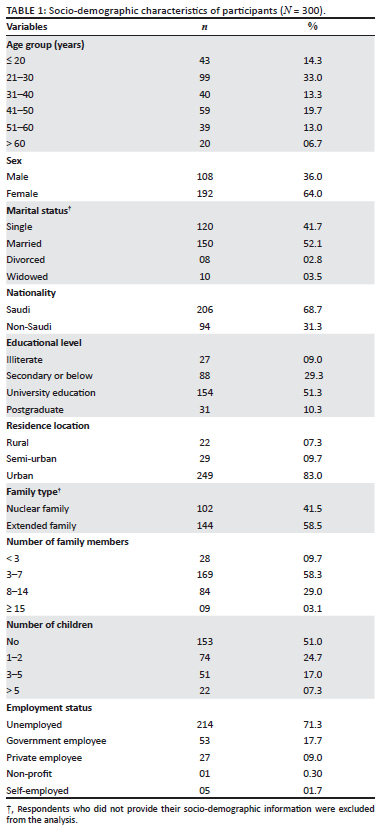
The study found that most participants were aged 21-30 years (33.0%), predominantly female (64.0%), and married (52.1%). The majority were Saudi (68.7%) with university education, and 71.3% were unemployed, as shown in Table 1.
Regarding the medical characteristics of participants, chronic diseases were reported by 26.4% of participants, and 31.6% had a documented past medical history. Psychiatric illnesses affected 7.4% of patients. Regular medication usage was seen in 47.4%. Allergies were found in 13.8% of cases, and 35.4% reported sleep problems. Most were non-smokers (90.5%), while 73.3% consumed a mixed diet (Includes both plant-based foods and animal products, such as meats, dairy, and eggs, alongside a variety of fruits, vegetables, and grains). Physical activity levels ranged from none to mild (46.4%). Body weight distribution showed 39.7% normal weight, 33.6% overweight or obese, and 5.1% underweight.
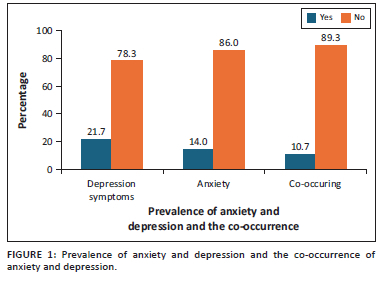
Figure 1 shows that 21.7% of participants had depression symptoms, whereas 14% had anxiety. A significant proportion (10.7%) of patients experienced both conditions simultaneously. This highlights the prevalence of anxiety and depression in the population, with a substantial portion of patients exhibiting comorbid symptoms.
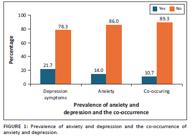
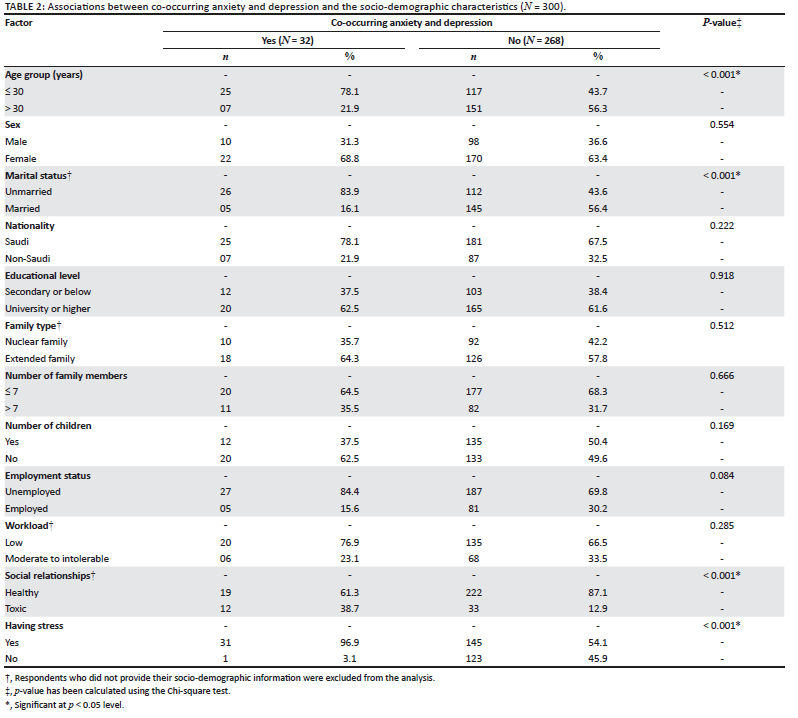
Table 2 illustrates the relationship between co-occurring anxiety and depression and the socio-demographic characteristics of participants. Individuals aged 30 years and younger exhibited higher prevalence rates compared to those over 30. Marital status, employment status, workload, and social relationships showed significant associations. Stress significantly correlated with a higher prevalence of co-occurring anxiety and depression among those reporting stress.
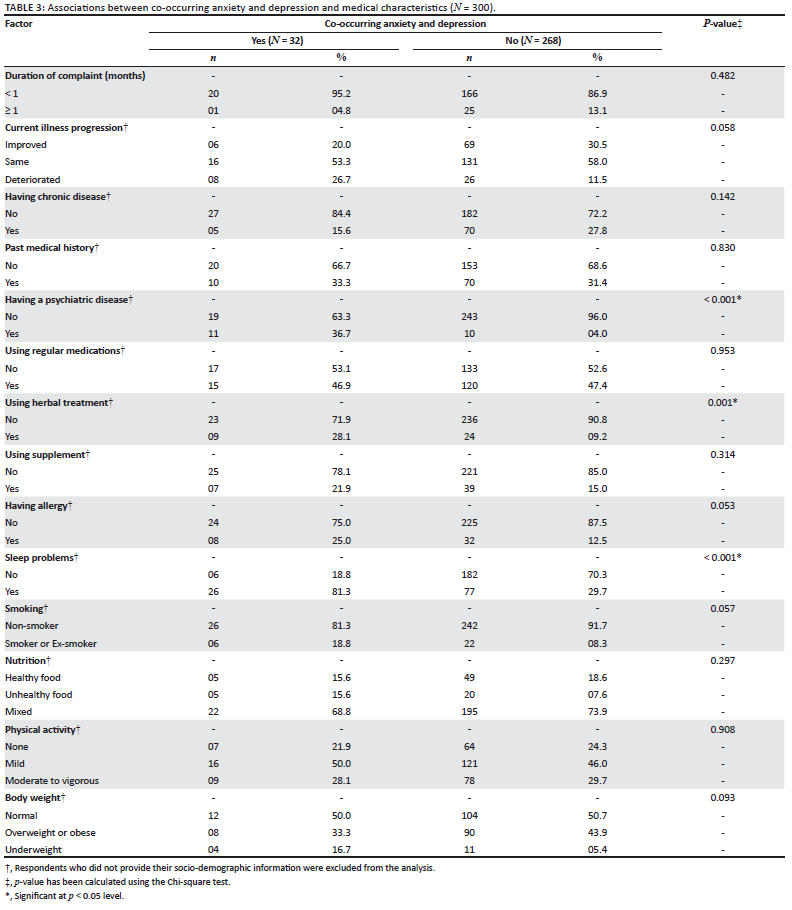
Table 3 examines the associations between co-occurring anxiety and depression and medical characteristics. Current illness progression, psychiatric co-morbidities, herbal treatments, and sleep problems were linked to increased co-occurring. Other factors showed no significant associations.
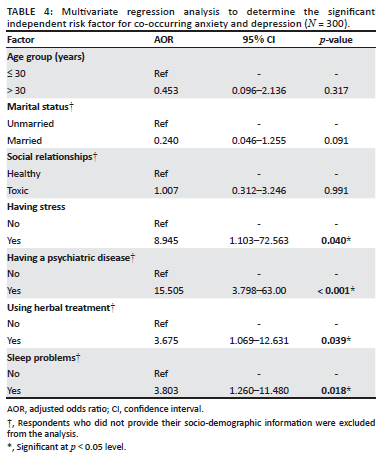
Table 4 presents multivariate regression analysis identifying stress as a significant predictor of co-occurring anxiety and depression, with stressed participants nearly nine times more likely to experience co-occurring. Having a psychiatric disorder was also significantly associated, with affected individuals being over 15 times more likely to exhibit co-occurring. In addition, those using herbal treatments and experiencing sleep problems were four times more likely to show these symptoms. However, age, marital status, and social relationships showed no significant associations.
Discussion
This study examined the susceptibility of adult patients at family medicine clinics in Najran University Hospital to co-occurring anxiety and depression. The findings revealed a co-occurrence rate of 10.7%, with depression prevalence (21.7%) higher than that of anxiety (14%). These results provide valuable insights into the existing literature, especially in Saudi Arabia, where research on the co-occurrence of these mental health conditions has been limited. Given the high comorbidity and often indistinguishable symptoms of these disorders,18
When comparing the study's findings with those of previous studies, it is noteworthy that the rates of co-occurring varied across different regions and populations. For instance, a study conducted in Brazil reported a higher incidence of co-occurring, with anxiety prevalent among 74% of depressed patients and depression common among 61% of anxiety patients.192021
Patients with mental health conditions are often at increased risk for comorbidities and frequently utilise healthcare services. Up to 80% of people worldwide use herbal medicine, with around 22% of patients in Australia seeking treatment for mental illness opting for herbal remedies.22232425
Furthermore, this study aligns with Hsu et al., identifying stress, psychiatric diagnoses, and sleep disorders as key risk factors for co-occurring anxiety and depression.26
Strengths and limitations
The study contributes valuable insights into anxiety and depression in Saudi Arabia, utilising validated tools and a representative sample. Limitations include self-reported data, a cross-sectional design, and a focus on one hospital, which may introduce bias. Another limitation is that positive PHQ-2 screening results were not followed by a structured clinical interview or PHQ-9 assessment to confirm depressive disorder. Therefore, the findings reflect a depression rather than clinically diagnosed depression, and the prevalence may be overestimated. Future research should include longitudinal studies.
Conclusion
This study highlights the significant prevalence of co-occurring anxiety and depression among adult patients at Najran University Hospital, with 10.7% affected. Key risk factors include stress, psychiatric co-morbidities, herbal medicine use, and sleep problems, emphasising the need for integrated treatment approaches to address these interconnected issues. Further prospective studies are necessary to clarify the causal relationships among these variables. Comparisons with existing literature reveal variability in prevalence rates, underscoring the complexity of these disorders. Overall, the findings advocate for comprehensive mental health strategies that prioritise early detection while considering socio-demographic, medical, and cultural factors in assessment and management, which are crucial for effectively addressing these complexities and improving patient outcomes.
Competing interests
The author declares that no financial or personal relationships inappropriately influenced the writing of this article.
CRediT authorship contribution
Nasser Saeed Alqahtani: Conceptualisation, Methodology, Formal analysis, Investigation, Writing - original draft, Visualisation, Project administration, Software, Validation, Data curation, Resources, Writing - review & editing, Supervision, Funding acquisition. The author confirms that this work is entirely their own, has reviewed the article, approved the final version for submission and publication, and takes full responsibility for the integrity of its findings.
Funding information
This research received no specific grant from any funding agency in the public, commercial, or not-for-profit sectors.
Data availability
All data generated and analysed are included in this research article and are available from the corresponding author, Nasser Saeed Alqahtani, upon reasonable request.
Disclaimer
The views and opinions expressed in this article are those of the author and are the product of professional research. They do not necessarily reflect the official policy or position of any affiliated institution, funder, agency, or that of the publisher. The author is responsible for this article's results, findings, and content.
Acknowledgements
The author would like to thank Editage (www.editage.com) for their assistance with English language editing.
References
-
1. Alqahtani NS. Risk assessment of somatic symptom disorder among patients attending a family medicine practice in an academic center. Psychiatr Q. 2025;96:607-622. https://doi.org/10.1007/s11126-025-10132-y
» https://doi.org/10.1007/s11126-025-10132-y -
2. Vos T, Lim SS, Abbafati C, et al. Global burden of 369 diseases and injuries in 204 countries and territories, 1990-2019: A systematic analysis for the global burden of disease study 2019. Lancet. 2020;396(10258):1204-1222. https://doi.org/10.1016/S0140-6736(20)30925-9
» https://doi.org/10.1016/S0140-6736(20)30925-9 -
3. Samreen S, Siddiqui NA, Mothana RA. Prevalence of anxiety and associated factors among pharmacy students in Saudi Arabia: A cross-sectional study. BioMed Res Int. 2020;2020(1):2436538. https://doi.org/10.1155/2020/2436538
» https://doi.org/10.1155/2020/2436538 -
4. Santomauro DF, Herrera AMM, Shadid J, et al. Global prevalence and burden of depressive and anxiety disorders in 204 countries and territories in 2020 due to the COVID-19 pandemic. Lancet. 2021;398(10312):1700-1712. https://doi.org/10.1016/S0140-6736(21)02143-7
» https://doi.org/10.1016/S0140-6736(21)02143-7 -
5. Culpepper L, Clayton A, Lieberman III J, Susman J. Treating depression and anxiety in primary care. Prim Care Companion J Clin Psychiatry. 2008;10(2):145-152. https://doi.org/10.4088/PCC.v10n0209
» https://doi.org/10.4088/PCC.v10n0209 -
6. Bandelow B, Michaelis S. Epidemiology of anxiety disorders in the 21st century. Dialogues Clin Neurosc. 2015;17(3):327-335. https://doi.org/10.31887/DCNS.2015.17.3/bbandelow
» https://doi.org/10.31887/DCNS.2015.17.3/bbandelow -
7. Hirschfeld RM. The comorbidity of major depression and anxiety disorders: Recognition and management in primary care. Primary Care Companion J Clin Psychiatry. 2001;3(6):244. https://doi.org/10.4088/PCC.v03n0609
» https://doi.org/10.4088/PCC.v03n0609 -
8. Arroll B, Moir F, Kendrick T. Effective management of depression in primary care: A review of the literature. BJGP Open. 2017;1(2):bjgpopen17X101025. https://doi.org/10.3399/bjgpopen17X101025
» https://doi.org/10.3399/bjgpopen17X101025 -
9. Alghadeer SM, Alhossan AM, Al-Arifi MN, et al. Prevalence of mental disorders among patients attending primary health care centers in the capital of Saudi Arabia. Neurosci J. 2018;23(3):238-243. https://doi.org/10.17712/nsj.2018.3.20180058
» https://doi.org/10.17712/nsj.2018.3.20180058 -
10. Parish AL, Gillis B, Anthamatten A. Pharmacotherapy for depression and anxiety in the primary care setting. J Nurse Pract. 2023;19(4):104556. https://doi.org/10.1016/j.nurpra.2023.104556
» https://doi.org/10.1016/j.nurpra.2023.104556 -
11. Muhammad Gadit AA, Mugford G. Prevalence of depression among households in three capital cities of Pakistan: Need to revise the mental health policy. PLoS One. 2007;2(2):e209. https://doi.org/10.1371/journal.pone.0000209
» https://doi.org/10.1371/journal.pone.0000209 -
12. Olariu E, Forero CG, Castro-Rodriguez JI, et al. Detection of anxiety disorders in primary care: A meta-analysis of assisted and unassisted diagnoses. Depress Anxiety. 2015;32(7):471-484. https://doi.org/10.1002/da.22360
» https://doi.org/10.1002/da.22360 -
13. Hafez SH, Mohamed NA, Abdalla AMAO, et al. Awareness of mental health, attitudes about mental illness, and utilization barriers of mental health services among adults in Najran region, Kingdom of Saudi Arabia. Jordan J Nurs Res. 2024;3(4):22-29. https://doi.org/10.14525/JJNR.v3i4.02
» https://doi.org/10.14525/JJNR.v3i4.02 -
14. Ghowinam MA, Albokhari AA, Badheeb AM, et al. Prevalence of depression and anxiety symptoms among patients with cancer in Najran, Saudi Arabia. Cureus. 2024;16(2):e54349. https://doi.org/10.7759/cureus.54349
» https://doi.org/10.7759/cureus.54349 -
15. Hanigan S. Improving outcomes of depression through implementation of depression screenings at a college health center [Internet]. Digital Commons @ ACU, Electronic Theses and Dissertations. Paper 859. 2025 [cited n.d.]. Available from: https://digitalcommons.acu.edu/etd/859
» https://digitalcommons.acu.edu/etd/859 -
16. Spitzer RL, Kroenke K, Williams JB, Löwe B. A brief measure for assessing generalized anxiety disorder: The GAD-7. Arch Intern Med. 2006;166(10):1092-1097. https://doi.org/10.1001/archinte.166.10.1092
» https://doi.org/10.1001/archinte.166.10.1092 -
17. Kroenke K, Spitzer RL, Williams JB, Monahan PO, Löwe B. Anxiety disorders in primary care: Prevalence, impairment, comorbidity, and detection. Ann Intern Med. 2007;146(5):317-325. https://doi.org/10.7326/0003-4819-146-5-200703060-00004
» https://doi.org/10.7326/0003-4819-146-5-200703060-00004 - 18. Kalin NH. The critical relationship between anxiety and depression. Washington, DC: American Psychiatric Association; 2020, vol. 177, p. 365-367.
-
19. Almeida-Filho N, Lessa I, Magalhães L, Araújo MJ, Aquino E, De Jesus Mari J. Co-occurrence patterns of anxiety, depression and alcohol use disorders. Eur Arch Psychiatry Clin Neurosci. 2007;257:423-431. https://doi.org/10.1007/s00406-007-0752-0
» https://doi.org/10.1007/s00406-007-0752-0 -
20. Schoevers RA, Deeg D, Van Tilburg W, Beekman A. Depression and generalized anxiety disorder: Co-occurrence and longitudinal patterns in elderly patients. Am J Geriatr Psychiatry. 2005;13(1):31-39. https://doi.org/10.1097/00019442-200501000-00006
» https://doi.org/10.1097/00019442-200501000-00006 -
21. Jennifer S, Brady BR, Ibrahim MM, et al. Co-occurrence of chronic pain and anxiety/depression symptoms in US adults: Prevalence, functional impacts, and opportunities. Pain. 2024;165(3):666-673. https://doi.org/10.1097/j.pain.0000000000003056
» https://doi.org/10.1097/j.pain.0000000000003056 -
22. Casteleijn D, Steel A, Bowman D, Lauche R, Wardle J. A naturalistic study of herbal medicine for self-reported depression and/or anxiety a protocol. Int Med Res. 2019;8(2):123-128. https://doi.org/10.1016/j.imr.2019.04.007
» https://doi.org/10.1016/j.imr.2019.04.007 -
23. Beekman AT, De Beurs E, Van Balkom AJ, Deeg DJ, Van Dyck R, Van Tilburg W. Anxiety and depression in later life: Co-occurrence and communality of risk factors. Am J Psychiatry. 2000;157(1):89-95. https://doi.org/10.1176/ajp.157.1.89
» https://doi.org/10.1176/ajp.157.1.89 -
24. Lallukka T, Mekuria GB, Nummi T, Virtanen P, Virtanen M, Hammarström A. Co-occurrence of depressive, anxiety, and somatic symptoms: Trajectories from adolescence to midlife using group-based joint trajectory analysis. BMC Psychiatry. 2019;19(1):236. https://doi.org/10.1186/s12888-019-2203-7
» https://doi.org/10.1186/s12888-019-2203-7 -
25. Prina A, Ferri C, Guerra M, Brayne C, Prince M. Co-occurrence of anxiety and depression amongst older adults in low-and middle-income countries: Findings from the 10/66 study. Psychol Med. 2011;41(10):2047-2056. https://doi.org/10.1017/S0033291711000444
» https://doi.org/10.1017/S0033291711000444 -
26. Hsu FC, Hsu CH, Chung CH, et al. The combination of sleep disorders and depression significantly increases cancer risk: A nationwide large-scale population-based study. Int J Environ Res Public Health. 2022;19(15): 9266. https://doi.org/10.3390/ijerph19159266
» https://doi.org/10.3390/ijerph19159266

Accepted: 10 Nov. 2025
Published: 14 Jan. 2026