Knowledge and attitudes towards electroconvulsive therapy in an academic psychiatric department
Abstract
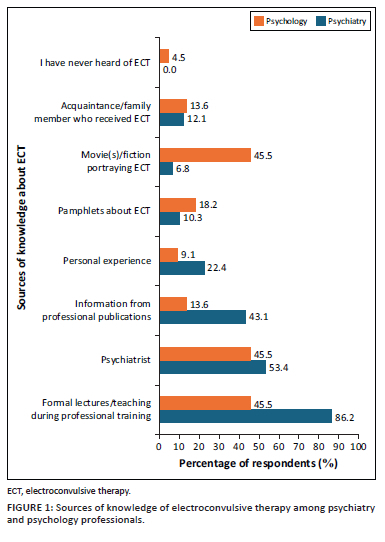
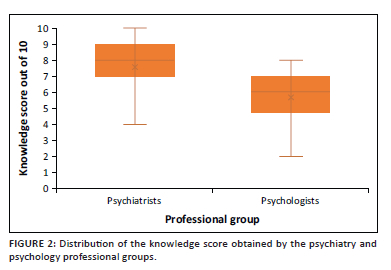
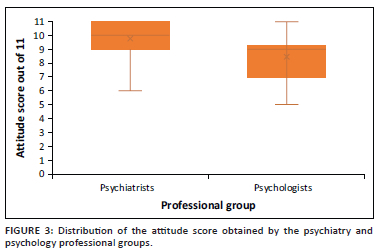
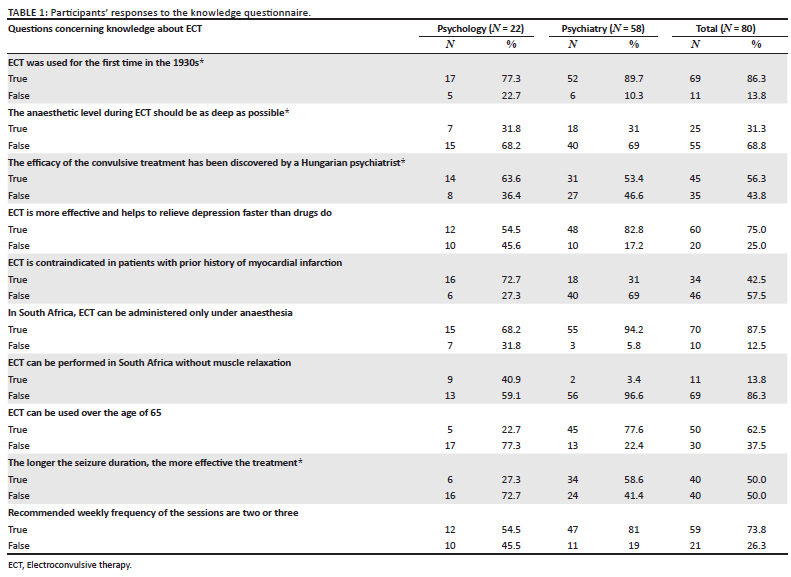
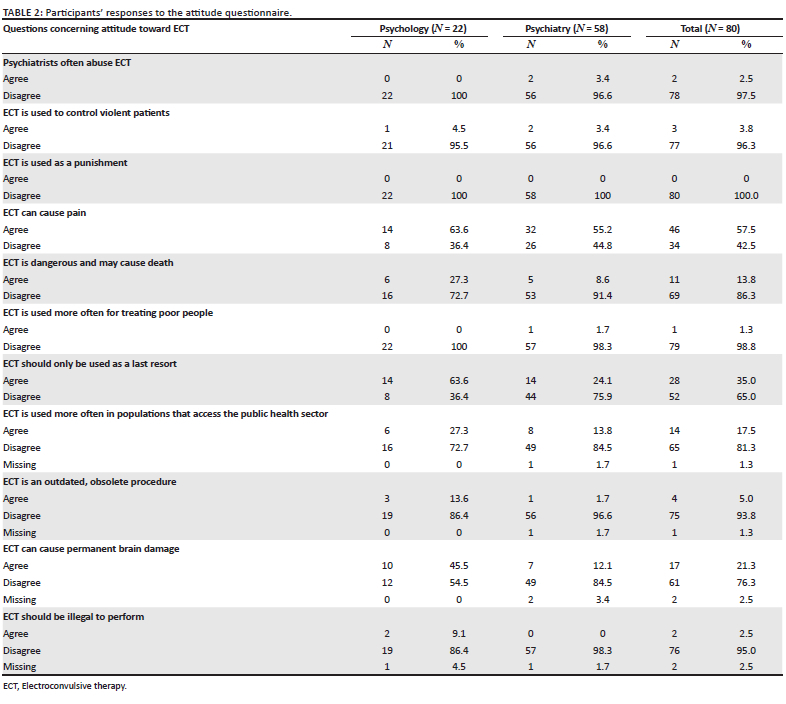
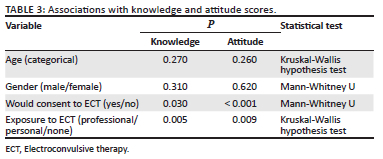
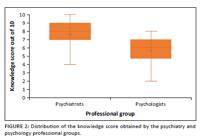
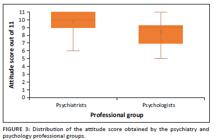
BACKGROUND: Negative attitudes towards electroconvulsive therapy (ECT) among health professionals have been attributed to a lack of knowledge, despite advancements in its administration and evidence of its efficacy in certain psychiatric conditions AIM: This study assesses knowledge and attitudes towards ECT among psychiatry and clinical psychology professionals SETTING: The University of the Witwatersrand, Department of Psychiatry, Johannesburg, South Africa METHODS: A quantitative cross-sectional design was used. All psychiatry and clinical psychology professionals associated with the university were invited to participate in an anonymous online survey from 01 September 2022 to 30 June 2023 RESULTS: The response rate was 49.6% (n = 58) among psychiatrits and 22.2% (n = 22) among clinical psychology professionals. Psyhiatrists had greater knowldge and more favourable attitudes than psychologists. Only 45.5% of psychologists had exposure to ECT, compared to 93.1% of psychiatrists. Knowledge and attitude scores were significanly correlated (p = 0.009, OR 6.7). Most psychologists (86.4%) recommended ECT theory be included in their curriculum CONCLUSION: Greater knowledge correlates with improved attitudes towards ECT. Increased training could enhance attitudes, particularly among psychology professionals CONTRIBUTION: This study offers insights into knowledge and attitudes towarss ECT in a Johannesburg psychiatry department
electroconvulsive therapy; knowledge; attitudes; psychiatry; psychology; South Africa
 Thumbnail
 Thumbnail
 Thumbnail
 Thumbnail