Knowledge and attitudes towards electroconvulsive therapy in an academic psychiatric department
Abstract
BACKGROUND: Negative attitudes towards electroconvulsive therapy (ECT) among health professionals have been attributed to a lack of knowledge, despite advancements in its administration and evidence of its efficacy in certain psychiatric conditions AIM: This study assesses knowledge and attitudes towards ECT among psychiatry and clinical psychology professionals SETTING: The University of the Witwatersrand, Department of Psychiatry, Johannesburg, South Africa METHODS: A quantitative cross-sectional design was used. All psychiatry and clinical psychology professionals associated with the university were invited to participate in an anonymous online survey from 01 September 2022 to 30 June 2023 RESULTS: The response rate was 49.6% (n = 58) among psychiatrits and 22.2% (n = 22) among clinical psychology professionals. Psyhiatrists had greater knowldge and more favourable attitudes than psychologists. Only 45.5% of psychologists had exposure to ECT, compared to 93.1% of psychiatrists. Knowledge and attitude scores were significanly correlated (p = 0.009, OR 6.7). Most psychologists (86.4%) recommended ECT theory be included in their curriculum CONCLUSION: Greater knowledge correlates with improved attitudes towards ECT. Increased training could enhance attitudes, particularly among psychology professionals CONTRIBUTION: This study offers insights into knowledge and attitudes towarss ECT in a Johannesburg psychiatry department
electroconvulsive therapy; knowledge; attitudes; psychiatry; psychology; South Africa
Introduction
Electroconvulsive therapy (ECT) is recommended as a first-line treatment where a rapid definitive response of depression is needed, where there is a high suicide risk, where there is severe psychomotor retardation associated with compromised eating and drinking, as well as to treat severe depression, mixed affective states, mania and catatonia.1,23,43,4,5,6
The use of ECT requires collaboration between psychiatrists who prescribe the procedure and anaesthesiologists who administer anaesthesia for the procedure. In addition to doctors, other mental health professionals play a role in decision making, patient education on ECT and referrals to psychiatrists for further interventions. In a study conducted locally, the majority of the multidisciplinary team members derived their knowledge of ECT from psychiatrists, with psychologists showing the lowest knowledge of the procedure.78
Research into the knowledge of and attitudes towards ECT among healthcare professionals has been explored in various parts of the world; however, it is sparse in the South African context. A survey of the practice of ECT found that ECT was administered exclusively by consultant psychiatrists in South African private hospitals whereas most units in training hospitals used registrars to administer the procedure.910,11,12
Research methods and design
Study design and setting
This study is a quantitative cross-sectional online survey of psychiatrists, psychiatry registrars, community service and intern clinical psychologists, and clinical psychologists employed at various training hospitals falling under the University of the Witwatersrand's Department of Psychiatry. Electroconvulsive therapy is an available treatment option at two hospitals within the university training circuit.
Study population and sampling strategy
All psychiatry and clinical psychology professionals, 196 in total, were invited via email to participate in an online survey from 01 September 2022 to 30 June 2023. The invitation email contained a participation information sheet detailing the aim and objectives of the study, and a link to the consent form and the questionnaire. Voluntary response sampling was used. The questionnaire was initially live for 3 months, with a reminder email sent once a week yielding 59 responses (30.1%). The target response rate was 80%, with a minimum of at least 30% required to detect a large effect. The higher the response rate, the more likely that smaller significant differences between the groups can be detected; therefore, data collection was extended, with permission, to optimise the response rate. Information sheets with a QR code link to the consent form were re-distributed to psychiatry and clinical psychology professionals until 30 June 2023, subsequently reaching a 40.8% response rate.
Data collection and analysis
The survey was designed using Research Electronic Data Capture (REDCap), through the University of the Witwatersrand's REDCap administrator. A self-administered modified 21-item questionnaire used in similar studies was completed online.1213,14,15,16,17,18
Data analysis was done using IBM SPSS Statistics for Windows, Version 28.0 (IBM Corp., Armonk, NY, USA). Demographic data were analysed using descriptive statistics such as mean, median mode and standard deviation. Responses from the questionnaire were compared to determine if any significant differences between the groups existed. Categorical variables were analysed using Chi-squared and continuous variables using the t-test for normally distributed variables, and the Mann-Whitney U test and Kruskal-Wallis test for variables not satisfying this assumption. The significance level was set at 5%.
Ethical considerations
Ethical approval was obtained from the University of the Witwatersrand Human Research Ethics Committee (No. M220327). In addition, permission to distribute the questionnaire among clinical psychology and psychiatry professionals was obtained from the University of the Witwatersrand's Division of Clinical Psychology Head of Department as well as from the Academic Head of the Department of Psychiatry, respectively. Consent for participation was obtained electronically. The invitation emails were sent by the departmental secretaries to all psychiatry and clinical psychology staff email addresses, and no identifying data were used to ensure the anonymity of participants.
Results
General characteristics and main sources of knowledge
The survey was completed by 80 psychiatry and clinical psychology professionals at the University of the Witwatersrand. The psychiatry professionals (n = 58) constitute 33 psychiatry registrars (41.3%) and 25 psychiatrists (31.3%). The psychology professionals (n = 22) constitute 11 clinical psychologists in training (13.8%) and 11 clinical psychologists (13.8%). The median age of the respondents was 33. The majority of respondents were women (n = 57, 74.0%). Most respondents rated their knowledge of ECT as medium (n = 43, 53.8%) in contrast to minimal (n = 26, 32.5%) and high (n = 11, 13.8%).
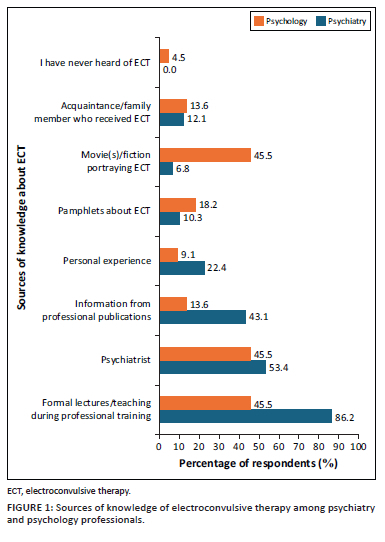
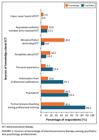
Most psychiatry professionals (86.2%) obtained knowledge of ECT from formal teaching during their professional training. The most common sources of knowledge on ECT among clinical psychology professionals were formal teaching during training (45.5%) and from psychiatrists (45.5%), with a similar proportion learning about ECT from movies and fiction (45.5%). Sources of knowledge of ECT are represented in Figure 1.
Exposure to and knowledge of electroconvulsive therapy
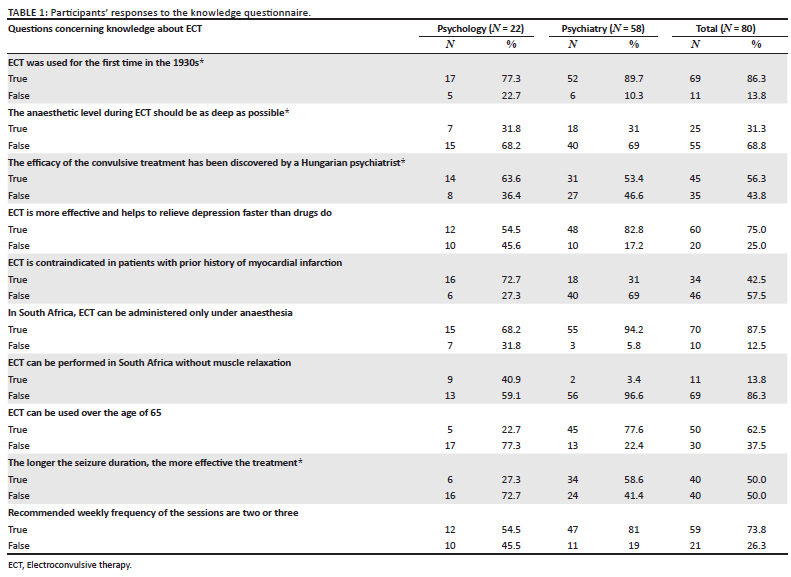
Respondents were classified as having had professional exposure to ECT if they worked in an ECT utilising department or had referred patients to this procedure or observed patients receiving it. Most psychiatry professionals (n = 54, 93.1%) had professional exposure to ECT compared to 45.5% (n = 10) of clinical psychology professionals. Responses to questions regarding knowledge of ECT are presented in Table 1.
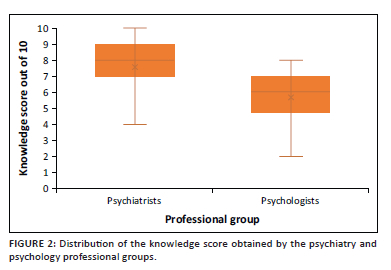
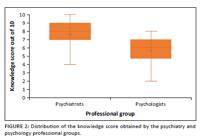
For the knowledge items, a score of 1 was given for each correct answer and 0 for each incorrect answer. The sum of the scores out of 10 formed the knowledge score of the participant. Psychiatry professionals had a mean knowledge score of 7.6 (± SD1.6) and psychology professionals a score of 5.7 (± SD1.7). The distribution of the knowledge score among the two professional groups is represented in Figure 2.
Both professional groups knew that ECT was used for the first time in the 1930s; however, more clinical psychology professionals (n = 14, 63.6%) than psychiatry professionals (n = 31, 53.4%) knew that a Hungarian psychiatrist discovered it. Both professional groups indicated correctly on the depth of anaesthesia, but more psychiatry colleagues (n = 55, 94.2%) than psychology colleagues (n = 15, 68.2%) knew that ECT can only be performed under anaesthesia in South Africa. More psychology professionals (n = 9, 40.9%) than psychiatry professionals (n = 2, 3.4%) did not know that ECT must be performed with muscle relaxation. On questions related to the contraindications of ECT, most clinical psychology professionals (n = 17, 77.3%) did not know that ECT can be used over the age of 65, and the majority (n = 16, 72.7%) thought that ECT was contraindicated in patients with prior history of myocardial infarction. Fewer clinical psychologists than psychiatry professionals knew that the recommended frequency of sessions is two to three per week. On the efficacy of ECT, psychiatry professionals (n = 48, 82.8%) correctly indicated that ECT helps to relieve depression faster than drugs do. Most psychiatry professionals (n = 34, 58.6%) incorrectly indicated that the longer the seizure duration, the more effective the treatment.
Attitudes towards electroconvulsive therapy
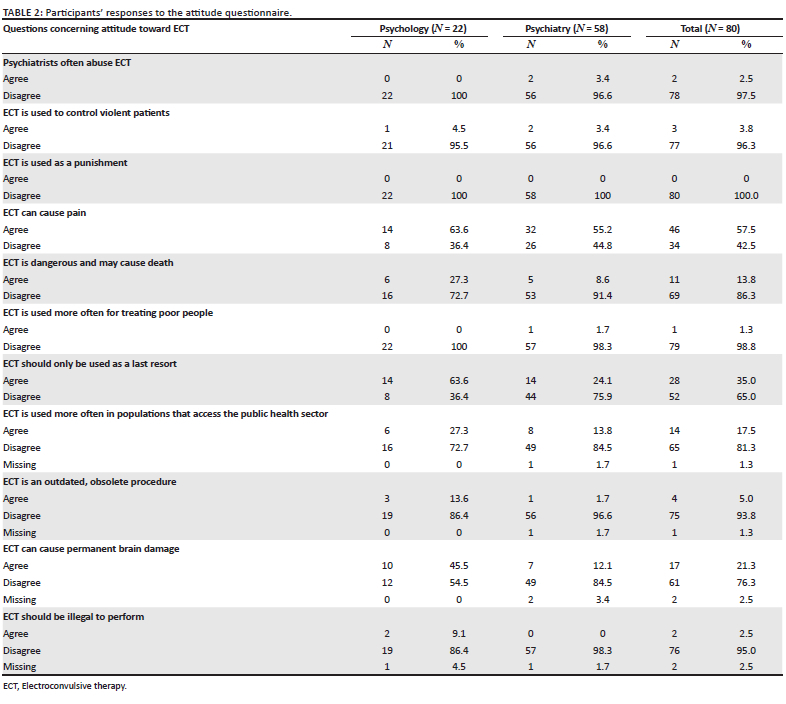
Responses to questions regarding attitudes towards ECT are represented in Table 2. In a similar fashion to a previous study using the same questionnaire, a score of 1 was assigned for responses that indicated a positive attitude and a score of 0 for responses that reflected a negative attitude. Summing the score yielded a total score out of 11; the higher the score, the more positive the attitude.
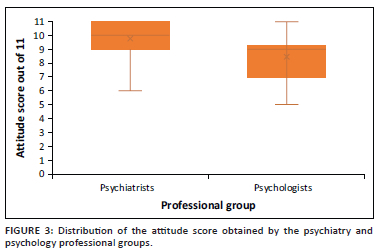
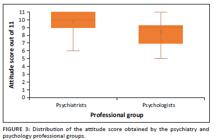
Psychiatry professionals obtained a mean attitude score of 9.8 (± s.d. 1.2), whereas psychology professionals obtained a score of 8.5 (± s.d. 1.8), indicating a trend towards a positive attitude towards ECT among both psychiatry and psychology professionals. The distribution of the attitude score among the two professional groups is represented in Figure 3.
All respondents disagreed that ECT is used as punishment (n = 80, 100%). While all clinical psychology professionals did not believe that psychiatrists often abuse ECT (n = 22, 100%), a small number of psychiatrists (n = 2, 3.4%) did. Similar to most psychiatry professionals (n = 56, 96.6%), most psychology professionals (n = 21, 95.5%) did not agree that ECT is used to control violent patients (n = 77, 96.3%). There were mixed perceptions relating to the side effects of the procedure, with 63.6% (n = 14) of clinical psychologists and 55.2% (n = 32) of psychiatry professionals indicating that ECT can cause pain. Almost half of psychology professionals (n = 10, 45.5%) believed that ECT can cause permanent brain damage, whereas a large majority of psychiatry professionals (n = 49, 84.5%) did not agree. Most respondents from both professional groups did not perceive ECT as dangerous or potentially fatal, with 86.3% (n = 69) expressing this view. Regarding the application of ECT, a majority of clinical psychology professionals (63.6%, n = 14) indicated that it should be considered a last resort, whereas a higher proportion of psychiatry professionals (75.9%, n = 44) did not share this view. None of the respondents (100%, n = 80) believed that ECT is disproportionately used to treat individuals from lower socioeconomic backgrounds. Additionally, the majority of psychiatry professionals (84.5%, n = 49) and clinical psychology professionals (72.7%, n = 16) did not believe that ECT is more frequently administered in the public sector. A significant majority from both professional groups disagreed with the notion that ECT is outdated and obsolete (93.8%, n = 75) and that it should be deemed illegal (95%, n = 76).
Relationship between electroconvulsive therapy knowledge score and attitude towards electroconvulsive therapy
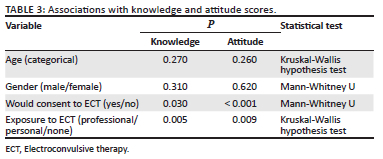
The Mann-Whitney U hypothesis test was used to compare the knowledge scores and the attitude scores, which showed a significant difference for both the knowledge score p < 0.001 and the attitude score p < 0.001 between the two professional groups. Furthermore, there was a significant association between the knowledge score and the attitude score (p = 0.01), with an odds ratio (OR) of 6.7 (Chi-Squared).
There was no significant difference in the knowledge scores (p = 0.31) and attitude scores (p = 0.62) between male and female professionals. Similarly, the age difference was not significant for both the knowledge score (p = 0.27) and the attitude score (p = 0.26). The difference in the knowledge score (p = 0.049) and attitude score (p = 0.01) between trainees, that is, psychiatry registrars and clinical psychology interns/community service was significant. Conversely, the difference in the attitude score was significant (p = 0.01) among trainee professionals whereas not significant for consultant psychiatrists and registered clinical psychologists.
Overall, most participants (n = 62, 77.5%) indicated that they would consent to receive ECT if they were in a psychotic depressive condition, of which most (n = 52, 89.7%) were psychiatry professionals and fewer were psychology professionals (n = 10, 45.5%). The majority (n = 54, 87.1%) of the participants who would consent to ECT had professional exposure to ECT. Consent to receive ECT if they had a depressive episode was associated with a higher knowledge of ECT than those who would not consent to ECT (p = 0.03, Mann-Whitney U test), and similarly a more favourable attitude towards ECT than those who would not consent to ECT (p < 0.001).
All psychiatry professionals (n = 58, 100%) and a high proportion of clinical psychology professionals (n = 20, 90.9%) would recommend that ECT teaching should be a routine part of psychiatric specialisation. With respect to theoretical ECT training being part of psychology training, a larger proportion of clinical psychology professionals (n = 19, 86.4%) than psychiatry professionals (n = 39, 67.2%) would recommend its inclusion in the training of clinical psychologists. The associations with knowledge and attitude scores are summarised in Table 3.
Four potentially irrelevant or ambiguous questions on the knowledge questionnaire (Marked with asterisk in Table 1) were removed to better assess the relationship between knowledge and attitude towards ECT. Reanalysis showed consistent patterns and did not alter the study's findings. Significant differences were observed between knowledge scores of the two professional groups (p < 0.001) and between knowledge and attitude scores (p = 0.002), with an OR of 7.3 (Chi-Squared). No significant differences were found based on gender (p = 0.44) or age (p = 0.139). Additionally, individuals who would consent to ECT demonstrated greater knowledge about ECT compared to those who did not consent (p = 0.005).
Concerns regarding electroconvulsive therapy
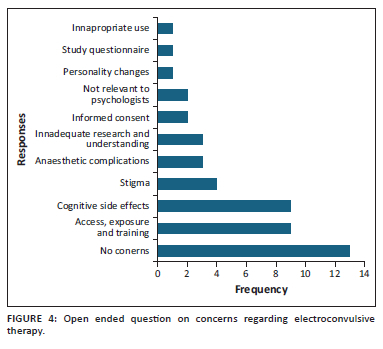
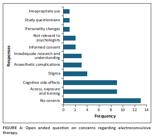
Respondents were additionally asked to identify and elaborate on their concerns related to ECT; 43 of the 80 participants chose to respond to this section of the questionnaire. A summary of the responses is displayed in Figure 4. In all, 13 participants specified having no concerns about ECT. Concerns on the availability of ECT in institutions, the exposure of psychology professionals to this treatment and the adequacy of training for psychiatry professionals administering ECT were raised. Concerns with cognitive side effects (n = 9) such as memory loss and other cognitive impairments, anaesthetic side effects (n = 3) and personality changes (n = 1) were also noted. The stigma associated with ECT also emerged as a concern (n = 4). There were concerns regarding the level of research and understanding related to ECT (n = 3). Respondents felt that there was insufficient scientific investigation and public knowledge about the procedure, which could affect its acceptance and application. The issue of informed consent was raised (n = 2), with respondents concerned about whether patients fully understand the risks and benefits of ECT before consenting to the treatment. A minority of respondents (n = 2) questioned the relevance of ECT in the field of psychology. One respondent noted concerns about the inappropriate use of ECT, indicating a need for stricter guidelines and oversight in its application. There was a concern (n = 1) regarding the validity of the study questionnaire itself.
Discussion
The equal proportions of clinical psychology professionals citing movies and fiction, psychiatrist and formal teaching as sources of knowledge suggest that public portrayals of ECT may shape their understanding and attitudes towards the therapy. In South Africa, medical students similarly relied on media rather than professional sources, leading to mixed perceptions of ECT as a last resort.1920
Both groups were aware that ECT was first introduced in the 1930s, with clinical psychology professionals demonstrating slightly better knowledge of its Hungarian origins (63.6%) compared to psychiatry professionals (53.4%). This minor difference might reflect variations in historical education or interest between the disciplines. However, given the higher mean knowledge score among psychiatrists, this specific question may not fully capture core ECT knowledge. Significant differences were observed in procedural knowledge: while both groups recognised the need for anaesthesia during ECT, a larger proportion of psychiatry professionals (94.2%) were aware that ECT must be administered under anaesthesia compared to clinical psychologists (68.2%). Additionally, fewer clinical psychologists (40.9%) were aware of the need for muscle relaxation during ECT. Knowledge gaps among clinical psychology professionals concerning contraindications, such as ECT's applicability for patients over 65 (77.3%) and those with a history of myocardial infarction (72.7%), could affect clinical decision-making. On treatment efficacy, psychiatry professionals were better informed that ECT offers faster relief from depression compared to pharmacotherapy (82.8%). However, 58.6% of psychiatry professionals incorrectly believed that longer seizure duration correlates with greater treatment effectiveness, which may be because of the ambiguous nature of this question regarding what constitutes a long seizure duration.
The unanimous agreement that ECT is not used as punishment (100%) indicates a shared recognition of ECT's therapeutic intent across both professional groups. This consensus is reinforced by the fact that no clinical psychology professionals believed that psychiatrists frequently misuse ECT, although a small minority of psychiatrists (3.4%) expressed concerns about potential misuse. Both groups largely agree that ECT is not used to control violent patients, with high levels of disagreement on this notion (96.3%).
Perceptions about the side effects of ECT reveal some discrepancies between the professional groups. While a majority in both groups reject the notion that ECT is inherently dangerous or potentially fatal (86.3%), concerns about pain and potential long-term effects are notable. The belief that ECT can cause permanent brain damage was held by 45.5% of clinical psychologists compared to 15.5% of psychiatrists. The lower incidence of such beliefs among psychiatrists suggests they may have more experience with ECT's safety profile. Views on the role of ECT as a treatment option vary between the groups. A majority of clinical psychology professionals (63.6%) consider ECT a last-resort treatment, while a higher proportion of psychiatrists (75.9%) do not share this view. This finding contrasts with international studies, which have shown that a significant proportion of psychiatrists and other mental health professionals believe ECT should be reserved as a last-resort treatment.13,14,15,20
The significant association between knowledge and attitude scores (p = 0.01) with an OR of 6.7 suggests that higher knowledge of ECT is related to more positive attitudes towards the treatment. This supports earlier studies correlating positive attitudes towards ECT with clinical experience and knowledge of ECT.6,7,13,14,15,16,17,18,19,2021,22
The majority of responses to the question on concerns about ECT expressed 'no concerns'. This may reflect familiarity with ECT's benefits and trust in its clinical efficacy. A high proportion of the responses expressed concerns related to the availability of ECT, the exposure of psychology professionals to this treatment and the adequacy of training for psychiatry professionals administering ECT. These concerns highlight systemic issues that could impact the accessibility of ECT services. In a review of the use of ECT within South Africa, Benson-Martin noted that although 42 institutions in the public and private sectors had access to an ECT machine, 31% did not use the machine because of various problems including clinicians not agreeing with the procedure.8
A similar proportion raised concerns about cognitive side effects. Cognitive impairments are well-documented side effects of ECT, though their severity and impact on patients' quality of life can vary.23
Some responses expressed concerns about the stigma associated with ECT, which may arise from its historical misuse and media portrayal. There is a call for more research to better understand ECT's mechanism, efficacy and long-term effects. Additionally, there was concern that patients might not fully grasp the risks and benefits of ECT, suggesting a need for improved educational resources and counselling. Questions about ECT's relevance in psychology versus psychiatry indicate differing views on its role. Finally, issues with wording of the questionnaire highlight the need for precise tools to accurately assess knowledge and attitudes towards ECT.
Strengths and limitations
Several limitations should be acknowledged in interpreting the findings of this study. Firstly, the sample size was relatively small with a total response rate of 40.8%, consisting of professionals from a single institution, which may limit the generalisability of the results to broader populations of psychiatry and clinical psychology professionals. Secondly, the survey relied on self-reported data, which may be subject to recall bias and social desirability bias. Thirdly, the survey instrument itself may not have captured all relevant aspects of knowledge and attitudes towards ECT, potentially leading to incomplete or biased responses. The wording of some of the questions in the questionnaire may have been ambiguous, interfering with the interpretation of knowledge and attitude scores. Lastly, the clinical psychology and psychiatry professional groups are not homogenous groups of professionals as there may be differences in the years of experience and exposure to ECT.
Recommendations
Based on the findings and limitations identified in this study, several recommendations can be made to inform future research and practice in this area. Firstly, larger-scale studies involving diverse samples of mental health professionals from multiple institutions are needed to enhance the generalisability of findings and ensure representation across different contexts. Secondly, future research should utilise more comprehensive and validated measures of knowledge and attitudes towards ECT to obtain a more accurate understanding of professionals' knowledge and perceptions. Qualitative studies could explore the underlying themes behind any reported negative perceptions, providing a richer and more nuanced understanding of these attitudes. For psychiatry professionals, continued emphasis on formal teaching remains essential, including the integration of current research. Interdisciplinary collaboration and training initiatives could further enhance cooperation between psychiatry and psychology professionals in the delivery of mental healthcare, including education and exposure to ECT.
Conclusion
This research provides insights into the knowledge and attitudes towards ECT among psychiatry and clinical psychology professionals. Despite differences in levels of knowledge, both groups generally expressed positive attitudes towards ECT, highlighting its perceived efficacy in treating certain psychiatric disorders. Because of the association between knowledge of and attitude towards ECT, addressing gaps in knowledge and promoting evidence-based practice are essential for ensuring the appropriate use of the procedure and improving patient outcomes. Moving forward, collaborative efforts between psychiatry and psychology professionals, coupled with targeted education and training interventions, are crucial for advancing the field of ECT and enhancing mental healthcare delivery.
This article is based on the author's research report titled "Knowledge of and attitudes towards electroconvulsive therapy in an academic psychiatric department" towards the degree of Master of Medicine in Psychiatry in the Department of Psychiatry, University of the Witwatersrand, South Africa with supervisor Dr. Y.M. Nel.
Competing interests
The authors declare that they have no financial or personal relationships that may have inappropriately influenced them in writing this article.
Authors' contributions
L.L.M. was the primary investigator for the study. Y.M.N. supervised the research throughout the process and supported the drafting and review of the article for publication.
Funding information
The authors received no financial support for the research, authorship and/or publication of this article.
Data availability
The data that support the findings of this study are available from the corresponding author, L.L.M upon reasonable request.
Disclaimer
The views and opinions expressed in this article are those of the authors and are the product of professional research. The article does not necessarily reflect the official policy or position of any affiliated institution, funder, agency or that of the publisher. The authors are responsible for this article's results, findings and content.
Acknowledgements
The authors would like to acknowledge the help of the University of the Witwatersrand Department of Psychiatry's secretariates for assisting with the distribution of the survey, the respective heads of departments of psychiatry and psychology for distributing the information sheets with QR codes, the Wits REDCap administrators for assistance with developing the questionnaire as well as Ms Elsabe Smit for assistance with data analysis.
References
- 1. Ferrier IN, Waite J. The ECT handbook. 4th ed. Cambridge: Cambridge University Press; 2019.
-
2. Milev RV, Giacobbe P, Kennedy SH, et al. Canadian network for mood and anxiety treatments (CANMAT) 2016 clinical guidelines for the management of adults with major depressive disorder. Can J Psychiatry. 2016;61(9):561-575. https://doi.org/10.1177/0706743716660033
» https://doi.org/10.1177/0706743716660033 -
3. Read J, Arnold C. Is electroconvulsive therapy for depression more effective than placebo? A systematic review of studies since 2009. Ethical Hum Psychol Psychiatry. 2017;19(1):5-23. https://doi.org/10.1891/1559-4343.19.1.5
» https://doi.org/10.1891/1559-4343.19.1.5 -
4. Read J, Kirsch I, McGrath L. Electroconvulsive therapy for depression: A review of the quality of ECT versus sham ECT trials and meta-analyses. Ethical Hum Psychol Psychiatry. 2019;21(2):64-103. https://doi.org/10.1891/EHPP-D-19-00014
» https://doi.org/10.1891/EHPP-D-19-00014 -
5. Fink M. Convulsive therapy: A review of the first 55 years. J Affect Disord. 2001;63(1-3):1-15. https://doi.org/10.1016/s0165-0327(00)00367-0
» https://doi.org/10.1016/s0165-0327(00)00367-0 -
6. Gazdag G, Ungvari GS. Electroconvulsive therapy: 80 Years old and still going strong. World J Psychiatry. 2019;9(1):1-6. https://doi.org/10.5498/wjp.v9.i1.1
» https://doi.org/10.5498/wjp.v9.i1.1 -
7. Netshilema TC, Khamker N, Sokudela F. Mental health professionals' attitudes toward and knowledge about electroconvulsive therapy at Weskoppies Hospital, South Africa. Perspect Psychiatr Care. 2019;55(2):201-209. https://doi.org/10.1111/ppc.12330
» https://doi.org/10.1111/ppc.12330 -
8. Fisher P. Psychological factors related to the experience of and reaction to electroconvulsive therapy. J Ment Health. 2012;21(6):589-599. https://doi.org/10.3109/09638237.2012.734656
» https://doi.org/10.3109/09638237.2012.734656 -
9. Benson-Martin JJ. A survey of the practice of electroconvulsive therapy in South Africa. J ECT. 2015;31(4):253-257. https://doi.org/10.1097/YCT.0000000000000239
» https://doi.org/10.1097/YCT.0000000000000239 -
10. Regulations for admission to the fellowship of the college of psychiatrists of South Africa FC Psych (SA) [homepage on the Internet]. c2023 [cited 2024 Feb 11]. Available from: https://cmsa.co.za/document/01-fc-psychsa-regulations/
» https://cmsa.co.za/document/01-fc-psychsa-regulations/ -
11. The professional board for psychology: Minimum standard for the training of clinical psychology [homepage on the Internet]. c2019 [cited 2021 Aug 16]. Available from: https://www.hpcsa.co.za/Content/upload/psb/guidelines/Minimum_standards_for_the_training_of_Clinical_Psychology.pdf
» https://www.hpcsa.co.za/Content/upload/psb/guidelines/Minimum_standards_for_the_training_of_Clinical_Psychology.pdf -
12. Health Professions Act 56 of 1974: Regulations defining the scope of the profession of psychology [homepage on the Internet]. c2008 [cited 2021 Aug 16]. Available from: https://www.hpcsa.co.za/Uploads/professional_boards/psb/regulations/regulations_gnr993_2008.pdf
» https://www.hpcsa.co.za/Uploads/professional_boards/psb/regulations/regulations_gnr993_2008.pdf -
13. Antosik-Wójcińska A, Gazdag G, Święcicki Ł, et al. Attitudes towards ECT: A survey of polish mental health professionals. Psychiatr Danub. 2021;33(3):328-333. https://doi.org/10.24869/psyd.2021.328
» https://doi.org/10.24869/psyd.2021.328 -
14. Gazdag G, Kocsis N, Tolna J, Lipcsey A, Habil M. Attitudes towards electroconvulsive therapy among Hungarian psychiatrists. J ECT. 2004;20(4):204-207. https://doi.org/10.1097/00124509-200412000-00003
» https://doi.org/10.1097/00124509-200412000-00003 -
15. Gazdag G, Zsargó E, Kerti KM, Grecu IG. Attitudes toward electroconvulsive therapy in Romanian psychiatrists. J ECT. 2011;27(3):55-56. https://doi.org/10.1097/YCT.0b013e318214c576
» https://doi.org/10.1097/YCT.0b013e318214c576 -
16. Gazdag G, Molnár E, Ungvari GS, Iványi Z. Knowledge of and attitude toward electroconvulsive therapy: A survey of Hungarian anesthesiology residents. J ECT. 2009;25(2):113-116. https://doi.org/10.1097/YCT.0b013e31818803c8
» https://doi.org/10.1097/YCT.0b013e31818803c8 -
17. AlHadi AN, AlShahrani FM, Alshaqrawi AA, Sharefi MA, Almousa SM. Knowledge of and attitudes towards electroconvulsive therapy (ECT) among psychiatrists and family physicians in Saudi Arabia. Ann Gen Psychiatry. 2017;16(1):16. https://doi.org/10.1186/s12991-017-0139-1
» https://doi.org/10.1186/s12991-017-0139-1 -
18. Knowledge and attitude toward electroconvulsive therapy among MBBS interns. Ann Ind Pstchiatry. 2022;6(3):265-270. https://doi.org/10.4103/aip.aip_110_20
» https://doi.org/10.4103/aip.aip_110_20 -
19. Mausling MB, Macharia M, Jordaan GP. Junior medical students' knowledge about and attitudes towards electroconvulsive therapy in a South African setting. S Afr J Psych. 2017;23:1062. https://doi.org/10.4102/sajpsychiatry.v23i0.1062
» https://doi.org/10.4102/sajpsychiatry.v23i0.1062 - 20. Brender R, Dar N, Dannon P. Electroconvulsive therapy: Relating attitude towards treatment and knowledge among mental health professionals in a mental health center. Isr J Psychiatry Relat Sci. 2020;57(2):89-97.
-
21. James BO, Omoaregba OJ, Igberase OO, Olotu SO. Unmodified electroconvulsive therapy: Changes in knowledge and attitudes of Nigerian medical students. Afr Health Sci. 2009;9(4):213-220. https://doi.org/10.4314/ahs.v11i4.29
» https://doi.org/10.4314/ahs.v11i4.29 -
22. James BO, Inogbo CF. Implementing modified electroconvulsive therapy in Nigeria: Current status and psychiatrists' attitudes. J ECT. 2013;29(2):25-26. https://doi.org/10.1097/YCT.0b013e3182801cce
» https://doi.org/10.1097/YCT.0b013e3182801cce -
23. McDonald WM, McCall VW, Epstein CM. Electroconvulsive therapy: Six years of progress and a comparison with transcranial magnetic stimulation and vagal nerve stimulation. In: Neuropsychopharmacology: The fifth generation of progress. Philadelphia: Lippincott Williams & Wilkins, 2002; p. 1097-1108. https://doi.org/10.1007/978-3-031-40371-2_9
» https://doi.org/10.1007/978-3-031-40371-2_9

Accepted: 20 Sept. 2024
Published: 21 Nov. 2024