Prevalence of autism spectrum disorder symptoms in a paediatric neurology clinic at a tertiary hospital in Uganda
Abstract
BACKGROUND: Children with neurological disorders are more likely to present with autism spectrum disorder (ASD) symptoms and get an ASD diagnosis. Despite the large burden of childhood neurological disorders in Uganda, there is limited information on ASD amongst children with neurological disorders in Uganda. AIM: The aim of this study was to determine the prevalence and factors associated with ASD symptoms amongst children attending the paediatric neurology clinic. SETTING: The study was conducted at the paediatric neurology clinic of Mulago National Referral Hospital in Uganda. METHODS: This was a cross-sectional study of 318 children aged 2-9 years. After obtaining consent, a socio-demographic questionnaire and the Social Communication Questionnaire were administered to the caregivers of the children. Additional questions were administered to assess the prenatal, birth and postnatal characteristics of the children. Sample characteristics were described using frequencies and means. Bivariate analysis was carried out using chi-square test and Fisher's exact test. Multiple logistic regression models were used to assess which factors were independently associated with ASD symptoms. RESULTS: The mean age of the children was 5 years and 58.2% were males. The prevalence of significant ASD symptoms was found to be 45%. Factors negatively associated with significant ASD symptoms were female sex (odds ratio [OR] 0.48 [95% CI 0.24, 0.98]) and ability to speak (OR 0.09 [95% CI 0.04, 0.2]). The history of delayed developmental milestones was positively associated with significant ASD symptoms (OR 3.3 [95% CI 1.59, 6.84). CONCLUSION: The prevalence of ASD symptoms is high in children with neurological disorders. Children, especially those with delayed developmental milestones, should routinely be screened for ASD.
prevalence; associated factors; autism spectrum disorder; neurological disorders; Uganda
Introduction
Autism spectrum disorder (ASD) is a neurodevelopmental disorder characterised by persistent deficits in social communication and social interaction and restricted and repetitive behaviours, interests and activities.1
These deficits occur in multiple contexts and are characterised by deficits in socio-emotional reciprocity, verbal and non-verbal communication used for social interaction and difficulty in developing and maintaining relationships.23
According to a mini review by Suresh and colleagues, the global mean prevalence of ASD was estimated at 26.7 per 10 000 population.45678,910
Various factors have been postulated to be associated with ASD amongst children. Perinatal factors have been studied extensively and those found to be associated with ASD, include gestational diabetes, maternal infections and drug use during pregnancy, caesarean delivery, preterm delivery, post-term delivery, low Apgar score and small for gestational age.11121013
Neurological disorders in children represent a significant proportion of global burden of disease because they are a major cause of morbidity, disability, mortality and poor quality of life.14151617
Methods
Study design and setting
This was a cross-sectional study conducted in the paediatric neurology clinic of Mulago National Referral Hospital, which is one of the two national referral hospitals in Uganda. It is located in Kampala district, the capital city of Uganda, about 4 kilometres (km) from the city centre. It is the largest hospital in Uganda, with a bed capacity of 1500. The hospital provides both inpatient and outpatient services for patients from all over the country and training of students of all cadres. The paediatric neurology clinic is a specialised outpatient clinic, which receives children with neurologic disorders from all over the country. It runs twice a week and about 50 children are attended to on clinic days. The conditions managed in this clinic include epilepsy, cerebral palsy and muscular dystrophy. It is also in this clinic that a number of neurodevelopmental disorders including ASD are usually seen before they are sent to the child and adolescent psychiatry clinic for further assessment and management.
Eligibility criteria
Parents or caregivers of children aged 2-9 years were approached to participate in the study. Those who consented to participation were included in the study. The age of 2 years was considered as the lower limit for this study because at this age parents or caregivers started noticing symptoms that are characteristic of ASD. The age of 9 years was considered as the upper limit so as to limit this study to the age group below adolescence (the World Health Organization defines adolescence as the age group of 10-17 years).
Children who were too sick and needed urgent medical attention and those whose caregivers lived with them for less than 6 months and as such had insufficient information about the behaviour of the child were excluded from the study.
Sample size calculation
Sample size was calculated based on Leslie Kish's (1965) formula. With an expected proportion of 29.3% of children having ASD (Mpaka et al., 2016) and a standard error of ± 5%, the sample size was estimated at 318.
Study procedure
The study participants were enrolled from the paediatric neurology clinic of Mulago Hospital between November 2018 and January 2019. Every child aged 2-9 years was considered as the potential participant for the study.
On a clinic day, the principal investigator and two research assistants (who were mental health nurses) approached the potential participants and their caregivers to assess for eligibility and interest in the research project. They explained the purpose of the study and procedures and obtained informed consent from the parents/caregivers. The research questionnaires took 45 min to complete. Those who were found to have significant ASD symptoms were directed to the child and adolescent mental health clinic to receive further assistance.
Study measures and instruments
Autism spectrum disorder symptoms
Autism spectrum disorder symptoms are impairments in social communication, social interaction and restricted, repetitive patterns of behaviour as seen in children with ASD. These were measured using the Social Communication Questionnaire (SCQ).18
The SCQ is based on the Autism Diagnostic Interview-Revised,191820,21,22 This screening tool has also been used and validated in African settings. A validation study in Mali amongst individuals 4-20 years of age reported a sensitivity of 71% and a specificity of 72%,232425,26,27,28 A cut-off of 15 has been shown to have a fairly good specificity and sensitivity in distinguishing between children with ASD and those with other developmental disabilities.29
Socio-demographic characteristics
Socio-demographic characteristics of both the child and the parents were assessed using a socio-demographic questionnaire. Child demographic characteristics included age, sex, education level, primary caregiver and family history of mental illness.
Perinatal characteristics
The following additional questions were asked to assess the prenatal, birth and postnatal characteristics: maternal and paternal age at the conception of the child, history of gestational diabetes and hypertension, mode of delivery, preterm delivery, birth weight, breastfeeding history and history of illness in the neonatal period.
Patient's medical records
The participant's clinical records obtained included the neurological condition, history of delayed milestones and the presence or lack of speech.
Data analysis
Data analysis was carried out with STATA version 14. Frequencies and percentages were computed for the categorical variables, whilst means and standard deviation were used to describe the continuous variables. Chi-square tests and Fisher's exact test were used for bivariate analysis. Variables whose level of significance was 0.2 or less at bivariate analysis were included in the multiple logistic regression model for multivariate analysis.
A p-value of less than or equal to 0.05 was considered to be statistically significant.
Ethical consideration
This study was approved by Makerere University School of Medicine Research and Ethics Committee (#REC REF 2018-110). The caregivers of all the children gave written informed consent and children of 8-9 years gave written assent to participate in the study.
Results
Socio-demographic characteristics
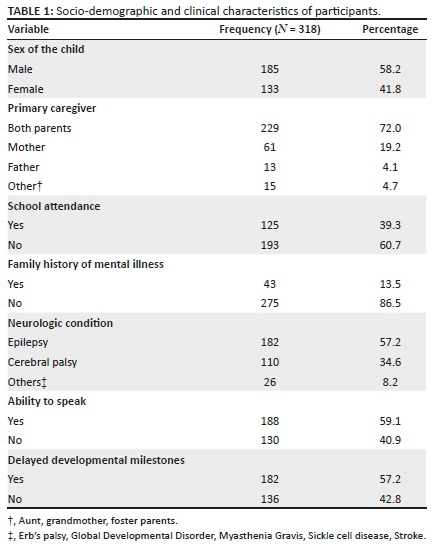
The sample included 318 children with neurological disorders. Of the participants, 185 (58.2%) were males, with a female to male ratio of 1:1.4. The participants' age ranged from 2 to 9 years, with a mean age of 5.0 years. The rest of the participant characteristics are represented in Table 1.
Clinical characteristics
The children in this clinic presented with a number of neurological conditions, with the most common being epilepsy (57.2%) and cerebral palsy (34.6%). The rest of the disorders are represented in Table 1. More than half of the participants (182; 57.2%) had a history of delayed developmental milestones (sitting, standing, walking and talking).
Prenatal, birth and postnatal characteristics of the study participants
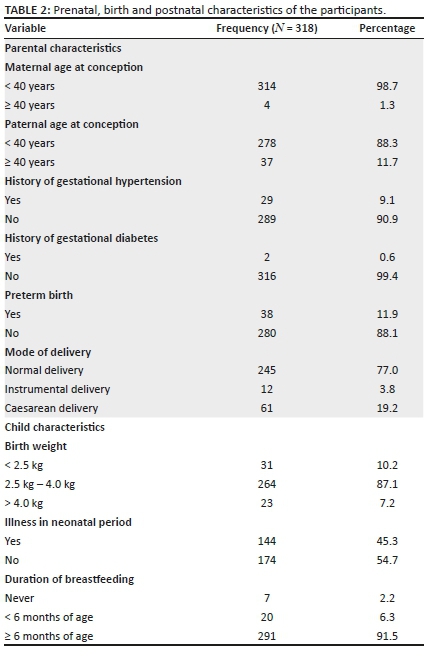
The majority of respondents reported no history of gestational diabetes (99.4%) or gestational hypertension (90.9%). The most common mode of delivery was normal delivery (77%), followed by caesarean delivery (19.2%). The rest of the perinatal factors are presented in Table 2.
Prevalence and factors associated with significant autism spectrum disorder symptoms
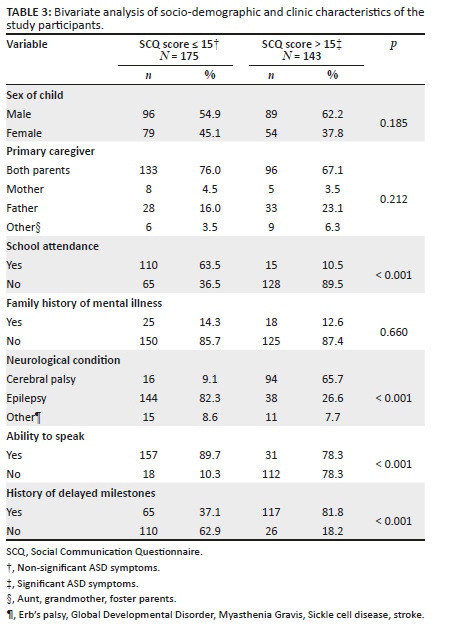
This study found that 143 participants (45%) had significant ASD symptoms, that is, screened positive on the SCQ (above the cut-off of 15).
Table 3 illustrates the bivariate analyses of socio-demographic characteristics and clinical characteristics. The factors that were significantly associated with significant ASD symptoms on bivariate analysis included not attending school, lack of speech and delayed developmental milestones.
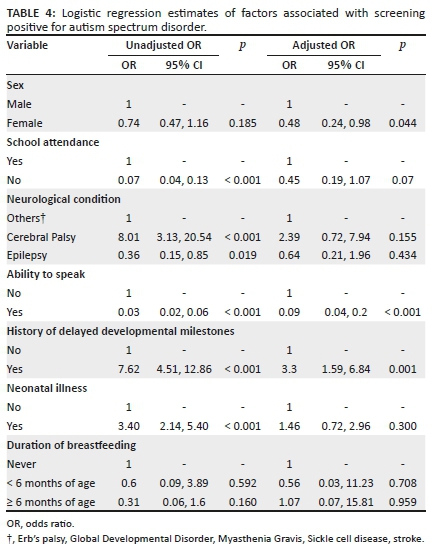
Table 4 illustrates the bivariate analyses of the perinatal characteristics. The history of illness in the neonatal period was significantly associated with significant ASD symptoms.
The results of the multivariate logistic regression analysis indicated that females were 52% less likely to screen positive for ASD (odds ratio [OR] 0.48 [95% CI 0.24, 0.98]). The children who had the ability to speak were 91% less likely to screen positive for ASD compared with those who were unable to speak (OR 0.09 [95% CI 0.04, 0.2]). Those with delayed milestones were 3.3 times more likely to screen positive for ASD than those without a history of delayed milestones (OR 3.3 [95% CI 1.59, 6.84]).
Discussion
This study was designed to determine the prevalence and factors associated with ASD symptoms amongst children attending the paediatric neurology clinic of Mulago Hospital. The prevalence of significant ASD symptoms was estimated to be 45.0% in this population. Female sex and ability to speak were negatively associated with significant ASD symptoms, whilst history of delayed milestones was positively associated with significant ASD symptoms.
The estimate of prevalence is consistent with findings from a number of other studies that have shown ASD symptoms to be higher in children with neurological disorders compared with healthy peers or children with other chronic disorders.6,830,313233
The prevalence in this study, however, is higher than that shown in other studies that looked at ASD symptoms in neurological disorders. A study by Ryland and colleagues, which assessed for ASD symptoms amongst children with neurological disorders, reported a prevalence of 14.1%.6341035
Factors associated with autism spectrum disorder symptoms
According to this study, being male was positively associated with screening positive for ASD symptoms. This is in line with study findings that indicate the rate of ASD to be significantly higher in males than in females, with a frequently stated male to female ratio of 4:1.36,37,38394040
Social imitation or camouflaging enables some level of social success and coping, which results in some females never receiving the diagnosis of ASD because they may not exhibit any observable functional impairment.4142
There was also a significant association between inability to speak and significant ASD symptoms. The lack of expressive speech has been described as a common finding in African children with ASD.43,4445434647,4848
This study also showed a significant association between delay in milestones and ASD symptoms. This has been noted before in another study that reported delays in motor milestones in children with ASD compared with normal children.49,505152
Education attainment was not found to be correlated with screening positive for ASD in this study. Amongst the children who screened positive for ASD, the number of those who were not attending school was significantly higher than those who were attending the school. However, on multivariate analysis, this association became insignificant. This is not in line with studies that have reported that ASD negatively affects education attainment amongst affected individuals.53
There was no association between perinatal factors and ASD in this study. There have been mixed findings about this association in various studies,1154,5556,57
Strengths and limitations
The main strength of this study was that it had a large sample size that increased the power of this study and the generalisability of the results. This study adds to the limited database of ASD within the African context.
This study had several limitations. Firstly, this is a cross-sectional study; thus, the temporal relationship between ASD and neurological disorders could not be established. Therefore, inferences about causation could not be made in this cross-sectional study because the exposure and outcome were measured at the same time. Secondly, there was no independent validation of ASD symptoms by direct assessment of the children by a qualified clinician. The SCQ cannot be used to make a diagnosis of ASD as this requires a more detailed description of actual behaviour, onset and development over time as well as effect on functioning.18 Parent or caregiver reports on a screening questionnaire with 'yes' or 'no' answers, therefore, cannot replace a clinical validation of diagnosis. Speech was also not assessed by a qualified specialist, but we mainly depended on parental reports and these findings may have not taken into account developmental age. Thirdly, there was potential for recall bias caused by requirement for respondents to provide information regarding experiences or events from the past. There are also limitations in the generalisability of these findings to other children with neurological conditions in other settings as this study was performed in a national referral hospital that usually receives the more severe cases.
Implications and recommendations
The present findings highlight the need for awareness amongst clinicians about the likelihood that a number of children with neurological disorders in Uganda might be experiencing significant ASD-related challenges. It is, therefore, important that clinicians have access to and use screening instruments to enable them to identify these problems that may pose a great challenge to the affected children and their families. Emphasis can be placed on children who present with delays in developmental milestones.
Further research is recommended amongst those who screen positive using diagnostic tools such as the Autism Diagnostic Interview-Revised and the Autism Diagnostic Observation Schedule.
Conclusion
This study found that almost half of the children attending a neurology clinic in a tertiary hospital in Uganda presented with significant ASD symptoms. The children with significant ASD symptoms were most likely males, had limited or no speech and history of developmental delays.
Competing interests
The authors declare they have no financial or personal relationships that may have inappropriately influenced them in writing this article.
Authors' contributions
A.A. conceptualised and designed the study, collected the data and wrote the article. N.N. and R.O. supervised the study and helped in the writing of the article. All authors have read and approved the final manuscript.
Funding information
The study was made possible by a scholarship fund awarded to Anita Arinda by the Neuro-Genetics of African Populations (Neuro-GAP) study.
Data availability statement
All data that were generated and analysed during this study are included in this published article.
Disclaimer
The views and opinions expressed in this article are the authors' own and do not necessarily represent the official policy or position of any institution or funder of the authors.
Acknowledgements
The authors would like to thank Dr Nelson Mukiiza who helped with the statistical analysis and also gave wonderful suggestions that improved this article.
References
- 1.American Psychiatric Association. Diagnostic and statistical manual of mental disorders (DSM-5®). Washington, DC: American Psychiatric Pub; 2013.
-
2.Lai M-C, Lombardo MV, Baron-Cohen S. Autism. Lancet. 2014;383(9920):896-910. https://doi.org/10.1016/S0140-6736(13)61539-1
» https://doi.org/10.1016/S0140-6736(13)61539-1 -
3.Jones EA, Carr EG. Joint attention in children with autism: Theory and intervention. Focus Autism Other Dev Disabil. 2004;19(1):13-26. https://doi.org/10.1177/10883576040190010301
» https://doi.org/10.1177/10883576040190010301 -
4.Poovathinal SA, Anitha A, Thomas RJ, et al., editors. Global prevalence of autism: A mini-review [homepage on the Internet]. 2018. Available from: https://www.semanticscholar.org/paper/Global-Prevalence-of-Autism%3A-A-Mini-Review-Poovathinal-Anitha/590e87eccf1300a7a821f11779316b2d962322dc
» https://www.semanticscholar.org/paper/Global-Prevalence-of-Autism%3A-A-Mini-Review-Poovathinal-Anitha/590e87eccf1300a7a821f11779316b2d962322dc - 5.Christopher G. Double syndromes: Autism associated with genetic, medical and metabolic disorders. In: Ruth D, Nass YF, editors. Cognitive and behavioral abnormalities of pediatric diseases. New York, NY: Oxford University Press, 2010; p. 11-29.
-
6.Ryland HK, Hysing M, Posserud M-B, Gillberg C, Lundervold AJ. Autism spectrum symptoms in children with neurological disorders. Child Adolesc Psychiatry Ment Health. 2012;6:34. https://doi.org/10.1186/1753-2000-6-34
» https://doi.org/10.1186/1753-2000-6-34 -
7.Lindquist B, Carlsson G, Persson EK, Uvebrant P. Behavioural problems and autism in children with hydrocephalus: A population-based study. Eur Child Adolesc Psychiatry. 2006;15(4):214-219. https://doi.org/10.1007/s00787-006-0525-8
» https://doi.org/10.1007/s00787-006-0525-8 -
8.Clarke DF, Roberts W, Daraksan M, et al. The prevalence of autistic spectrum disorder in children surveyed in a tertiary care epilepsy clinic. Epilepsia. 2005;46(12):1970-1977. https://doi.org/10.1111/j.1528-1167.2005.00343.x
» https://doi.org/10.1111/j.1528-1167.2005.00343.x -
9.Reilly C, Atkinson P, Das KB, et al. Neurobehavioral comorbidities in children with active epilepsy: A population-based study. Pediatrics. 2014;133(6):e1586-e1593. https://doi.org/10.1542/peds.2013-3787
» https://doi.org/10.1542/peds.2013-3787 -
10.Bjorgaas HM, Elgen I, Ryland HK, Hysing M. Autism spectrum symptoms in children with cerebral palsy: Prevalence and co-occurring conditions. Res Autism Spectr Disord. 2014;8(5):581-588. https://doi.org/10.1016/j.rasd.2014.01.011
» https://doi.org/10.1016/j.rasd.2014.01.011 -
11.Guinchat V, Thorsen P, Laurent C, Cans C, Bodeau N, Cohen D. Pre-, peri- and neonatal risk factors for autism. Acta Obstet Gynecol Scand. 2012;91(3):287-300. https://doi.org/10.1111/j.1600-0412.2011.01325.x
» https://doi.org/10.1111/j.1600-0412.2011.01325.x -
12.Xie S, Karlsson H, Dalman C, et al. Family history of mental and neurological disorders and risk of autism. JAMA Netw Open. 2019;2(3):e190154. https://doi.org/10.1001/jamanetworkopen.2019.0154
» https://doi.org/10.1001/jamanetworkopen.2019.0154 -
13.Parkes J, White-Koning M, Dickinson HO, et al. Psychological problems in children with cerebral palsy: A cross-sectional European study. J Child Psychol Psychiatr. 2008;49(4):405-413. https://doi.org/10.1111/j.1469-7610.2007.01845.x
» https://doi.org/10.1111/j.1469-7610.2007.01845.x -
14.Newton C. Global burden of pediatric neurological disorders. Semin Pediatr Neurol. 2018;27:10-15. https://doi.org/10.1016/j.spen.2018.03.002
» https://doi.org/10.1016/j.spen.2018.03.002 -
15.Idro R, Newton C, Kiguli S, Kakooza-Mwesige A. Child neurology practice and neurological disorders in East Africa. J Child Neurol. 2010;25(4):518-524. https://doi.org/10.1177/0883073809357792
» https://doi.org/10.1177/0883073809357792 -
16.Kakooza-Mwesige A, Ndyomugyenyi D, Pariyo G, et al. Adverse perinatal events, treatment gap, and positive family history linked to the high burden of active convulsive epilepsy in Uganda: A population-based study. Epilepsia Open. 2017;2(2):188-198. https://doi.org/10.1002/epi4.12048
» https://doi.org/10.1002/epi4.12048 -
17.Kakooza-Mwesige A, Andrews C, Peterson S, Wabwire Mangen F, Eliasson AC, Forssberg H. Prevalence of cerebral palsy in Uganda: A population-based study. Lancet Global Health. 2017;5(12):e1275-e1282. https://doi.org/10.1016/S2214-109X(17)30374-1
» https://doi.org/10.1016/S2214-109X(17)30374-1 -
18.Berument SK, Rutter M, Lord C, Pickles A, Bailey A. Autism screening questionnaire: Diagnostic validity. Br J Psychiatry. 1999;175:444-451. https://doi.org/10.1192/bjp.175.5.444
» https://doi.org/10.1192/bjp.175.5.444 -
19.Lord C, Rutter M, Le Couteur A. Autism diagnostic interview-revised: A revised version of a diagnostic interview for caregivers of individuals with possible pervasive developmental disorders. J Autism Dev Disord. 1994;24(5):659-685. https://doi.org/10.1007/BF02172145
» https://doi.org/10.1007/BF02172145 -
20.Chandler S, Charman T, Baird G, et al. Validation of the social communication questionnaire in a population cohort of children with autism spectrum disorders. J Am Acad Child Adolesc Psychiatry. 2007;46(10):1324-1332. https://doi.org/10.1097/chi.0b013e31812f7d8d
» https://doi.org/10.1097/chi.0b013e31812f7d8d -
21.Schanding GT Jr., Nowell KP, Goin-Kochel RP. Utility of the social communication questionnaire-current and social responsiveness scale as teacher-report screening tools for autism spectrum disorders. J Autism Dev Disord. 2012;42(8):1705-1716. https://doi.org/10.1007/s10803-011-1412-9
» https://doi.org/10.1007/s10803-011-1412-9 -
22.Witwer AN, Lecavalier L. Autism screening tools: An evaluation of the social communication questionnaire and the developmental behaviour checklist-autism screening algorithm. J Intellect Dev Disabil. 2007;32(3):179-187. https://doi.org/10.1080/13668250701604776
» https://doi.org/10.1080/13668250701604776 -
23.Sangare M, Toure HB, Toure A, et al. Validation of two parent-reported autism spectrum disorders screening tools M-CHAT-R and SCQ in Bamako, Mali. eNeurological Sci. 2019;15:100188. https://doi.org/10.1016/j.ensci.2019.100188
» https://doi.org/10.1016/j.ensci.2019.100188 - 24.Bozalek F. Autism screening in children: Using the social communication questionnaire in a Western Cape population. Cape Town: University of Cape Town; 2013.
-
25.Allen C, Silove N, Williams K, Hutchins P. Validity of the social communication questionnaire in assessing risk of autism in preschool children with developmental problems. J Autism Dev Disord. 2007;37(7):1272-1278. https://doi.org/10.1007/s10803-006-0279-7
» https://doi.org/10.1007/s10803-006-0279-7 -
26.Lee L-C, David AB, Rusyniak J, Landa R, Newschaffer CJ. Performance of the social communication questionnaire in children receiving preschool special education services. Res Autism Spectr Disord. 2007;1(2):126-138. https://doi.org/10.1016/j.rasd.2006.08.004
» https://doi.org/10.1016/j.rasd.2006.08.004 -
27.Snow AV, Lecavalier L. Sensitivity and specificity of the modified checklist for autism in toddlers and the social communication questionnaire in preschoolers suspected of having pervasive developmental disorders. Autism. 2008;12(6):627-644. https://doi.org/10.1177/1362361308097116
» https://doi.org/10.1177/1362361308097116 -
28.Wiggins LD, Bakeman R, Adamson LB, Robins DL. The utility of the social communication questionnaire in screening for autism in children referred for early intervention. Focus Autism Other Dev Disabil. 2007;22(1):33-38. https://doi.org/10.1177/10883576070220010401
» https://doi.org/10.1177/10883576070220010401 -
29.Oosterling I, Rommelse N, De Jonge M, et al. How useful is the Social Communication Questionnaire in toddlers at risk of autism spectrum disorder? J Child Psychol Psychiatry. 2010;51(11):1260-1268. https://doi.org/10.1111/j.1469-7610.2010.02246.x
» https://doi.org/10.1111/j.1469-7610.2010.02246.x -
30.Weaving LS, Christodoulou J, Williamson SL, et al. Mutations of CDKL5 cause a severe neurodevelopmental disorder with infantile spasms and mental retardation. Am J Hum Genet. 2004;75(6):1079-1093. https://doi.org/10.1086/426462
» https://doi.org/10.1086/426462 -
31.Meng H, Xu HQ, Yu L, et al. The SCN1A mutation database: Updating information and analysis of the relationships among genotype, functional alteration, and phenotype. Hum Mutat. 2015;36(6):573-580. https://doi.org/10.1002/humu.22782
» https://doi.org/10.1002/humu.22782 -
32.Bottcher L, Flachs EM, Uldall P. Attentional and executive impairments in children with spastic cerebral palsy. Dev Med Child Neurol. 2010;52(2):e42-e47. https://doi.org/10.1111/j.1469-8749.2009.03533.x
» https://doi.org/10.1111/j.1469-8749.2009.03533.x -
33.Nadeau L, Tessier R. Social adjustment of children with cerebral palsy in mainstream classes: Peer perception. Dev Med Child Neurol. 2006;48(5):331-336. https://doi.org/10.1017/S0012162206000739
» https://doi.org/10.1017/S0012162206000739 -
34.Clay S, Schell B, Corrigan P, Ralph RO. On our own, together: Peer programs for people with mental illness. Nashville, TN: Vanderbilt University Press City, 2005; p. 1-299. https://doi.org/10.2307/j.ctv17vf73b
» https://doi.org/10.2307/j.ctv17vf73b -
35.Berg AT, Plioplys S, Tuchman R. Risk and correlates of autism spectrum disorder in children with epilepsy: A community-based study. J Child Neurol. 2011;26(5):540-547. https://doi.org/10.1177/0883073810384869
» https://doi.org/10.1177/0883073810384869 -
36.Fombonne E. Epidemiology of pervasive developmental disorders. Pediatr Res. 2009;65(6):591-598. https://doi.org/10.1203/PDR.0b013e31819e7203
» https://doi.org/10.1203/PDR.0b013e31819e7203 -
37.Halladay AK, Bishop S, Constantino JN, et al. Sex and gender differences in autism spectrum disorder: Summarizing evidence gaps and identifying emerging areas of priority. Mol Autism. 2015;6(1):36. https://doi.org/10.1186/s13229-015-0019-y
» https://doi.org/10.1186/s13229-015-0019-y -
38.Werling DM, Geschwind DH. Sex differences in autism spectrum disorders. Curr Opin Neurol. 2013;26(2):146-153. https://doi.org/10.1097/WCO.0b013e32835ee548
» https://doi.org/10.1097/WCO.0b013e32835ee548 -
39.Baron-Cohen S. Autism: The empathizing-systemizing (E-S) theory. Ann NY Acad Sci. 2009;1156:68-80. https://doi.org/10.1111/j.1749-6632.2009.04467.x
» https://doi.org/10.1111/j.1749-6632.2009.04467.x -
40.Ehlers S, Gillberg C. The epidemiology of asperger syndrome. J Child Psychol Psychiatry. 1993;34(8):1327-1350. https://doi.org/10.1111/j.1469-7610.1993.tb02094.x
» https://doi.org/10.1111/j.1469-7610.1993.tb02094.x -
41.Allely CS. Understanding and recognising the female phenotype of autism spectrum disorder and the 'camouflage' hypothesis: A systematic PRISMA review. Adv Autism. 2019;5(1):14-37. https://doi.org/10.1108/AIA-09-2018-0036
» https://doi.org/10.1108/AIA-09-2018-0036 -
42.Werling DM, Geschwind DH. Understanding sex bias in autism spectrum disorder. Proc Natl Acad Sci USA. 2013;110(13):4868-4869. https://doi.org/10.1073/pnas.1301602110
» https://doi.org/10.1073/pnas.1301602110 -
43.Bakare MO, Munir KM. Autism spectrum disorders (ASD) in Africa: A perspective. Afr J Psychiatry. 2011;14(3):208-210. https://doi.org/10.4314/ajpsy.v14i3.3
» https://doi.org/10.4314/ajpsy.v14i3.3 - 44.Belhadj A, Mrad R, B Halayem M. A clinic and a paraclinic study of Tunisian population of children with autism. About 63 cases. Tunis Med. 2007;84(12):763-767.
-
45.Lagunju IA, Bella-Awusah TT, Omigbodun OO. Autistic disorder in Nigeria: Profile and challenges to management. Epilepsy Behav. 2014;39:126-129. https://doi.org/10.1016/j.yebeh.2014.08.020
» https://doi.org/10.1016/j.yebeh.2014.08.020 -
46.Surén P, Saasen-Havdahl A, Bresnahan M, et al. Sensitivity and specificity of early screening for autism. BJPsych Open. 2019;5(3):e41. https://doi.org/10.1192/bjo.2019.34
» https://doi.org/10.1192/bjo.2019.34 -
47.Corsello C, Bal V, Pickles A, et al. Between a ROC and a hard place: Decision making and making decisions about using the SCQ. J Child Psychol Psychiatry. 2007;48:932-940. https://doi.org/10.1111/j.1469-7610.2007.01762.x
» https://doi.org/10.1111/j.1469-7610.2007.01762.x -
48.Oosterling IJ, Swinkels SH, Van der Gaag RJ, Visser JC, Dietz C, Buitelaar JK. Comparative analysis of three screening instruments for autism spectrum disorder in toddlers at high risk. J Autism Dev Disord. 2009;39(6):897-909. https://doi.org/10.1007/s10803-009-0692-9
» https://doi.org/10.1007/s10803-009-0692-9 -
49.Liu T. Motor milestone development in young children with autism spectrum disorders: An exploratory study. Educ Psychol Pract. 2012;28(3):315-326. https://doi.org/10.1080/02667363.2012.684340
» https://doi.org/10.1080/02667363.2012.684340 -
50.Ozonoff S, Young GS, Goldring S, et al. Gross motor development, movement abnormalities, and early identification of autism. J Autism Dev Disord. 2008;38(4):644-656. https://doi.org/10.1007/s10803-007-0430-0
» https://doi.org/10.1007/s10803-007-0430-0 -
51.Iverson JM, Fagan MK. Infant vocal-motor coordination: Precursor to the gesture-speech system? Child Dev. 2004;75(4):1053-1066. https://doi.org/10.1111/j.1467-8624.2004.00725.x
» https://doi.org/10.1111/j.1467-8624.2004.00725.x -
52.Mandich AD, Polatajko HJ, Rodger S. Rites of passage: Understanding participation of children with developmental coordination disorder. Hum Mov Sci. 2003;22(4-5):583-595. https://doi.org/10.1016/j.humov.2003.09.011
» https://doi.org/10.1016/j.humov.2003.09.011 -
53.Billstedt E, Gillberg IC, Gillberg C. Autism after adolescence: Population-based 13- to 22-year follow-up study of 120 individuals with autism diagnosed in childhood. J Autism Dev Disord. 2005;35(3):351-360. https://doi.org/10.1007/s10803-005-3302-5
» https://doi.org/10.1007/s10803-005-3302-5 -
54.Haglund NG, Kallen KB. Risk factors for autism and Asperger syndrome. Perinatal factors and migration. Autism. 2011;15(2):163-183. https://doi.org/10.1177/1362361309353614
» https://doi.org/10.1177/1362361309353614 -
55.Hultman CM, Sandin S, Levine SZ, Lichtenstein P, Reichenberg A. Advancing paternal age and risk of autism: New evidence from a population-based study and a meta-analysis of epidemiological studies. Mol Psychiatry. 2011;16(12):1203-1212. https://doi.org/10.1038/mp.2010.121
» https://doi.org/10.1038/mp.2010.121 -
56.Buchmayer S, Johansson S, Johansson A, Hultman CM, Sparen P, Cnattingius S. Can association between preterm birth and autism be explained by maternal or neonatal morbidity? Pediatrics. 2009;124(5):e817-e825. https://doi.org/10.1542/peds.2008-3582
» https://doi.org/10.1542/peds.2008-3582 -
57.Tsuchiya KJ, Matsumoto K, Miyachi T, et al. Paternal age at birth and high-functioning autistic-spectrum disorder in offspring. Br J Psychiatry. 2008;193(4):316-321. https://doi.org/10.1192/bjp.bp.107.045120
» https://doi.org/10.1192/bjp.bp.107.045120

Accepted: 29 Sept. 2020
Published: 28 Jan. 2021