Prevalence and correlates of sexual dysfunction among patients with mental disorders in a tertiary hospital in Southwest Nigeria
Abstract
BACKGROUND: Sexual dysfunction is more common among patients with mental disorders compared to the general population. Despite this high occurrence, information regarding sexual dysfunction as well as their correlates in patients receiving care for mental disorders in developing countries is still sparse. AIM: To determine the prevalence and correlates of sexual dysfunction among patients with mental disorders receiving care in a tertiary hospital in Southwest Nigeria. SETTING: This study was performed at the psychiatric outpatient clinic at the University College Hospital, Ibadan, Southwest Nigeria. METHODS: A cross-sectional study was conducted on a convenience sample of 238 adults aged 18-60 years. Socio-demographic and clinical information was obtained from all recruited patients. Sexual dysfunction was assessed using the International Index of Erectile Function questionnaire for men and the Female Sexual Function Index questionnaire for women. Questionnaires for measuring depression, medication adherence and autonomic medication side effects were also administered. Associations between sexual dysfunction and socio-demographic and clinical factors were explored. RESULTS: The prevalence rates of sexual dysfunction among male and female participants were 84.7% and 95.7%, respectively. In the multivariate analysis, employment status and autonomic side effects of psychotropic medications significantly predicted male sexual dysfunction, while religion and employment status were predictors of female sexual dysfunction. CONCLUSION: Sexual dysfunction is very common among patients with mental disorders, with higher rates in female participants. There is a need for clinicians to consider routine screening for sexual dysfunction in psychiatric outpatients with a view of providing psychosocial interventions to improve patient's quality of life.
prevalence; correlates; sexual dysfunctions; mental disorders; Southwest Nigeria
Introduction
Sexual activity is regarded by the World Health Organization and the Office of Surgeon General of the United States as a basic human right and an integral part of life.123,4,5,6,7,84
Sexual dysfunction is reportedly higher in patients with mental disorders compared to the general population, with rates ranging between 40% and 96%.9,10,11,12,13,14,15,16,17,18,199,10,121314
Studies on the rates of sexual dysfunction types among patients with mental disorders and those without have not consistently demonstrated a difference. While some studies report that sexual dysfunction prevalence is higher in patients with mental disorders,20142021221415
Factors that are associated with sexual dysfunction among patients with mental disorders include increasing age, female sex, marital status, quality of marital relationship, employment status, use of first-generation antipsychotics such as haloperidol, medication dosage, medication side effects, comorbid medical conditions and presence of psychopathology.11,12,14,15,20182313
The few available studies on sexual dysfunction among patients with mental disorders conducted in Nigeria have estimated prevalence rates ranging from 40.4% to 83%.12,14,15
Methods
This study followed a descriptive, cross-sectional study design. Participants were consecutive consenting patients attending the psychiatric clinic at the medical outpatient department of the University College Hospital, Ibadan over a period of 6 months from November 2016 to April 2017. The University College Hospital is a tertiary teaching hospital in Southwestern part of Nigeria.
The sample size for this study was determined using the sample size formula for cross-sectional studies. An estimated sample size of 240 was derived based on the 83% prevalence of sexual dysfunction among patients with mental disorders in a previous Nigerian study,15
Participants were adults (aged between 18 and 60 years), with a diagnosis of a mental disorder according to the International Classification of Diseases 10th edition and currently in partial or full remission, who provided voluntary written informed consent. Those who had acute illnesses, grossly disorganised thought or behaviour and/or significant cognitive impairment were excluded from the study.
Eligible participants were either given the questionnaires to complete by themselves with the support from two trained research assistants or had the questionnaires administered to them if they were unable to read or write English or Yoruba languages fluently.
Instruments
Socio-demographic and clinical information were obtained from all recruited patients by self-report. Sexual dysfunction was assessed using the International Index of Erectile Function (IIEF) questionnaire for male participants and the Female Sexual Function Index (FSFI) questionnaire for female participants. Information on depressive symptoms, medication adherence and autonomic side effects of psychotropic medications were obtained using the Becks Depression Inventory (BDI), Morisky Medication Adherence Scale 8 (MMAS 8) and the autonomic subscale of the Udvalg for Kliniske Undersogelser Side Effects Rating Scale (UKU-SERS), respectively. The Yoruba versions of the questionnaires were derived by standard iterative procedures of translation and back-translation. Either the Yoruba or the English version was administered depending on the language the patients were more comfortable with.
International Index of Erectile Function Questionnaire
The IIEF is a brief, self-administered questionnaire used for the assessment of male sexual functioning in the past 4 weeks. It has five domains comprising 15 questions that are scored on a scale of 0-5, with 0 indicating no sexual activity or no attempt. These domains are erectile function (Q1-5, Q15) with a maximum score of 30, intercourse satisfaction (Q6-8) with a maximum score of 15, orgasmic function (Q9, 10) with a maximum score of 10, sexual desire (Q11, 12) with a maximum score of 10 and overall satisfaction (Q13, 14) with a maximum score of 10. Higher scores denote better sexual functioning. Based on the presence and severity of sexual dysfunction, each domain is further classified into 'no dysfunction', 'mild dysfunction', 'mild to moderate dysfunction', 'moderate dysfunction' and 'severe dysfunction'. In this study, sexual dysfunction was defined as the presence of at least a mild dysfunction in one or more domains, as reported in the previous studies.12,1415
Female Sexual Function Index questionnaire
The FSFI is a brief, self-administered questionnaire used for the assessment of female sexual functioning in the past 4 weeks. It has six domains comprising 19 questions that are scored on a scale of 0-5, with 0 indicating no sexual activity or no attempt. These domains are sexual desire (Q1, 2), sexual arousal (Q3-6), lubrication (Q7-10), orgasm (Q11-13), satisfaction (Q14-16) and pain (Q17-19), which all have a maximum score of 6. The overall score ranges from a minimum score of 2 to a maximum score of 36, with a higher score connoting better sexual functioning. As proposed by Wiegel et al., a cut-off point of 26.55 or less was classified as female sexual dysfunction in this study.244
Morisky Medication Adherence Scale 8
The MMAS 8 is an eight-item, self-administered questionnaire used for the assessment of medication adherence among patients with different clinical conditions and has been used in some Nigerian studies.25,26
The Udvalg for Kliniske Undersogelser Side Effects Rating Scale
The UKU-SERS is a questionnaire that measures the side effects of medications in the past 3 days. It comprises 48 items that are categorised into psychic subscale (1.1-1.10), neurologic subscale (2.1-2.8), autonomic subscale (3.1-3.11) and others (4.1-4.19). The subscales are useful in assessing differential side effect profiles. The autonomic subscale of the self-rated version was used in this study to assess the presence of autonomic side effects of prescribed psychotropic medications. Each item is scored on a four-point Likert-type scale (0-3), a score of 0 indicating 'not or doubtfully present'. Scores 1-3 indicate that a symptom is present to a mild, moderate or severe degree, respectively. The scale can be used in both clinical practice and trial. It has been adapted to suit the study population.
The Beck Depression Inventory
The BDI is a 21-item self-rated questionnaire designed to assess the intensity of depressive symptoms among individuals. Each item is scored on a Likert scale of 0-3 in terms of increasing intensity and is summed up giving a minimum and maximum score of 0 and 63, respectively. The total scores are interpreted as 0-10 (normal), 11-16 (mild mood disturbance), 17-20 (borderline depression), 21-30 (moderate depression), 31-40 (severe depression) and ˃ 40 (extreme depression). The BDI has been validated among the adolescent272829,30
Statistical analysis
Data were cleaned and entered into Microsoft Excel spreadsheet and statistical analysis was performed using SPSS 22.0. Categorical data were summarised into tables, while continuous data were summarised using mean and standard deviation. Pearson's chi-square test or Fisher's exact test was used to determine the association between categorical dependent variables, while independent t-test or analysis of variance was applied to continuous dependent variables. Pearson's correlation coefficient was used to test the association between continuous dependent and independent variables. The independent variables found to be significantly associated with sexual dysfunctions were included in logistic regression models for categorical variables and linear regression models for continuous variables. All analysis was two-tailed and the level of significance was set at p < 0.05.
Ethical considerations
Ethical approval was obtained from the University of Ibadan/University College Hospital's Ethics committee, reference number: UI/EC/16/0144. The purpose of the study was explained to all the participants and those who were willing to participate in the study provided written informed consent. Serial numbers were allotted to the participants to anonymise the questionnaires, such that data collected could not be linked to participants. Refusal to participate in the study did not alter the quality of treatments participants received.
Results
Socio-demographic and clinical characteristics of participants
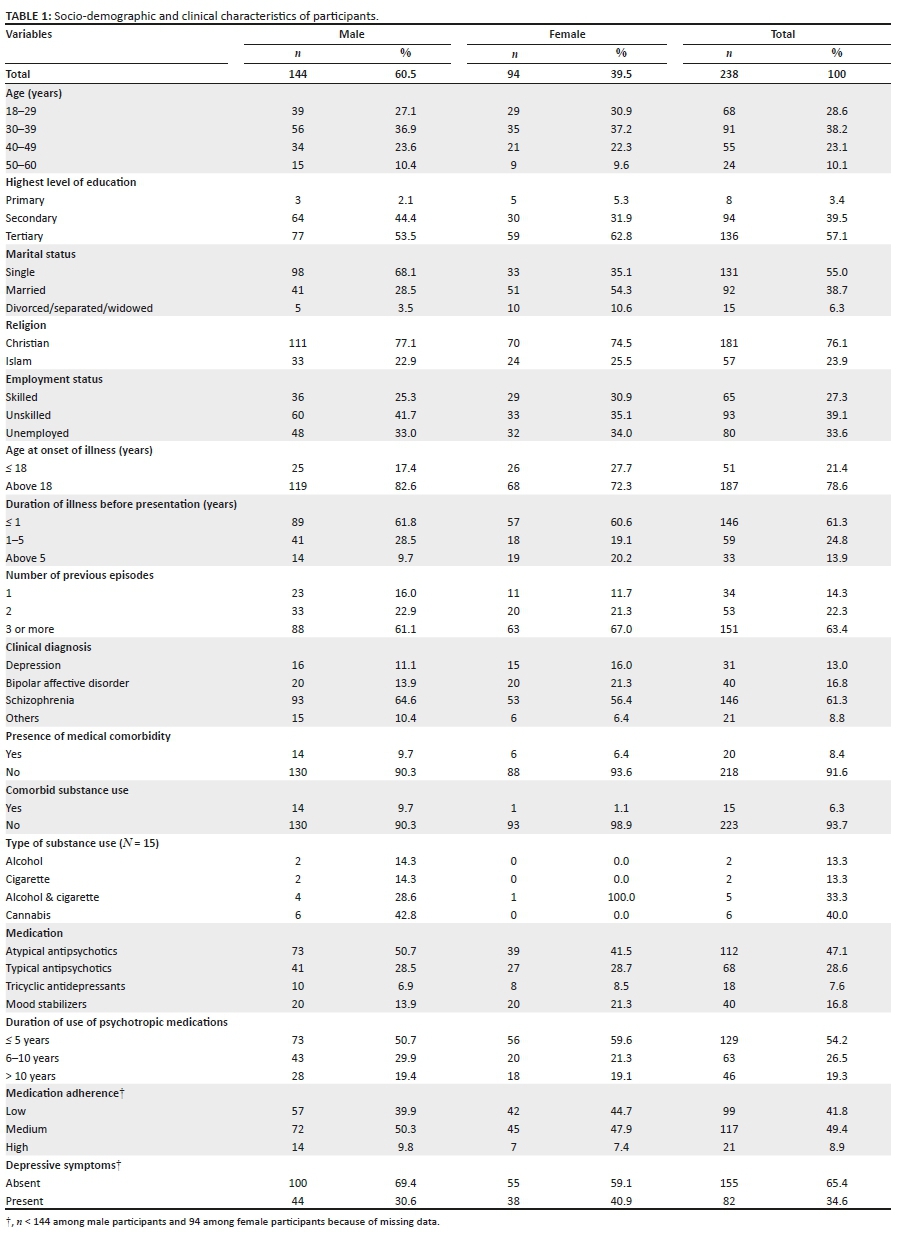
Over the study period, 238 participants were eligible for inclusion in the study, of which 144 (60.5%) were male participants. The mean age of the participants was 35.71 years (standard deviation: 9.53 years). Over half of the participants had tertiary education (57.1%) and were single (55%), while 33.6% were unemployed and 39.1% were involved in unskilled work (such as causal factory workers, messengers, janitors and desk clerks).
Over three-quarters (78.6%) of the participants were aged above 18 years at the onset of illness, with a mean age of 25 years. About two-thirds of the participants (61.3%) presented for treatment within 1 year of onset of symptoms of their mental disorders and 63.4% had three or more previous episodes of mental disorders. Over half (54.2%) had been using medications for at least 12 months. In terms of diagnosis, the most common disorder presenting to this clinic was schizophrenia (61.3%), followed by bipolar affective disorder (16.8%) and depressive disorder (13%). Using the Beck's Depression Inventory, regardless of diagnosis, 34.6% of the participants were found to have depressive symptoms, while low medication adherence was reported in 41.8% of patients (Table 1).
Prevalence of sexual dysfunction
The overall prevalence of any sexual dysfunction among male participants was 84.7%, while this was 95.7% among female participants. The prevalence was significantly higher among female participants (x2p = 0.008). The most common types of sexual dysfunction were sexual desire disorder, intercourse dissatisfaction and orgasmic dysfunction for male participants.
Correlates of sexual dysfunction
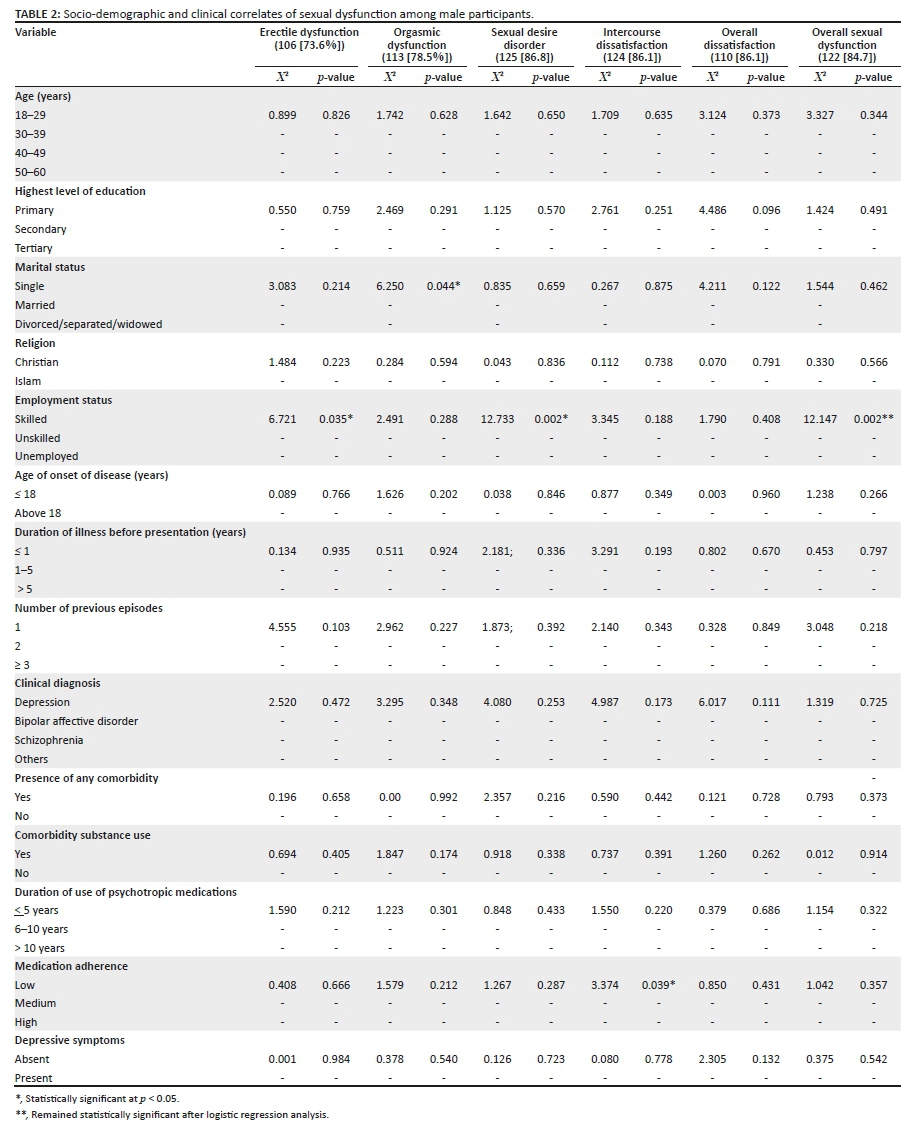
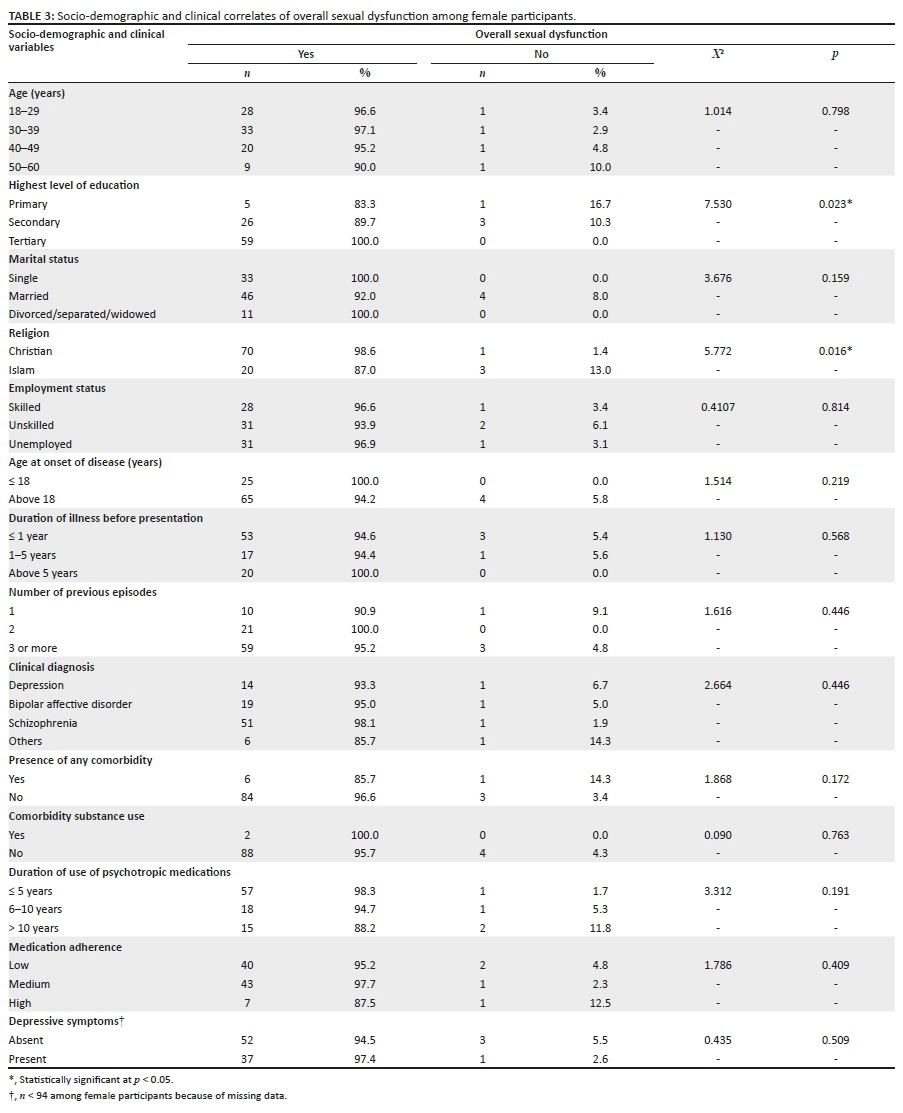
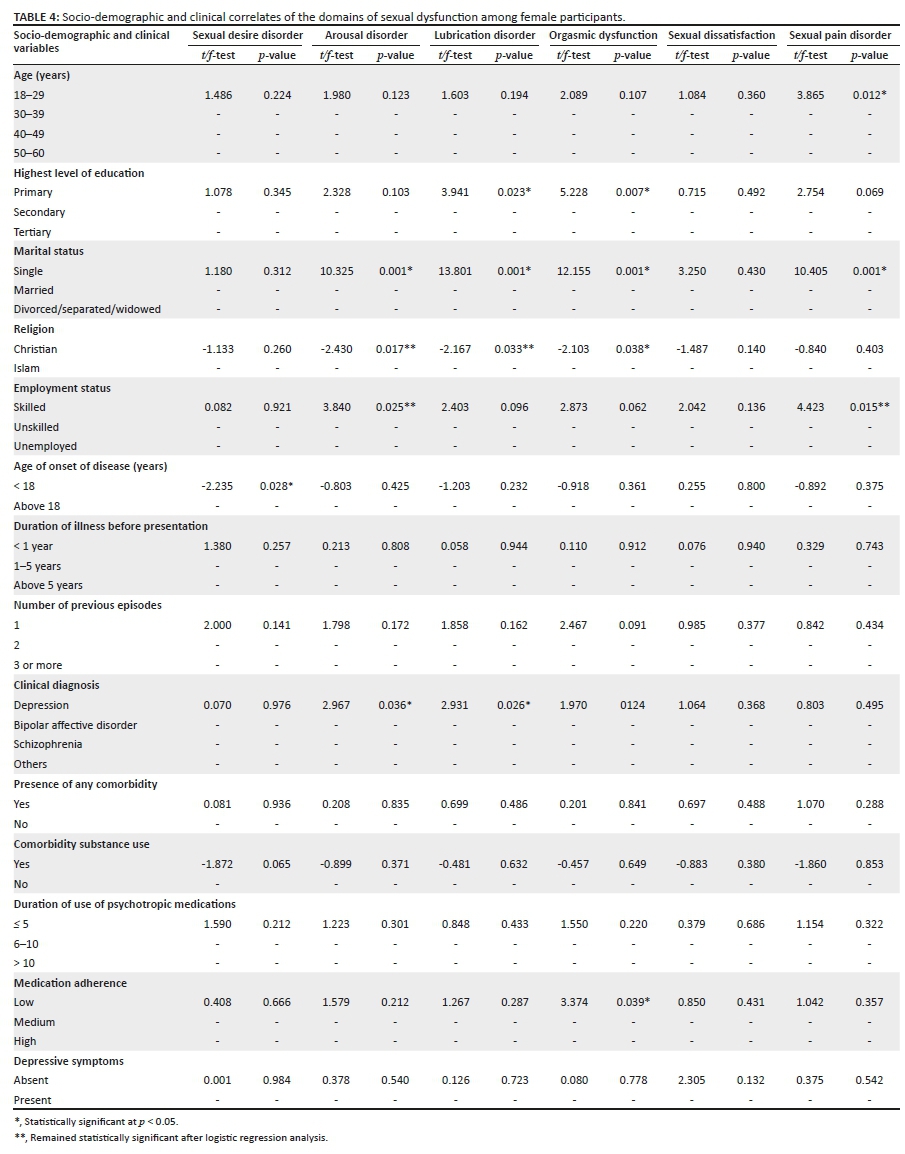
The socio-demographic and clinical variables significantly associated with overall sexual dysfunction and the types of sexual dysfunction in male participants are shown in Table 2, while those for the female participants are shown in Tables 3 and 4. In male participants, overall sexual dysfunction, erectile dysfunction and sexual desire disorder were significantly associated with employment status (with highest rates among those who are unemployed), while orgasmic dysfunction was significantly associated with marital status (with highest rates among the divorced, separated and widowed).
Autonomic side effect of psychotropic medications was significantly associated with the presence of sexual dysfunction in male participants (ttest = -2.007, p = 0.047) but not in female participants.
In the female participants, overall sexual dysfunction was significantly associated with educational status (x2p = 0.02) and religion (x2p = 0.02) (Table 3).
Disorder of sexual desire was associated with age of onset of mental disorders (with mean FSFI scores being lower among those who had age of onset before 18 years). Disorder of sexual arousal was associated with marital status (with mean FSFI scores lowest among the divorced, separated and widowed) compared to those who were married. Other socio-demographic associations for disorder of sexual arousal include religion, employment status (with mean scores lowest among those who are unemployed) and clinical diagnosis (mean scores were lowest among those with schizophrenia). Disorder of lubrication, on the other hand, was associated with educational status, marital status (mean scores lowest among the divorced, separated and widowed), religion and clinical diagnosis (with mean scores lowest among those with schizophrenia).
Orgasmic disorder was associated with educational status, marital status, religion and medication adherence (Table 4). Sexual pain disorder was associated with age (the scores being lowest in the 18-29 age group), marital status and unemployment status.
In both male and female participants, the presence or absence of depressive symptoms was not significantly associated with overall sexual dysfunction or any of the domains of sexual dysfunction.
These associations were explored further in multivariate logistic regression analysis in the male participants and linear regression models in the female participants. In the male participants, being unemployed (odds ratio [OR] = 5.4, confidence interval [CI] = 1.525, 19.259), or being employed in unskilled work (OR = 4.7, CI = 1.515, 14.279) and the presence of autonomic side effects of psychotropic medications (OR = 1.3, CI = 1.103, 1.620) were the significant predictors of overall sexual dysfunction. For the female participants, practising Christianity was a significant predictor of sexual arousal disorder (B = 1.092, CI = 0.252, 1.932) and lubrication disorder (B = 1.107, CI = 0.056, 2.158), while unemployment was a significant predictor of arousal disorder (B = -0.634, CI = -1.095, -0.173) and sexual pain disorder (B = -0.691, CI = -1.319, -0.063).
Discussion
This study examined the prevalence and correlates of sexual dysfunction among male and female patients with mental disorders attending the medical outpatient department of the University College Hospital, Ibadan. Overall, about 85% and 96% of male and female participants, respectively, had at least one form of sexual dysfunction. In the male patients, the most common forms were disorder of sexual desire, orgasmic dysfunction and sexual dissatisfaction. Unemployment, not being in a marital relationship and autonomic side effects of medications were the most important correlates of sexual dysfunction in the male participants. While for the female participants, important correlates included religion, unemployment, marital status, early age of onset of mental disorder and having a diagnosis of schizophrenia.
These prevalence rates for sexual dysfunction in this sample of patients with mental disorders are much higher compared to rates obtained in studies of the general population that ranged between 30% and 81%.3,4,5,6,7,89,10,11,12,13,14,15,16,17,18,1910,11,15,16,19
Some studies have reported rates ranging between 40.4% and 68%, which is within the range reported in studies of general adult population.9,12,14,189,12,14,182,31
In this study, male participants who are either unemployed or unskilled labourers had up to five times the risk of sexual dysfunction compared to those who were employed. Employment status in men is reported in the literature as an important determinant of overall sexual dysfunction, erectile dysfunction and sexual desire disorder.12,14
One of the social roles conferred on the male gender is the ability to provide for the basic needs of his partner and this role may be more challenging when the man is not employed. Failure to achieve this leads to role reversal within a relationship contrary to societal and cultural expectations, thereby engendering feelings of shame and inadequacy.1232
Another correlate of sexual dysfunction reported in male participants in this study is the presence of autonomic side effects of psychotropic medications as indicated by the significantly higher mean scores on the UKU side effect rating. While we could not ascertain the reason for this relationship in male participants, difference in dosing of psychotropic medications between male participants and female participants is a possibility. However, this present report is based on self-reported measures and we did not verify medication dose; hence, we could not explore this association. An earlier study by Smith et al.18
Marital status was significantly associated with sexual dysfunction in both male participants and female participants in this study. Male participants who were divorced, separated, widowed or single were more likely to experience arousal disorder, while female participants who were divorced, separated and widowed were more likely to experience arousal, lubrication, orgasmic and sexual pain disorders compared to those who were married. This is consistent with the findings of a study by Fanta et al.1633,34
Female sexual dysfunction was related to age, age at onset of mental illness, clinical diagnosis and medication adherence. Although studies have found that sexual dysfunction including sexual pain disorder increases with age, this study found significantly lower mean scores for sexual pain disorder in female participants below the age of 30 years. While the specific reasons for this association in this population with mental disorders are unknown, young women in the general population have been reported to experience pain during sexual intercourse because of physical and psychosocial factors including congenital vulvovaginal abnormality, vulvovaginal infection, poorly repaired episiotomy after childbirth, pelvic trauma or surgery, sexual abuse and anxiety.35,36,373810
Religion and employment status emerged as the independent predictors of sexual dysfunction among female participants. Although religion has not been previously reported to be associated with sexual dysfunction in patients with mental disorders, religiosity has been reported to be a risk factor of sexual dysfunction in a community sample of women.3940
The findings of this study should be interpreted bearing in mind the limitations. Firstly, this study employed a cross-sectional study design that makes the inference of the direction of causality between sexual dysfunction and the socio-demographic and clinical variables difficult. Secondly, the study was conducted in a tertiary facility where the patients may not be a true representation of the demographics in primary and secondary healthcare facilities. This is because patients who are better educated or from higher socio-economic classes may be over-represented in the population of patients receiving care in tertiary healthcare centres in Nigeria. Thirdly, the inclusion of patients with comorbid medical disorders as well as comorbid psychoactive substance use disorders could be a confounding factor as these disorders have been reported to also cause sexual dysfunction. There was also the possibility that some participants in this study had difficulty recalling events, such as age at onset of illness, duration of illness before presentation, duration of use of psychotropic medications, doses of medications and the number of previous episodes, which could have caused recall bias and affected the inference made. Furthermore, confounding factors that could have influenced the associations reported, such as the presence of comorbid medical disorders and hormonal levels, were not explored. Even though the instruments used in assessing sexual dysfunctions (the IIEF for male participants and the FSFI for female participants) have been assessed to have good psychometric properties in the Nigerian population, we cannot overlook the limitations of these instruments. These include their inability to measure distress and provide information about relevant aetiologic factors.
Despite these limitations, this study has contributed to expanding the knowledge base about the correlates of sexual dysfunction in male participants and female participants with serious mental disorders on treatment in Nigeria. The rates of sexual dysfunction were quite high among patients of both sexes with mental disorders. Although unemployment was a risk factor of sexual dysfunction in both male and female participants in this study, other factors were more specific to certain gender and type of sexual dysfunction. Medication adherence and depressive symptoms were not risk factors of sexual dysfunction among the participants, but autonomic side effect of psychotropic medications was a risk factor among male participants. While we did not explore the number of patients who were aware of this problem and the rates among those who had actually complained to their doctors, we know that this will be very low. There is an urgent need to increase the awareness about the high rates of sexual dysfunction in patients with mental disorders to encourage healthcare providers to routinely screen for them and provide appropriate interventions. More studies are required to further explore these associations with a view to determine the direction of causality and to explore the impact of sexual dysfunction on patient functioning and QoL.
Sexual dysfunction was highly prevalent among patients with mental disorders, particularly among female patients. Unemployment was a significant risk factor of sexual dysfunction in both sexes. In addition, while the presence of autonomic side effects of psychotropic medications predicted sexual dysfunction in male patients, practising Christianity as a religion predicted female sexual dysfunction.
Competing interests
The authors declare that they have no financial or personal relationships that may have inappropriately influenced them in writing this article.
Authors' contributions
A.O.A. conceived the research idea that was planned with B.O. A.O.A. carried out the research and wrote the initial draft of the manuscript. A.O.A. and B.O. contributed to the final version of the manuscript. B.O. supervised the research.
Funding information
This research received no specific grant from any funding agency in the public, commercial or not-for-profit sectors.
Data availability
The data that support the findings of this study are available from the corresponding author, A.O.A., upon reasonable request.
Disclaimer
The views and opinions expressed in this article are those of the authors and do not necessarily reflect the official policy or position of any affiliated agency of the authors.
Acknowledgements
The authors express their profound gratitude to all the staff members of the Department of Psychiatry, University College Hospital, Ibadan, and all the participants who voluntarily participated in this study. This study would not have been successful without their support, counselling and cooperation. The authors also appreciate Mr Martins Imhansoloeva for his valuable advice in data collection and analysis.
References
-
1.Stevenson RWD. Sexual medicine: Why psychiatrists must talk to their patients about sex. Can J Psychiatry. 2004;49(10):673-677. https://doi.org/10.1177/070674370404901004
» https://doi.org/10.1177/070674370404901004 - 2.Bos L, Fortini V, Cas I, et al. Sexual dysfunctions, psychiatric diseases and quality of life: A review. Psychiatr Pol. 2014;48(4):715-726.
-
3.Dunn KM, Croft PR, Hackett GI. Sexual problems: A study of the prevalence and need for health care in the general population. Fam Pract. 1998;15(6):519-524. https://doi.org/10.1093/fampra/15.6.519
» https://doi.org/10.1093/fampra/15.6.519 -
4.Nwagha UI, Oguanuo TC, Ekwuazi K, Olubobokun TO, Nwagha TU, Onyebuchi AK. Prevalence of sexual dysfunction among females in a university community in Enugu, Nigeria. Niger J Clin Pract. 2014;17(6):791-796. https://doi.org/10.4103/1119-3077.144401
» https://doi.org/10.4103/1119-3077.144401 -
5.Shaeer KZM, Osegbe DN, Siddiqui SH, Razzaque A, Glasser DB, Jaguste V. Prevalence of erectile dysfunction and its correlates among men attending primary care clinics in three countries: Pakistan, Egypt, and Nigeria. Int J Impot Res. 2003;15 Suppl 1:S8-S14. https://doi.org/10.1038/sj.ijir.3900971
» https://doi.org/10.1038/sj.ijir.3900971 -
6.Fatusi AO, Ijadunola KT, Ojofeitimi EO, et al. Assessment of andropause awareness and erectile dysfunction among married men in Ile-Ife, Nigeria. Ageing Male. 2003;6(2):79-85. https://doi.org/10.1080/tam.6.2.79.85
» https://doi.org/10.1080/tam.6.2.79.85 -
7.Nazareth I, Boynton P, King M. Problems with sexual function in people attending London general practitioners: A cross-sectional study. Br Med J. 2003;327(7412):423. https://doi.org/10.1136/bmj.327.7412.423
» https://doi.org/10.1136/bmj.327.7412.423 -
8.Laumann EO. Sexual dysfunction in the United States. J Am Med Assoc. 1999;282(13):1229. https://doi.org/10.1001/jama.282.13.1229-a
» https://doi.org/10.1001/jama.282.13.1229-a - 9.Hocaoglu C, Celik FH, Kandemir G, Guveli H, Bahceci B. Sexual dysfunction in outpatients with schizophrenia in Turkey: A cross-sectional study. Shanghai Arch Psychiatry. 2015;26(6):347-356.
-
10.MacDonald S, Halliday J, MacEwan T, et al. Nithsdale schizophrenia surveys 24: Sexual dysfunction. Case-control study. Br J Psychiatry. 2003;182(Jan.):50-56. https://doi.org/10.1192/bjp.182.1.50
» https://doi.org/10.1192/bjp.182.1.50 -
11.Oyekanmi A, Adelufosi A, Abayomi O, Adebowale T. Demographic and clinical correlates of sexual dysfunction among Nigerian male outpatients on conventional antipsychotic medications. BMC Res Notes. 2012;5:267. https://doi.org/10.1186/1756-0500-5-267
» https://doi.org/10.1186/1756-0500-5-267 - 12.Kennedy SH, Rizvi S. Sexual dysfunction, depression, and the impact of antidepressants. J Clin Psychopharmacol. 2009;29(2):157-164.
-
13.Olisah VO, Sheikh TL, Abah ER, Ajeigbe AFM. Sociodemographic and clinical correlates of sexual dysfunction among psychiatric outpatients receiving common psychotropic medications in a Neuropsychiatric Hospital in Northern Nigeria. Niger J Clin Pract. 2016;19(6):799-806. https://doi.org/10.4103/1119-3077.180063
» https://doi.org/10.4103/1119-3077.180063 -
14.Mosaku KS, Ukpong DI. Erectile dysfunction in a sample of patients attending a psychiatric outpatient department. Int J Impot Res. 2009;21(4):235-239. https://doi.org/10.1038/ijir.2009.16
» https://doi.org/10.1038/ijir.2009.16 - 15.Fanta T, Haile K, Abebaw D, Assefa D, Hibdye G. Assessment of sexual dysfunction and associated factors among patients with schizophrenia in Ethiopia, 2017. BMC Psychiatry. 2018;18(1):1-9.
-
16.Letourneau EJ, Schewe PA, Frueh BC. Preliminary evaluation of sexual problems in combat veterans with PTSD. J Trauma Stress. 1997;10(1):125-132. https://doi.org/10.1002/jts.2490100112
» https://doi.org/10.1002/jts.2490100112 -
17.Smith SM, Keane VO, Ay RM. Sexual dysfunction in patients taking conventional antipsychotic medication. Br J Psychiatry. 2002;181(1):49-56. https://doi.org/10.1192/bjp.181.1.49
» https://doi.org/10.1192/bjp.181.1.49 - 18.Harley EW-Y, Boardman J, Craig T. Sexual problems in schizophrenia: prevalence and characteristics. A cross-sectional survey. Soc Psychiatry Psychiatr Epidemiol. 2010;45(7):759-766.
-
19.Hou CL, Zang Y, Rosen RC, et al. Sexual dysfunction and its impact on quality of life in Chinese patients with schizophrenia treated in primary care. Compr Psychiatry. 2016;65:116-121. https://doi.org/10.1016/j.comppsych.2015.11.002
» https://doi.org/10.1016/j.comppsych.2015.11.002 -
20.Simiyon M, Chandra PS, Desai G. Sexual dysfunction among women with schizophrenia - A cross-sectional study from India. Asian J Psychiatry. 2016;24:93-98. https://doi.org/10.1016/j.ajp.2016.08.022
» https://doi.org/10.1016/j.ajp.2016.08.022 - 21.Esfehani RJ, Fazel N, Dashti S, Moshkani S, Hasanabad FH, Foji S. Female sexual dysfunction and its associated risk factors: An epidemiological study in the North-East of Iran. J Midwifery Reprod Heal. 2016;4(1):498-505.
-
22.Oyelade BO, Jemilohun AC, Aderibigbe SA. Prevalence of erectile dysfunction and possible risk factors among men of South-Western Nigeria: a population-based study. Pan Afr Med J. 2016;24:124. https://doi.org/10.11604/pamj.2016.24.124.8660
» https://doi.org/10.11604/pamj.2016.24.124.8660 -
23.Serretti A, Chiesa A. Treatment-emergent sexual dysfunction related to antidepressants. J Clin Psychopharmacol. 2009;29(3):259-266. https://doi.org/10.1097/JCP.0b013e3181a5233f
» https://doi.org/10.1097/JCP.0b013e3181a5233f -
24.Wiegel M, Meston C, Rosen R. The Female Sexual Function Index (FSFI): Cross-validation and development of clinical cutoff scores. J Sex Marital Ther. 2005;31(1):1-20. https://doi.org/10.1080/00926230590475206
» https://doi.org/10.1080/00926230590475206 -
25.Ibrahim AW, Pindar SK, Yerima MM, et al. Medication-related factors of non-adherence among patients with schizophrenia and bipolar disorder: Outcome of a cross-sectional survey in Maiduguri, North-eastern Nigeria. J Neurosci Behav Heal. 2015;7(5):31-39. https://doi.org/10.5897/JNBH2015.0128
» https://doi.org/10.5897/JNBH2015.0128 -
26.Fadare J, Olamoyegun M, Gbadegesin BA. Medication adherence and direct treatment cost among diabetes patients attending a tertiary healthcare facility in Ogbomosho, Nigeria. Malawi Med J. 2015;27(2):65-70. https://doi.org/10.4314/mmj.v27i2.7
» https://doi.org/10.4314/mmj.v27i2.7 -
27.Adewuya AO, Ola BA., Aloba OO. Prevalence of major depressive disorders and validation of the beck depression inventory among Nigerian adolescents. Eur Child Adolesc Psychiatry. 2007;16:287-292. https://doi.org/10.1007/s00787-006-0557-0
» https://doi.org/10.1007/s00787-006-0557-0 - 28.Awaritefe A. The Beck Depression Inventory in relation to some commonly used tests in Nigeria. Niger J Basic Appl Psychol. 1988;1:23-28.
-
29.James BO, Omoaregba JO, Eze G. Depression among patients with diabetes mellitus in a Nigerian teaching hospital. SAJP. 2010;16(2):61-64. https://doi.org/10.4102/sajpsychiatry.v16i2.232
» https://doi.org/10.4102/sajpsychiatry.v16i2.232 - 30.Adewuya AO, Ologun YA. Factors associated with depressive symptoms in Nigerian adolescents. J Adolesc Health. 2006;39(1):105-110.
-
31.Lewis RW, Fugl-Meyer KS, Bosch R, et al. Epidemiology/risk factors of sexual dysfunction. J Sex Med. 2004(1):35-39. https://doi.org/10.1111/j.1743-6109.2004.10106.x
» https://doi.org/10.1111/j.1743-6109.2004.10106.x -
32.Adewuya AO, Owoeye AO, Erinfolami AO, Ola BA. Correlates of self-stigma among outpatients with Mental Illness in Lagos, Nigeria. Int J Soc Psychiatry. 2011;57(4):418-427. https://doi.org/10.1177/0020764010363522
» https://doi.org/10.1177/0020764010363522 -
33.Anil KBN, Shalini M, Sanjay RJ, Prasannakumar DR. Sexual dysfunction in women with alcohol dependence syndrome: A study from India. Asian J Psychiatr. 2017;28:9-14. https://doi.org/10.1016/j.ajp.2017.03.007
» https://doi.org/10.1016/j.ajp.2017.03.007 - 34.Diehl A, Da Silva RL, Laranjeira R. Female sexual dysfunction in patients with substance-related disorders. Clinics (Sao Paulo). 2013;68(2):205-212.
-
35.Meana M, Yitzchak B. Painful coitus: A review of female dyspareunia. J Nerv Ment Dis. 1994;182(5):264-272. https://doi.org/10.1097/00005053-199405000-00003
» https://doi.org/10.1097/00005053-199405000-00003 -
36.Graziottin A. Clinical approach to dyspareunia. J Sex Marital Ther. 2001;27(5):489-501. https://doi.org/10.1080/713846803
» https://doi.org/10.1080/713846803 -
37.Elmerstig E, Wijma B, Berterö C. Why do young women continue to have sexual intercourse despite pain? J Adolesc Heal. 2008;43(4):357-363. https://doi.org/10.1016/j.jadohealth.2008.02.011
» https://doi.org/10.1016/j.jadohealth.2008.02.011 -
38.Kessler RC, Amminger GP, Aguilar-Gaxiola S, Alonso J, Lee S, Ustün TB. Age of onset of mental disorders: a review of recent literature. Curr Opin Psychiatry. 2007;20(4):359-364. https://doi.org/10.1097/YCO.0b013e32816ebc8c
» https://doi.org/10.1097/YCO.0b013e32816ebc8c -
39.Artiles Pérez V, Gutiérrez Sigler MD, Sanfélix Genovés J. Female sexual function and related factors. Aten Primaria. 2006;38(6):339-344. https://doi.org/10.1157/13093371
» https://doi.org/10.1157/13093371 -
40.Peitl MV, Peitl V, Pavlovic E. Influence of religion on sexual self-perception and sexual satisfaction in patients suffering from schizophrenia and depression. Int J Psychiatry Med. 2009;39(2):155-167. https://doi.org/10.2190/PM.39.2.d
» https://doi.org/10.2190/PM.39.2.d

Accepted: 26 Feb. 2021
Published: 27 May 2021