Antipsychotics and chronic dystonia at a Botulinum Toxin clinic
Abstract
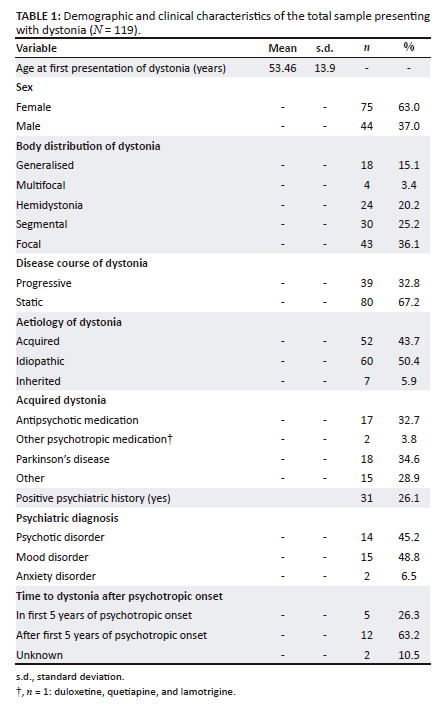
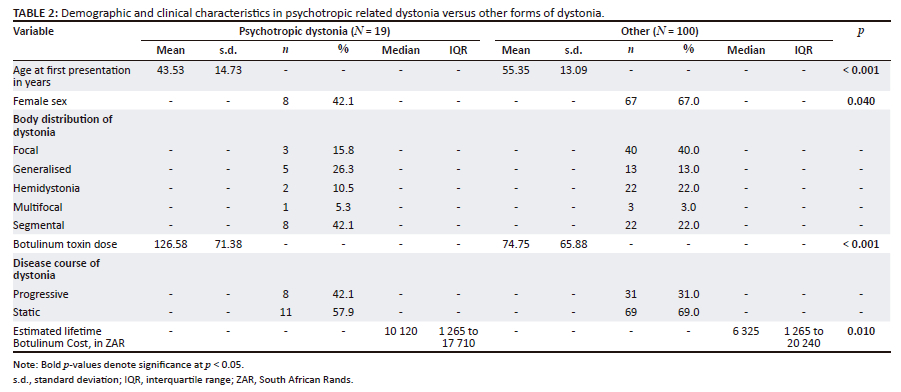
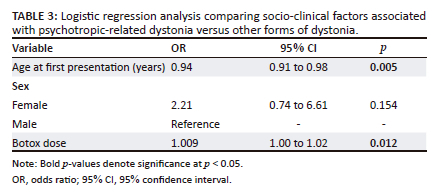
BACKGROUND: Chronic dystonia, characterised by sustained muscle contractions and abnormal postures, poses clinical challenges, especially when associated with antipsychotic medication use. AIM: To delineate the demographic and clinical profiles of adults with dystonia and examine the association with antipsychotic medication. SETTING: Botulinum Toxin Clinic at Tygerberg Hospital, Cape Town, South Africa. METHODS: We conducted a retrospective cohort study of adult patients seen at the Botulinum Toxin Clinic between January 2018 and June 2022. RESULTS: Of the 119 patients studied, those assessed with antipsychotic-induced dystonia (32.69%) presented at a younger age (p < 0.001), were more likely female (p = 0.04), received higher average dose of Botulinum toxin (p < 0.001), and incurred a higher estimated Botulinum toxin treatment cost (p = 0.01) compared to those with primary dystonia. Logistic regression identified age and Botulinum toxin dose as factors associated with psychotropic-related dystonia (p = 0.005 and p = 0.012, respectively. CONCLUSION: Clinical and demographic factors are associated with dystonia in adults taking antipsychotic medication. These patients generally manifested symptoms at an earlier age, had a higher male prevalence, and required prolonged treatment with Botulinum toxin, leading to increased costs. In those assessed with antipsychotic-induced dystonia, a comorbid diagnosis of a mood disorder was more common than that of a psychotic disorder. CONTRIBUTION: By identifying the demographic and clinical profile of individuals with dystonia because of antipsychotic medication, this study provides a basis for preventative strategies and enhanced patient care.
dystonia; Botulinum toxin; antipsychotics; chronic dystonia; tardive dystonia; neuroleptics