Correlates of high-dose antipsychotic prescription amongst outpatients with Schizophrenia in a Nigerian Hospital
Abstract
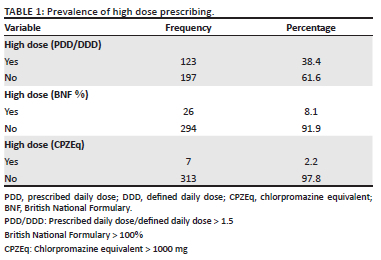
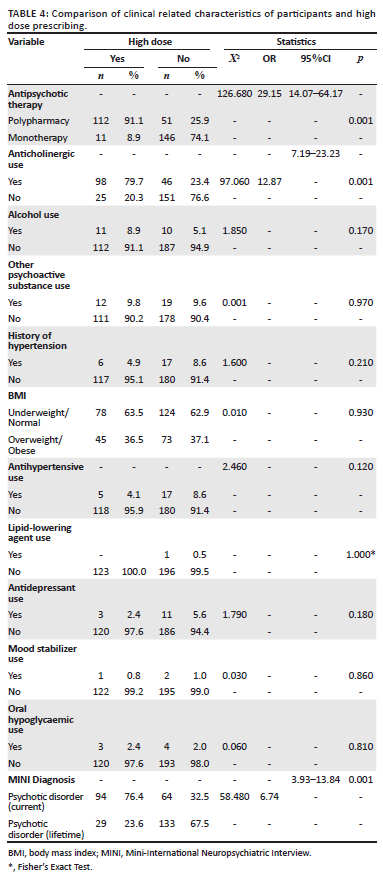
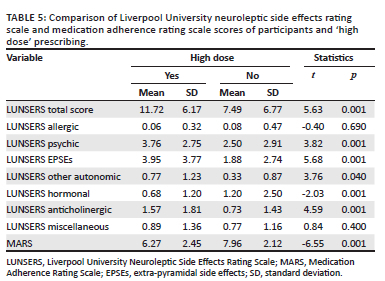
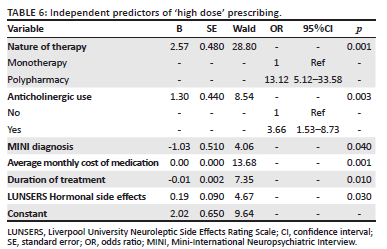
BACKGROUND: Treatment guidelines recommend the use of antipsychotic monotherapy at effective doses for the treatment of schizophrenia, although about a third of the sufferers still receive high-dose antipsychotic treatment. Current evidence suggests that high-dose antipsychotic prescription (HDAP) not only fails to improve outcomes but also increases side effects AIM: Our study aimed to determine the prevalence of HDAP and its association with illness severity, medication adherence behaviour and side effects amongst outpatients with schizophrenia SETTING: The Federal Neuro-Psychiatric Hospital, Benin-City, Nigeria METHODS: A cross-sectional study of 320 attendees with schizophrenia at the outpatient department was undertaken. We administered a sociodemographic and antipsychotic medication questionnaire, Mini-International Neuropsychiatric Interview, Positive and Negative Syndrome Scale, Liverpool University Neuroleptic Side Effects Rating Scales and Medication Adherence Rating Scales. High-dose antipsychotic prescription was determined by the ratio of prescribed daily dose to defined daily dose greater than 1.5 RESULTS: The prevalence of HDAP was 38.4%. Greater severity of illness, experiencing more side effects and poor medication adherence were significantly associated with HDAP.The major predictors of HDAP were antipsychotic polypharmacy and concurrent anticholinergic use CONCLUSION: We conclude that although the use of HDAP amongst patients with schizophrenia remains common, its persistent use should be discouraged
high dose; antipsychotics; prescription; schizophrenia; Nigeria