Caregiver burden and its sociodemographic determinants in family caregivers of patients with schizophrenia attending a psychiatric tertiary hospital in South Africa
Abstract
BACKGROUND: Chronic mental illnesses such as schizophrenia affect patients' functioning, making caregiving necessary although burdensome AIM: This study aimed to determine caregiver burden and its sociodemographic determinants in family caregivers of patients with schizophrenia attending a Psychiatric Outpatient Department (POD SETTING: Tertiary hospital in Northern Pretoria, South Africa METHODS: In this cross-sectional study conducted over 3 months, 300 consecutive family caregivers who attended the POD were administered a 22-item Zarit Burden Interview (ZBI-22), which has a score of 0-88, with higher values indicating more burden. Their sociodemographic characteristics were ascertained. Linear and ordinal logistic regression analyses were performed to identify determinants or predictors of total and severe burdens, respectively RESULTS: Most caregivers were aged 46.0 ± 14 years, females (62%), parents (39%), of low-income status (93.7%), had secondary education (70%), resided with the patient (87%), and helped with all troublesome activities (95.3%). The median ZBI-22 score was 19.0 (interquartile range: 13.0-30.5). The determinants of both total and severe burdens were: caregiver age ≥ 50 years adjusted odds ratio (aOR): 2.55, confidence interval (CI): 1.49-4.36; residential area farther away from the hospital aOR: 1.76, CI: 1.3-2.99; increasing months of caregiving aOR: 1.0, CI: 1.001-1.009, p = 0.006; and not having another family member that needs care aOR: 0.43, CI: 0.24-0.78 CONCLUSION: Having mental healthcare facilities close to residential areas and assisting caregivers aged ≥ 50 years who have multiple family members who need care may alleviate the burden CONTRIBUTION: Predicting total and severe caregiver burdens contemporaneously is effective for identifying potential burden interventions
caregiver burden; family caregivers; ordinal logistic regression; predictors; schizophrenia; sociodemographic factors
Introduction
Schizophrenia is a major psychiatric disorder with variable clinical presentation and chronic course, which are disabling to the patients.1 2,3 According to the World Health Organization, it affects 24 million or 1 in 300 persons (0.33%) worldwide.4 5 6 3,7 The disorder has a genetic predisposition and is associated with environmental factors such as substance use, and may be precipitated or aggravated by poor socioeconomic conditions.8,9,10 It is a major mental health issue in settings where substance use is prevalent.9
Patients with schizophrenia require additional support at home from their family members, and this is often on a long-term basis because of the impact of the disease on patients' functioning. This includes impairment and distress in the personal, family, occupational, social, and other crucial areas of activities of daily living.4 11,12 The family member who provides unpaid care to the patient is called an informal caregiver.13 14 15 16 15
Stress-coping-burden perspective may be influenced by the sociodemographic context of the caregiver. The sociodemographic context refers to sociodemographic factors peculiar to an environment or setting. For instance, a previous study in South Africa showed that a low educational attainment was associated with poor quality of life and a high caregiver burden, while a high household income had the opposite effect.9 17 18
Methods
Study design, setting, and duration
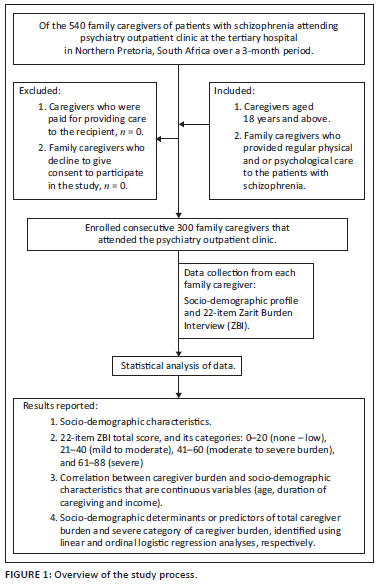
This was a cross-sectional study conducted in the POD of a tertiary hospital in northern Pretoria, Gauteng province, South Africa from 01 June 2022 to 31 August 2022.
Study population
The study population was the family caregivers of patients with schizophrenia attending a tertiary hospital in northern Pretoria, South Africa, that provided at least weekly care to the patients. In the study setting, patients with schizophrenia who attend the outpatient psychiatry clinic are usually accompanied by their family caregivers during hospital visits. At other times, these family caregivers visit the clinic unaccompanied to collect chronic medications on behalf of the patients. Our sample was drawn from these family caregivers. All eligible family caregivers were offered the opportunity to participate in the study.
Selection criteria
Inclusion criteria
The following participants were included: (1) family members who were caregivers of patients with schizophrenia attending the POD at the study setting during the period of data collection, (2) participants aged 18 years and above, and (3) caregivers who provided regular care (which may be physical, psychological, and/or financial) to the patients with schizophrenia. For this study, regular care was defined as frequency of care of at least once a week (personal communication with Professor Stephen H Zarit, 2021).
Exclusion criteria
We excluded caregivers who were paid for providing care to the recipient.
Sampling
Sample size
Based on a 5% margin of error, 99% confidence interval, a population size of 540 family caregivers in 3 months obtained from the POD records of visits, and a response distribution rate of 50%, we obtained a sample size of 298 (approximately 300), using the Raosoft sample size software.19
Sampling method
The family caregivers of patients with schizophrenia who attended the POD during the study period were informed to participate in the study. The exclusion and inclusion criteria were applied. A convenience sampling method was used. All eligible, consented, and consecutively identified caregivers attending the POD were included in the study until the sample size was attained.
Data collection
Caregiver burden assessment tool
According to Zarit and colleagues, perceived burden is 'One's subjective belief that current and future resources are insufficient to meet role demands'.14 https://wai.wisc.edu/wp-content/uploads/sites/1129/2021/11/Zarit-Caregiver-Burden-Assessment-Instruments.pdf. It assesses the burden of caring for patients such as those with mental illnesses including schizophrenia.20 21 22,23,24,25 The questionnaire may be self- or interviewer-administered.26
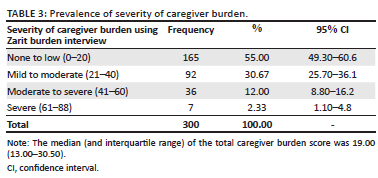
The responses to the ZBI-22 are rated on a Likert scale ranging from 0 (never) to 4 (almost always) and the total score ranges from 0 to 88. Higher scores imply that there is a higher level of burden experienced by the caregiver. The total score may be categorised according to the severity of the burden into 0-20 (none to low), 21-40 (mild to moderate), 41-60 (moderate to severe burden), and 61-88 (severe).18 27 28 29 30 31,32,33 According to other investigators, the ZBI-22 is the gold standard for assessing family caregiver burden in patients with schizophrenia.34
Data collection process
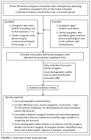
Again, the family caregivers of patients with schizophrenia who attended the POD during the study period were informed to participate in the study. The exclusion and inclusion criteria were applied. The ZBI-22 questionnaire27,34 was administered to each participant by the principal investigator through one-to-one interviewing. In addition, the caregivers provided details of their sociodemographic information (Figure 1). Both the ZBI and the sociodemographic data were entered into a data collection sheet. The data were subsequently captured by the principal investigator using SPSS version 27.0 (IBM, Armonk, NY, USA) based on personal preference.
Statistical analysis of data
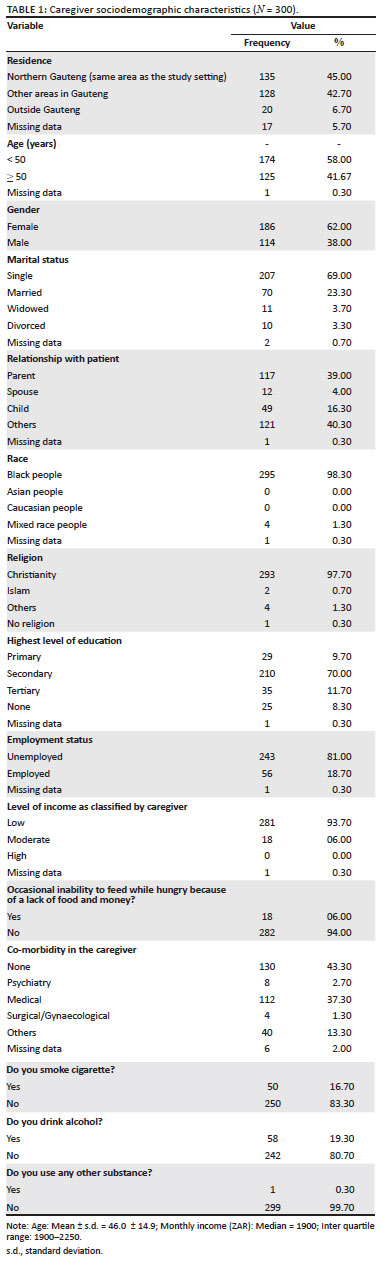
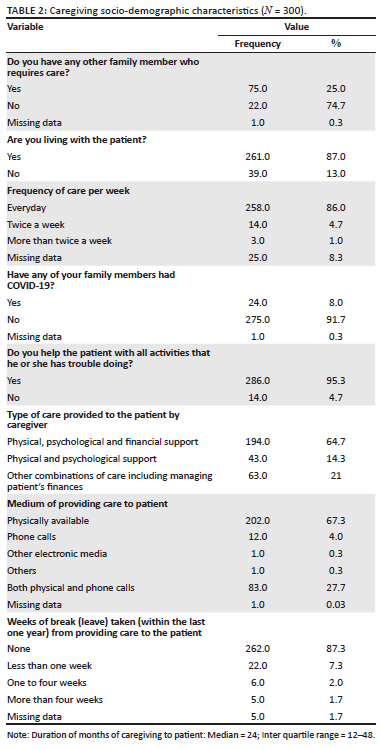
Data were analysed using STATA version 17 (StataCorp, Texas, USA). Categorical variables were expressed as frequency and percentages (Table 1, Table 2, and Table 3). The prevalence of the four categories of severity of caregiver burden (none to low [0-20]; mild to moderate [21-40]; moderate to severe [41-60]; severe [61-88]) was also expressed as frequency and percentage with its 95% confidence interval (CI). The normality of the continuous variables was assessed with multiple measures including the skewness-kurtosis test. Normally distributed data were expressed as mean and standard deviation. Skewed data were expressed as median and interquartile range (IQR). The correlation between continuous variables among sociodemographic characteristics and total caregiver burden score was assessed using Spearman rank correlation. Missing data were excluded from the calculation of p-values.
Simple and multiple linear regression were further conducted with the total burden of care score as the outcome or dependent variable while the sociodemographic characteristics were the explanatory variables. Variables with univariable p < 0.2 were selected for the multivariable linear regression.35,36 However, the gender of the caregiver, the relationship of the caregiver with the patient, and self-reported income per month were chosen a priori based on theoretical and pragmatic knowledge. The multivariable linear model was built using the backward elimination technique.37 3839,40,41 Similarly, univariable and multivariable ordinal regression was built as previously described for linear regression. The ologit command in STATA was used, and variables that did not violate the assumptions of POM or rule of parallel odds based on Brant's test and 'omodel' test were utilised for the modelling. Multicollinearity was assessed among the variables using the variance inflation factor and values less than 10 suggest no collinearity.42,43 Two-tailed test of the hypothesis was assumed, and a p < 0.05 was taken as a statistically significant level. The goodness-of-fit test (Hosmer-Lemeshow, Pulkstenis-Robinson, and Lipsitz chi-square tests) was calculated, and a p > 0.05 showed model fit.
Ethical considerations
The study protocol was reviewed and approved by the Sefako Makgatho Health Sciences University (SMU) Research and Ethics Committee, reference SMUREC/M/01/2022:PG. Each participant gave informed consent before participating in the study after the nature of the research had been fully explained. The permission to re-use the ZBI-22 was obtained from the publisher, Oxford University Press. To ensure confidentiality, the data collected from participants did not have personal identification of the caregiver such as the name. Rather, a study code was used to de-identify the participants. The collected data were stored in a lockable cupboard with access control.
Results
Sociodemographic characteristics
Table 1 and Table 2 show the sociodemographic characteristics of the caregivers (N = 300), and their mean age was 46.0 ± 14 years. Most caregivers were females (62%), parents (39%), of low-income status (93.7%), had secondary education (70%), resided with the patient (87%), and helped with all troublesome activities (95.3%).
Caregiver burden score
The Cronbach's alpha of the 22-item ZBI in our study was 0.86. The minimum and maximum total caregiver burden scores were 0 and 75, respectively, while the median was 19.00 (IQR: 13.0-30.8). Among all participants, ZBI items 2, 4-6, 9-14, and 16-19 had a median score of zero out of four. Items 15 and 21 had the highest median scores of 3 (IQR: 2-4) and 3 (IQR: 2-3), respectively. Other items had median scores ranging from 1 to 2. Table 3 shows the prevalence of severity of caregiver burden. The prevalence of different categories of caregiver burden decreased with increasing severity of burden: none to low 55%, mild to moderate 30.67%, moderate to severe 12%, and severe 2.33%.
Correlation between sociodemographic continuous variables and total caregiver burden
There was a positive moderate correlation between age (r = 0.4, p < 0.001), duration of caregiving (r = 0.37, p < 0.001) and the total caregiver burden. On the other hand, there was a non-statistically significant negative correlation between the monthly income and total caregiver burden (r = −0.05, p = 0.512).
Determinants of total caregiver burden
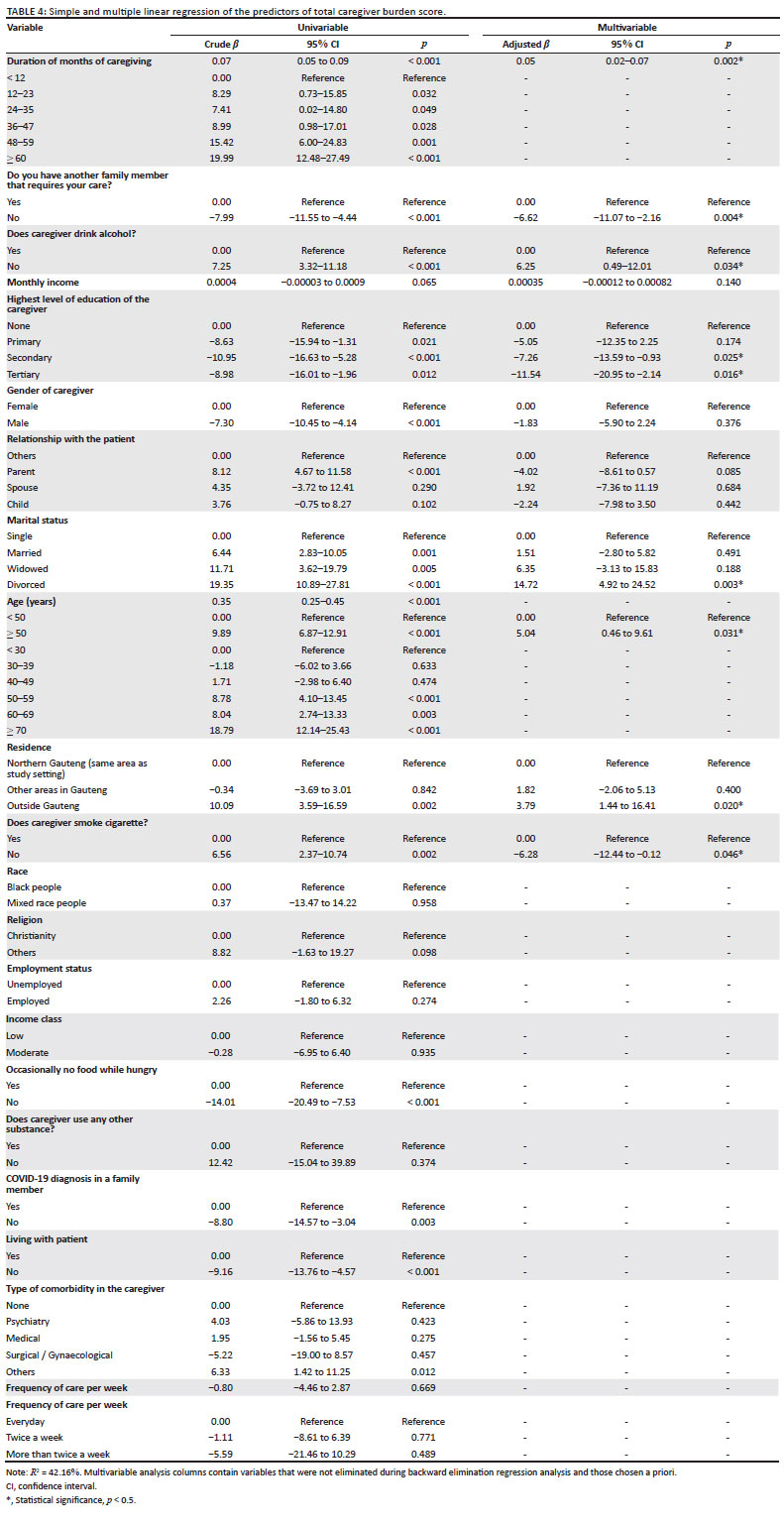
Table 4 shows that at multivariable linear regression (after adjusting for covariates), the statistically significant explanatory variables were the total duration of months of caregiving, having another family member that requires care, use of alcohol, educational status, marital status, age, residence, and smoking. The R2
In Table 4, the linear regression coefficient (β) shows the expected change in the dependent variable that is caused by one unit change in the predictor variable. For every 1-month increase in the duration of caregiving, the total caregiver burden increased by 5% (adjusted β [aβ] = 0.05, 95% CI: 0.02-0.07, p = 0.002). The caregiver burden score of participants who did not have another family member who requires attention was about 6.6 lesser as compared to participants with another family member who needed care (aβ = −6.62, 95% CI: −11.07 to −2.16, p = 0.004). Furthermore, participants who do not drink alcohol had on average about 6.6 extra burden of care score as compared to those who drank alcohol (aβ = 6.62, 95% CI: −0.49 to 12.01, p = 0.034). The burden of care score generally decreased with increasing level of education. Participants who were 50 years and older had on average about 5.04 extra burden of care score as compared to participants who were younger than 50 years (aβ = 5.04, 95% CI: 0.46 to 9.61, p = 0.031). Participants living outside Gauteng had on average about 3.8 extra burden score compared to participants living in Northern Gauteng. However, there was no statistically significant difference in burden score between participants living in other parts of Gauteng and those living in Northern Gauteng. In addition, a participant who was a divorcee had a higher total burden of care score of 14.72 as compared to the burden among single participants. A habit of not smoking reduces the total burden of caregiving by 6.28 in comparison to smoking. The variance inflation factor of all the covariates was less than 2, suggesting that there was no collinearity among the variables.
Determinants of severe caregiver burden
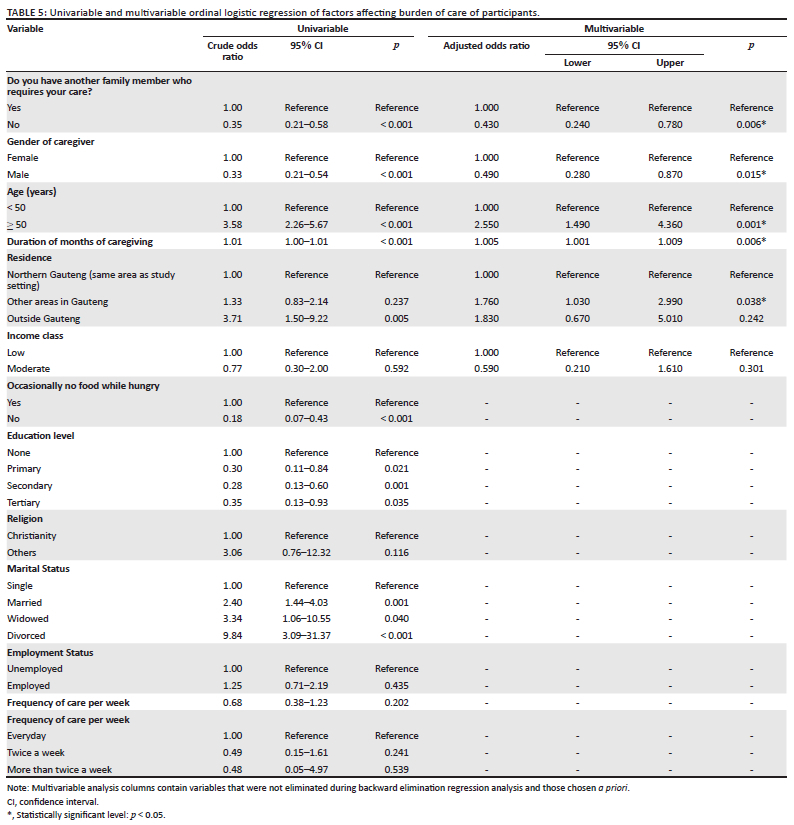
After multivariable ordinal logistic regression modelling of the predictors of severe burden of care, the explanatory variables that were statistically significant were having another family member that requires care, gender, age category (with 50 years as threshold), residence, and duration of months of caregiving (Table 5). Notably, reporting results of an odds ratio as a percentage change in the outcome (dependent) variable given an exposure to a risk factor (explanatory variable) is valuable. The formula for the percentage change is odds ratio minus 1 multiplied by 100.44 p = 0.006). Likewise, there were 51% lesser odds of having a severe burden of care among males as compared to females (aOR: 0.49, 95% CI: 0.28-0.87, p = 0.015). The likelihood of having a severe burden of care among older participants who were 50 years and older was about 2.6 times the odds of having a severe burden of care among participants who were younger than 50 years (aOR: 2.55, 95% CI: 1.49-4.36, p = 0.001). The odds of having a severe burden of care increases with increasing distance of the residence from the study site. Thus, the odds of having a severe burden of care were about 76% higher among participants living in other areas of Gauteng as compared to those living in Northern Gauteng (aOR: 1.76, 95% CI: 1.03-2.99, p = 0.038). The likelihood of having a severe burden of care increases by 0.5% for every additional 1 month of caring for the patients (aOR: 1.005, 95% CI: 1.001-1.009, p = 0.006). The self-reported income class of the participants did not influence the risk of having a severe burden of care even after multivariable ordinal regression modelling (POM). There was no violation of the POM based on the result of Brant's test (X2 = 13.71, p = 0.472) and the omodel result (X = 5.57, p = 0.936). The goodness of fit test showed that Hosmer-Lemeshow (p = 0.378), Pulkstenis-Robison (p = 0.981), and Lipsitz (p = 0.063) tests all had p > 0.05.
Discussion
Main findings
The median ZBI-22 score was 19.0 (IQR: 13.0-30.5). The explanatory variables that predicted total and severe caregiver burdens in multivariable linear and ordinal logistic regression analyses, respectively, were four: age ≥ 50 years, total duration of months of caregiving, residence farther away from the hospital, and having another family member that needs care.
Interpretation
The median (and IQR) total caregiver burden score was 19.00 (13.00-30.50). Our finding is comparable to the ZBI-22 median score of 11 found by Martyns-Yelllowe45 462,9 respectively. In our study, the distribution of severity of burden among the caregivers was 'no to low' 55%, 'mild to moderate' 30.7%, 'moderate to severe' 12%, and 'severe' burden 2.3%. Shamseai et al., in their study, reported that 7.6% of the caregivers had 'no to low', 23.5% 'mild to moderate', 41.8% 'moderate to severe', and 27.1% 'severe' burden.2999
The four explanatory variables that predicted total and severe caregiver burdens in multivariable linear and ordinal logistic regression analyses, respectively, were age ≥ 50 years, total duration of months of caregiving, residence farther away from the hospital, and having another family member that needs care. Arguably, increasing age and duration of caregiving are associated with increasing responsibility, which may be a source of stress that culminates in burden. For instance, other authors have reported a statistically significant positive correlation between caregiver age and burden.474849,50 Using the Family Burden Interview Schedule (FBIS), Yu et al. found that gender, education, and having an additional dependent were predictive of caregiver burden in family members of patients with schizophrenia.515
The R2Table 4). This implies that 42.16% of the variance in the dependent variable (total caregiver burden) is explained by the independent variables. Human behaviour is generally difficult to predict and studies about them generally have an R-squared of less than 50%.52
Strengths and limitations
This is one of the few studies on caregiver burden of family caregivers of patients with schizophrenia conducted during the era of coronavirus disease 2019 (COVID-19). To the best of our knowledge, it is the first study that identified the determinants of both total and severe caregiver burdens associated with schizophrenia (contemporaneously in the same group of caregivers). This approach was undertaken to improve the efficiency of predicting both total and severe burdens contemporaneously. Furthermore, we used an instrument that has domains that comprehensively assess caregiver burden including the stressors such as patient's behaviour as in item 4 in ZBI-22.
The main limitation of our study is that the sociodemographic profile of caregivers may be different in various settings. However, the findings of this study may apply to settings with similar sociodemographic profiles as ours. In addition, the sampling method was a convenience sampling, which may predispose to selection bias. To prevent selection bias, all eligible and consecutively identified caregivers who attended the POD during the period of data collection were included in the study until the sample size was attained. No caregiver declined to participate in the study. Furthermore, there is a lack of robust data on cultural determinants of caregiver burden. Consequently, culturally guided interventions to mitigate the burden of care on family caregivers of patients with schizophrenia require further investigation. This is therefore a future research agenda. Furthermore, we wish to acknowledge that the interpretation and/or expression of the burden may be influenced by the disabilities in the caregivers themselves. Although the chronic illnesses of the participants were ascertained, it is proposed that future studies should address this limitation. Moreover, we did not compare the burden of care across family caregivers of patients with different types of chronic medical conditions. Future studies that will provide this information are required.
Recommendations
A major implication of our study is that it points to recommendations on how to reduce caregiver burden. Firstly, the severity of caregiver burden worsened with increasing duration of months of care. This may suggest that many patients required prolonged long-term care in their activities of daily living because of inadequate or difficult symptom control. Therefore, we recommend regular patient follow-up (as clinically indicated) with easy access to healthcare services. Symptom remission will also allow the caregiver to engage in support groups and skills training/acquisition activities, the latter being crucial since the majority were unemployed.
Secondly, family caregivers aged 50 years and above were identified to be at high risk of having an increased burden; therefore, this age group should be evaluated periodically to determine the severity of their burden. Those with severe burdens should be offered individualised support such as the opportunity for the patients with schizophrenia to be considered for placement in an institution. This also applies to caregivers who have more than one family member that needs care. Of note, accepting placement can be a very difficult decision for many families. Therefore, other alternative interventions should be explored and offered, given that placement shifts some but does not relieve all associated family burdens.53 53,54
Thirdly, improving transportation services may alleviate the burden among caregivers who reside far away from the hospital. This includes improving both patient-paid public transport systems, and making available efficient ambulance services that will collect patients and caregivers at specific places in the community and convey them to the hospital to receive medical assistance. Currently, in South Africa, patients are transported from their homes to the hospitals only if they have emergency medical conditions and not stable chronic illnesses.
Conclusion
Family caregivers who care for patients with schizophrenia are at risk of developing a caregiver burden. Age, residential area, duration of caregiving, and having another family member who needs care are determinants of both total and severe caregiver burden. Having mental healthcare facilities close to residential areas, and assisting families aged ≥ 50 years with more than one member that needs long-term care are interventions that may reduce burden. An encounter with these family caregivers for their healthcare needs should be an opportunity for the practitioners to discuss and initiate appropriate interventions to reduce the burden.
Competing interests
The authors declare that they have no financial or personal relationship(s) that may have inappropriately influenced them in writing this article.
Authors' contributions
C.O.O. was involved in conceptualisation, data curation, investigation, methodology, project administration, resources, software, validation, visualisation, writing - original draft, writing - review and editing and approving submitted manuscript. J.S.L. was responsible for conceptualisation, methodology, supervision, validation, writing - review and editing, and approving submitted manuscript. G.O. performed formal analysis, validation, writing - review and editing, and approved submitted manuscript. N.C.N. was involved in formal analysis, resources, software, validation, writing - review and editing, and approving submitted manuscript.
Funding information
This research received no specific grant from any funding agency in the public, commercial or not-for-profit sectors.
Data availability
The data that support the findings of this study are available from the corresponding author, C.O.O., upon reasonable request.
Disclaimer
The views and opinions expressed in this article are those of the authors and are the product of professional research. It does not necessarily reflect the official policy or position of any affiliated institution, funder, agency, or that of the publisher. The authors are responsible for this article's results, findings, and content.
Acknowledgements
References
- 1. American Psychiatric Association. Diagnostic and Statistical Manual Of Mental Disorders Fifth Edition Text Revision (DSM-5-TR). Washington, DC: American Psychiatric Association; 2022.
- 2. Shamsaei F, Cheraghi F, Bashirian S. Burden on family caregivers caring for patients with schizophrenia. Iran J Psychiatry. 2015;10(4):239-245.
-
3. Martins R, Kadakia A, Williams GR, et al. The lifetime burden of schizophrenia as estimated by a government-centric fiscal analytic framework. J Clin Psychiatry. 2023;84(5):22m14746. https://doi.org/10.4088/JCP.22m14746
» https://doi.org/10.4088/JCP.22m14746 -
4. World Health Organization. Schizophrenia: Key facts 2023 [homepage on the Internet]. WHO; 2023 [cited 2024 Apr 01]. Available from: https://www.who.int/news-room/fact-sheets/detail/schizophrenia?gclid=Cj0KCQiAyeWrBhDDARIsAGP1mWT64kofj4YBcYfhksnNX5A7j2xaSI84mzuWH7Kr7nJxwIjv-5eptNsaAhDjEALw_wcB
» https://www.who.int/news-room/fact-sheets/detail/schizophrenia?gclid=Cj0KCQiAyeWrBhDDARIsAGP1mWT64kofj4YBcYfhksnNX5A7j2xaSI84mzuWH7Kr7nJxwIjv-5eptNsaAhDjEALw_wcB -
5. Thela L, Talatala M, Chiliza B. Addressing the needs of people with schizophrenia in South Africa during the COVID-19 pandemic. Schizophr Bull Open. 2022;3(1):sgac048. https://doi.org/10.1093/schizbullopen/sgac048
» https://doi.org/10.1093/schizbullopen/sgac048 -
6. Solmi M, Seitidis G, Mavridis D, et al. Incidence, prevalence, and global burden of schizophrenia - Data, with critical appraisal, from the Global Burden of Disease (GBD) 2019. Mol Psychiatry. 2023;28(12):5319-5327. https://doi.org/10.1038/s41380-023-02138-4
» https://doi.org/10.1038/s41380-023-02138-4 -
7. Christensen MK, Lim CCW, Saha S, et al. The cost of mental disorders: A systematic review. Epidemiol Psychiatr Sci. 2020;29:e161. https://doi.org/10.1017/s204579602000075x
» https://doi.org/10.1017/s204579602000075x -
8. Hjorthøj C, Compton W, Starzer M, et al. Association between cannabis use disorder and schizophrenia stronger in young males than in females. Psychol Med. 2023;53(15):7322-7328. https://doi.org/10.1017/S0033291723000880
» https://doi.org/10.1017/S0033291723000880 -
9. Yerriah J, Tomita A, Paruk S. Surviving but not thriving: Burden of care and quality of life for caregivers of patients with schizophrenia spectrum disorders and comorbid substance use in South Africa. Early Interv Psychiatry. 2021;16(2):153-161. https://doi.org/10.1111/eip.13141
» https://doi.org/10.1111/eip.13141 -
10. Besterman AD. A genetics-guided approach to the clinical management of schizophrenia. Schizophr Res. 2023. 267:462-469 https://doi.org/10.1016/j.schres.2023.09.042
» https://doi.org/10.1016/j.schres.2023.09.042 -
11. US Department of Health and Human Services. What is long-term care (LTC) and who needs it? [homepage on the Internet]. 2021 [cited 2022 Dec 17]. Available from: https://acl.gov/ltc
» https://acl.gov/ltc -
12. National Institute of Aging. Long-term care [homepage on the Internet]. 2017 [cited 2022 Dec 17]. Available from: https://www.nia.nih.gov/health/what-long-term-care
» https://www.nia.nih.gov/health/what-long-term-care -
13. U.S. Department of Health & Human Services. Caregiving for Family and Friends - A Public Health Issue. 2019 [cited 2024 May 21]. Available from: https://www.cdc.gov/aging/caregiving/caregiver-brief.html
» https://www.cdc.gov/aging/caregiving/caregiver-brief.html -
14. Van Durme T, Macq J, Jeanmart C, et al. Tools for measuring the impact of informal caregiving of the elderly: A literature review. Int J Nurs Stud. 2012;49(4):490-504. https://doi.org/10.1016/j.ijnurstu.2011.10.011
» https://doi.org/10.1016/j.ijnurstu.2011.10.011 -
15. Liu Z, Heffernan C, Tan J. Caregiver burden: A concept analysis. Int J Nurs Sci. 2020;7(4):438-445. https://doi.org/10.1016/j.ijnss.2020.07.012
» https://doi.org/10.1016/j.ijnss.2020.07.012 - 16. Jensena C, Bauerb LJ. Unique models and initiatives that states are working on to close the family care gap. In JE Gaugler editor, Bridging the family care gap. 2021, Academic Press, London.
-
17. Marutani T, Chhim S, Nishio A, et al. Quality of life and its social determinants for patients with schizophrenia and family caregivers in Cambodia. PLoS One. 2020;15(3):e0229643. https://doi.org/10.1371/journal.pone.0229643
» https://doi.org/10.1371/journal.pone.0229643 -
18. Yildirim S, Yalciner N, Guler C. Caregiver burden in chronic mental illness: A systematic review. J Psychiatr Nurs. 2017;8(3):165-171. https://doi.org/10.14744/phd.2017.60783
» https://doi.org/10.14744/phd.2017.60783 -
19. Raosoft. Sample size calculator [homepage on the Internet]. 2004 [cited 2021 Aug 10]. Available from: http://www.raosoft.com/samplesize.html
» http://www.raosoft.com/samplesize.html -
20. Vella S-L, Pai N. The measurement of burden of care in serious mental illness: A qualitative review. Aust N Z J Psychiatry. 2013;47(3):222-234. https://doi.org/10.1177/0004867412468494
» https://doi.org/10.1177/0004867412468494 -
21. Whitlatch CJ, Zarit SH, Von Eye A. Efficacy of interventions with caregivers: A reanalysis. Gerontologist. 1991;31(1):9-14. https://doi.org/10.1093/geront/31.1.9
» https://doi.org/10.1093/geront/31.1.9 -
22. Nurse key. Zarit Burden Interview (ZBI) [homepage on the Internet]. 2017 [cited 2023 Jun 24]. Available from: https://nursekey.com/zarit-burden-interview-zbi/
» https://nursekey.com/zarit-burden-interview-zbi/ -
23. Al-Rawashdeh SY, Lennie TA, Chung ML. Psychometrics of the Zarit Burden Interview in Caregivers of Patients With Heart Failure. J Cardiovasc Nurs. 2016;31(6):E21-e28. https://doi.org/10.1097/jcn.0000000000000348
» https://doi.org/10.1097/jcn.0000000000000348 -
24. Boluarte-Carbajal A, Paredes-Angeles R, Tafur-Mendoza AA. Psychometric properties of the Zarit Burden Interview in informal caregivers of persons with intellectual disabilities. Front Psychol. 2022;13:792805. https://doi.org/10.3389/fpsyg.2022.792805
» https://doi.org/10.3389/fpsyg.2022.792805 -
25. Ko KT, Yip PK, Liu SI, et al. Chinese version of the Zarit caregiver Burden Interview: A validation study. Am J Geriatr Psychiatry. 2008;16(6):513-518. https://doi.org/10.1097/JGP.0b013e318167ae5b
» https://doi.org/10.1097/JGP.0b013e318167ae5b -
26. Ozen ME, Orum MH, Kalenderoglu A. The burden of schizophrenia on caregivers. Psychiatry Behav Sci. 2018;8(3):105-110. https://doi.org/10.5455/jmood.20171228112101
» https://doi.org/10.5455/jmood.20171228112101 -
27. Seng BK, Luo N, Ng WY, et al. Validity and reliability of the Zarit Burden Interview in assessing caregiving burden. Ann Acad Med Singap. 2010;39(10):758-763. https://doi.org/10.47102/annals-acadmedsg.V39N10p758
» https://doi.org/10.47102/annals-acadmedsg.V39N10p758 -
28. Terwee CB, Bot SDM, De Boer MR, et al. Quality criteria proposed for measurement properties of health status questionnaires. J Clin Epidemiol. 2007;60(1):34-42. https://doi.org/10.1016/j.jclinepi.2006.03.012
» https://doi.org/10.1016/j.jclinepi.2006.03.012 -
29. Imarhiagbe FA, Asemota AU, Oripelaye BA, et al. Burden of informal caregivers of stroke survivors: Validation of the Zarit burden interview in an African population Ann Afr Med. 2017;16(2):46-51. https://doi.org/10.4103/aam.aam_213_16
» https://doi.org/10.4103/aam.aam_213_16 -
30. Kidman R, Thurman TR. Caregiver burden among adults caring for orphaned children in rural South Africa. Vulnerable Child Youth Stud. 2014;9(3):234-246. https://doi.org/10.1080/17450128.2013.871379
» https://doi.org/10.1080/17450128.2013.871379 -
31. Awad AG, Voruganti LNP. The burden of schizophrenia on caregivers: A review. Pharmacoeconomics. 2008;26(2):149-162. https://doi.org/10.2165/00019053-200826020-00005
» https://doi.org/10.2165/00019053-200826020-00005 -
32. Domínguez-Vergara J, Santa-Cruz-Espinoza H, Chávez-Ventura G. Zarit Caregiver Burden Interview: Psychometric properties in family caregivers of people with intellectual disabilities. Eur J Investig Health Psychol Educ. 2023;13(2):391-402. https://doi.org/10.3390/ejihpe13020029
» https://doi.org/10.3390/ejihpe13020029 -
33. Gonçalves-Pereira M, González-Fraile E, Santos-Zorrozúa B, et al. Assessment of the consequences of caregiving in psychosis: A psychometric comparison of the Zarit Burden Interview (ZBI) and the Involvement Evaluation Questionnaire (IEQ). Health Qual Life Outcomes. 2017;15(1):63. https://doi.org/10.1186/s12955-017-0626-8
» https://doi.org/10.1186/s12955-017-0626-8 -
34. Yu Y, Liu Z-W, Zhou W, et al. Assessment of burden among family caregivers of Schizophrenia: Psychometric testing for short-form Zarit Burden Interviews. Front Psychol. 2018;9:2539. https://doi.org/10.3389/fpsyg.2018.02539
» https://doi.org/10.3389/fpsyg.2018.02539 -
35. Zhang Z. Model building strategy for logistic regression: Purposeful selection. Ann Transl Med. 2016;4(6):111. https://doi.org/10.21037/atm.2016.02.15
» https://doi.org/10.21037/atm.2016.02.15 -
36. Bursac Z, Gauss CH, Williams DK, et al. Purposeful selection of variables in logistic regression Source Code Biol Med. 2008;3:17. https://doi.org/10.1186/1751-0473-3-17
» https://doi.org/10.1186/1751-0473-3-17 -
37. Schneider A, Hommel G, Blettner M. Linear regression analysis: Part 14 of a series on evaluation of scientific publications. Dtsch Arztebl Int. 2010;107(44):776-782. https://doi.org/10.3238/arztebl.2010.0776
» https://doi.org/10.3238/arztebl.2010.0776 - 38. Cleophas TJ, Zwinderman AH. SPSS for starters and 2nd levelers. Switzerland: Springer; 2016.
-
39. Statology. 7 common types of regression (And when to use each) [homepage on the Internet]. 2023 [cited 2023 Jul 09]. Available from: https://www.statology.org/types-of-regression/
» https://www.statology.org/types-of-regression/ -
40. Statology. The 3 types of logistic regression (including examples) [homepage on the Internet]. 2023 [cited 2023 Jul 09]. Available from: https://www.statology.org/types-of-logistic-regression/
» https://www.statology.org/types-of-logistic-regression/ -
41. Das S, Rahman RM. Application of ordinal logistic regression analysis in determining risk factors of child malnutrition in Bangladesh. Nutr J. 2011;10:124. https://doi.org/10.1186/1475-2891-10-124
» https://doi.org/10.1186/1475-2891-10-124 - 42. Ho R. Handbook of univariate and multivariate data analysis with IBM SPSS. New York, NY: CRC Press; 2014.
-
43. Marcoulides KM, Raykov T. Evaluation of variance inflation factors in regression models using latent variable modeling methods Educ Psychol Meas. 2019;79(5):874-882. https://doi.org/10.1177/0013164418817803
» https://doi.org/10.1177/0013164418817803 -
44. Statology. How to interpret an odds ratio less than 1 [homepage on the Internet]. 2021 [cited 2023 May 07]. Available from: https://www.statology.org/interpret-odds-ratio-less-than-1/
» https://www.statology.org/interpret-odds-ratio-less-than-1/ -
45. Martyns-Yellowe IS. The burden of schizophrenia on the family: A study from Nigeria. Br J Psychiatry. 1992;161(6):779-782. https://doi.org/10.1192/bjp.161.6.779
» https://doi.org/10.1192/bjp.161.6.779 -
46. Khalil SA, Elbatrawy AN, Saleh NM, et al. The burden of care and burn out syndrome in caregivers of an Egyptian sample of schizophrenia patients. Int J Soc Psychiatry. 2022;68(3):619-627. https://doi.org/10.1177/0020764021993155
» https://doi.org/10.1177/0020764021993155 -
47. Hajebi A, Naserbakht M, Minoletti A. Burden experienced by caregivers of schizophrenia patients and its related factors. Med J Islam Repub Iran. 2019;33:54. https://doi.org/10.34171/mjiri.33.54
» https://doi.org/10.34171/mjiri.33.54 -
48. Schene AH, Van Wijngaarden B, Koeter MW. Family caregiving in schizophrenia: Domains and distress. Schizophr Bull. 1998;24(4):609-618. https://doi.org/10.1093/oxfordjournals.schbul.a033352
» https://doi.org/10.1093/oxfordjournals.schbul.a033352 -
49. Singh A, Ali A. Socio-demographic correlates of care burden in primary caregivers of persons with schizophrenia: A study from Northeast India. Int J Indian Psychol. 2021;9(2):813-822. https://doi.org/10.25215/0902.086
» https://doi.org/10.25215/0902.086 -
50. Yazici E, Karabulut Ü, Yildiz M, et al. Burden on caregivers of patients with schizophrenia and related factors. Noro Psikiyatr Ars. 2016;53(2):96-101. https://doi.org/10.5152/npa.2015.9963
» https://doi.org/10.5152/npa.2015.9963 -
51. Yu Y, Liu Z-W, Tang B-W, et al. Reported family burden of schizophrenia patients in rural China. PLoS One. 2017;12(6):e0179425. https://doi.org/10.1371/journal.pone.0179425
» https://doi.org/10.1371/journal.pone.0179425 -
52. Frost J. How to interpret R-squared in regression analysis [homepage on the Internet]. 2023 [2023 Sep 02]. Available from: https://statisticsbyjim.com/regression/interpret-r-squared-regression/
» https://statisticsbyjim.com/regression/interpret-r-squared-regression/ -
53. Zarit SH. Diagnosis and management of caregiver burden in dementia. Handb Clin Neurol. 2008;89:101-106. https://doi.org/10.1016/S0072-9752(07)01209-2
» https://doi.org/10.1016/S0072-9752(07)01209-2 -
54. Adelman RD, Tmanova LL, Delgado D, et al. Caregiver burden: A clinical review. JAMA. 2014;311(10):1052-1060. https://doi.org/10.1001/jama.2014.304
» https://doi.org/10.1001/jama.2014.304

Accepted: 08 May 2024
Published: 21 June 2024