Changes in cannabis use post decriminalisation in mental health care users in South Africa
Abstract
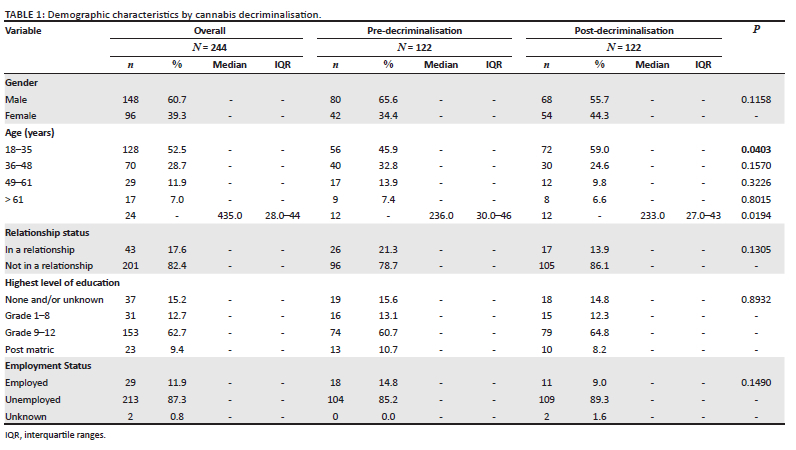
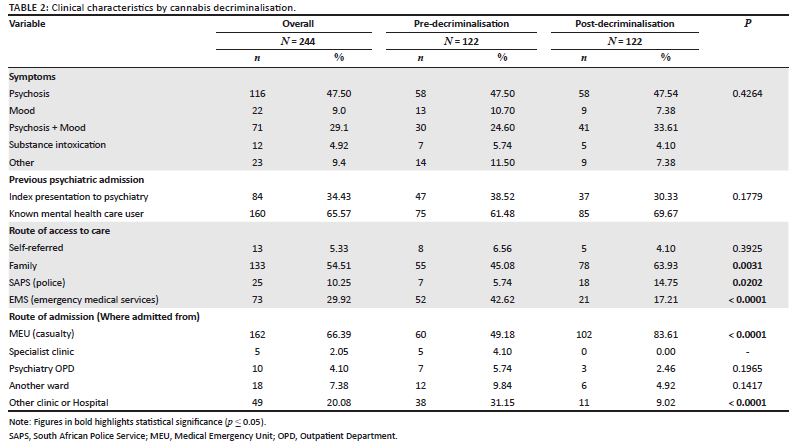
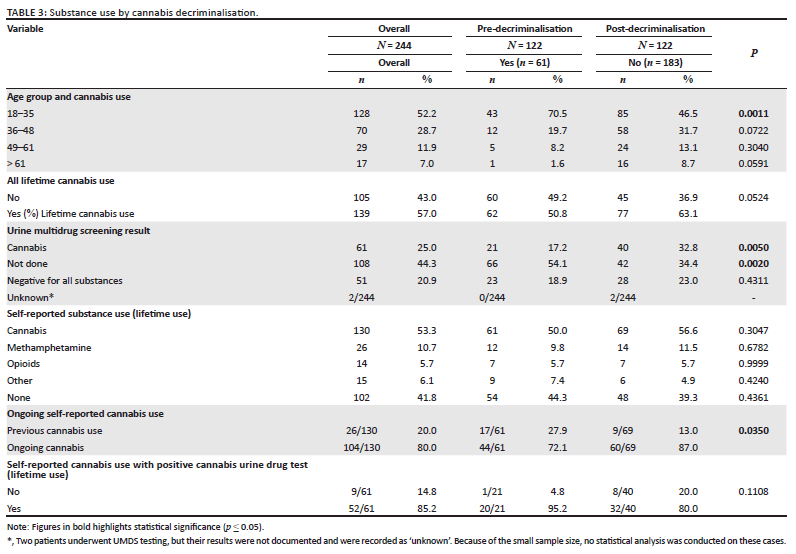
BACKGROUND: Personal cannabis use was decriminalised in South Africa in 2018. Cannabis use increases the risk of mental illness (MI) and worsens prognosis in patients with MI. The impact of decriminalisation on cannabis use remains unclear AIM: To examine cannabis use patterns by self-report and urine multidrug screening (UMDS) among psychiatric inpatients at Chris Hani Baragwanath Academic Hospital (CHBAH SETTING: CHBAH, Soweto, South Africa METHODS: A retrospective review of clinical records comparing patients admitted to CHBAH psychiatry pre- and post-decriminalisation RESULTS: A total of 244 patients were included, with 57% using cannabis based on self-report and/or UMDS. Although not significant, overall cannabis use was higher post-decriminalisation (63.1%) than pre-decriminalisation (50.8%). Self-reported use increased slightly post-decriminalisation (56.6% vs. 50.0%), while UMDS-confirmed use was significantly higher (32.8% vs. 17.2%). Cannabis use was associated with male gender and younger age, with younger admissions post-decriminalisation CONCLUSION: Decriminalisation did not significantly increase overall or self-reported cannabis use; however, more patients tested positive on UMDS post-decriminalisation. Young males remain at higher risk of cannabis use
cannabis; decriminalisation; psychotic disorders; South Africa; mental health; substance use; psychiatric admissions