Substance use patterns in an adolescent psychiatric unit in Johannesburg, South Africa
Abstract
BACKGROUND: Substance use among adolescents carries a significant public health and socioeconomic burden with potential long-term consequences for the adolescent substance user (SU). Adolescents with mental health challenges are vulnerable to substance use and substance use worsens outcomes in this population. AIM: This study aimed to describe the substance use patterns among inpatients admitted to a specialised tertiary adolescent inpatient unit in Johannesburg over a 4-year period. SETTING: This study was conducted at the Tara H. Moross Centre (Tara Hospital), in Johannesburg in the Gauteng province of South Africa. METHODS: This was a retrospective comparative record review of all patients admitted to the adolescent unit over the 4 years. RESULTS: A lifetime history of substance use was documented in 44.1% (n = 52) of the 118 patient's records included in the final analysis. Cannabis was the most frequently used substance (n = 36, 69.2%). There were significant differences between the SU and substance nonuser groups regarding family structure (p = 0.012), family history of substance abuse (p = 0.046) and conflict within the family (p < 0.001). CONCLUSION: The high prevalence of substance use in this sample demonstrates the dual burden of mental health disorders and substance use in an adolescent treatment programme in Johannesburg. Primary caregiver burden and relational difficulties within the family unit should be observed for planned multidisciplinary interventions. CONTRIBUTION: The findings of this review provide an update on the pattern and prevalence of substance use among this adolescent mental healthcare user group, highlighting potential therapeutic targets.
adolescent; mental health; inpatient; substance use; prevalence
Introduction
Substance use has several multisectoral societal consequences, with a disproportionately higher prevalence of substance use in youth and men globally.1112113
Early onset substance use has substantial implications for the development of adult substance use disorders, drug-related deaths and drug-related treatment, as well as for other important psychosocial consequences.14567,889
Theoretical underpinnings describing the factors influencing the increased risk of substance use, which has been observed in the adolescent period include a propensity towards novelty seeking behaviours and activation of reward system neural pathways.10106,1011,1211111111
The prevalence of substance use has been reported to be higher in adolescents with mental illness when compared with the general adolescent population.13,14,1515,16,17,181913201914,1521
Aim and objectives
The aim of this study was to describe the pattern of substance use among inpatients admitted to a specialised tertiary adolescent unit in Johannesburg over a 4-year period. The objectives of this study were to describe the prevalence of lifetime reported substance use, to describe the pattern of this substance use and to describe and compare the socioclinical profiles of the patients with and without a substance use history.
Research methods and design
Setting
The Tara H. Moross Centre (Tara Hospital) is located in Johannesburg in the Gauteng Province of South Africa. The hospital is a specialised psychiatric hospital with both inpatient and outpatient services directed at adolescents with mental health disorders. There are 12 adolescent inpatient beds.
Study design and sample population
This study was a retrospective comparative record review conducted at Tara Hospital. All the available files of adolescent patients between the ages of 13 and 18 years who were admitted at the Tara Hospital's adolescent unit at any time over a 4-year period from 01 January 2012 until 31 December 2015 were included in the study, with the only exclusion being files which were not traceable, and were therefore excluded from analysis.
The study's main outcome was to determine the prevalence of substance use in adolescent inpatients at Tara Hospital. Information about substance use was obtained from the admission clerking sheet and ward file. Substance use, for this study's purpose, was defined as lifetime use of any psychoactive substance, as observed in the patient's history. This was ascertained from any one or more of the following documented in the clinical record: a self-report of substance use or misuse, a diagnosis of substance-related disorder, a positive multidrug urine screen during admission and collateral information. Multidrug urine test screening for all the inpatients was not performed routinely. Information on diagnosis and clinical and demographic data was obtained from the clinical file. No rating scales were used.
Data analysis
All data were manually collected and entered into an electronic spreadsheet. The Χ2Χ2t-test. Where the data did not meet the assumptions of the test, a nonparametric alternative, the Wilcoxon rank sum test was used. The relationship between study variables and SU status was assessed by binomial regression. Categories with n < 10 were not included in the analysis. Variables that were significant univariately were combined into a multivariable model, after examining each pair of variables for possible confounding using the chi-squared test (or Fisher's exact test for 2 × 2 tables). A value of Cramer's V (or the phi coefficient for Fisher's exact test) > 0.60 was regarded as too strong an association to include both variables in a multivariable model. Nonsignificant variables were sequentially removed from the multivariable model. The 5% significance level was used. Statistical Analysis System (SAS, version 9.4 for Windows) was used for all analysis.
Ethical considerations
This was a retrospective study and confidentiality was maintained during data collection, analysis and storage of data. The patients' personal identifying data were not recorded. The original protocol was approved by the University of the Witwatersrand Postgraduate Committee. Ethical clearance was obtained from the University of the Witwatersrand Human Research Ethics Committee (M170410); informed consent was not required by the ethics committee because of the retrospective nature of data collection. Permission to conduct this study was also obtained from the Hospital Research Committee.
Results
Overall, 140 patients were admitted to the Tara Hospital adolescent ward during the study period, but there were 17 missing files and 5 repeat admissions. The final sample was therefore 118 patients.
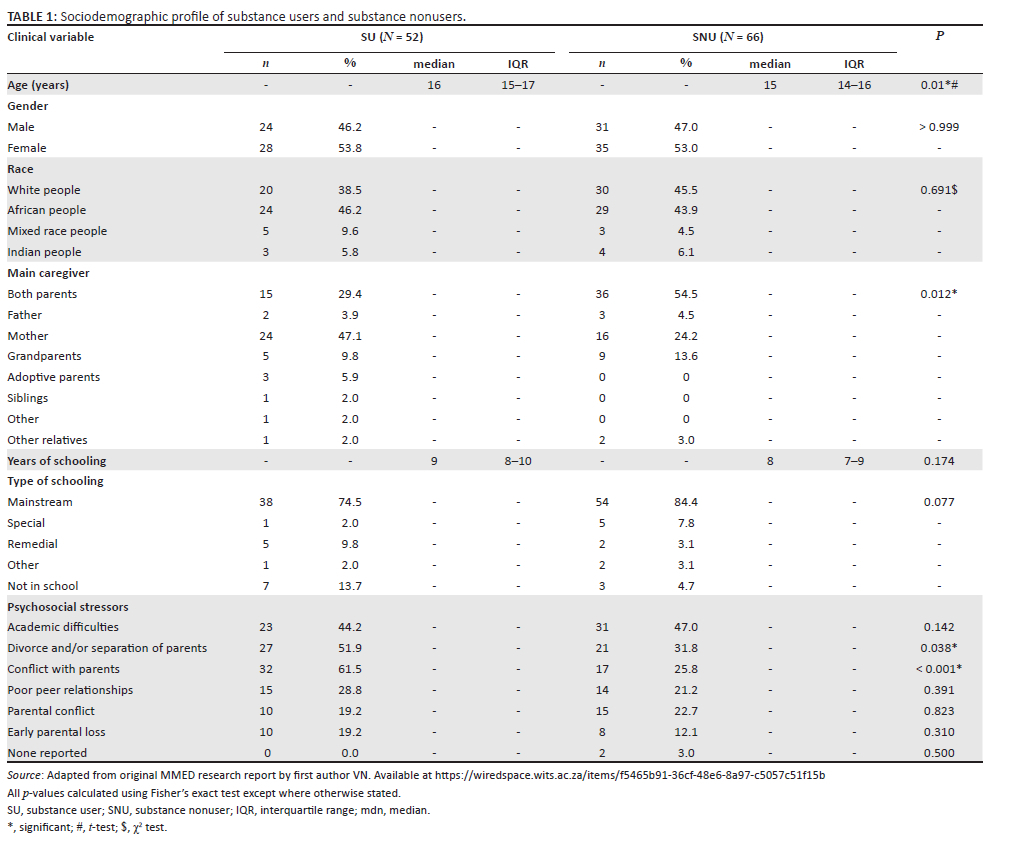
The sociodemographic profile of the SU and substance nonuser (SNU) groups is presented in Table 1. There were no significant differences in the gender profiles or ethnic grouping of the SU and SNU groups. There was a significant difference in the age of the SU and SNU groups, with the SU group being slightly older than the SNU group (p = 0.014). There were no statistically significant differences between the two groups with respect to the type of schooling (p = 0.077).
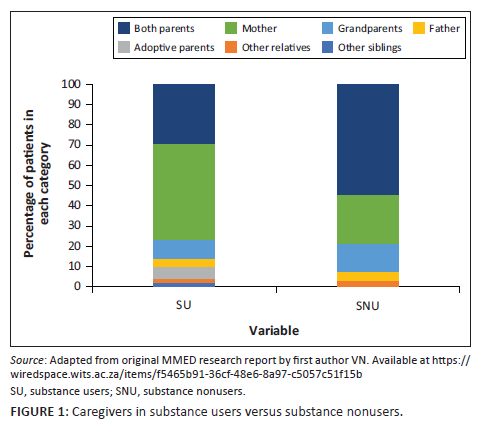
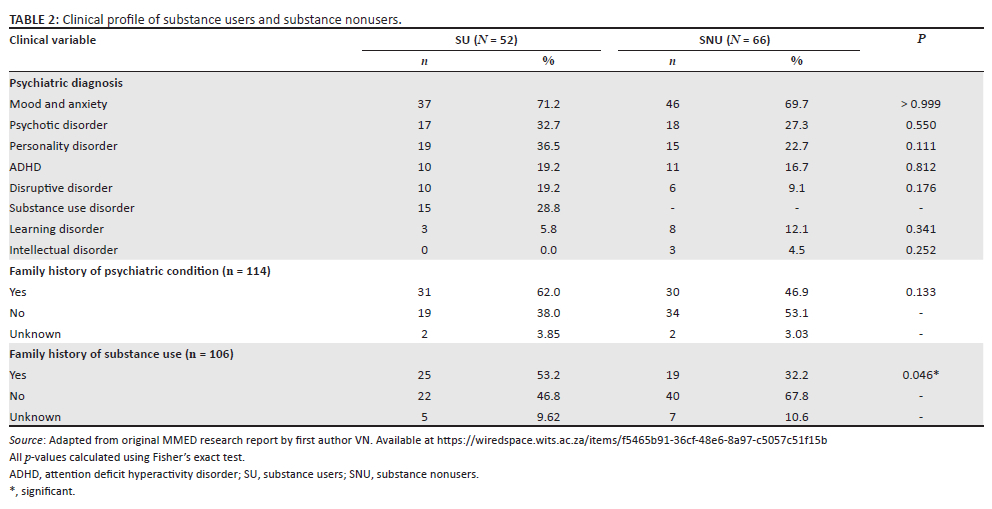
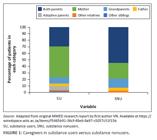
There was a significant difference between the two groups regarding the main caregiver patterns (p = 0.012). Single-parent households were more common in the SU group, with 47.1% (n = 24) of SU cared for by the mother alone, compared to 24.2% (n = 16) in the SNU group. Furthermore, more SNU had both parents involved in their care, with 54.5% (n = 36) cared for by both parents compared to 29.4% (n = 15) in the SU group. Substance users were also more likely to have reported conflict with parents as a stressor compared to SNU (Table 2 and Figure 1). More SU came from households where there was 'divorce or separation of parents' when compared to SNU (Table 2, Figure 1).
There were no significant differences between the SNU and SU groups with regard to clinical diagnostic categories. However, there was a significant association between the SU group and SNU group and the presence of a family history of substance use. The proportion of patients with a family history of substance use was higher in the SU group (n = 25, 53.2%) compared to the SNU group (n = 19, 32.2%; p = 0.046).
All significant variables were included in the further multivariable analysis. There were no confounders observed. Only conflict with parents remained significant in the multivariable model (relative risk [RR] 2.25, 95% CI: 1.48-3.44).
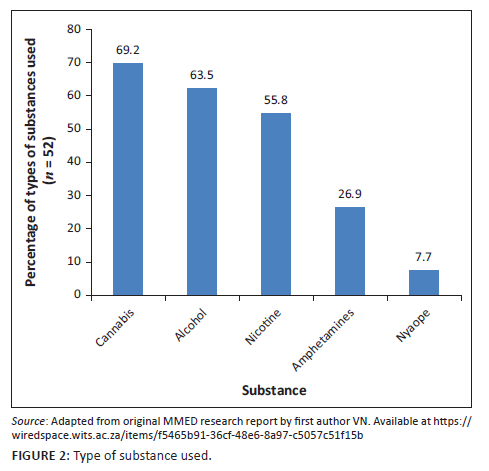
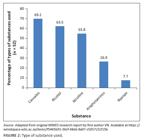
The lifetime prevalence of substance use as documented in the clinical record was 44.1% (n = 52) with the median age at first use of substances documented as 14 years (IQR [interquartile range] 13 years - 15 years). Of the patients reporting substance use, 46.2% (n = 24) were male and 53.8% (n = 28) were female. The median duration of substance use was 20 months with minimum duration of 1 month and maximum of 72 months (IQR 11-24 months). Most patients were introduced to substances by their peer group (n = 38, 86.4%). Cannabis was the most commonly used substance (n = 36, 69.2%), followed by alcohol (n = 33, 63.5%), nicotine (n = 29, 55.8%), amphetamines (including methamphetamine) (n = 14, 26.9%) and 'nyaope' (n = 4, 7.7%) (a mixture of cannabis and heroine and other substances, also known as 'sugars' or 'whoonga') (Figure 2). Substance use was not limited to one type of substance, and while 33% used only one substance, 67% used two or more substances.
Discussion
This retrospective review describes the pattern of substance use in an adolescent inpatient population at Tara Hospital over a 4-year period. Almost half of the adolescents admitted to this psychiatric unit had used substances. The prevalence of substance use in this sample group of 44.1% was slightly higher than previously described in a similar South African report, published in 2017.1813,14,15,20,21
Cannabis and alcohol were found to be the most used substances at 69.2% and 63.5%, respectively. This is in line with previous local research on adolescent mental healthcare users, with cannabis and alcohol as being the most common drugs of abuse in several centres within South Africa. Specifically, Taukoor et al. found alcohol to be the most frequently used substance, and after that, cannabis, in adolescents with mental illness in Durban,181521221
Although this study primarily measured lifetime substance use and not substance use disorder, a diagnosis of substance use disorder was recorded in some of the clinical records (12.7%). Rates of substance use are expected to be higher than a diagnosis of substance use disorder. A comparison of the prevalence of a substance use disorder diagnosis with the rates of substance use disorder diagnosis reported in other similar studies (25% - 54%) suggests that substance use disorder may have been underdiagnosed in this sample particularly considering the 44.1% prevalence of lifetime substance use.13,21
There were several significant sociodemographic related factors associated with substance use in this sample in keeping with what is known about adolescent substance use. These factors correlate with findings from previous research carried out on adolescent populations with mental health disorders, which found elevated levels of conflict within families with adolescent substance use.14,21,23,24,25,2625,27
There were no associations observed between diagnosis, as grouped for the purpose of data capture and analysis, and substance use or nonuse. The 'mood and anxiety disorders' category was the most common diagnostic grouping for both the SU and nonuser groups. The grouping of conditions in the study might have influenced any potential associations of diagnosis and substance use. Of note, Lachman et al. previously found higher rates of substance-induced psychosis than schizophrenia; however, in the current sample, substance-induced disorders were grouped with the relevant mood, anxiety or psychotic disorder categories. Although conduct disorder has been previously strongly associated with substance use, this was not found in the current sample.13
Substance use in adolescents has been repeatedly associated with a family history of substance use, particularly adolescent exposure to parental substance use.21,26,282829
Limitations
This study used one research site, Tara Hospital, in Johannesburg and is therefore not generalisable to a broader South African context. Retrospective data were used. There was no routine use of multidrug urine tests in the files, so most of the information was based on self-report and collateral, which is subject to both recall and social desirability bias. No rating scales were used in the clinical files. The broad categorical grouping of clinical diagnosis for data collection and analysis limited the depth of analysis regarding individual diagnosis and substance use. The once-off use of substance, or experimentation, which can be regarded as a normal part of adolescent behaviour was not further explored in this study. The data collected for this study cover the 4-year period of 2012-2015 and as such do not describe the current pattern of substance use in this setting.
Conclusion
The use of substances in adolescents has the potential to induce, complicate and exacerbate mental health conditions. The high prevalence of lifetime substance use in this population demonstrates the need for targeted interventions, noting family and socioenvironmental stressors, to address substance use among adolescent mental healthcare users. Therapeutic targets should address conflict within the family unit, as well as provide supportive interventions for single-parent households. In addition, given the findings in this sample which add to the existing literature supporting the association of a family history of substance use with adolescent substance use, mentoring parents who are SU in their parenting role, to reduce generational transmission of substance use, may be another therapeutic target. Dual diagnosis should be observed and addressed in the planning and implementation of treatment programmes, which are designed for adolescent mental healthcare users.
Competing interests
The authors have declared that no competing interest exists.
Authors' contributions
V.W.N. drafted the protocol, conducted the data collection and data analysis, and compiled an initial MMED research report as part of his requirements for an MMED in Psychiatry at the University of the Witwatersrand. Y.M.N. supervised the initial master's project, advised on the process of the research and data analysis, and write-up and editing, and drafted the current manuscript for journal submission.
Funding information
The authors received no financial support for the research, authorship and/or publication of this article.
Data availability
The data that support the findings of this study are not openly available because of the presence of human data and are available from the corresponding author, Y.M.N., upon reasonable request, with HREC and hospital approval.
Disclaimer
The views expressed in the submitted article are of the authors and not an official position of the institution or funder.
Acknowledgements
This article is partially based on the author's research report of the degree of Master of Medicine in the discipline of Psychiatry at the Faculty of Health Sciences, University of the Witwatersrand, South Africa, with supervisor Dr Yvette Nel, received June 2020, available here: https://wiredspace.wits.ac.za/server/api/core/bitstreams/5bb4c8a0-456c-4a4e-aff9-adc866c33d2b/content. The authors would also like to thank Petra Gaylard for assistance with statistical analysis.
References
-
1.UNODC (United Nations Office on Drugs and Crime). World drug report 2022 [homepage on the Internet]. United Nations; 2022 [cited 2023 Jun 15]. Available from: www.unodc.org/unodc/en/data-and-analysis/world-drug-report-2022.html
» www.unodc.org/unodc/en/data-and-analysis/world-drug-report-2022.html -
2.ESPAD Group. ESPAD report 2019: Results from the European School Survey Project on Alcohol and Other Drugs [homepage on the Internet]. Luxembourg: EMCDDA Joint Publications, Publications Office of the European Union; 2020 [cited 2023 Jun 15]. Available from: https://www.emcdda.europa.eu/publications/joint-publications/espad-report-2019_en
» https://www.emcdda.europa.eu/publications/joint-publications/espad-report-2019_en -
3.Halladay J, Woock R, El-Khechen H, et al. Patterns of substance use among adolescents: A systematic review. Drug Alcohol Depend. 2020;216:108222. https://doi.org/10.1016/j.drugalcdep.2020.108222
» https://doi.org/10.1016/j.drugalcdep.2020.108222 -
4.Dennis M, Babor TF, Roebuck MC, Donaldson J. Changing the focus: The case for recognizing and treating cannabis use disorders. Addiction. 2002;97(Suppl. 1):4-15. https://doi.org/10.1046/j.1360-0443.97.s01.10.x
» https://doi.org/10.1046/j.1360-0443.97.s01.10.x -
5.Substance Abuse and Mental Health Services Administration. Results from the 2012 national survey on drug use and health: Summary of national findings. NSDUH Series H-46, HHS Publication no. (SMA) 13-4795. Rockville, MD: Substance Abuse and Mental Health Services Administration; 2013 [cited 2023 Jun 19]. Available from: https://www.samhsa.gov/data/sites/default/files/NSDUHresults2012/NSDUHresults2012.pdf
» https://www.samhsa.gov/data/sites/default/files/NSDUHresults2012/NSDUHresults2012.pdf -
6.Sharma A, Morrow JD. Neurobiology of adolescent substance use disorders. Child Adolesc Psychiatr Clin N Am. 2016;25(3):367-375. https://doi.org/10.1016/j.chc.2016.02.001
» https://doi.org/10.1016/j.chc.2016.02.001 -
7.Saban A, Flisher AJ, Grimsrud A, et al. The association between substance use and common mental disorders in young adults: Results from South African Stress and Health (SASH) survey. Pan Afr Med J. 2014;17(Suppl. 1):1-7. https://doi.org/10.11694/pamj.supp.2014.17.1.3328
» https://doi.org/10.11694/pamj.supp.2014.17.1.3328 -
8.Pacek LR, Martins SS, Crum RM. The bidirectional relationships between alcohol, cannabis, co-occurring alcohol and alcohol and cannabis use disorders with major depressive disorder: Results from a national sample. J Affect Disord. 2013;148(2-3):188-195. https://doi.org/10.1016/j.jad.2012.11.059
» https://doi.org/10.1016/j.jad.2012.11.059 -
9.Swartz MS, Swanson JW, Hiday VA, Borum R, Wagner HR, Burns BJ. Violence and severe mental illness: The effects of substance abuse and nonadherence to medication. Am J Psychiatry. 1998;155(2):226-231. https://doi.org/10.1176/ajp.155.2.226
» https://doi.org/10.1176/ajp.155.2.226 -
10.Steinberg L. A social neuroscience perspective on adolescent risk-taking. Dev Rev. 2008;28(1):78-106. https://doi.org/10.1016/j.dr.2007.08.002
» https://doi.org/10.1016/j.dr.2007.08.002 -
11.Whitesell M, Bachand A, Peel J, Brown M. Familial, social, and individual factors contributing to risk for adolescent substance use. J Addict. 2013;2013:1-9. https://doi.org/10.1155/2013/579310
» https://doi.org/10.1155/2013/579310 -
12.Sussman S, Skara S, Ames SL. Substance abuse among adolescents. Subst Use Misuse. 2008;43(12-13):1802-1828. https://doi.org/10.1080/10826080802297302
» https://doi.org/10.1080/10826080802297302 -
13.Hollen V, Ortiz G. Mental health and substance use comorbidity among adolescents in psychiatric inpatient hospitals: Prevalence and covariates. J Child Adolesc Subst Abuse. 2015;24(2):102-112. https://doi.org/10.1007/s40429-015-0070-y
» https://doi.org/10.1007/s40429-015-0070-y -
14.Paruk S, Jhazbhay K, Singh K, Sartorius B, Burns JK. A comparative study of socio-demographic and substance use correlates in early-onset psychosis. Early Interv Psychiatry. 2018;12(3):339-347. https://doi.org/10.1111/eip.12330
» https://doi.org/10.1111/eip.12330 -
15.Paruk S, Ramlall S, Burns JK. Adolescent-onset psychosis: A 2-year retrospective study of adolescents admitted to a general psychiatric unit. S Afr J Psychiatry. 2009;15(4):86-91. https://doi.org/10.4102/sajpsychiatry.v15i4.203
» https://doi.org/10.4102/sajpsychiatry.v15i4.203 -
16.Peltzer K, Phaswana-Mafuya N. Drug use among youth and adults in a population-based survey in South Africa. S Afr J Psychiatry. 2018;24(1):1-6. https://doi.org/10.4102/sajpsychiatry.v24i0.1139
» https://doi.org/10.4102/sajpsychiatry.v24i0.1139 -
17.Moodley SV, Matjila MJ, Moosa MY. Epidemiology of substance use among secondary school learners in Atteridgeville, Gauteng. S Afr J Psychiatry. 2012;18(1):2-7. https://doi.org/10.4102/sajpsychiatry.v18i1.320
» https://doi.org/10.4102/sajpsychiatry.v18i1.320 -
18.Taukoor B, Paruk S, Karim E, Burns JK. Substance use in adolescents with mental illness in Durban, South Africa. J Child Adolesc Ment Health. 2017;29(1):51-61. https://doi.org/10.2989/17280583.2017.1318395
» https://doi.org/10.2989/17280583.2017.1318395 -
19.Engelgardt P, Krzyżanowski M, Borkowska-Sztachańska M, et al. Lifetime use of illicit substances among adolescents and young people hospitalized in psychiatric hospital. Sci Rep. 2023;13(1):1866. https://doi.org/10.1038/s41598-023-28603-2
» https://doi.org/10.1038/s41598-023-28603-2 -
20.Niethammer O, Frank R. Prevalence of use, abuse and dependence on legal and, illegal psychotropic substances in an adolescent inpatient psychiatric population. Eur Child Adolesc Psychiatry. 2007;16(4):254-259. https://doi.org/10.1007/s00787-006-0597-5
» https://doi.org/10.1007/s00787-006-0597-5 -
21.Lachman A, Nassen R, Hawkridge S, Emsley RA. A retrospective chart review of the clinical and psychosocial profile of psychotic adolescents with co-morbid substance use disorders presenting to acute adolescent psychiatric services at Tygerberg Hospital. S Afr J Psychiatry. 2012;18(2):53-60. https://doi.org/10.4102/sajpsychiatry.v18i2.351
» https://doi.org/10.4102/sajpsychiatry.v18i2.351 -
22.Dada S, Burnhams BH, Erasmus J, et al. South African Community Epidemiology Network on Drug Use (SACENDU): Monitoring alcohol, tobacco and other drug abuse treatment admissions in South Africa, September 2016 (Phase 39) [homepage on the Internet]. 2016 [cited 2023 Jun 19]. Available from: http://hdl.handle.net/20.500.11910/10200
» http://hdl.handle.net/20.500.11910/10200 -
23.Olumide AO, Robinson AC, Levy PA, et al. Predictors of substance use among vulnerable adolescents in five cities: Findings from the well-being of adolescents in vulnerable environments study. J Adolesc Health. 2014;55(6):S39-S47. https://doi.org/10.1016/j.jadohealth.2014.08.024
» https://doi.org/10.1016/j.jadohealth.2014.08.024 -
24.Becker DF, Grilo CM. Ethnic differences in the predictors of drug and alcohol abuse in hospitalised adolescents. Am J Addict. 2007;16(5):389-396. https://doi.org/10.1080/10550490701525343
» https://doi.org/10.1080/10550490701525343 -
25.Barrett AE, Turner RJ. Family structure and substance use problems in adolescence and early adulthood: Examining explanations for the relationship. Addiction. 2006;101(1):109-120. https://doi.org/10.1111/j.1360-0443.2005.01296.x
» https://doi.org/10.1111/j.1360-0443.2005.01296.x -
26.Biederman J, Faraone SV, Monuteaux MC, Feighner JA. Patterns of alcohol and drug use in adolescents can be predicted by parental substance use disorder. Pediatrics. 2000;106(4):792-797. https://doi.org/10.1542/peds.106.4.792
» https://doi.org/10.1542/peds.106.4.792 -
27.Ololade S, Mndzebele S. Factors influencing use of illicit drugs among high school learners in an informal township of Gauteng Province, South Africa. PULA Botswana J Afr Stud [serial online]. 2017 [cited 2023 Jun 22];31(1):121-131. Available from: https://journals.ub.bw/index.php/pula/article/view/655
» https://journals.ub.bw/index.php/pula/article/view/655 -
28.Ali MM, Dean D, Jr, Hedden SL. The relationship between parental mental illness and / or substance use disorder on adolescent substance use disorder: Results from a nationally representative survey. Addict Behav. 2016;59(1):35-41. https://doi.org/10.1016/j.addbeh.2016.03.019
» https://doi.org/10.1016/j.addbeh.2016.03.019 -
29.Eiden RD, Lessard J, Colder CR, Livingston J, Casey M, Leonard KE. Developmental cascade model for adolescent substance use from infancy to late adolescent. Dev Psychol. 2016;52(10):1619-1633. https://doi.org/10.1037/dev0000199
» https://doi.org/10.1037/dev0000199

Accepted: 03 Dec. 2023
Published: 31 Jan. 2024