Pregnancy-related anxiety symptoms and associated factors amongst pregnant women attending a tertiary hospital in south-west Nigeria
Abstract
BACKGROUND: Pregnancy can be associated with anxiety symptoms because of anticipated uncertainty. AIM: This study investigated pregnancy-related anxiety symptoms (PRASs) and their associated factors amongst pregnant women. SETTING: Obafemi Awolowo University Teaching Hospitals Complex, Ile-Ife, Nigeria. METHODS: This cross-sectional survey involved 230 pregnant women attending antenatal clinic at a tertiary teaching hospital in Nigeria. Pregnancy-related anxiety symptoms, maternal worries, personality traits and social support were measured by using Perinatal Anxiety Screening Scale (PASS), Cambridge Worry Scale (CWS), Big Five Personality Inventory (BFI-10) and Maternal Social Support Scale (MSSS) respectively. Socio-demographic and obstetric details were also obtained. The Chi-square, t-test and logistic regression were used RESULTS: Respondents' mean age was 28.2 ± 5.4 years, whilst 192 (83.5%) were of Yoruba ethnicity. Twenty-four respondents (10.4%) were in the first trimester, 85 (37.0%) in the second and 121 (52.6%) in the third trimester. Some 154 (67.0%) were parous. The prevalence of PRAS and major maternal worries were 43.5% and 55.7% respectively. The socio-demographic factors significantly associated with PRAS were age (p = 0.004), ethnicity (p = 0.001), educational level (p = 0.011) and living arrangement (p = 0.029). Associated obstetric factors include trimester (p = 0.01), hypertension (p = 0.006), past miscarriage(s) (p = 0.013) and past pregnancy complication (p = 0.030). Significant psychosocial factors were partner social support (p = 0.038), maternal worries (p < 0.001) and extraversion (p = 0.016). Factors that contributed significantly to regression models were older maternal age and socio-medical worries. CONCLUSION: High level of PRAS and major maternal worries were common amongst antenatal clinic attendees of a tertiary teaching hospital in Nigeria. Older maternal age and socio-medical maternal worries are important predictors of PRAS.
pregnancy; anxiety; women; gynaecology; Nigeria
Introduction
Pregnancy is a significant milestone in the life of a woman and her family. It is a period of mixed feelings in which some pregnant women experience great joy, satisfaction and fulfillment, whilst others may report great stress when dealing with its demands.1,2345
Previous studies on pregnancy anxiety from European and Asian countries have reported a wide range of prevalence rates of 6.8% - 54%.6,7,8,910,11,12,1314
The prevalence of pregnancy-related anxiety varies at different trimesters of pregnancy with high levels reported in the first1,1411,151,13,167,9,1713,18
High levels of untreated pregnancy anxiety may have a negative impact on the health and well-being of the pregnant woman and the developing foetus.1920,21,22,232425,2620,27
Previously published Nigerian studies on pregnancy anxiety assessed general anxiety amongst pregnant women. However, there is a paucity of data on PRASs amongst Nigerian pregnant women. It is against this background that the present study was designed to determine the prevalence of PRASs amongst Nigerian women attending antenatal clinic in a tertiary hospital and to identify factors associated with those symptoms.
Methods
Study design
This study is a facility-based cross-sectional analytical study carried out at the antenatal clinics of a teaching hospital in south-west Nigeria.
Study setting
The hospital is one of the first-generation teaching hospitals established by the Federal Government of Nigeria, and it provides qualitative health care to people in the south-western part of the country. The antenatal clinics of Department of Obstetrics, Gynecology and Perinatology run 4 days a week with an average of 30 to 40 pregnant women per clinic.
Study population
The study population comprised pregnant women accessing antenatal services at the Department of Obstetrics, Gynecology and Perinatology of the Obafemi Awolowo University Teaching Hospitals Complex, Ile-Ife, Nigeria. Pregnant women aged 18-45 years and at different trimesters were included in the study. Pregnant women who were critically ill or declined participation were excluded from the study.
Sample size determination
From the records of the antenatal clinic, the total number of registered pregnant women who accessed professional antenatal care services in the hospital between January and December 2017 was 3458. The sample size of this study was calculated with the formula for total study population of less than 10 000 at 95% confidence level (1.96). Using the estimate of the true proportion of PRASs amongst pregnant women of 17.5% from a previous Nigerian study,13
Procedure
Pregnant women who met the inclusion criteria were given a copy of the participant information sheet. An average attendance of 3040 pregnant women per clinic from the antenatal clinics ensured feasibility for adequate sampling. The aim of the study was explained to each of the pregnant women, and informed consent was obtained from interested participants. Consenting women were recruited into the study, whilst women who refused consent were excluded with no adverse consequence. The participants completed the questionnaire in a convenient room within the antenatal clinic. They were each asked to read through the statements in the questionnaires carefully and then mark what they thought was correct on a rating scale against each statement. Each rating score meaning was explained to them. They first completed the demographic and pregnancy-related variables section of the questionnaire. A questionnaire was used to collect socio-demographic and pregnancy-related variables. Socio-demographic variables obtained were age, marital status, religion, ethnicity, educational level and living arrangement. Maternal age was categorised as 1824 years (young mothers), 25-34 years (reference group) and 35 years and above (old mothers). Education was categorised as low (≤secondary school), middle (Nigeria Certificate in Education [NCE] and diplomas) and high (university degree) whilst living arrangement was grouped as living with partner, partner and children, alone and with parents. Pregnancy-related variables obtained were last menstrual period (LMP), duration of pregnancy, wanted pregnancy or not, history of hypertension and diabetes, past history of miscarriage, past history of caesarean section and complications during delivery such as postpartum haemorrhage. The duration of pregnancy was categorised into trimesters.
Measures
They self-rated their anxiety level by using the PASS, maternal worries by using the Farsi Cambridge Worry Scale (CWS), personality trait by using the 10-item Big Five Personality Inventory (BFI-10) and social support by using the Maternal Social Support Scale (MSSS). Each questionnaire was completed within 1520 min.
Pregnancy-related anxiety symptoms were assessed with the PASS.28282829303129
Personality traits were measured by using 10-item BFI-10.3232
Social support was measured by using the MSSS.3333
Data analysis
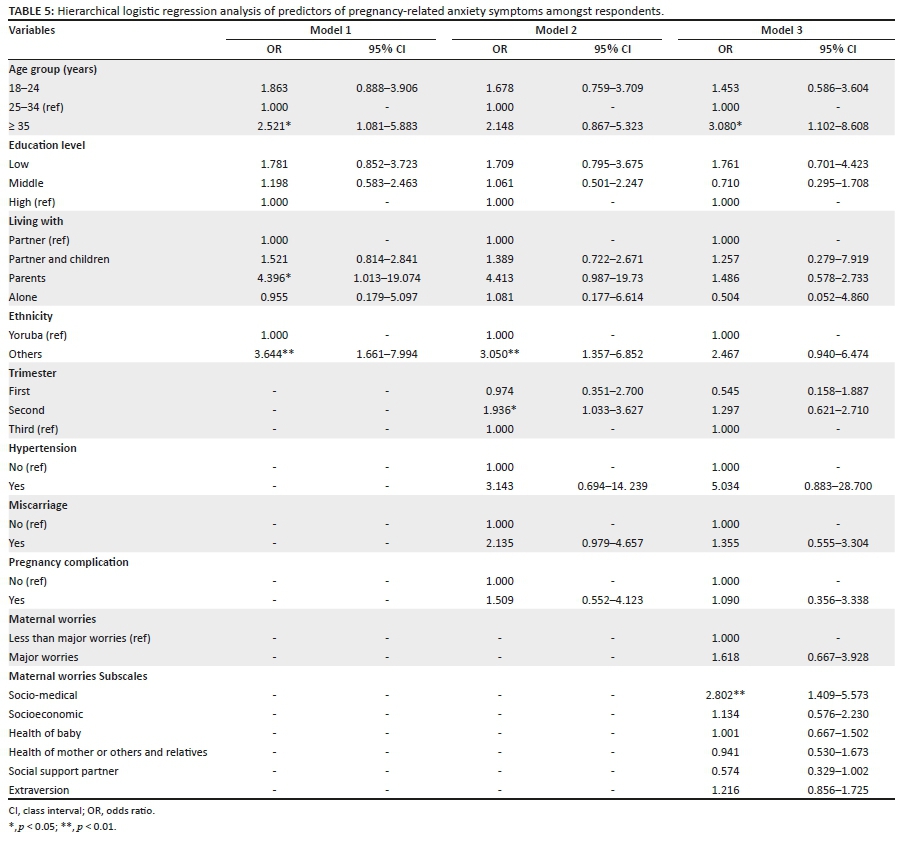
The IBM-SPSS version 21.0 was used for statistical analysis. Descriptive statistics such as frequency and percentages were used to describe categorical data, whilst mean with standard deviation (SD) was used to describe continuous data. Inferential statistics made use of Chi-square for the associations of PRASs with demographic and pregnancy-related variables. Independent t-test was used to compare the mean scores of the psychosocial factors (CWS, BFI-10 and MSSS) amongst pregnant women with low and high PRASs. Hierarchical logistic regression analysis with the enter method was used to explore the predictors (socio-demographic and pregnancy-related characteristics as well as psychosocial factors) of PRASs. The dependent variable was PRAS categorised as low and high. The independent variables included were the socio-demographic and pregnancy-related factors, as well as the psychosocial factors. Three blocks and significant variables at the bivariate level were entered into the model. Socio-demographic variables (age group, educational level, living arrangement and ethnicity) were first entered into Model 1, then pregnancy-related factors (trimester, hypertension, past miscarriage and past pregnancy complication[s]) were added to Model 2 and finally psychosocial factors (maternal worries and its subscales, social support from partners and extraversion) were added to Model 3. All statistical tests were two-tailed, and the level of significance was p-value less than 0.05.
Ethical considerations
This study was approved by the Ethics and Research Committee of a teaching hospital in south-west Nigeria (Protocol number: ERC/2018/04/11). Written informed consent was obtained from all respondents after the aim and objectives of the study were explained to them by using respondent's information sheet. The issues of confidentiality and voluntariness in participation were also explained.
Results
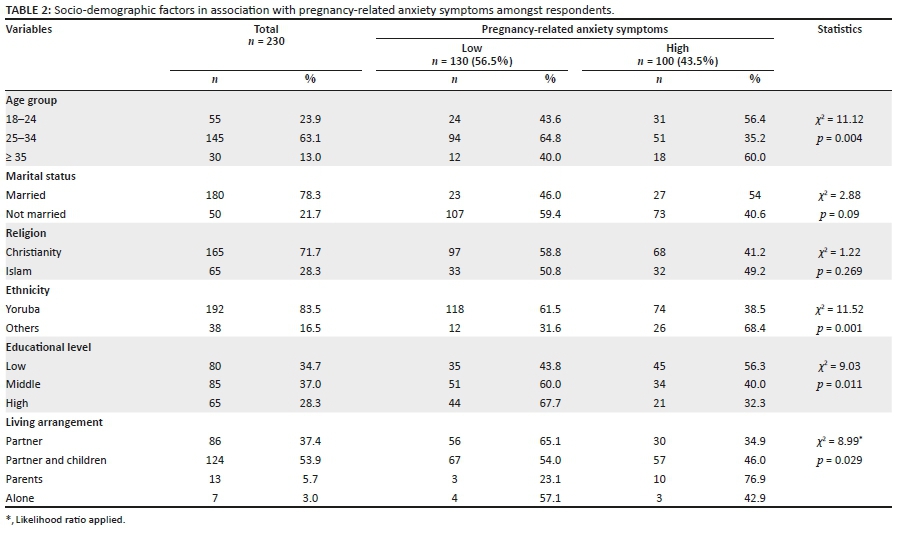
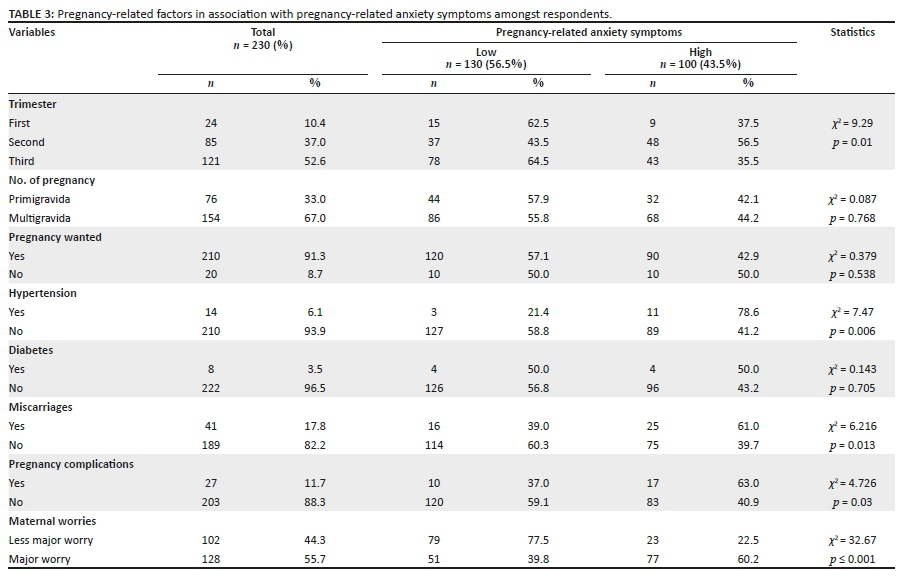
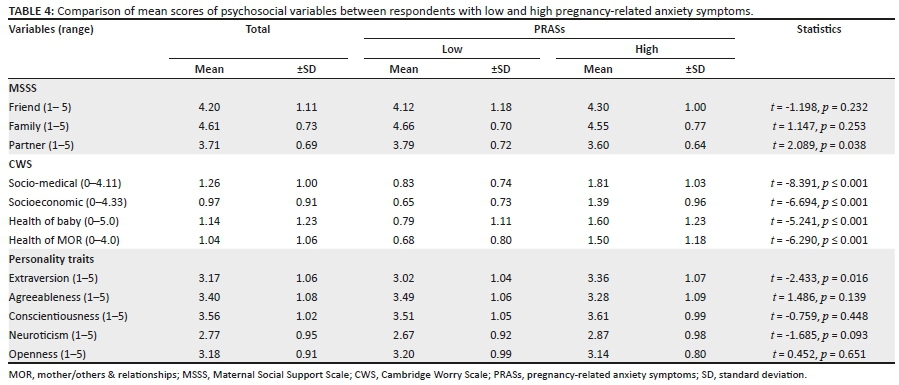
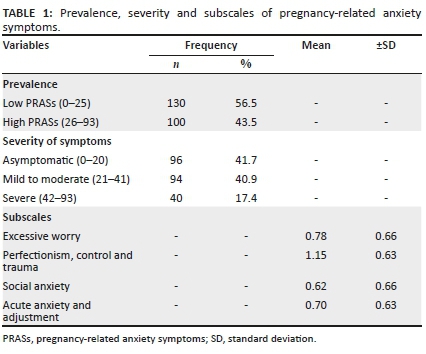
The prevalence of PRASs was 43.5%, and 40 respondents (17.4%) reported severe symptoms. The PRAS subscale with the highest mean score was perfectionism, control and trauma (1.15 ± 0.66), whilst social anxiety subscale had the lowest (0.62 ± 0.66) (Table 1). One hundred and forty-five respondents (63.1%) were aged 2534 years old, whilst 30 respondents (13.0%) were 35 years and above with a mean age of 28.2 ± 5.4 years. One hundred and eighty respondents (78.3%) were married, 165 (71.7%) were Christians and 198 (83.5%) were of Yoruba ethnicity. Eighty-five had middle level education (37.0%) and 80 (34.7) had low level education. One hundred and twenty-four respondents (53.9%) were living with partner and children, whilst only seven (3.0%) lived alone. Socio-demographic factors significantly associated with high level PRAS were maternal age (p = 0.004), ethnicity (p = 0.001), educational level (p = 0.011) and living arrangement (p = 0.029) (Table 2). One hundred and twenty-one respondents (52.6%) were in the third trimester, whilst 24 respondents (10.4%) were in the first trimester. One hundred and fifty-four respondents (67.0%) were parous, and 210 (91.3%) expressed that the pregnancy was wanted. Fourteen respondents (6.1%) had hypertension, whilst eight respondents had diabetes. Only 41 respondents (17.8%) experienced a miscarriage in a previous pregnancy, whilst 27 (11.7%) had experienced pregnancy complications. One hundred and twenty-eight respondents reported major maternal worries. Pregnancy-related factors significantly associated with high level of PRAS were trimester (p = 0.01), comorbid hypertension (p = 0.006), past miscarriages (p = 0.013), past pregnancy complication (p = 0.03) and maternal worries (p < 0.001) (Table 3). The maternal social support with highest mean score was family social support (4.61 ± 0.73), and partner social support had the lowest mean score (3.71 ± 0.69). Maternal worries subscale with the highest mean score was socio-medical (1.26 ± 1.00) whilst socio-economic subscale had the lowest mean score (0.97 ± 0.91). Personality trait with the highest mean score was conscientiousness (3.56 ± 1.02) and neuroticism had the lowest mean score (2.77 ± 0.95). Significant psychosocial factors were partner social support (p = 0.038), all the subscales of maternal worries (p < 0.001) and extroversion (p = 0.016) (Table 4).
Table 5 shows the hierarchical logistic regression model. Model 1 containing socio-demographic predictors was statistically significant, χ (8, N = 230) = 32.30, p < 0.001, indicating that the model was able to distinguish between respondents with high and low PRASs. The model as a whole explained between 13.1% (Cox and Snell R-square) and 17.6% (Nagelkerke R-square) of the variance in PRAS level, and correctly classified 66.5% of cases. Only three of the independent variables made a unique statistically significant contribution to Model 1 (older women, living with parents and other tribes). In Model 2, pregnancy-related variables were added, and it was statistically significant, χ (13, N = 230) = 45.87, p < 0.001, indicating that the model was able to distinguish between respondents with high and low PRASs. The model as a whole explained between 18.1% (Cox and Snell R-square) and 24.2% (Nagelkerke R-square) of the variance in PRAS level, and correctly classified 69.6% of cases. Only two of the independent variables made a unique statistically significant contribution to Model 2 (second trimester pregnancy and other tribes). In Model 3, psychosocial variables were added, and it was statistically significant, χ (20, N = 230) = 96.51, p < 0.001, indicating that the model was able to distinguish between respondents with high and low PRASs. The model as a whole explained between 34.3% (Cox and Snell R-square) and 46.0% (Nagelkerke R-square) of the variance in PRAS level, and correctly classified 81.3% of cases. Only two of the independent variables made a unique, statistically significant contribution to Model 3 (being 35 years and above and socio-medical maternal worries).
Discussion
This study provides useful information about the prevalence of PRASs and their associated factors amongst a sample of Nigerian pregnant women. The results of this study show that pregnancy-related anxiety is a common disorder amongst pregnant women. Also, the consequence of experiencing pregnancy-related anxiety on the health and well-being of both the pregnant woman and the developing foetus calls for investigation into the factors that are associated with it during the course of pregnancy.
The prevalence rate of 43.5% of PRASs reported in this study is within the range reported in previous studies carried out in different socio-economic and cultural settings.8,31103435
Amongst the socio-demographic factors, a significant association of PRASs with maternal age, respondent's level of education, living arrangement and ethnicity was demonstrated. In this study, high levels of PRASs were found amongst the younger and older women with a U pattern. Some studies show that younger maternal age is associated with higher levels of pregnancy-related anxiety,1,183637
The burden of pregnancy-related anxiety was apparently higher amongst women who belonged to the other tribes. This is similar to the findings of a previous study that found significant association between pregnancy anxiety and not speaking the predominant language.38
Paradoxically, in the present study, a higher proportion of pregnant women with high levels of PRASs were observed in the second trimester. This is in contrast with what was reported in previous studies that observed low levels of pregnancy-related anxiety in the second trimester.8,2139,40
Although previous studies have reported higher levels of pregnancy-related anxiety amongst primigravida, this study could not demonstrate any significant association. Also, unwanted pregnancy and history of diabetes were not significantly associated with pregnancy-related anxiety. In this study, pregnant women with comorbid hypertension, past history of miscarriage and complicated pregnancy reported higher burden of pregnancy-related anxiety.
Amongst the psychosocial factors, maternal worries, extroversion and social support from partners were significant factors associated with pregnancy-related anxiety in this study. In this study, 55.7% had 'a major worry' (scoring 4-5) about their pregnancy, and this is significantly higher than what was reported in a previous study.311313,41
Increased perceived partner social support appears to reduce the risk for pregnancy-related anxiety, as reported in this study. This is similar to previous research that found significant associations between pregnancy-related anxiety and low social support.42,4338
The results of this study need to be interpreted in the light of some limitations. Firstly, the use of self-administered questionnaires may introduce some biases such as social acceptability and recall bias. Also, the study design is cross-sectional in nature, so temporality of studied variables could not be established. Therefore, longitudinal studies are needed to know how pregnancy-related anxiety changes across the course of pregnancy. Moreover, the study was conducted in a single centre, predominantly in a Yoruba setting; the results of this study may have limited generalisability to pregnant women from other Nigerian culture. Despite these limitations, the strength of this study lies in the use of standardised instruments to measure pregnancy-related anxiety and other factors amongst the pregnant women.
Conclusion
High levels of PRASs and major maternal worries were common amongst a sample of pregnant women attending a tertiary hospital in south-west Nigeria. The predictors of PRASs were older maternal age and socio-medical worries. The results of this study have significant implications for both primary and secondary prevention efforts. There is the need for integrated routine screening of PRASs during routine antenatal care. Early detection, prevention and appropriate management of PRASs may help women to cope with the challenges of pregnancy.
Competing interests
The authors declare that they have no financial or personal relationship that may have inappropriately influenced them in writing this article.
Authors' contributions
A.A. conceived the study, contributed to literature review and study design, case recruitment, assessment, statistical analyses and interpretation of data, discussion and drafted the manuscript. A.M.T. conceived the study, contributed to literature review and study design, case recruitment, assessment, statistical analyses, interpretation of data, discussion and drafted the manuscript.
I.O.O. contributed to study design, interpretation of data, discussion and drafted the manuscript. B.O.O. contributed to study design, interpretation of data, discussion and drafted the manuscript. O.B.Y. contributed to study design, interpretation of data, discussion and drafted the manuscript. All authors read and approved the final manuscript.
Funding information
This research was funded by the researchers.
Data availability statement
Data are available from the corresponding author upon reasonable request.
Disclaimer
The views and opinions expressed in this article are those of the authors and do not necessarily reflect the official policy or position of any affiliated agency of the authors.
Acknowledgements
We appreciate all the pregnant women who graciously participated in this study. Without their generous support and commitment, our research would not be possible.
References
-
1.Madhavanprabhakaran GK, D'Souza MS, Nairy KS. Prevalence of pregnancy anxiety and associated factors. Int J Afr Nur Sci. 2015;3:1-7. https://doi.org/10.1016/j.ijans.2015.06.002
» https://doi.org/10.1016/j.ijans.2015.06.002 -
2.Podvornik N, Velikonja VG, Praper P. Depression and anxiety in women during pregnancy in Slovenia [Depresija In Anksioznost Pri Ženskah Med Nosečnostjo V Sloveniji]. Slov J Pub Health. 2015;54(1):45-50. https://doi.org/10.1515/sjph-2015-0006
» https://doi.org/10.1515/sjph-2015-0006 -
3.Yuksel F, Akin S, Durna Z. Prenatal distress in Turkish pregnant women and factors associated with maternal prenatal distress. J Clin Nurs. 2014;23(1-2):54-64. https://doi.org/10.1111/j.1365-2702.2012.04283.x
» https://doi.org/10.1111/j.1365-2702.2012.04283.x -
4.Westerneng M, De Cock P, Spelten ER, Honig A, Hutton EK. Factorial invariance of pregnancy-specific anxiety dimensions across nulliparous and parous pregnant women. J Health Psychol. 2015;20(2):164-172. https://doi.org/10.1177/1359105313500684
» https://doi.org/10.1177/1359105313500684 -
5.Brunton RJ, Dryer R, Saliba A, Kohlhoff J. The initial development of the pregnancy-related Anxiety Scale. Women Birth. 2019;32(1):e118-e130. https://doi.org/10.1016/j.wombi.2018.05.004
» https://doi.org/10.1016/j.wombi.2018.05.004 -
6.Fadzil A, Balakrishnan K, Razali R, et al. Risk factors for depression and anxiety among pregnant women in Hospital Tuanku Bainun, Ipoh, Malaysia. Asia Pac Psychiatry. 2013;5(S1):713. https://doi.org/10.1111/appy.12036
» https://doi.org/10.1111/appy.12036 -
7.Giardinelli L, Innocenti A, Benni L, et al. Depression and anxiety in perinatal period: Prevalence and risk factors in an Italian sample. Arch Womens Men Health. 2012;15(1):21-30. https://doi.org/10.1007/s00737-011-0249-8
» https://doi.org/10.1007/s00737-011-0249-8 -
8.Lee AM, Lam SK, Lau SMSM, Chong CSY, Chui HW, Fong DYT. Prevalence, course, and risk factors for antenatal anxiety and depression. Obstet Gynecol. 2007;110(5):1102-1112. https://doi.org/10.1097/01.AOG.0000287065.59491.70
» https://doi.org/10.1097/01.AOG.0000287065.59491.70 -
9.Qiao YX, Wang J, Li J, Ablat A. The prevalence and related risk factors of anxiety and depression symptoms among Chinese pregnant women in Shanghai. Aust N Z J Obstet Gynaecol. 2009;49(2):185-190. https://doi.org/10.1111/j.1479-828X.2009.00966.x
» https://doi.org/10.1111/j.1479-828X.2009.00966.x -
10.Adewuya A, Ola B, Aloba O, Mapayi B. Anxiety disorders among Nigerian women in late pregnancy: A controlled study. Arch Womens Ment Health. 2006;9(6):325-328. https://doi.org/10.1007/s00737-006-0157-5
» https://doi.org/10.1007/s00737-006-0157-5 - 11.Busari AO. Prevalence and associated factors of anxiety and depression among pregnant women attending antenatal care at state hospital Moniya, Ibadan, Oyo state, Nigeria. Gen Behav Depress Res Treat. 2018;16(3):1193811953.
-
12.Esimai O, Fatoye F, Quiah A, Vidal O, Momoh R. Antepartum anxiety and depressive symptoms: A study of Nigerian women during the three trimesters of pregnancy. J Obstet Gynaecol. 2008;28(2):202-203. https://doi.org/10.1080/01443610801912352
» https://doi.org/10.1080/01443610801912352 - 13.Ezeme M, Dinwoke V, Ohayi S. Risk factors and co-morbid anxiety and depression in pregnancy in a tertiary hospital in southeast Nigeria. Int J Med Health Dev. 2018;23:276-283.
- 14.Thomas C, Surekha A, Suguna A, Puthur KJ, Kiran P, Sulekha T. Screening for anxiety among antenatal women attending a taluk Hospital in rural India. Natl J Community Med. 2015;6(2):313-317.
- 15.Madhavanprabhakaran G, Kumar K, Ramasubramaniam S, Akintola A. Effects of pregnancy related anxiety on labour outcomes: A prospective cohort study. J res Nur Midwifery. 2013;2(7):96-103.
-
16.Fertl KI, Bergner A, Beyer R, Klapp BF, Rauchfuss M. Levels and effects of different forms of anxiety during pregnancy after a prior miscarriage. Eur J Obstet Gynecol Reprod Biol. 2009;142(1):23-29. https://doi.org/10.1016/j.ejogrb.2008.09.009
» https://doi.org/10.1016/j.ejogrb.2008.09.009 -
17.Henderson J, Redshaw M. Anxiety in the perinatal period: Antenatal and postnatal influences and women's experience of care. J Reprod Infant Psychol. 2013;31(5):465-478. https://doi.org/10.1080/02646838.2013.835037
» https://doi.org/10.1080/02646838.2013.835037 -
18.Rubertsson C, Hellström J, Cross M, Sydsjö G. Anxiety in early pregnancy: Prevalence and contributing factors. Arch Womens Ment Health. 2014;17(3):221-228. https://doi.org/10.1007/s00737-013-0409-0
» https://doi.org/10.1007/s00737-013-0409-0 -
19.Huizink A, Delforterie M, Scheinin N, Tolvanen M, Karlsson L, Karlsson H. Adaption of pregnancy anxiety questionnaire-revised for all pregnant women regardless of parity: PRAQ-R2. Arch Womens Ment Health. 2016;19(1):125-132. https://doi.org/10.1007%2Fs00737-015-0531-2
» https://doi.org/10.1007%2Fs00737-015-0531-2 -
20.Field T. Prenatal anxiety effects: A review. Infant Behav Dev. 2017;49:120-128. https://doi.org/0.1016/j.infbeh.2017.08.008
» https://doi.org/0.1016/j.infbeh.2017.08.008 -
21.Huizink AC, Mulder EJ, De Medina PGR, Visser GH, Buitelaar JK. Is pregnancy anxiety a distinctive syndrome? Early Hum Dev. 2004;79(2):8191. https://doi.org/10.1016/j.earlhumdev.2004.04.014
» https://doi.org/10.1016/j.earlhumdev.2004.04.014 -
22.Ramos IF, Guardino CM, Mansolf M, et al. Pregnancy anxiety predicts shorter gestation in Latina and non-Latina white women: The role of placental corticotrophin-releasing hormone. Psychoneuroendocrinology. 2019;99:166-173. https://doi.org/10.1016/j.psyneuen.2018.09.008
» https://doi.org/10.1016/j.psyneuen.2018.09.008 -
23.Tomfohr-Madsen L, Cameron EE, Dunkel Schetter C, et al. Pregnancy anxiety and preterm birth: The moderating role of sleep. Health Psychol. 2019;38(11):1025. https://doi.org/10.1037/hea0000792
» https://doi.org/10.1037/hea0000792 -
24.Schetter CD, Tanner L. Anxiety, depression and stress in pregnancy: Implications for mothers, children, research, and practice. Curr Opin Psychiatry. 2012;25(2):141. https://doi.org/10.1097/YCO.0b013e3283503680
» https://doi.org/10.1097/YCO.0b013e3283503680 -
25.Gutteling BM, De Weerth C, Willemsen-Swinkels SH, et al. The effects of prenatal stress on temperament and problem behavior of 27-month-old toddlers. Eur Child Adolesc Psychiatry. 2005;14(1):41-51. https://doi.org/10.1007/s00787-005-0435-1
» https://doi.org/10.1007/s00787-005-0435-1 -
26.Huizink AC, De Medina PGR, Mulder EJ, Visser GH, Buitelaar JK. Psychological measures of prenatal stress as predictors of infant temperament. J Am Acad Child Adolesc Psychiatry. 2002;41(9):10781085. https://doi.org/10.1097/00004583-200209000-00008
» https://doi.org/10.1097/00004583-200209000-00008 -
27.Van den Bergh BR, Mennes M, Oosterlaan J, et al. High antenatal maternal anxiety is related to impulsivity during performance on cognitive tasks in 14-and 15-year-olds. Neurosci Biobehav Rev. 2005;29(2):259-69. https://doi.org/10.1016/j.neubiorev.2004.10.010
» https://doi.org/10.1016/j.neubiorev.2004.10.010 -
28.Somerville S, Dedman K, Hagan R, et al. The perinatal anxiety screening scale: Development and preliminary validation. Arch Women Ment Health. 2014;17(5):443-454. https://doi.org/10.1007/s00737-014-0425-8
» https://doi.org/10.1007/s00737-014-0425-8 -
29.Mortazavi F, Akaberi A. Worries of pregnant women: Testing the Farsi Cambridge worry scale. Scientifica. 2016;2016:5791560. https://doi.org/10.1155/2016/5791560
» https://doi.org/10.1155/2016/5791560 -
30.Green JM, Kafetsios K, Statham HE, Snowdon CM. Factor structure, validity and reliability of the Cambridge Worry Scale in a pregnant population. J Health Psychol. 2003;8(6):753-764. https://doi.org/10.1177%2F13591053030086008
» https://doi.org/10.1177%2F13591053030086008 -
31.Gourounti K, Anagnostopoulos F, Sandall J. Poor marital support associate with anxiety and worries during pregnancy in Greek pregnant women. Midwifery. 2014;30(6):628-635. https://doi.org/10.1016/j.midw.2013.10.008
» https://doi.org/10.1016/j.midw.2013.10.008 -
32.Rammstedt B, John OP. Measuring personality in one minute or less: A 10-item short version of the Big Five Inventory in English and German. J Res Personality. 2007;41(1):203-212. https://doi.org/10.1016/j.jrp.2006.02.001
» https://doi.org/10.1016/j.jrp.2006.02.001 -
33.Webster J, Linnane JW, Dibley LM, Hinson JK, Starrenburg SE, Roberts JA. Measuring social support in pregnancy: Can it be simple and meaningful? Birth. 2000;27(2):97-101. https://doi.org/10.1046/j.1523-536x.2000.00097.x
» https://doi.org/10.1046/j.1523-536x.2000.00097.x -
34.Nath A, Venkatesh S, Balan S, Metgud CS, Krishna M, Murthy GVS. The prevalence and determinants of pregnancy-related anxiety amongst pregnant women at less than 24 weeks of pregnancy in Bangalore, Southern India. Int J Womens Health. 2019;11:241. https://doi.org/10.2147%2FIJWH.S193306
» https://doi.org/10.2147%2FIJWH.S193306 -
35.Wall V, Premji SS, Letourneau N, McCaffrey G, Nyanza EC. Factors associated with pregnancy-related anxiety in Tanzanian women: A cross sectional study. BMJ Open. 2018;8(6):e020056. https://doi.org/10.1136/bmjopen-2017-020056
» https://doi.org/10.1136/bmjopen-2017-020056 -
36.Gurung RA, Dunkel-Schetter C, Collins N, Rini C, Hobel CJ. Psychosocial predictors of prenatal anxiety. J Soc Clin Psychol. 2005;24(4):497519. https://psycnet.apa.org/doi/10.1521/jscp.2005.24.4.497
» https://psycnet.apa.org/doi/10.1521/jscp.2005.24.4.497 -
37.Saisto T, Salmela-Aro K, Nurmi JE, Halmesmäki E. Psychosocial characteristics of women and their partners fearing vaginal childbirth. BJOG. 2001;108(5):492-498. https://doi.org/10.1111/j.1471-0528.2001.00122.x
» https://doi.org/10.1111/j.1471-0528.2001.00122.x -
38.Dunkel Schetter C, Niles AN, Guardino CM, Khaled M, Kramer MS. Demographic, medical, and psychosocial predictors of pregnancy anxiety. Paediatr Perinat Epidemol. 2016;30(5):421-429. https://doi.org/10.1111/ppe.12300
» https://doi.org/10.1111/ppe.12300 -
39.Nasreen HE, Kabir ZN, Forsell Y, Edhborg M. Prevalence and associated factors of depressive and anxiety symptoms during pregnancy: A population based study in rural Bangladesh. BMC Womens Health. 2011;11(1):22. https://doi.org/10.1186/1472-6874-11-22
» https://doi.org/10.1186/1472-6874-11-22 -
40.Roos A, Faure S, Lochner C, Vythilingum B, Stein D. Predictors of distress and anxiety during pregnancy. Afr J Psychiatry. 2013;16(2):118-22. https://doi.org/10.4314/ajpsy.v16i2.15
» https://doi.org/10.4314/ajpsy.v16i2.15 -
41.Aduloju O, Akintayo A, Ade-Ojo I, Awoleke J, Aduloju T, Ogundare OR. Gestational age at initiation of antenatal care in a tertiary hospital, Southwestern Nigeria. Niger J Clin Pract. 2016;19(6):772-777. https://doi.org/10.4103/1119-3077.181398
» https://doi.org/10.4103/1119-3077.181398 -
42.Okunowo AA, Fasesin T. Institutional-based study on the knowledge of appropriate timing, time and predictors of initiation of antenatal care in Lagos, Nigeria. Niger J Gen Pract. 2019;17(2):43. https://doi.org/10.4103/NJGP.NJGP_15_18
» https://doi.org/10.4103/NJGP.NJGP_15_18 -
43.Canals J, Esparó G, Fernández-Ballart JD. How anxiety levels during pregnancy are linked to personality dimensions and sociodemographic factors. Pers Indiv Differ. 2002;33(2):253-259. https://doi.org/10.1016/S0191-8869(01)00149-0
» https://doi.org/10.1016/S0191-8869(01)00149-0

Accepted: 19 Oct. 2020
Published: 19 Mar. 2021