Clinical profile of children and adolescents with autism spectrum disorder in Durban, South Africa
Abstract
BACKGROUND: There are often delays in accessing care and diagnosing autism spectrum disorders (ASDs), with little data from Southern Africa on the clinical profile of affected children and adolescents AIM: To describe the socio-demographic and clinical variables of children and adolescents with ASD attending psychiatric services at two state hospitals in eThekwini Municipality, KwaZulu-Natal province, South Africa SETTING: Two state hospitals in KwaZulu-Natal province, South Africa METHODS: The retrospective chart review examined patient records for the period 01 January 2018 to 31 December 2021. Data were collated using a structured data questionnaire on birth and family history, current presentation, comorbid conditions, medications, and non-pharmacological interventions RESULTS: Of the 67 children and adolescents accessing care for ASD during the study period (including the coronavirus disease 2019 [COVID-19] pandemic lockdown period), most were males (89%), with a mean age standard deviation (s.d.) of 10.69 (s.d. 2.64) years. There was a delay between recognition of first symptoms and an ASD diagnosis of approximately three years. The most common reasons for referral were behavioural problems and speech delay, with 57 patients having delayed milestones (85%). Comorbid attention deficit hyperactivity disorder was reported in 55.2% (n = 37) of the patients and intellectual disability in 50.7% (n = 34), and the commonest comorbid medical condition was epilepsy (n = 20; 29.8%). All participants were on psychotropic medications, with 40 (59%) being on more than one agent CONCLUSION: The delay in diagnosing ASD, high rates of comorbidity, and need for polypharmacy are concerning CONTRIBUTION: The study highlights the need for greater awareness of ASD in communities and health care workers to expedite diagnosis and facilitate prompt psychosocial support and rehabilitation
autism spectrum disorder; clinical features; children and adolescents; South Africa; Durban; sociodemographic profile
Introduction
Autism spectrum disorder (ASD) is a neuro-developmental disorder that is characterised by impairments in communication skills, preoccupation with restricted interests, and the demonstration of stereotyped behaviours and activities.123
Historically grouped under 'pervasive developmental disorders (PDDs)' in the Diagnostic and Statistical Manual of Mental Disorders III (DSM-III) for its broad social and communication deficits, the term ASD is now used in the DSM-5 and International Classification of Diseases 11 (ICD-11) with clinical specifiers and modifiers for individual diagnostic differentiation.
The condition has long-term effects on the wellbeing and functioning of the individual and that of their family, with associated societal and economic costs, specifically related to their need for life-long care.4567
Autism spectrum disorder may be diagnosed by 18-24 months of age, with early signs being identified as early as 12 months of age.891011
These co-occurring conditions can exacerbate the challenges faced by individuals with ASD, making management and treatment more complex.12131415161718192021,22,23 The presence of tic disorders in individuals with ASD may also be linked to higher intelligence quotient (IQ) and more severe ASD and comorbid symptoms.24
As these comorbid disorders have a negative impact on the quality of life of the individual and their family, early intervention is aimed at decreasing disability and addressing comorbid conditions which may impact on prognosis.25
Materials and methods
Study design, site and sample population
A retrospective descriptive quantitative chart review study of children and adolescents diagnosed with ASD was conducted at the specialist psychiatry outpatient departments of the two hospitals for the period, 01 January 2018 to 31 December 2021 using the hospital register. The study included all patients who were 18 years or younger, and clinically fulfilled DSM-5 criteria for ASD. Both hospitals have a child and adolescent psychiatrist supervising the assessment and management of the patients. They also have access to clinical psychology, occupational therapy, social work, and physiotherapy services at the units.
Measures
A structured socio-demographic and clinical questionnaire was designed to extract data from the clinical records, including age at presentation, gender, educational level, referral source, and if living in urban or rural area. Clinical information was collated on birth history, educational needs, family history, clinical presentation, developmental features (milestones), comorbid conditions, medications and non-pharmacological interventions.
Statistical analysis
Data were collected by a senior psychiatry registrar and anonymised and analysed with Statistical Package for the Social Sciences (SPSS) version 28.0 (IBM Corp, Armonk, NY, USA) and Stata version 16.0 (StataCorp, College Station, TX, USA). Categorical data (e.g., age and educational level) were presented as frequencies and percentages, with descriptive statistics (mean and standard deviation [s.d.]) being used to describe the continuous data (e.g., gender) that were collected.
Ethical considerations
The study was approved by the Biomedical Research Ethics Committee of the University of KwaZulu-Natal (BREC/00004009/2022), and permission to conduct it in the provincial hospitals was given by the KwaZulu-Natal Department of Health. The two hospital managers gave the consent for the records to be accessed.
Results
Demographic variables
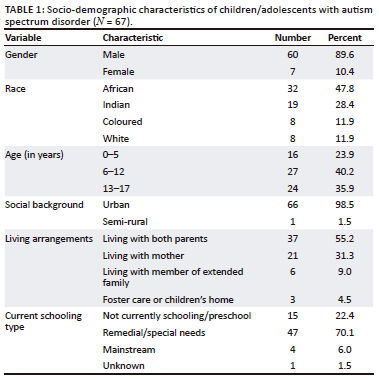
During the 4 years in which the records were reviewed for patients who met the inclusion criteria, 67 files were identified for analysis and their data were extracted. There were significantly more males (n = 60, 89.6%) than females (n = 7, 10.4%) (p < 0.001), almost half (n = 32, 47.8%) were African, and the largest age group was 6-12 years old (Table 1). The majority (n = 66, 98.5%) of the patients resided in urban areas, slightly more than half (n = 37, 55.2%) were living with both parents, with the majority (n = 47, 70.1%) attending remedial or special educational needs schools. The 15 (22.4%) patients who were not schooling were either awaiting placement at special educational needs school, or their severe aggressive behaviour precluded admission currently to a school.
Clinical variables
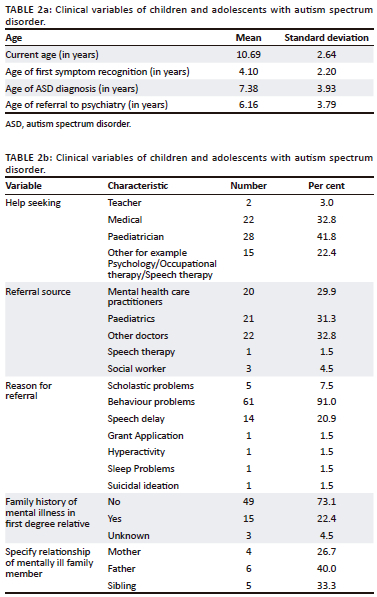
The mean and s.d. for the current age of the child (in years) was 10.69 (s.d. 2.64) years (Table 2), while the median and interquartile range (IQR) was 10 (9.0-12.0) years. The mean age of first symptom recognition by parent/caregiver was 4.10 years (s.d. 2.20), referral to psychiatry was 6.16 years (s.d. 3.79), and at first diagnosis of ASD was 7.38 years (s.d. 3.93). Help-seeking was mainly at paediatric medical services (n = 28, 41.8%) followed by general medical services (n = 22, 32.8%), with the main referrals being from mental health care practitioners (n = 20, 29.9%), paediatrics (n = 21, 31.3%), and other doctors (n = 22, 32.8%). The main reason for referral was behavioural problems (n = 61, 91.0%). In addition, 49 (73.1%) patients indicated that there was no history of mental illness in first degree relatives.
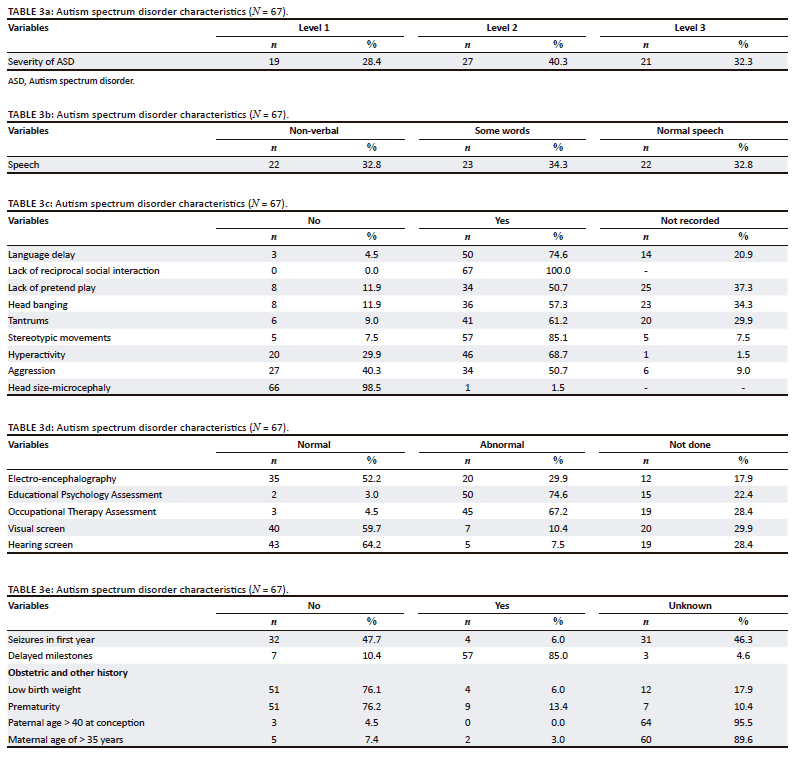
In assessing the clinical variables of the ASD, the majority of patients living with ASD were noted to have severity level 2 (n = 27, 40.3%), with similar numbers being non-verbal (n = 22, 32.8%) having limited speech (n = 23, 34.3%) and normal speech (n = 22, 32.8%) (Table 3). Three quarters (n = 50, 74.6%) had language delays, all lacked social interaction skills.
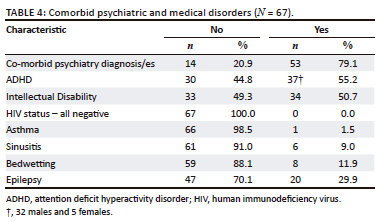
In terms of comorbid disorders, 53 (79.2%) patients had an additional psychiatry diagnosis, with 37 (55.2%) having comorbid ADHD (Table 4). The prevalence of intellectual disability was approximately 50%.
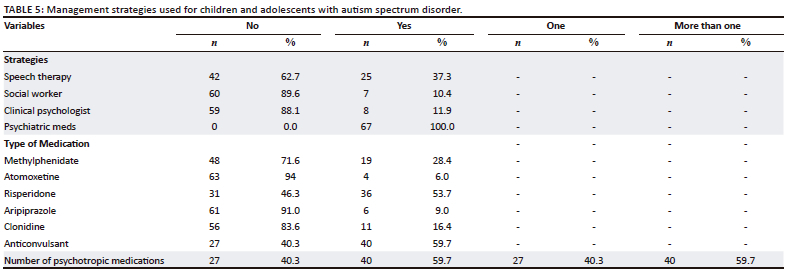
One quarter (n = 25, 37.3%) of the patients were being assisted by a speech therapist, only seven (10.4%) by a social worker, and eight (11.9%) by a clinical psychologist. All the patients were on psychotropic medication, with 36 (53.7%) being on risperidone, 40 (59.7%) being on an anticonvulsant, and 40 (59.7%) being on more than one psychotropic drug (Table 5).
Discussion
In this study, one of the main findings was that of the 67 children and adolescents with ASD accessing psychiatric care, most were males (60 males; 89.6%), this being consistent with the literature.26,27,28,29,30,31 The literature has reported that male children with ASD display more externalising behaviours than their female counterparts such as aggression and hyperactivity,32333435
In terms of the racial demographics of this study, the bulk of participants were black children which is not consistent with international findings. The USA Centers for Disease Control and Prevention (CDC) community report of 2020 on ASD reports that black and Hispanic children are less likely to be identified with ASD than white children.3637
Fifteen individuals had a positive family history of mental illness in a first degree relative; however, the nature of the mental illness was not available in the medical records. This information is important in the context of ASD which is thought to be a highly heritable condition with a pronounced genetic contribution, reinforced by twin studies showing prominent concordance among monozygotic twins.3839404142434444
In terms of their clinical variables, there was a delay between the recognition of first symptoms and a formal ASD diagnosis of approximately 3 years. The most common initial reason for referral to psychiatry being behavioural problems followed by speech delay. It should be noted that the early warning signs of possible ASD include poor joint attention, diminished eye contact, a lack of orienting to verbal call, decreased facial expression and social smile, and a lack of or poor quality of movements.294546
The delay in diagnosis of ASD from first symptom recognition to a definitive diagnosis of ASD is concerning, as early diagnosis and prompt intervention for ASD and associated comorbidities is critical for a number of reasons. Between the ages of birth and 6 years, the brain is geared to acquire social and verbal skills.4748495051
The delay in diagnosis may be associated with multiple factors, such as in the USA CDC community report of 2023 on ASD, which showed that stigma, a lack of access to healthcare services because of non-citizenship or low income and non-English primary language are potential barriers to identification of children with ASD, especially among Hispanic children.5253544555
In addition, Mazurek et al. report that older current age, lower socio-economic circumstances, higher IQ, and lower levels of autism symptoms are associated with later age of initial diagnosis. Lower parental education was also significantly associated with delays in diagnosis. They also found that children with greater current behavioural symptoms, and those with a previous psychiatric disorder diagnosis were diagnosed later with ASD than those without psychiatric diagnoses.56485758,59
In terms of ASD characteristics, the commonest presenting features reported in this study were a lack of reciprocal social interaction (100%), stereotypic movements (85.1%), language delay (74.6%) and hyperactivity (68.7%), this being similar to other studies.60,61 In a study conducted by Malhi et al., of the 33 patients with ASD, no peer play was found in 95.2% of children and motor stereotypies were also present in 85.7%.6061
Comorbid ADHD was noted in 55.2% (n = 37) and intellectual disability in 50.7% (n = 34). Comorbidity is the co-occurrence of two or more disorders in the same individual.626364656667
The prevalence of ADHD in those living with ASD has ranged from 14% to 78%.68676970
The finding in this study that 29.9% of patients had a comorbid diagnosis of epilepsy is consistent with other studies such as 30.0% prevalence of comorbid seizure disorders in ASD in a study by Maniram et al. in 2023.7067717273
Regarding their management, non-pharmacological treatment modalities are critical for treating ASD and to assist with the core symptoms, they are easily accepted by parents and have fewer side effects.7470
With regards to medication in this study, all those with ASD were on psychotropic medication and 40 patients (59.7%) were on more than one, the most widely used being anticonvulsants (59.7%), risperidone (53.7%), and methylphenidate (28.4%). This is consistent with a systematic literature review by Ritter et al., which found that most of the youth with ASD were taking two or more medications, psychotropic or non-psychotropic, simultaneously. The authors found that the rates of polypharmacy range across studies from 6.8% - 87% among autistic youth, and noted that having psychiatric comorbidities, self-injurious behaviours and physical aggression as well as being male and older were associated with higher rates of polypharmacy.757677
In the other local study, the likelihood of psychotropic medication combination use among children with ASD was greatest among the 7-9 year age group, with males across all age groups requiring a combination of psychotropic medications more often than female patients. In contrast to this study, risperidone was used in 88% of patients, followed by methylphenidate in 32% and sodium valproate in only 16% of children,70
Limitations
This retrospective chart review was conducted at only two public sector psychiatric services in Durban, KwaZulu-Natal province, and did not include patients from the private health sector which may limit the generalisability of findings to the community at large. The sample size was small (67 patients), and there was missing information in some files because of incomplete documentation which were then excluded. Occasionally it was difficult to interpret information in the charts and a variance in the quality of information recorded by the medical professionals was noted. The period of analysis included the COVID-19 pandemic lockdown period, which may have limited help-seeking by caregivers and therefore affected the sample size. The timing of the study during the COVID-19 pandemic is a limitation as the pandemic influenced not only help-seeking by caregivers, but availability of health care professionals to assess and manage children with neurodevelopmental disorders particularly when mental health services were curtailed to support the COVID-19 crisis. It is recommended that additional studies review pathways to care after the pandemic. In addition, the use of pharmacotherapy may be artificially high in that patients are referred specifically to psychiatry for psychotropic medications as they may have not responded to other psychosocial treatments, their management status not reflecting patients who do not attend such a specialised facility. A final limitation is the lack of being able to assess use of alternative therapies.
Recommendations
A diagnosis of ASD is often delayed and associated with comorbidity which may impact on outcome. Improved public health awareness is essential to reach parents, caregivers and teachers of children with ASD to ensure the early diagnosis and implementation of a multi-disciplinary approach to ensuring favourable outcomes. Moreover, we need to promote ASD in the curriculum of all health care workers to improve diagnosis. Research is needed at primary health care and community level to identify blockages in the system of having young children timeously referred for diagnosis and management.
Parents and caregivers must be empowered with knowledge about ASD so as to better relate to and understand their children.49495047
Standardised national policies which are evidence-based and in the best interest of individuals with ASD need to be formulated and implemented78
South Africa is known to have considerable health disparities.787859
Finally, parental education and training is the cornerstone of treatment of ASD. There is a lack of specialist service providers in most state facilities. By involving parents and caregivers, children with ASD can receive early interventions despite low resource settings.78
Conclusion
This study echoes findings cited in existing literature regarding the clinical profile of children presenting with ASD. The strong male predilection of ASD coupled with significant comorbidities are in keeping with previous research. This study illustrates a persistent delay in diagnosis of approximately 3 years and low rates of allied health care involvement. It is important to recognise that prompt identification of and intervention in children with ASD capitalises on the period of highest neuroplasticity. In this way, the social, communication and language skills and functioning of those affected are improved, enhancing their quality of life and long-term prognosis.
Competing interests
The authors declare that they have no financial or personal relationship(s) that may have inappropriately influenced them in writing this article.
Authors' contributions
M.G., the principal investigator, conceptualised the study, developed the protocol, performed data collection, and undertook the initial write-up for this study and subsequent manuscript revisions. E.K. contributed to study conceptualisation, protocol development, and editing of the manuscript revisions. S.P. supervised the project and assisted with study conceptualisation, protocol development and write-up.
Funding information
This research received no specific grant from any funding agency in the public, commercial or not-for-profit sectors.
Data availability
The data that support the findings of this study are available from the corresponding author, M.G., upon reasonable request.
Disclaimer
The views and opinions expressed in this article are those of the authors and do not necessarily reflect the official policy or position of any affiliated agency of the authors, and the publisher.
Acknowledgements
The authors would like to acknowledge Deepak Singh who was the statistician for this study.
References
- 1. American Psychiatric Association (APA). Diagnostic and Statistical Manual of mental disorders. 5th ed. Arlington, VA: American Psychiatric Association; 2013.
-
2. Lord C, Elsabbagh M, Baird G, Veenstra-Vanderweele J. Autism spectrum disorder. Lancet. 2018;392(10146):508-520. https://doi.org/10.1016/S0140-6736(18)31129-2
» https://doi.org/10.1016/S0140-6736(18)31129-2 -
3. Lord C, Brugha TS, Charman T, et al. Autism spectrum disorder. Nat Rev Dis Primers. 2020;6(1):5. https://doi.org/10.1038/s41572-019-0138-4
» https://doi.org/10.1038/s41572-019-0138-4 -
4. Divan G, Bhavnani S, Leadbitter K, et al. Annual research review: Achieving universal health coverage for young children with autism spectrum disorder in low- and middle-income countries: A review of reviews. J Child Psychol Psychiatry. 2021;62(5):514-535. https://doi.org/10.1111/jcpp.13404
» https://doi.org/10.1111/jcpp.13404 -
5. Buescher AV, Cidav Z, Knapp M, Mandell DS. Costs of autism spectrum disorders in the United Kingdom and the United States. JAMA Pediatr. 2014;168(8):721-772. https://doi.org/10.1001/jamapediatrics.2014.210
» https://doi.org/10.1001/jamapediatrics.2014.210 -
6. Lemmi V, Knapp M, Ragan I. The autism dividend: Reaping the rewards of a better investment [homepage on the Internet]. 2017. Available from: https://nationalautistictaskforce.org.uk/wp-content/uploads/2020/02/autism-dividend-report.pdf
» https://nationalautistictaskforce.org.uk/wp-content/uploads/2020/02/autism-dividend-report.pdf - 7. World Health Assembly, Resolution 67.8. WHA 67.8/ Comprehensive and coordinated efforts for the management of autism spectrum disorders. UN and WHO Resolutions and Declarations. Resolutions and Declarations on Child and Youth, Resolutions and Declarations on Mental Health. May 24. Geneva: World Health Organization.
-
8. Miller M, Iosif AM, Hill M, et al. Response to name in infants developing autism spectrum disorder: A prospective study. J Pediatr. 2017;183:141-146.e1. https://doi.org/10.1016/j.jpeds.2016.12.071
» https://doi.org/10.1016/j.jpeds.2016.12.071 -
9. Zeidan J, Fombonne E, Scorah J, et al. Global prevalence of Autism: A systematic review update. Autism Res. 2022;15(5):778-790. https://doi.org/10.1002/aur.2696
» https://doi.org/10.1002/aur.2696 -
10. Zwaigenbaum L, Bauman ML, Stone WL, et al. Early identification of autism spectrum disorder: Recommendations for practice and research. Pediatrics. 2015;136(Suppl 1):S10-S40. https://doi.org/10.1542/peds.2014-3667C
» https://doi.org/10.1542/peds.2014-3667C -
11. Xue Ming, Brimacombe M, Chaaban J, Zimmerman-Bier B, Wagner GC. Autism spectrum disorders: Concurrent clinical disorders. J Child Neurol. 2008;23(1):6-13. https://doi.org/10.1177/0883073807307102
» https://doi.org/10.1177/0883073807307102 -
12. Collins H, Siegel M. Recognising and treating comorbid psychiatric disorders in people with autism spectrum disorder [homepage on the Internet]. Psychiatrictimes.com 29 August 2019. Maine: Maine Behavioural Healthcare. [cited 2023 Aug 20]. Available from: https://www.psychiatrictimes.com/view/recognising-and-treating-comorbidpsychiatric-disorders-people-autism;MaineBehaviouralHealthcare
» https://www.psychiatrictimes.com/view/recognising-and-treating-comorbidpsychiatric-disorders-people-autism;MaineBehaviouralHealthcare -
13. Hossain MM, Khan N, Sultana A, et al. Prevalence of comorbid psychiatric disorders among people with autism spectrum disorder: An umbrella review of systematic reviews and meta-analyses. Psychiatry Res. 2020;287:112922. https://doi.org/10.31124/advance.11497014
» https://doi.org/10.31124/advance.11497014 -
14. Rong Y, Yang CJ, Jin Y, Wang Y. Prevalence of attention-deficit/hyperactivity disorder in individuals with autism spectrum disorder. Res Autism Spectrum Dis. 2021;83;101759. https://doi.org/10.1016/j.rasd.2021.101759
» https://doi.org/10.1016/j.rasd.2021.101759 -
15. Stevens T, Peng L, Barnard-Brak L. The comorbidity of ADHD in children with ASD. Res Autism Spectrum Dis. 2016;31:11-18. https://doi.org/10.1016/j.rasd.2016.07.003
» https://doi.org/10.1016/j.rasd.2016.07.003 -
16. Van Steensel F, Bogels S, Perrin S. Anxiety disorders in children and adolescents with ASD: A meta-analysis. Psychol Rev. 2011;14:302-317. https://doi.org/10.1007/s10567-011-0097-0
» https://doi.org/10.1007/s10567-011-0097-0 -
17. Hollocks MJ, Lerh JW, Magiati I, Meiser-Stedman R, Brugha TS. Anxiety and depression in adults with autism spectrum disorder: A systematic review and meta-analysis. Psychol Med. 2019;49(4):559-572. https://doi.org/10.1017/S0033291718002283
» https://doi.org/10.1017/S0033291718002283 -
18. Hedley D, Uljarevic M, Foley KR, Richdale A, Trollor J. Risk and protective factors underlying depression and suicidal ideation in autism spectrum disorder. Depress Anxiety. 2018;35(7):648-657. https://doi.org/10.1002/da.22759
» https://doi.org/10.1002/da.22759 -
19. Vannucchi G, Masi G, Toni C, Del'Osso L, Erfuth A, Perugi G. Bipolar disorder in adults with Asperger's Syndrome: A systematic review. J Affect Disord. 2014;168:151-160. https://doi.org/10.1016/j.jad.2014.06.042
» https://doi.org/10.1016/j.jad.2014.06.042 -
20. Gotham K, Unruh K, Lord C. Depression and its measurement in verbal adolescents and adults woth autism spectrum disorder. Autism. 2015;19(4):491-504. https://doi.org/10.1177/1362361314536625
» https://doi.org/10.1177/1362361314536625 -
21. Kahl U, Schunke O, Schottle D, et al. Tic phenomenology and tic awareness in adults with autism. Mov Disord Clin Pract. 2015;2:237-242. https://doi.org/10.1002/mdc3.12154
» https://doi.org/10.1002/mdc3.12154 -
22. Canitano R, Vivanti G. Tics and Tourette syndrome in autism spectrum disorder. Autism. 2007;11(1):19-28. https://doi.org/10.1177/1362361307070992
» https://doi.org/10.1177/1362361307070992 -
23. Baron-Cohen S, Scahill VL, Izaguirre J, Hornsey H, Robertson MM. The prevalence of Gilles de la Tourette syndrome in children and adolescents with autism: A large-scale study. Psychol Med. 1999;29(5):1151-1159. https://doi.org/10.1017/S003329179900896X
» https://doi.org/10.1017/S003329179900896X -
24. Kim YR, Song DY, Bong G, Han JH, Kim JH, Yoo HJ. Clinical characteristics of comorbid tic disorders in autism spectrum disorder: Exploratory analysis. Child Adolesc Psychiatry Ment Health. 2023;17(1):71. https://doi.org/10.1186/s13034-023-00625-8
» https://doi.org/10.1186/s13034-023-00625-8 -
25. Zwaigenbaum L, Bauman ML, Choueiri R, et al. Early Identification and interventions for autism spectrum disorder: Executive summary. Pediatrics. 2015;136(Suppl 1):S1-S9. https://doi.org/10.1542/peds.2014-3667B
» https://doi.org/10.1542/peds.2014-3667B -
26. Vargason T, Frye RE, McGuinness DL, et al. Clustering of co-occurring conditions in autism spectrum disorder during early childhood: A retrospective analysis of medical claims data. Autism Res. 2019;12(8):1272-1285. https://doi.org/10.1002/aur.2128
» https://doi.org/10.1002/aur.2128 -
27. González-Cortés T, Gutiérrez-Contreras E, Espino-Silva PK, et al. Clinical profile of autism spectrum disorder in a pediatric population from Northern Mexico. J Autism Dev Disord. 2019;49(11):4409-4420. https://doi.org/10.1007/s10803-019-04154-2
» https://doi.org/10.1007/s10803-019-04154-2 -
28. Kurasawa S, Tateyama K, Iwanaga R, Ohtoshi T, Nakatani K, Yokoi K. The Age at diagnosis of autism spectrum disorder in children in Japan. Int J Pediatr. 2018;2018:5374725. https://doi.org/10.1155/2018/5374725
» https://doi.org/10.1155/2018/5374725 -
29. Parmeggiani A, Corinaldesi A, Posar A. Early features of Autism spectrum disorder: A cross-sectional study. Ital J Pediatr. 2019;45(1):144. https://doi.org/10.1186/s13052-019-0733-8
» https://doi.org/10.1186/s13052-019-0733-8 -
30. Bhat BA, Hussain AM, Qadir W, et al. Clinico-socio demographic profile of children with autism spectrum disorders from a Tertiary Care Hospital in Kashmir, India. J Child Dev Disord. 2019;5(2):5. https://doi.org/10.36648/2472-1786.5.2.82
» https://doi.org/10.36648/2472-1786.5.2.82 - 31. Ramachandram S. Clinical characteristics and demographic profile of children with autism spectrum disorder (ASD) at child development clinic (CDC), Penang Hospital, Malaysia. Med J Malaysia. 2019;74(5):372-376.
-
32. Bargiela S, Steward R, Mandy W. The experiences of late- diagnosed women with autism spectrum conditions: An investigation of the female autism phenotype. J Autism Dev Disord. 2016;46:3281-3294. https://doi.org/10.1007/s10803-016-2872-8
» https://doi.org/10.1007/s10803-016-2872-8 -
33. Singer L. Thoughts about sex and gender differences from the next generation of autism scientists. Mol Autism. 2015;6:52. https://doi.org/10.1186/s13229-015-0046-8
» https://doi.org/10.1186/s13229-015-0046-8 -
34. Robinson EB, Lichtenstein P, Anckarsater H, Happe F, Ronald A. Examining and interpreting the female protective effect against autistic behaviour. Proc Natl Acad Sci U S A. 2013;110(13):5258-5262. https://doi.org/10.1073/pnas.1211070110
» https://doi.org/10.1073/pnas.1211070110 -
35. Baron-Cohen S. The extreme male brain theory of autism. Trends Cogn Sci. 2003;6(6):248-254. https://doi.org/10.1016/S1364-6613(02)01904-6
» https://doi.org/10.1016/S1364-6613(02)01904-6 -
36. CDC Centre for Disease control and prevention. US Department of Health and Human services ASD homepage 2020 [homepage on the Internet] [cited 2023 June 26]. Available from: https://www.cdc.gov
» https://www.cdc.gov -
37. Statistics South Africa. Midyear population estimates [homepage on the Internet]. Pretoria: StatsSA; 2017. Available from: https://www.statssa.gov.za/publications/P0302/P03022017.pdf
» https://www.statssa.gov.za/publications/P0302/P03022017.pdf -
38. Folstein S, Rutter M. Infantile autism: A genetic study of 21 twin pairs. J Child Psychol Psychiatry. 1977;18(4):297-321. https://doi.org/10.1111/j.1469-7610.1977.tb00443.x
» https://doi.org/10.1111/j.1469-7610.1977.tb00443.x -
39. Sandin S, Lichtenstein P, Kuja-Halkola R, Hultman C, Larsson H, Reichenberg A. The heritability of autism spectrum disorder. JAMA. 2017;318(12):1182-1184. https://doi.org/10.1001/jama.2017.12141
» https://doi.org/10.1001/jama.2017.12141 -
40. Ingersoll B, Hambrick D. The relationship between broader autism phenotype, child severity, and stress and depression in parents of children with Autism spectrum disorders. Res Autism Spectrum Dis. 2011;5(1):337-344. https://doi.org/10.1016/j.rasd.2010.04.017
» https://doi.org/10.1016/j.rasd.2010.04.017 -
41. Larsson HJ, Eaton WW, Madsen KM, et al. Risk factors for autism: Perinatal factors, parental psychiatric history and socioeconomic status. Am J Epidemiol. 2005;161(10):916-925 https://doi.org/10.1093/aje/kwi123
» //doi.org/10.1093/aje/kwi123 -
42. Daniels JL, Forssen U, Hultman CM, et al. Parental psychiatric disorders associated with autism spectrum disorders in the offspring. Paediatrics. 2008;121(5):1357-1362. https://doi.org/10.1542/peds.2007-2296
» https://doi.org/10.1542/peds.2007-2296 -
43. Jokiranta E, Brown AS, Heinimaa M, Cheslack-Postava K, Suominen A, Sourander A. Parental psychiatric disorders and autism spectrum disorders. Psychiatry Res. 2013;207(3):203-211. https://doi.org/10.1016/j.psychres.2013.01.005
» https://doi.org/10.1016/j.psychres.2013.01.005 -
44. Yu T, Chang KC, Kuo PL. Paternal and maternal psychiatric disorders associated with offspring autism spectrum disorders: A case-control study. J Psychiatry Res. 2022;151:469-475. https://doi.org/10.1016/j.jpsychires.2022.05.009
» https://doi.org/10.1016/j.jpsychires.2022.05.009 -
45. Ozonoff S, Iosif AM, Baguio F, et al. A prospective study of the emergence of early behavioral signs of autism. J Am Acad Child Adolesc Psychiatry. 2010;49(3):256-266.e1-2. https://doi.org/10.1016/j.jaac.2009.11.009
» https://doi.org/10.1016/j.jaac.2009.11.009 -
46. Siperstein R, Volkmar F. Brief report: Parental reporting of regression in children with pervasive developmental disorders. J Autism Dev Disord. 2004;34(6):731-734. https://doi.org/10.1007/s10803-004-5294-y
» https://doi.org/10.1007/s10803-004-5294-y -
47. Courchesne E, Campbell K, Solso S. Brain growth across the life span in autism: Age- specific changes in anatomical pathology. Brain Res. 2011;1380:138-145. https://doi.org/10.1016/j.brainres.2010.09.101
» https://doi.org/10.1016/j.brainres.2010.09.101 - 48. Huttonlocher P. Neural plasticity: The effects of environment on the development of cerebral cortex. Cambridge, MA: Harvard University Press; 2002.
- 49. Rogers SJ, Dawson G, Vismara LA. An early start for your child with autism: Using everyday activities to help kids connect, communicate and learn. New York, NY: Guillford Press; 2012.
-
50. Bauman ML. Medical comorbidities in autism: Challenges to diagnosis and treatment. Neurotherap J Am Soc Neurotherap. 2010;7(3):320-327. https://doi.org/10.1016/j.nurt.2010.06.001
» https://doi.org/10.1016/j.nurt.2010.06.001 -
51. Cidav Z, Munson J, Estes A, Dawson G, Rogers S, Mandell D. Cost offset associated with Early Start Denver Model for children with autism. J Am Acad Child Adolesc Psychiatry. 2017;56(9):777-783. https://doi.org/10.1016/j.jaac.2017.06.007
» https://doi.org/10.1016/j.jaac.2017.06.007 -
52. CDC Centre for Disease Control and Prevention. US Department of Health and Human services ASD homepage [homepage on the Internet] 2023 [cited 2023 July 7]. Available from: https://www.cdc.gov
» https://www.cdc.gov -
53. Aderinto N, Olatunji D, Idowu O. Autism in Africa: Prevalence, diagnosis, treatment and the impact of social and cultural factors on families and caregivers: A review. Ann Med Surg (Lond). 2023;85(9):4410-4416. https://doi.org/10.1097/MS9.0000000000001107
» https://doi.org/10.1097/MS9.0000000000001107 -
54. Van Biljon KA. Early identification of learners with ASD: Drawing on developmental histories. Early Child Dev Care. 2019;189(1):157-167. https://doi.org/10.1080/03004430.2017.1301934
» https://doi.org/10.1080/03004430.2017.1301934 -
55. Matlou MJ. Screening, diagnosis and management of autism spectrum disorders amongst healthcare practitioners in South Africa [homepage on the Internet]. 2021. Available from: https://scholar.ufs.ac.za
» https://scholar.ufs.ac.za -
56. Mazurek MO, Handen BL, Wodka EL, Nowinski L, Butter E, Engelhardt CR. Age at first autism spectrum disorder diagnosis: The role of birth cohort, demographic factors, and clinical features. J Dev Behav Pediatr. 2014;35(9):561-569. https://doi.org/10.1097/DBP.0000000000000097
» https://doi.org/10.1097/DBP.0000000000000097 -
57. Bisgaier J, Levinson D, Cutts DB, Rhodes KV. Access to Autism evaluation appointments with developmental-behavioral and neurodevelopmental subspecialists. Arch Pediatr Adolesc Med. 2011;165(7):673-674. https://doi.org/10.1001/archpediatrics.2011.90
» https://doi.org/10.1001/archpediatrics.2011.90 -
58. Basco WT, Rimsza ME. Committee on pediatric workforce-American Academy of Pediatrics. Pediatrician workforce policy statement. Pediatrics. 2013;132(2):390-397. https://doi.org/10.1542/peds.2013-1517
» https://doi.org/10.1542/peds.2013-1517 -
59. De Vries PJ. Thinking globally to meet local needs: Autism spectrum disorders in Africa and other low-resource environments. Curr Opin Neurol. 2016;29(2):130-136. https://doi.org/10.1097/WCO.0000000000000297
» https://doi.org/10.1097/WCO.0000000000000297 -
60. Malhi P, Singhi P. A retrospective study of toddlers with autism spectrum disorder: Clinical and developmental profile. Ann Indian Acad Neurol. 2014;17(1):25-29. https://doi.org/10.4103/0972-2327.128537
» https://doi.org/10.4103/0972-2327.128537 -
61. Kondekar A, Joshi S, Shah H, Subramanyam A. Clinical profile of children with autism spectrum disorder in tertiary care centre. Int J Contemp Pediatr. 2016;3(2):334-9. https://doi.org/10.18203/2349-3291.ijcp20160947
» https://doi.org/10.18203/2349-3291.ijcp20160947 -
62. Matson JL, Nebel-Schwalm MS. Comorbid psychopathology with autism spectrum disorder in children: An overview. Res Dev Disabil. 2007;28(4):341-352. https://doi.org/10.1016/j.ridd.2005.12.004
» https://doi.org/10.1016/j.ridd.2005.12.004 -
63. Joshi G, Petty C, Wozniak J, et al. The heavy burden of psychiatric comorbidity in youth with autism spectrum disorders: A large comparative study of a psychiatrically referred population. J Autism Dev Disord. 2010;40(11):1361-1370. https://doi.org/10.1007/s10803-010-0996-9
» https://doi.org/10.1007/s10803-010-0996-9 -
64. Simonoff E, Pickles A, Charman T, et al. Psychiatric disorders in children with autism spectrum disorders: Prevalence, comorbidity, and associated factors in a population-derived sample. J Am Acad Child Adolesc Psychiatry. 2008; 47(8):921-929. https://doi.org/10.1097/CHI.0b013e318179964f
» https://doi.org/10.1097/CHI.0b013e318179964f -
65. Bradley EA, Summers JA, Wood HL, Bryson SE. Comparing rates of psychiatric and behavior disorders in adolescents and young adults with severe intellectual disability with and without Autism. J Autism Dev Disord. 2004;34(2):151-161. https://doi.org/10.1023/B:JADD.0000022606.97580.19
» https://doi.org/10.1023/B:JADD.0000022606.97580.19 -
66. Fodstad J, Rojahn J, Matson J. Emergent comorbidity in at risk children with and without autism spectrum disorder - A cross-sectional study. J Dev Phys Disabil. 2010;22;381-400. https://doi.org/10.1007/s10882-010-9202-4
» https://doi.org/10.1007/s10882-010-9202-4 -
67. Mannion A, Leader G. Comorbidity in autism spectrum disorder: A literature review. Res Autism Spectrum Dis. 2013;7(2):1595-1616. https://doi.org/10.1016/j.rasd.2013.09.006
» https://doi.org/10.1016/j.rasd.2013.09.006 -
68. Gargaro BA, Rinehart NJ, Bradshaw JL, Tonge BJ, Sheppard DM. Autism and ADHD: How far have we come in the comorbidity debate? Neurosci Biobehav Rev. 2011;35:1081-1088. https://doi.org/10.1016/j.neubiorev.2010.11.002
» https://doi.org/10.1016/j.neubiorev.2010.11.002 -
69. Skokauskas N, Gallagher L. Mental health aspects of autism spectrum disorder in children. J Intellect Disabil Res. 2012;56:248-257. https://doi.org/10.1111/j.1365-2788.2011.01423.x
» https://doi.org/10.1111/j.1365-2788.2011.01423.x -
70. Maniram J, Oosthuizen F, Karrim SB. An overview of pharmacotherapy in the management of children with ASD at a public hospital in Kwazulu-Natal. Child Psychiatry Hum Dev. 2023. https://doi.org/10.1007/s10578-023-01514-z
» https://doi.org/10.1007/s10578-023-01514-z -
71. Amiet C, Gourfinkel-An I, Bouzamondo A, et al. Epilepsy in autism is associated with intellectual disability and gender: Evidence from a meta-analysis. Biol Psychiatry. 2008;64(7):577-582. https://doi.org/10.1016/j.biopsych.2008.04.030
» https://doi.org/10.1016/j.biopsych.2008.04.030 -
72. Bolton PF, Carcani-Rathwell I, Hutton J, Goode S, Howlin P, Rutter M. Epilepsy in autism: Features and correlates. Br J Psychiatry. 2011;198(4):289-294. https://doi.org/10.1192/bjp.bp.109.076877
» https://doi.org/10.1192/bjp.bp.109.076877 -
73. Smith KRM, Matson JI. Psychopathology: Differences among adults with intellectually disabled comorbid autism spectrum disorders and epilepsy. Res Dev Disabil. 2010b;31:743-749. https://doi.org/10.1016/j.ridd.2010.01.016
» https://doi.org/10.1016/j.ridd.2010.01.016 -
74. Jiang X, Song M, Qin W, Xiao J, Xu X, Yuan Q. Non-pharmaceutical therapy for autism spectrum disorder: A Protocol for systematic review and network meta-analysis. Medicine (United States). 2022;101(7):E28811. https://doi.org/10.1097/MD.0000000000028811
» https://doi.org/10.1097/MD.0000000000028811 -
75. Ritter C, Hewitt K, McMorris CA. Psychotropic polypharmacy among children and youth with Autism: A systematic review. J Child Adolesc Psychopharmacol. 2021;31(4):244-258. https://doi.org/10.1089/cap.2020.0110
» https://doi.org/10.1089/cap.2020.0110 -
76. Bowden N, Thabrew H, Kokaua J, Braund R. National prescribing rates and polypharmacy for children and young people in New Zealand with and without ASD. Res ASD. 2020;78:101642. http://doi.org/10.1016/j.rasd.2020.101642
» http://doi.org/10.1016/j.rasd.2020.101642 -
77. Spencer D, Marshall J, Post B, et al. Psychotropic medication use and polypharmacy in children with autism spectrum disorders. Paediatrics. 2013;132(5):833-840. https://doi.org/10.1542/peds.2012-3774
» https://doi.org/10.1542/peds.2012-3774 -
78. Franz L, Adewumi K, Chambers N, Viljoen M, Baumgartner JN, de Vries PJ. Providing early detection and early intervention for autism spectrum disorder in South Africa: Stakeholder perspectives from the Western Cape province. J Child Adolesc Ment Health. 2018;30(3):149-165. https://doi.org/10.2989/17280583.2018.1525386
» https://doi.org/10.2989/17280583.2018.1525386

Accepted: 07 Apr. 2024
Published: 14 May 2024