Descriptive study of mental health care users 12 months pre- and post-COVID-19 lockdown
Abstract
BACKGROUND: Coronavirus disease 2019 (COVID-19) has impacted on a range of physical, mental and societal health indices. Increased levels of psychological stress are often reported following pandemics AIM: To describe and compare the presentations of mental health care users pre- and post-initiation of the lockdown, with an emphasis on demographic profiles and final diagnoses SETTING: The study was conducted as a retrospective record review over the predetermined period at a large public hospital in Johannesburg and included all mental health care users requiring psychiatry consultation during the study period METHODS: Clinical records were traced via the emergency department registration desk, and information pertaining to demographics, presenting complaints, date of presentation and diagnosis was extracted RESULTS: A significant increase was seen in patients with psychotic disorders from pre-COVID-19 to post-COVID-19. There was a reduction in presentations of mood disorders and substance-related disorders. Patients presenting in the post-COVID-19 time period were significantly younger than in the pre-COVID-19 time period CONCLUSION: Pandemics result in notable negative mental health sequelae. Policies aimed at mitigating the spread of infective agents should be implemented with consideration of the burden of psychological distress following the pandemic CONTRIBUTION: This study provides insights into clinical and demographic variables in a mental health care population serviced at a government hospital pre- and post-COVID-19 lockdown regulations
COVID-19; mental health; emergency department; pandemics; psychological distress; psychiatry
Introduction
A novel severe acute respiratory syndrome coronavirus 2 (SARS-CoV-2) was identified as an aetiological agent in cases of pneumonia seen in the Chinese city of Wuhan on 31 December 2019.1
The global COVID-19 pandemic posed unprecedented challenges for societies, economies and healthcare systems.23
The COVID-19 outbreak is the greatest global pandemic experienced in over a century, and it has impacted on a range of physical, mental and societal health indices.45678
The National Department of Health developed mental health guidelines during the COVID-19 pandemic with the aim to promote and protect the mental well-being of the citizenry.9
The effect of the pandemic in a study conducted by the Human Sciences Research Council reported that 33% of South Africans were depressed, while 45% were fearful, and 29% were experiencing loneliness during the first lockdown period.99
Migrants and refugees were particularly vulnerable during the pandemic, both because of potentially precarious housing environments and because of increased stigma and discrimination, in addition to restrictions on their movement and rights.1011
In Australia, Kam et al. described changes in patterns of presentations to emergency departments during COVID-19 lockdowns, including higher presentations with mental health problems in 2020 compared to 2019.12135
A systematic review and meta-analysis conducted in the early stages of the COVID-19 pandemic identified female gender, younger age and lower socioeconomic status as factors associated with psychological distress during the pandemic.14141415
Early impacts of COVID-19 globally demonstrated rates of generalised anxiety disorder ranging between 19.6% and 35.1% and rates of major depressive disorder ranging from 9.8% to 48.3%.1516
The aim of this study was to describe and compare the presentations of mental health care users before and during lockdown, with an emphasis on the number of presentations, demographic profiles and types of presenting symptoms and subsequent diagnoses given to patients.
The objectives were to describe and compare in the year prior to, and after the initial COVID-19 lockdown:
• The number of mental health-related emergency department presentations to a tertiary hospital in Johannesburg.
• The clinical and demographic variables of mental health care users presenting to the emergency department at Charlotte Maxeke Johannesburg Academic Hospital (CMJAH) during times of high population stress.
Research methods and design
Study design and setting
The study was conducted as a retrospective record review over the predetermined period at CMJAH and included all mental health-related patients requiring psychiatry consultation during the study period.
Sample population
The study population included all adults with new and pre-existing mental health-related diagnoses presenting in the predetermined period. Medical records of adult patients presenting between 01 March 2019 - 29 February 2020 (identified as the pre-COVID-19 lockdown period) and 01 March 2020 - 28 February 2021 (identified as during COVID-19 lockdown period) were reviewed. Medical records of adults with complete demographic information and diagnoses were included, while those of patients under the age of 18 years and those patients with non-mental health-related diagnoses were excluded.
Data collection
Once the required approvals were obtained, medical records were reviewed by the first author, who is a psychiatry registrar, to collect the data. All files were traced via the emergency department registration desk. Data were collected using a structured data collection sheet, and information pertaining to demographics, presenting complaint or symptoms, duration of hospital stay and diagnosis was extracted. Diagnoses were captured as per the Diagnostic and Statistical Manual of Mental Disorders, 5th Edition (DSM-5). The data were collected and recorded onto a Microsoft Excel data sheet ensuring the removal of all identifying data.
Statistical data analysis
Statistical analyses were conducted in R software (version 4.00; www.R-project.org). Tests are two-tailed and the model significance was set at 0.05. The results are reported descriptively as counts and percentages for categorical data, and means and standard deviation for continuous data. Welch's t-test was used to analyse the length of hospital stay pre-COVID-19 and during COVID-19 lockdown period. Pearson's chi-squared analyses was used to determine if there was a correlation between sociodemographic variables and the final diagnosis.
Ethical considerations
Permission to conduct the study was obtained from the Chief Executive Officer (CEO) of the hospital and ethical clearance to conduct this study was obtained from the University of the Witwatersrand, Human Research Ethics Committee (No. M220384).
Results
Sociodemographic profile
A total of 101 files were retrieved for the first time period, of which 18 patients were not referred to psychiatry even though they were registered as having presented with psychiatric symptoms. This was either because of an error in registration or more likely that after assessment by the emergency department team, it was deemed that the presentations were not psychiatric. Three files could not be retrieved from records. For ease of comparison to the second time period, 80 files were then reviewed. There was an overall reduction in the total number of patients seen during the lockdown period compared to the pre-COVID-19 time period, with 550 presenting in the first time period and 474 presenting in the lockdown period. The biggest change was seen in April 2020, which was the first full month after the declaration of stage-5 lockdown, with a 50% reduction compared to the previous year.
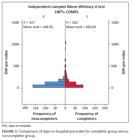
Patients were significantly older, by an average of 6 years, in the pre-COVID-19 lockdown period compared to the post-COVID-19 lockdown period (t-test = 2.61, p = 0.010) (Figure 1).
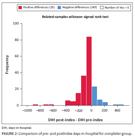
Gender was a significant predictor of the number of patients treated pre- and post-COVID-19 (p = 0.039). A greater proportion of females were treated pre-COVID-19 (60%) than post-COVID-19 (40%), whereas fewer males (43%) were treated pre-COVID-19 than post-COVID-19 (57%) (Figure 2).
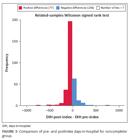
Most patients were of South African origin both pre- and post-COVID-19. However, grouping all foreign nationals together in comparison to the proportion of South Africans showed a significant difference (Fisher's exact test: p = 0.030), with the proportion of foreign nationals increasing from 8% to 22% and the proportion of South Africans decreasing from 92% to 78% from pre-COVID-19 to post-COVID-19 (Figure 3). Foreign nationals were three times (odds ratio) more likely to be seen post-COVID-19 than pre-COVID-19.
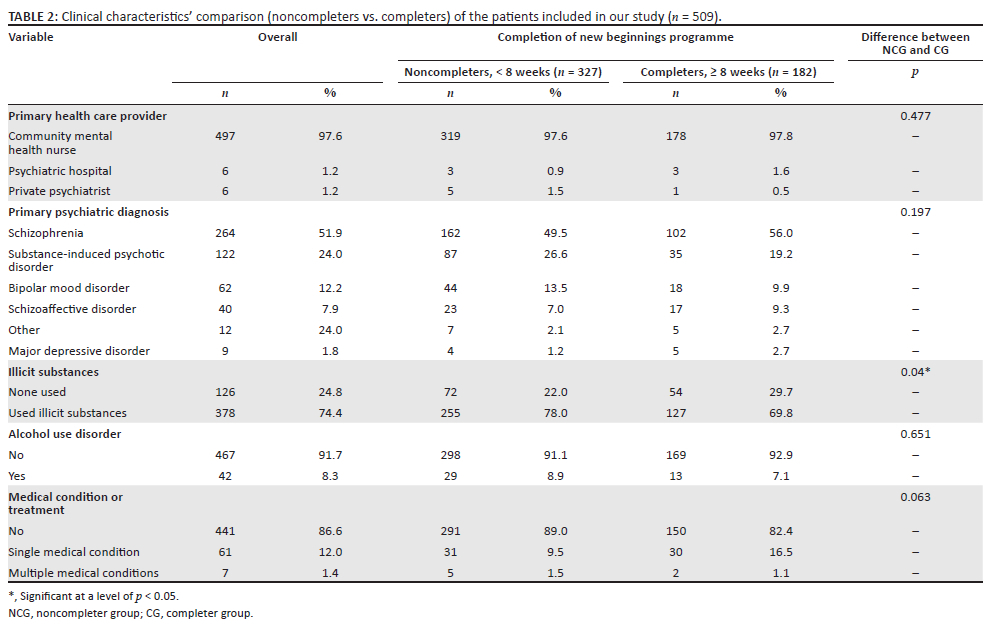
Most patients were single and expressed high school as their highest level of education. Most patients were also unemployed (Table 1).
Significantly more patients had a psychotic disorder (p = 0.02) presenting during COVID-19 lockdown than the pre-COVID-19 period (Table 2).
Discussion
Key findings
Our study showed an overall reduction in the total number of mental health-related presentations to the emergency department (ED). This contrasted with early evidence on psychiatric morbidity from China, which indicated that the rates of mental illness during the COVID-19 pandemic were expected to rise rather than fall.1718
Patients with anxiety and depression were similarly deterred from presenting to the ED because of COVID-19, yet the nearly steady number of visits for anxiety and depression during the pandemic reflects an increased prevalence of acute psychiatric problems in the general population.181919
Pérez-Balaguer et al. suggested that the intense psychosocial stress associated with a new life-threatening disease and national lockdown restrictions could be triggers for new-onset psychotic disorders.20206
Mood disorders, particularly depressive disorders, were the second most prevalent in our study. This could be as a result of a variety of reasons. Movement restriction during lockdown negatively affected many people's earning potential. Additionally, people spent extended periods of time isolated, with limited opportunities for social interactions. Isolation and confinement, even if only for a few weeks, can cause lasting psychological problems.213622
Our study showed a higher proportion of males presenting in the post-lockdown period, which was in contrast to a study conducted by Di Lorenzo et al.232425
The population in our study was significantly younger in the post-lockdown period than in the pre-lockdown period. Severe COVID-19 infection was associated with medical comorbidities, which are more prevalent in older people. This could explain why older people would be more reluctant to present to the ED, where the chance of infection could potentially be higher. Similar to our study, a study conducted in China2424
There was a significant increase in the proportion of foreign nationals treated in the post-lockdown period than there was in the pre-lockdown period, which was similar to other studies. Ambrosetti et al.292910
Strengths and limitations
Our study was conducted as a retrospective chart review, which has some limitations, as well as recognised advantages. Scientific and systematic investigation of existing health records is an important and valued methodology in healthcare research. Retrospective chart review is an important methodology with distinct advantages and has the potential to provide us with valuable research opportunities.30
Conclusion
Our study highlighted the negative effect that pandemics can have on mental health populations. The implementation of policies aimed at curbing the spread of the pandemic needs to be a careful balancing act between protecting people from infection by the causative agent and protecting their mental health. Many factors contribute to good mental health, including social relationships and financial security, and these seem to be most disrupted during pandemics. Vulnerable populations such as the young, the elderly and those who have immigrated from other countries appear to be more negatively affected, necessitating pointed strategies designed to reduce this disparity.
Competing interests
The authors declare that they have no financial or personal relationship(s) that may have inappropriately influenced them in writing this article.
Authors' contributions
N.A.H. was involved in the conceptualisation, protocol development, data collection and write-up of the research. K.L. supervised at all stages of the research project.
Funding information
The authors received no financial support for the research, authorship and/or publication of this study.
Data availability
The authors confirm that the data supporting the findings in this study are available within the article.
Disclaimer
The views and opinions expressed in this article are those of the authors and are the product of professional research. It does not necessarily reflect the official policy or position of any affiliated institution, funder, agency or that of the publisher. The authors are responsible for this article's results, findings and content.
Acknowledgements
The authors would like to extend their gratitude to Dr. Nikki Eklektos for her guidance and contribution during the protocol development stages of this project. This article is partially based on the author's thesis entitled "Descriptive study of mental healthcare users 12months pre and post COVID lockdown" towards the degree of Master of Medicine in the speciality of Psychiatry in the Department of Psychiatry, University of the Witwatersrand, South Africa with supervisor Dr. Karishma Lowton.
References
-
1. Ozdin S, Ozdin SB. Levels and predictors of anxiety, depression and health anxiety during COVID-19 pandemic in Turkish society: The importance of gender. Int J Soc Psychiatry. 2020;66(5):504-511. https://doi.org/10.1177/0020764020927051
» https://doi.org/10.1177/0020764020927051 -
2. Abbas MJ, Kronenberg G, McBride M, et al. The early impact of the COVID-19 pandemic on acute care mental health services. Psychiatry Serv Adv. 2021;72(3):242-246. https://doi.org/10.1176/appi.ps.202000467
» https://doi.org/10.1176/appi.ps.202000467 -
3. Wu T, Jia X, Shi H, et al. Prevalence of mental health problems during the COVID-19 pandemics: A systematic review and meta-analysis. J Affect Disord. 2021;281: 91-98. https://doi.org/10.1016/j.jad.2020.11.117
» https://doi.org/10.1016/j.jad.2020.11.117 -
4. Lyne J, Roche E, Kamali M, Feeney L. COVID-19 from the perspective of urban and rural general adult mental health services. Irish J Psychol Med. 2020;37(3): 181-186. https://doi.org/10.1017/ipm.2020.62
» https://doi.org/10.1017/ipm.2020.62 -
5. Dragovic M, Pascu V, Hall T, Ingram J, Waters F. Emergency department mental health presentations before and during the COVID-19 outbreak in western Australia. Aus Psychiatry. 2020;28(6):627-663. https://doi.org/10.1177/1039856220960673
» https://doi.org/10.1177/1039856220960673 -
6. Subramaney U, Kim AW, Chetty I, et al. Coronavirus disease and psychiatric sequelae in South Africa: Anxiety and beyond. Wits J Clin Med. 2020;2(2): 115-122. https://doi.org/10.18772/26180197.2020.v2n2a2
» https://doi.org/10.18772/26180197.2020.v2n2a2 -
7. Esterwood E, Saeed S. Past epidemics, natural disaster, COVID-19 and mental health: Learning from history as we deal with the present and prepare for the future. Psychiatr Q. 2020;91(4):1121-1133. https://doi.org/10.1007/s11126-020-09808-4
» https://doi.org/10.1007/s11126-020-09808-4 -
8. Lim G, Hui How A, Zhong Hui Lee J, Ganti S, Omar E. Mental health related presentations to a tertiary emergency department during the COVID-19 pandemic. Singapore Med J. 2023;10(103). https://doi.org/10.4103/singaporemedj.SMJ-2022-103
» https://doi.org/10.4103/singaporemedj.SMJ-2022-103 -
9. Nguse S, Wassenaar D. Mental health and COVID-19 in South Africa. S Afr J Psychol. 2021;51(2):304-313. https://doi.org/10.1177/00812463211001543
» https://doi.org/10.1177/00812463211001543 -
10. Vigo D, Patten S, Pajer K, et al. Mental health of communities during the COVID-19 pandemic. Can J Psychiatry. 2020;65(10):681-687. https://doi.org/10.1177/0706743720926676
» https://doi.org/10.1177/0706743720926676 -
11. Liam A, Wang C, Wariyanti Y, Latkine CA, Hall BJ. The neglected health of international migrant workers in the COVID-19 epidemic. Lancet Psychiatry. 2020;7(4):e20. https://doi.org/10.1016/S2215-0366(20)30076-6
» https://doi.org/10.1016/S2215-0366(20)30076-6 -
12. Kam A, Ghaudhry S, Gunasekaran N, White A, Vukasovic M, Fung A. Fewer presentations to metropolitan emergency departments during the COVID-19 pandemic. Med J Aust. 2020;213(8):370-371. https://doi.org/10.5694/mja2.50769
» https://doi.org/10.5694/mja2.50769 -
13. Mukadam N, Sommerlad A, Wright J, et al. Psychiatry and covid-19: Acute mental health presentations before and during the pandemic. 2021;7(134):1-8. https://doi.org/10.1192/bjo.2021.970
» https://doi.org/10.1192/bjo.2021.970 -
14. Wang Y, Kala MP, Jafar TH. Factors associated with psychological distress during the corona virus disease (COVID-19) pandemic on the predominantly general population: A systematic review and meta-analysis. PLoS One. 2020;15(12):e0244630. https://doi.org/10.1371/journal.pone.0244630
» https://doi.org/10.1371/journal.pone.0244630 -
15. Tuma J, Zhang J, Lamberti N. Anxiety, depression and stress during the COVID-19 pandemic. Results from cross-sectional survey. J Psychiatr Res. 2021;137:96-103. https://doi.org/10.1016/j.jpsychires.2021.02.059
» https://doi.org/10.1016/j.jpsychires.2021.02.059 -
16. Alacevich C, Thalmann I, Nicodemo C, de Lusignan S, Petrou S. Depression and anxiety during and after episodes of COVID-19 in the community. Sci Rep. 2023;13:8257. https://doi.org/10.1038/541598-023-33642-w
» https://doi.org/10.1038/541598-023-33642-w -
17. McAndrew J, O'Leary J, Cotter D, et al. Impact of initial COVID-19 restrictions on psychiatry presentations to the emergency department of a large academic teaching hospital. Irish J Psychol Med. 2020;38(2):108-115. https://doi.org/10.1017/ipm.2020.115
» https://doi.org/10.1017/ipm.2020.115 -
18. Sacco D, Probst M, Schultebraucks K, Greene M, Chang B. Evaluation of emergency department visits for mental health complaints during the COVID-19 pandemic. J Am Coll Physicians Open. 2022;3(3):e12728. https://doi.org/10.1002/emp2.12728
» https://doi.org/10.1002/emp2.12728 - 19. Keks N, Blashki G. The acutely psychotic patient: Assessment and initial management. Aust Fam Physician. 2006;35(3):90-94.
-
20. Pérez-Balaguer A, Solari-Heresmann L, Gil-Benito E, Sanz-Aranguez B, Gayubo-Moreo L. The impact of the COVID-19 pandemic on the development of acute and transient psychotic disorders. Eur Psychiatry. 2021;64(S1):S258-S259. https://doi.org/10.1192/j.eurpsy.2021.693
» https://doi.org/10.1192/j.eurpsy.2021.693 -
21. Taylor S, Asmusndson GJG. Life in a post-pandemic world: What to expect of anxiety-related conditions and their treatment. J Anxiety Disord. 2020;72:102231. https://doi.org/10.1016/j.janxdis.2020.102231
» https://doi.org/10.1016/j.janxdis.2020.102231 -
22. Kim AW, Nyengerai T, Mendehall E. Evaluating the mental health impacts of the COVID-19 pandemic: Perceived risk of COVID-19 infection and childhood trauma predict adult depressive symptoms in urban South Africa. Psychol Med. 2022;52(8):1587-1599. https://doi.org/10.1017/S0033291720003414
» https://doi.org/10.1017/S0033291720003414 -
23. Di Lorenzo R, Fiore G, Bruno A, et al. Urgent psychiatric consultations at mental health centre during COVID-19 pandemic: Retrospective observational study. Psychiatr Q. 2021;92(4):1341-1359. https://doi.org/10.1007/s11126-021-09907-w
» https://doi.org/10.1007/s11126-021-09907-w -
24. Liang L, Ren H, Cao R, et al. The effect of COVID-19 on youth mental health. Psychiatr Q. 2020;91(3):841-852. https://doi.org/10.1007/s11126-020-09744-3
» https://doi.org/10.1007/s11126-020-09744-3 -
25. Suanrueang P, Peltzer K, Suen M, Lin H, Er T. Trends and gender differences in mental disorders in hospitalized patients in Thailand. Inquiry. 2022;59:469580221092827. https://doi.org/10.1177/00469580221092827
» https://doi.org/10.1177/00469580221092827 -
26. Stroever S, Brett C, Michael K, Petrini J. Emergency department utilization for mental health conditions before and after the COVID-19 outbreak. Am J Emerg Med. 2021;47:164-168. https://doi.org/10.1016/j.ajem.2021.03.084
» https://doi.org/10.1016/j.ajem.2021.03.084 -
27. Munich J, Dennett L, Swainson J, Greenshaw AJ, Hayward J. Impact of pandemics/epidemics on emergency department utilization for mental health and substance use: A rapid review. Front Psychiatry 2021;12:615000. https://doi.org/10.3389/fpsyt.2021.615000
» https://doi.org/10.3389/fpsyt.2021.615000 -
28. Disaster Management Act [homepage on the Internet]. [cited 2024 Feb 27]. Available from: https://www.gov.za/sites/default/files/gcis_document/202003/4314825-3cogta.pdf
» https://www.gov.za/sites/default/files/gcis_document/202003/4314825-3cogta.pdf -
29. Ambrosetti J, Macheret L, Folliet A, et al. Psychiatric emergency admissions during and after COVID-19 lockdown: Short-term impact and long-term implications on mental health. BMC Psychiatry. 2021;21(1):465. https://doi.org/10.1186/s12888-021-03469-8
» https://doi.org/10.1186/s12888-021-03469-8 - 30. Gearin R, Mian I, Barber J. A methodology for conducting retrospective chart review research in child and adolescent psychiatry. J Can Acad Child Adolesc Psychiatry. 2006;15(3):126-134.

Accepted: 18 Aug. 2024
Published: 18 Oct. 2024