Trauma as a mediator of childhood adversity and mental illness in South Africa: A path analysis
Abstract
BACKGROUND: South Africa bears a high burden of adverse childhood events (ACEs), which have been identified as a primary factor that can lead to negative mental health outcomes for adults. While studies within South Africa have examined the associations between ACEs, adult trauma and adult mental illness, there is less knowledge of how these preceding factors interact to affect mental distress together and which ACEs are most likely to lead to adverse mental health outcomes AIM: The main aim of this study was to explore the mediating effects of recent adult trauma on mental illness among patients at two psychiatric hospitals in Johannesburg, South Africa, using path analysis SETTING: This study took place at two public psychiatric facilities in Johannesburg, South Africa METHODS: Surveys were conducted with 309 adults living in Gauteng province. Mediational path analysis explored the association between ACEs, adult traumatic events, and depression, anxiety, and stress RESULTS: Adult traumatic events partially mediated the association between verbal abuse, emotional neglect, mental illness and substance use in the household as a child and adult mental illness. Adult traumatic events fully mediated the associations between experiencing domestic violence in childhood or child sexual abuse CONCLUSION: This study highlights the importance of disaggregating ACEs when exploring their effects while also reinforcing previous findings that ACEs increase the likelihood of experiencing adult trauma and adult mental illness CONTRIBUTION: Future studies should further pinpoint which ACEs are most impactful and target those for prevention in childhood and intervention in adulthood to mitigate their deleterious impacts
South Africa; Johannesburg; ACEs; trauma; mental health
Introduction
Globally there are significant variations in exposure to trauma;1234
Within South Africa, this has prompted an increase in research on trauma exposure in recent years. One study with a clinical population in South Africa found a 75% prevalence rate of past trauma exposure, with a 43.8% rate of multiple traumatic events.56
In South Africa, mental illness as a result of traumatic experiences has been declared a national public health concern because of particular high rates of violence, crime and serious accidents.78,9,10
Mental illness is an increasing concern in South Africa, where an estimated 92% of people who need care for psychiatric disorders are reportedly not receiving any biomedical treatment.111213,1415,16,1710,18,19,20,219,22,23
While the literature has established a firm link between childhood adversity and adult mental health,24,25,269,2728
Most studies with ACEs explore the impact of aggregated scores on various outcomes; therefore, very little is known about how specific types of adversity in childhood may relate to adult well-being.2930
Previous research with this study sample has found that both ACEs and adult traumatic events were associated with significant increases in anxiety, depression and severe stress.31disaggregated ACEs as a predictor of depression, anxiety and stress symptoms, and (2) exploring whether the impact of childhood trauma on these symptoms was mediated by adult traumatic events. Findings from this study may help guide the development of interventions that are targeted to treat and prevent these symptoms and which are based on specific traumas experienced during childhood, thereby optimising mental health outcomes through increased programmatic efficacy.
Research methods and design
Sample
Sampling, procedures and measures were described in a previous publication.31n = 309). All patients who identified as being of Black/African descent, aged 18 years or above, and able to provide written informed consent were eligible to participate in the study. Individuals who did not meet the inclusion criteria or self-reported having a serious mental illness or disability that would prevent them from participating in the survey were excluded from the study.
Measures
Demographics: Participants reported their age, sex, psychiatric history, history of mental illness in family members, income, marital status, highest level of education achieved and number of people living in the household.
Adverse childhood experiences were measured with the 10-item version of the ACEs - International Questionnaire.32
Stress was measured using the 10-item Perceived Stress Scale (PSS).3333
Traumatic events were measured using a 12-item binary (yes/no) index assessing the experience of traumatic events (homelessness, rape, injury, family separation, natural disaster, murder, domestic violence and serious automobile accident). A high index score indicates a larger number of traumatic events experienced by the participant.
Anxiety symptoms were assessed using the Generalized Anxiety Disorder (GAD-7) screen tool. The measure consists of seven Likert scale items that have been validated for assessing GAD in clinical and research environments in different cultural settings.3435
Depressive severity was assessed using the Patient Health Questionnaire 9, which includes nine items.34,36,37
Data analysis
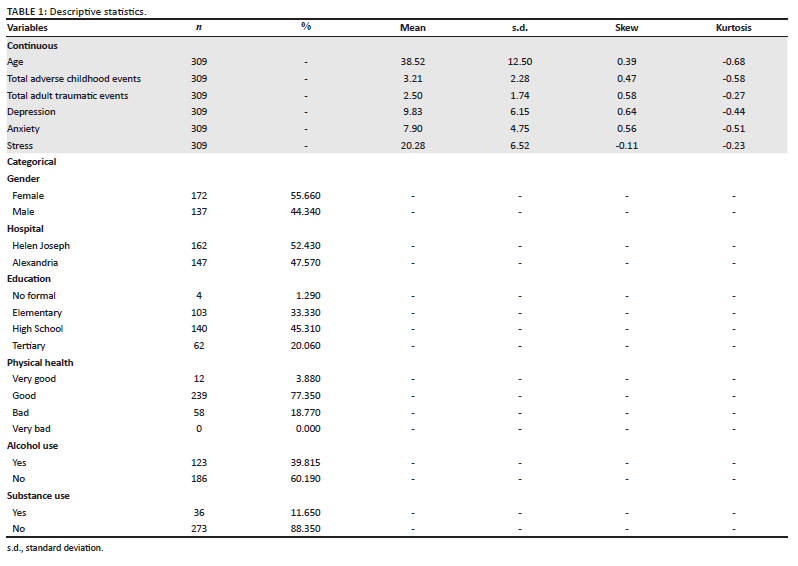
Data were analysed using R statistical software 4.2.2. Descriptive data were obtained for the sample (Table 1), and internal consistency of the measures of depression, anxiety, stress, and ACEs were determined using Cronbach's alpha. Diagonally weighted least squares path analysis with lavaan3823940
Ethical considerations
Ethical clearance to conduct this study was obtained from the University of the Witwatersrand Human Research Ethics Committee (No. M210815). Participants were approached by the study lead, co-investigators and trained research assistants at the two hospitals. After written informed consent was obtained, each participant was interviewed by a trained research assistant. The interviews were conducted in person at a private location at the hospital. All potential participants were screened for eligibility in person. All participants signed and received a copy of the consent form to keep for their records and received remuneration in the amount of 100 ZAR or South African Rand (US$ 7). Data confidentiality was maintained by keeping all information on password-protected devices that were only accessible for study team members.
Results
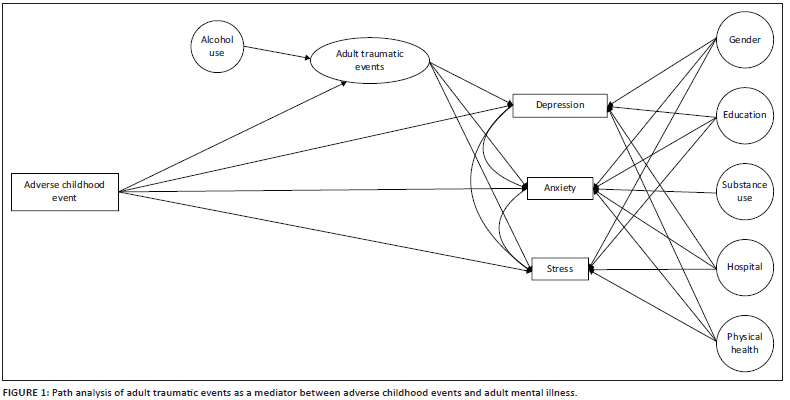
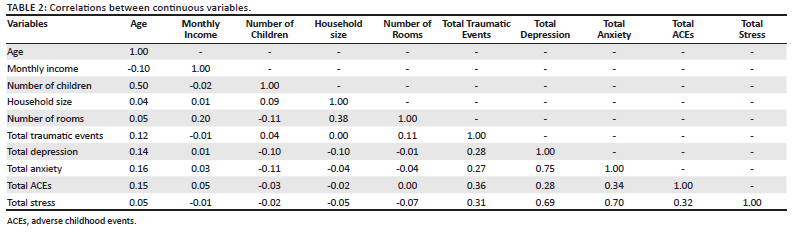
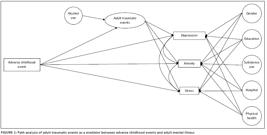
The study enrolled a total of 309 participants, all of whom completed the measures in their entirety. Skewness and kurtosis of continuous data were mild but violated the Shapiro-Wilks normality test.41Table 2); correlations with other continuous variables were weak. Point-biserial correlations between gender and total depression (rpb = -0.25, p < 0.001), total anxiety (rpb = -0.21, p < 0.001) and total stress (rpb = -0.23, p < 0.001) were all significant, as was the hospital at which the participant was interviewed; correlations were rpb = -0.22, p < 0.001, rpb = -0.18, p = 0.001 and rpb = -0.19, p < 0.001 for depression, stress and anxiety, respectively. Additionally, substance use correlated with anxiety (rpb = -0.12, p = 0.03), and alcohol use correlated with the total number of adult traumatic events (rpb = -0.14, p = 0.02). Analysis of variances (ANOVAs) was used as a preliminary evaluation of the relationship between categorical and ordinal variables and mental health outcomes. Subjective physical health was significantly associated with depression, F(1, 309) = 53.24, p < 0.001; anxiety F(1, 309) = 40.60, p < 0.001; and stress, F(1, 309) = 43.06, p < 0.001. Additionally, education was found to be associated with depression, F(1, 309) = 4.79, p = 0.03 and anxiety, F(1, 309) = 6.58, p = 0.01. Based on these findings, gender, hospital setting, physical health and education were retained as control variables for depression, anxiety and stress in the final models. Substance use was retained as a control for anxiety, and alcohol use was retained as a control for total adult traumatic events. Additionally, depression, anxiety and stress were allowed to covary in the path analysis. The final model, used for all subsequent analyses, is depicted in Figure 1.
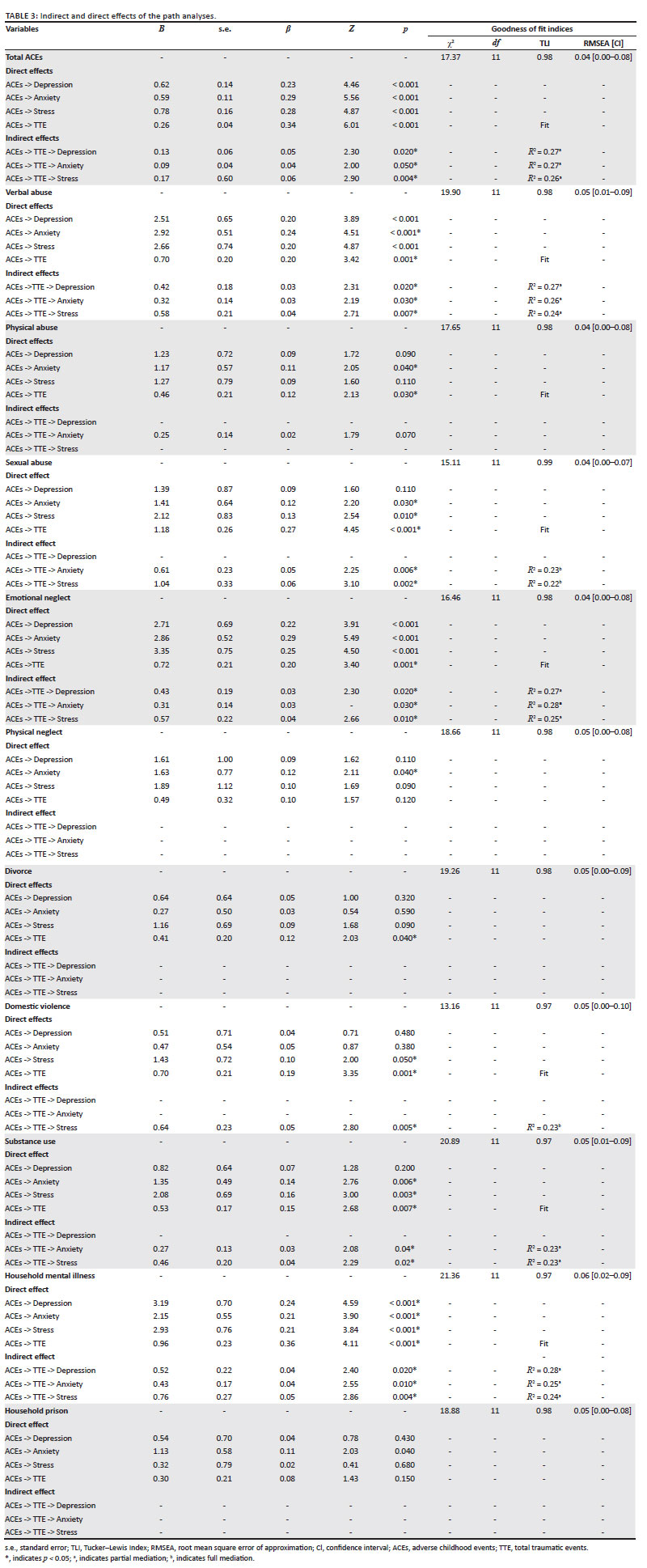
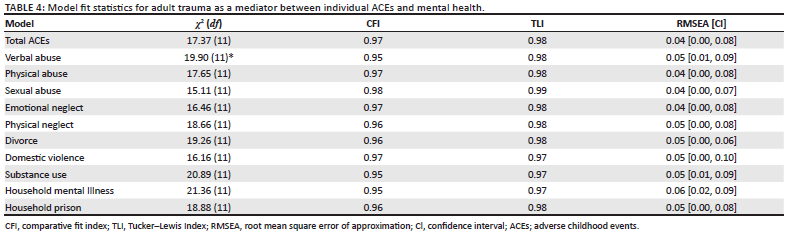
A path analysis was conducted to evaluate total ACEs as the independent variable in the model. Total adult traumatic events were found to partially mediate the relationship between total ACEs and depression, anxiety and stress (Table 3). Based on these findings, individual ACEs were tested, to determine whether differences could be observed between them. Model fits for each respective model are detailed in Table 4. Total adult traumatic events partially mediated the associations between verbal abuse, emotional neglect and mental illness in the household as a child and all three adult mental health outcomes (Table 3). Total adult traumatic experiences partially mediated the association between experiencing substance use in the household as a child and experiencing anxiety and stress as an adult. Additionally, total adult traumatic events fully mediated the association between experiencing domestic violence in childhood and experiencing stress as an adult, and fully mediated the association between childhood sexual abuse and anxiety and stress. All other associations showed a non-significant direct effect, either between the ACE (independent variable) and the mental health outcome or between the total adult traumatic events (mediator) and the mental health outcome.
Discussion
This study of a clinical sample of mental health patients at two large public psychiatric facilities in Johannesburg examined how adult trauma events mediated the relationship between ACEs and depression, anxiety and stress. The findings of this study reflect the high rates of ACEs that have been found in other research in sub-Saharan Africa, with up to 83% experiencing emotional abuse, 64% physical abuse and 19% sexual abuse.342289,43,44
While other mediation studies in South Africa have examined variables linked to ACEs and mental health, none have examined the pathway of complex trauma over a patient's life course to see the impact multiple traumatic events have over time. One mediation study looked at how childhood trauma is mediated by poor coping abilities, thus leading to depression and other psychiatric outcomes, with findings indicating that the ability to cope is a key factor in whether or not childhood trauma leads to mental illness in adulthood.1045
As noted in Manyema et al.,4646
In addition to the direct effects on adult mental distress, adult traumatic events were found to partially mediate the association between ACEs, including verbal abuse, emotional neglect, mental illness in the household as a child, and substance use in the household as a child, and either all or some of the mental health outcome variables. Adult traumatic events fully mediated the associations between experiencing domestic violence in childhood or child sexual abuse and either all or some of the outcome variables. These findings support earlier research suggesting that the effect of ACEs is attenuated in the presence of adult adversity,46,47,4849
This study also highlighted why it is important to research factors related to adult traumatic experiences. First and foremost is poverty, which is widespread in many sub-Saharan countries. Poverty is associated with increased rates of abuse, as poor households are often overstressed.28,5010,51,5221,5323
Lastly, this study found a significant relationship between alcohol use and adult traumatic experiences. Similarly, other studies in South Africa which examined 560 women in a township outside Cape Town found that alcohol use has a strong relationship to both trauma and mental illness in this population.5455,56,571158
While this study provides interesting initial findings for future research on mental illness in adulthood, the results should be interpreted with caution as the study has limitations. Data were collected with a clinical population of adults, and therefore the findings may not be generalisable to the broader population. However, given the high rates of trauma and mental illness in South Africa paired with low rates of receiving mental health support, it is possible that these findings would be applicable across South Africa, and future research should explore this connection. Another limitation is the relatively low sample size in comparison with the number of variables and models. Additionally, this study collected data via retrospective self-reporting, which has been found to affect participant responses.59
Conclusion
Traumatic events in both childhood and adulthood are closely linked and represent a clear pathway to experiences of mental distress for adults. The high rates of depression, anxiety and stress in South Africa speak to the need to better understand the origins of major mental illness in the country as a precursor to developing methods to support the recovery of patients experiencing mental distress. The results of this study further that aim by improving our understanding of how the connections between specific forms of childhood adversity and adult trauma impact well-being, particularly in understudied regions of the world such as sub-Saharan Africa. While preventing the occurrence of ACEs is an important objective, so too is comprehending how to interrupt the chain linking ACEs and poor health outcomes. Lastly, this study also helps to identify which types of ACEs are most influential for adult trauma and mental health risks, emphasising how specific ACEs affecting social and emotional factors may impact adult mental distress more than physical forms of abuse.
Competing interests
The authors declare that they have no financial or personal relationships that may have inappropriately influenced them in writing this article.
Authors' contributions
M.D.G. conceptualised, analysed, investigated, wrote, reviewed and supervised the writing of this research article. A.S. conceptualised, analysed and contributed to the writing of this research article. L.C. and Z.L. contributed to the investigation, data, and writing of this research article. A.W.K. contributed to the writing and supervision of this research article. A.M. contributed to the conceptualisation, investigation, writing and supervision of this research article.
Funding information
Research reported in this publication was supported by the Fogarty International Center and the Office of Behavioral and Social Sciences Research (OBSSR) of the National Institutes of Health under Award Number D43 TW010543. The content is solely the responsibility of the authors and does not necessarily represent the official views of the National Institutes of Health.
Data availability
All data will be made available to anyone upon reasonable request.
Disclaimer
The views and opinions expressed in this article are those of the authors and are the product of professional research. It does not necessarily reflect the official policy or position of any affiliated institution, funder or agency or that of the publisher. The authors are responsible for this article's results, findings and content.
Acknowledgements
References
-
1. Benjet C, Bromet E, Karam EG, et al. The epidemiology of traumatic event exposure worldwide: Results from the World Mental Health Survey Consortium. Psychol Med. 2016;46(2):327-343. https://doi.org/10.1017/S0033291715001981
» https://doi.org/10.1017/S0033291715001981 -
2. Ng LC, Stevenson A, Kalapurakkel SS, et al. National and regional prevalence of posttraumatic stress disorder in sub-Saharan Africa: A systematic review and meta-analysis. PLoS Med. 2020;17(5):e1003090. https://doi.org/10.1371/journal.pmed.1003090
» https://doi.org/10.1371/journal.pmed.1003090 -
3. Stoltenborgh M, Bakermans-Kranenburg MJ, Alink LR, Van IJzendoorn MH. The prevalence of child maltreatment across the globe: Review of a series of meta-analyses. Child Abuse Rev. 2015;24(1):37-50. https://doi.org/10.1002/car.2353
» https://doi.org/10.1002/car.2353 -
4. Smigelsky MA, Aten JD, Gerberich S, et al. Trauma in sub-Saharan Africa: Review of cost, estimation methods, and interventions. Int J Emerg Ment Health. 2014;16(2):354-365. https://doi.org/10.4172/1522-4821.1000129
» https://doi.org/10.4172/1522-4821.1000129 -
5. Van Zyl L, Nel C, Du Toit M, Joubert G. Reported exposure to trauma among adult patients referred for psychological services at the Free State Psychiatric Complex, Bloemfontein. Health SA Gesondheid. 2017;22;235-240. https://doi.org/10.1016/j.hsag.2017.01.001
» https://doi.org/10.1016/j.hsag.2017.01.001 -
6. Stevenson A, Beltran M, Misra S, et al. Trauma exposure and psychometric properties of the life events checklist among adults in South Africa. Eur J Psychotraumatol. 2023;14(1):2172257. https://doi.org/10.1080/20008066.2023.2172257
» https://doi.org/10.1080/20008066.2023.2172257 -
7. Edwards D. Post-traumatic stress disorder as a public health concern in South Africa. J Psychol Afr. 2005;15(2):125-134. https://doi.org/10.4314/jpa.v15i2.30650
» https://doi.org/10.4314/jpa.v15i2.30650 -
8. Ward CL, Flisher AJ, Zissis C, Muller M, Lombard C. Exposure to violence and its relationship to psychopathology in adolescents. Inj Prev. 2001;7(4):297-301. https://doi.org/10.1136/ip.7.4.297
» https://doi.org/10.1136/ip.7.4.297 -
9. Suliman S, Mkabile SG, Fincham DS, Ahmed R, Stein DJ, Seedat S. Cumulative effect of multiple trauma on symptoms of posttraumatic stress disorder, anxiety, and depression in adolescents. Comprehen Psychiatry. 2009;50(2):121-127. https://doi.org/10.1016/j.comppsych.2008.06.006
» https://doi.org/10.1016/j.comppsych.2008.06.006 -
10. Choi KW, Sikkema KJ, Velloza J, et al. Maladaptive coping mediates the influence of childhood trauma on depression and PTSD among pregnant women in South Africa. Arch Women's Ment Health. 2015;18(5):731-738. https://doi.org/10.1007/s00737-015-0501-8
» https://doi.org/10.1007/s00737-015-0501-8 -
11. Docrat S, Besada D, Cleary S, Daviaud E, Lund C. Mental health system costs, resources and constraints in South Africa: A national survey. Health Policy Plan. 2019;34(9):706-719. https://doi.org/10.1093/heapol/czz085
» https://doi.org/10.1093/heapol/czz085 -
12. Burns JK, Jhazbhay K, Esterhuizen T, Emsley R. Exposure to trauma and the clinical presentation of first-episode psychosis in South Africa. J Psychiatr Res. 2011;45(2):179-184. https://doi.org/10.1016/j.jpsychires.2010.05.014
» https://doi.org/10.1016/j.jpsychires.2010.05.014 -
13. Lindert J, Von Ehrenstein OS, Grashow R, Gal G, Braehler E, Weisskopf MG. Sexual and physical abuse in childhood is associated with depression and anxiety over the life course: Systematic review and meta-analysis. Int J Public Health. 2014;59(2):359-372. https://doi.org/10.1007/s00038-013-0519-5
» https://doi.org/10.1007/s00038-013-0519-5 -
14. Li M, D'Arcy C, Meng X. Maltreatment in childhood substantially increases the risk of adult depression and anxiety in prospective cohort studies: Systematic review, meta-analysis, and proportional attributable fractions. Psychol Med. 2016;46(4):717-730. https://doi.org/10.1017/S0033291715002743
» https://doi.org/10.1017/S0033291715002743 -
15. McCauley J, Kern DE, Kolodner K, et al. Clinical characteristics of women with a history of childhood abuse: Unhealed wounds. JAMA. 1997;277(17):1362-1368. https://doi.org/10.1001/jama.1997.03540410040028
» https://doi.org/10.1001/jama.1997.03540410040028 -
16. Green BL, Goodman LA, Krupnick JL, et al. Outcomes of single versus multiple trauma exposure in a screening sample. J Trauma Stress. 2000;13(2):271-286. https://doi.org/10.1023/A:1007758711939
» https://doi.org/10.1023/A:1007758711939 -
17. Miranda R, Meyerson LA, Marx BP, Tucker PM. Civilian-based posttraumatic stress disorder and physical complaints: Evaluation of depression as a mediator. J Trauma Stress. 2002;15(4):297-301. https://doi.org/10.1023/A:1016299711568
» https://doi.org/10.1023/A:1016299711568 -
18. Kaplow JB, Widom CS. Age of onset of child maltreatment predicts long-term mental health outcomes. J Abnormal Psychol. 2007;116(1):176. https://doi.org/10.1037/0021-843X.116.1.176
» https://doi.org/10.1037/0021-843X.116.1.176 -
19. Brezing C, Ferrara M, Freudenreich O. The syndemic illness of HIV and trauma: Implications for a trauma-informed model of care. Psychosomatics. 2015;56(2):107-118. https://doi.org/10.1016/j.psym.2014.10.006
» https://doi.org/10.1016/j.psym.2014.10.006 -
20. Kim AW, Said Mohamed R, Norris SA, Richter LM, Kuzawa CW. Psychological legacies of intergenerational trauma under South African apartheid: Prenatal stress predicts greater vulnerability to the psychological impacts of future stress exposure during late adolescence and early adulthood in Soweto, South Africa. J Child Psychol Psychiatry. 2023;64(1):110-124. https://doi.org/10.1111/jcpp.13672
» https://doi.org/10.1111/jcpp.13672 -
21. Yemeke TT, Sikkema KJ, Watt MH, Ciya N, Robertson C, Joska JA. Screening for traumatic experiences and mental health distress among women in HIV care in Cape Town, South Africa. J Interpers Violence. 2020;35(21-22):4842-4862. https://doi.org/10.1177/0886260517718186
» https://doi.org/10.1177/0886260517718186 -
22. Karam EG, Friedman MJ, Hill ED, et al. Cumulative traumas and risk thresholds: 12-month PTSD in the World Mental Health (WMH) surveys. Depress Anxiety. 2014;31(2):130-142. https://doi.org/10.1002/da.22169
» https://doi.org/10.1002/da.22169 -
23. Mall S, Mortier P, Taljaard L, Roos J, Stein DJ, Lochner C. The relationship between childhood adversity, recent stressors, and depression in college students attending a South African university. BMC Psychiatry. 2018;18(1):1-10. https://doi.org/10.1186/s12888-017-1583-9
» https://doi.org/10.1186/s12888-017-1583-9 -
24. McLaughlin KA, Green JG, Gruber MJ, Sampson NA, Zaslavsky AM, Kessler RC. Childhood adversities and first onset of psychiatric disorders in a national sample of US adolescents. Arch Gen Psychiatry. 2012;69(11):1151-1160. https://doi.org/10.1001/archgenpsychiatry.2011.2277
» https://doi.org/10.1001/archgenpsychiatry.2011.2277 -
25. Hughes K, Bellis MA, Hardcastle KA, et al. The effect of multiple adverse childhood experiences on health: A systematic review and meta-analysis. Lancet Public Health. 2017;2(8):e356-e366. https://doi.org/10.1016/S2468-2667(17)30118-4
» https://doi.org/10.1016/S2468-2667(17)30118-4 -
26. Sahle BW, Reavley NJ, Li W, et al. The association between adverse childhood experiences and common mental disorders and suicidality: An umbrella review of systematic reviews and meta-analyses. Eur Child Adolesc Psychiatry. 2022;31(10):1489-1499. https://doi.org/10.1007/s00787-021-01745-2
» https://doi.org/10.1007/s00787-021-01745-2 -
27. Craig A, Rochat TJ, Naicker SN, et al. The prevalence of probable depression and probable anxiety, and associations with adverse childhood experiences and socio-demographics: A national survey in South Africa. Front Public Health. 2022;10:986531. https://doi.org/10.3389/fpubh.2022.986531
» https://doi.org/10.3389/fpubh.2022.986531 -
28. Hatcher AM, Gibbs A, Jewkes R, McBride RS, Peacock D, Christofides N. Effect of childhood poverty and trauma on adult depressive symptoms among young men in peri-urban South African settlements. J Adolesc Health. 2018;64(1):79-85. https://doi.org/10.1016/j.jadohealth.2018.07.026
» https://doi.org/10.1016/j.jadohealth.2018.07.026 -
29. Font SA, Maguire-Jack K. Pathways from childhood abuse and other adversities to adult health risks: The role of adult socioeconomic conditions. Child Abuse Negl. 2016;51:390-399. https://doi.org/10.1016/j.jadohealth.2018.07.026
» https://doi.org/10.1016/j.jadohealth.2018.07.026 -
30. Giano Z, Ernst CW, Snider K, Davis A, O'Neil AM, Hubach RD. ACE domains and depression: Investigating which specific domains are associated with depression in adulthood. Child Abuse Negl. 2021;122:105335. https://doi.org/10.1016/j.chiabu.2021.105335
» https://doi.org/10.1016/j.chiabu.2021.105335 -
31. Byansi W, Galvin M, Chiwaye L, et al. Adverse childhood experiences, traumatic events, and mental health among adults at two outpatient psychiatric facilities in Johannesburg, South Africa: A cross-sectional analysis. BMC Psychiatry. 2023;23(1):1-11. https://doi.org/10.1186/s12888-023-05085-0
» https://doi.org/10.1186/s12888-023-05085-0 -
32. Kidman R, Smith D, Piccolo LR, Kohler HP. Psychometric evaluation of the adverse childhood experience international questionnaire (ACE-IQ) in Malawian adolescents. Child Abuse Negl. 2019;92:139-145. https://doi.org/10.1016/j.chiabu.2019.03.015
» https://doi.org/10.1016/j.chiabu.2019.03.015 -
33. Hamad R, Fernald LCH, Karlan DS, Zinman J. Social and economic correlates of depressive symptoms and perceived stress in South African adults. J Epidemiol Community Health. 2008;62(6):538-544. https://doi.org/10.1136/jech.2007.066191
» https://doi.org/10.1136/jech.2007.066191 -
34. Chibanda D, Verhey R, Gibson LJ, et al. Validation of screening tools for depression and anxiety disorders in a primary care population with high HIV prevalence in Zimbabwe. J Affect Disord. 2016;198:50-55. https://doi.org/10.1016/j.jad.2016.03.006
» https://doi.org/10.1016/j.jad.2016.03.006 -
35. Spitzer RL, Kroenke K, Williams JB, Löwe B. A brief measure for assessing generalized anxiety disorder: The GAD-7. Arch Intern Med. 2006;166(10):1092-1097. https://doi.org/10.1001/archinte.166.10.1092
» https://doi.org/10.1001/archinte.166.10.1092 -
36. Kroenke K, Spitzer RL, Williams JB, Löwe B. The patient health questionnaire somatic, anxiety, and depressive symptom scales: A systematic review. Gen Hosp Psychiatry. 2010;32(4):345-359. https://doi.org/10.1016/j.genhosppsych.2010.03.006
» https://doi.org/10.1016/j.genhosppsych.2010.03.006 -
37. Rane MS, Hong T, Govere S, et al. Depression and anxiety as risk factors for delayed care-seeking behavior in human immunodeficiency virus-infected individuals in South Africa. Clin Infect Dis. 2018;67(9):1411-1418. https://doi.org/10.1093/cid/ciy309
» https://doi.org/10.1093/cid/ciy309 -
38. Rosseel Y. lavaan: An R Package for structural equation modeling. J Stat Soft. 2012;48(2):1-36. https://doi.org/10.18637/jss.v048.i02
» https://doi.org/10.18637/jss.v048.i02 -
39. Bentler PM, Bonett DG. Significance tests and goodness of fit in the analysis of covariance structures. Psychol Bull. 1980;88(3):588-606. https://doi.org/10.1037/0033-2909.88.3.588
» https://doi.org/10.1037/0033-2909.88.3.588 -
40. MacCallum RC, Browne MW, Sugawara HM. Power analysis and determination of sample size for covariance structure modeling. Psychol Methods. 1996;1:130-149. https://doi.org/10.1037/1082-989X.1.2.130
» https://doi.org/10.1037/1082-989X.1.2.130 -
41. Shapiro SS, Wilk MB. An analysis of variance test for normality (complete samples). Biometrika. 1965;52(3/4):591-611. https://doi.org/10.2307/2333709
» https://doi.org/10.2307/2333709 -
42. Manyema M, Richter LM. Adverse childhood experiences: Prevalence and associated factors among South African young adults. Heliyon. 2019;5(12):e03003. https://doi.org/10.1016/j.heliyon.2019.e03003
» https://doi.org/10.1016/j.heliyon.2019.e03003 -
43. Seedat S, Nyamai C, Njenga F, Vythilingum B, Stein DJ. Trauma exposure and post-traumatic stress symptoms in urban African schools: Survey in Cape Town and Nairobi. Br J Psychiatry. 2004;184(2):169-175. https://doi.org/10.1192/bjp.184.2.169
» https://doi.org/10.1192/bjp.184.2.169 -
44. Mal-Sarkar T, Keyes K, Koen N, et al. The relationship between childhood trauma, socioeconomic status, and maternal depression among pregnant women in a south African birth cohort study. SSM Popul Health. 2021;14:100770. https://doi.org/10.1016/j.ssmph.2021.100770
» https://doi.org/10.1016/j.ssmph.2021.100770 -
45. Spies G, Seedat S. Depression and resilience in women with HIV and early life stress: Does trauma play a mediating role? A cross-sectional study. BMJ Open. 2014;4(2):e004200. https://doi.org/10.1136/bmjopen-2013-004200
» https://doi.org/10.1136/bmjopen-2013-004200 -
46. Manyema M, Norris SA, & Richter LM. Stress begets stress: The association of adverse childhood experiences with psychological distress in the presence of adult life stress. BMC Public Health. 2018;18(1):835. https://doi.org/10.1186/s12889-018-5767-0
» https://doi.org/10.1186/s12889-018-5767-0 -
47. Nurius PS, Green S, Logan-Greene P, Borja S. Life course pathways of adverse childhood experiences toward adult psychological well-being: A stress process analysis. Child Abuse Negl. 2015;45:143-153. https://doi.org/10.1016/j.chiabu.2015.03.008
» https://doi.org/10.1016/j.chiabu.2015.03.008 -
48. Stumbo SP, Yarborough BJH, Paulson RI, Green CA. The impact of adverse child and adult experiences on recovery from serious mental illness. Psychiatr Rehabil J. 2015;38(4):320. https://doi.org/10.1037/prj0000141
» https://doi.org/10.1037/prj0000141 -
49. Jones TM, Nurius P, Song C, Fleming CM. Modeling life course pathways from adverse childhood experiences to adult mental health. Child Abuse Negl. 2018;80:32-40. https://doi.org/10.1016/j.chiabu.2018.03.005
» https://doi.org/10.1016/j.chiabu.2018.03.005 - 50. Idemudia ES, Williams JK, Madu SN, Wyatt GE. Trauma exposures and posttraumatic stress among Zimbabwean refugees in South Africa. Life Sci J. 2013;10(3):349.
-
51. Jewkes R, Abrahams N. The epidemiology of rape and sexual coercion in South Africa: An overview. Soc Sci Med. 2002;55(7):1231-1244. https://doi.org/10.1016/S0277-9536(01)00242-8
» https://doi.org/10.1016/S0277-9536(01)00242-8 -
52. Dunkle KL, Jewkes RK, Brown HC, et al. Prevalence and patterns of gender-based violence and revictimization among women attending antenatal clinics in Soweto, South Africa. Am J Epidemiol. 2004;160(3):230-239. https://doi.org/10.1093/aje/kwh194
» https://doi.org/10.1093/aje/kwh194 -
53. Kaminer D, Grimsrud A, Myer L, Stein DJ, Williams DR. Risk for post-traumatic stress disorder associated with different forms of interpersonal violence in South Africa. Soc Sci Med. 2008;67(10):1589-1595. https://doi.org/10.1016/j.socscimed.2008.07.023
» https://doi.org/10.1016/j.socscimed.2008.07.023 -
54. Abler LA, Sikkema KJ, Watt MH, et al. Longitudinal cohort study of depression, post-traumatic stress, and alcohol use in South African women who attend alcohol serving venues. BMC Psychiatry. 2014;14(1):1-10. https://doi.org/10.1186/s12888-014-0224-9
» https://doi.org/10.1186/s12888-014-0224-9 -
55. Schuurman N, Cinnamon J, Walker BB, Fawcett V, Nicol A, Hameed SM, Matzopoulos R. Intentional injury and violence in Cape Town, South Africa: An epidemiological analysis of trauma admissions data. Glob Health Action. 2015;8(1):27016. https://doi.org/10.3402/gha.v8.27016
» https://doi.org/10.3402/gha.v8.27016 -
56. Berg MK, Hobkirk AL, Joska JA, Meade CS. The role of substance use coping in the relation between childhood sexual abuse and depression among methamphetamine users in South Africa. Psychol Trauma Theory Res Pract Policy. 2017;9(4):493. https://doi.org/10.1037/tra0000207
» https://doi.org/10.1037/tra0000207 -
57. Bhengu BS, Tomita A, Mashaphu S, Paruk S. The role of adverse childhood experiences on perinatal substance use behaviour in KwaZulu-Natal Province, South Africa. AIDS Behav. 2020;24(6):1643-1652. https://doi.org/10.1007/s10461-019-02661-y
» https://doi.org/10.1007/s10461-019-02661-y -
58. Kim AW, Nyengerai T, Mendenhall E. Evaluating the mental health impacts of the COVID-19 pandemic: Perceived risk of COVID-19 infection and childhood trauma predict adult depressive symptoms in urban South Africa. Psychol Med. 2022;52(8):1587-1599. https://doi.org/10.1017/S0033291720003414
» https://doi.org/10.1017/S0033291720003414 -
59. Naicker SN, Norris SA, Mabaso M, Richter LM. An analysis of retrospective and repeat prospective reports of adverse childhood experiences from the South African Birth to Twenty Plus cohort. PLoS One. 2017;12(7):e0181522. https://doi.org/10.1371/journal.pone.0181522
» https://doi.org/10.1371/journal.pone.0181522

Accepted: 09 Sept. 2024
Published: 20 May 2025