Burnout in emergency department staff: The prevalence and barriers to intervention
Abstract
BACKGROUND: Burnout impacts patient care and staff well-being. Emergency department (ED) staff are at an elevated risk for burnout. Despite an acceleration in burnout research due to the coronavirus disease 2019 (COVID-19) pandemic, there is limited data on the nature and prevalence of burnout in the South African emergency medicine setting. AIM: This study determined the prevalence of burnout in ED staff (doctors, nurses and non-clinical staff) at Tygerberg Hospital and explored staff awareness and utilisation of interventions. SETTING: The study was conducted at Tygerberg Hospital, South Africa. METHODS: This cross-sectional study used the Maslach Burnout Inventory to assess burnout via a self-administered electronic survey in a convenience sample of 109 ED staff. Quantitative data were analysed with descriptive and inferential statistics. Qualitative data were analysed using thematic analysis. RESULTS: A total of 46 participants (45.10%) experienced burnout, with 73 participants (71.57%) at high risk for emotional exhaustion or depersonalisation. The prevalence of burnout in doctors was 57.89%, non-clinical staff was 25.93%, and nursing staff was 50.00%. Burnout was higher in doctors and nursing staff compared to non-clinical staff, with high emotional exhaustion and depersonalisation found in interns and specialist professional nurses. The level of intervention awareness was 41.8% and the level of intervention utilisation was 8.82%. Thematic analysis identified awareness, accessibility and reactive utilisation as barriers to utilisation with opportunities to reduce burnout and enhance resilience. CONCLUSION: Coordinated health system and organisational efforts are required to optimise intervention strategies to reduce burnout. CONTRIBUTION: Guidance on the design and planning of intervention strategies considering at risk groups, intervention-related factors, and non-clinical staff.
burnout; prevalence; healthcare; hospital; emergency care; intervention; doctors; nurses; non-clinical
Introduction
Burnout is a global concern in healthcare,123,4,56,7,8910
Multiple factors cause fatigue, anxiety and stress in HCW contributing to burnout,1112313,14152
The ED is a high-stress environment,161718196,20
Concerns have emerged from various studies indicating rising levels of burnout associated with increasing costs and consequences to individuals and organisations.12,21,2212,23
Despite an international acceleration in burnout research among HCW due to the COVID-19 pandemic, there remains limited data on the prevalence of burnout in LMICs,10,1324,2518,2627,2829,30,3132,33223,249,10329,10
Burnout is a systems-level problem requiring effective strategies focusing on individual and structural (or organisational) solutions. In addition, the complexity of workplace factors contributing to burnout33422219
The aim of this research was to determine the prevalence of burnout in ED staff (doctors, nurses and non-clinical staff) at Tygerberg Hospital (TBH) via a validated survey using the Maslach Burnout Inventory Human Services Survey (MBI-HSS). In addition, the survey explored ED staff's awareness and utilisation of intervention programmes to hypothesise leverage points to optimise the effectiveness of strategies. As burnout varies based on organisational context, understanding local burnout prevalence is essential to planning effective intervention strategies1235
Research methods and design
Study design
This cross-sectional study measured burnout and intervention-related factors of ED staff working at TBH.
Study setting
Tygerberg Hospital is an academic tertiary public facility in Cape Town, South Africa. The hospital consists of 1380 beds and serves a population of approximately 3.5 million people, predominantly from low-income areas and informal settlements. Tygerberg Hospital is the largest hospital in the Western Cape, receiving a high volume of acute complex cases. Emergency department services are provided by the internal medicine, emergency medicine, surgery and trauma departments across separate units (trauma, medical emergencies, surgical emergencies and resuscitation) within the hospital. Emergency department staff (doctors, nurses and non-clinical staff) work a minimum of 8-12-h shifts, with doctors exposed to shifts exceeding 24 h at least weekly. All staff are required to work unsocial hours, including weekend shifts, of varying frequency and duration each month. The hospital has one on-site counsellor to support staff with individual-focused initiatives for burnout through the Employee Health and Wellness Programme accessed by referral or self-presentation.
Study population and sampling strategy
All staff (N = 227) employed in units providing ED services at TBH were eligible to participate in the study. Clinical and non-clinical staff were included in the target population as both groups are exposed to similar external factors contributing to burnout. The study population included 30 doctors (interns, medical officers, registrars and specialists), 150 nurses (nursing assistants, staff nurses, general professional nurses and specialist professional nurses), and 47 non-clinical staff (administration, porters, security and domestic workers). Staff employed as locums or for less than 1 month were excluded. A non-probabilistic convenience sampling strategy was utilised because of a time-dependent data collection period. A minimum sample size of 77 was targeted to achieve ideal power of 80% for research based on a priori power analysis at 5% significance, medium effect size (Cohen's d = 0.15), and three predictors: emotional exhaustion (EE), depersonalisation (DP) and personal accomplishment (PA).36,37
The study population was identified through the Manager of Medical Services at TBH, with full details of the study provided electronically to line managers of the emergency units. A cover letter was distributed to eligible staff via line managers in three languages (English, Afrikaans and isiXhosa), which explained the purpose of the study and access instructions to the electronic survey. The purpose was described as evaluating job-related attitudes to reduce participant sensitisation to burnout and response bias. Recruitment was via electronic communication, the cover letter, and an in-person hospital campaign utilising a portable device for survey completion to increase access to participants without compatible devices or language fluency. Participants were advised to complete the survey individually; however, technical assistance was permitted from line managers or the researcher. All survey responses were completed electronically. Informed consent was obtained on accessing the survey, and participant anonymity was ensured.
Data collection
Data were collected via a structured self-administered electronic survey hosted on Qualtrics Core XM platform.38
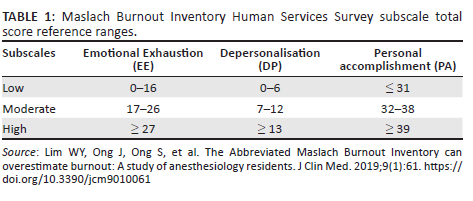
The MBI is the gold standard in burnout measurement assessing the syndrome in the subscales of EE, DP and PA.12,3940281841,42,43,4441Table 1).26,4541,46
Data analysis
Quantitative analyses were conducted using Statistical Package for the Social Sciences (SPSS) software version 28.0.1 for Mac and Microsoft Excel. All statistical tests were two-sided, and a 5% significance level (p < 0.05) was used. Means and standard deviations (s.d.) were calculated for continuous variables, and frequencies and percentages determined for categorical variables. Maslach Burnout Inventory Human Services Survey scale scores were calculated separately and aggregated to determine the sample's burnout levels and prevalence.
The internal consistency of the study was determined by calculating Cronbach's alpha coefficient. One-way analysis of variance (ANOVA) and least-significant difference (LSD) post hoc analyses were used to compare the MBI-HSS scores with demographic and intervention variables. Categorical variables were compared using chi-square analyses and Fisher's exact test. Pearson correlation was calculated for continuous variables to determine linear associations.
Qualitative data from open-ended intervention questions were analysed using thematic analysis4747,48
Ethical considerations
The study was approved by the Social, Behavioural, and Education Research Ethics Committee of the University of Stellenbosch (REC: SBE 25406) and permission to conduct the study at TBH from the National Health Research Database (reference: WC_202209_024). A protocol for potential emotional discomfort was included in the survey with contact information provided for counselling and support services.
Results
Demographic characteristics of the sample
A total of 109 ED staff participated in the survey (N = 227). Incomplete surveys (n = 7) were removed with 102 valid surveys (effective response rate = 44.93%) contributing to the final analysis: consisting of 19 doctors (18.63%), 56 nurses (54.90%) and 27 non-clinical staff (26.47%).
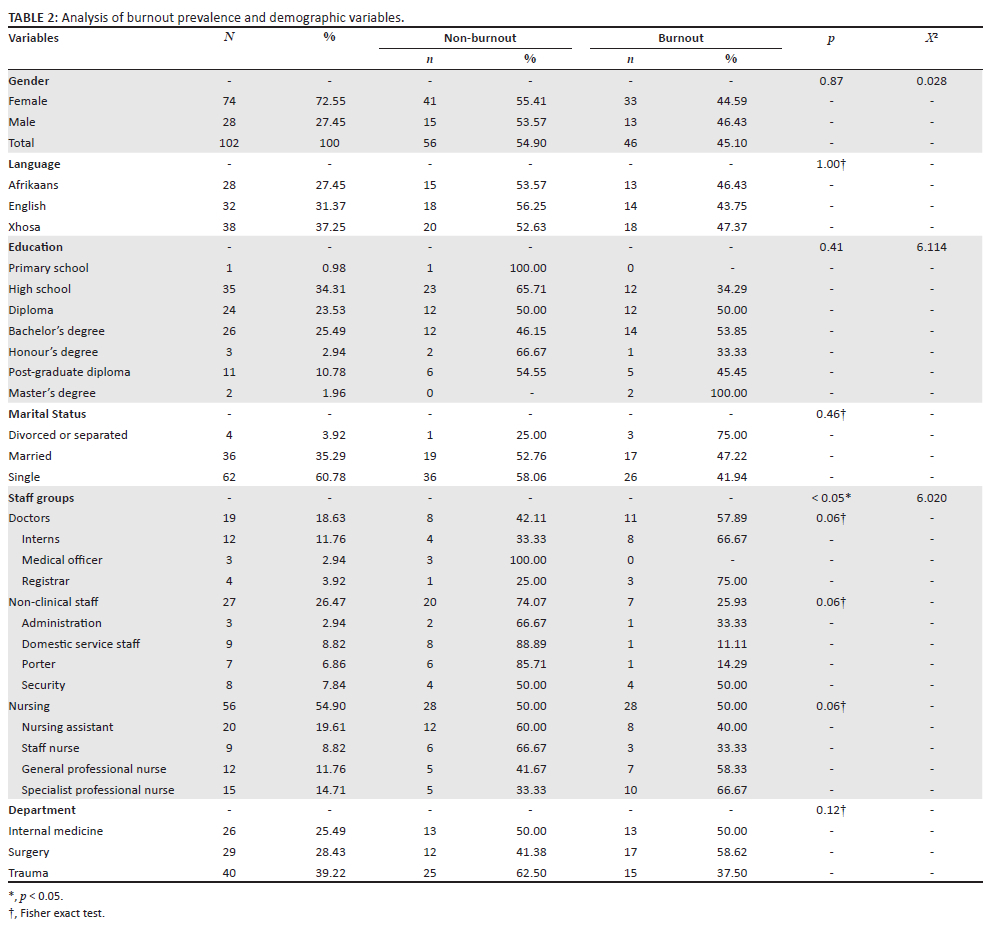
The participants were between the ages of 22 and 59 years (M = 37.28, s.d. = 8.99), and the majority were female (72.55%) and unmarried (60.78%). Nursing formed the dominant staff group (54.90%), with a substantial proportion of participants working in the trauma department (39.22%) as depicted in Table 2. The mean employment history since completing education was 10.54 ± 8.93 years with the average employment at TBH 6.55 ± 7.69 years.
The internal consistency estimated by Cronbach's alpha was determined for EE (α = 0.89, 95% confidence interval [CI]: 0.85, 0.91), DP (α = 0.69, 95% CI: 0.58, 0.77) and PA (α = 0.78, 95% CI: 0.67, 0.85) indicating adequate reliability for the study.
Burnout levels and prevalence estimates
In all, 46 participants met the criteria for burnout (i.e. burnout defined by high EE and high DP or high EE and low PA), indicating a prevalence of 45.10% (95% CI: 35.39, 54.80) in the sample. In addition, 73 participants (71.57%) experienced high scores in EE or DP. There were 15 participants (14.71%) who experienced severe burnout across all three subscales (i.e. high EE, high DP, and low PA). Of interest, two-thirds of participants (66.67%) displayed moderate to high levels of burnout in all three subscales. In contrast, only nine participants (8.82%) were identified with low risk for burnout across all subscales and were considered engaged staff (i.e. low EE, low DP, and high PA).
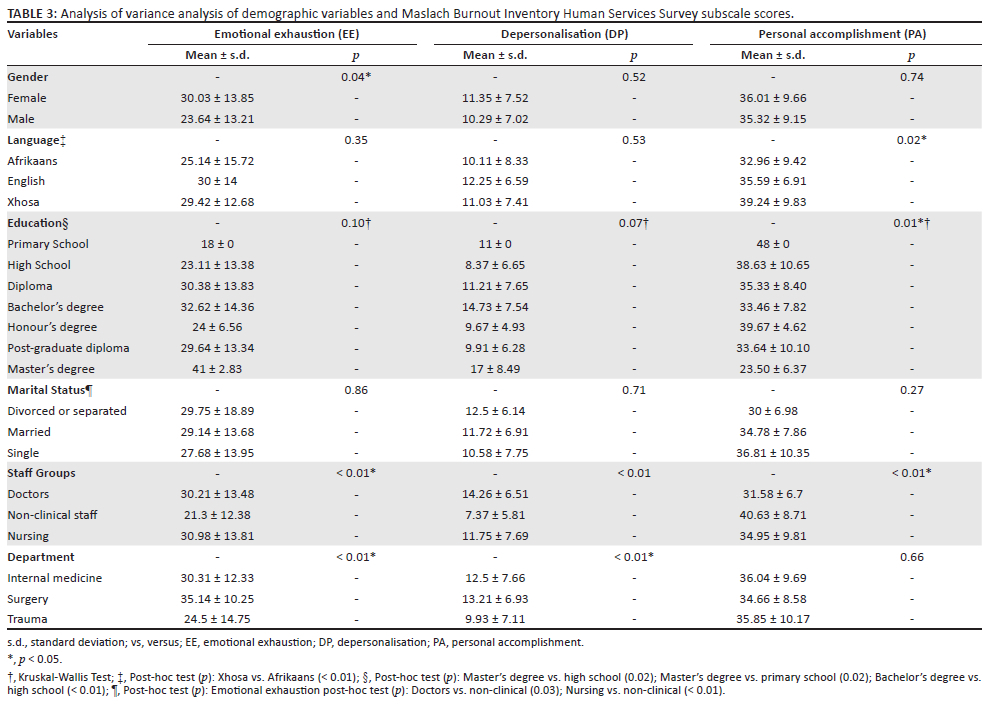
The mean scores of the MBI-HSS subscales showed high EE (M = 28.27, s.d. = 28.27), moderate DP (M = 11.06, s.d. = 7.37) and moderate PA (M = 35.82, s.d. = 9.48) suggesting EE as the predominant characteristic of burnout in the sample. The results of ANOVA shown in Table 3 revealed high EE scores were most significant in nursing (F = 5.010, p < 0.01), while high DP scores were most significant in doctors (F = 5.961, p < 0.01). In addition, non-clinical staff scored significantly lower across all the MBI-HSS subscales of EE (F = 5.010, p < 0.01), DP (F = 5.961, p < 0.01), and PA (F = 6.186, p < 0.01). Furthermore, bivariate analysis of correlation coefficients revealed that the level of education had a weak positive linear association with EE (r = 0.23, p = 0.02) and DP (r = 0.21, p = 0.01) scores. At the same time, PA had a weak negative association with the level of education (r = −0.25, p = 0.01). Therefore, indicating higher degrees of EE and DP, with increasing levels of education but lower PA.
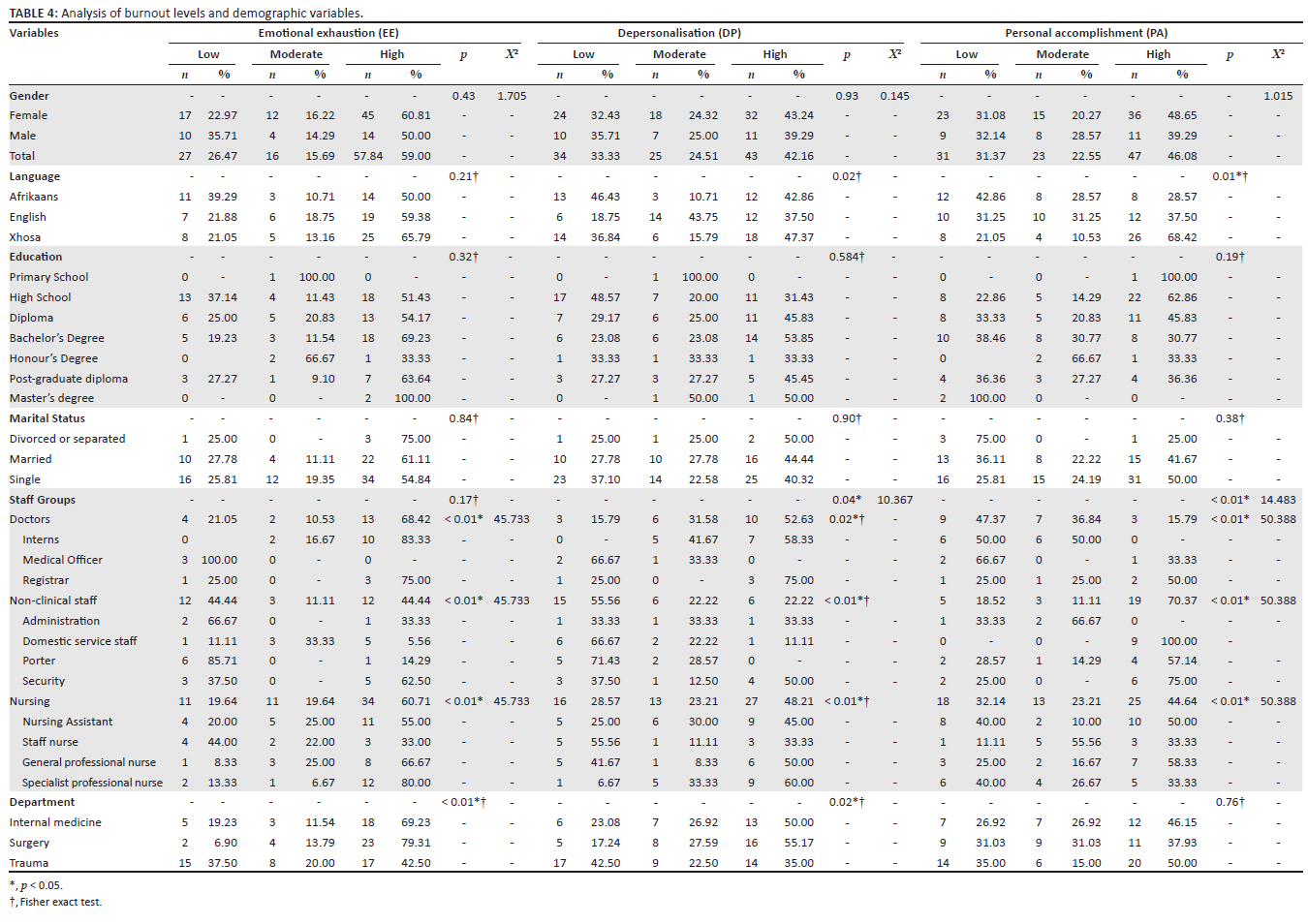
Table 4 depicts the relationship between the demographic variables and burnout levels among ED staff. Interns were associated with significant levels of burnout across all subscales: high EE (X2 = 45.733, p < 0.01), high DP (p < 0.01) and low PA (X2 = 50.388, p < 0.01). In addition, specialist professional nurses were associated with high levels of EE (X2 = 45.733, p < 0.01) and DP (p < 0.01). Of interest, doctors were significantly associated with low PA (X2 = 14.483, p < 0.01), whereas domestic service staff were significantly associated with high PA (X2 = 50.388, p < 0.01) compared to other staff groups.
The prevalence of burnout by demographic variables is quantified in Table 2. Burnout was significantly associated with staff groups (X2p < 0.05) with findings of higher burnout in doctors and nursing staff, while lower burnout was observed in non-clinical staff, reinforcing the results of ANOVA indicating intergroup differences in MBI-HSS subscale scores. Furthermore, among staff groups the prevalence of burnout in doctors was 57.89% (n = 11), non-clinical staff 25.93% (n = 7) and nursing staff 50% (n = 28).
Analysis of intervention insights
The overall awareness of existing interventions at TBH among participants was 41.18% (n = 42) with only 36.96% of participants (n = 17) experiencing burnout indicated being aware of programmes addressing burnout or stress. In addition, the utilisation of existing interventions among participants was low at 8.82% (n = 9), with only 8.70% (n = 4) of participants experiencing burnout accessing programmes addressing burnout or stress. Of interest, 88.89% of participants accessing interventions possessed a diploma or lower levels of education with a trend suggesting a weak negative correlation between intervention utilisation and level of education (r = −0.195, p = 0.05). Furthermore, intervention utilisation had a weak positive correlation to the number of years employed since qualification (r = 0.222, p = 0.03) and work experience at TBH (r = 0.289, p < 0.01).
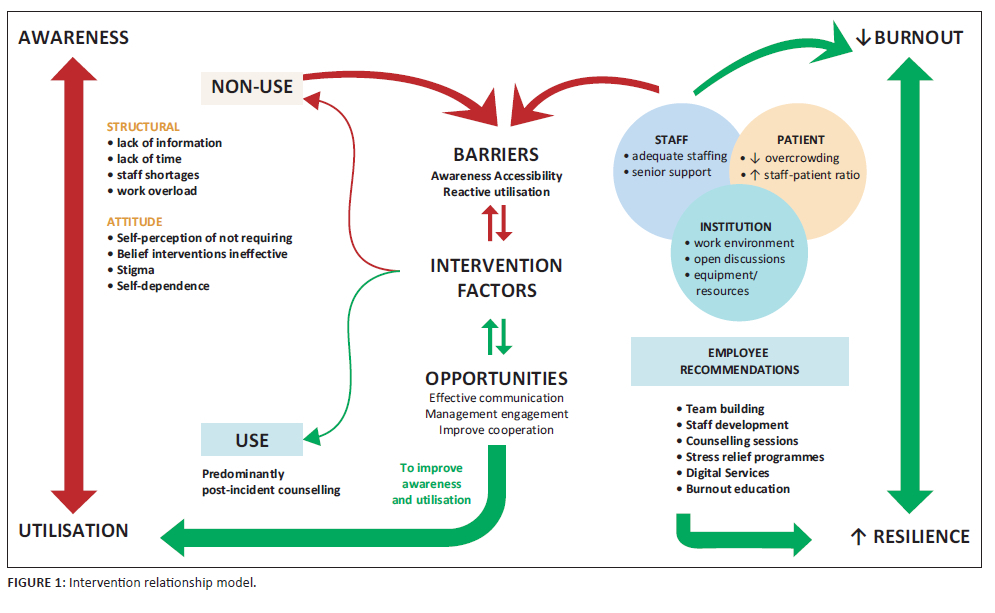
Figure 1 depicts the intervention-related factors, groups and themes identified through thematic analysis of qualitative data.47
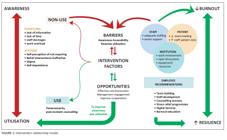
Based on the frequency of occurrences of factors determined by thematic analysis, most participants were unaware of existing interventions at TBH because of 'structural' and 'attitude' themes. 'Lack of information' was identified as the main factor (58%) for the reasons of 'non-use'. In addition, more than half the participants (54.12%) who reported 'lack of information' and a third of participants (36.36%) with 'self-perception of not requiring' interventions were experiencing burnout. The predominant 'use' case for accessing interventions was referrals for 'post-incident counselling' (44%), with only one participant having utilised the programme for burnout. The findings indicate the main 'barriers' to intervention utilisation were 'awareness', 'accessibility', and 'reactive utilisation' (the use of services only following an incident as opposed to pre-emptive or prophylactic engagement with services). 'Staff', 'patient' and 'institution'-related themes were prominently reported in participant recommendations to reduce the levels of 'burnout'. The three themes are interrelated and influence structural factors representing potential 'opportunities' to reduce burnout or 'barriers' if left unresolved. In addition, the 'opportunities' of 'effective communication', 'management engagement' and 'improve cooperation' were identified from suggestions to raise 'awareness' and improve intervention 'utilisation'. Finally, the specific 'staff recommendations' identified provide the potential to enhance 'resilience' in ED staff thereby mediating the effects of burnout.
Discussion
The key finding of 45.1% burnout prevalence is marginally lower than global estimates for ED staff during the COVID-19 pandemic.949,502429,51,524153
Among doctors, this study found marginal differences in mean EE (30.21 vs. 30.5) and DP (14.26 vs. 14.6) scores compared to the mean scores of doctors in Western Cape district hospitals.151515,1815,1841
Among nursing staff, the prevalence of burnout was found to be lower than doctors, consistent with international studies5424285528,561757
Among non-clinical staff, the findings of this study represent novel data utilising the MBI-HSS in a hospital setting with staff groups (administration, domestic service staff, porters and security) not typically assessed in existing burnout research. Organisational factors relating to the work environment and workload are the predominant factors associated with the development of burnout in HCW,3,1529,3118,24
The finding of high EE and DP within the sample compared to normative studies41,5115,26,55532192234
The high prevalence of burnout at TBH in ED staff (doctors, nurses and non-clinical staff) demonstrated by this study emphasises the need for greater engagement by hospital management and system-level decision-makers. There is a need for the development of cooperative intervention strategies and health workforce governance policies that are strategically aligned to the factors identified as driving burnout (structural, attitude, staff, patient, institutional) and existing barriers (awareness, accessibility, reactive utilisation) to interventions.
Lack of awareness and accessibility are barriers to intervention strategy effectiveness and were found to be prominent factors influencing utilisation among ED staff at TBH. Therefore, reliance on existing individual-focused interventions at a system level (national programme for government employees) requires redress by organisational-level management, reinforced by the poor utilisation rates among participants despite the prevalence of burnout symptoms. A critical starting point for hospital management is to address awareness of burnout and accessibility to existing interventions promoting utilisation as a pre-emptive measure through effective communication. The findings on intervention use, awareness and staff recommendations contribute to guiding decision-making and support the need for strategies to raise awareness, promote well-being and develop evidence-based organisational programmes to enhance coping mechanisms (resiliency) for burnout in HCW.
This study has contributed to understanding the scope and estimated magnitude of the burden of burnout among ED staff at TBH. In addition, findings related to non-clinical staff provide novel data to health research in South Africa and important implications for including non-clinical staff in developing and designing intervention strategies at the organisational and system levels. Furthermore, the study contributes to the limited existing knowledge regarding the prevalence of burnout among ED staff in South Africa and provides evidence that burnout is rising. Thus, the need for system-level change by healthcare leaders and policymakers is emphasised to ensure the well-being of HCW and improve the quality of care in the South African healthcare system.
There were several limitations to this study. Firstly, the study was conducted at a single healthcare facility using convenience sampling, resulting in the under-representation of some staff occupations within the sample, limiting the generalisability of results to the population. Secondly, the study used an electronic survey only available in English with the potential for non-response error by systematically excluding some participants. Thirdly, despite undertaking a rigorous and systematic analysis of qualitative data using thematic analysis with independent auditing of coding and themes, the findings are potentially limited by respondent bias because of on-site interactions with participants during survey completion or researcher bias through unconscious positionality during analysis. Lastly, the study utilised the MBI-HSS for the assessment of burnout. There are significant variations in reporting results among published research in South Africa, with the potential for standardisation to improve the comparison of findings in future. In addition, there are limited validation studies assessing the MBI-HSS in South Africa, with further studies required on the psychometric validity and cultural adaptation of the standard and translated versions of the MBI-HSS in local languages to determine construct equivalence and improve utilisation in the South African context.
There is a lack of South African research on burnout in healthcare settings of large sample sizes and comparing burnout between HCW, facilities, sectors and provinces. Therefore, future research should focus on study designs to enable extensive population sampling and screening, providing evidence of the nature and prevalence of burnout in the South African healthcare system. In addition, it is recommended that future research explore the effectiveness of intervention strategies in the South African context to guide policy design enabling system-level change. Furthermore, additional studies are required to evaluate the nature and prevalence of burnout in non-clinical staff.
Conclusion
There was a high prevalence of burnout among ED staff at TBH, with evidence of the burden in this setting worsening. Doctors and nurses were affected more than non-clinical staff, with interns and specialist professional nurses identified as risk groups. The solution to HCW burnout requires collaborative efforts at health system and organisational levels to develop effective intervention strategies, inclusive of non-clinical staff. Organisational intervention strategies should prioritise addressing awareness and accessibility in the short term to improve utilisation. However, long-term goals must include management engagement in tackling system-level barriers in combination with initiatives that enhance staff resilience.
Competing interests
The authors have declared that no competing interest exists.
Authors' contributions
R.N. was involved in the conceptualisation of the study, methodological design and investigation, data analysis and interpretation and writing of the article. R.S. was involved in the conceptualisation of the study, methodological design, and review and revision of the draft.
Funding information
This research received no grant from any funding agency in the public, commercial or not-for-profit sectors.
Data availability
The data sets used and/or analysed during the current study are available from the corresponding author upon request.
Disclaimer
The views and opinions expressed in this article are those of the authors and do not necessarily reflect the official policy or position of any affiliated agency of the authors, and the publisher.
Acknowledgements
The authors would like to thank the following for their contributions: the participants, Prof. R. Albertyn for her guidance in the writing process, Prof. M. Kidd for assistance with statistical analysis and Dr Elrike van der Merwe for institutional support.
References
-
1.Green S, Markaki A, Baird J, Murray P, Edwards R. Addressing healthcare professional burnout: A quality improvement intervention. Worldviews Evid Based Nurs. 2020;17(3):213-220. https://doi.org/10.1111/wvn.12450
» https://doi.org/10.1111/wvn.12450 -
2.West CP, Dyrbye LN, Shanafelt TD. Physician burnout: Contributors, consequences and solutions. J Intern Med. 2018;283(6):516-529. https://doi.org/10.1111/joim.12752
» https://doi.org/10.1111/joim.12752 -
3.De Hert S. Burnout in healthcare workers: Prevalence, impact and preventative strategies. Local Reg Anesth. 2020;13:171-183. https://doi.org/10.2147/LRA.S240564
» https://doi.org/10.2147/LRA.S240564 -
4.Mangory KY, Ali LY, Rø KI, Tyssen R. Effect of burnout among physicians on observed adverse patient outcomes: A literature review. BMC Health Serv Res. 2021;21(1):369. https://doi.org/10.1186/s12913-021-06371-x
» https://doi.org/10.1186/s12913-021-06371-x -
5.Mercado M, Wachter K, Schuster RC, et al. A cross-sectional analysis of factors associated with stress, burnout and turnover intention among healthcare workers during the COVID-19 pandemic in the United States. Health Soc Care Community. 2022;30(5):e2690-e2701. https://doi.org/10.1111/hsc.13712
» https://doi.org/10.1111/hsc.13712 -
6.Chor WPD, Ng WM, Cheng L, et al. Burnout amongst emergency healthcare workers during the COVID-19 pandemic: A multi-center study. Am J Emerg Med. 2021;46:700-702. https://doi.org/10.1016/j.ajem.2020.10.040
» https://doi.org/10.1016/j.ajem.2020.10.040 -
7.Basu S, Qayyum H, Mason S. Occupational stress in the ED: A systematic literature review. Emerg Med J. 2017;34(7):441-447. https://doi.org/10.1136/emermed-2016-205827
» https://doi.org/10.1136/emermed-2016-205827 -
8.Lacy BE, Chan JL. Physician burnout: The hidden health care crisis. Clin Gastroenterol Hepatol. 2018;16(3):311-317. https://doi.org/10.1016/j.cgh.2017.06.043
» https://doi.org/10.1016/j.cgh.2017.06.043 -
9.Gualano MR, Sinigaglia T, lo Moro G, et al. The burden of burnout among healthcare professionals of intensive care units and emergency departments during the COVID-19 pandemic: A systematic review. Int J Environ Res Public Health. 2021;18(15):8172. https://doi.org/10.3390/ijerph18158172
» https://doi.org/10.3390/ijerph18158172 -
10.Gray P, Senabe S, Naicker N, Kgalamono S, Yassi A, Spiegel JM. Workplace-based organizational interventions promoting mental health and happiness among healthcare workers: A realist review. Int J Environ Res Public Health. 2019;16(22):4396. https://doi.org/10.3390/ijerph16224396
» https://doi.org/10.3390/ijerph16224396 -
11.Zerden L, Lombardi B, Richman E, Forte A, McCollum M. Addressing burnout among the frontline healthcare workforce during COVID-19: A scoping review and expert interviews. J Health Hum Serv Adm. 2021;44(4):302-332. https://doi.org/10.37808/jhhsa.44.4.3
» https://doi.org/10.37808/jhhsa.44.4.3 -
12.Rehder K, Adair KC, Sexton JB. The science of health care worker burnout: Assessing and improving health care worker well-being. Arch Pathol Lab Med. 2021;145(9):1095-1109. https://doi.org/10.5858/arpa.2020-0557-RA
» https://doi.org/10.5858/arpa.2020-0557-RA -
13.Mahmood SBZ, Zahid A, Nasir N, Tahir M, Ghouri U, Almas A. Triggering and protective factors of burnout in medical resident physicians in a lower-middle-income country: A cross-sectional study. Ann Med Surg (Lond). 2021;67:102500. https://doi.org/10.1016/j.amsu.2021.102500
» https://doi.org/10.1016/j.amsu.2021.102500 -
14.Yıldırım M, Solmaz F. COVID-19 burnout, COVID-19 stress and resilience: Initial psychometric properties of COVID-19 Burnout Scale. Death Stud. 2022;46(3):524-532. https://doi.org/10.1080/07481187.2020.1818885
» https://doi.org/10.1080/07481187.2020.1818885 -
15.Liebenberg AR, Coetzee JF, Conradie HH, Coetzee JF. Burnout among rural hospital doctors in the Western Cape: Comparison with previous South African studies. Afr J Prim Health Care Fam Med. 2018;10(1):e1-e7. https://doi.org/10.4102/phcfm.v10i1.1568
» https://doi.org/10.4102/phcfm.v10i1.1568 -
16.Clark P, Hulse B, Polivka BJ. Resilience, moral distress, and job satisfaction driving engagement in emergency department nurses. J Nurs Adm. 2022;52(2):112-117. https://doi.org/10.1097/NNA.0000000000001111
» https://doi.org/10.1097/NNA.0000000000001111 -
17.Van de Ruit C, Lahri S, Wallis LA. Clinical teams' experiences of crowding in public emergency centres in Cape Town, South Africa. Afr J Emerg Med. 2020;10(2):52-57. https://doi.org/10.1016/j.afjem.2019.12.004
» https://doi.org/10.1016/j.afjem.2019.12.004 -
18.Rajan S, Engelbrecht A. A cross-sectional survey of burnout amongst doctors in a cohort of public sector emergency centres in Gauteng, South Africa. Afr J Emerg Med. 2018;8(3):95-99. https://doi.org/10.1016/j.afjem.2018.04.001
» https://doi.org/10.1016/j.afjem.2018.04.001 -
19.Robertson LJ, Maposa I, Somaroo H, Johnson O. Mental health of healthcare workers during the COVID-19 outbreak: A rapid scoping review to inform provincial guidelines in South Africa. S Afr Med J. 2020;110(10):1010-1019. https://doi.org/10.7196/SAMJ.2020.v110i10.15022
» https://doi.org/10.7196/SAMJ.2020.v110i10.15022 -
20.Deng D, Naslund JA. Psychological impact of COVID-19 pandemic on frontline health workers in low- and middle-income countries. Harv Public Health Rev (Camb). 2020;28:1-18. https://doi.org/10.54111/0001/Z1
» https://doi.org/10.54111/0001/Z1 -
21.Bradford L, Glaser G. Addressing physician burnout and ensuring high-quality care of the physician workforce. Obstet Gynecol. 2021;137(1):3-11. https://doi.org/10.1097/AOG.0000000000004197
» https://doi.org/10.1097/AOG.0000000000004197 -
22.Montgomery A, Panagopoulou E, Esmail A, Richards T, Maslach C. Burnout in healthcare: The case for organisational change. BMJ. 2019;366(July):1-5. https://doi.org/10.1136/bmj.l4774
» https://doi.org/10.1136/bmj.l4774 -
23.Rotenstein LS, Torre M, Ramos MA, et al. Prevalence of burnout among physicians a systematic review. JAMA. 2018;320(11):1131-1150. https://doi.org/10.1001/jama.2018.12777
» https://doi.org/10.1001/jama.2018.12777 -
24.Dubale BW, Friedman LE, Chemali Z, et al. Systematic review of burnout among healthcare providers in sub-Saharan Africa. BMC Public Health. 2019;19(1):1247. https://doi.org/10.1186/s12889-019-7566-7
» https://doi.org/10.1186/s12889-019-7566-7 -
25.MacKanga JR, Mouendou Mouloungui EG, Iba-Ba J, Pottier P, Moussavou Kombila JB, Boguikouma JB. Burnout level and associated factors in a sub-Saharan African medical setting: Prospective cross-sectional survey. BMC Med Educ. 2020;20(1): 1-9. https://doi.org/10.1186/s12909-020-02194-2
» https://doi.org/10.1186/s12909-020-02194-2 -
26.Rossouw L, Seedat S, Emsley RA, Suliman S, Hagemeister D. The prevalence of burnout and depression in medical doctors working in the Cape Town Metropolitan Municipality community healthcare clinics and district hospitals of the Provincial Government of the Western Cape: A cross-sectional study. S Afr Fam Pract. 2013;55(6):567-573. https://doi.org/10.1080/20786204.2013.10874418
» https://doi.org/10.1080/20786204.2013.10874418 -
27.Klopper HC, Coetzee SK, Pretorius R, Bester P. Practice environment, job satisfaction and burnout of critical care nurses in South Africa. J Nurs Manag. 2012;20(5):685-695. https://doi.org/10.1111/j.1365-2834.2011.01350.x
» https://doi.org/10.1111/j.1365-2834.2011.01350.x -
28.Van der Colff JJ, Rothmann S. Burnout of registered nurses in South Africa. J Nurs Manag. 2014;22(5):630-642. https://doi.org/10.1111/j.1365-2834.2012.01467.x
» https://doi.org/10.1111/j.1365-2834.2012.01467.x -
29.Clinchamps M, Auclair C, Prunet D, et al. Burnout among hospital non-healthcare staff influence of job demand-control-support, and effort-reward imbalance. J Occup Environ Med. 2021;63(1):E13-E20. https://doi.org/10.1097/JOM.0000000000002072
» https://doi.org/10.1097/JOM.0000000000002072 -
30.Cook LJ, Hassem T, Laher S, Variava T, Schutte E. Mental health experiences of healthcare professionals during COVID-19. SA J Ind Psychol. 2021;47:1-10. https://doi.org/10.4102/sajip.v47i0.1865
» https://doi.org/10.4102/sajip.v47i0.1865 -
31.Marques MM, Alves E, Queirós C, Norton P, Henriques A. The effect of profession on burnout in hospital staff. Occup Med (Lond). 2018;68(3):207-210. https://doi.org/10.1093/occmed/kqy039
» https://doi.org/10.1093/occmed/kqy039 -
32.Pollock A, Campbell P, Cheyne J, et al. Interventions to support the resilience and mental health of frontline health and social care professionals during and after a disease outbreak, epidemic or pandemic: A mixed methods systematic review. Cochrane Database Syst Rev. 2020;11(11):CD013779. https://doi.org/10.1002/14651858.CD013779
» https://doi.org/10.1002/14651858.CD013779 -
33.Prasad K, McLoughlin C, Stillman M, et al. Prevalence and correlates of stress and burnout among U.S. healthcare workers during the COVID-19 pandemic: A national cross-sectional survey study. EClinicalMedicine. 2021;35:100879. https://doi.org/10.1016/j.eclinm.2021.100879
» https://doi.org/10.1016/j.eclinm.2021.100879 -
34.West CP, Dyrbye LN, Erwin PJ, Shanafelt TD. Interventions to prevent and reduce physician burnout: A systematic review and meta-analysis. Lancet. 2016;388(10057):2272-2281. https://doi.org/10.1016/S0140-6736(16)31279-X
» https://doi.org/10.1016/S0140-6736(16)31279-X -
35.Affleck E, Wagner JE. Structural determinants of health workforce burnout. Healthc Manage Forum. 2022;35(4):243-247. https://doi.org/10.1177/08404704221093889
» https://doi.org/10.1177/08404704221093889 -
36.Cohen J. A power primer. Psychol Bull. 1992;112(1):155-159. https://doi.org/10.1037//0033-2909.112.1.155
» https://doi.org/10.1037//0033-2909.112.1.155 -
37.Faul F, Buchner A, Erdfelder E, Lang AG. G*Power (RRID:SCR_013726) [homepage on the Internet]. Düsseldorf: Heinrich-Heine-Universität; 2020 [cited 2022 Jun 12]. Available from: http://www.gpower.hhu.de/
» http://www.gpower.hhu.de/ -
38.Qualtrics. Qualtrics Core XM [homepage on the Internet]. Provo, UT: Qualtrics; 2022 [cited 2022 Jul 3]. Available from: https://www.qualtrics.com
» https://www.qualtrics.com -
39.Maslach C, Jackson SE. The measurement of experienced burnout. J Organ Behav. 1981;2(2):99-113. https://doi.org/10.1002/job.4030020205
» https://doi.org/10.1002/job.4030020205 -
40.Naudé JLP, Rothmann S. The validation of the Maslach Burnout Inventory - Human Services Survey for emergency medical technicians in Gauteng. SA J Ind Psychol. 2004;30(3):a167. https://doi.org/10.4102/sajip.v30i3.167
» https://doi.org/10.4102/sajip.v30i3.167 -
41.Maslach C, Jackson SE, Leiter MP. Maslach Burnout Inventory Manual [homepage on the Internet]. 4th ed. CA: Mind Garden, Inc.; 2018 [cited 2022 May 25]. Available from: www.mindgarden.com
» www.mindgarden.com -
42.Worley JA, Vassar M, Wheeler DL, Barnes LLB. Factor structure of scores from the maslach burnout inventory: A review and meta-analysis of 45 exploratory and confirmatory factor-analytic studies. Educ Psychol Meas. 2008;68(5):797-823. https://doi.org/10.1177/0013164408315268
» https://doi.org/10.1177/0013164408315268 -
43.Lheureux F, Truchot D, Borteyrou X, Rascle N. The Maslach Burnout Inventory - Human Services Survey (MBI-HSS). Le Trav Hum. 2017;80(2):161-186. https://doi.org/10.3917/th.802.0161
» https://doi.org/10.3917/th.802.0161 -
44.Pereira SdS, Fornés-Vives J, Unda-Rojas SG, Pereira-Junior GA, Juruena MF, Cardoso L. Confirmatory factorial analysis of the Maslach Burnout Inventory - Human Services Survey in health professionals in emergency services. Rev Lat Am Enfermagem. 2021;29:e3386. https://doi.org/10.1590/1518-8345.3320.3386
» https://doi.org/10.1590/1518-8345.3320.3386 -
45.Lim WY, Ong J, Ong S, et al. The Abbreviated Maslach Burnout Inventory can overestimate burnout: A study of anesthesiology residents. J Clin Med. 2019;9(1):61. https://doi.org/10.3390/jcm9010061
» https://doi.org/10.3390/jcm9010061 -
46.Dyrbye LN, West CP, Shanafelt TD. Defining burnout as a dichotomous variable. J Gen Intern Med. 2009;24(3):440. https://doi.org/10.1007/s11606-008-0876-6
» https://doi.org/10.1007/s11606-008-0876-6 -
47.Braun V, Clarke V. Using thematic analysis in psychology. Qual Res Psychol. 2006;3(2):77-101. https://doi.org/10.1191/1478088706qp063oa
» https://doi.org/10.1191/1478088706qp063oa -
48.Nowell LS, Norris JM, White DE, Moules NJ. Thematic analysis: Striving to meet the trustworthiness criteria. Int J Qual Methods. 2017;16(1):1-13. https://doi.org/10.1177/1609406917733847
» https://doi.org/10.1177/1609406917733847 -
49.Sanfilippo F, Noto A, Foresta G, et al. Incidence and factors associated with burnout in anesthesiology: A systematic review. Biomed Res Int. 2017;2017:1-10. https://doi.org/10.1155/2017/8648925
» https://doi.org/10.1155/2017/8648925 -
50.Verougstraete D, Hachimi Idrissi S. The impact of burn-out on emergency physicians and emergency medicine residents: A systematic review. Acta Clin Belg. 2020;75(1):57-79. https://doi.org/10.1080/17843286.2019.1699690
» https://doi.org/10.1080/17843286.2019.1699690 -
51.Zhang Q, Mu M, He Y, Cai Z, Li Z. Burnout in emergency medicine physicians: A systematic review and meta-analysis. Medicine (Baltimore). 2020;99(32):e21462. https://doi.org/10.1097/MD.0000000000021462
» https://doi.org/10.1097/MD.0000000000021462 -
52.Gómez-Urquiza JL, De la Fuente-Solana EI, Albendín-García L, Vargas-Pecino C, Ortega-Campos EM, Cañadas-De la Fuente GA. Prevalence of burnout syndrome in emergency nurses: A meta-analysis. Crit Care Nurse. 2017;37(5):e1-e9. https://doi.org/10.4037/ccn2017508
» https://doi.org/10.4037/ccn2017508 -
53.Dzau VJ, Kirch DG, Nasca TJ. To care is human - Collectively confronting the clinician-burnout crisis. N Engl J Med. 2018;378(4):312-314. https://doi.org/10.1056/NEJMp1715127
» https://doi.org/10.1056/NEJMp1715127 -
54.Sultana A, Sharma R, Hossain MM, Bhattacharya S, Purohit N. Burnout among healthcare providers during COVID-19: Challenges and evidence-based interventions. Indian J Med Ethics. 2020;V(4):1-6. https://doi.org/10.20529/IJME.2020.73
» https://doi.org/10.20529/IJME.2020.73 -
55.Roomaney R, Steenkamp J, Kagee A. Predictors of burnout among HIV nurses in the Western Cape. Curationis. 2017;40(1):e1-e9. https://doi.org/10.4102/curationis.v40i1.1695
» https://doi.org/10.4102/curationis.v40i1.1695 -
56.Kelly LA, Gee PM, Butler RJ. Impact of nurse burnout on organizational and position turnover. Nurs Outlook. 2021;69(1):96-102. https://doi.org/10.1016/j.outlook.2020.06.008
» https://doi.org/10.1016/j.outlook.2020.06.008 -
57.Bakker AB, Heuven E. Emotional dissonance, burnout, and in-role performance among nurses and police officers. Int J Stress Manag. 2006;13(4):423-440. https://doi.org/10.1037/1072-5245.13.4.423
» https://doi.org/10.1037/1072-5245.13.4.423

Accepted: 01 Sept. 2023
Published: 23 Oct. 2023