The occurrence of postpartum post-traumatic stress disorder among women in Johannesburg metropolitan clinics
Abstract
BACKGROUND: Childbirth has been associated with post-traumatic stress disorder (PTSD) in women, affecting mother-child bonding, foetal growth, cognitive development and marital relationships. However, there is a dearth of literature on postpartum PTSD in Africa AIM: The study aimed to investigate the occurrence of postpartum PTSD among women SETTING: The study was conducted within Johannesburg metropolitan clinics METHODS: The study included 88 women attending postnatal clinics in the metropolitan area. A questionnaire was used to collect data on their characteristics, obstetric and neonatal factors and perceived social support. The City Birth Trauma Scale was used to screen for postpartum PTSD symptoms. Data were analysed using R software with a significance level of 0.05 RESULTS: Almost half of the participants (48.9%) perceived their most recent childbirth as a traumatic event. One participant (1.1%; 95% CI: 0.0003-0.06) endorsed all symptoms required to diagnose PTSD. Endorsing childbirth as a traumatic event was significantly associated with reporting intrusion and/or re-experiencing symptoms (OR = 3.7) and avoidance symptoms (OR = 3.3). There was no association between the mode of childbirth and PTSD symptom scores. There is no association between the presence or absence of neonatal complications and PTSD symptom scores CONCLUSION: Although the occurrence was relatively low, our findings highlight the importance of routine screening and early intervention in maternal health services CONTRIBUTION: There is need for further research to inform culturally relevant prevention and treatment strategies
postpartum; post-traumatic stress disorder; childbirth; maternal mental health; traumatic birth; mental health
Introduction
Conceiving and giving birth is a significant and special event that many women cherish and regard as a happy and enriching experience1,2; however, for some women, it can lead to psychological distress, which can trigger mental health disorders, including postpartum stress disorder.1,2 An increasing body of evidence suggests that the experience of childbirth may be linked to the development of postpartum post-traumatic stress disorder (PTSD) and that it is more common than previously believed.3,4 Early research on PTSD was mainly associated with military veterans; it is only in recent years that PTSD following childbirth is being recognised and investigated.56,7 Post-traumatic stress disorder is classified as a trauma and stressor-related disorder in the Diagnostic and Statistical Manual of Mental Disorders (DSM) 5.884,9 Research on postpartum mental health has largely focused on postpartum depression, and while many are familiar with postpartum depression and psychosis, there is a dearth of literature on the phenomenon of postpartum PTSD, particularly in Africa.6,10 A systematic review investigating psychological disorders in the pre- and postnatal period among women in Africa found that depression was the most commonly assessed disorder.1112,13 The first descriptions of traumatic experiences associated with childbirth were documented in case study.141,14 Over time, qualitative and quantitative studies reported women developing PTSD symptoms after childbirth, even after successful health outcomes.10,14 In 2000s, further research suggested that PTSD can occur as a result of childbirth after controlling for pre-existing psychiatric conditions before childbirth.3,4 Postpartum PTSD can be conceptualised in two ways. Firstly, it can occur as a result of the childbirth experience that triggers pre-existing PTSD. Secondly, it can indicate new-onset PTSD that is induced by childbirth itself.121516145,17 The majority of studies were undertaken in Western and Middle Eastern countries.6,7,18 A systematic review reported a prevalence of 4.9% in women who did not have a history of pre-existing PTSD before childbirth. This systemic review of 36 articles included studies with high methodological ranking and controlled for PTSD symptoms before childbirth.12191920
Research methods and design
Study design and site
The study was a cross-sectional design and was conducted in postnatal clinics in the Johannesburg metropolitan area. The city is divided into seven regions (A-G), covering areas from Randburg, Sandton, Soweto, Roodepoort and Johannesburg inner city. Region D of the Johannesburg metropolitan area covers greater Soweto and its surrounding areas. The routine 6-week postnatal follow-up for women in Johannesburg is usually conducted at the district clinics and is independent of the place of delivery; hence, it involves mothers who delivered in hospitals and community obstetric units. Data were collected from three sites in Soweto, namely Mofolo Community Health Centre (CHC), Chiawelo and Lillian Ngoyi clinics, which form the largest centres serving the metropolitan area.
Study sampling and inclusion criteria
The study employed a non-probability approach. The clinics were selected through facility-based convenience sampling and chosen for their large patient volumes, accessibility and wide representation. The required sample size was determined to be at least 87, using Fisher's formula for a cross-sectional study,21P is the expected proportion who have the characteristic of interest (5.9%), and E is the margin of error (0.05). n is the sample size. Zα is a value from the normal distribution related to the significant level α. Zα = 1.96. Therefore, n = (1.96) ^2(0.059) (0.941) / (0.05) ^2 = 87. Inclusion criteria were postpartum women over the age of 18 years old and not more than 6 weeks postpartum. They were required to understand English.
Study measures
The researcher designed a questionnaire that elicited the participants' demographic characteristics and details on their most recent childbirth, including the place and mode of delivery. Additionally, the questionnaire sought information on neonatal characteristics, such as Apgar scores and neonatal complications. The City Birth Trauma Scale (CBTS) was used to screen for PTSD symptoms. It is a measure for PTSD in the postpartum period and was developed to measure PTSD according to the, DSM-5. It is a 29-item questionnaire and has been shown to have excellent reliability.99
Study procedure
Data collection was undertaken from September 2020 to December 2020. The participants were women booked for their routine 6-week postpartum checkup and were all exactly 6 weeks post-delivery. With the assistance of the clinic register, all women attending the facility during the study period were screened against the predefined inclusion criteria. All those who met inclusion criteria were invited to participate in the study. Should any participant have experienced distress related to the nature of the study questionnaires, arrangements were in place for referral to a clinical psychologist.
Data analysis
Statistical analyses were conducted in R software (R Core Team, 2024; Vienna, Austria. 4.00; www.R-project.org). The normal distribution of the data was checked using the Shapiro-Wilk test and Q-Q plots. Categorical data were analysed using Chi-squared contingency tests or Fisher's exact tests (FET), for which interquartile and odds ratios are provided. Continuous variables were analysed using Mann-Whitney U (MWU) tests because the data were nonparametric. Tests were two-tailed, and model significance was set at 0.05. Data were reported as counts and percentages and median (interquartile range [IQR]), as appropriate, and are presented descriptively in charts, tables or text.
Ethical considerations
Ethical clearance to conduct this study was obtained from the University of the Witwatersrand Human Research Ethics Committee (Ref. No. M200262). Permission was also obtained from the Johannesburg District Committee. The participants were offered information sheets and an informed consent document with details of the study and given an opportunity to ask questions. Only those who consented were included in the study.
Results
Sample characteristics
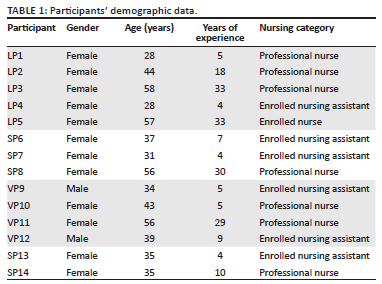
Data were collected from 88 out of 90 women from three Johannesburg metropolitan clinics, as two women declined to participate in the study. The socio-demographic and clinical variables recorded in the study population are presented in Table 1.
Occurrence of post-traumatic stress disorder
Only one (1.1%; 95% CI: 0.0003-0.06) of the 88 participants in this study fulfilled the DSM 5 criteria for PTSD using CBTS.
Socio-demographic characteristics of the study participants
Eighty-eight women participated in the study, the majority (81.8%) were below 35 years, 60.2% had a secondary education, while 86.4% were unmarried. In addition, 88.7% indicated that they had supportive partners.
Obstetric and neonatal characteristics
Of the total study participants, 39.7% reported their most recent pregnancy was a planned one, 68.2 % delivered via normal vaginal delivery and 67.1% delivered in a hospital setting. As identified, 15.9% reported neonatal complications.
Childbirth is endorsed as a traumatic event
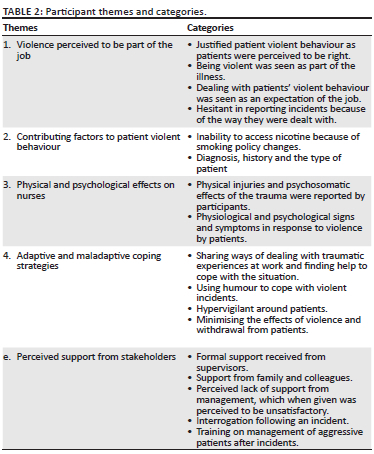
Nearly half of the women (n = 43, 48.9%) perceived their most recent childbirth as a traumatic event (criterion A of PTSD), believing either themselves or their baby would be seriously injured or would die (Q1 and/or Q2). The median (IQR) PTSD symptom score was median 2 and interquartile 3.6. Comparing the perceived traumatic event (childbirth) against PTSD clusters indicated that women who reported the birth as a traumatic event had higher PTSD scores (n = 43 median = 3, IQR = 1.75) than women who did not report the birth as a traumatic event (n = 45, median = 0, IQR = 0.3) (MWU = 603.5, n = 43, n = 45, p = 0.002). An analysis of the responses in the CBTS indicated that one woman fulfilled the full criteria for PTSD 6 weeks after birth. Of the 45 women who did not report childbirth as a traumatic event, some went on to report PTSD symptomatology (Table 2). Among the 43 women who perceived childbirth as a traumatic event, 29 (67%) also reported experiencing intrusion symptoms (FET = 0.003, 95% CI = 1.42-9.99) (Figure 1). In particular, those who reported childbirth as a traumatic event were 3.7 times (odds ratio) more likely to have intrusion or re-experiencing symptoms. Similarly, significantly more women who reported childbirth as a traumatic event also reported having avoidance symptoms (FET = 0.020, 95% CI = 1.15-10.17) (Figure 2). Specifically, they were 3.3 times more likely to have avoidance symptoms. Stressors had no significant influence on negative cognition or mood symptoms (FET = 0.276, 95% CI = 0.57-7.29) and hyperarousal symptoms (FET = 1.000, 95% CI = 0.25-6.98). There was no statistical difference in the median score of PTSD symptoms between the mode of childbirth (i.e. caesarean and normal childbirth) (MWU; p = 1.000) (Figure 3). There was no statistical difference in the median scores of PTSD symptom between the presence or absence of neonatal complications (MWU; p = 0.102) (Figure 4).
Discussion
The study examined the occurrence of PTSD in a cohort of women 6 weeks postpartum. The results showed that 1.1% of women fulfilled the criteria for PTSD according to the CBTS at 6 weeks postpartum. In addition, a large portion of women (48.9%) perceived their most recent childbirth to be a psychologically traumatic event. This is similar to work done in Australia which found 45.5% of women are likely to report childbirth as being a traumatic experience.4222219232425826
Study limitations
The lack of validation of the CBTS tool in the South African setting is a limitation of the current study. The design of the study prevents analysis of the prevalence of postpartum PTSD. The study sample was homogenous (single black African women) from a similar setting in Johannesburg, so generalisation of the findings should be made with caution. The sample size was small, thus limiting our generalisability and ability to explore the potential associated factors. Also, the pre-existing maternal PTSD, as well as trauma in the past 6 weeks, was not controlled for; hence, we are unable to conclude if the symptoms indicate new-onset PTSD. The sample only included data from women who had live births coming for follow-up in clinics (6 weeks postpartum); this may explain the lower percentage who met full diagnostic criteria for PTSD. The convenient sampling method used in the current study means that we should interpret the results of the study with caution, especially because some participants with the specific variables of interest may have been skipped, such as those with delayed onset of PTSD.
Conclusion
The percentage of participants who met full diagnostic criteria for PTSD at 6 weeks postpartum was lower than expected compared to international research. However, the percentage of participants who perceived birth as a traumatic experience was in keeping with findings from international literature. This suggests the need for further research in the longer-term follow-up of women reporting birth as a traumatic experience but not experiencing full diagnostic PTSD symptoms at 6 weeks postpartum. There is a gap in knowledge on childbirth-induced PTSD and postpartum PTSD in South Africa and Africa generally. The current study has been beneficial in providing information on an under-investigated topic. Further study in this area is needed to assist in developing targeted policies and screening tools.
Competing interests
The authors declare that they have no financial or personal relationships that may have inappropriately influenced them in writing this article.
CRediT authorship contribution
Botho P. Pheto-Malikongwa: Conceptualisation, Data curation, Investigation, Methodology, Writing - original draft, Writing - review & editing. Melitah Motlhale: Supervision. Reyanta Bridgmohun: Supervision. Danie Hoffman: Supervision. Anthony Olashore: Writing - review & editing. All authors reviewed the article, contributed to the discussion of results, approved the final version for submission and publication and take responsibility for the integrity of its findings.
Funding information
This research received no specific grant from any funding agency in the public, commercial or not-for-profit sectors.
Data availability
The data that support the findings of this study are available upon reasonable request from the corresponding author, Botho P. Pheto-Malikongwa.
Disclaimer
The views and opinions expressed in this article are those of the authors and are the product of professional research. They do not necessarily reflect the official policy or position of any affiliated institution, funder, agency or that of the publisher. The authors are responsible for this article's results, findings and content.
Acknowledgements
This article is based on research originally conducted as part of Botho P. Pheto-Malikongwa's Master's thesis entitled, 'The occurrence of postpartum post-traumatic stress disorder among women in Johannesburg metropolitan clinics', submitted to the Faculty of Health Sciences, Department of Psychiatry, University of the Witwatersrand in 2021. The thesis was supervised by Reyanta Bridgmohun and Danie Hoffman. The thesis was reworked, revised and adapted into a journal article for publication. The original thesis is available at: https://hdl.handle.net/10539/33718.
References
- 1. Reynolds JL. Post-traumatic stress disorder after childbirth: The phenomenon of traumatic birth. CMAJ. 1997;156(6):831-835.
-
2. Lyerly AD. Ethics and 'normal birth'. Birth. 2012;39(4):315-317. https://doi.org/10.1111/birt.12008
» https://doi.org/10.1111/birt.12008 -
3. Ayers S, Pickering AD. Do women get posttraumatic stress disorder as a result of childbirth? A prospective study of incidence. Birth. 2001;28:111-118. https://doi.org/10.1046/j.1523-536X.2001.00111.x
» https://doi.org/10.1046/j.1523-536X.2001.00111.x -
4. Alcorn KL, O'Donovan A, Patrick JC, Creedy D, Devilly GJ. A prospective longitudinal study of the prevalence of post-traumatic stress disorder resulting from childbirth events. Psychol Med. 2010;40(11):1849-1859. https://doi.org/10.1017/S0033291709992224
» https://doi.org/10.1017/S0033291709992224 -
5. Grekin R, O'Hara MW. Prevalence and risk factors of postpartum posttraumatic stress disorder: A meta-analysis. Clin Psychol Rev. 2014;34(5):389-401. https://doi.org/10.1016/j.cpr.2014.05.003
» https://doi.org/10.1016/j.cpr.2014.05.003 - 6. Polachek IS, Harari LH, Baum M, Strous RD. Postpartum post-traumatic stress disorder symptoms: The uninvited birth companion. Isr Med Assoc J. 2012; 14(6):347-353.
-
7. Modarres M, Afrasiabi S, Rahnama P, Montazeri A. Prevalence and risk factors of childbirth-related post-traumatic stress symptoms. BMC Pregnancy Childbirth. 2012;12:88. https://doi.org/10.1186/1471-2393-12-88
» https://doi.org/10.1186/1471-2393-12-88 - 8. American Psychiatric Association. Diagnostic and statistical manual of mental disorders. 5th ed. Arlington, VA: American Psychiatric Publishing; 2013.
-
9. Ayers S, Wright DB, Thornton A. Development of a measure of postpartum PTSD: The city birth trauma scale. Front Psychiatry. 2018;9:409. https://doi.org/10.3389/fpsyt.2018.00409
» https://doi.org/10.3389/fpsyt.2018.00409 -
10. Olde E, Van Der Hart O, Kleber R, Van Son M. Posttraumatic stress following childbirth: A review. Clin Psychol Rev. 2006;26(1):1-16. https://doi.org/10.1016/j.cpr.2005.07.002
» https://doi.org/10.1016/j.cpr.2005.07.002 -
11. Sawyer A, Ayers S, Smith H. Pre- and postnatal psychological wellbeing in Africa: A systematic review. J Affect Disord. 2010;123(1-3):17-29. https://doi.org/10.1016/j.jad.2009.06.027
» https://doi.org/10.1016/j.jad.2009.06.027 -
12. Dekel S, Stuebe C, Dishy G. Childbirth induced posttraumatic stress syndrome: A systematic review of prevalence and risk factors. Front Psychol. 2017;8:560. https://doi.org/10.3389/fpsyg.2017.00560
» https://doi.org/10.3389/fpsyg.2017.00560 -
13. Garthus-Niegel S, Ayers S, Martini J, Von Soest T, Eberhard-Gran M. The impact of postpartum post-traumatic stress disorder symptoms on child development: A population-based, 2-year follow-up study. Psychol Med. 2017;47(1):161-170. https://doi.org/10.1017/S003329171600235X
» https://doi.org/10.1017/S003329171600235X -
14. Jenkins H, Daskalopoulou Z, Opondo C, Alderdice F, Fellmeth G. Prevalence of perinatal post-traumatic stress disorder (PTSD) in low-income and middle-income countries: A systematic review and meta-analysis. BMJ Public Health. 2024; 2(1):e000215. https://doi.org/10.1136/bmjph-2023-000215
» https://doi.org/10.1136/bmjph-2023-000215 -
15. Ayers S, Bond R, Bertullies S, Wijma K. The aetiology of post-traumatic stress following childbirth: A meta-analysis and theoretical framework. Psychol Med. 2016;46(6):1121-1134. https://doi.org/10.1017/S0033291715002706
» https://doi.org/10.1017/S0033291715002706 -
16. Van Heumen MA, Hollander MH, Van Pampus MG, Van Dillen J, Stramrood CAI. Psychosocial predictors of postpartum posttraumatic stress disorder in women with a traumatic childbirth experience. Front Psychiatry. 2018;9:1-9. https://doi.org/10.3389/fpsyt.2018.00348
» https://doi.org/10.3389/fpsyt.2018.00348 -
17. Hernández-Martínez A, Rodríguez-Almagro J, Molina-Alarcón M, Infante-Torres N, Donate Manzanares M, Martínez-Galiano JM. Postpartum post-traumatic stress disorder: Associated perinatal factors and quality of life. J Affect Disord. 2019; 249:143-150. https://doi.org/10.1016/j.jad.2019.01.042
» https://doi.org/10.1016/j.jad.2019.01.042 -
18. Verreault N, Da Costa D, Marchand A, et al. PTSD following childbirth: A prospective study of incidence and risk factors in Canadian women. J Psychosom Res. 2012;73(4):257-263. https://doi.org/10.1016/j.jpsychores.2012.07.010
» https://doi.org/10.1016/j.jpsychores.2012.07.010 -
19. Adewuya AO, Ologun YA, Ibigbami OS. Post-traumatic stress disorder after childbirth in Nigerian women: Prevalence and risk factors. BJOG. 2006;113(3): 284-288. https://doi.org/10.1111/j.1471-0528.2006.00861.x
» https://doi.org/10.1111/j.1471-0528.2006.00861.x -
20. Alemu SS, Jarso MH, Gejo NG, et al. Prevalence of postpartum disorder and associated factors among postnatal mothers in west Arsi Zone, South-West Ethopia,2024: A community-based cross-sectional study. Front Psychiatry. 2024;15:1470819. https://doi.org/10.3389/fpsyt.2024.1470819
» https://doi.org/10.3389/fpsyt.2024.1470819 - 21. Hulley SB, Cummings SR, Browner WS, Grady DG, Newman TB. Designing clinical research: An epidemiologic approach. 4th ed. Philadelphia, PA: Lippincott Williams & Wilkins; 2013.
-
22. Soet JE, Brack GA, Dilorio C. Prevalence and predictors of women's experience of psychological trauma during childbirth. Birth. 2003;30(1):36-46. https://doi.org/10.1046/j.1523-536X.2003.00215.x
» https://doi.org/10.1046/j.1523-536X.2003.00215.x -
23. Ng LC, Stevenson A, Sreeja SK, et al. National and regional prevalence of posttraumatic stress disorder in sub-Saharan Africa: A systematic review and meta-analysis. PLoS Med. 2020;17(5):e1003090. https://doi.org/10.1371/journal.pmed.1003090
» https://doi.org/10.1371/journal.pmed.1003090 -
24. Ford E, Ayers S. Support during birth interacts with prior trauma and birth intervention to predict postnatal post-traumatic stress symptoms. Psychol Heal. 2011;26(12):1553-1570. https://doi.org/10.1080/08870446.2010.533770
» https://doi.org/10.1080/08870446.2010.533770 -
25. Dennis CL, Fung K, Grigoriadis S, Robinson GE, Romans S, Ross L. Traditional postpartum practices and rituals: A qualitative systemic review. Womens Health. 2007;3(4):487-502. https://doi.org/10.2217/17455057.3.4.487
» https://doi.org/10.2217/17455057.3.4.487 -
26. Dikmen-Yildiz P, Ayers S, Phillips L. Screening for birth-related PTSD: Psychometric properties of the Turkish version of the posttraumatic diagnostic scale in postpartum women in Turkey. Eur J Psychotraumatol. 2017;8(1):1306414. https://doi.org/10.1080/20008198.2017.1306414
» https://doi.org/10.1080/20008198.2017.1306414

Accepted: 23 June 2026
Published: 10 Aug. 2026