The profile of adolescent patients presenting to a tertiary maternal mental health clinic
Abstract
BACKGROUND: Between March 2021 and April 2022, there were 90 037 documented adolescent pregnancies in South Africa. Statistics SA reports that this number is growing. Pregnancy places adolescents at greater risk of psychiatry-related morbidity and may have far-reaching consequences for their children. To date, there is no published data describing the patient profile of adolescent pregnancies in Gauteng Province, South Africa. AIM: To describe the patient profile (demographics, schooling history and type of accommodation), pregnancy-related factors, substance use habits and contraceptive use in pregnant adolescents seen at a tertiary care maternal mental health clinic (MMHC. SETTING: The MMHC at Chris Hani Baragwanath Academic Hospital, Soweto, Johannesburg, South Africa. METHODS: A retrospective file review of all pregnant adolescents referred to the MMHC between January and June 2022. RESULTS: The mean age of the patients was 15.2 years; 72% attended school and 97.4% planned to return. Most pregnancies were unplanned (97.9%), wanted (84%) and presented in the second (41.24%) and third (51.55%) trimesters. Most did not report using substances (76.7%). Fifty percent of the participants met the criteria for a major depressive disorder. Repeating a grade was an identifiable risk factor for an increased Edinburgh depression score. An unplanned pregnancy was associated with a higher risk factor assessment. CONCLUSION: Pregnant adolescents represent a vulnerable population group. A greater understanding of this patient profile may inform early psychiatric and psychosocial interventions, improved service delivery and help-seeking behaviour. CONTRIBUTION: This study gives significant insights into the challenges faced, as well as the health and social needs of pregnant adolescents. This contributes to wholistic care and opportunities for early intervention, including awareness of contraceptive use and the risks of substance use and adolescent pregnancy on mental health, benefiting all South African adolescents.
adolescent pregnancy; maternal mental health; major depressive disorder; adjustment disorder peripartum mental illness; substance use; education
Introduction
Adolescent pregnancies are a global concern, especially in disadvantaged communities and developing regions, where approximately 21 million adolescent girls aged 15-19 become pregnant annually.12,3456
Worldwide adolescent pregnancies occur more in disadvantaged communities where these pregnancies are thought to be driven by poor education and poverty.17829910
In South Africa, little is known about adolescent pregnancies, despite these pregnancies having far-reaching consequences for their children.1112,13,141511
Despite maternal mental illness being highly prevalent in low- and middle-income countries, it is often not adequately screened for detected or treated.16161717,18,1920212222
Contraception is an essential tool to prevent unwanted pregnancies. In developing regions, as many as 10 million pregnancies occurring annually among adolescents aged 15-19 are unplanned.1,23242525
Adolescence is often characterised by increased risk-taking behaviour.262728,29303132313131313031,3231,32
To date, there is no published data describing the patient profile of adolescent pregnancies, whose health and social needs differ from those of pregnant adult women,33
Methods
Study design
This retrospective study examined the records of all pregnant adolescent patients consulted at the outpatient MMHC at Chris Hani Baragwanath Academic Hospital (CHBAH) for 6 months from January to June 2022. Data were collected from July to December 2022. All data were collected anonymously. Demographic profiles, schooling history, type of accommodation, substance use habits, contraceptive use and pregnancy-related factors were collected. The presence of a diagnosed psychiatric illness and assessment scores from the RFA (Risk Factor Assessment) and EDS (Edinburgh Depression Scale) were documented. These scales were used to screen for depression in all patients.
Setting
Chris Hani Baragwanath Academic Hospital is a tertiary academic hospital in Soweto, Johannesburg. It services a large catchment area in south Gauteng and includes acute inpatient adult, adolescent, child and outpatient psychiatric services. It receives referrals from district hospitals and specialised psychiatric clinics in its catchment area. The MMHCs at CHBAH and Rahima Moosa Mother and Child Hospital, are the only available specialised psychiatric services to assess pregnant adolescents, in the public sector for southern Gauteng. Referrals are received from the Departments of Obstetrics and Gynaecology and Psychiatry at CHBAH and local clinics in both disciplines. Referrals include pregnant women known to have mental illness, pregnant women who are screened as having an increased risk for mental illness, pregnant women presenting with acute mental illness and all pregnant adolescents under 18.
Study population
All adolescent pregnancies aged 10-18 years referred to the MMHC at CHBAH over 6 months from January to June 2022 were included in the study. Sample size was determined using an assessment of Z scores and expected frequencies, taking the prevalence of adolescent pregnancies in Gauteng Province in 2021 at 8.9%, to obtain a sample size of 124 patients that will detect statistical significance at the fifth percentage level at a low effect size. At a medium effect size, statistical significance can be expected with a sample of 100 patients.
Data collection
Data were collected using a retrospective file review, documenting assessments done by psychiatric medical officers, registrars and consultants. The information was collected and documented from patient files using a data sheet. Identifying data were not included in the data sheet, thus maintaining anonymity. The files for patients are kept in a locked filing system within the psychiatry department at CHBAH.
Data analysis
The data for this study were collated in Microsoft Excel™. Statistical analyses were conducted in R software (version 4.00; www.R-project.org). Analyses were conducted on categorical variables only. Pearson's chi-squared tests (goodness of fit) were used to assess whether the distribution of counts of socio-demographic, pregnancy conditions, substance use habits and diagnosis (psychiatric and comorbid) variables deviated from a null model. Binary post-hoc tests were used to assess pairwise comparisons of significant outcomes. The prevalence of psychiatric risk on the RFA and EDS scores was calculated as percentages of the total sample size with 95% CIs. Fisher's exact tests were used to test the associations between selected socio-demographic/pregnancy variables and the RFA and EDS scores. Statistical tests were two-tailed, and the model significance was set at 0.05. Continuous variables are reported as mean and standard deviation, and categorical data are reported as percentages and presented in tables, text and charts.
Ethical considerations
This study is a retrospective record review. All identifying data were omitted from the data sheet to maintain anonymity. Ethics approval was obtained from the Human Research Ethics Committee (Medical) of the University of the Witwatersrand (Clearance Certificate M220401) and the CEO of CHBAH.
Results
Data from the 97 participants were analysed. Not all questions were recorded in the patient file, so the sample size reported varies by variable.
Demographic profile
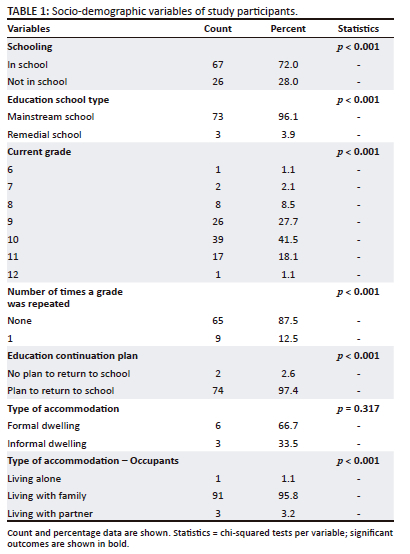
Participants had a mean age of 15.2 (standard deviation [s.d.] = 1.03), ranging from 13 to 18 years. Table 1 provides the socio-demographic characteristics of the participants. The majority of participants were in mainstream schooling, with three participants in remedial schooling (Table 1). Most participants were in Grade 9 or 10, and most did not repeat any grades. All but two participants planned to return to school. There was no difference in participants living in formal and informal dwellings, but this could be because of the low number of responses. The majority of participants lived with their families (Table 1). Three participants reported living with a partner, and one participant reported living alone.
Pregnancy-related factors
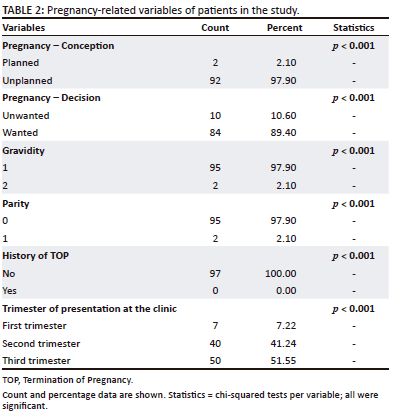
Table 2 provides pregnancy-related characteristics of the participants. Most (97.9%) pregnancies were unplanned, and 89.4% of participants reported that the pregnancy was wanted. Significantly more participants were primigravida. No participants had a history of termination of pregnancy. Most participants were in the second and third trimesters of pregnancy when they visited the clinic (Table 2). Three participants mentioned using contraceptives, but the type of contraceptive used was not documented.
Substance use habits
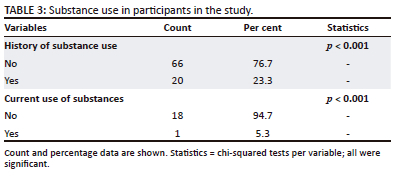
Table 3 provides the substance use information for patients in the study. Most (76.7%) participants reported no substance use. Of those using substances, more participants were not using substances during the study period (Table 3).
Most participants reported drinking alcohol (n = 19), three reported smoking cannabis and one smoked tobacco. None of the participants reported using methamphetamines, amphetamines, opioids, benzodiazepines, cocaine or nyaope. Five participants (33%) reported drinking alcohol weekly, and 10 (67%) did not provide any information. Three participants (50%) drank alcohol for less than a year, two (33%) for 1-5 years, and one (17%) for more than 5 years. No further details were available for participants using cannabis and tobacco. Eleven participants (100%) reported not having withdrawal symptoms at the time of assessment.
Psychiatric diagnosis and risk profile
A prevalence of high patient risk (i.e. a score ≥ 3) was 44.4% (95% LCI (Lower Confidence Interval): 0.30; UCI (Upper Confidence Interval): 0.59; n = 45) from the risk factor assessment scores. Using the Edinburgh Depression Scale score, the prevalence of high patient risk (i.e. a score ≥ 13) was 47.7% (95% LCI: 0.36; UCI: 0.60; n = 34).
Thirty respondents answered questions for the Risk Factor Assessment and Edinburgh Depression Scales. Of these, 14 (47%) had a high risk (≥ 3 and ≥ 13) on both scoring systems.
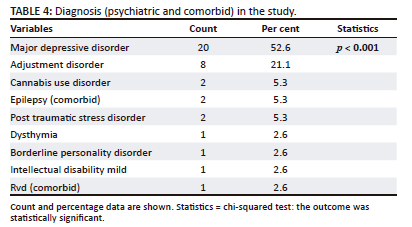
Table 4 shows the psychiatric and comorbid diagnoses in the participants. Significantly more participants had major depressive disorder (52.6%), followed by adjustment disorder (21.1%). There were five other disorders and two comorbidities (Table 4).
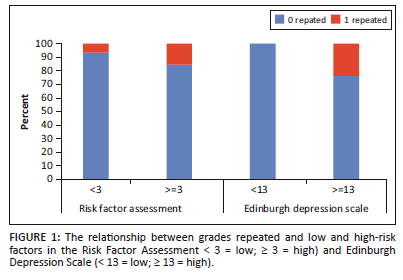
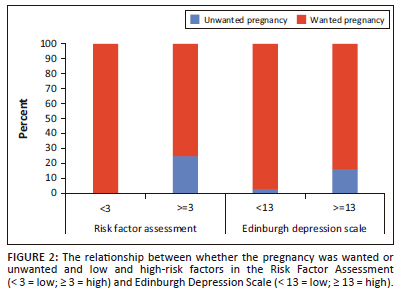
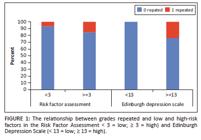
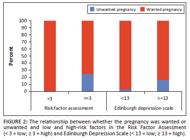
The association of two variables with the Risk Factor Assessment and Edinburgh Depression Scale assessments is shown in Figure 1 and Figure 2. For the number of grades repeated, a significantly greater proportion (n = 5; 24%) of participants who repeated a grade also had a high-risk profile on the Edinburgh Depression Scale (Fisher's exact test: p = 0.048) versus no participants who repeated a grade and had low risk on this scale (Figure 1). There was no significant association between grades repeated and Risk Factor Assessment (Fisher's exact test: p = 0.583). For wanted and unwanted pregnancies, a significantly greater proportion (n = 5; 25%) of participants with an unwanted pregnancy had a high-risk profile on the Risk Factor Assessment scale (Fisher's exact test: p = 0.016) versus participants who did not want to keep the pregnancy and had a low risk for this scale (Figure 2). There was no significant association between wanting to keep the pregnancy or not and Edinburgh Depression Scale (Fisher's exact test: p = 0.091).
Discussion
This study describes the patient profile, pregnancy-related factors and substance use habits of 97 participants seen at the outpatient MMHC at CHBAH from January to June 2022.
Demographics
The mean age of patients presenting to the clinic was 15.2 years, ranging from 13 to 18 years. This is in keeping with the World Health Organization statistics that most adolescent pregnancies worldwide (about 16 million) are between 15 and 19 years. Fewer adolescent pregnancies (about 1 million) are younger than 15 years.343536273737373737
Schooling
A common concern for pregnant adolescents is the ability to further their education.3838393820,401038
Data reporting on adolescent pregnancies occurring in mainstream schools versus remedial schools in South Africa is scarce. This study found that most adolescents attended a mainstream school (96.1%), and only 3.9% attended a remedial school. Most patients had never repeated a grade (87.5%). This may be a protective factor for these patients as an appropriate age for grade before pregnancy has been associated with greater odds of school return.3841
Accommodation
This study found that most adolescent patients resided with their families (95.8%). This echoes previous research showing that most pregnant adolescents still depend on their families for their place of residence, financial and schooling needs and emotional support during this time.424310431044
Too little data were captured on the type of accommodation to make statistical associations.
Pregnancy-related factors
Most adolescent pregnancies were unplanned (97.9%) although most were wanted (89.4%). This contrasts with a study in sub-Saharan Africa, where 35% of adolescent pregnancies were unplanned and unwanted.44546
Most teenagers said this was their first pregnancy (97.9%). Two participants reported having a previous pregnancy. Among the two participants that reported a previous pregnancy, none reported a previous termination. This differs significantly from a study conducted in Soweto, South Africa, reporting that 23% of pregnancies in 13- to 16-year-olds and 14.9% in the 17- to 19-year age group resulted in abortion.3,447
Substance use habits
Significantly more patients reported no substance use (76.7%). Of those using substances, most did not use them during the study period (94.7%). This differs significantly from the United States, where pregnant adolescents reported greater drug use than their same-age non-pregnant peers (13.8%).4527,4827,484937
Risk factor assessment and Edinburgh Depression Scale
A prevalence of high patient risk (i.e. a score ≥ 3) from the Risk Factor Assessment scores was 44.4%. Using the Edinburgh Depression Scale score, the prevalence of high patient risk (i.e. a score ≥ 13) was 47.7%. Thirty respondents answered questions for both the Risk Factor Assessment and Edinburgh Depression Scale; of these, 14 (47%) had a high risk (≥ 3 and ≥ 13) on both scoring systems. This agrees with several studies suggesting that adolescent mothers are at higher risk of developing depression.502151525353
Diagnosis
Significantly more patients had major depressive disorder (52.6%), followed by adjustment disorder (21.1%). There were five other disorders and two comorbidities. There is a slightly higher incidence of Major Depressive Disorder among pregnant adolescents at the MMHC at CHBAH compared to the findings reported by Stacy C. Hodgkinson et al. in the study 'Depressive Symptoms and Birth Outcomes among Pregnant Teenagers' (16% - 44%).54
Contraception
Adolescent pregnancy prevention is an essential strategy for improving maternal and infant outcomes.555556
Limitations
In this study, retrospective file review methodology was employed. Firstly, this meant that the researcher was limited by the information that was present and recorded in the study population's files. For example, there was limited information provided with regard to the adolescent's living conditions, extent of family support and contraceptive use. Further research that includes self-report questionnaires specifically asking about contraception use and knowledge will be informative to help develop strategies to prevent adolescent pregnancies. Secondly, the patient assessments were done by a combination of psychiatric medical officers and registrars with different levels of skill and expertise. The assessments of the patient's mental health were therefore not done on a standard level of expertise. Thirdly, the study took place over a short period of only 6 months, and a more extended study with a larger study population would improve the reliability of the results. Fourthly, the study took place at a single centre, and included only patients referred to the MMHC (a tertiary institution); therefore, the results cannot be generalised to other adolescent populations. A study involving multiple centres, at all levels of care, would be of benefit to generalise the findings.
Conclusion
This review emphasises the patient profile of pregnant adolescent patients presenting to a tertiary maternal mental health facility. A greater understanding of this population's health and social needs may inform early psychiatric and psychosocial interventions and improve service delivery and help-seeking behaviour. Collaboration between the Departments of Health, Social Development and Education is needed to further psychoeducation on contraceptive use, the adverse effects of substance use and how to screen for mental illness in pregnancy. The development of a standard format of assessments of pregnant adolescents would be helpful to both clinicians and primary-level healthcare workers. This will assist in the identification of those at greater risk, early identification of mental health concerns and intervention as pregnancy places adolescents at a greater risk of psychiatric-related morbidity, which could have far-reaching consequences for their children. Collaboration is also needed to facilitate the treatment of this vulnerable population's substance use disorders. It is suggested that further research be conducted into the use of contraceptives in this population, as this data was not available for the study and could assist in preventing further adolescent pregnancies. Further research focussing on rates of school re-enrolment after childbirth and barriers preventing re-enrolment is needed, as this could help inform how these adolescents can be better supported to further their education.
Competing interests
The authors declare that they have no financial or personal relationships that may have inappropriately influenced them in writing this article.
Authors' contributions
L.C. was the principal investigator and was responsible for the study concept, design, data collection and the preparation of the manuscript. S.M. and L.P. were the primary supervisors and contributed substantially to the critical revision and approval of the final version of the manuscript.
Funding information
The research was funded by the research investigator. This research received no specific grant from any funding agency in the public, commercial or not-for-profit sectors.
Data availability
The data may be requested from the principal investigator, L.C., upon reasonable request.
Disclaimer
The views expressed in this article are those of the authors and not an official position of the University of the Witwatersrand.
Acknowledgements
The authors would like to thank the Department of Psychiatry at CHBAH for the patient files that were used to collect data.
References
-
1.World Health Organization. Adolescent pregnancy [homepage on the Internet]. WHO Newsroom: WHO; 2020 [cited 2021 Apr 05]. Available from: https://www.who.int/news-room/fact-sheets/detail/adolescent-pregnancy
» https://www.who.int/news-room/fact-sheets/detail/adolescent-pregnancy -
2.Izugbara C. Socio-demographic risk factors for unintended pregnancy among unmarried adolescent Nigerian girls. SAFP. 2015;57(2):121-125. https://doi.org/10.1080/20786190.2014.977042
» https://doi.org/10.1080/20786190.2014.977042 - 3.Kahasay S. Assessment of magnitude and factors associated with unintended pregnancy among preparatory high school students. Ethiopia: School of Graduate Studies of Addis Ababa University, Department of Nursing and Midwifery; 2015.
-
4.Mchunu G, Peltzer K, Tutshana B, Seutlwadi L. Adolescent pregnancy and associated factors in South African youth. Afr Health Sci. 2012;12(4):426-434. https://doi.org/10.4314/ahs.v12i4.5
» https://doi.org/10.4314/ahs.v12i4.5 - 5.Maqhina M, Daniels N. NGO's alarmed by 90000 pregnancies of 10 to 19 year-olds. Cape Times. 2022 Jul 01.
-
6.Cloete R. Teenage pregnancy continues to rise in SA [homepage on the Internet]. Careers Portal, Portal Publishing; [cited 2023 Feb 14]. Available from https://www.careersportal.co.za/news/teenage-pregnancy-rate-continues-to-rise-in-sa
» https://www.careersportal.co.za/news/teenage-pregnancy-rate-continues-to-rise-in-sa -
7.Five facts about poverty in South Africa [homepage on the Internet]. Statistics South Africa; 2019 [cited 20 Sep 2021]. Available from: http://www.statssa.gov.za/?p=12075
» http://www.statssa.gov.za/?p=12075 -
8.Maluleke R. Provincial profile: Gauteng community survey 2016. Report number 03-01-09. [Internet] Pretoria: Stats SA; 2018. Available from: http://cs2016.statssa.gov.za/wp-content/uploads/2018/07/Gauteng.pdf
» http://cs2016.statssa.gov.za/wp-content/uploads/2018/07/Gauteng.pdf - 9.Panday S, Makiwane M, Ranchod C, Letsoalo T. Teenage pregnancy in South Africa - With a specific focus on school-going learners. Pretoria: Department of Basic Education; 2009.
-
10.Nkosi NN, Pretorius E. The influence of teenage pregnancy on education: The perceptions of educators at a secondary school in Tembisa, Gauteng. Soc Work. 2019;55:114. https://doi.org/10.15270/55-1-698
» https://doi.org/10.15270/55-1-698 -
11.Osok J, Kigamwa P, Stoep AV, Huang KY, Kumar M. Depression and its psychosocial risk factors in pregnant Kenyan adolescents: A cross-sectional study in a community health Centre of Nairobi. BMC Psychiatry. 2018;18:136. https://doi.org/10.1186/s12888-018-1706-y
» https://doi.org/10.1186/s12888-018-1706-y -
12.Kumar M, Huang KY, Othieno C, et al. Adolescent pregnancy and challenges in Kenyan context: Perspectives from multiple community stakeholders. Glob Soc Welf. 2018;5:11-27. https://doi.org/10.1007/s40609-017-0102-8
» https://doi.org/10.1007/s40609-017-0102-8 -
13.Patel V, Flisher AJ, Hetrick S, McGorry P. Mental health of young people: A global public-health challenge. Lancet. 2007;369:1302-1313. https://doi.org/10.1016/S0140-6736(07)60368-7
» https://doi.org/10.1016/S0140-6736(07)60368-7 -
14.Patton GC, Sawyer SM, Santelli JS, et al. Our future: A Lancet commission on adolescent health and wellbeing. Lancet. 2016;387(9569):2423-2478. https://doi.org/10.1016/S0140-6736(16)00579-1
» https://doi.org/10.1016/S0140-6736(16)00579-1 - 15.Bornstein MH. The SAGE encyclopedia of lifespan human development. Thousand Oaks, CA: Sage; 2018.
-
16.Mal-Sarkar T, Keyes K, Koen N, et al. The relationship between childhood trauma, socioeconomic status, and maternal depression among pregnant women in a South African birth cohort study. SSM Popul Health. 2021;14:100770. https://doi.org/10.1016/j.ssmph.2021.100770
» https://doi.org/10.1016/j.ssmph.2021.100770 -
17.Van Zyl C, Van Wyk C. Exploring factors that could potentially have affected the first 1000 days of absent learners in South Africa: A qualitative study. Int J Environ Res Public Health. 2021;18(5):1-19. https://doi.org/10.3390/ijerph18052768
» https://doi.org/10.3390/ijerph18052768 -
18.Pem D. Factors affecting early childhood growth and development: Golden 1000 days. Adv Practice Nurs. 2015;1:101. https://doi.org/10.4172/2573-0347.1000101
» https://doi.org/10.4172/2573-0347.1000101 -
19.Cusick S, Georgieff MK. The first 1,000 days of life: The brain's window of opportunity [homepage on the Internet]. Unichef; 2013 [cited 2021 May 22]. Available from: https://www.unicef-irc.org/article/958-the-first-1000-days-of-life-the-brains-window-of-opportunity.html
» https://www.unicef-irc.org/article/958-the-first-1000-days-of-life-the-brains-window-of-opportunity.html - 20.Richter L. Birth to thirty. 1st ed. Johannesburg: DSI-NRF Centre of Excellence in Human Development, University of the Witwatersrand using Reach Publishers, 2022; p. 109-124.
-
21.Kinsella MT, Monk C. Impact of maternal stress, depression and anxiety on fetal neurobehavioral development. Clin Obstet Gynecol. 2009;52:425-440. https://doi.org/10.1097/GRF.0b013e3181b52df1
» https://doi.org/10.1097/GRF.0b013e3181b52df1 -
22.Morris-Rosendahl DJ, Crocq MA. Neurodevelopmental disorders-the history and future of a diagnostic concept. Dialogues Clin Neurosci. 2020;22(1):65-72. https://doi.org/10.31887/DCNS.2020.22.1/macrocq
» https://doi.org/10.31887/DCNS.2020.22.1/macrocq - 23.Treffers PE. [Teenage pregnancy, a worldwide problem]. Ned Tijdschr Geneeskd. 2003;147:2320-5.
- 24.Sedgh G, Ashford L, Rubina H. Unmet need for contraception in developing countries: Examining women's reasons for not using a method, New York: Guttmacher Institute; 2016.
-
25.Jonas K, Duby Z, Maruping K, et al. Perceptions of contraception services among recipients of a combination HIV-prevention interventions for adolescent girls and young women in South Africa: A qualitative study. Reprod Health. 2020;17:122. https://doi.org/10.1186/s12978-020-00970-3
» https://doi.org/10.1186/s12978-020-00970-3 -
26.Hardin MG, Ernst M. Functional brain imaging of development-related risk and vulnerability for substance use in adolescents. J Addict Med. 2009;3(2):47-54. https://doi.org/10.1097/ADM.0b013e31819ca788
» https://doi.org/10.1097/ADM.0b013e31819ca788 -
27.Shilubane HN, Ruiter RA, Van Den Borne B, Sewpaul R, James S, Reddy PS. Suicide and related health risk behaviours among school learners in South Africa: Results from the 2002 and 2008 national youth risk behaviour surveys. BMC Public Health. 2013;13:926. https://doi.org/10.1186/1471-2458-13-926
» https://doi.org/10.1186/1471-2458-13-926 -
28.Jumbe S, Kamninga TM, Mwalwimba I, Kalu UG. Determinants of adolescent substance use in Africa: A systematic review and meta-analysis protocol. Syst Rev. 2021;10:125. https://doi.org/10.1186/s13643-021-01680-y
» https://doi.org/10.1186/s13643-021-01680-y - 29.Derese A, Seme A, Misganaw C. Assessment of substance use and risky sexual behaviour among Haramaya University students. Ethiop J Health Sci. 2014;2(2):102-110.
-
30.Mitsuhiro S, Chalem E, Barros M, Guinsburg R, Laranjeira R. Teenage pregnancy: Use of drugs in the third trimester and prevalence of psyhiatric disorders. Bras Psiquiat. 2006;28(2):122-125. https://doi.org/10.1590/S1516-44462006000200009
» https://doi.org/10.1590/S1516-44462006000200009 -
31.Forray A. Substance use during pregnancy. F1000Res. 2016;5:887. https://doi.org/10.12688/f1000research.7645.1
» https://doi.org/10.12688/f1000research.7645.1 -
32.Louw KA. Substance use in pregnancy: The medical challenge. Obstet Med. 2018;11(2):54-66. https://doi.org/10.1177/1753495X17750299
» https://doi.org/10.1177/1753495X17750299 -
33.Taşdemir S, Balci E, Günay O. Comparison of life quality of pregnant adolescents with that of pregnant adults in Turkey. Ups J Med Sci. 2010;115(4):275-281. https://doi.org/10.3109/03009731003628724
» https://doi.org/10.3109/03009731003628724 - 34.Kirchengast S. Teenage pregnancies: A worldwide social and medical problem. In: Laratta R, editor. An analysis of contemporary social welfare issues. London: InTech, 2016; p. 13-14.
-
35.Ahinkorah BO, Kang M, Perry L, Brooks F, Hayen A. Prevalence of first adolescent pregnancy and its associated factors in sub-Saharan Africa: A multi-country analysis. PLoS One. 2021;16(2):e0246308. https://doi.org/10.1371/journal.pone.0246308
» https://doi.org/10.1371/journal.pone.0246308 -
36.De Girolamo G, Dagani J, Purcell R, Cocchi A, McGorry PD. Age of onset of mental disorders and use of mental health services: Needs, opportunities and obstacles. Epidemiol Psychiatr Sci. 2012;21(1):47-57. https://doi.org/10.1017/S2045796011000746
» https://doi.org/10.1017/S2045796011000746 - 37.Department of Health. National mental health policy framework and strategic plan 2023-2030.
-
38.Jochim J, Meinck F, Toska E, et al. Who goes back to school after birth? Factors associated with postpartum school return among adolescent mothers in the Eastern Cape, South Africa. Glob Public Health. 2022;18(1):1-15. https://doi.org/10.1080/17441692.2022.2049846
» https://doi.org/10.1080/17441692.2022.2049846 -
39.Statistics South Africa. Demographic profile of adolescents in South Africa [homepage on the Internet]. [cited 2023 Jan 07]. 70 p. Available from: https://www.statssa.gov.za/publications/Report%2003-00-10/Report%2003-00-102016.pdf
» https://www.statssa.gov.za/publications/Report%2003-00-10/Report%2003-00-102016.pdf -
40.Kaufman CE, Wet T, Stadler J. Adolescent pregnancy and parenthood in South Africa. Stud Fam Plann. 2001;32:147-160. https://doi.org/10.1111/j.1728-4465.2001.00147.x
» https://doi.org/10.1111/j.1728-4465.2001.00147.x -
41.Grant MJ, Hallman KK. Pregnancy-related school dropout and prior school performance in KwaZulu-Natal, South Africa. Stud Fam Plann. 2008;39(4):369-382. https://doi.org/10.1111/j.1728-4465.2008.00181.x
» https://doi.org/10.1111/j.1728-4465.2008.00181.x -
42.Udjo EO. The relationship between the child support grant and teenage fertility in post-apartheid South Africa. Soc Policy Soc. 2014;13(4):505-519. https://doi.org/10.1017/S1474746413000390
» https://doi.org/10.1017/S1474746413000390 -
43.Rosen RH, Benson T, Stack JM. Help or hindrance: Parental impact on pregnant teenagers' resolution decisions. Fam Relat. 1982;31:271. https://doi.org/10.2307/584406
» https://doi.org/10.2307/584406 -
44.East PL, Chien NC. Stress in Latino families following an adolescent's childbearing: Effects on family relationships and siblings. J Fam Psychol. 2013;27:183-193. https://doi.org/10.1037/a0031536
» https://doi.org/10.1037/a0031536 -
45.Connery HS, Albright BB, Rodolico JM. Adolescent substance use and unplanned pregnancy: Strategies for risk reduction. Obstet Gynecol Clin North Am. 2014;41(2):191-203. https://doi.org/10.1016/j.ogc.2014.02.011
» https://doi.org/10.1016/j.ogc.2014.02.011 -
46.Barton K, Redshaw M, Quigley MA, Carson C. Unplanned pregnancy and subsequent psychological distress in partnered women: A cross-sectional study of the role of relationship quality and wider social support. BMC Pregnancy Childbirth. 2017;17:44. https://doi.org/10.1186/s12884-017-1223-x
» https://doi.org/10.1186/s12884-017-1223-x -
47.Kaswa R, Yogeswaran P. Abortion reforms in South Africa: An overview of the Choice on Termination of Pregnancy Act. S Afr Fam Pract (2004). 2020;62(1):1-5. https://doi.org/10.4102/safp.v62i1.5240
» https://doi.org/10.4102/safp.v62i1.5240 - 48.Reddy SP, Panday S, Swart D, et al. Umthente uhlaba usamila: The 1st South African national youth risk behaviour survey, 2002. Cape Town: South African Medical Research Council; 2003.
-
49.Maserumule OM, Skaal L, Sithole SL. Alcohol use among high school learners in rural areas of Limpopo province. SAJP. 2019;25:a1183. https://doi.org/10.4102/sajpsychiatry.v25i0.1183
» https://doi.org/10.4102/sajpsychiatry.v25i0.1183 -
50.Corcoran J. Teenage pregnancy and mental health. Societies. 2016;6:21. https://doi.org/10.3390/soc6030021
» https://doi.org/10.3390/soc6030021 -
51.Jahan N, Went TR, Sultan W, et al. Untreated depression during pregnancy and its effect on pregnancy outcomes: A systematic review. Cureus. 2021;13(8):e17251. https://doi.org/10.7759/cureus.17251
» https://doi.org/10.7759/cureus.17251 -
52.Sheeba B, Nath A, Metgud CS, et al. Prenatal depression and its associated risk factors among pregnant women in Bangalore: A hospital based prevalence study. Front Public Health. 2019;7:108. https://doi.org/10.3389/fpubh.2019.00108
» https://doi.org/10.3389/fpubh.2019.00108 -
53.Slomian J, Honvo G, Emonts P, Reginster JY, Bruyère O. Consequences of maternal postpartum depression: A systematic review of maternal and infant outcomes. Womens Health (Lond). 2019;15:1745506519844044. https://doi.org/10.1177/1745506519844044
» https://doi.org/10.1177/1745506519844044 -
54.Hodgkinson S, Beers L, Southammakosane C, Lewin A. Addressing the mental health needs of pregnant and parenting adolescents. Pediatrics. 2014;133(1):114-122. https://doi.org/10.1542/peds.2013-0927
» https://doi.org/10.1542/peds.2013-0927 -
55.Chandra-Mouli V, Mccarraher DR, Phillips SJ, Williamson NE, Hainsworth G. Contraception for adolescents in low and middle income countries: Needs, barriers, and access. Reprod Health. 2014;11:1. https://doi.org/10.1186/1742-4755-11-1
» https://doi.org/10.1186/1742-4755-11-1 -
56.Nelson AL. Prenatal contraceptive counselling and method provision after childbirth. Open Access J Contracept. 2015;6:53-63. https://doi.org/10.2147/OAJC.S52925
» https://doi.org/10.2147/OAJC.S52925

Accepted: 13 Nov. 2023
Published: 20 Dec. 2023