Bullying and associated risk factors among adolescents in a secondary school in Lobatse, Botswana
Abstract
BACKGROUND: The prevalence of bullying globally is concerning. There is a lack of data to inform policies against bullying in Botswana. AIM: The study aimed to determine the prevalence and associated risk factors of bullying among students in a senior secondary school. SETTING: The study was conducted in Lobatse, Botswana. METHODS: A cross-sectional study was done among 372 Lobatse Senior Secondary School students. Data were collected using the Illinois Bullying Scale, Cyberbullying, Strengths and Difficulties, Car, Relax, Alone, Forget Friends, Trouble (CRAFFT) and the Oslo Social Support Scale. Data were analysed using IBM SPSS Statistics version 28. RESULTS: Overall prevalence of bullying was 23.2%, 33.1% and 42.5% for perpetration, victimisation and cyberbullying, respectively. Being male (B = -0.143, p = 0.004), having poor social support (B = -0.193, p = < 0.001), having a possible substance use problem (B = 0.157, p = 0.002) and having conduct disorder (B = 0.276, p = < 0.001) were found to be significantly associated with bullying perpetration. Having a conduct problem was the only factor associated with bullying victimisation (B = 0.0276, p < 0.001). Factors significantly associated with cyberbullying were being a day scholar (B = -0.117, p = 0.021), having a substance use problem (B = 0.136, p = 0.008) and possible conduct disorder (B = 0.177, p < 0.001). CONCLUSION: Bullying is on the rise in Botswana secondary schools, highlighting the need for effective prevention strategies. CONTRIBUTION: The study offers insights into bullying patterns among secondary school students and identifies areas to be targeted for prevention.
bullying perpetration; bullying victimisation; cyberbullying; secondary school
Introduction
Bullying in adolescents is a global challenge that has been observed over time.12,3456,7
Bullying is intentional, repeated, harmful actions by one or more people directed toward another person without clear provocation from the target.89,109,10
An American study among 15 686 students found that 44.4% bullied others and 41.1% were bullied last term.1112131415
In Botswana, studies on bullying are scarce, with the only quantitative study on victimisation prevalence over 15 years ago reporting 53.1%.161717,1819
Several factors have been identified in many studies outside Botswana,2,20,21,2223132117
Bullying can cause psychological issues like depression and suicidal behaviour,6
Research methods and design
Study design, setting and population
The study was cross-sectional research conducted in Lobatse Senior Secondary School, a public institution located in Lobatse town, in the southeastern district of Botswana. The school offers both day and boarding facilities. At the time of data collection, it had an enrolment of 1485 students, out of which 151 were boarders. The presence of students from both day and boarding facilities provided a convenient opportunity for comparison between the boarders and non-boarders within the same school.
The study population consisted of students enrolled in Lobatse Senior Secondary School, in forms four or five at the time of data collection, who were literate in the local languages, Setswana and English. The study excluded those whose parents did not grant consent for participation.
Sampling and procedure
The sample size was calculated using Cochran's formula (1977), based on the prevalence of bullying among adolescents in Nigeria found in a previous study (0.16) and a desired level of precision of 0.05. Accordingly, the sample size was determined to be 201, with an additional 20% added to account for possible non-response, resulting in 241 participants.
A multistage sampling technique was used to enrol study participants. The students were divided into two groups according to their grades Form 4 and Form 5. Classes were randomly selected from both arms. Students were then randomly selected from the selected classes. This method allowed for any student to be selected, thus minimising participant bias.
Data were collected from August 2023 to September 2023. The principal investigator visited randomly selected classes before their scheduled lunch breaks. During these visits, the students were provided with a comprehensive explanation of the objectives and rationale of the study. The students were given letters containing further details about the study, which they were encouraged to share with their parents. The students were allowed to ask any questions they might have had, and consent forms were handed out for their parents or guardians to sign. One week later, the principal investigator returned to the classes, and the students who had been randomly selected and whose parents or guardians had signed consent forms were given the necessary instructions to complete the self-administered questionnaires.
Sociodemographic questionnaire
The questionnaire was designed by the investigator. It includes specificities on the demographics of the respondents; for example, age, gender and level of study. It also includes questions to assess family relations, socioeconomic status and students' academic performance, which may influence the presence or absence of bullying.
Illinois Bullying Scale
It is an 18-item scale divided into three subscales: bully, victim and fight; this was used to assess bullying victimisation and perpetration. The tool uses a five-point Likert scale to grade participant responses. Respondents grade how often they bullied or were bullied in the last 30 days. Bullying scores: zero is none; less than nine, mild; 10-18, moderate; 19-36, severe. Victimisation scores: zero is none; less than four, mild; 5-8, moderate; 9-16, severe.242526
CRAFFT alcohol screening tool
Car, Relax, Alone, Forget Friends, Trouble (CRAFFT) screens for substance issues in adolescents 12-21; it has two parts with nine items. The first three questions enquire about whether the respondent has used alcohol, cannabis, or any other illegal substances in the past 12 months. The second part of the tool assesses circumstances around substance use. One of the questions is, 'Do you do drugs by yourself?' The respondent indicates by giving a yes or no answer. A 'yes' answer is given one point, and a 'no' answer is given zero points. A score above two on the second part suggests a possible substance problem; it has good internal consistency and high reliability.2728
Strengths and difficulties questionnaire
This assessment tool consists of five subscales, each with five items, comprising 25 items; its subscales evaluate conduct, emotion, hyperactivity-inattention, peer relationships and prosocial behaviour. The tool uses a three-point Likert scale, and respondents answer to what degree a certain symptom applies to them. For each subscale, a score range of 0-10 is possible.
The investigators for our study focused solely on the conduct subscale, which is evaluated by questions 5, 7, 12, 18 and 22. A score of more than five on this subscale indicates a high risk of a clinically significant conduct problem. The overall tool Cronbach's alpha was 0.73, with 0.60 specifically for the conduct subscale.29
The cyberbullying questionnaire
The Cyberbullying Questionnaire (CBQ), developed by Calvete in 2010, is a 16-item scale assessing cyberbullying perpetration. It uses a three-point Likert scale to describe the frequency of each mentioned act. Response options are 'never', 'sometimes' and 'often', which are graded 'zero', 'one' and 'two', respectively.3031
Oslo Social Support Scale
This is a self-reporting tool that assesses social support and has three items. Scores ranging from 3 to 14 are possible. A score of 3-8 indicates poor social support, a score of 9-11 indicates moderate social support, and a score of 12-14 indicates strong social support.3233
Data analysis
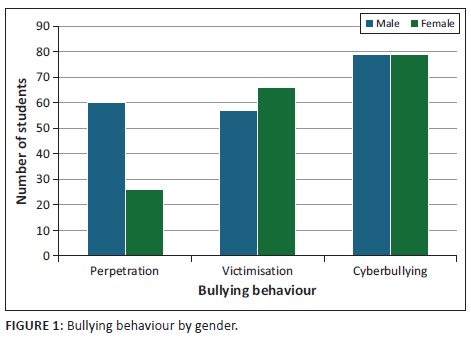
Our study utilised the Statistical Package for Social Sciences version 28 for data analysis. Categorical variables such as gender, bullying and conduct disorder traits were described using frequencies and percentages, while continuous variables like age were expressed as mean (standard deviation [SD]). The distribution of outcome variables, including perpetration, bullying victimisation and cyberbullying by gender, was represented using a bar graph. The scores of the outcome variables, including bullying perpetration, bullying victimisation and cyberbullying, were further analysed. Bivariate analyses, such as independent t-tests and Pearson's correlation, were used to explore the relationship between outcome variables and the risk factors. A single-step multiple regression model, incorporating all significant variables identified in the bivariate analysis, was conducted to determine the predictors of the outcomes. A p-value of less than 0.05 was considered statistically significant.
Ethical considerations
An application for full ethical approval was made to the Research and Ethics Committee of the University of Botswana, and ethics consent was received on 08 November 2022. The ethical clearance number is HPRD: UBR/RES/IRB/BIO/GRAD/314. The research was also approved by the Ministry of Health and Wellness Internal Review Board (IRB) Botswana (HPRD: 6/14/1) and the management of Lobatse Senior Secondary School. All procedures carried out in studies involving human participants were conducted in accordance with the ethical standards of the institutional and national research committee, as well as with the 1964 Helsinki Declaration and its subsequent amendments or equivalent ethical standards. Written informed consent was secured from the parents or guardians of the participants, and assent to participate was also obtained from the respondents after explaining the purpose, benefits and risks in simple language. Data collected were anonymised, and confidentiality was maintained.
Results
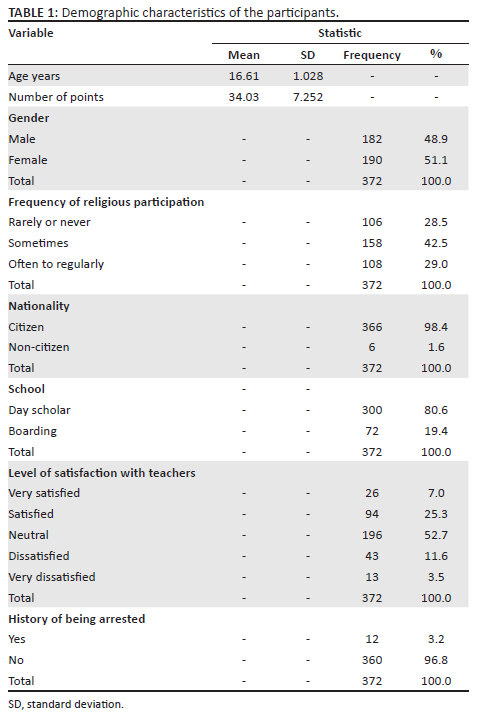
A total of 372 questionnaires were completed. The mean age (SD) of participants was 16 years (1.028), with a slightly larger proportion of students doing form 4 (51.1%). Females were more than males at 190 (51.1%) (Table 1).
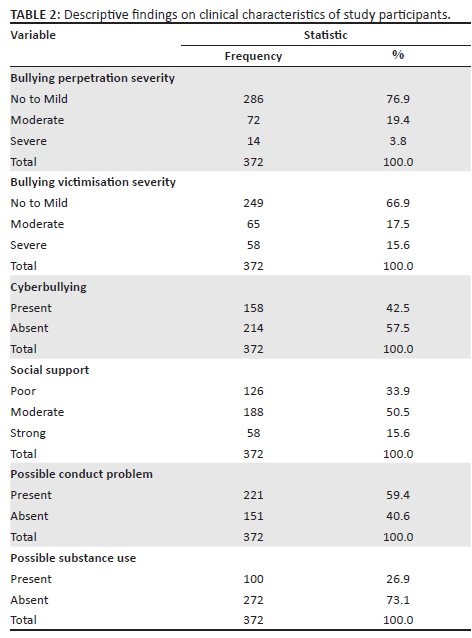
The overall prevalence of bullying was 23.2%, 33.1% and 42.5% for perpetration, victimisation and cyberbullying, respectively. Females were victimised more than males, 66 (53.7%), whereas males perpetrated more than females, 60 (69.8%). Both sexes were equally represented in cyberbullying perpetration. Figure 1 depicts the severity of bullying behaviour by gender. Only a small percentage (15.6%) of the participants reported having strong social support. One hundred (26.9%) students had a possible substance use problem. Table 2 shows the clinical characteristics of the sample.
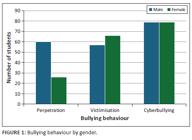
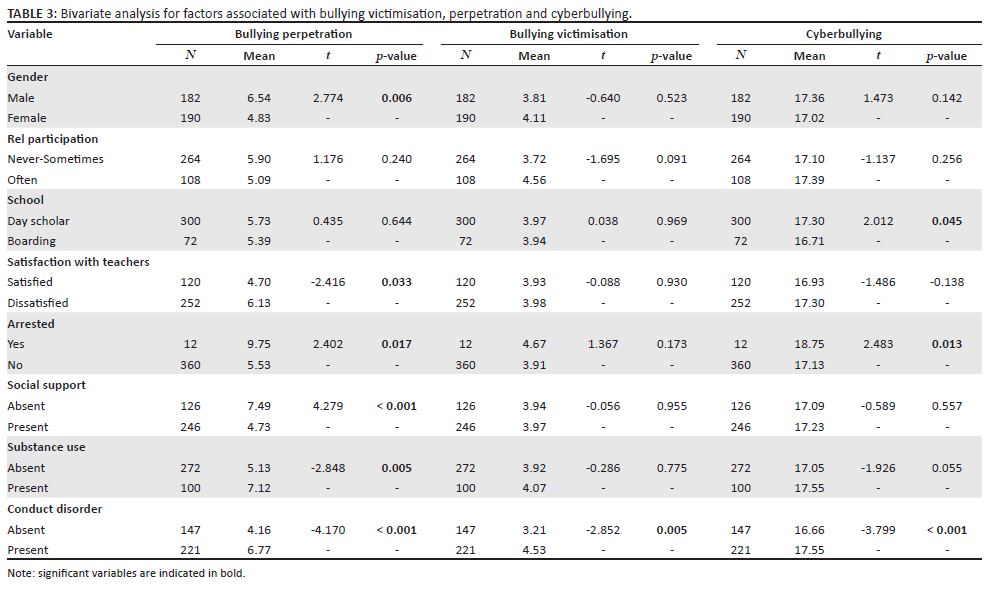
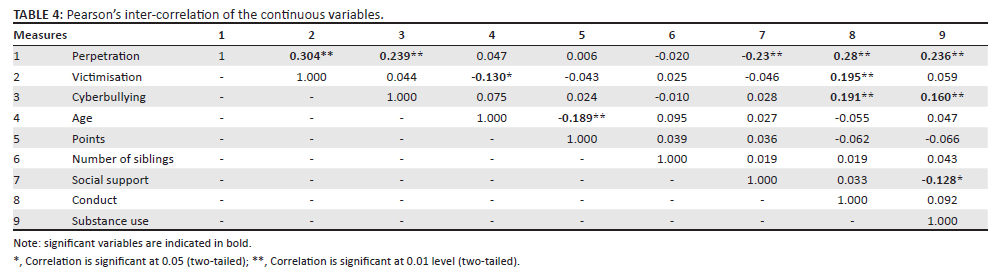
Table 3 and Table 4 show the association between bullying behaviour and independent variables. Factors associated with bullying perpetration were being male (t = 2.774, p = 0.006), poor satisfaction with teachers (t = -2.416, p = 0.033), history of being arrested (t = 2.402, p = 0.017), perceived poor social support (t = 4.279, p ≤ 0.001), substance use problem (t = -2.848, p = 0.005) and having a conduct problem (t = -4.170, p ≤ 0.001). Bullying victimisation was found to be associated with having a conduct problem. Cyberbullying perpetration was associated with being a day scholar, having a previous history of arrest and having conduct problems.
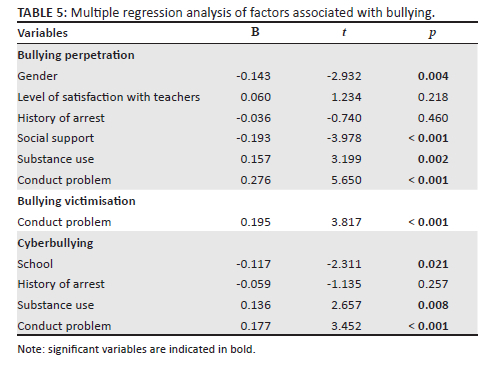
Variables found to be significant on bivariate regression were entered into the multivariate model, and the results are seen in Table 5. Being male (B = -0.143, p = 0.004), having poor social support (B = -0.193, p < 0.001), having a possible substance use problem (B = 0.157, p = 0.002) and having conduct disorder (B = 0.276, p ≤ 0.001) were found to be significantly associated with bullying perpetration. Having a conduct problem was the only factor associated with bullying victimisation (B = 0.0276, p ≤ 0.001). Factors significantly associated with cyberbullying were being a day scholar (B = -0.117, p = 0.021), having a substance use problem (B = 0.136, p = 0.008) and possible conduct disorder (B = 0.177, p ≤ 0.001).
Discussion
We aimed to explore the prevalence of bullying behaviour and its associated risk factors among senior school students in Botswana. The findings of the study revealed that victimisation, perpetration and cyberbullying were prevalent among 33.1%, 23.2% and 42.5% of the participants, respectively. The study further identified factors that were significantly associated with the outcome variables, including boarding or day scholar status, social support and possible substance and conduct disorders.
Approximately one-third of the participants in the study acknowledged being subjected to bullying by other individuals. This percentage is comparatively lower than the prevalence rate of roughly 50% in a previous study involving adolescents in Lebanon. However, it is higher than the rate observed among students in Pakistan, which was approximately 25% of the participants.34,3536
In our study, the incidence of bullying perpetration was found to be slightly less than a quarter, while in Iran, the percentage was lower than the incidence of bullying perpetration using the same tool, which was found to be approximately one-fifth.3713,21,38
Cyberbullying is a growing phenomenon with the increased usage of gadgets among teenagers in Botswana, as in other countries.30,3930,39
Cyberbullying is linked to the tragic deaths of young people in the United States and has prompted widespread concern about its prevalence and psychological impact.4041,4243
It is worth noting that the prevalence of this phenomenon is comparatively higher among day students than boarding students, primarily because of the former's unrestricted access to electronic media and the internet. The findings suggest that boarding students' limited access to such resources might protect against this phenomenon. However, these outcomes reinforce the observation that cyberbullying is a highly prevalent phenomenon among adolescents, necessitating the involvement of all stakeholders in mitigating its deleterious effects. More importantly, parents must be made aware of the potential ramifications of unrestricted access to social media and the deleterious effects of cyberbullying. As social media continues to expand its reach, the impact on young people's mental and emotional well-being is becoming increasingly challenging to ignore. Therefore, parents must be equipped with the necessary information to help them navigate social media's complex and rapidly evolving landscape.
The statistical analysis revealed that males tend to engage in bullying behaviour more often than females, and this association persisted even after controlling for other variables in the regression model. Based on the available data, it can be anticipated that bullying is more prevalent among boys, while girls are more often targeted as victims of bullying. This pattern also echoes previous research, such as that carried out by Reis e Silva and colleagues,4413,454513,46
Other factors that may contribute to the greater likelihood that males will engage in bullying can be explained by the increased aggressive behaviour because of underlying biological mechanisms47484913,38,5051
The findings of our study indicated that delinquent behaviour correlates with both physical bullying and cyberbullying. A study, which involved a comparison of 206 participants with Conduct Disorder (CD) and typically developing controls aged between 9 and 19 years, found that individuals with conduct behaviour were more likely to engage in cyberbullying,5213Table 4), indicating a cycle of troubled children who require treatment rather than punishment as culpable offenders, as previously reported.13,5253
In line with the above observations, the present study has identified social support as a potential factor in preventing bullying perpetration, as it was observed that individuals with social support were less likely to be involved in such acts. Bullying perpetrators often have a strained relationship with their teachers, according to Olashore and colleagues,13
Limitations
It is important to note that certain limitations of this study must be considered when interpreting the results. Firstly, the sample size used in the study was small, and it was conducted only in one town in Botswana, which raises questions about the generalisability of the findings. Secondly, the study was of a cross-sectional design, meaning it cannot establish causality. Thirdly, although the survey covered various forms of bullying, it did not specify the type. Finally, the self-report questionnaire used in the study may have resulted in an underestimation of the prevalence of negative behaviours, as participants may have been unwilling to report them. Furthermore, none of the questionnaires used had been validated for this specific population, thus emphasising the need for a cautious interpretation. The self-reporting and lack of validation for the tool render a possibility that some may report minor conflict as bullying behaviour. In an attempt to mitigate this, those who scored mildly were removed from further analysis. Consequently, interpretation of the results may require caution.
However, it has some notable strengths. Firstly, it is the first study to examine bullying behaviour and its related factors in Botswana. Secondly, it also explores the prevalence of cyberbullying, which has been reported in the country but has not been thoroughly researched. Additionally, the study covers a range of factors that contribute to bullying, providing valuable insights for targeted prevention programmes aimed at both victims and perpetrators.
Conclusion
The findings indicate an increase in the incidence of bullying, indicating a need for further research to identify potential solutions. It is crucial to take appropriate measures to ensure that children receive the necessary support and guidance to break the cycle of bullying and victimisation and promote healthy social interactions. The study also highlights the factors that contribute to bullying, emphasising the importance of addressing the emotional, psychological and academic needs of both perpetrators and victims. Parents must be equipped with the necessary information to help them navigate social media's complex and rapidly evolving landscape to protect their children from its negative effects.
The authors are grateful to all respondents who participated in this research.
Competing interests
The authors declare that they have no financial or personal relationships that may have inappropriately influenced them in writing this article.
Authors' contributions
T.M. conceptualised the study and drafted the initial manuscript. A.A.O. and H.R. supervised the project. T.M., A.A.O., P.O. and H.R. reviewed and edited the final version of the manuscript. All authors read and agreed to the final draft.
Funding information
This research received no specific grant from any funding agency in the public, commercial or not-for-profit sectors.
Data availability
The datasets used and analysed during the current study are available from the corresponding author, T.M., upon reasonable request.
Disclaimer
The views and opinions expressed in this article are those of the authors and are the product of professional research. They do not necessarily reflect the official policy or position of any affiliated institution, funder, agency or that of the publisher. The authors are responsible for this article's results, findings and content.
Acknowledgements
This article is based on research originally conducted as part of Taboka Maphorisa's master's thesis titled 'Bullying and associated risk factors among adolescents in a senior secondary school in Lobatse, Botswana: a cross-sectional study', submitted to the University of Botswana in 2025. The thesis is currently unpublished and not publicly available. The thesis was supervised by Hlanganiso Roy, Phillip Opondo and Anthony A. Olashore. The manuscript has been revised and adapted for journal publication. The authors confirm that the content has not been previously published or disseminated and complies with ethical standards for original publication.
References
-
1.Mishra DK, Thapa TR, Marahatta SB, Mahotra A. Bullying behavior and psychosocial health - A cross-sectional study among school students of Pyuthan Municipality. J Nepal Health Res Counc. 2018;16(1):73-78. https://doi.org/10.3126/jnhrc.v16i1.19370
» https://doi.org/10.3126/jnhrc.v16i1.19370 -
2.Juan A, Zuze L, Hannan S, Govender A, Reddy V. Bullies, victims and bully-victims in South African schools: Examining the risk factors. S Afr J Educ. 2018;38(1): 1585. https://doi.org/10.15700/saje.v38ns1a1585
» https://doi.org/10.15700/saje.v38ns1a1585 -
3.Ministry of Basic Education. Public Statement: Bullying in Schools. Updated 24 February 2020 [cited 2025 Oct 07]. Available from: https://www.facebook.com/BotswanaGovernment/posts/statement-bullying-in-schoolthe-ministry-of-basic-education-has-noted-with-grave/2780990355316938/
» https://www.facebook.com/BotswanaGovernment/posts/statement-bullying-in-schoolthe-ministry-of-basic-education-has-noted-with-grave/2780990355316938/ - 4.UNESCO. School violence and bullying: Global status report. Paris: United Nations Educational, Scientific and Cultural Organization; 2017.
- 5.Owuamanam DO, Makinwa VI. Prevalence of bullying among secondary school students in Ondo state, Nigeria. Eur Sci J. 2015;11(20):326-333.
-
6.Dake JA, Price JH, Telljohann SK. The nature and extent of bullying at school. J Sch Health. 2003;73(5):173-180. https://doi.org/10.1111/j.1746-1561.2003.tb03599.x
» https://doi.org/10.1111/j.1746-1561.2003.tb03599.x -
7.Fareo DO. Bullying in Nigerian secondary schools: Strategies for counseling intervention. Educ Res Rev. 2015;10(4):435-443. https://doi.org/10.5897/ERR2012.239
» https://doi.org/10.5897/ERR2012.239 - 8.Olweus D. Bullying in schools: Facts and intervention. Paper presented at IX International Meeting on Biology and Sociology of Violence, under the honorary presidency of HM Queen Sofia, Valencia, Spain; October; 2005; 1;64(6):351-61.
-
9.Slonje R, Smith PK. Cyberbullying: Another main type of bullying? Scand J Psychol. 2008;49(2):147-154. https://doi.org/10.1111/j.1467-9450.2007.00611.x
» https://doi.org/10.1111/j.1467-9450.2007.00611.x -
10.Gohal G, Alqassim A, Eltyeb E, et al. Prevalence and related risks of cyberbullying and its effects on adolescent. BMC Psychiatry. 2023;23(1):39. https://doi.org/10.1186/s12888-023-04542-0
» https://doi.org/10.1186/s12888-023-04542-0 -
11.Nansel TR, Overpeck M, Pilla RS, Ruan WJ, Simons-Morton B, Scheidt P. Bullying behaviors among US youth: Prevalence and association with psychosocial adjustment. J Am Med Assoc. 2001;285(16):2094-2100. https://doi.org/10.1001/jama.285.16.2094
» https://doi.org/10.1001/jama.285.16.2094 -
12.Jadambaa A, Thomas HJ, Scott JG, Graves N, Brain D, Pacella R. Prevalence of traditional bullying and cyberbullying among children and adolescents in Australia: A systematic review and meta-analysis. Aust N Z J Psychiatry. 2019;53(9):878-888. https://doi.org/10.1177/0004867419846393
» https://doi.org/10.1177/0004867419846393 -
13.Olashore AA, Osasona SO, Uwadiae E, Akanni OO. Predictors of bullying reported by perpetrators in a sample of senior school students in Benin City, Nigeria. S Afr J Psychiatry. 2020;26(1):1-8. https://doi.org/10.4102/sajpsychiatry.v26i0.1359
» https://doi.org/10.4102/sajpsychiatry.v26i0.1359 - 14.Sahli J, Mellouli M, Ghardallou EM, et al. Bullying among Tunisian middle school students: The prevalence, psychosocial associated factors and perceived involvement of parents, teachers and classmates. J Res Health Sci. 2018;18(2):414.
-
15.Shiba D, Mokwena KE. The profile of bullying perpetrators and victims and associated factors among high school learners in Tshwane District, South Africa. Int J Environ Res Public Health. 2023;20(6): 4916. https://doi.org/10.3390/ijerph20064916
» https://doi.org/10.3390/ijerph20064916 -
16.Fleming LC, Jacobsen KH. Bullying among middle-school students in low and middle income countries. Health Promot Int. 2010;25(1):73-84. https://doi.org/10.1093/heapro/dap046
» https://doi.org/10.1093/heapro/dap046 - 17.Mangope H, Dinama B, Kefhilwe M. Bullying and its consequences: A case of Botswana junior secondary schools. J Educ Pract. 2012;3(16):65-74.
- 18.Selemogwe M, Setlhare-Oagile N, Mphele S. Bullying in Botswana schools: A review. Int J Afr Asian Stud. 2014;4:78-82.
-
19.Shirandula AH. Evolving information technology: Opportunities and challenges. Int J Comput Technol. 2015;14(8):6001-6008. https://doi.org/10.24297/ijct.v14i8.1858
» https://doi.org/10.24297/ijct.v14i8.1858 -
20.Fenny O, Falola MI. Prevalence and correlates of bullying behavior among Nigerian middle school students. Int J Offender Ther Comp Criminol. 2020;64(5):564-585. https://doi.org/10.1177/0306624X20902045
» https://doi.org/10.1177/0306624X20902045 -
21.Galal YS, Emadeldin M, Mwafy MA. Prevalence and correlates of bullying and victimization among school students in rural Egypt. J Egypt Public Health Assoc. 2019;94(1):1-12. https://doi.org/10.1186/s42506-019-0019-4
» https://doi.org/10.1186/s42506-019-0019-4 -
22.Biswas T, Scott JG, Munir K, et al. Global variation in the prevalence of bullying victimisation amongst adolescents: Role of peer and parental supports. EClinicalMedicine. 2020;20:100276. https://doi.org/10.1016/j.eclinm.2020.100276
» https://doi.org/10.1016/j.eclinm.2020.100276 -
23.Brown DW, Riley L, Butchart A, Kann L. Bullying among youth from eight African countries and associations with adverse health behaviors. Pediatr Health. 2008;2(3):289-299. https://doi.org/10.2217/17455111.2.3.289
» https://doi.org/10.2217/17455111.2.3.289 -
24.Saini V, Balda S. Bullying, victimization and fighting in secondary school: Gender-based differences. Int J Curr Microbiol App Sci. 2019;8(6):1759-1764. https://doi.org/10.20546/ijcmas.2019.806.210
» https://doi.org/10.20546/ijcmas.2019.806.210 -
25.Espelage DL, Holt MK. Bullying and victimization during early adolescence: Peer influences and psychosocial correlates. J Emotional Abuse. 2001;2(2-3):123-142. https://doi.org/10.1300/J135v02n02_08
» https://doi.org/10.1300/J135v02n02_08 -
26.Eze JE, Chukwuorji JC, Ettu PC, Zacchaeus EA, Iorfa SK, Nwonyi SK. Bullying and suicide ideation: Testing the buffering hypothesis of social support in a sub-Saharan African sample. J Child Adolesc Trauma. 2021;14(1):19-27. https://doi.org/10.1007/s40653-019-00294-w
» https://doi.org/10.1007/s40653-019-00294-w -
27.Dhalla S, D Zumbo B, Poole G. A review of the psychometric properties of the CRAFFT instrument: 1999-2010. Curr Drug Abuse Rev. 2011;4(1):57-64. https://doi.org/10.2174/1874473711104010057
» https://doi.org/10.2174/1874473711104010057 - 28.Ola B, Atilola O. Validation of CRAFFT for use in youth correctional institutions in Lagos, Nigeria. J Am Acad Psychiatry Law. 2017;45(4):439-446.
-
29.Goodman R. Psychometric properties of the strengths and difficulties questionnaire. J Am Acad Child Adolesc Psychiatry. 2001;40(11):1337-1345. https://doi.org/10.1097/00004583-200111000-00015
» https://doi.org/10.1097/00004583-200111000-00015 -
30.Calvete E, Orue I, Estévez A, Villardón L, Padilla P. Cyberbullying in adolescents: Modalities and aggressors' profile. Comput Hum Behav. 2010;26(5):1128-1135. https://doi.org/10.1016/j.chb.2010.03.017
» https://doi.org/10.1016/j.chb.2010.03.017 -
31.Fernández AL, Noboa MIR, Hong AEH. Cyberbullying and its relationship with perceived stress in high school students - A case of study in the province of Tungurahua. Cienc Psicol. 2019;13(1):150-157. https://doi.org/10.22235/cp.v13i1.1816
» https://doi.org/10.22235/cp.v13i1.1816 -
32.Bøen H, Dalgard OS, Bjertness E. The importance of social support in the associations between psychological distress and somatic health problems and socio-economic factors among older adults living at home: A cross sectional study. BMC Geriatr. 2012;12(1):1-12. https://doi.org/10.1186/1471-2318-12-27
» https://doi.org/10.1186/1471-2318-12-27 -
33.Olashore AA, Molebatsi K, Musindo O, et al. Psychosocial predictors of anxiety and depression in a sample of healthcare workers in Botswana during the COVID-19 pandemic: A multicenter cross-sectional study. SAGE Open Med. 2022;10:20503121221085095. https://doi.org/10.1177/20503121221085095
» https://doi.org/10.1177/20503121221085095 -
34.Malaeb D, Awad E, Haddad C, et al. Bullying victimization among Lebanese adolescents: The role of child abuse, internet addiction, social phobia and depression and validation of the Illinois Bully Scale. BMC Pediatr. 2020;20(1):1-11. https://doi.org/10.1186/s12887-020-02413-1
» https://doi.org/10.1186/s12887-020-02413-1 -
35.Shujja S, Atta M, Shujjat JM. Prevalence of bullying and victimization among sixth graders with reference to gender, socio-economic status and type of schools. J Soc Sci. 2014;38(2):159-165. https://doi.org/10.1080/09718923.2014.11893246
» https://doi.org/10.1080/09718923.2014.11893246 -
36.Jiménez-Barbero JA, Ruiz-Hernández JA, Llor-Zaragoza L, Pérez-García M, Llor-Esteban B. Effectiveness of anti-bullying school programs: A meta-analysis. Child Youth Serv Rev. 2016;61:165-175. https://doi.org/10.1016/j.childyouth.2015.12.015
» https://doi.org/10.1016/j.childyouth.2015.12.015 - 37.Khezri H, Ghavam SE, Mofidi F, Delavar A. Bullying and victimization: Prevalence and gender differences in a sample of Iranian middle school students. J Educ Manage Stud. 2013;3:224-229.
-
38.Liang H, Flisher AJ, Lombard CJ. Bullying, violence, and risk behavior in South African school students. Child Abuse Negl. 2007;31(2):161-171. https://doi.org/10.1016/j.chiabu.2006.08.007
» https://doi.org/10.1016/j.chiabu.2006.08.007 -
39.Gámez-Guadix M, Villa-George F, Calvete E. Psychometric properties of the Cyberbullying Questionnaire (CBQ) among Mexican adolescents. Violence Vict. 2014;29(2):232-247. https://doi.org/10.1891/0886-6708.VV-D-12-00163R1
» https://doi.org/10.1891/0886-6708.VV-D-12-00163R1 -
40.Schneider SK, O'donnell L, Stueve A, Coulter RW. Cyberbullying, school bullying, and psychological distress: A regional census of high school students. Am J Public Health. 2012;102(1):171-177. https://doi.org/10.2105/AJPH.2011.300308
» https://doi.org/10.2105/AJPH.2011.300308 -
41.Gous N. Pretoria girl commits suicide, allegedly after cyberbullying. Times Live. Updated 19 February 2019 [cited 2025 Oct 07]. Available from: https://www.timeslive.co.za/news/south-africa/2019-02-19-pretoria-girl-commits-suicide-allegedly-after-cyberbullying/#google_vignette
» https://www.timeslive.co.za/news/south-africa/2019-02-19-pretoria-girl-commits-suicide-allegedly-after-cyberbullying/#google_vignette -
42.Media statement: Basic education committee chairperson condemns Limpopo bullying incident [press release]. 2021 [cited 2025 Oct 07]. Available from: https://www.parliament.gov.za/press-releases/media-statement-basic-education-committee-chairperson-condemns-limpopo-bullying-incident
» https://www.parliament.gov.za/press-releases/media-statement-basic-education-committee-chairperson-condemns-limpopo-bullying-incident -
43.Peebles E. Cyberbullying: Hiding behind the screen. Paediatr Child Health. 2014;19(10):527-528. https://doi.org/10.1093/pch/19.10.527
» https://doi.org/10.1093/pch/19.10.527 -
44.Reis e Silva GR, De Lima MLC, Acioli RML, Barreira AK. Prevalence and factors associated with bullying: Differences between the roles of bullies and victims of bullying. J Pediatr. 2020;96:693-701. https://doi.org/10.1016/j.jped.2019.09.005
» https://doi.org/10.1016/j.jped.2019.09.005 -
45.Kossoudji S, Mueller E. The economic and demographic status of female-headed households in rural Botswana. Econ Dev Cul Change. 1983;31(4):831-859. https://doi.org/10.1086/451360
» https://doi.org/10.1086/451360 -
46.Davis JT, Hines M. How large are gender differences in toy preferences? A systematic review and meta-analysis of toy preference research. Arch Sex Behav. 2020;49(2):373-394. https://doi.org/10.1007/s10508-019-01624-7
» https://doi.org/10.1007/s10508-019-01624-7 -
47.Staniloiu A, Markowitsch H. Gender differences in violence and aggression - A neurobiological perspective. Procedia Soc Behav Sci. 2012;33:1032-1036. https://doi.org/10.1016/j.sbspro.2012.01.279
» https://doi.org/10.1016/j.sbspro.2012.01.279 -
48.Björkqvist K. Gender differences in aggression. Curr Opin Psychol. 2018;19:39-42. https://doi.org/10.1016/j.copsyc.2017.03.030
» https://doi.org/10.1016/j.copsyc.2017.03.030 -
49.Repple J, Habel U, Wagels L, Pawliczek CM, Schneider F, Kohn N. Sex differences in the neural correlates of aggression. Brain Struct Funct. 2018;223:4115-4124. https://doi.org/10.1007/s00429-018-1739-5
» https://doi.org/10.1007/s00429-018-1739-5 -
50.Gaete J, Tornero B, Valenzuela D, et al. Substance use among adolescents involved in bullying: A cross-sectional multilevel study. Front Psychol. 2017;8:1056. https://doi.org/10.3389/fpsyg.2017.01056
» https://doi.org/10.3389/fpsyg.2017.01056 -
51.Ito TA, Miller N, Pollock VE. Alcohol and aggression: A meta-analysis on the moderating effects of inhibitory cues, triggering events, and self-focused attention. Psychol Bull. 1997;120(1):60-82. https://doi.org/10.1037/0033-2909.120.1.60
» https://doi.org/10.1037/0033-2909.120.1.60 -
52.Baumann S, Bernhard A, Martinelli A, et al. Perpetrators and victims of cyberbullying among youth with conduct disorder. Eur Child Adolesc Psychiatry. 2023;32(9):1643-1653. https://doi.org/10.1007/s00787-022-01973-0
» https://doi.org/10.1007/s00787-022-01973-0 - 53.National Academies of Sciences, Engineering, and Medicine. Preventing bullying through science, policy, and practice. Washington (DC), National Academies Press, 2016.

Accepted: 13 Oct. 2025
Published: 20 Nov. 2025