Factors associated with the successful completion of a substance rehabilitation programme at a psychiatric training hospital
Abstract
BACKGROUND: Comorbid psychiatric and substance use disorders are common and present several treatment challenges. AIM: The aim of this study was to determine which patient and substance factors are associated with the completion of a substance rehabilitation programme in psychiatric inpatients. SETTING: The study was conducted at the Substance Rehabilitation Unit (SRU) at Weskoppies Hospital, a psychiatric training hospital in South Africa, which offers a 6-week programme at the hospital for psychiatric inpatients. METHODS: This descriptive, retrospective hospital-based study was carried out comparing completers and non-completers of the SRU programme with respect to patient and substance factors. All patients accepted into the SRU during 2013-2014 were included (n = 119). Data were collected over a year (2016-2017) from the clinical files, SRU referral forms, SRU attendance register, hospital computerised demographic records, nursing notes and administration files using a data collection sheet designed by the researchers for this study. Comparison between completers and non-completers was performed using Chi-Square or Fisher's Exact tests. RESULTS: The SRU accepted 119 patients from January 2013 to December 2014. The majority of the sample were involuntary patients (n = 39), 30-49 years old (n = 57), male (n = 89), unmarried (n = 112), never having received a disability grant (n = 27), unemployed (n = 96) and with a Grade 8-11 education (n = 49). Substance-induced psychotic disorders (n = 39), schizophrenia (n = 29) and bipolar disorders (n = 22) were found to be common. Frequent medical comorbidities included head injury (n = 27), cardiovascular disease (n = 18) and HIV reactivity (n = 7). Cannabis (n = 98), alcohol (n = 94) and nicotine (n = 90) were the most frequently used substances. Level of education (p = 0.004), disability grant status (p = 0.004), Nyaope use (p = 0.001) and nicotine use (p = 0.049) were statistically seen to be significantly associated with completion. Psychiatric diagnoses and general medical comorbidity were not associated with completion. CONCLUSIONS: This study has yielded several results in areas that have not yet been well researched in South Africa. Risk factors for non-completion may include lower levels of education, being on a disability grant and using Nyaope or nicotine, but may vary in different settings. Future research should focus on identifying further factors that may affect completion of substance rehabilitation in psychiatric inpatients, the role of disability grants in patients with co-occurring disorders and the effect of Nyaope and nicotine use on treatment outcomes in this population. Effective and accessible interventions to assist vulnerable patients also need to be identified.
substance rehabilitation; psychiatric inpatients; dual diagnosis; co-occurring disorders; substance use disorders; mental illness; addiction treatment
Introduction
The relationship between substance use and mental illness is complex. The two conditions can in some cases be unrelated, but more often they share similar risk factors or have a bidirectional interaction with each other.1,2,3,45262,72,5
For the purposes of this study, we defined substance rehabilitation as any attempted completion of a structured medical, psychoeducational or psychotherapeutic treatment programme aimed at achieving abstinence and recovery from substance misuse and addiction. As such, it may include inpatient and outpatient detoxification and rehabilitation services as well as the medically guided use of agonist or aversive medications.
Substance rehabilitation in patients with COD is more complex, recovery is often prolonged and treatment is complicated by poor insight, poor compliance, poor engagement and higher relapse rates, often associated with greater treatment costs and caregiver burden.1,2,4,5,7,8,9,10,112,5,10,12,13132,5,7,12,13,14
An essential component of individualised care is to understand and anticipate the factors that might affect treatment completion. This knowledge can guide service planning and improve effectiveness of existing and future substance rehabilitation programmes for psychiatric inpatients by exposing treatment gaps and the areas where effort and resources should be focussed. It can improve the process of service adaptation to meet the needs of COD patients in a better way. It can also help to curb the inefficient use of limited treatment resources and direct future research.151616617
Treatment completion is affected by the complex interplay between service factors, patient factors and substance factors.16,18166,16161911,207,17,19,21,22,2321,23,2421,2219
With regard to factors affecting treatment completion in the COD population specifically, the literature is limited.16
Methods
Study design
The study was a descriptive, retrospective, hospital-based two-group, cross-sectional study. Completers and non-completers of a Substance Rehabilitation Unit (SRU) programme for patients with co-occurring disorders (COD) were compared with respect to various socio-demographic factors, psychiatric diagnoses, medical comorbidities and substance use patterns.
Setting
The study was conducted at the SRU at Weskoppies Hospital, which offers substance rehabilitation for inpatients at the hospital with COD. The SRU was established in 2011 after it became necessary for revolving door patients whose frequent relapses were linked to substance abuse and who often did not access substance rehabilitation services after discharge (sequential treatment). The programme follows a parallel treatment model for COD, that is, substance rehabilitation treatment and psychiatric management are performed by different treating multidisciplinary teams (MDTs) at the same time. Patients remain resident in the wards that they were in at the time of referral to the SRU, and attend the day programme each weekday at the SRU. Management of psychiatric conditions and overall case management remains the responsibility of the referring MDT. The programme entails daily group and individual sessions centred on substance education and group therapy, where patients are given support and the tools that they need for recovery and relapse prevention. Families are involved through a family support group. The programme is run by an MDT consisting of a psychiatrist, social worker, psychologist, occupational therapist, physiotherapist, dietician, nursing staff, pastoral care and external sponsors such as Alcoholics Anonymous. The programme runs on a 6-week cycle with five to eight patients at a time. Aftercare is provided in the form of outpatient support groups twice a month. The criteria for inclusion into the SRU are inpatient status, being between the ages of 18-65, able to read and write, understand the English language, apsychotic, non-violent and preferably in an open ward. Patients with cognitive impairment, aggression, mania and overt psychosis are excluded from the SRU. Only patients who are willing to attend the SRU and apparently motivated to abstain from substances are accepted. Voluntariness for substance rehabilitation is considered separately from willingness to accept psychiatric treatment at the time of admission when MHCA status is usually determined (see outcome measures, demographic variables). The legal status as per the definitions in the Mental Health Care Act No. 17 of 2002 of South Africa (MHCA) is therefore not considered for acceptance into the SRU, so that this does not delay or become a barrier to accessing treatment. Treatment, therefore, remains the responsibility of the referring team. Patients may be expelled from the programme for disobeying SRU rules, including substance use and dealing, wilful damage to property, possession or weapons, violent or aggressive behaviour, or engaging in sexual or romantic relationships during sessions. Using the SRU inclusion and exclusion criteria as a guide, potential candidates for the SRU are referred to the SRU by their treating MDT by means of a detailed referral form. They are then assessed by the SRU MDT for suitability and readiness, before being accepted into the SRU. Non-completers of the SRU are managed further by the referring MDT in an individualised case-by-case manner, depending on the status of their psychiatric conditions.
Study population and sampling strategy
All the patients who were accepted into the SRU during the 2-year period from January 2013 to December 2014 were included in this study. There were no other inclusion or exclusion criteria; a convenience sampling method was therefore utilised. The SRU was started in 2011 and needed time to stabilise and overcome the initial start-up challenges before effectiveness could be reliably assessed.
Data collection
Data were collected from the clinical files, SRU referral forms, SRU attendance register, hospital computerised demographic records, nursing notes and administration files. All data were recorded on data sheets designed by the researchers for use in this study. All data were collected retrospectively by one researcher. Data collection was carried out over a 1-year period from 2016 to 2017.
Outcome measures
Completion status
The primary outcome measure was completion status, which refers to whether or not a patient completed the full 6 weeks duration of the SRU programme. In a few cases, the patient disobeyed rules or relapsed and was temporarily suspended. The patient was able to complete after rejoining the programme in the next cycle.
Demographic variables
Demographic variables included age, gender, highest level of education, marital status, employment status and legal status under the MHCA.25
Age refers to the age of the individual at the time of referral to the SRU. Highest level of education refers to the highest completed level of education, categorised in the same way as the South African Stress and Health Survey (SASH).26,27Marital status was recorded as per clinical records and categorised as married, single, widowed, divorced, separated and other. MHCA status refers to the legal status (at the time of admission) of an individual receiving care, treatment or rehabilitation under the MHCA, and can include voluntary, assisted, involuntary and state patients. Voluntary, assisted and involuntary mental health care users (MHCUs) are patients who have a mental illness and require treatment. Voluntary MHCUs are able to make an informed decision and are willing to receive care, treatment and rehabilitation. Assisted and involuntary MHCUs are unable by way of mental illness to make an informed decision for care, treatment and rehabilitation related to mental illness, and are differentiated according to whether they do not oppose such treatment (assisted) or refuse and are a risk to themselves, others or their reputation (involuntary). State patients are criminal offenders who have been charged with a crime, found to be unfit to stand trial and/or not criminally responsible because of a mental illness or disability, and who have been referred by the court to a psychiatric facility for further inpatient treatment until reclassified or discharged by the judge in chambers.25,28
Medical comorbidities
Data on all recorded current general medical diagnoses were collected, including HIV status and pregnancy, amongst others.
Psychiatric diagnoses
Psychiatric diagnoses reflect the working Diagnostic and Statistical Manual of Mental Disorders, fourth edition, text-revised (DSM-IV-TR)29
Previous substance rehabilitation
Data on previous substance rehabilitation attempts were recorded as per clinical files.
Pattern of substance use
Variables included the type of substance, number of substances and age of debut.
Reasons for non-completion
Reasons for non-completion were captured for patients who did not complete the SRU programme. More than one reason may have been applicable.
Data analysis
All data were categorical, including age, which was divided into age categories similar to firm allocation at Weskoppies Hospital to aid data analysis. Frequency tables were compiled for each variable. Comparison between completers and non-completers was performed using Chi-Square or Fisher's Exact tests. When missing data were encountered, cases were excluded for analyses of that variable only and sample sizes were adjusted for that variable. To avoid reducing the total sample size, cases were still included in the analysis for other variables. Statistical analysis was carried out using Stata 15.
Ethical considerations
Permission to access patient records was obtained from the CEO of Weskoppies Hospital. Ethics approval and a waiver of informed consent were obtained from the University of Pretoria's Faculty of Health Sciences Research Ethics Committee prior to commencing data collection (Ethical Clearance number: 30/2016).
Results
Descriptive statistics
During the 2-year period, 119 patients were accepted into the SRU, of which 76% (n = 90) completed and 24% (n = 29) did not complete the 6-week programme. The most common reason for non-completion was disobeying unit rules (n = 19), which included substance use during admission (n = 9). This was followed by lack of continued motivation (n = 7) and abscondment (n = 4).
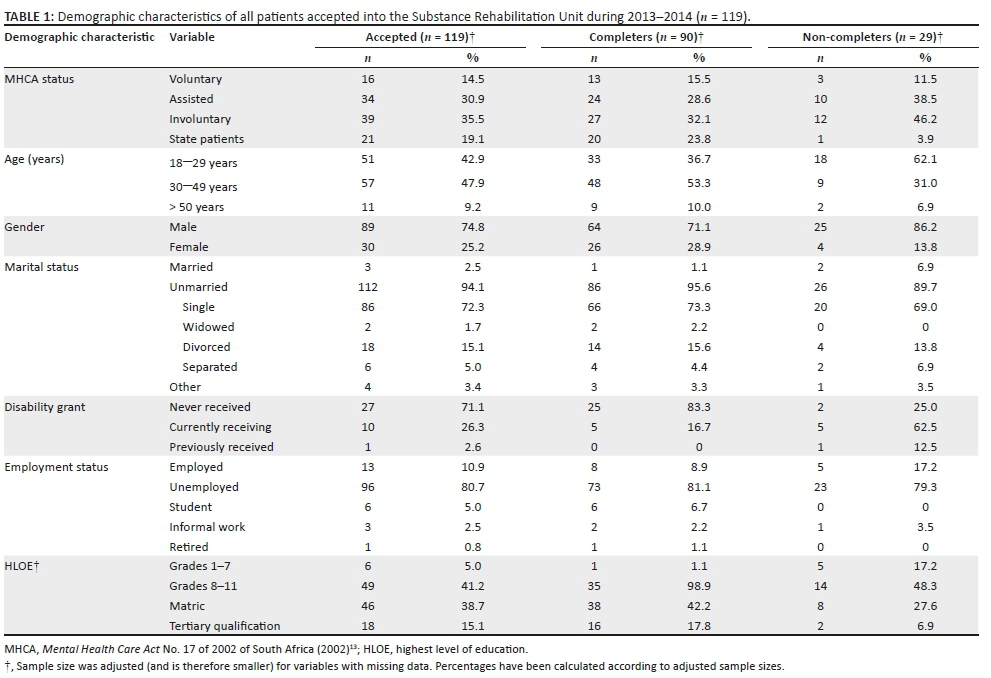
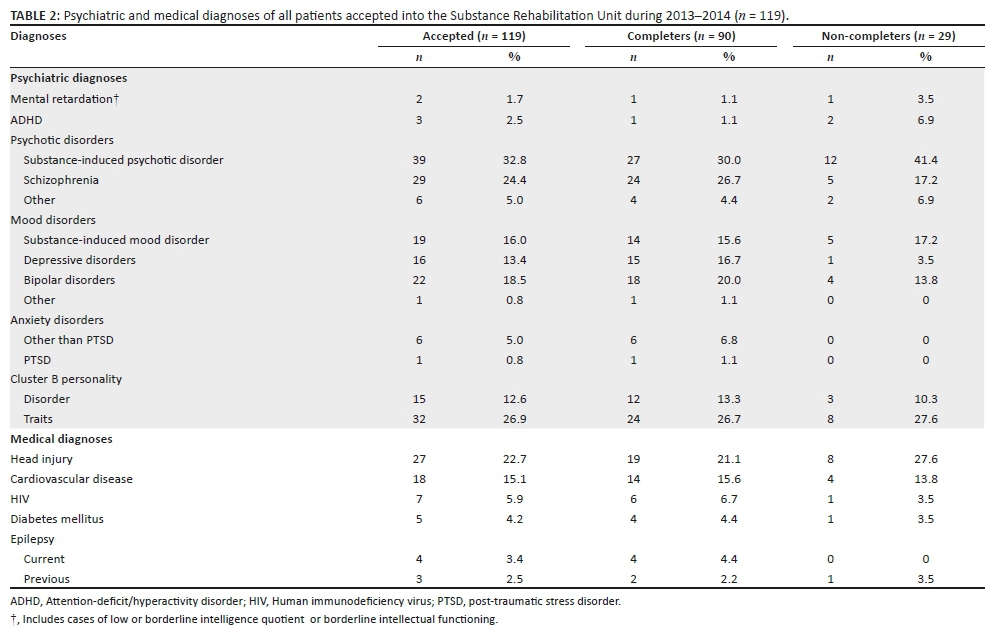
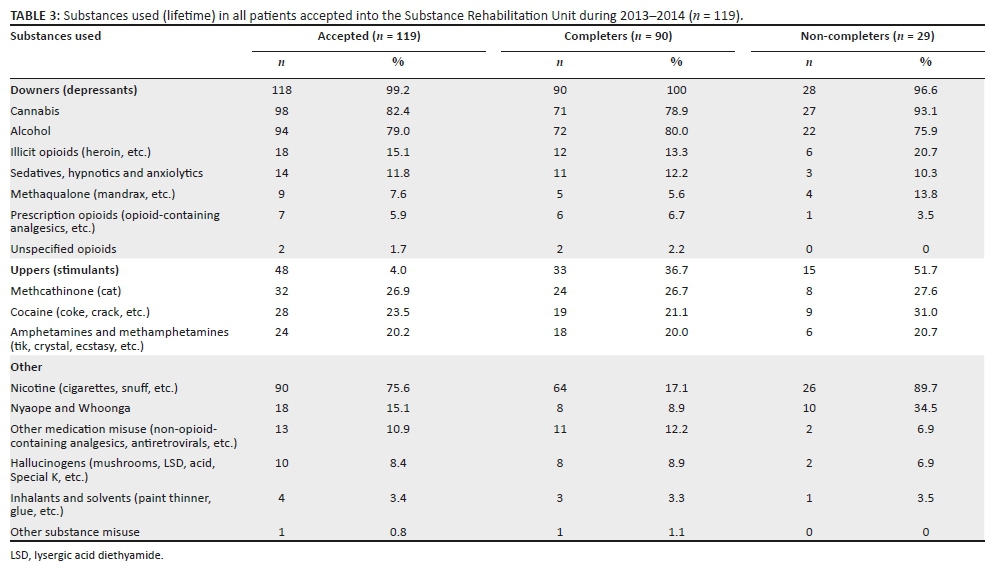
Table 1 shows the demographic characteristics of the patients accepted into the SRU. Psychiatric and medical diagnoses are shown in Table 2 and substance use frequencies are shown in Table 3.
Seventy-one per cent (n = 85) of the sample regularly used three or more substances. Eighty-two per cent (n = 79) of the 96 patients with a recorded age of debut used their first substance prior to the age of 18 years. Of the accepted patients with recorded prior rehabilitation attendance data (n = 115), 35% (n = 40) had attended some form of previous rehabilitation.
Factors associated with completion status
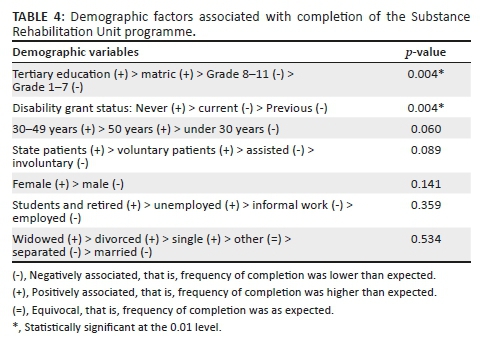
Demographic factors found to be associated with completion of the SRU are summarised in Table 4. Disability grant status (p = 0.004) and level of education (p = 0.004) were the only two variables found statistically to be significantly associated with completion; patients with higher levels of education and those who had never received a disability grant were statistically more likely to complete rehabilitation (Table 4). However, only 32% (n = 38) of the cases had information on disability grant status; tests of association excluded cases without disability grant data.
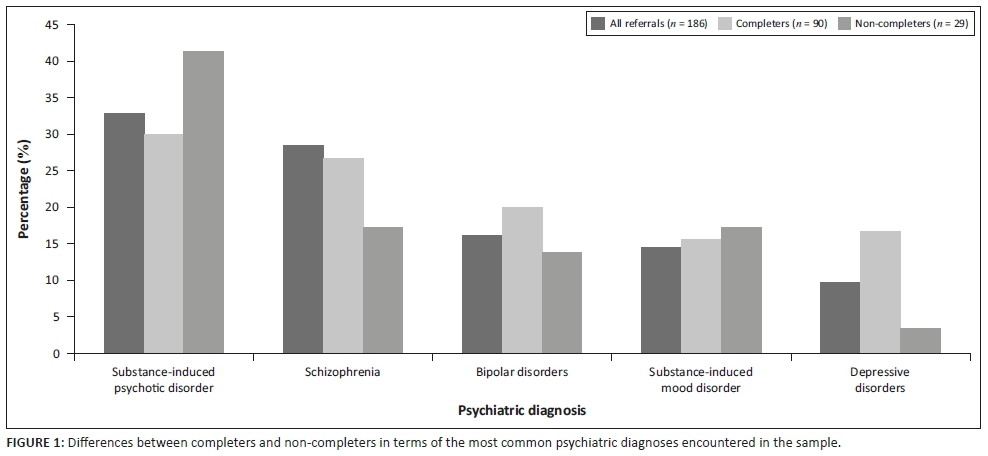
No psychiatric or general medical conditions was found to be statistically significantly associated with completion of the SRU programme. In spite of the lack of statistical significance, differences between completers and non-completers can be noted for the most common psychiatric disorders (Figure 1). Non-completers had higher rates of substance-induced disorders, especially substance-induced psychotic disorder (41% vs. 30%), compared to completers. On the other hand, completers had higher rates of primary psychiatric disorders, such as schizophrenia (27% vs. 17%), bipolar disorders (20% vs. 14%) and depressive disorders (17% vs. 3%). Regarding general medical comorbidities, completers were less likely than non-completers to have had a previous head injury (21% vs. 28%), and more likely to have cardiovascular disease (16% vs. 14%) and be HIV positive (7% vs. 3.5%), but none of these were found to be statistically significant.
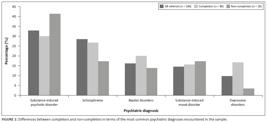
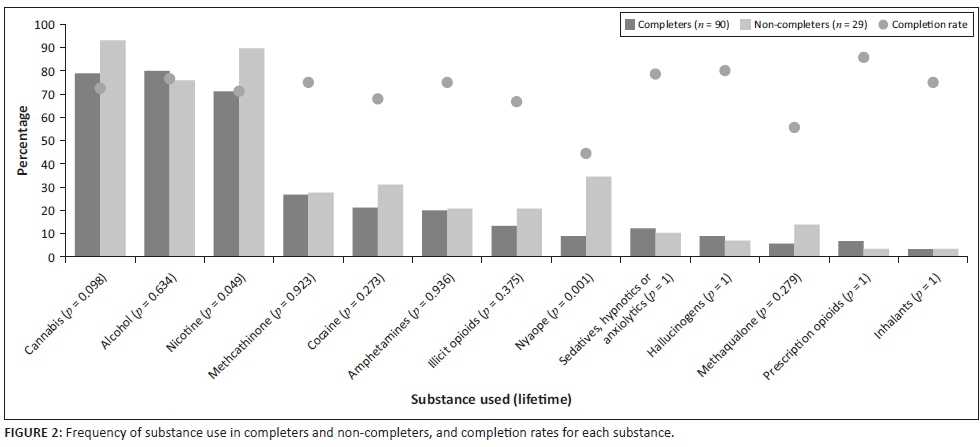
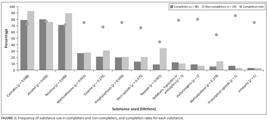
Figure 2 shows the frequencies of use for each substance in completers versus non-completers, as well as completion rates for each substance. Non-completers had higher frequencies of cannabis, illicit opioids, methaqualone, stimulants, nicotine, Nyaope and inhalant use; however, based on the statistics obtained, only Nyaope (p = 0.001) and nicotine (p = 0.049) use were significantly associated with non-completion. Although only 15% (n = 18) of the total sample had used Nyaope, non-completers had statistically significant higher rates of Nyaope use than completers (34.5% vs. 9%). Compared to other substances, Nyaope was associated with the lowest completion rate, with only 44% of users completing the programme. Nicotine use was also found to be statistically more frequent in non-completers than in completers (90% vs. 71%); however, 71% of users were still able to complete (Figure 2).
Likelihood of completion decreased when more substances were used (87.5% when only one substance was used vs. 73% when three or more substances were used); and increased with increasing age of debut (73% with an age of debut < 18 years vs. 80% with an age of debut > 25 years), but these were not found to be statistically significant. Non-completers were more likely to have had previous rehabilitation attempts as compared to completers, but this too was not found to be statistically significant (39% vs. 33%).
Discussion
Completion rates were comparable to those in general substance rehabilitation centres locally and internationally,17,306
Studies show inconsistent associations of education with completion;167,17,2417,247
From clinical experience, patients with serious mental illness in South Africa are sometimes denied disability grants when there is comorbid substance use, which may have a bearing on the low levels of disability grant receivers. However, this may also be explained by the fact that one-fifth of the sample (n = 21) were state patients who cannot receive grants because they are maintained by the state.31n = 20) patients completing the programme, this may account for the association between not having a disability grant and completion (confounding bias). Further, there may be a non-response bias because of the amount of missing data for this variable. Non-completion of disability grant-holders may however also be related to another reason. Firstly, it may be related to lower functional status.32323334,35
The lack of association between medical and psychiatric diagnosis, and completion is in keeping with existing research, with some exceptions.6,16166,1616
Commonly used substances were similar to those found in other local COD samples,5,717,245,7,10,1724,27
Although Nyaope was used by only 15% of the sample, it was significantly associated with non-completion; only 44% of the patients using it were able to complete the SRU programme. The rates of Nyaope use in our study are higher than in other local COD samples,7,3624
The high prevalence of nicotine use is consistent with other studies. Patients with mental illness and those with SUD are more likely to use nicotine, use it more frequently and heavily, are less likely to quit and more likely to relapse into smoking than the general population.37,38,39,40,414040,4138,40,41,423,4,5,40,41,43,44,45,46,4743
Limitations
Retrospective descriptive studies based on clinical records have inherent limitations, which are also evident in this study. As notes were not initially written for research purposes, records were at times unclear and difficult to translate onto the data capturing sheet. Certain variables would have been better obtained with other study methodologies, for example, by using structured interviews or standardised rating scales. Patterns of substance use, such as methods of use, severity of use and reasons for use, as well as psychosocial difficulties, severity of head injury and level of motivation could not be captured with the methodology of this study. Further, the use of standardised diagnostic instruments would have improved diagnostic certainty. Missing data, either because of untraceable files or poorly recorded variables, also impaired accurate data capturing and reduced sample sizes for certain variables. This limited the statistical analysis. This is particularly relevant to disability grant status, where results need to be interpreted with caution because missing data can result in a non-response or hidden bias. In smaller studies such as this one, either case or variable deletion is usually employed to deal with missing data.48
There is also a notable selection bias as the study population was made up entirely of patients who had already gone through a referral and acceptance process based on predetermined inclusion and exclusion criteria to the SRU, as well as clinical judgement regarding motivation. These criteria were likely designed to take into account factors that may have an impact on completion. The findings can therefore not be generalised to patients who would not have met the criteria for inclusion into this SRU. The large number of state patients in the sample also limits generalisability.
Completion rates do not necessarily reflect similar levels of long-term abstinence. Completion rates of state and involuntary patients (under the MHCA) in particular may be misleading as patients may be motivated to attend substance rehabilitation for reasons other than lasting abstinence, such as a change in their usual routines, or the hope that they will be discharged sooner or receive other benefits (secondary gain). Some patients may complete the programme because they assume it is expected of them as part of their otherwise involuntary treatment. Despite thorough assessment of motivation prior to acceptance into the SRU, this possibility remains and limits interpretation of the non-significance of MHCA status on completion status. Furthermore, MHCA status was captured only once according to documented MHCA status on admission; the study did not assess whether patients were formally reassessed for MHCA status at any point during admission or prior to referral to the SRU and therefore may not accurately reflect MHCA status at the time of referral to the SRU. In hospitals where patients are routinely reassessed for MHCA status at the time of referral to a substance rehabilitation programme, it may result in different rates of involuntary patients being referred. Generalisability may therefore be limited. Nevertheless, it is encouraging that admission MHCA status was not found to be significantly associated with completion status.
Another limitation is the focus of this study on individual patient and substance risk factors. The interplay between patient factors and service factors, such as perception of treatment, patient-therapist match and therapeutic alliance, may be more important than individual patient factors taken in isolation; patient factors alone may play more of a moderating role.16,30,49
Strengths and contributions
Firstly, there are few substance rehabilitation programmes in South Africa that cater specifically for patients with COD, and therefore studies on the outcomes and effectiveness of such programmes are valuable.15 This is the first study in South Africa (to the authors' knowledge) to examine completion rates and factors associated with completion of a substance rehabilitation programme in psychiatric inpatients.
Secondly, this is the first study to our knowledge examining the role of Nyaope in substance rehabilitation completion in COD samples, and only a few other studies have looked at the role of disability grants in mental illness, substance use or in substance rehabilitation. The role of nicotine use in substance rehabilitation in South Africa is also not well researched yet.
Thirdly, a control group of non-completers allowed for more meaningful analysis.
This study therefore adds to the overall understanding of substance rehabilitation in COD samples in South Africa and allows for some recommendations to be made.
Recommendations
Psychiatric facilities that are endeavouring to incorporate substance rehabilitation services for patients with COD should consider the following:
•Further research is needed to determine whether voluntary substance rehabilitation improves long-term abstinence rates in COD inpatients that are classified as involuntary or state patients under the MHCA.
•Patients with lower education or on a disability grant, as well as Nyaope and nicotine users, may be at higher risk for non-completion; however, further research is needed to confirm these findings in other settings. Increased support and a greater emphasis on treatment alliance, motivational interviewing, problem-solving, and coping skills may be helpful to improve treatment outcomes in patients with risk factors for non-completion,14,16,50
•Further research should focus on the role of disability grants in substance rehabilitation for patients with COD.
•We concur with international guidelines that emphasise the need for health care workers to assess for smoking in patients with COD and follow evidence-based treatments to assist cessation.4137,38,40,51,52
Conclusions
Substance rehabilitation for patients with COD is challenging. Outcomes may be improved, and the inefficient use of limited treatment resources avoided, by identifying patients who are at risk of non-completion so that targeted interventions may be applied. This study has yielded several results in areas that have not yet been well researched in South Africa. Risk factors for non-completion may include lower levels of education, being on a disability grant and using Nyaope or nicotine, but may vary in different settings. Future research should focus on identifying further factors that may affect completion of substance rehabilitation in local COD patients, the role of disability grants in COD patients, and the effect of Nyaope and nicotine use on COD substance rehabilitation. Effective and accessible interventions to assist vulnerable patients also need to be identified.
Competing interests
The authors have declared that no competing interests exist.
Authors' contributions
All authors contributed meaningfully to and approved the study protocol and the final manuscript. J.D. wrote the study protocol, collected and interpreted the data, and wrote the article. Statistical analysis was performed by L.D. J.P., and C.K. supervised the study, assisted with protocol development and substantially assisted with the editing of the final article.
Funding information
This research did not receive any specific grant from funding agencies in the public, commercial or not-for-profit sectors.
Data availability statement
Data sharing is not applicable to this article as no new data were created or analysed in this study.
Disclaimer
The views and opinions expressed in this article are that of the authors and do not necessarily reflect the official policy or position of any affiliated agency of the authors.
Acknowledgements
The authors are grateful to Mrs Mabena, the CEO, for allowing this research to be carried out at Weskoppies Hospital, as well as to the hospital administration and clinical staff who assisted in accessing clinical records.
References
-
1.Saban A, Flisher A, Grimsrud A, et al. The association between substance use and common mental disorders in young adults: Results from the South African Stress and Health (SASH) Survey. Pan Afr Med J. 2014;17(1):11. https://doi.org/10.11694/pamj.supp.2014.17.1.3328
» https://doi.org/10.11694/pamj.supp.2014.17.1.3328 -
2.Fabricius V, Langa M, Wilson K. An exploratory investigation of co-occuring substance-related and psychiatric disorders. J Subst Use. 2008;13(2):99-114. https://doi.org/10.1080/14659890701680877
» https://doi.org/10.1080/14659890701680877 -
3.Buckley P. Dual diagnosis of substance abuse and severe mental illness: The scope of the problem. J Dual Diagnosis. 2007;3(2):59-62. https://doi.org/10.1300/J374v03n02_07
» https://doi.org/10.1300/J374v03n02_07 -
4.Mueser K, Drake R, Wallach M. Dual diagnosis: A review of etiological theories. Addict Behav. 1998;23(6):717-734. https://doi.org/10.1016/S0306-4603(98)00073-2
» https://doi.org/10.1016/S0306-4603(98)00073-2 -
5.Weich L, Pienaar W. Occurence of comorbid substance use disorders among acute psychiatric inpatients at Stikland Hospital in the Western Cape, South Africa. Afr J Psychiatry. 2009;12(3):212-217. https://doi.org/10.4314/ajpsy.v12i3.48496
» https://doi.org/10.4314/ajpsy.v12i3.48496 -
6.Meier P, Barrowclough C. Mental health problems: Are they or are they not a risk factor for dropout from drug treatment? A systematic review of the evidence. Drugs Educ Prev Policy. 2009;16(1):7-38. https://doi.org/10.1080/09687630701741030
» https://doi.org/10.1080/09687630701741030 -
7.Mahomed T. The influence of an inpatient dual diagnosis program on readmission rates [dissertation]. Johannesburg: University of the Witwatersrand; 2013 [cited 2017 Oct 15]. Available from: http://wiredspace.wits.ac.za/handle/10539/13680
» http://wiredspace.wits.ac.za/handle/10539/13680 -
8.Drake R, Wallach M. Dual diagnosis: 15 years of progress. Psychiatr Serv. 2000;51(9):1126-1129. https://doi.org/10.1176/appi.ps.51.9.1126
» https://doi.org/10.1176/appi.ps.51.9.1126 -
9.Xie H, McHugo G, Fox M, Drake R. Substance abuse relapse in a ten year prospective follow-up of clients with mental and substance use disorders. Psychiatr Serv. 2005;56(10):1282-1287. https://doi.org/10.1176/appi.ps.56.10.1282
» https://doi.org/10.1176/appi.ps.56.10.1282 -
10.Lachman A, Nassen R, Hawkridge S, Emsley R. A retrospective chart review of the clinical and psychosocial profile of psychotic adolescents with co-morbid substance use disorders presenting to acute adolescent psychiatric services at Tygerberg Hospital. S Afr J Psychiatr. 2012;18(2):53-60. https://doi.org/10.4102/sajpsychiatry.v18i2.351
» https://doi.org/10.4102/sajpsychiatry.v18i2.351 -
11.Witbooi M. The performance of a methamphetamine rehabilitation programme at De Novo rehabilitation centre. A descriptive study [dissertation]. Stellenbosch: University of Stellenbosch; 2014 [cited 2019 Aug 17]. Available from: https://scholar.sun.ac.za
» https://scholar.sun.ac.za -
12.Drake R, Mueser K, Brunette M, McHugo G. A review of treatments for clients with severe mental illness and co-occurring substance use disorder. Psychiatr Rehabil J. 2004;27(4):360-374. https://doi.org/10.2975/27.2004.360.374
» https://doi.org/10.2975/27.2004.360.374 -
13.Hintz T, Psych D, Mann K. Co-occurring disorders: Policy and practice in Germany. Am J Addict. 2006;15(4):261-267. https://doi.org/10.1080/10550490600754275
» https://doi.org/10.1080/10550490600754275 -
14.Kelly T, Daley D, Douaihy A. Treatment of substance abusing patients with comorbid psychiatric disorders. Addict Behav. 2012;37(1):11-24. https://doi.org/10.1016/j.addbeh.2011.09.010
» https://doi.org/10.1016/j.addbeh.2011.09.010 -
15.Myers B, Petersen Z, Kader R, Parry C. Editorial: Moving beyond access: Towards a quality-orientated substance abuse treatment system in South Africa. S Afr Med J. 2012;102(8):667-668. https://doi.org/10.7196/SAMJ.5990
» https://doi.org/10.7196/SAMJ.5990 -
16.Brorson H, Arnevik E, Rand-Hendriksen K, Duckert F. Drop-out from addiction treatment: A systematic review of risk factors. Clin Psychol Rev. 2013;33(8):1010-1024. https://doi.org/10.1016/j.cpr.2013.07.007
» https://doi.org/10.1016/j.cpr.2013.07.007 -
17.Ramlagan S, Peltzer K, Matseke G. Epidemiology of drug abuse treatment in South Africa. S Afr J Psych. 2010;16(2):40-49. https://doi.org/10.4102/sajpsychiatry.v16i2.172
» https://doi.org/10.4102/sajpsychiatry.v16i2.172 -
18.Craig R. Reducing the treatment drop our rate in drug abuse programs. J Subst Abuse Treat. 1985;2(4):209-219. https://doi.org/10.1016/0740-5472(85)90003-0
» https://doi.org/10.1016/0740-5472(85)90003-0 - 19.Mokwena K, Huma M. Experiences of 'Nyaope' users in three provinces of South Africa. Afr J Phys Health Educ Recreat Dance. 2014;1(2):352-363.
-
20.Knapp WP, Soares B, Farrell M, De Lima MS. Psychosocial interventions for cocaine and psychostimulant amphetamines related disorders. Cochrane Database Syst Rev. 2007;3:CD003023. https://doi.org/10.1002/14651858.CD003023.pub3
» https://doi.org/10.1002/14651858.CD003023.pub3 - 21.Khine A, Mokwena K. Drug interactions in the constituents of street drug mixture 'Nyaope' in South Africa: A mini-review. Afr J Drug Alcohol Stud. 2016;15(2):91-101.
- 22.Mokwena K. The novel psychoactive substance 'Nyaope' brings unique challenges to mental health services in South Africa. Int J Emerg Ment Health. 2015;17(1):251-252.
- 23.Mokwena K, Morojele N. Unemployment and unfavourable social environment as contributory factors to Nyaope use in three provinces of South Africa. Afr J Phys Health Educ. 2014;1(2):374-378.
-
24.Dada S, Harker Burnhams N, et al. South African Community Epidemiology Network on Drug Use (SACENDU): Monitoring alcohol, tobacco and other drug abuse treatment admissions in South Africa (Phase 40) [homepage on the Internet]. 2017 [cited 2018 April 14]. Available from: http://www.mrc.ac.za/sites/default/files/attachments/2017-05-22/SACENDUPhase40.pdf
» http://www.mrc.ac.za/sites/default/files/attachments/2017-05-22/SACENDUPhase40.pdf -
25.Mental Health Care Act (MHCA), No. 17 of 2002 [statute on the internet]. 2002. Available from: https://www.gov.za/sites/www.gov.za/files/a17-02.pdf
» https://www.gov.za/sites/www.gov.za/files/a17-02.pdf - 26.Herman A, Williams D, Stein D, Seedat S, Heeringa S, Moomal H. The South African Stress and Health Study (SASH): A foundation for improving mental health care in South Africa. In: Kessler R, Ustun T, editors. The WHO World Mental Health Surveys: Global perspectives on the epidemiology of mental disorders. Cambridge: Cambridge University Press; 2008;238-264.
- 27.Van Heerden S, Grimsrud A, Seedat S, Myer L, Williams D, Stein D. Patterns of substance use in South Africa: Results from the South African Stress and Health study. S Afr Med J. 2009;99(5 Pt 2):358-366.
- 28.Kaliski S. Psycholegal assessment in South Africa. Cape Town: Oxford University Press; 2006.
- 29.American Psychiatric Association. Diagnostic and statistical manual of mental disorders: DSM-IV-TR. Washington, DC: American Psychiatric Publishing; 2000.
-
30.Stevens A, Radcliffe P, Sanders M, Hunt N. Early exit: Estimating and explaining early exit from drug treatment. Harm Reduct J. 2008;5(1):13. https://doi.org/10.1186/1477-7517-5-13
» https://doi.org/10.1186/1477-7517-5-13 -
31.South Afican Social Security Agency (SASSA). Disability grant [homepage on the internet]. [cited 2017 Nov 15]. Available from: http://www.sassa.gov.za/index.php/social-grants/disability-grant.
» http://www.sassa.gov.za/index.php/social-grants/disability-grant -
32.Jelsma J, Maart S, Eide A, Toni M, Loeb M. Who gets the disability grant in South Africa? An analysis of the characteristics of recipients in urban and rural areas. Disabil Rehabil. 2008;30(15):1139-1145. https://doi.org/10.1080/17483100701475962
» https://doi.org/10.1080/17483100701475962 - 33.Sharif S, Ogunbanjo G, Malete N. Reasons for non-compliance to treatment among patients with psychiatric illness: A qualitative study. SA Fam Pract. 2003;45(4):10-13.
-
34.Neves D, Samson M, Van Niekerk I, Hlatshwayo S, Du Toit A. The use and effectiveness of social grants in South Africa [homepage on the Internet]. Research Report to FinMark Trust. Johannesburg; 2009 [cited 2017 Nov 15]. Available from: http://www.academia.edu/3023713/The_use_and_effectiveness_of_social_grants_in_South_Africa
» http://www.academia.edu/3023713/The_use_and_effectiveness_of_social_grants_in_South_Africa -
35.Surender R, Noble M, Wright G, Ntshongwana P. Social assistance and dependency in South Africa: An analysis of attitudes to paid work and social grants. J Soc Pol. 2010;39(2):203-221. https://doi.org/10.1017/S0047279409990638
» https://doi.org/10.1017/S0047279409990638 -
36.Davis G, Tomita A, Baumgartner J, et al. Substance use and duration of untreated psychosis in KwaZulu-Natal, South Africa. S Afr J Psychiatr. 2016;22(1):a852. https://doi.org/10.4102/sajpsychiatry.v22i1.852
» https://doi.org/10.4102/sajpsychiatry.v22i1.852 -
37.Das S, Hickman N, Prochaska J. Treating smoking in adults with co-occuring acute psychiatric and addictive disorders. J Addict Med. 2017;11(4):273-279. https://doi.org/10.1097/ADM.0000000000000320
» https://doi.org/10.1097/ADM.0000000000000320 -
38.Hall S, Prochaska J. Treatment of smokers with co-occuring disorders: Emphasis on integration in mental health and addiction treatment settings. Annu Rev Clin Psychol. 2009;5:409-431. https://doi.org/10.1146%2Fannurev.clinpsy.032408.153614
» https://doi.org/10.1146%2Fannurev.clinpsy.032408.153614 -
39.McClave A, Davis S, McKnight L, Dube S. Smoking characteristics of adults with selected lifetime mental illnesses: Results from the 2007 National Health Interview Survey. Am J Public Health. 2010;100(12):2464-2472. https://doi.org/10.2105/AJPH.2009.188136
» https://doi.org/10.2105/AJPH.2009.188136 -
40.Schroeder S, Morris C. Confronting a neglected epidemic: Tobacco cessation for persons with mental illnesses and substance abuse problems. Annu Rev Public Health. 2010;31:297-314. https://doi.org/10.1146/annurev.publhealth.012809.103701
» https://doi.org/10.1146/annurev.publhealth.012809.103701 -
41.Tidey J, Miller M. Smoking cessation and reduction in people with chronic mental illness. BMJ. 2015;351:h4065. https://doi.org/10.1136/bmj.h4065
» https://doi.org/10.1136/bmj.h4065 -
42.Satre D, Kohn C, Weisner C. Cigarette smoking and long-term alcohol and drug treatment outcomes: A telephone follow-up at five years. Am J Addict. 2007;16(1):32-37. https://doi.org/10.1080/10550490601077825
» https://doi.org/10.1080/10550490601077825 -
43.Harrell P, Montoya I, Preston K, Juliano L, Gorelick D. Cigarette smoking and short-term addiction treatment outcome. Drug Alcohol Depend. 2011;115(3):161-166. https://doi.org/10.1016/j.drugalcdep.2010.08.017
» https://doi.org/10.1016/j.drugalcdep.2010.08.017 -
44.Daughters S. Distress tolerance as a predictor of early treatment dropout in a residential substance abuse treatment facility. J Abnorm Psychol. 2005;114(4):729-734. https://doi.org/10.1037/0021-843X.114.4.729
» https://doi.org/10.1037/0021-843X.114.4.729 -
45.Naude J, Dongelmans M, Faure P. Nicotinic alteration of decision-making. Neuropharmacology. 2015;96(Pt B):244-254. https://doi.org/10.1016/j.neuropharm.2014.11.021
» https://doi.org/10.1016/j.neuropharm.2014.11.021 -
46.Steinberg M, Williams J, Gandhi K, Foulds J, Epstein E, Brandon T. Task persistence predicts smoking cessaton in smokers with and without schizophrenia. Psychol Addict Behav. 2012;26(4):850-858. https://doi.org/10.1037/a0028375
» https://doi.org/10.1037/a0028375 -
47.Trujillo M, Khoddam R, Greenberg J, et al. Distress tolerance as a correlate of tobacco dependence and motivation: Incremental relations over and above anxiety and depressive symptoms. Behav Med. 2017;43(2):120-128. https://doi.org/10.1080/08964289.2015.1110559
» https://doi.org/10.1080/08964289.2015.1110559 -
48.Worster A, Haines T. Advanced statistics: Understanding medical record review (MRR) studies. Acad Emerg Med. 2004;11(2):187-192. https://doi.org/10.1111/j.1553-2712.2004.tb01433.x
» https://doi.org/10.1111/j.1553-2712.2004.tb01433.x - 49.Otiashvili D, Djordjevic A, Morales D, Parsons A, Platt E, Stempliuk V. Factors related to the process of seeking and completing treatment for drug abuse (qualitative methods in drug abuse research). Georgian Med News. 2005;122:29-32.
-
50.Palmer R, Murphy M, Piselli A, Ball S. Substance user treatment dropout from client and clinician perspectives: A pilot study. Subs Use Misuse. 2009;44(7):1021-1038. https://doi.org/10.1080/10826080802495237
» https://doi.org/10.1080/10826080802495237 -
51.American Psychiatric Association. Practice guidelines for the treatment of patients with substance use disorders [homepage on the Internet]. 2nd ed. Washington, DC: American Psychiatric Association; 2006 [cited 2018 Apr 14]. Available from: https://psychiatryonline.org/pb/assets/raw/sitewide/practice_guidelines/guidelines/substanceuse.pdf
» https://psychiatryonline.org/pb/assets/raw/sitewide/practice_guidelines/guidelines/substanceuse.pdf -
52.Fiore M. Treating tobacco use and dependence: 2008 update [homepage on the Internet]. Clinical practice guideline. Public Health Service Reports. Rockville, MD: U.S. Department of Health and Human Services; 2008 [cited 2018 Apr 14]. Available from: https://www.ncbi.nlm.nih.gov/books/NBK63952/
» https://www.ncbi.nlm.nih.gov/books/NBK63952/

Accepted: 29 Nov. 2019
Published: 03 Feb. 2020