Substance abuse in first-episode psychosis at Chris Hani Baragwanath Hospital
Abstract
BACKGROUND: In South Africa, the use of substances is associated with serious health challenges, exacerbated by limited health resources. Substance use is often associated with first-episode psychosis (FEP). Prevention and treatment protocols can be established by understanding the socio-demographic and clinical characteristics of patients with FEP AIM: To determine the prevalence, patterns, socio-demographic and clinical factors associated with substance use in patients with FEP at Chris Hani Baragwanath Academic Hospital SETTING: The study was conducted at Chris Hani Baragwanath Academic Hospital, a tertiary healthcare facility in Soweto, South Africa METHODS: The study was a retrospective chart review analysis of clinical records of 200 patients presenting with FEP. The data were then statistically analysed, and patients with and without substance use in FEP were compared RESULTS: The prevalence of substance use was 73.6%. Most patients were male and between 21 years old and 30 years old (37.0%). Substance-induced psychotic disorder was the most common diagnosis. Cannabis (THC) (46.0%) was the most commonly used substance. Substance use was associated with aggression (45.0%), and only 34.0% of substance users were referred to social services CONCLUSION: Substance use is a modifiable risk factor in the presentation of psychotic disorders. Integrated models of care, addressing both mental health and substance use and targeting early intervention, are essential to improve patient outcomes CONTRIBUTION: In this study, the focus was on the interrelationship between substance use and psychosis. It emphasised the need for integrated strategies for the treatment of mental health and substance use. It provides a crucial insight into the socio-demographic and clinical predictors of substance use in patients with FEP, which can inform clinical practice and intervention strategies
first-episode psychosis; early intervention psychiatry; cannabis use; methamphetamine use; substance use disorder; risk factors; psychiatric comorbidities
Introduction
Psychotic disorders are a group of disorders that affect a person's thoughts and perceptions, and make it difficult for them to recognise what is real and what is not.11234,54,64
Psychosis is a common presentation in individuals who use substances.789105
In South Africa, the use of substances in individuals with mental illness is a growing concern.1110,12,131214
Psychotic symptoms can occur acutely during intoxication and/or during withdrawal. They can also occur in the longer term, where the symptoms are ongoing despite no recent use of a substance.1514,161710,16
Policies have been formulated to address the problem of substance abuse in the country, such as the National Drug Master Plan 2019-2024.181920
While the burden of substance use and mental illness is increasing in South Africa,121121
This study aimed to determine the prevalence and patterns of substance use as well as associated factors in FEP patients at Chris Hani Baragwanath Academic Hospital (CHBAH). These findings will provide valuable information on the factors associated with the use of substances among FEP patients, guiding clinical management plans and resources to improve care for this population.
Research methods and design
Study design and setting
This study was a retrospective record review. A retrospective record review is a study design that allows the analysis of previously collected data from medical records.2222222322242425
Study population and sampling strategy
The sample size was calculated using sensitivity and specificity likelihood ratios. For sensitivity, the formula used was: n = Z2*Se(1-Se)/d2*P, where n = sample size, Z = Z statistic for confidence level, Se = Assumed sensitivity, d = Precision and P = Prevalence. For specificity, the formula used was: n = Z2*Sp (1-Sp)/d2*P, where n = sample size, Z = Z statistics for a level of confidence (1.96 for 95% confidence level), Sp = Assumed specificity, d = Precision and P = Prevalence.
With sensitivity and specificity at 95%, precision at 10% and the prevalence at 17.4% (based on Franken et al.),10 a sample size of 105 patients per group using or not using substances was deemed to be adequate as per the sensitivity formula. The specificity formula generated a size of 59 patients per group. The average of the two (82) was assessed as appropriate for this study. Hence, 100 patients who used substances and 100 patients who did not were selected for the study.
The inclusion criteria were as follows:
• Medical records that documented all the relevant information needed for the study
• Patients aged 14 years and older
• Patients admitted during the periods of 2022 and 2023
• Patients diagnosed with a psychotic disorder for the first time.
The exclusion criteria were as follows:
• Patients with psychotic symptoms, who met the Diagnostic and Statistical Manual of Mental Disorders, Fifth Edition (DSM-5) criteria for a mood disorder (and thus the diagnosis would be a mood-spectrum disorder, rather than a psychotic disorder)
• Medical records that had incomplete relevant information were excluded.
Data collection
The CHBAH Department of Psychiatry's online database for discharge summaries was used as the source material. Discharge summaries from 01 January 2022 to 31 December 2023 were analysed, and the following data were extracted:
• The presence of a FEP
• Demographics (age, gender, marital status, employment status and length of hospital stay)
• Reason for presentation on admission (presence of aggression)
• The presence of substance use - from history or multidrug urine testing
• The type or types of substance used
• The psychiatric diagnosis
• Comorbid medical conditions
• Referral to a social worker for rehabilitation centre assistance.
Data were extracted into a predesigned Excel spreadsheet with preset columns for each variable. This ensured consistency of data collection.
Data analysis
Statistical analyses were conducted in R software (version 4.0.0; www.R-project.org). Categorical data were reported as counts and percentages, while continuous data were reported as median and interquartile ranges (IQRs). Data were presented in charts, tables and text.
The prevalence of substance use in patients presenting with FEP at Chris Hani Baragwanath Academic Hospital was reported as a percentage of the total FEP in 2022 and 2023, with 95% confidence intervals (CIs). To compare socio-demographic and clinical variables of patients who used substances and those who did not, Pearson's Chi-squared and Fisher's exact tests were used to analyse categorical variables. The continuous variable, days of admission, was determined to be non-parametric (Shapiro-Wilk test) and was analysed using the Mann-Whitney U test for non-parametric data. All analyses were two-tailed, with model-level significance set at 0.05.
Reliability and validity
All relevant data from official discharge summaries were extracted by the principal researcher from the Department of Psychiatry official online database. The systematic approach to extraction and input into the Excel worksheet enhanced the reliability.
Ethical considerations
As this was a retrospective record review, patient consent was not required to access the data. Ethical approval to conduct this study was obtained from the Department of Psychiatry, Chris Hani Baragwanath Academic Hospital and the University of the Witwatersrand Human Research Ethics Committee (No. M240652). The study was also registered with the National Health Research Database (GP_202404_068). Data were collected in an entirely anonymous fashion, with no patient-identifying variables included.
Results
Prevalence of substance use
A total of 526 patients with FEP were admitted to CHBAH during 2022 and 2023. Of these, 387 patients used substances, 139 either did not use substances or were not recorded to have used substances. The prevalence of substance use in the study population was determined to be 73.6% (CIs: 68.8%, 77.3%).
Socio-demographic characteristics of patients with first-episode psychosis
This study comprised a randomly selected subset of the 526 patients, including 100 patients who used substances and 100 patients who did not use substances.
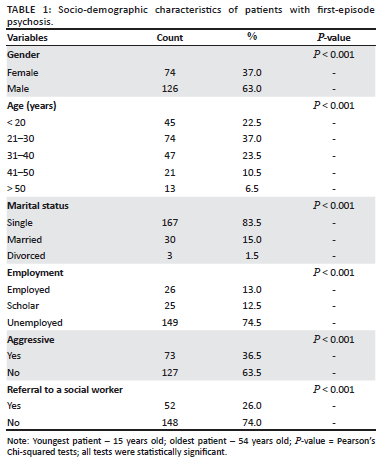
The majority of patients included in this study were male (63.0%; Table 1). A significant number were 21-30 years old (37.0%), single (83.5%) and unemployed (74.5%; Table 1). The youngest and oldest patients identified were 15 years and 54 years old, respectively. Most patients were not aggressive (63.5%) and were not referred to a social worker (74.0%; Table 1). Patients spent a median of 24 days (1st IQR = 14 days; 3rd IQR = 39 days) in admission.
Clinical characteristics of patients with first-episode psychosis
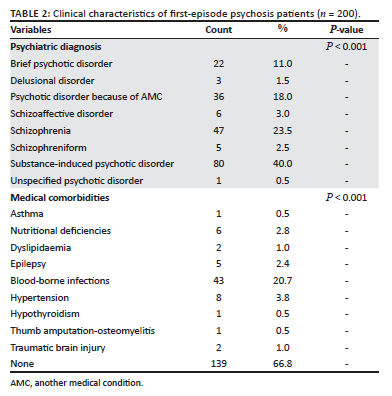
A significantly greater number of patients were diagnosed with substance-induced psychotic disorder (SIPD) (40.0%), followed by patients with schizophrenia (23.5%) and psychotic disorder because of another medical condition (AMC) (18.0%) (P ≤ 0.001; Table 2). Most patients had no medical comorbidities (66.8%), which was significantly different from chance (i.e., a null model; P ≤ 0.001; Table 2). Most of those with a medical comorbidity had blood-borne infections (20.7%; Table 2).
Substances used
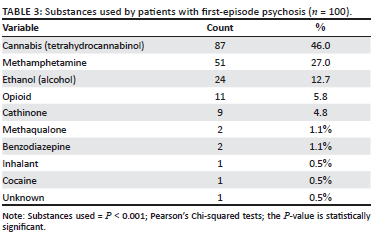
All counts of substances used by the 100 patients in the substance-using group were considered in the analyses, resulting in a larger sample size, because 59% of the patients used more than one substance.
A significant majority took cannabis (46.0%), followed by methamphetamine (27.0%) and ethanol (12.7%) (P ≤ 0.001; Table 3). The prevalence of all other substances used was less than 13.0%.
Comparison of patients who use substances and those who do not use substances
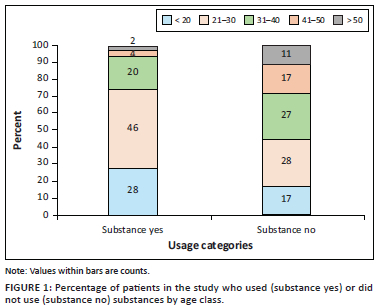
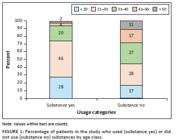
There was a significant difference between the proportion of patients using substances by age category (χ2df] = 4, P = 0.002) (Figure 1). Pairwise analyses using Fisher's exact tests indicated that younger patients were more likely to use substances, while older patients (i.e. 41-50 years, > 50 years) were more likely to be non-substance users.
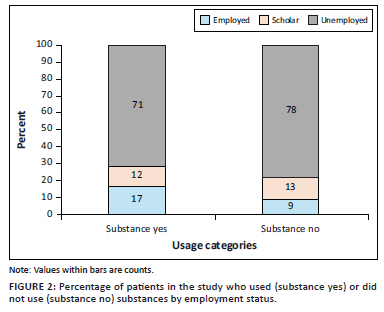
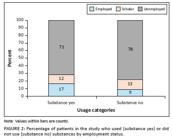
There was no significant difference between the proportion of patients using substances and those that did not use substances with regard to employment status (χ2df = 2, p = 0.242) (Figure 2). In both groups, more patients were unemployed than employed or scholars (Figure 2).
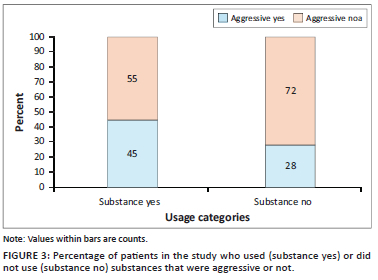
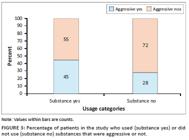
There was a significant difference between the proportion of patients using substances and those who were aggressive (Fisher's exact test; P = 0.019) (Figure 3). A greater proportion of patients using substances were aggressive than those not using substances (Figure 3).
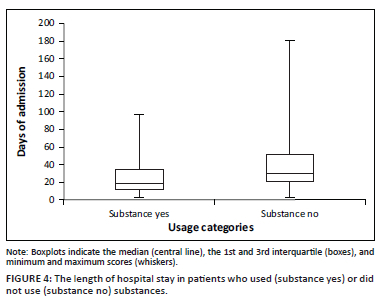
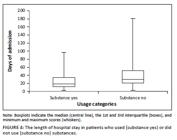
Patients who used substances had a significantly shorter length of hospital stay (median = 18 days) compared to patients who did not use substances (median = 29 days) (Z score = 4.19, P < 0.001) (Figure 4).
Discussion
Prevalence of substance use
In this study, the prevalence of substance use among patients presenting with FEP was 73.6%. This high prevalence emphasises the close relationship between substance use and psychosis. The 73.6% prevalence rate of this study is higher than the 55.0%2612
The study done in Cape Town2612
Demographic and clinical characteristics of patients presenting with first-episode psychosis
Most of the patients (63%) were male and were largely young people aged 21 years to 30 years. This is consistent with previous research suggesting that FEP patients are predominantly male12,13,14,1515,17
A total of 83.5% of the patients were single, while 15.0% were married or in a long-term relationship and 1.5% were divorced. A study that looked at predictors of schizophrenia in FEP showed a similarly high proportion of single marital status, with 89.0% of their population being single.2714,16
Some studies have suggested that being single can have a negative impact on the mental well-being of an individual.28,29293030,313232,33
One of the reasons for hospitalisation was aggressive behaviour, which was present in 36.5% of the patients. The study looked at physical aggression towards others, verbal aggression and property damage as indicators of aggression. Research on violence in patients with FEP in South Africa is not readily available. However, some international studies do provide valuable information. For instance, one study that looked at aggression in FEP patients had a similar level of aggression to our study, with a level of aggression of 34.5%.3435
A study conducted in Gauteng province by Anic and Robertson,1414
The median length of hospital stay in this study was 24 days. Studies focusing on the length of stay in patients with FEP are scarce. This study specifically focused on FEP patients, and our comparative studies looked at general psychiatric admissions. A study done in KwaZulu-Natal (KZN)36373837
Social workers play an important role in psychiatric care by providing psychosocial support.39394041
Substance-induced psychotic disorder was the most common diagnosis in this study, affecting 40.0% of patients, followed by schizophrenia (23.5%) and psychotic disorders because of AMC (18.0%). Thungana et al.12425,12,135,8,4344
It is important to note the possibility of a diagnostic bias in our results. When patients present with both psychotic symptoms and substance use, clinicians are more likely to diagnose SIPD rather than diagnosing schizophrenia which is a more chronic diagnosis.45
A significant portion of this population had no medical comorbidities (66.8%), suggesting that a substantial proportion of this population may present with good physical health at the onset of psychosis. This is consistent with the concept that FEP frequently commonly manifests in younger people who are less likely to have chronic illnesses. However, the occurrence of blood-borne infections (20.7%) in patients of this study is notable and needs further attention. In this study, blood-borne infections encompass human immunodeficiency virus (HIV), syphilis and Hepatitis C. A study conducted by Mashapu et al.464746
Substance use patterns and most commonly used substances
Cannabis was the most used substance in this study, accounting for 46.0%. This was followed by methamphetamine (27.0%) and ethanol (12.7%). These findings are consistent with the South African Community Epidemiology Network on Drug Use (SACENDU)481210
Both cannabis and methamphetamine were prevalent in this study, and both are associated with the development of or worsening of psychosis.10,12,1340,41
A total of 59% of substance users reported using more than one substance. The SACENDU49
Comparison of clinical and demographic characteristics between substance users and non-users
Substance use was significantly higher in the younger population than in the older population. Only 4% of individuals aged 41-50 years and 2% above the age of 50 years reported using substances, whereas 43% of patients between the ages of 21 years and 30 years and 28% under the age of 20 years had used substances. The SACENDU4850,51
The study did not find a significant difference when comparing substance users to non-users in terms of employment status. More people were unemployed than employed or scholars in both groups. A study in done in Johannesburg had similar findings, where there was no difference in employment status when comparing substance users with non-users.145223
Substance use was closely related to aggressive behaviour, with 45% of patients who used substances presenting with a history of aggression prior to admission compared to 28% of non-users. Anic and Robertson141610,12,14,16
Although the median duration of hospital stay was lower (18 days) for substance users when compared to 29 days of non-users, this may not always mean that their outcomes were better. Substance use magnifies psychotic symptoms,10,12,13,15535453,5455
Implications
The study highlights key socio-demographic and clinical factors associated with drug use among patients admitted to CHBAH. The significant role of substance abuse, mainly cannabis and methamphetamines, in the triggering and aggravating of psychotic symptoms underscores the need for targeted early intervention programmes, particularly for disadvantaged young people. In addition, the study highlights gaps in integrated care, including the underutilisation of social work services that can be addressed by integrated care models, combined with mental health and drug abuse services. This study did not include psychology and occupational therapy. This was a conscious decision to narrow the variables and include factors that are most pertinent to substance use in FEP. This exclusion does not imply that psychology and occupational therapy are not significant. They are a crucial component of the multidisciplinary care in patients with FEP and substance use, and future studies may delve deeper into the role of these disciplines.
Limitations
The study is limited by its retrospective design based on existing records. Medical records that had missing information were excluded which caused selection bias. In addition, as this was a retrospective study, the data that were in the records could not be independently verified for accuracy, introducing possible information bias. Samples were collected from a single hospital in a socioeconomically disadvantaged region, which may limit the generalisation of the results to other areas and populations. This study did not look at occupational therapy and psychology referrals, which are important components of the multidisciplinary approach in the management of FEP and substance use. This exclusion limits the ability to comment on the full multidisciplinary team approach to FEP and substance use. Moreover, the use of self-reported or historical records of substance use may underestimate the prevalence of substance use because of a lack of reporting or inconsistent testing. This study looked at the lifetime history of substance use and not only at current use of substances which could contribute to bias.
Conclusion
The study emphasises the critical impact of the use of substances on the clinical and socio-demographic characteristics of patients with FEP, which highlights that cannabis and methamphetamines are associated with the emergence of a psychotic disorder. Younger age, male gender and aggressive behaviours are significantly related to substance use and emphasise the need for targeted early intervention programmes and gender-sensitive approaches. The findings also reveal deficiencies in holistic care, including insufficient referrals to social workers, and point to the need for integrated care models that address both psychiatric and substance use disorders. These insights can guide effective prevention, treatment and policy-making interventions to reduce the dual burden of mental illness and substance use, and ultimately improve the outcomes and health systems of patients and resource-limited settings.
The research presented in this article was conducted as part of Precious N. Shandu's Master of Medicine (MMED) degree.
Competing interests
The authors declare that they have no financial or personal relationships that may have inappropriately influenced them in writing this article.
CRediT authorship contribution
Precious N. Shandu: Conceptualisation, Formal analysis, Investigation, Writing - original draft. Yumna Minty: Supervision, Writing - review & editing.
All authors reviewed the article, contributed to the discussion of results, approved the final version for submission and publication, and take responsibility for the integrity of its findings.
Funding information
This research received no specific grant from any funding agency in the public, commercial or not-for-profit sectors.
Data availability
The data are available from Precious N. Shandu upon reasonable request, subject to relevant approval processes.
Disclaimer
The views and opinions expressed in this article are those of the authors and are the product of professional research. The article does not necessarily reflect the official policy or position of any affiliated institution, funder, agency, or that of the publisher. The authors are responsible for this article's results, findings and content.
Acknowledgements
We would like to acknowledge Professor Pillay for his assistance with statistical planning and data analysis. Our sincere thanks to the Department of Psychiatry at Chris Hani Baragwanath Academic Hospital for granting access to the data.
References
-
1. National Alliance on Mental Illness. Early psychosis and psychosis [homepage on the Internet]. [cited 2023 Jun 16]. Available from: https://www.nami.org/About-Mental-Illness/Mental-Health-Conditions/Psychosis
» https://www.nami.org/About-Mental-Illness/Mental-Health-Conditions/Psychosis - 2. American Psychiatric Association. Diagnostic and statistical manual of mental disorders. 5th ed. Arlington, VA: American Psychiatric Publishing; 2013.
-
3. Breitford NJK, Srihari VH, Woods SW. Review of the operational definition for first episode psychosis. Early Interv Psychiatry. 2009;3(4):259-265. https://doi.org/10.1111/j.1751-7893.2009.00148.x
» https://doi.org/10.1111/j.1751-7893.2009.00148.x - 4. Bromley S, Choi M, Faruqui S. First episode psychosis - An information guide. Rev. ed. Centre for Addiction and Mental Health; 2015.
-
5. DiForti M, Quattrone D, Freeman TP, et al. The contribution of cannabis use to variation in the incidence of psychotic disorder across Europe (EU-GEI): A multicenter case-control study. Lancet Psychiatry. 2019;6(5):427-436. https://doi.org/10.1016/S2215-0366(19)30048-3
» https://doi.org/10.1016/S2215-0366(19)30048-3 -
6. Wang J, Kapoor M, Goate AM. The genetics of substance dependence. Ann Rev Genomics Hum Genet. 2012;13:241-261. https://doi.org/10.1146/annurev-genom-090711-163844
» https://doi.org/10.1146/annurev-genom-090711-163844 -
7. Green AI, Khokhar JY. Addiction and schizophrenia: A translational perspective. Schizophr Res. 2018;194:1-3. https://doi.org/10.1016/j.schres.2017.10.008
» https://doi.org/10.1016/j.schres.2017.10.008 -
8. Barnett JH, Werners U, Secher SM, et al. Substance use in a population-based clinic sample of people with first episode psychosis. Br J Psychiatry. 2007;190(6):515-520. https://doi.org/10.1192/bjp.bp.106.024448
» https://doi.org/10.1192/bjp.bp.106.024448 -
9. World Health Organization. Drugs (psychoactive) [Fact Sheet] [homepage on the Internet]. Geneva: World Health Organization [cited 2025 Jan 07]. Available from: https://www.who.int/health-topics/drugs-psychoactive
» https://www.who.int/health-topics/drugs-psychoactive -
10. Franken H, Parker J, Allen R, et al. A profile of adult acute admissions to Lentegeur Psychiatric Hospital, South Africa. S Afr J Psychiatry. 2019;25:a1244. https://doi.org/10.4102/sajpsychiatry.v25i0.1244
» https://doi.org/10.4102/sajpsychiatry.v25i0.1244 -
11. Sukeri K. Regional aspects of long term-public sector psychiatric care in the Eastern Cape. S Afr J Psychiatr. 2017;23:a6. https://doi.org/10.4102/sajpsychiatry.v23i0.992
» https://doi.org/10.4102/sajpsychiatry.v23i0.992 -
12. Thungana Y, Zingela Z, Van Wyk S. First-episode psychosis and substance use in Nelson Mandela Bay: Findings from an acute mental health unit. S Afr J Psychiatr. 2019;25:a1372. https://doi.org/10.4102/sajpsychiatry.v25i0.1372
» https://doi.org/10.4102/sajpsychiatry.v25i0.1372 -
13. Wade D, Harrigan S, Edwards S. Substance misuse in first-episode psychosis: 15-month prospective follow-up study. Br J Psychiatry. 2006;189(3):229-234. https://doi.org/10.1192/bjp.bp.105.017236
» https://doi.org/10.1192/bjp.bp.105.017236 -
14. Anic A, Roberston L. Substance use among acute psychiatric inpatients, Gauteng, South Africa. S Afr J Psychiatr. 2020;26:a1526. https://doi.org/10.4102/sajpsychiatry.v26i0.1526
» https://doi.org/10.4102/sajpsychiatry.v26i0.1526 -
15. Inchausti L, Gorostiza I, Gonzalez Torres MA, et al. Diagnostic stability in substance-induced psychosis. Rev Psiquiatr Salud Ment. 2022;15(4):272-280. https://doi.org/10.1016/j.rpsm.2019.10.005
» https://doi.org/10.1016/j.rpsm.2019.10.005 -
16. Weich L, Pienaar W. Occurrence of comorbid substance use disorders among acute psychiatric inpatients at Stikland Hospital in the Western Cape, South Africa. Afr J Psychiatry. 2009;12(3):213-217. https://doi.org/10.4314/ajpsy.v12i3.48496
» https://doi.org/10.4314/ajpsy.v12i3.48496 -
17. Hodgins S, Mednick SA, Brennan PA, et al. Mental Disorders and crime. Evidence from a Danish birth cohort. Arch Gen Psychiatry. 1996;53(6):489-496. https://doi.org/10.1001/archpsyc.1996.01830060031004
» https://doi.org/10.1001/archpsyc.1996.01830060031004 -
18. South African Government. National Drug Master Plan 2019 to 2024 [homepage on the Internet]. Pretoria: Department of Social Development; 2020 [cited 2022 Apr 10]. Available from: https://www.gov.za/sites/default/files/gcis_document/202006/drug-master-plan.pdf
» https://www.gov.za/sites/default/files/gcis_document/202006/drug-master-plan.pdf -
19. Nguse S, Wassenaar D. Mental health and COVID-19 in South Africa. S Afr J Psychol. 2021;51(2):304-313. https://doi.org/10.1177/00812463211001543
» https://doi.org/10.1177/00812463211001543 -
20. Tarricone I, Boydell J, Panigada S, et al. The impact of substance use at psychosis onset on First Episode Psychosis course: Results from a 1-year follow-up study in Bologna. Schizophr Res. 2014;156(1):60-63. https://doi.org/10.1016/j.schres.2014.01.014
» https://doi.org/10.1016/j.schres.2014.01.014 -
21. Mousavi SB, Higgs P, Piri N, et al. Prevalence of substance use among psychotic patients and determining its strongest predictor. Iran J Psychiatry. 2021;16(2):124-130. https://doi.org/10.18502/ijps.v16i2.5812
» https://doi.org/10.18502/ijps.v16i2.5812 -
22. Vassar M, Holzmann M. The retrospective chart review: Important methodological considerations. J Educ Eval Health Prof. 2013;10:12. https://doi.org/10.3352/jeehp.2013.10.12
» https://doi.org/10.3352/jeehp.2013.10.12 -
23. Republic of South Africa, Department of Cooperative Governance and Traditional Affairs. City of Johannesburg Profile - October 2020 [homepage on the Internet]. Pretoria: Department of Cooperative Governance and Traditional Affairs; 2020 [cited 2025 Sep 03]. Available from: https://www.cogta.gov.za/ddm/wp-content/uploads/2020/11/City-of-Johannesburg-October-2020.pdf
» https://www.cogta.gov.za/ddm/wp-content/uploads/2020/11/City-of-Johannesburg-October-2020.pdf -
24. Chris Hani Baragwanath Academic Hospital. Psychiatry Department [homepage on the Internet]. Johannesburg: Chris Hani Baragwanath Hospital; 2025 [cited 2024 Dec 18]. Available from: https://www.chrishanibaragwanathhospital.co.za/departments/psychiatry/show
» https://www.chrishanibaragwanathhospital.co.za/departments/psychiatry/show -
25. Ramchander P. Chapter 2: Background to the study area: Soweto. In: Towards the responsible management of the socio-cultural impact of township tourism [dissertation on the internet]. Pretoria: University of Pretoria; 2004 [cited 2024 Jan 07]. Available from: https://repository.up.ac.za/bitstream/handle/2263/27544/02chapter2.pdf?sequence=3&isAllowed=y
» https://repository.up.ac.za/bitstream/handle/2263/27544/02chapter2.pdf?sequence=3&isAllowed=y -
26. Temmingh HS, Mall S, Howells FM, et al. The prevalence and clinical correlates of substance use disorders in patients with psychotic disorder from an Upper-Middle-Income Country. S Afr J Psychiatr. 2020;26:a1473. https://doi.org/10.4102/sajpsychiatry.v26i0.1473
» https://doi.org/10.4102/sajpsychiatry.v26i0.1473 -
27. Ramirez N, Arran B, Salavert J, et al. Predictors of schizophrenia in patients with a first episode of psychosis. Psychiatry Res. 2010;175(1-2):11-14. https://doi.org/10.1016/j.psychres.2009.03.013
» https://doi.org/10.1016/j.psychres.2009.03.013 - 28. Apostolou M, Alexopoulos S, Christoforou C. The price of being single: An explorative study of the disadvantages of singlehood. Pers Individ Dif. 2023;208:112208.
-
29. Adamczyk K, Segrin C. Perceived social support and mental health among single vs partnered Polish young adults. Curr Psychol. 2015;34(1):82-96. https://doi.org/10.1007/s12144-014-9242-5
» https://doi.org/10.1007/s12144-014-9242-5 -
30. Serra-Arumi C, Vila-Badia R, Del Cacho N, et al. Association of perceived social support with sociodemographic, clinical, and psychosocial variables in patients with first episode psychosis. Psychiatry Res. 2023;162:30-36. https://doi.org/10.1016/j.jpsychires.2023.04.008
» https://doi.org/10.1016/j.jpsychires.2023.04.008 -
31. Gayer-Anderson C, Morgan C. Social support and three-year symptom and admission outcomes for first episode psychosis. Schizophr Res. 2006;80(2-3):227-234. https://doi.org/10.1016/j.schres.2005.05.006
» https://doi.org/10.1016/j.schres.2005.05.006 - 32. Flemming CB, White HR, Oesterle S, et al. Romantic relationship status changes and substance use among 18- to-20- year-olds. J Stud Alcohol Drugs. 2010;71(6):847-856.
-
33. Jang BJ, Schuler MS, Evans-Polce RJ, et al. Marital status as partial mediator of the associations between young adult substance use and subsequent substance use disorder: Applications of causal inference methods. J Stud Alcohol Drugs. 2018;79(4):567-577. https://doi.org/10.15288/jsad.2018.79.567
» https://doi.org/10.15288/jsad.2018.79.567 -
34. Large M, Nielssen O. Violence in first-episode psychosis: A systematic review and meta-analysis. Schizophr Res. 2011;125(2-3):209-220. https://doi.org/10.1016/j.schres.2010.11.026
» https://doi.org/10.1016/j.schres.2010.11.026 -
35. Youn S, Guadagno BL, Byrne LK, et al. Systematic review and meta-analysis: Rates of violence during First Episode Psychosis (FEP). Schizophr Bull. 2024;50(4):757-770. https://doi.org/10.1093/schbul/sbae010
» https://doi.org/10.1093/schbul/sbae010 -
36. Myeni SY, Ntlantsana V, Tomita A, et al. The profile of long -stay patients in a psychiatric hospital in KwaZulu-Natal, South Africa. S Afr J Psychiatr. 2025;31:a2358. https://doi.org/10.4102/sajpsychiatry.v31i0.2358
» https://doi.org/10.4102/sajpsychiatry.v31i0.2358 -
37. Addisu F, Wondafrash M, Chemali Z, et al. Length of stay of psychiatric admissions in a general hospital in Ethiopia: A retrospective study. Int J Ment Health Syst. 2015;9:13. https://doi.org/10.1186/s13033-015-0006-x
» https://doi.org/10.1186/s13033-015-0006-x - 38. Baeza FL, Da Rocha NS, Fleck MP. Predictors of length of stay in an acute psychiatric inpatient facility in a general hospital: A prospective study. Braz J Psychiatry. 2017;40(1):89-96.
-
39. McNamara KA. Professionals and their organizational roles in pathways to care for early psychosis: Where are the social workers? [disser$4tation on the Internet]. Baltimore, MD: University of Maryland, Baltimore; 2014 [cited 2025 Mar 10]. Available from: https://www.proquest.com/dissertations-theses/professionals-their-organizational-roles-pathways/docview/1545891885/se-2?accountid=15083
» https://www.proquest.com/dissertations-theses/professionals-their-organizational-roles-pathways/docview/1545891885/se-2?accountid=15083 -
40. McGorry PD, Killackey E, Yung A. Early intervention in psychosis: Concepts, evidence, and future directions. Med J Aust. 2007;187(S7):S26-S30. https://doi.org/10.5694/j.1326-5377.2007.tb01327.x
» https://doi.org/10.5694/j.1326-5377.2007.tb01327.x -
41. Lukens EP, McFarlane WR. Psychoeducation as evidence-based practice: Consideration for practice, research, and policy. Br Treat Crisis Interv. 2004:4(1);205-225. https://doi.org/10.1093/brief-treatment/mhh019
» https://doi.org/10.1093/brief-treatment/mhh019 -
42. Fraser S, Hides L, Philips L, Proctor D, Lubman DI. Differentiating first episode substance induced and primary psychotic disorders with concurrent substance use in young people. Schizophr Res. 2012;136(1-3):110-115. https://doi.org/10.1016/j.schres.2012.01.022
» https://doi.org/10.1016/j.schres.2012.01.022 -
43. Hunt GE, Large MM, Cleary M, et al. Prevalence of comorbid substance use in schizophrenia spectrum disorders in community and clinical settings, 1990-2017: Systematic review and meta-analysis. Drug Alcohol Depend. 2018;191:234-258. https://doi.org/10.1016/j.drugalcdep.2018.07.011
» https://doi.org/10.1016/j.drugalcdep.2018.07.011 - 44. Stefanis NC, Dragovic M, Power BD, et al. The effect of drug use on the age at onset of psychotic disorders in an Australian cohort. Schizophr Res. 2014;156(2):211-216.
-
45. Caton CLM, Samet S, Hasin DS. When acute-state psychosis and substance use co-occur: Differentiating substance-induced and primary psychotic disorders. J Psychiatr Pract. 2000;6(5):256-266. https://doi.org/10.1097/00131746-200009000-00006
» https://doi.org/10.1097/00131746-200009000-00006 - 46. Mashapu S, Mkhize DL. HIV seropositivity in patients with first episode psychosis. S Afr J Psychiatr. 2007;13(3):a2.
-
47. Brown E, Castagnini E, Langstone A, et al. High-risk sexual behaviours in young people experiencing a first episode of psychosis. Early Interv Psychiatry. 2023;17(2):159-166. https://doi.org/10.1111/eip.13301
» https://doi.org/10.1111/eip.13301 -
48. SACENDU. SACENDU UPDATE: January-June 2024 [homepage on the Internet]. Cape Town: South African Medical Research Council; 2024 [cited 2025 Mar 11]. Available from: https://www.samrc.ac.za/sites/default/files/attachments/2025-02/SacenduUpdateJanJun2024.pdf
» https://www.samrc.ac.za/sites/default/files/attachments/2025-02/SacenduUpdateJanJun2024.pdf -
49. South African Medical Research Council. SACENDU research brief: Monitoring alcohol, tobacco, and other drug use trends in South Africa (Phase 55) [homepage on the Internet]. 2025 [cited 2025 Mar 11]. Available from: https://www.samrc.ac.za/sites/default/files/attachments/2025-02/SACENDUBriefPhase55.pdf
» https://www.samrc.ac.za/sites/default/files/attachments/2025-02/SACENDUBriefPhase55.pdf -
50. Keyzers A, Lee SK, Dworkin J. Peer pressure and substance use in emerging adulthood: A latent profile analysis. Subst Use Misuse. 2020;55(10):1716-1723. https://doi.org/10.1080/10826084.2020.1759642
» https://doi.org/10.1080/10826084.2020.1759642 -
51. Watts LL, Hamza EA, Bedewy DA, et al. A meta-analysis study on peer influence and adolescent substance use. Curr Psychol. 2024;43:3866-3881. https://doi.org/10.1007/s12144-023-04944-z
» https://doi.org/10.1007/s12144-023-04944-z -
52. Ramsay CE, Stewart T, Compton MT. Unemployment among patients with newly diagnosed first-episode psychosis: Prevalence and clinical correlates in a U.S sample. Soc Psychiatry Psychiatr Epidemiol. 2012;47(5):797-803. https://doi.org/10.1007/s00127-011-0386-4
» https://doi.org/10.1007/s00127-011-0386-4 -
53. Baldacara L, Ramos A, Castaldelli-Maia JM. Managing drug-induced psychosis. Int Rev Psychiatry. 2023;35(5-6):496-502. https://doi.org/10.1080/09540261.2023.2261544
» https://doi.org/10.1080/09540261.2023.2261544 -
54. Ries RK, Russo J, Wingerson D, et al. Shorter hospital stays and more rapid improvement among patients with schizophrenia and substance disorders. Psychiatr Serv. 2000;51(2):210-215. https://doi.org/10.1176/appi.ps.51.2.210
» https://doi.org/10.1176/appi.ps.51.2.210 -
55. Burrer A, Egger ST, Spiller TR, et al. Examining the impact of substance use on hospital length of stay in schizophrenia spectrum disorder: A retrospective analysis. BMC Med. 2024;22:233. https://doi.org/10.1186/s12916-024-03447-3
» https://doi.org/10.1186/s12916-024-03447-3

Accepted: 20 Oct. 2025
Published: 19 Jan. 2026