A population-based survey of autistic traits in Kenyan adolescents and young adults
Abstract
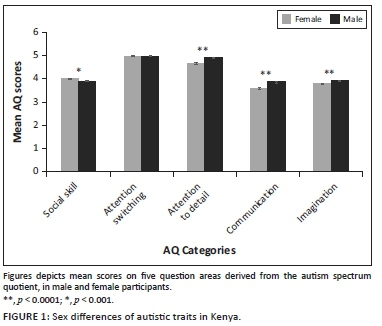
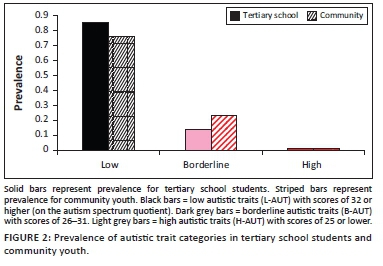
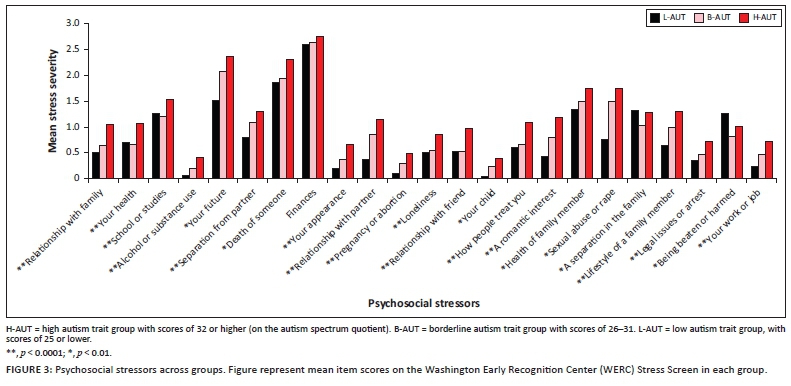
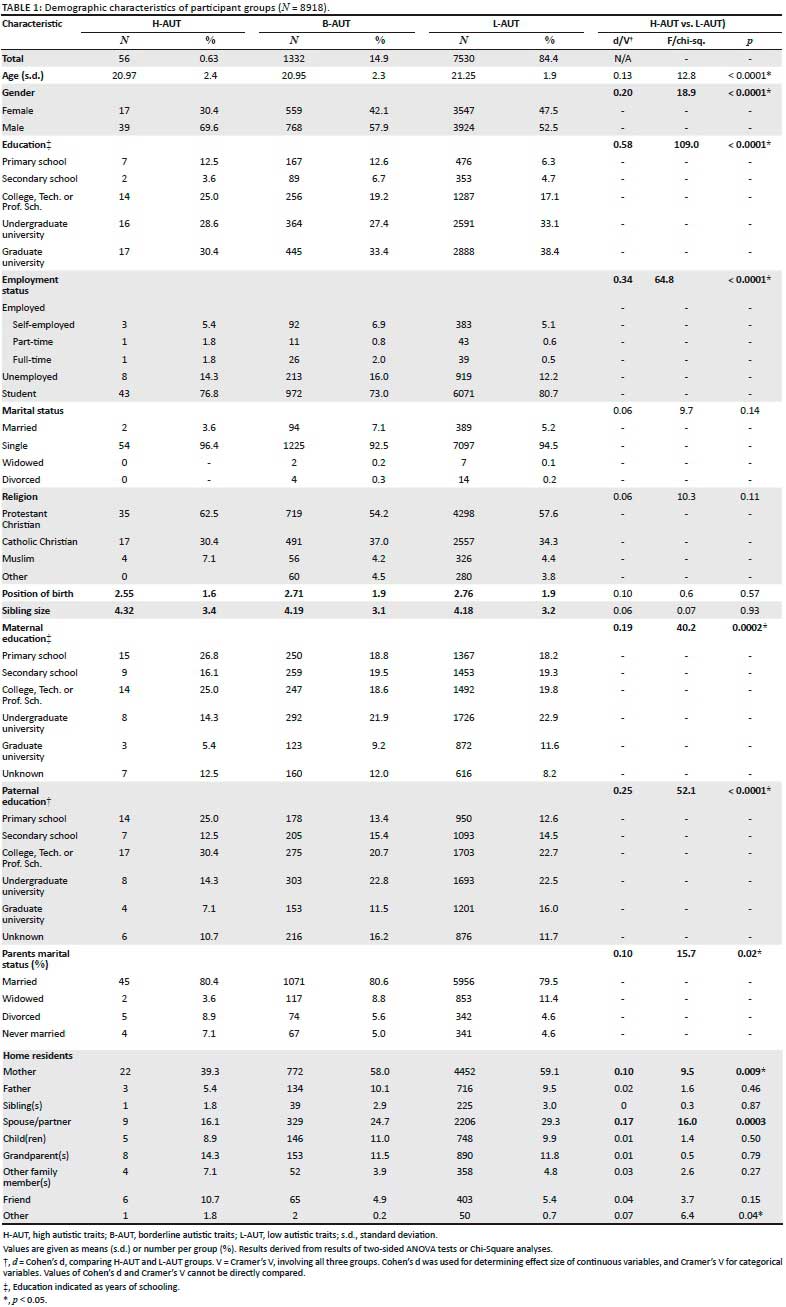
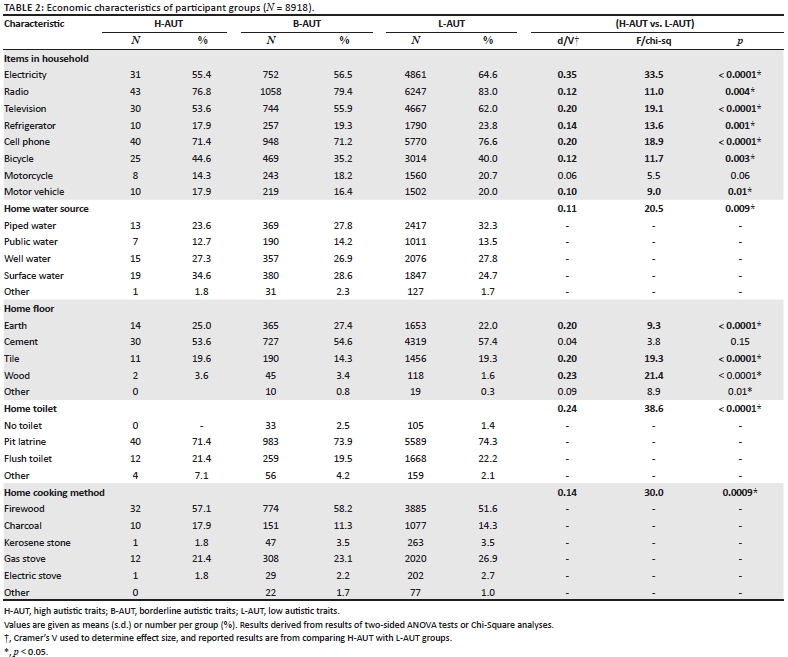
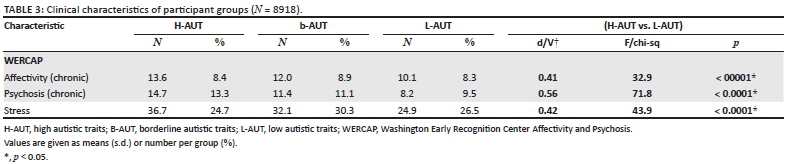
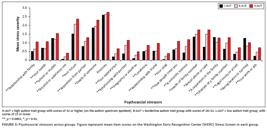
BACKGROUND: To date, there have been no large-scale population studies of autistic traits (AUT) conducted in AfricaAIM: The study aimed to estimate the prevalence and characteristics of autism spectrum disorders in a large sample of Kenyan adolescents and young adultsSETTING: Tertiary academic institutions (87%) and directly from the community (13%METHODS: Our study surveyed 8918 youths (aged 15-25 years) using the autism spectrum quotient (AQ). Based on AQ scores, we derived groups with low (L-AUT), borderline (B-AUT), and high (H-AUT) autistic traits. Relationships of AUT with demographic factors, psychosis, affectivity and stress were investigatedRESULTS: Internal consistency of the AQ in the population was excellent (Cronbach's α = 0.91). Across all participants, 0.63% were estimated as having H-AUT, while 14.9% had B-AUT. Amongst community youth, prevalence of H-AUT was 0.98%. Compared to those with low and borderline traits, H-AUT participants were more likely to be males, to have lower personal and parental educational attainment, and to be of a lower socioeconomic status. The H-AUT group also had higher psychotic and affective symptoms as well as higher psychosocial stress than other groupsCONCLUSION: The prevalence of H-AUT amongst Kenyan youth is comparable to Autism spectrum disorder (ASD) rates in many countries. Autistic traits in Kenya are associated with worse social and clinical profiles. Further research on autism across Africa is needed to investigate cross-cultural heterogeneity of this disorder, and to guide healthcare policy
autism; autistic; traits; Africa; Kenya; adolescents; adults
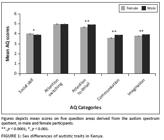 Thumbnail
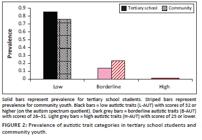 Thumbnail
 Thumbnail