Mental illness and HIV amongst female inmates in Durban, South Africa
Abstract
BACKGROUND: There is limited data regarding the prevalence of mental illness and human immunodeficiency virus (HIV) amongst female inmates in South Africa. Rehabilitation programmes can only be formulated once the needs of this population have been identified. AIM: This study aimed to measure the prevalence of mental illnesses, borderline and antisocial personality disorders and HIV amongst female inmates. SETTING: The study was based at a correctional centre in Durban, KwaZulu-Natal, South Africa. METHODS: This study forms part of a larger two-phased, mixed methods, sequential, explanatory design study. In phase one, 126 female inmates were interviewed using a clinical questionnaire and the Structured Clinical Interview for Diagnostics and Statistical Manual (DSM)-5 diagnoses - Research Version. RESULTS: The following lifetime prevalence rates were found: depressive disorder 70.6%, alcohol use disorder 48.4%, post-traumatic stress disorder (PTSD) 46.8%, borderline personality disorder 33.3%, substance use disorder 31.7%, antisocial personality disorder 15.1% and psychotic disorder 4.8%. The prevalence of current adult attention-deficit and hyperactivity disorder was 9.5%. A total of 39% of the participants admitted to past suicide attempts, whilst 64.3% reported past suicidal ideation and 36.5% had a current episode of a psychiatric disorder. A total of 64.3% of the participants were living with HIV. Although 90.4% had a lifetime psychiatric disorder, only 16.7% were previously diagnosed with a mental illness. The majority of inmates with lifetime disorders had psychiatric comorbidities. CONCLUSION: The high prevalence of mental illness and HIV amongst female inmates, and the fact that most with mental illness remain undiagnosed, is concerning. Improved screening, identification and treatment of mental illnesses in this population is needed to ensure optimal mental health outcomes and decreased recidivism.
prevalence; mental illness; female inmates or prisoners; HIV and AIDS; South Africa
Introduction
There is a paucity of research on the mental health of female prisoners as women constitute a minority of the total prison population, which ranges from 2% to 9% of total prisoners in most countries.1233
In the past few decades, there has been a burgeoning interest in female prisoner's mental health with increased recognition that females have gender-specific vulnerabilities and mental health needs.45678
Human immunodeficiency virus (HIV) is a global challenge, however, the majority of people living with HIV and/or AIDS (PLWHA) reside in sub-Saharan Africa.9101112131314,1516
Prison populations
In 2018, worldwide, there were an estimated 10.74 million prisoners (including remand detainees and sentenced prisoners).171811192021
Mental illnesses amongst prisoners
An updated systematic review on 33 588 prisoners from 24 countries worldwide from 1966 to 2010, found little change in the prevalence of SMIs amongst prisoners in the past decade, with psychotic disorders amongst female prisoners averaging 3.9% (3.6% for males) and depressive disorders averaging 14.1% in females (10.2% in males).22
Another common mental illness amongst prisoners is PTSD.232324
Substance use disorders and alcohol use disorders (AUDs) are also amongst the most common disorders diagnosed in prisoners, with females having higher rates of addiction than males for illicit substances but lower rates for alcohol.2525,26,27
Most children and adolescents with attention deficit and hyperactivity disorder (ADHD) will continue to suffer from the disorder in adulthood,2829303031
Incarcerated populations also have an over-representation of personality disorders.323233,3432,33,34,35
There are limited studies on prisoners in LMICs, particularly in Africa. A systematic review on the prevalence of SMIs amongst prisoners in LMICs revealed a 1-year prevalence rate of 6.2% for psychosis, 16.0% for depression, 3.8% for AUDs and 5.1% for SUDs.183636
-
Definitions
1.Inmate: 'Any person, whether convicted or not, who is being detained in custody in any correctional centre or remand detention facility'.37Correctional Services Act (CSA) 111 of 1998 of SA, however, the word 'prisoner' is used more commonly in international research.1,2,3,4,6,7,8,13,17,18,19,23,24,25,26,27,30,31,32,33,34,35
2.Remand detainee (RD): 'A person detained in a remand detention facility awaiting the finalisation of his or her trial, whether by acquittal or sentence, if such person has not commenced serving a sentence or is not already serving a prior sentence'.37
3.Sentenced offender (SO): 'A convicted person sentenced to incarceration or correctional supervision'.37
4.Correctional facility: 'Any place established under the Correctional Services Act 111 of 1998 of South Africa as a place for the reception, detention, confinement, training or treatment of persons liable to detention in custody or to placement under protective custody'.37
5.Recidivism: The tendency of a convicted criminal to re-offend.38
6.Violent offences: Offences where a person is harmed by or threatened with violence, which for the purposes of this study include murder, attempted murder, robbery, robbery with aggravating circumstances, assault, assault with intent to do grievous bodily harm (GBH), rape, conspiracy to murder, human trafficking and kidnapping.39,40
7.Non-violent offences: Offences in which no injury or physical force or threat of force is used against a person, which for the purposes of this study include theft, fraud, housebreaking, racketeering, corruption, money laundering, dealing in drugs, possession of drugs, forgery and uttering, contravening the Medicines and Related Substances Act, breaking parole, possession of stolen property and unlawful possession of a firearm.39,40
Method
Study design
This study formed part of a larger two-phased, mixed methods, sequential, explanatory design study,41
Study setting
This correctional centre, situated in Durban, KZN is one of the largest correctional centres in sub-Saharan Africa. However, it remains a largely under-researched area geographically. It accommodates male and female inmates. At the time of the study, the female section of this correctional facility had two full-time social workers and two part-time psychologists who consulted on an ad hoc basis. In addition, there was one psychiatrist consulting part-time for the entire correctional facility.
Study sample
At the time of the study there were 349 female inmates at this correctional centre, consisting of 250 SOs and 99 RDs. Inclusion criteria for phase one of the study included all adult female inmates (18 years and older), who were able to provide written informed consent. Capacity to provide consent was assessed by the first author. The RDs and SOs who spoke either English or isiZulu were included. Exclusion criteria were participants who lacked capacity to provide informed consent, including those who were floridly psychotic and behaviourally disturbed such that they might pose a danger to themselves or others. For women who were illiterate, the contents of the information leaflet were explained and informed consent was obtained via thumbprint. Stratified random sampling for SOs and RDs was conducted. A total of 126 women participated in phase one interviews.
Instruments
Socio-demographic, clinical and forensic questionnaire
A socio-demographic, clinical and forensic questionnaire, based on a review of the literature was compiled and administered by the first author. The forensic component of this interview elicited information regarding details of the current and past charges and/or convictions, circumstances surrounding the offence, motivation for the offence and details of referral for forensic observation (if applicable). Information regarding offence and sentence was confirmed from each participant's official prison cards. The clinical component contained questions about current and past medical illnesses (including HIV), past psychiatric illnesses (including self-harming behaviours, suicidal ideation and attempts) and relevant treatment thereof.
Structured clinical interview for Diagnostics and Statistics Manual of mental disorders 5th edition - Research Version
The SCID-5 is a structured clinical interview that can be used to assess mental disorders and provide diagnoses according to the definitions and criteria of the American Psychiatric Association's Diagnostics and Statistical Manual. The Research Version, non-patient edition of the SCID was administered in this study.42
Procedure
Data collection was from August to November 2019. The study assessments were conducted by the first author who is a forensic psychiatrist. Prior to commencement of the study, all 349 adult female inmates were addressed and introduced to the study. They were informed that their participation would be voluntary, anonymous and confidential. In addition, they were informed that the first author was not affiliated to the Department of Correctional Services (DCS) and that their participation in the study would in no way influence their criminal proceedings. They were then invited to participate in the study. Inmates who were not keen to participate after being addressed were not included in the sampling frame. Stratified random sampling of both groups of inmates (SOs and RDs) was conducted. Most interviews were conducted in English, however, for a minority of women who spoke isiZulu only, an English-isiZulu translator assisted. The translator was a qualified social worker with a research background and was bilingual.
Data collation
Data was captured online by the first author on-site, using Research electronic data capture (Redcap). Redcap is a browser-based, meta-data driven electronic data capture software solution and workflow methodology for designing clinical and translational research data bases.43
Analysis
Data from both the SCID-RV (regarding diagnosis) and the clinical questionnaire (regarding other clinical information) were analysed using IBM Statistical Package for the Social Sciences (SPSS) version 26. Frequency tables with percentages and graphs were used to describe categorical variables. Quantitative variables were summarised using mean and standard deviation (s.d.). Categorical variables were compared between groups using chi-square tests or Fisher's exact tests as appropriate. A p < 0.05 indicated statistical significance.
Ethical considerations
Approval for this study was obtained from the University of the Witwatersrand Human Research Ethics Committee (reference number: M181026), and from the DCS. Written informed consent was obtained from all participants. Participants' HIV status were confirmed with their informed consent, using prison hospital records. Those who had a mental illness/psychological distress, which required urgent intervention were referred, with their consent, to the prison doctor or psychologist. Data were stored electronically and were password protected. The DCS had no access to any information derived from the participants. Participants were advised on their rights not to participate, voluntariness of participation and their right to withdraw at any time without impacting their care at the correctional facility. Undue influence was minimised as the first author was independent of the DCS and offered no financial incentive to participate. Women who participated were given a hygiene pack with sanitary items valued at R60.
Results
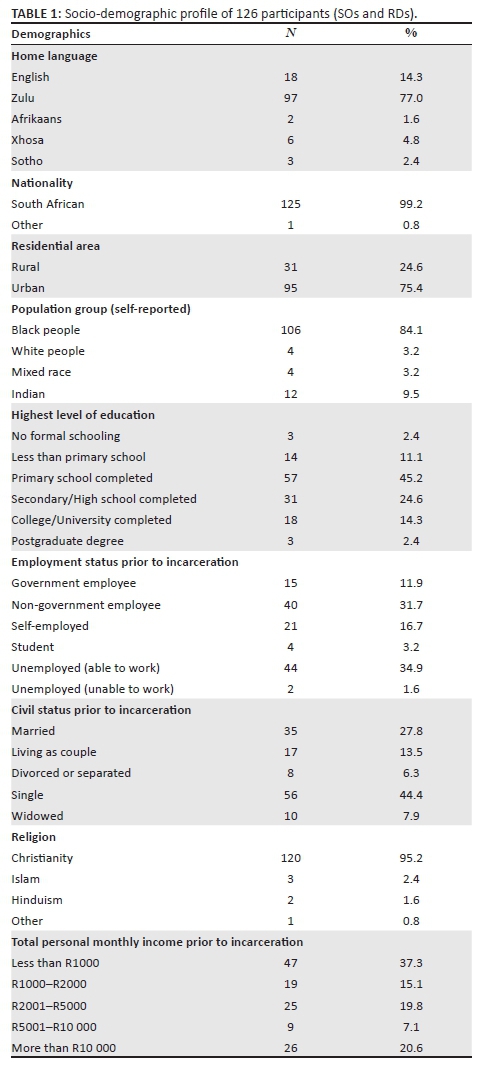
Table 1 shows the socio-demographic profile of the 126 female inmates (96 SOs and 30 RDs) who participated.
Forensic profile
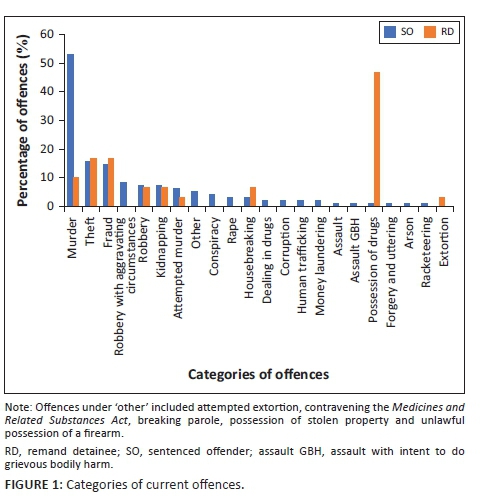
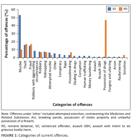
The mean age at first arrest was 32 years (s.d. = 10.01). A total of 32% (n = 41) of the participants were recidivists. Most women (73.8%, n = 93) were incarcerated for a single offence, however, more than a quarter (26.2%, n = 33) were incarcerated for two or more offences. A total of 3% (n = 4) of the participants had been referred for forensic observation whilst awaiting trial. Three were found fit to stand trial and criminally responsible (and subsequently found guilty and sentenced) whilst one was currently awaiting trial. This number does not reflect those who were found not fit or not responsible, and who were diverted to forensic psychiatric hospitals for care, treatment and rehabilitation under the Mental H ealth Care Act 17 of 2002.44Figure 1 shows the categories of current offences.
Clinical profile
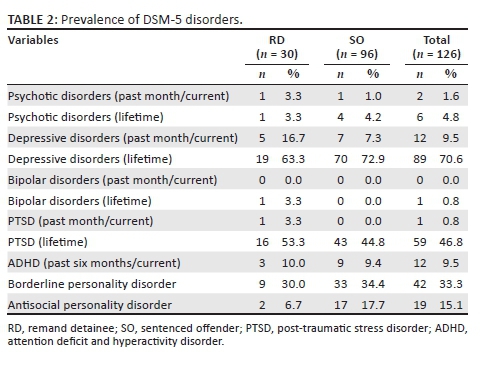
Table 2 shows the prevalence of DSM-5 disorders. Psychotic disorders (past month) consisted of 0.8% (n = 1) schizophrenia and 0.8% (n = 1) unspecified psychotic disorder. Psychotic disorders (lifetime) consisted of 1.6% (n = 2) psychotic disorders due to another medical condition, and 1.6% (n = 2) unspecified psychotic disorders, and those listed under psychotic disorders (current). Depressive disorders (past month and lifetime) were all in the category of MDD.
A minority of women with PTSD had experienced more than one episode during their lifetime. A total of 38 out of the 59 women (64.4%) reported rape as having been the precipitating stressor. Two women (3.4%) had experienced PTSD after being hijacked. Ten women (16.9%) had witnessed stabbings, shootings, suicide or murder. Five (8.5) had been stabbed, whilst one (1.7%) had been shot in the head. Five (8.5%) had been robbed at either knifepoint or gunpoint, whilst three women (5.1%) had been involved in a motor vehicle accident.
Alcohol and substance use disorders
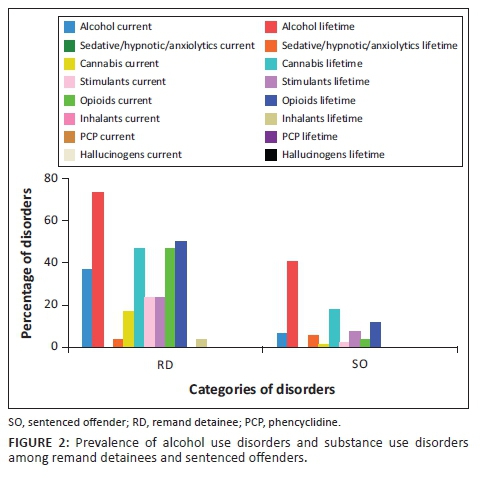
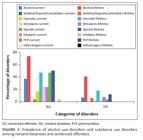
Figure 2 shows the prevalence of AUDs and SUDs. We found 13.5% of women had a 12-month prevalence of an AUD, whilst 48.4% (n = 61) had a lifetime prevalence of an AUD. Overall 18.3% (n = 23) had a 12-month prevalence of a SUD, whilst 31.7% (n = 40) had a lifetime prevalence of a SUD.
Self-harming behaviour and suicidality
The lifetime prevalence of non-fatal deliberate self-harming behaviours, which included cutting and burning was 5.6% (n = 7). The lifetime prevalence of suicide attempts was 39.7% (n = 50) and the most common method of attempting suicide was overdosing on medication. Many women (64.3%, n = 81) admitted to past suicidal ideation.
Psychiatric comorbidities
A total of 36% of the women (n = 46) had a current episode of a psychiatric disorder (i.e. psychotic, depressive, PTSD, AUDs or SUDs) or a current psychiatric disorder (adult ADHD) and 7.9% (n = 10) experienced two or more psychiatric disorders currently, whilst 90.4% (n = 114) had a lifetime diagnosis of a psychiatric disorder with 62.7% (n = 79) having two or more lifetime diagnoses.
Past psychiatric history
A total of 16% (n = 21) had a prior psychiatric diagnosis; however, most women (90.4%) were found to have suffered from a lifetime psychiatric disorder.
HIV and mental illness
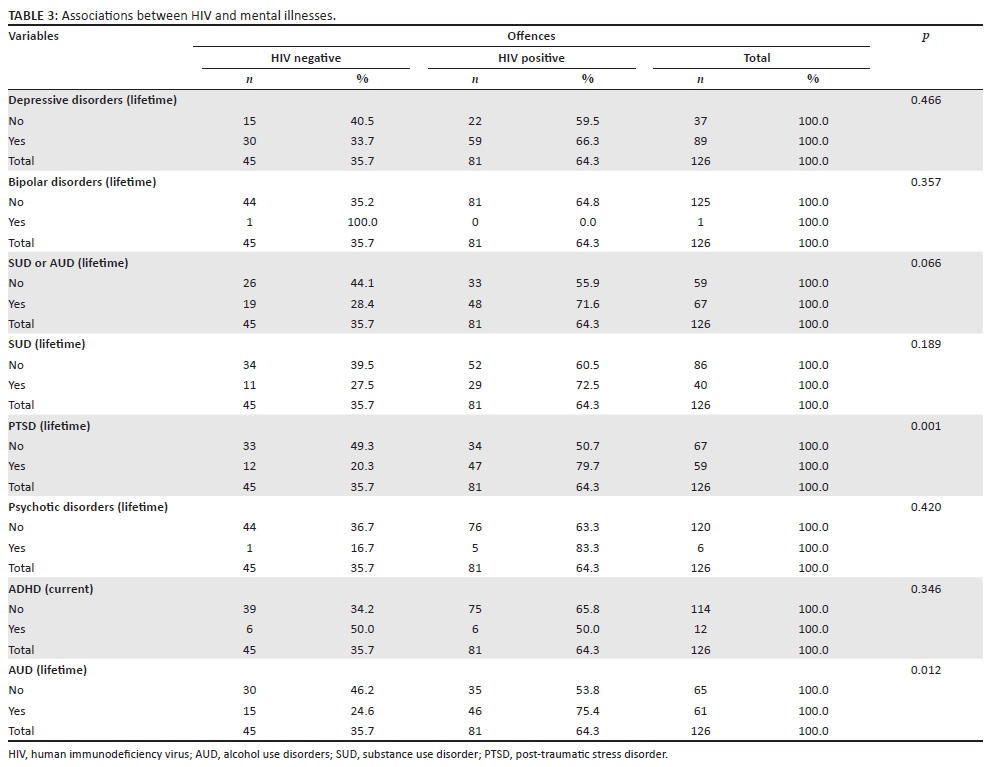
The prevalence of HIV was 64.3% (n = 81) with all, except one participant, being on highly active anti-retroviral therapy currently. Table 3 shows the association between HIV and mental illness. There was a statistically significant association between HIV and PTSD and HIV and AUD. Those participants with PTSD were more likely to be HIV positive than those without PTSD (79.7% vs. 50.7%, p = 0.001). The participants with AUD were also more likely to be HIV positive than those without AUD (75.4% vs. 53.8%, p = 0.012). There was a non-statistically significant trend shown in those with a SUD or AUD (lifetime) and HIV (71.6% vs. 55.9%; p = 0.066). Other non-significant trends observed to be more common amongst PLWHA were depressive disorders, SUDs and psychotic disorders. However, a larger study is required to explore these findings further.
Mental illness and offending
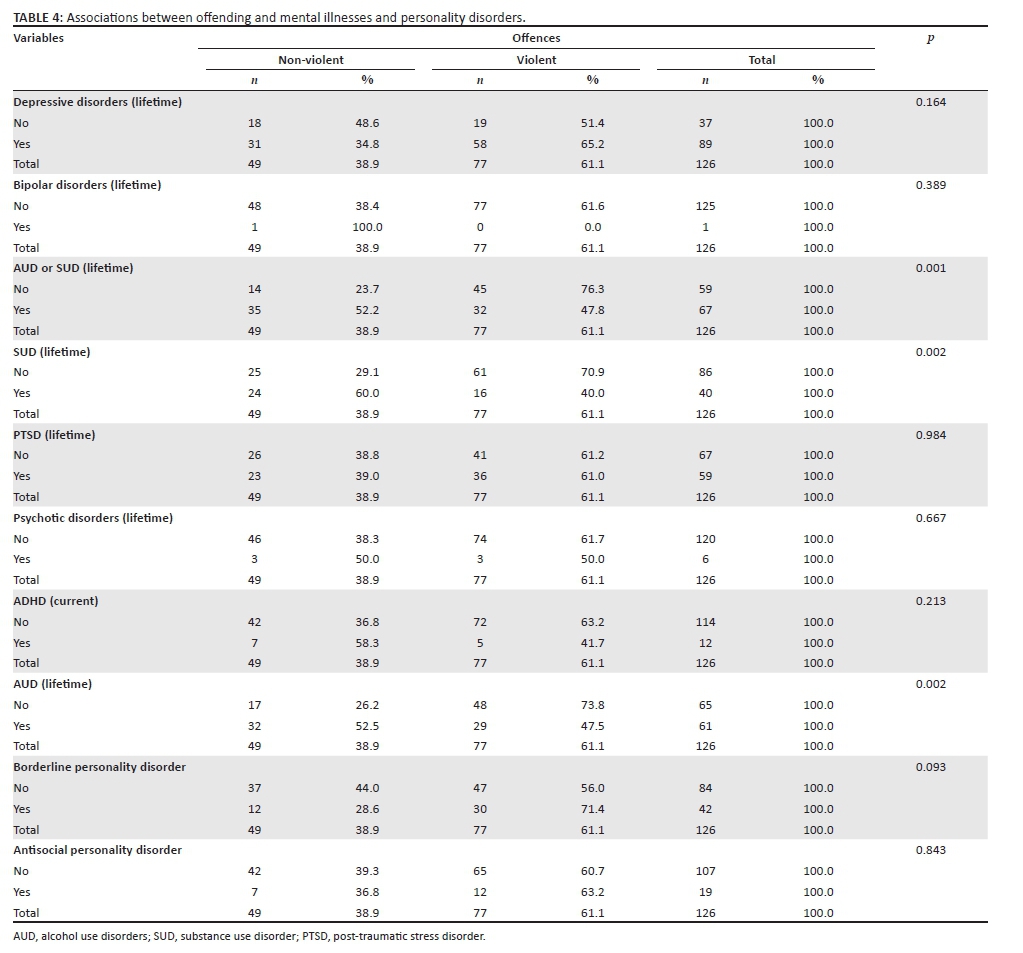
Table 4 shows the association between offending and mental illness and offending and personality disorders. Having an AUD or SUD was significantly associated with non-violent offences (p = 0.001). A total of 52% participants with SUD or AUD committed non-violent offences whereas 23.7% of those without SUD or AUD committed non-violent offences. Similarly, SUD and AUD were independently associated with non-violent offences (p = 0.002 and 0.002, respectively). The most common non-violent offence was drug possession. Conversely, violent offences were associated with not having an AUD or SUD. The most common violent offence was murder. Borderline personality disorder was non-significantly higher in women who committed violent offences (p = 0.093).
Discussion
The main findings of this study were the high prevalence of mental illnesses and HIV amongst female inmates compared with the general population in SA.4518
The estimated overall HIV prevalence rate in SA is approximately 13%. In the age group 15-49 years, an estimated 18.7% of the population is living with HIV.114647484949
The South African Stress and Health study (SASH), which was the first large population-based mental health epidemiological survey in South Africa, measured the 12-month and lifetime prevalence of mental illness amongst the general population in all 9 provinces.45
In Fazel and Seewald's updated review 3.9% had a 6-month prevalence of psychotic disorders, which is higher than in our study (1.6% one-month prevalence).22181844
Fazel and Seewald's updated review also found a 6-month prevalence of 14.1% for depression,2218184550
The lifetime prevalence of PTSD in this study (46.8%) is much higher than in the SASH study, which found a 2.3% lifetime prevalence in the general population452451,5253,545556,57,58,596061
A meta-analysis of ADHD amongst young adults in the general population found a prevalence of 5.0%,623063,6465
The prevalence of AUD was higher in this study than in the general population in the SASH study, which was 5.7% (12 month prevalence) and 14% (lifetime prevalence).45452566
A total of 33% of the women in our study were diagnosed with BPD, which is higher than that found in Fazel and Danesh's systematic review (25%).32676869
In our study, a minority of women (16.7%) had a previous psychiatric diagnosis and/or treatment for a psychiatric disorder despite the majority having a lifetime history of mental illness. This is in contrast to the study by Tyler et al. (UK) who found that a high number of prisoners had previous contact with mental health services or a prior psychiatric diagnosis.6570
Limitations
This study was based at one correctional centre in KZN. Another limitation was that the study relied on retrospective self-report and this information was vulnerable to exaggeration, misinterpretation and distortions, particularly when diagnosing lifetime disorders. Neuro-cognitive disorders, which are common in prison populations and in PLWHA, were not measured in this study. A further limitation was the lack of collateral information, which would have enhanced diagnostic accuracy. As a result of the cross-sectional design of the study, we were unable to draw causal inferences about associations found. Prisoners assessed by lay interviewers have been associated with higher prevalence rates of mental illness than interviews conducted by clinically trained psychologists and psychiatrists. The strengths of this study were that all interviews were conducted by a forensic psychiatrist. In addition, the SCID 5-RV, which is the gold standard for diagnosing mental illness, was used.
Conclusion
This is the first study which measured the prevalence of mental illnesses and HIV amongst female inmates at a correctional centre in South Africa. Although conducted at one site, this study demonstrates the substantial burden of mental illness and HIV prevalent amongst female inmates compared with international female prison populations as well as to the general population in SA. This underscores the critical need to improve mental health screening, treatment, care and rehabilitation services in correctional centres in SA. Screening should ideally be conducted at admission so that individualised programmes may be tailored and implemented during incarceration. Surveillance and monitoring should be ongoing. Incarceration serves as an opportunity for the implementation of integrated mental health programmes including substance rehabilitation and trauma-focused interventions. Robust interventions during incarceration may positively impact women's future behaviour and decrease their rate of recidivism. It is recommended that further research be undertaken at all correctional centres in SA to facilitate comparison and more importantly to form a knowledge base for the formulation and implementation of mental health care programmes designed specifically for female inmates.
Competing interests
The authors declare that they have no financial or personal relationships that may have inappropriately influenced them in writing this article.
Authors' contributions
S.N. conceptualised the study, collected and analysed the data, wrote the manuscript and obtained funding for the study. U.S., S.P. and L.F. were involved in conception of the study protocol, supervision and editing of the manuscript.
Funding information
The study was partially funded by a bursary from the Nedgroup Trust.
Data availability
The authors confirm that the data supporting the findings of this study are available within the article.
Disclaimer
The views and opinions expressed in this article are those of the authors and do not necessarily reflect the official policy or position of any affiliated agency of the authors.
Acknowledgements
The authors wish to thank the Department of Correctional Services and the female inmates who participated in this study.
References
-
1.Walmsley R. World female imprisonment list. 4th ed. Women and girls in penal institutions, including pre-trial detainees/remand prisoners [homepage on the Internet]. World Prison Brief; 2017 [cited 2020 Aug 25]. Available from: https://www.prisonstudies.org
» https://www.prisonstudies.org -
2.Lewis C. Treating incarcerated women: Gender matters. Psychiatr Clin North Am. 2006;29(3):773-789. https://doi.org/10.1016/j.psc.2006.04.013
» https://doi.org/10.1016/j.psc.2006.04.013 -
3.World Health Organization. Women's health in prison: Correcting gender inequity in prison health [homepage on the Internet]. Copenhagen; 2009 [cited 2020 Jul 29]. Available from: https://www.euro.who.int/en/health-topics/health-determinants/prisons-and-health/publications/2009/womens-health-in-prison.-correcting-gender-inequity-in-prison-health
» https://www.euro.who.int/en/health-topics/health-determinants/prisons-and-health/publications/2009/womens-health-in-prison.-correcting-gender-inequity-in-prison-health -
4.Van den Bergh BJ, Gatherer A, Moller LF. Women's health in prison: Urgent need for improvement in gender equity and social justice. Bull World Health Organ. 2009;87(6):406. https://doi.org/10.2471/BLT.09.066928
» https://doi.org/10.2471/BLT.09.066928 -
5.Department of Justice and Constitutional Development of South Africa. the Constitution of the Republic of South Africa [homepage on the Internet]. 1996 [cited 2020 Aug 22]. Available from: https://www.justice.gov.za/legislation/constitution/saconstitution-webeng.pdf
» https://www.justice.gov.za/legislation/constitution/saconstitution-webeng.pdf -
6.United Nations. Universal Declaration of Human Rights [homepage on the Internet]. [cited 2020 Aug 22]. Available from: https://www.un.org/en/about-us/universaldeclaration-of-human-rights
» https://www.un.org/en/about-us/universaldeclaration-of-human-rights -
7.Baillargeon J, Penn JV, Knight K, Harzke AJ, Baillargeon G, Becker EA. Risk of reincarceration among prisoners with co-occurring severe mental illness and substance use disorders. Adm Policy Ment Health. 2010;37(4):367-374. https://doi.org/10.1007/s10488-009-0252-9.
» https://doi.org/10.1007/s10488-009-0252-9 -
8.Baillargeon J, Binswanger IA, Penn JV, Williams BA, Murray OJ. Psychiatric disorders and repeat incarcerations: The revolving prison door. Am J Psychiatry. 2009;166(1):103-109. https://doi.org/10.1176/appi.ajp.2008.08030416
» https://doi.org/10.1176/appi.ajp.2008.08030416 -
9.WHO. HIV/AIDS [homepage on the Internet]. 2019 [cited 2020 Jul 28]; p. 5 of 13. Available from: https://www.who.int/news-room/fact-sheets/detail/hiv-aids
» https://www.who.int/news-room/fact-sheets/detail/hiv-aids -
10.Elflein J. Countries with the highest prevalence of HIV in 2000 and 2020 [homepage on the Internet]. [cited 2021 Jun 24]. Available from: https://www.statistica.com
» https://www.statistica.com -
11.Stats SA. Midyear population estimates 2020 [homepage on the Internet]. Pretoria, SA: Department of Statistics South Africa; 2020 [cited 2020 Jul 6]. Available from: http://www.statssa.gov.za/?p=13453
» http://www.statssa.gov.za/?p=13453 -
12.UN AIDS. AIDS info [homepage on the Internet]. [cited 2020 Mar 3]. Available from: https://aidsinfo.unaids.org
» https://aidsinfo.unaids.org -
13.Dolan K, Wirtz AL, Moazen B, et al. Global burden of HIV, viral hepatitis and tuberculosis in prisoners and detainees. Lancet. 2016;388(10049):1089-1102. https://doi.org/10.1016/S0140-6736(16)30466-4
» https://doi.org/10.1016/S0140-6736(16)30466-4 -
14.Spudich S, Gonzalex-Scarano F. HIV-1-related central nervous system disease: Current issues in pathogenesis, diagnosis and treatment. Cold Spring Harb Perspect Med. 2012;2(6):a007120. https://doi.org/10.1101/cshperspect.a007120
» https://doi.org/10.1101/cshperspect.a007120 -
15.Minager A, Commins D, Alexander JS, Hoque R, Chiappelli F, Singer EJ. NeuroAids: Characteristics and diagnosis of the neurological complications of AIDS. Mol Diagn Ther. 2008;12(1):25-43. https://doi.org/10.1007/BF03256266
» https://doi.org/10.1007/BF03256266 -
16.Zuma K, Manzini K, Mohlabane N. HIV epidemic in SA: A comparison of HIV epidemic patterns of two extreme provinces in South Africa. Health SA Gesondheid [serial online]. 2014 [cited 2021 Jul 6]. Available from: https://hsag.co.za/index.php/hsag/article/view/716/1042
» https://hsag.co.za/index.php/hsag/article/view/716/1042 -
17.Walmsley R. World prison population list [homepage on the Internet]. 12th ed. World Prison Brief; 2018 [cited 2020 May 3]. Available from: https://www.prisonstudies.org
» https://www.prisonstudies.org -
18.Baranyi G, Scholl C, Fazel S, Patel V, Priebe S, Mundt AP. Severe mental illness and substance use disorders in prisoners in low-income and middle-income countries: A systematic review and meta-analysis of prevalence studies. Lancet Glob Health. 2019;7(4):e461-e471. https://doi.org/10.1016/S2214-109X(18)30539-4
» https://doi.org/10.1016/S2214-109X(18)30539-4 -
19.Institute for Crime and Justice Policy Research, Birkbeck College, University of London. World Prison Brief [Internet]. 2019 [cited 2020 May 3]. Available from: https://www.prisonstudies.org/
» https://www.prisonstudies.org/ -
20.Makou G, Skosana I, Hopkins R. Factsheet: The state of South Africa's prisons [homepage on the Internet]. Africacheck; 2018 [cited 2020 May 3]. Available from: https://www.africacheck.org
» https://www.africacheck.org -
21.White paper on corrections in South Africa [homepage on the Internet]. 2005 [cited 2020 Aug 16]. Available from: https://www.acjr.org.za
» https://www.acjr.org.za -
22.Fazel S, Seewald K. Severe mental illness in 33588 prisoners worldwide: A systematic review and meta-regression analysis. Br J Psychiatry. 2012;200(5):364-373. https://doi.org/10.1192/bjp.bp.111.096370
» https://doi.org/10.1192/bjp.bp.111.096370 -
23.Goff A, Rose E, Rose S, Purves D. Does PTSD occur in sentenced prison populations? A systematic literature review. Crim Behav Ment Health. 2007;17(3):152-162. https://doi.org/10.1002/cbm.653
» https://doi.org/10.1002/cbm.653 -
24.Baranyi G, Cassidy M, Fazel S, Priebe S, Mundt AP. Prevalence of posttraumatic stress disorder in prisoners. Epidemiol Rev. 2018;40(1):134-145. https://doi.org/10.1093/epirev/mxx015
» https://doi.org/10.1093/epirev/mxx015 -
25.Fazel S, Yoon IA, Hayes AJ. Substance use disorders in prisoners: An updated systematic review and meta-regression in recently incarcerated men and women. Addiction. 2017;112(10):1725-1739. https://doi.org/10.1111/add.13877
» https://doi.org/10.1111/add.13877 -
26.Binswanger IA, Merrill JO, Krueger PM, White MC, Booth RE, Elmore JG. Gender differences in chronic medical, psychiatric, and substance-dependence disorders among jail inmates. Am J Public Health. 2010;100(3):476-482. https://doi.org/10.2105/AJPH.2008.149591
» https://doi.org/10.2105/AJPH.2008.149591 -
27.Fazel S, Baillargeon J. The health of prisoners. Lancet. 2011;377(9769):956-965. https://doi.org/10.1016/S0140-6736(10)61053-7
» https://doi.org/10.1016/S0140-6736(10)61053-7 -
28.Faraone SV, Biederman J, Mick E. The age-dependent decline of attention deficit hyperactivity disorder: A meta-analysis of follow-up studies. Psychol Med. 2006;36(2):159-165. https://doi.org/10.1017/S003329170500471X
» https://doi.org/10.1017/S003329170500471X -
29.Shaw M, Hodgkins P, Caci H, et al. A systematic review and analysis of long-term outcomes in attention deficit hyperactivity disorder: Effects of treatment and non-treatment. BMC Med. 2012;10:99. https://doi.org/10.1186/1741-7015-10-99
» https://doi.org/10.1186/1741-7015-10-99 -
30.Young S, Moss D, Sedgwick O, Fridman M, Hodgkins P. A meta-analysis of the prevalence of attention deficit hyperactivity disorder in incarcerated populations. Psychol Med. 2015;45(2):247-258. https://doi.org/10.1017/S0033291714000762
» https://doi.org/10.1017/S0033291714000762 -
31.Mohr-Jensen C, Steinhausen HC. A meta-analysis and systematic review of the risks associated with childhood attention-deficit hyperactivity disorder on long-term outcome of arrests, convictions and incarcerations. Clin Psychol Rev. 2016;48:32-42. https://doi.org/10.1016/j.cpr.2016.05.002
» https://doi.org/10.1016/j.cpr.2016.05.002 -
32.Fazel S, Danesh J. Serious mental disorders in 23000 prisoners: A systematic review of 62 surveys. Lancet. 2002;359(9306):545-550. https://doi.org/10.1016/S0140-6736(02)07740-1
» https://doi.org/10.1016/S0140-6736(02)07740-1 - 33.Trestman RL, Ford J, Zhang W, Wiesbrock V. Current and lifetime psychiatric illness among inmates not identified as acutely mentally ill at intake in Connecticut's jails. J Am Acad Psychiatry Law. 2007;35(4):490-500.
-
34.Black W, Gunter T, Allen J, et al. Borderline personality disorder in male and female offenders newly committed to prison. Compr Psychiatry. 2007;48(5):400-405. https://doi.org/10.1016/j.comppsych.2007.04.006
» https://doi.org/10.1016/j.comppsych.2007.04.006 -
35.Nee C, Farman S. Female prisoners with borderline personality disorder: Some promising treatment developments. Crim Behav Ment Health. 2005;15(1):2-16. https://doi.org/10.1002/cbm.33
» https://doi.org/10.1002/cbm.33 -
36.Naidoo S, Mkize DL. Prevalence of mental disorders in a prison population in Durban, South Africa. Afr J Psychiatry. 2012;15(1):30-35. https://doi.org/10.4314/ajpsy.v15i1.4
» https://doi.org/10.4314/ajpsy.v15i1.4 -
37.Department of Correctional Services of South Africa. Correctional Services Act 111 of 1998 of South Africa [homepage on the Internet]. 1998 [cited 2020 Aug 30]. Available from: https://www.dcs.gov.za/documents/correctional-services-act
» https://www.dcs.gov.za/documents/correctional-services-act -
38.National Institute of Justice. Recidivism [homepage on the Internet]. Washington: US Department of Justice. [cited 2020 Sep 1]. Available from: https://www.nij.ojp.gov/topics/corrections/recidivism
» https://www.nij.ojp.gov/topics/corrections/recidivism -
39.National Institute of Justice. Violent crime [homepage on the Internet]. Washington: US Department of Justice. [cited 2020 Jul 10]. Available from: https://nij.ojp.gov/topics/crimes/violent-crime
» https://nij.ojp.gov/topics/crimes/violent-crime -
40.Rosenfeld R. Violent Crime [homepage on the Internet]. Oxford University Press. 2017 [cited 2020 Jul 10]. Available from: https://www.oxfordbibliographies.com/view/document/obo-9780195396607/obo-9780195396607-0001.xml
» https://www.oxfordbibliographies.com/view/document/obo-9780195396607/obo-9780195396607-0001.xml - 41.Creswell JW, Plano-Clark V. Designing and conducting mixed methods research. Los Angeles, CA: Sage; 2011.
- 42.First MB, Williams JBW, Karg RS, Spitzer RL. Structured clinical interview for DSM-5 - Research version (SCID-5 for DSM-5, Research Version; SCID-5-RV). Arlington, VA: American Psychiatric Association; 2015.
- 43.Harris PA, Taylor R, Thielke R, Payne J, Gonzalez N, Conde JG. Research electronic data capture (REDCap) - A metadata-driven methodology and workflow process for providing translational research informatics support. J Biomed Inform. 2009;42(2):377-381.
-
44.Department of Justice of South Africa. Mental Health Care Act 17 of 2002 [homepage on the Internet]. 2002 [cited 2020 Aug 28]. Available from: https://www.gov.za/documents/mental-health-care-act
» https://www.gov.za/documents/mental-health-care-act - 45.Herman AA, Stein DJ, Seedat S, Heeringa SG, Moomal H, Williams DR. The South African Stress and Health (SASH) study: 12-month and lifetime prevalence of common mental disorders. S Afr Med J. 2009;99(5):339-344.
-
46.Huerga H, Van Cutsem G, Ben Farhat J, et al. Progress towards the UNAIDS 90-90-90 goals by age and gender in a rural area of KwaZulu-Natal, South Africa: A household-based community cross-sectional survey. BMC Public Health. 2018;18(1):303. https://doi.org/10.1186/s12889-018-5208-0
» https://doi.org/10.1186/s12889-018-5208-0 -
47.Allinder SM, Fleischman J. The world's largest HIV epidemic in crisis: HIV in South Africa [homepage on the Internet]. Centre for Strategic and International Studies; 2019 [cited 2021 Jul 11]. Available from: https://www.csis.org/analysis/worlds-largest-hiv-epidemic-crisis-hiv-south-africa
» https://www.csis.org/analysis/worlds-largest-hiv-epidemic-crisis-hiv-south-africa - 48.Shisana O, Davids A. Correcting gender inequalities is central to controlling HIV/AIDS. Bull World Health Organisation. 2004;82:11:811-890.
-
49.Telisinghe L, Charalambous S, Topp SM, et al. HIV and tuberculosis in prisons in sub-Saharan Africa. Lancet. 2016;388(10050):1215-1227. https://doi.org/10.1016/S0140-6736(16)30578-5
» https://doi.org/10.1016/S0140-6736(16)30578-5 -
50.Abdu Z, Kabeta T, Dube L, Tessema W, Abera M. Prevalence and associated factors of depression among prisoners in Jimma Town Prison, South West Ethiopia. Psychiatry J. 2018;2018:5762608. https://doi.org/10.1155/2018/5762608
» https://doi.org/10.1155/2018/5762608 -
51.Jewkes R, Levin J, Penn-Kekana L. Risk factors for domestic violence: Findings from a South African cross-sectional study. Soc Sci Med. 2002;55(9):1603-1617. https://doi.org/10.1016/s0277-9536(01)00294-5
» https://doi.org/10.1016/s0277-9536(01)00294-5 -
52.Maluleka R. Crime against women in South Africa- Report No. 03-40-05 [homepage on the Internet]. Stats SA; 2018 [cited 2020 Aug 23]. Available from: https://www.statssa.gov.za
» https://www.statssa.gov.za -
53.Kessler RC, Sonnega A, Bromet E, Hughes M, Nelson CB. Posttraumatic stress disorder in the National Comorbidity Survey. Arch Gen Psychiatry. 1995;52(12):1048-1060. https://doi.org/10.1001/archpsyc.1995.03950240066012
» https://doi.org/10.1001/archpsyc.1995.03950240066012 -
54.Acierno R, Resnick HS, Kilpatrick DG. Health impact of interpersonal violence 1: Prevalence rates, case identification, and risk factors for sexual assault, physical assault, and domestic violence in men and women. Behav Med. 1997;23(2):53-64. https://doi.org/10.1080/08964289709596729
» https://doi.org/10.1080/08964289709596729 -
55.Martin L, Kagee A. Lifetime and HIV-related PTSD among persons recently diagnosed with HIV. AIDS Behav. 2011;15(1):125-131. https://doi.org/10.1007/s10461-008-9498-6
» https://doi.org/10.1007/s10461-008-9498-6 -
56.Kelly B, Raphael B, Judd F, Kernutt G, Burnett P, Burrows G. Posttraumatic stress disorder in response to HIV infection. Gen Hosp Psychiatry. 1998;20(6):345-352. https://doi.org/10.1016/S0163-8343(98)00042-5
» https://doi.org/10.1016/S0163-8343(98)00042-5 - 57.Kimerling R, Calhoun KS, Forehand R, et al. Traumatic stress in HIV-infected women. AIDS Educ Prev. 1999;11(4):321-330.
-
58.Safren SA, Gershuny BS, Hendriksen E. Symptoms of posttraumatic stress and death anxiety in persons with HIV and medication adherence difficulties. AIDS Patient Care STDS. 2003;17(12):657-664. https://doi/org/10.1089/108729103771928717
» https://doi/org/10.1089/108729103771928717 -
59.Olley BO, Seedat S, Stein DJ. Persistence of psychiatric disorders in a cohort of HIV/AIDS patients in South Africa. J Psychosom Res. 2006;61(4):479-484. https://doi.org/10.1016/j.jpsychores.2006.03.010
» https://doi.org/10.1016/j.jpsychores.2006.03.010 -
60.Machtinger EL, Wilson TC, Haberer JE, Weiss DS. Psychological trauma and PTSD in HIV-positive women: A meta-analysis. AIDS Behav. 2012;16(8):2091-2100. https://doi.org/10.1007/s10461-011-0127-4
» https://doi.org/10.1007/s10461-011-0127-4 -
61.Boarts JM, Sledjeski EM, Bogart LM, Delahanty DL. The differential impact of PTSD and depression on HIV disease markers and adherence to HAART in people living with HIV. AIDS Behav. 2006;10(3):253-261. https://doi.org/10.1007/s10461-006-9069-7
» https://doi.org/10.1007/s10461-006-9069-7 -
62.Willcut EG. The prevalence of DSM-IV attention-deficit/hyperactivity disorder: A meta-analytic review. Neurotherapeutics. 2012;9(3):490-499. https://doi.org/10.1007/s13311-012-0135-8
» https://doi.org/10.1007/s13311-012-0135-8 -
63.Usher AM, Stewart LA, Wilton G. Attention deficit hyperactivity disorder in a Canadian prison population. Int J Law Psychiatry. 2013;36(3-4):311-315. https://doi.org/10.1016/j.ijlp.2013.04.005
» https://doi.org/10.1016/j.ijlp.2013.04.005 -
64.Gaiffas A, Galera C, Mandon V, Bouvard MP. Attention-deficit/hyperactivity disorder in young French male prisoners. J Forensic Sci. 2014;59(4):1016-1019. https://doi.org/10.1111/1556-4029.12444
» https://doi.org/10.1111/1556-4029.12444 -
65.Tyler N, Miles HL, Karadag B, Rogers G. An updated picture of the mental health needs of male and female prisoners in the UK: Prevalence, comorbidity, and gender differences. Soc Psychiatry Psychiatr Epidemiol. 2019;54(9):1143-1152. https://doi.org/10.1007/s00127-019-01690-1
» https://doi.org/10.1007/s00127-019-01690-1 -
66.Duko B, Ayalew M, Ayano G. The prevalence of alcohol use disorders among people living with HIV/AIDS: A systematic review and meta-analysis. Subst Abuse Treat Prev Policy. 2019;14(1):52. https://doi.org/10.1186/s13011-019-0240-3
» https://doi.org/10.1186/s13011-019-0240-3 -
67.Kolla NJ, Meyer JH. Trait anger, physical aggression, and violent offending in antisocial and borderline personality disorders. J Forensic Sci. 2017;62(1):137-141. https://doi.org/10.1111/1556-4029.13234
» https://doi.org/10.1111/1556-4029.13234 -
68.Richie H, Roser M, Ortiz-Ospina E. Suicide [homepage on the Internet]. OurWorldinData.org; 2015 [cited 2020 Aug 14]. Available from: https://www.ourworldindata.org/suicide
» https://www.ourworldindata.org/suicide -
69.Butler A, Young JT, Kinner SA, Borschmann R. Self-harm and suicidal behaviour among incarcerated adults in the Australian Capital Territory. Health Justice. 2018;6(1):13. https://doi.org/10.1186/s40352-018-0071-8
» https://doi.org/10.1186/s40352-018-0071-8 -
70.Burns JK. The burden of untreated mental disorders in KwaZulu-Natal province-mapping the treatment gap. S Afr J Psychiatry. 2014;20(1):6-10. https://doi.org/10.7196/SAJP.499
» https://doi.org/10.7196/SAJP.499

Accepted: 27 July 2021
Published: 27 Jan. 2022