Childhood trauma, substance use and depressive symptoms in people with HIV during COVID-19
Abstract
BACKGROUND: Adverse childhood experiences (ACEs), substance use, depressive symptoms, and HIV outcomes in people living with HIV (PLWHIV) have not been comprehensively investigated within a single study. AIM: The aim of this study was to investigate the prevalence and association of ACEs, substance use, depressive symptoms and human immunodeficiency virus (HIV) outcomes in PLWHIV accessing HIV care during the coronavirus disease 2019 (COVID-19) pandemic. SETTING: District hospital HIV clinic in South Africa. METHODS: A total of 196 PLWHIV completed a socio-demographic and clinical questionnaire; an adapted World Health Organization (WHO) Alcohol, Smoking and Substance Involvement Screening Test; WHO ACEs International Questionnaire, and Patient Health Questionnaire. RESULTS: The most common ACEs were having one or no parent, parental separation or divorce (n = 131, 66.8%), exposure to collective (n = 57, 29.1%) and community violence (n = 55, 28.1%), with 40.3% (n = 79) experiencing ≥ 3 ACEs. The most commonly used substances were alcohol (n = 34, 17.3%), tobacco (n = 33, 16.8%), and cannabis (n =13, 6.6%). The prevalence of depressive symptoms was 19.4% (n = 38). Linear regression analyses indicated greater alcohol (adj β = 2.84, p < 0.01), tobacco (adj β = 3.64, p < 0.01) and cannabis use risk scores (adj β = 2.39, p < 0.01) were associated with ≥ 3 ACEs. Logistic regression indicated depressive risk (adjusted odds ratio [OR] = 9.39, 95% confidence interval [CI] 4.78-23.51) was associated with ≥ 3 ACEs. CONCLUSION: A high prevalence of ACEs, substance use and depressive symptoms exists among PLWHIV, along with an association between cumulative ACEs and both substance use and depressive symptoms. CONTRIBUTION: Enhanced screening and management services are recommended to address this triple burden in PLWHIV.
adverse childhood experiences; alcohol; tobacco; cannabis; depression; HIV; COVID-19; South Africa
Introduction
South Africa (SA) has several public health challenges including having a high burden of mental illness,123145
Mental healthcare services in SA are severely limited,676,8 Pre-existing chronic conditions like cardiovascular diseases are prevalent in PLWHIV, and influence COVID-19 severity. People living with HIV (PLWHIV) are at risk of anaemia, neutropenia, thrombocytopenia and abnormal serum electrolytes, which also play a critical role in the disease course of COVID-19.9
The relationship between substance use disorders (SUDs) and mental disorders is known to be bi-directional.10111213
Substance use is a risk factor for acquiring HIV,141516171819202122
Rates of current depression among PLWHIV are at least twice the general population rates,21 a depression prevalence rate of 41% being found in a cohort of PLWHIV in SA.171123
Adverse Childhood Experiences (ACEs) constitute a group of potentially traumatic events (abuse, neglect and household dysfunction) that occur during the first 17 years of life.2425262726
There is increasing evidence that PLWHIV experience high levels of ACEs,1528,29 Adverse childhood experiences are recognised as meaningful predictors of HIV risk,1529
There is a strong relationship between ACEs and substance use and abuse later in life,303130323315
In an international sample, 13.3% of the respondents reported having started or increased substance use to cope with COVID-19 stress.783435
The pooled prevalence of depression in 2020 was 7-fold the estimated global prevalence in 2017,36372568
Significant gaps exist in the management of mental health and SUDs in PLWHIV in developing countries,3839224041114216,32 and these possible barriers to adherence need to be investigated and managed appropriately.
Aim
The aim of this study was to investigate the prevalence and association of ACEs, substance use, depressive symptoms and HIV outcomes in PLWHIV accessing HIV care during the COVID-19 pandemic.
Research methods and design
Study design and setting
This cross-sectional, quantitative, descriptive study was conducted at a HIV clinic in a public, district-level general hospital in Eastern SA from September to December 2020 after the first wave of the COVID-19 pandemic in SA. The outpatient HIV clinic manages an average of 40 patients a day, 5 days a week and comprises of a diverse multicultural population.
Sample population, size and sampling strategy
The inclusion criteria used were patients 18 years or older with confirmed HIV infection, on highly active antiretroviral therapy (HAART), attending the HIV clinic and able to read and write in English or isiZulu (local language in KZN). Those who were unwilling or unable to provide consent were excluded. Because of COVID-19 risk, each patient was approached individually by the principal investigator for written informed consent. Data were collected via survey questionnaires that were completed in writing by the participants while awaiting consultation or medication in the clinic. Convenience sampling was utilised by the principal investigator who was solely responsible for data collection. The required sample size calculated was 196, which was determined on the statistical power of 80% and on the basis of the desired significance level of 0.05.
Data collection tools
The survey consisted of a socio-demographic and clinical questionnaire; an adapted version of the World Health Organization (WHO) Alcohol, Smoking and Substance Involvement Screening Test (ASSIST V 3.0); the WHO Adverse Childhood Experiences International Questionnaire (ACE-IQ), and the Patient Health Questionnaire (PHQ-9), which are all suitable for self-administration by the participants.
The main study predictor was ACEs, measured with the WHO ACE-IQ, a standardised instrument with 13 categories of adversities with good psychometric properties and has also been previously used in SA.13,43 The ACE score was computed (ranging from 0 to 13) using the recommended binary version, with an affirmative response being counted as a Yes for that specific ACE category.
Self-report of lifetime substance and current substance use (in the past 3 months) was collected for alcohol, tobacco or tobacco-related products, cannabis, cocaine, amphetamine, inhalants, sedatives and/or sleeping pills, hallucinogens and opioids, as per an adapted version of the WHO ASSIST V 3.0 containing terms applicable to the local context. It has been translated into isiZulu and utilised in SA.13,44 Validated cut-off points stratifying scores were as follows: Questions 2-7, a score of 0-3 (0-10 for alcohol) for a specific substance indicated low substance risk involvement and no intervention required; Questions 4-26 (11-26 for alcohol) indicated moderate substance risk involvement and brief intervention required, and scores greater than 27 suggest a high risk of substance dependence with intensive intervention required.
The PHQ-9, a nine-item questionnaire to make criteria-based diagnoses of depressive disorders and grade symptom severity in primary care settings, was used. The questionnaire uses a 4-point Likert scale (0 = not at all, 1 = several days, 2 = more than half the days, 3 = nearly every day) to assess the responses about mental and/or emotional health over the past 2-week period. The standard cut-off score used to identify possible moderate to severe depression of ≥ 10 was used. The PHQ-9 has shown diagnostic validity in SA,45 44
A chart review was conducted to confirm the patients' HAART regimens and National Health Laboratory Service results were checked to confirm positive HIV diagnosis, clusters of differentiation 4 (CD4) counts and quantitative HIV VL. Virologic detection was defined as a VL measurement of at least 50 copies/mL based on the assay.
Data analysis
Firstly, descriptive statistics was used to summarise the socio-demographic and clinical profiles of the participants. Secondly, associations between ACE and clinical outcomes (depressive symptoms, substance use and VL) were examined using Pearson χ2
A p-value < 0.05 was considered statistically significant, with the data being analysed using STATA 16 (StataCorp (2019) Stata Statistical Software: Release 16. StataCorp LLC, College Station, TX).
Ethical considerations
Ethical clearance to conduct this study was obtained from the University of Kwazulu-Natal, Biomedical Research Ethics Committee (No. BREC/00001085/2020). All potential participants were provided with a description of the study, and written informed consent was obtained from all who volunteered. The participants were allowed to withdraw consent at any stage.
Results
Socio-demographic profile
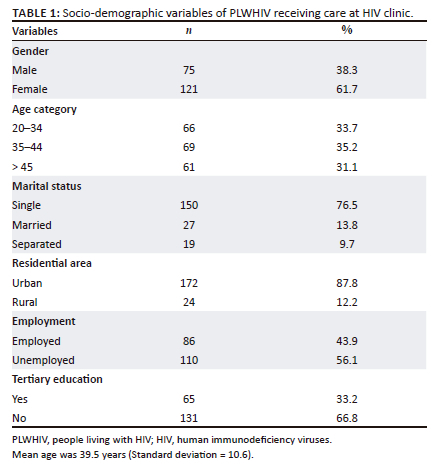
Of the 196 participants, a total of 121 were female (61.7%), 150 were single (76.5%), 131 had no tertiary education (66.8%), and 110 were unemployed (56.1%). The mean age of participants was 39.5 years (standard deviation [s.d.] = 10.6) (Table 1).
Clinical profile
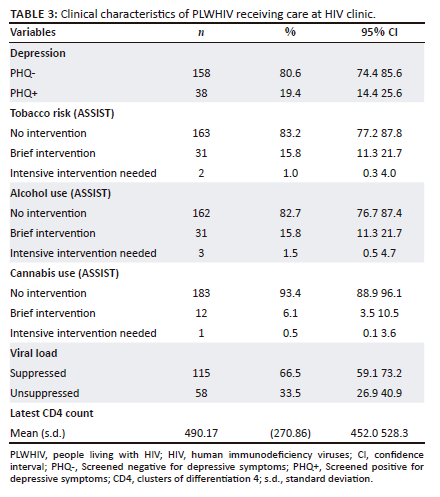
All participants were receiving HAART, the mean CD4 count for the study population being 490.17 (s.d. = 270.86), with 58 participants (33.5%) having a detectable VL (Table 3).
Adverse childhood experiences
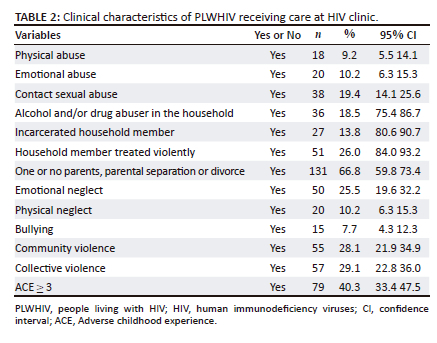
The most common types of ACEs experienced were having one or no parent, parental separation or divorce (n = 131, 66.8%), and being exposed to collective violence (n = 57, 29.1%) and community violence (n = 55, 28.1%). In all, 173 participants (88.3%) experienced ≥ 1 ACE and 79 (40.3%) experienced ≥ 3 ACEs (Table 2).
Substance use
Thirty-four (17.3%) participant scores on the WHO ASSIST suggested they needed at least a brief intervention for alcohol use, 33 (16.8%) for tobacco use and 13 (6.6%) for cannabis use (Table 3). The lifetime prevalence of cocaine and stimulants was 1.02 (n = 2), and no participants used inhalants, sedatives, hallucinogens, opioids, sugars, whoonga or mandrax. The group sizes were, therefore, not large enough for meaningful associations.
Depressive symptoms
Thirty-eight (19.4%) participants screened positive for depressive symptoms (Table 3). A bivariate analysis was conducted to test for association between depression and substance use. There was no association between the depressive risk score and alcohol use risk score (p = 0.152), tobacco use risk score (p = 0.128), and cannabis use risk score (p = 0.428).
Regression results
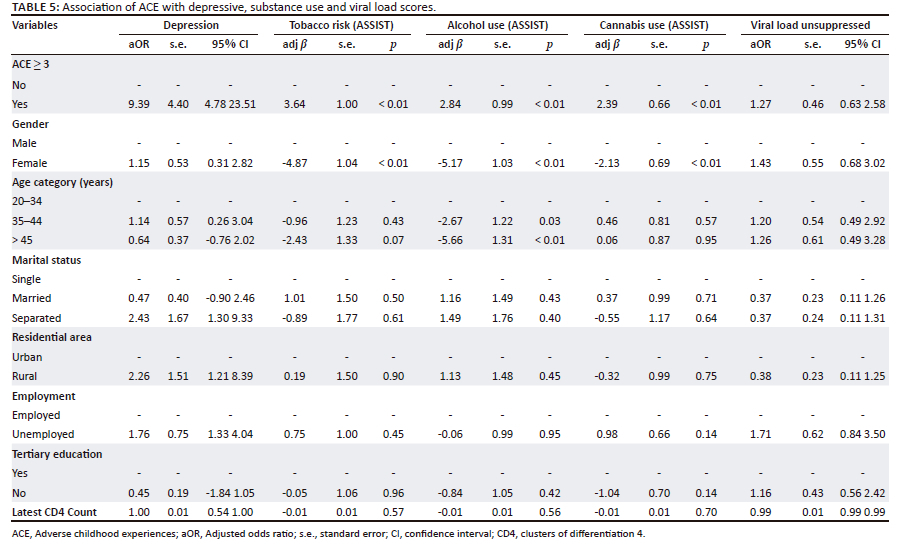
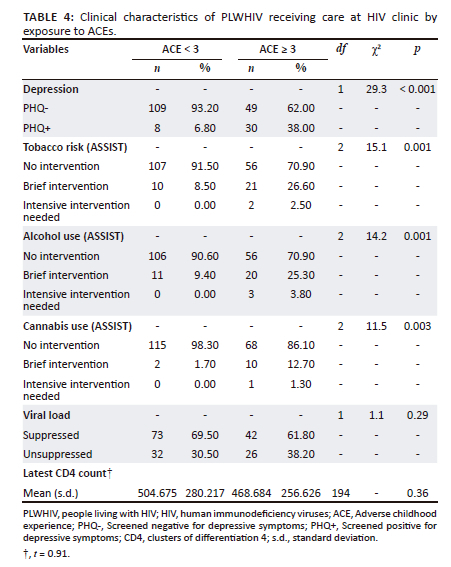
Table 4 describes the association between three or more adverse childhood experiences with clinical variables compared to those with less than three adverse childhood experiences. We tested for the association between depression, substance use and VL suppression as outcomes, and the exposure to ≥ 3 ACEs controlling for socio-demographic variables and latest CD4 count. Exposure to ≥ 3 ACEs was associated with greater alcohol (adj β = 2.84, p < 0.01), tobacco (adj β = 3.64, p < 0.01), and cannabis use risk scores (adj β = 2.39, p < 0.01). Similarly, a higher depressive risk (adjusted odds ratio [OR] = 9.39, 95% confidence interval [CI] 4.78-23.51) was also associated with ≥ 3 ACEs. Other notable results included a lower alcohol (adj β = -5.17, p≈< 0.01), tobacco (adj β = -4.87, p < 0.01) and cannabis use risk scores (adj β = -2.13, p < 0.01) among females compared to males (Table 5).
Discussion
We investigated the prevalence and association of ACEs, substance use and depressive symptoms in PLWHIV during the COVID-19 pandemic at a HIV service clinic in SA. The majority of PLWHIV experienced ≥ 1 ACE and there was a high prevalence of multiple adverse events experienced. The most used substances were alcohol, tobacco and cannabis, which were all significantly associated with experiencing ≥ 3 ACEs. There was a high prevalence of depressive symptoms, with a significant association between depressive symptoms and ≥ 3 ACEs.
The sample of PLWHIV was predominantly female, which is consistent with other studies on PLWHIV in SA,17,46 and could be accounted for by their higher vulnerability to HIV infection.5 The prevalence of exposure to ≥ 1 ACE (88.3%) by PLWHIV is similar to an international report of 82.5%,15264748262924,27 The most common ACE experienced was having one or no parents, parental separation or divorce, which was consistent with both international4943
Our study findings on substances used were consistent with commonly used drugs of abuse at South African treatment centres of alcohol, followed by tobacco and cannabis.501,2 but lower than findings of some older studies with PLWHIV.17,46 The finding that 16.8% of PLWHIV in this study had substance risk scores suggesting the need for a brief intervention for tobacco smoking is lower than previous prevalence findings of 34.0% in SA.51525352,54 The finding is, however, lower than in international study cohorts of PLWHIV.5556
Our finding of 19.4% of PLWHIV screening positive for depressive symptoms is similar to previous reports of 22%,57117,58 and international reports on PLWHIV during the COVID-19 pandemic.59 Based on the literature, a higher prevalence of depressive symptoms during the COVID-19 pandemic could have been anticipated,6,37 but possibly attending a clinical service was protective.
The gender differences in substance use indicated by lower alcohol (adj β = -5.17, p < 0.01), tobacco (adj β = -4.87, p < 0.01) and cannabis use risk scores (adj β = -2.13, p < 0.01) among females compared to males, were consistent with previous studies.160
In terms of a significant association between experiencing to ≥3 ACEs and depressive symptoms, our findings are consistent with some studies,5615
Limitations and strengths
There were limitations to this study. This study was cross-sectional, with the relationships identified possibly being bi-directional. Adverse Childhood Experiences were also self-reported retrospectively, with a recall bias possibly being present. Self-report surveys are also subjective and may be biased if social desirability is considered. Data for this study were collected after the first wave of the COVID-19 pandemic, which may have impacted the degree of substance use and depressive symptoms experienced at that time. It was also not possible to determine a causal relationship between pandemic-related exposure and associated outcomes. A follow-up study post pandemic would be beneficial to re-assess these factors. Finally, the study was limited by being based at one clinical site in an urban area which may mean that the results may not be generalisable to other settings. It is, therefore, recommended that the study should also be conducted in a more rural setting. Gender differences can be further explored with regards to types of ACEs experienced, differences in substances used as well as severity of depressive symptoms experienced. The strengths of the study include exploring four variables: ACEs, depressive symptoms, substance use and HIV outcomes in one study, particularly during the pandemic, as a retrospective review of patient-reported symptoms during the pandemic may be less accurate. The study also utilised objective measures that have been previously used in the South African setting.
Conclusion
Our study findings support the hypothesised cumulative effect of increased exposure to ACEs and association with alcohol, tobacco and cannabis use risk and depressive symptoms in PLWHIV. The high prevalence of substance use and depressive symptoms observed in this study highlights the importance of prioritising and monitoring the mental health needs of this vulnerable population especially in times of disaster such as the COVID-19 pandemic. The findings also support screening for ACEs, substance use and depressive symptoms in PLWHIV as well as highlight the need for larger longitudinal studies that include interventions to address this triple burden of disease. This will ensure that high risk patients can be identified timeously and managed holistically. Psychotherapeutic interventions especially with a cognitive behavioural component, together with targeted pharmacotherapy may be initiated earlier to optimally treat the patients. Integration of psychiatric and psychological services into emergency responses for future pandemics and other crises should be considered in order to reduce any adverse effects on mental health.
Competing interests
The authors declare that they have no financial or personal relationships that may have inappropriately influenced them in writing this article.
Authors' contributions
N.P.S., the principal investigator, conceptualised the study and research design, developed the protocol, performed data collection and undertook the initial write-up for this study and subsequent article revisions. S.P. supervised the project and assisted with study conceptualisation, protocol development, write-up of this study and subsequent article revisions. V.N. assisted with data analysis and contributed to article revisions. A.T. was responsible for data analysis and editorial article revisions.
Funding information
V.N. was funded by the University of KwaZulu-Natal, School of Clinical Medicine and South African Medical Research Council Institutional Clinician Researcher Scholarship Programme. A.T. was funded by the UK Global Challenge Research Fund (No. MR/T029803/1) and managed by the South African Medical Research Council. The funders had no role in the design and conduct of the study; collection, management, analysis and interpretation of the data; preparation, review or approval of the article; for publication. The authors did not receive financial support from any organisation for the submitted work.
Data availability
Data are available for review from the corresponding author, N.P.S., upon reasonable request.
Disclaimer
The views and opinions expressed in this article are those of the authors and are the product of professional research. The article does not necessarily reflect the official policy or position of any affiliated institution, funder, agency or that of the publisher. The authors are responsible for this article's results, findings and content.
Acknowledgements
The authors would like to acknowledge the staff and patients of the HIV clinic at the study location.
References
- 1. Herman AA, Stein DJ, Seedat S, Heeringa SG, Moomal H, Williams DR. The South African Stress and Health (SASH) study: 12-month and lifetime prevalence of common mental disorders. S Afr Med J. 2009;99(5):339-344.
-
2. Akahilem KE, Omole OB. Conjoint tobacco and alcohol use and depression among HIV-positive patients in Sedibeng, South Africa. S Afr Fam Pract. 2023;65(1):a5687. https://doi.org/10.4102/safp.v65i1.5687
» https://doi.org/10.4102/safp.v65i1.5687 -
3. WHO. WHO COVID-19 Dashboard https://covid19.who.int/region/afro/country/za2023 [homepage on the Internet]. [updated 2023 Oct 25] [cited 2023 Nov 29]. Available from: https://covid19.who.int/region/afro/country/za
» https://covid19.who.int/region/afro/country/za2023 -
4. Mnkandla MMA, Tshitangano TG, Mudau AG. Healthcare-seeking behaviors of homeless substance users during the COVID-19 lockdowns in Gauteng, South Africa: A COREQ-based report. Soc Sci. 2023;12(8):464. https://doi.org/10.3390/socsci12080464
» https://doi.org/10.3390/socsci12080464 -
5. UNAIDS. Country Factsheets South Africa 2020 [homepage on the Internet]. 2021. Available from: https://www.unaids.org/en/regionscountries/countries/southafrica.
» https://www.unaids.org/en/regionscountries/countries/southafrica - 6. Kim AW, Nyengerai T, Mendenhall E. Evaluating the mental health impacts of the COVID-19 pandemic in urban South Africa: Perceived risk of COVID-19 infection and childhood trauma predict adult depressive symptoms. medRxiv. 2020.
-
7. Czeisler, Lane RI, Petrosky E, Wiley JF, Christensen A, Njai R, et al. Mental health, substance use, and suicidal ideation during the COVID-19 pandemic-United States, June 24-30, 2020. Morb Mort Wkly Rep. 2020;69(32):1049. https://doi.org/10.15585/mmwr.mm6932a1
» https://doi.org/10.15585/mmwr.mm6932a1 -
8. Cooley SA, Nelson B, Doyle J, Rosenow A, Ances BM. Collateral damage: Impact of SARS-CoV-2 pandemic in people living with HIV. J NeuroVirol. 2021;27(1):168-170. https://doi.org/10.1007/s13365-020-00928-y
» https://doi.org/10.1007/s13365-020-00928-y -
9. Baum MK, Tamargo JA, Diaz-Martinez J, et al. HIV, psychological resilience, and substance misuse during the COVID-19 pandemic: A multi-cohort study. Drug Alcohol Depend. 2022;231:109230. https://doi.org/10.1016/j.drugalcdep.2021.109230
» https://doi.org/10.1016/j.drugalcdep.2021.109230 -
10. Substance Abuse and Mental Health Services Administration. Key substance use and mental health indicators in the United States: Results from the 2019 National Survey on Drug Use and Health (HHS Publication No. PEP20-07-01-001, NSDUH Series H-55). Rockville, MD: Center for Behavioral Health Statistics and Quality, Substance Abuse and Mental Health Services Administration; 2020 [cited 2022 Oct 12]. Available from: https://www.samhsa.gov/data/
» https://www.samhsa.gov/data/ -
11. Lee KW, Ang CS, Lim SH, et al. Prevalence of mental health conditions among people living with HIV during the COVID-19 pandemic: A rapid systematic review and meta-analysis. HIV Med. 2022;23(9):990-1001. https://doi.org/10.1111/hiv.13299
» https://doi.org/10.1111/hiv.13299 -
12. Berger-Greenstein JA, Cuevas CA, Brady SM, Trezza G, Richardson MA, Keane TM. Major depression in patients with HIV/AIDS and substance abuse. AIDS Patient Care STDS. 2007;21(12):942-955. https://doi.org/10.1089/apc.2006.0153
» https://doi.org/10.1089/apc.2006.0153 -
13. Bhengu BS, Tomita A, Mashaphu S, Paruk S. The role of adverse childhood experiences on perinatal substance use behaviour in KwaZulu-Natal Province, South Africa. AIDS Behav. 2019;24:1643-1652. https://doi.org/10.1007/s10461-019-02661-y
» https://doi.org/10.1007/s10461-019-02661-y - 14. Chandra PS, Desai G, Ranjan S. HIV & psychiatric disorders. Indian J Med Res. 2005;121(4):451.
-
15. Young-Wolff KC, Sarovar V, Sterling SA, et al. Adverse childhood experiences, mental health, substance use, and HIV-related outcomes among persons with HIV. AIDS Care. 2019;31(10):1241-1249. https://doi.org/10.1080/09540121.2019.1587372
» https://doi.org/10.1080/09540121.2019.1587372 -
16. Pengpid S, Huis in 't Veld D, Peltzer K. Effects of tobacco use on non-adherence to antiretroviral therapy among HIV-positive patients in South Africa. J Psychol Afr. 2019;29(3):265-269. https://doi.org/10.1080/14330237.2019.1616421
» https://doi.org/10.1080/14330237.2019.1616421 -
17. Freeman M, Nkomo N, Kafaar Z, Kelly K. Mental disorder in people living with HIV/AIDS in South Africa. S Afr J Psychol. 2008;38(3):489-500. https://doi.org/10.1177/008124630803800304
» https://doi.org/10.1177/008124630803800304 -
18. Cioe PA, Schnoll R, Hoeppner BB, et al. The impact of the COVID-19 pandemic on stress, isolation, smoking behaviors, and motivation to quit in people with HIV who smoke. AIDS Behav. 2023;27(6):1862-1869. https://doi.org/10.1007/s10461-022-03917-w
» https://doi.org/10.1007/s10461-022-03917-w -
19. Jacquet J-M, Peyriere H, Makinson A, et al. Psychoactive substances, alcohol and tobacco consumption in HIV-infected outpatients. AIDS. 2018;32(9):1165-1171. https://doi.org/10.1097/QAD.0000000000001830
» https://doi.org/10.1097/QAD.0000000000001830 -
20. Wang Y, Ibañez GE, Vaddiparti K, et al. Change in marijuana use and its associated factors among persons living with HIV (PLWH) during the COVID-19 pandemic: Findings from a prospective cohort. Drug Alcohol Depend. 2021;225:108770. https://doi.org/10.1016/j.drugalcdep.2021.108770
» https://doi.org/10.1016/j.drugalcdep.2021.108770 -
21. Ferrando SJ, Freyberg Z. Treatment of depression in HIV positive individuals: A critical review. Int Rev Psychiatry. 2008;20(1):61-71. https://doi.org/10.1080/09540260701862060
» https://doi.org/10.1080/09540260701862060 -
22. Chander, Himelhoch S, Moore RD. Substance abuse and psychiatric disorders in HIV-positive patients. Drugs. 2006;66(6):769-789. https://doi.org/10.2165/00003495-200666060-00004
» https://doi.org/10.2165/00003495-200666060-00004 -
23. Rzeszutek M, Gruszczyńska E. Depression during the COVID-19 pandemic among people living with HIV: Are low HIV/AIDS stigma and high perceived emotional support protective resources? Stress Health. 2023;39(4):884-893. https://doi.org/10.1002/smi.3231
» https://doi.org/10.1002/smi.3231 -
24. Felitti VJ, Anda RF, Nordenberg D, et al. Relationship of childhood abuse and household dysfunction to many of the leading causes of death in adults: The Adverse Childhood Experiences (ACE) Study. Am J Preven Med. 1998;14(4):245-258. https://doi.org/10.1016/S0749-3797(98)00017-8
» https://doi.org/10.1016/S0749-3797(98)00017-8 -
25. Haag K, Du Toit S, Skeen S, et al. Predictors of COVID-related changes in mental health in a South African sample of adolescents and young adults. Psychol Health Med. 2022;27(Sup 1):239-255. https://doi.org/10.1080/13548506.2022.2108087
» https://doi.org/10.1080/13548506.2022.2108087 -
26. Williams SL, Williams DR, Stein DJ, Seedat S, Jackson PB, Moomal H. Multiple traumatic events and psychological distress: The South Africa stress and health study. J Traum Stress. 2007;20(5):845-855. https://doi.org/10.1002/jts.20252
» https://doi.org/10.1002/jts.20252 -
27. Dong M, Anda RF, Felitti VJ, et al. The interrelatedness of multiple forms of childhood abuse, neglect, and household dysfunction. Child Abuse Neglect. 2004;28(7):771-784. https://doi.org/10.1016/j.chiabu.2004.01.008
» https://doi.org/10.1016/j.chiabu.2004.01.008 -
28. Seedat S. Interventions to improve psychological functioning and health outcomes of HIV-infected individuals with a history of trauma or PTSD. Curr HIV/AIDS Rep. 2012;9(4):344-350. https://doi.org/10.1007/s11904-012-0139-3
» https://doi.org/10.1007/s11904-012-0139-3 -
29. Anand, Wilson J, Carter B, et al. Clinic screening for adverse childhood experiences in people living with HIV to Improve Care Delivery. AIDS Care. 2021;34(9):1094-1102. https://doi.org/10.1080/09540121.2021.1956416
» https://doi.org/10.1080/09540121.2021.1956416 -
30. Leza L, Siria S, López-Goñi JJ, Fernandez-Montalvo J. Adverse childhood experiences (ACEs) and substance use disorder (SUD): A scoping review. Drug Alcohol Depend. 2021;221:108563. https://doi.org/10.1016/j.drugalcdep.2021.108563
» https://doi.org/10.1016/j.drugalcdep.2021.108563 -
31. Anda RF, Felitti VJ, Bremner JD, et al. The enduring effects of abuse and related adverse experiences in childhood. A convergence of evidence from neurobiology and epidemiology. Eur Arch Psychiatry Clin Neurosci. 2006;256(3):174-186. https://doi.org/10.1007/s00406-005-0624-4
» https://doi.org/10.1007/s00406-005-0624-4 -
32. LeGrand S, Reif S, Sullivan K, Murray K, Barlow ML, Whetten K. A review of recent literature on trauma among individuals living with HIV. Curr HIV/AIDS Rep. 2015;12(4):397-405. https://doi.org/10.1007/s11904-015-0288-2
» https://doi.org/10.1007/s11904-015-0288-2 -
33. Merrick MT, Ford DC, Ports KA, Guinn AS. Prevalence of adverse childhood experiences from the 2011-2014 behavioral risk factor surveillance system in 23 states. JAMA Pediatr. 2018;172(11):1038-1044. https://doi.org/10.1001/jamapediatrics.2018.2537
» https://doi.org/10.1001/jamapediatrics.2018.2537 -
34. Kalkhoran SM, Levy DE, Rigotti NA. Smoking and e-cigarette use among US adults during the COVID-19 pandemic. Am J Prevent Med. 2022;62(3):341-349. https://doi.org/10.1016/j.amepre.2021.08.018
» https://doi.org/10.1016/j.amepre.2021.08.018 -
35. Bonnet U, Specka M, Roser P, Scherbaum N. Cannabis use, abuse and dependence during the COVID-19 pandemic: A scoping review. J Neural Transm. 2023;130(1):7-18. https://doi.org/10.1007/s00702-022-02564-8
» https://doi.org/10.1007/s00702-022-02564-8 -
36. Bueno-Notivol J, Gracia-García P, Olaya B, Lasheras I, López-Antón R, Santabárbara J. Prevalence of depression during the COVID-19 outbreak: A meta-analysis of community-based studies. Int J Clin Health Psychol. 2021;21(1):100196. https://doi.org/10.1016/j.ijchp.2020.07.007
» https://doi.org/10.1016/j.ijchp.2020.07.007 -
37. Ettman CK, Abdalla SM, Cohen GH, Sampson L, Vivier PM, Galea S. Prevalence of depression symptoms in US adults before and during the COVID-19 pandemic. JAMA Network Open. 2020;3(9):e2019686-e. https://doi.org/10.1001/jamanetworkopen.2020.19686
» https://doi.org/10.1001/jamanetworkopen.2020.19686 -
38. Parcesepe AM, Mugglin C, Nalugoda F, et al. Screening and management of mental health and substance use disorders in HIV treatment settings in low-and middle-income countries within the global Ie DEA consortium. J Int AIDS Soc. 2018;21(3):e25101. https://doi.org/10.1002/jia2.25101
» https://doi.org/10.1002/jia2.25101 -
39. Chandler GE, Kalmakis KA, Murtha T. Screening adults with substance use disorder for adverse childhood experiences. J Addict Nurs. 2018;29(3):172-178. https://doi.org/10.1097/JAN.0000000000000233
» https://doi.org/10.1097/JAN.0000000000000233 -
40. Grelotti DJ, Hammer GP, Dilley JW, et al. Does substance use compromise depression treatment in persons with HIV? Findings from a randomized controlled trial. AIDS Care. 2017;29(3):273-279. https://doi.org/10.1080/09540121.2016.1226479
» https://doi.org/10.1080/09540121.2016.1226479 -
41. Levi-Minzi MA, Surratt HL. HIV stigma among substance abusing people living with HIV/AIDS: Implications for HIV treatment. AIDS Patient Care STDs. 2014;28(8):442-451. https://doi.org/10.1089/apc.2014.0076
» https://doi.org/10.1089/apc.2014.0076 -
42. Oyenubi A, Kim AW, Kollamparambil U. COVID-19 risk perceptions and depressive symptoms in South Africa: Causal evidence in a longitudinal and nationally representative sample. J Affect Disord. 2022;308:616-622. https://doi.org/10.1016/j.jad.2022.04.072
» https://doi.org/10.1016/j.jad.2022.04.072 -
43. Naicker SN, Norris SA, Mabaso M, Richter LM. An analysis of retrospective and repeat prospective reports of adverse childhood experiences from the South African Birth to Twenty Plus cohort. PLoS One. 2017;12(7):e0181522. https://doi.org/10.1371/journal.pone.0181522
» https://doi.org/10.1371/journal.pone.0181522 -
44. Poliah V, Paruk S. Depression, anxiety symptoms and substance use amongst sex workers attending a non-governmental organisation in KwaZulu-Natal, South Africa. S Afr Fam Pract. 2017;59(3):116-122. https://doi.org/10.1080/20786190.2016.1272247
» https://doi.org/10.1080/20786190.2016.1272247 -
45. Bhana A, Rathod SD, Selohilwe O, Kathree T, Petersen I. The validity of the Patient Health Questionnaire for screening depression in chronic care patients in primary health care in South Africa. BMC Psychiatry. 2015;15(1):1-9. https://doi.org/10.1186/s12888-015-0503-0
» https://doi.org/10.1186/s12888-015-0503-0 -
46. Myer L, Smit J, Roux LL, Parker S, Stein DJ, Seedat S. Common mental disorders among HIV-infected individuals in South Africa: Prevalence, predictors, and validation of brief psychiatric rating scales. AIDS Patient care STDs. 2008;22(2):147-158. https://doi.org/10.1089/apc.2007.0102
» https://doi.org/10.1089/apc.2007.0102 -
47. Meinck F, Cluver LD, Boyes ME, Loening-Voysey H. Physical, emotional and sexual adolescent abuse victimisation in South Africa: Prevalence, incidence, perpetrators and locations. J Epidemiol Community Health. 2016;70(9):910-916. https://doi.org/10.1136/jech-2015-205860
» https://doi.org/10.1136/jech-2015-205860 -
48. Bekele T, Collins EJ, Maunder RG, et al. Childhood adversities and physical and mental health outcomes in adults living with HIV: Findings from the Ontario HIV treatment network cohort study. AIDS Res Treat. 2018;2018:2187232. https://doi.org/10.1155/2018/2187232
» https://doi.org/10.1155/2018/2187232 -
49. Wallace M, Felker-Kantor E, Madkour A, et al. Adverse childhood experiences, smoking and alcohol use, and allostatic load among people living with HIV. AIDS Behav. 2020;24(6):1653-1662. https://doi.org/10.1007/s10461-019-02684-5
» https://doi.org/10.1007/s10461-019-02684-5 -
50. Ramlagan S, Peltzer K, Matseke G. Epidemiology of drug abuse treatment in South Africa. S Afr J Psychiatry. 2010;16(2):a172. https://doi.org/10.4102/sajpsychiatry.v16i2.172
» https://doi.org/10.4102/sajpsychiatry.v16i2.172 -
51. Elf JL, Variava E, Chon S, et al. Prevalence and correlates of smoking among people living with HIV in South Africa. Nicotine Tobacco Res. 2018;20(9):1124-1131. https://doi.org/10.1093/ntr/ntx145
» https://doi.org/10.1093/ntr/ntx145 -
52. Pacek LR, Towe SL, Hobkirk AL, Nash D, Goodwin RD. Frequency of Cannabis use and medical Cannabis use among persons living with HIV in the United States: Findings from a nationally representative sample. AIDS Educ Prev. 2018;30(2):169-181. https://doi.org/10.1521/aeap.2018.30.2.169
» https://doi.org/10.1521/aeap.2018.30.2.169 -
53. Peltzer K, Ramlagan S, Johnson BD, Phaswana-Mafuya N. Illicit drug use and treatment in South Africa: A review. Subst Use Misuse. 2010;45(13):2221-2243. https://doi.org/10.3109/10826084.2010.481594
» https://doi.org/10.3109/10826084.2010.481594 -
54. Peltzer K, Ramlagan S. Cannabis use trends in South Africa. S Afr J Psychiatry. 2007;13(4):126-131. https://doi.org/10.4102/sajpsychiatry.v13i4.33
» https://doi.org/10.4102/sajpsychiatry.v13i4.33 -
55. Harris GE, Dupuis L, Mugford GJ, et al. Patterns and correlates of Cannabis use among individuals with HIV/AIDS in Maritime Canada. Can J Infect Dis Med Microbiol. 2014;25:301713. https://doi.org/10.1155/2014/301713
» https://doi.org/10.1155/2014/301713 -
56. Wilson-Genderson M, Heid AR, Cartwright F, Pruchno R. Adverse childhood experiences, adult trauma, and depressive symptom trajectories. Aging Mental Health. 2021;26(11):2170-2178. https://doi.org/10.1080/13607863.2021.1978926
» https://doi.org/10.1080/13607863.2021.1978926 -
57. Fojo AT, Lesko CR, Calkins KL, et al. Do symptoms of depression interact with substance use to affect HIV continuum of care outcomes? AIDS Behav. 2019;23(3):580-591. https://doi.org/10.1007/s10461-018-2269-0
» https://doi.org/10.1007/s10461-018-2269-0 -
58. Nel A, Kagee A. The relationship between depression, anxiety and medication adherence among patients receiving antiretroviral treatment in South Africa. AIDS Care. 2013;25(8):948-955. https://doi.org/10.1080/09540121.2012.748867
» https://doi.org/10.1080/09540121.2012.748867 -
59. Fodjo, Faria de Moura Villela E, Van Hees S, Vanholder P, Reyntiens P, Colebunders R. Follow-up survey of the impact of covid-19 on people living with hiv during the second semester of the pandemic. Int J Environ Res Public Health. 2021;18(9):4635. https://doi.org/10.3390/ijerph18094635
» https://doi.org/10.3390/ijerph18094635 -
60. Cook JA, Grey DD, Burke-Miller JK, et al. Illicit drug use, depression and their association with highly active antiretroviral therapy in HIV-positive women. Drug Alcohol Depend. 2007;89(1):74-81. https://doi.org/10.1016/j.drugalcdep.2006.12.002
» https://doi.org/10.1016/j.drugalcdep.2006.12.002

Accepted: 09 Aug. 2024
Published: 08 Oct. 2024