HIV associated psychiatric comorbidity among attendees at a tertiary hospital, North-Eastern Nigeria
Abstract
BACKGROUND: There are a wide range of neuropsychiatric conditions associated with human immunodeficiency virus (HIV) and acquired immunodeficiency syndrome (AIDS). These mental disorders may be unrecognised yet their presence can significantly affect outcome AIM: This study aimed to determine psychiatric comorbidity associated with HIV and AIDS. SETTING: The HIV clinic of a tertiary hospital in North-Eastern Nigeria. METHODS: A cross-sectional descriptive study consecutively recruiting 328 adult persons living with HIV. The Mini International Neuropsychiatric Interview and a sociodemographic questionnaire were administered to the participants. RESULTS: Two-thirds of the respondents were females. The mean age (±s.d.) was 42 years (±11.24). Majority of the participants had World Health Organization stage 1 HIV disease. The prevalence of psychiatry comorbidity among our respondents was 82.9%. Social phobia was the leading disorder (69.8%). Others were mixed depression anxiety disorder (49.4%) and post-traumatic stress disorder (36.6%). Current psychosis was 27.7%, while major depressive disorder was 12.2%. Psychiatric comorbidity was significantly associated with male gender, religion, ethnicity, marital status and being unemployed with p < 0.01. Human immunodeficiency virus stage was related to panic disorder with p < 0.01, while viral load was significantly associated with depressive disorder with p = 0.001. CONCLUSION: Majority of our HIV patients attending the clinic have undetected psychiatric morbidity. Clinicians need to be aware of the features of major psychiatric disorders and refer appropriately for improved overall outcome. CONTRIBUTION: This study contributes to the body of work on unrecognised psychiatric comorbidity in people living with HIV and AIDS, especially in North-Eastern Nigeria, identifying issues which are relevant to clinical practice and buttressing the need for integration of mental healthcare services into HIV treatment and prevention services.
HIV; AIDS psychiatric comorbidity; stigma; depression; psychosis; psychopathology; comorbidity; PLWHA
Introduction
People living with human immunodeficiency virus (HIV) and acquired immunodeficiency syndrome (AIDS) (PLWHA) are more likely to have a higher population with undiagnosed mental illness than the general population.1,213
A systematic review of HIV positive adults in Africa showed that about one-half of HIV positive adults have some form of psychiatric disorder.4567
There is a bidirectional relationship between a positive HIV status and mental health disorders,6,8,9339101110121311
Several mental health conditions are associated with HIV.1141516179
Suicide ideation is also common among PLWHA and it is very important to do a risk assessment.21819
This study seeks to bridge the gap between research and practice in the zone where this study was carried out to show there is a need for mental health assessments in PLWHA when they come for follow-up, as early identification and management can improve overall outcomes.
Aim
This study aimed to determine if there is psychiatric comorbidity and its relationship with clinical correlates and sociodemographic variables among HIV and AIDS clinic attendees of a tertiary health facility. The specific objectives are:
To determine the prevalence of psychiatric comorbidity among HIV clinic attendees.
To determine the association between sociodemographic variables, clinical correlates and psychiatric comorbidity in PLWHA.
Significance of the study
While there are a lot of studies on HIV and AIDS and also on psychiatric morbidity in Nigeria, there are fewer studies on HIV-associated psychiatric comorbidity and fewer still published studies in the immediate locale where this study took place. It is thus hoped that this study will not only help to bridge a data gap in research into HIV and AIDS, but also highlight their plight vis-à-vis mental health access and ensure that mental health is also prioritised for those living with this condition.
Research methods and design
This was a cross-sectional descriptive study design.
Setting
The study was carried out in North-Eastern Nigeria, in Gombe State, a multi-ethnic state with 3 million residents, who are predominantly of Fulani ethnicity.20
The tertiary hospital is a 300-bed specialist tertiary healthcare facility owned by the federal government of Nigeria running specialty clinics and consultations in various fields of medicine. It renders specialist care to the inhabitants of the state and neighbouring states. The HIV unit runs clinics daily, with a usual attendance of about 100 patients. Stable patients are generally seen every 3-6 months.
Sampling
Inclusion criteria
Patients who were 18 years and older with confirmatory HIV test results and who consented to take part in the study were included.
Exclusion criteria
Patients who did not understand English or Hausa language or those with severe physical or mental conditions who would be unable to fill the questionnaire were excluded from the study.
Sample size calculation
Sample size was estimated by:

where z = standard deviation set at 1.96 (this corresponds to 95% confidence interval), p = the proportion in the target population estimated to have the desired characteristic and was set at 71.4% (i.e. 0.714),1q = 1.0 - p and d = level of precision (0.05) since degree of precision desired is 95%. Therefore, n = (1.962)2n = 314. (However, the data were eventually collected from 328 respondents.)
Instruments and data collection procedure
To facilitate data collection, structured and semi-structured instruments were used. The Mini International Neuropsychiatric Interview (MINI) Plus which can screen and diagnose a wide range of psychiatric disorders was used to assess psychiatric comorbidity. This instrument can also make a 'current' (in the last 1 month) diagnosis as well as a 'lifetime' (anytime in the past) diagnosis and has been used extensively in similar studies,1,5
Ten booked clinic attendees were recruited per day through a random selection method, provided they fulfilled the inclusion criteria and they gave consent. The nature of the study was explained to the selected patients to obtain their consent for the study. Respondents were then administered the MINI Plus instrument as well as a sociodemographic questionnaire. Information needed was asked directly from patients and medical diagnosis and comorbidity was obtained from the case file. The managing physicians filled the clinical characteristics for each patient.
Ethical considerations
Ethical approval to carry out the study was obtained from the Health Research Ethics committee of the hospital: approval code NHREC/25/10/2013. Consent was read out to them from the consent form, and oral permission was obtained from each patient before inclusion in the study. The decision to participate in the study was voluntary and they were free to withdraw consent. Consent and confidentiality of participants was ensured as they filled the questionnaires. Participants were assured of anonymity and confidentiality even during dissemination of findings. However, participants identified with mental or behavioural disorders were referred for formal psychiatric evaluation and management.
Data analysis
Study data were analysed using Statistical Package for Social Sciences (SPSS) programme, version 21.0. Descriptive statistics were presented using frequency distribution tables reflecting percentages, mean and standard deviation. Medians were preferred as the measure of central tendency for data that were skewed. Between-group differences in categorical variables, such as gender, religion, place of residence, etc., were compared using chi-square statistics, while differences in continuous variables, such as age, were compared using independent students t-test. The confidence interval set at 95% and p-value less than 0.05 (p < 0.05) were taken to be significant. The following disorders were used to model 'psychiatric comorbidity': (1) current depressive disorder, (2) current hypomania or mania, (3) current psychotic symptoms, (4) social anxiety disorder, (5) obsessive compulsive disorder, (6) generalised anxiety disorder, (7) somatisation, (8) hypochondriasis, (9) adjustment disorder, (10) mixed depression anxiety disorder, (11) panic disorder and (12) post-traumatic stress disorder (PTSD).
Results
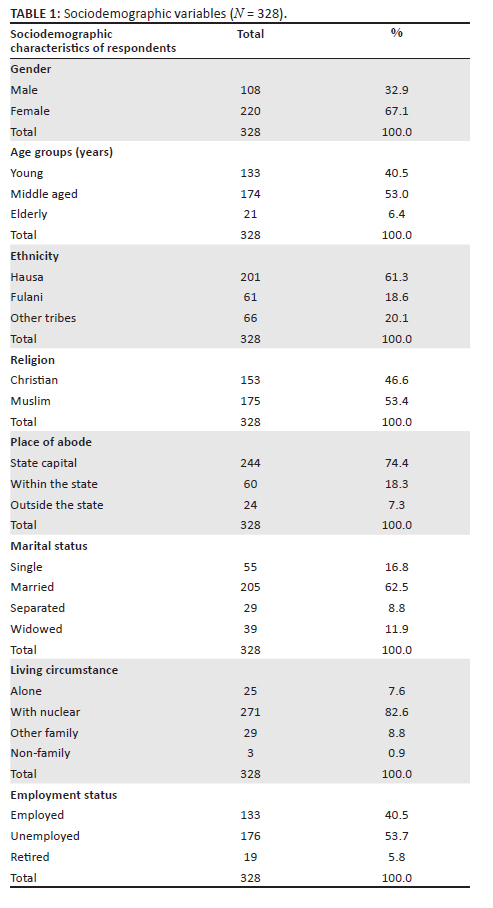
The mean age (± s.d.) of participants was 41.89 years (± 11.24) and it ranged between 18 and 71 years (Table 1).
Psychiatric comorbidity and its association with sociodemographic variables
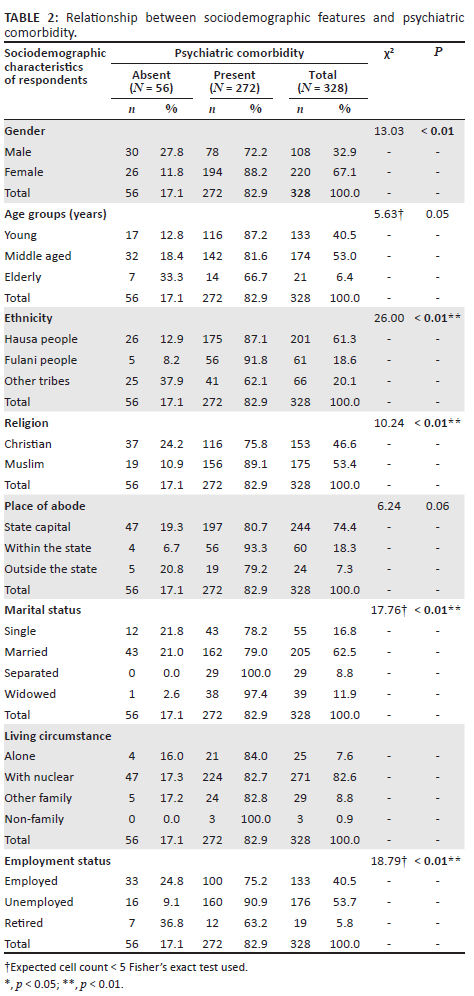
Psychiatric comorbidity was found in 272 (82.9%) participants as assessed by the MINI (Table 2) with significant associations between psychiatric comorbidity and gender, ethnicity, religion, marital status and employment status.
Prevalence of individual psychopathology or psychiatric diagnosis
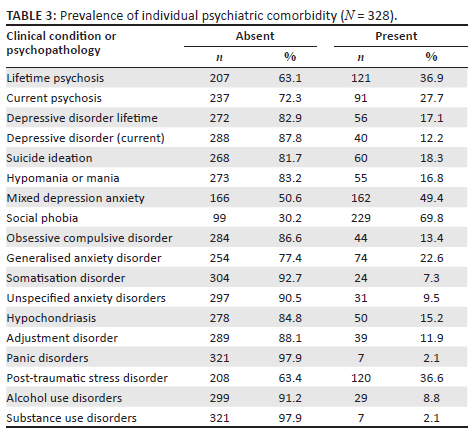
Table 3 shows the most common disorder was social phobia 229 (69.8%). Mixed depression anxiety disorder 162 (49.4%) followed by Post traumatic stress disorder 120 (36.6%). Sixty respondents had suicide ideation.
Alcohol and drug use
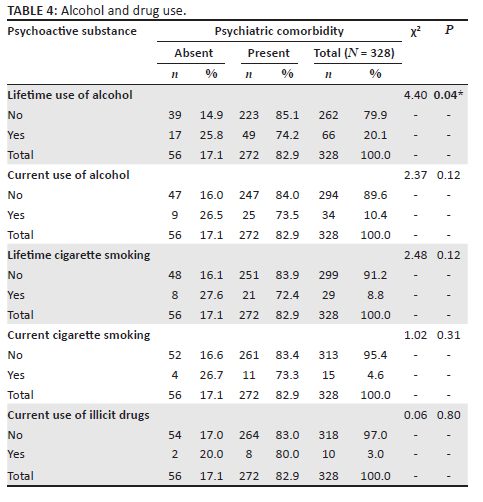
Lifetime alcohol use was significantly related to developing psychiatric comorbidity. Current cigarette smoking or current use of psychoactive substances was unrelated to psychiatric comorbidity (Table 4).
Clinical parameters
All respondents had commenced antiretroviral (ARV) medication, 14 (4.1%) of respondents had commenced antiretroviral medication in the last year and 14 (4.1%) were not currently using cotrimoxazole. The most common medication was combination of tenofovir, lamivudine and dolutegravir (TLD) at 89%. Nine-tenths of them were on first-line medication.
Body mass index (BMI) ranged from 10.6 to 46.9 with a mean of 23.7 (±5.37). Nineteen (5.6%) of them were hypertensive, 8 (2.35%) had a current febrile illness and 1 person had confirmed tuberculosis.
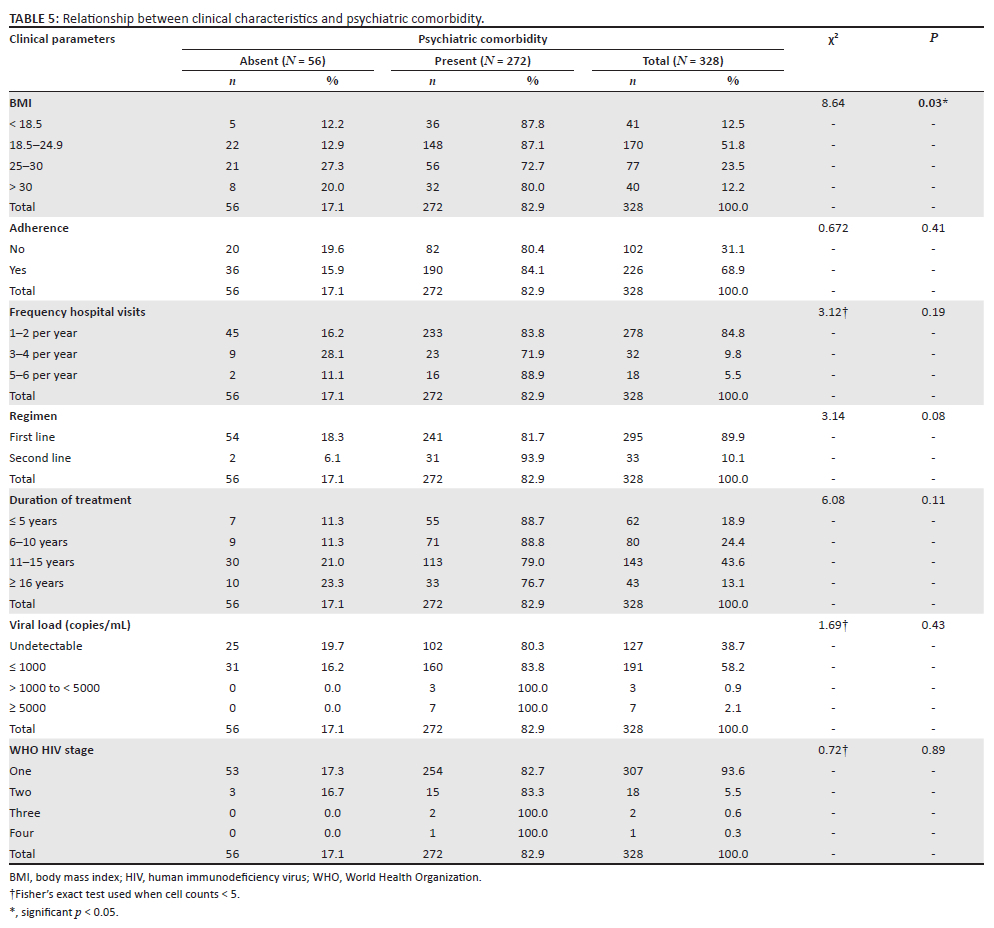
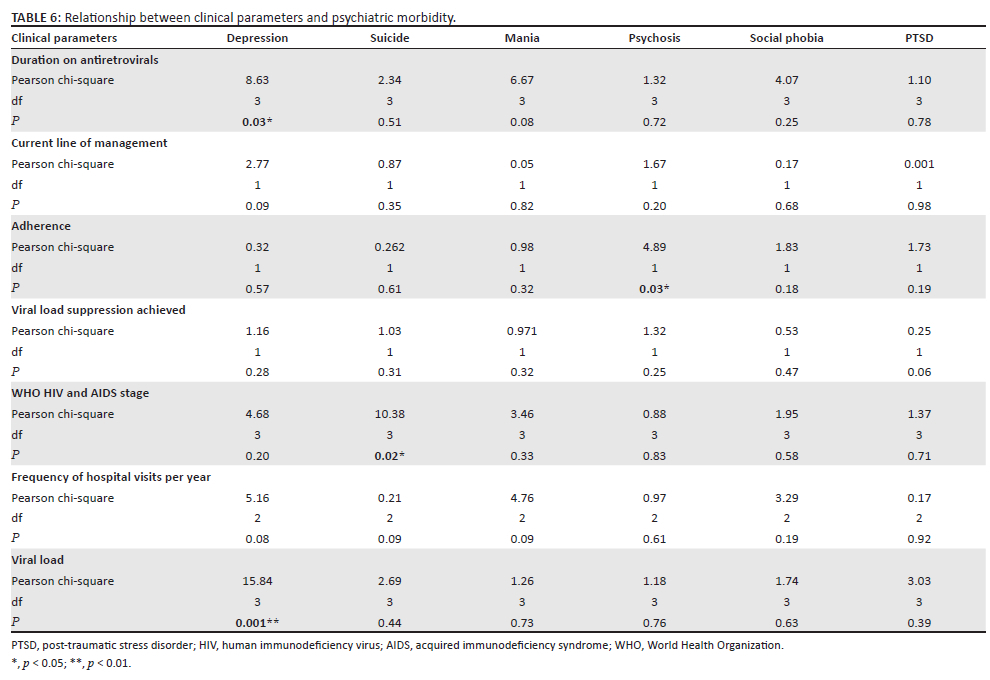
Only BMI was significantly related to psychiatric comorbidity (Table 5), and when multivariate analysis was performed, the likelihood ratio test value was 0.048 with goodness-of-fit giving a Pearson of 0.49, showing that BMI was related to psychiatric morbidity. In Table 6, depression was related duration on ARV medication and the viral load.
Discussion
Human immunodeficiency virus is associated with significant unrecognised psychiatric comorbidity. This may be because the distress associated with a major mental disorder is subsumed under the distress associated with the HIV infection itself. In other cases, physicians do not assess for the psychological disorders, thus missing opportunities to help the patient. The prevalence of psychiatric comorbidity is higher in this study (82.9%) and differs from the prevalence in other African studies 71.4% and 45% respectively in this study (82.9%), differing from other African studies with 71.4% and 45%, respectively,1,5621222324
Psychiatric comorbidity was higher in females. Studies have corroborated the higher incidence of psychiatric comorbidity in women with HIV,1,25262627
The family was still the bastion of care with more than 90% of respondents living within the family circle. However, four-fifths of those who lived alone were females. In such a strongly patriarchal society, marriage is usually the major reason why women move away from parent's homes. A high proportion of females living alone could thus be due to the presence of discrimination and stigma, the experience of which could be contributory to the presence of psychiatric comorbidity.
Psychiatric comorbidity was unrelated to drugs of abuse both licit and illicit, even though the prevalence of use of these substances was high, consistent with Nigerian studies in PLWHA.6
About a quarter of respondents had experienced psychotic symptoms in the last month. Nigerian studies have shown that almost two-thirds of non-clinical members of the general population exhibit psychotic-like events with up to 13% of them having clinically significant psychotic-like events.28
The prevalence of depressive disorder among PLWHA in studies is quite variable. In the United States, it can be up to 30% - 40%,29125123
While having thoughts of suicide is not a disorder, suicide ideation often occurs in depressive disorders and is linked to suicide acts.2530
Human immunodeficiency virus and acquired immunodeficiency syndrome is highly stigmatised despite the many social media campaigns against it. This may account for why social phobia and the fear of being identified or being the focus of attention was observed in more than two-thirds of respondents, as they may be experiencing internalised stigma.
The prevalence for manic or hypomanic symptoms was higher than other studies.313233
Respondents who were not adherent to HIV medication were more likely to have psychotic features. Patients who are not adherent with HIV medication are also unlikely to be adherent to antipsychotics and are thus likely to be more symptomatic especially when they lack 'insight'.
Adherence was unrelated to social phobia and coming for follow-up. This could be a result of the effectiveness of the campaigns against stigmatising PLWHA and counselling they receive at follow-up. In addition, patients may have seen the improvements in quality of life since they started medication with a sort of positive feedback mechanism, coupled with the fact that PLWHA groups now exist where there is little fear of not being accepted.
Viral load was related to depression. The explanation for this is probably multifactorial with patients with higher viral loads being relatively 'sicker' and having more AIDS defining disorders. The frequency of hospital visits was not related to psychopathology except panic disorder. Generally, patients are given shorter appointments when they require close monitoring. More frequent hospital visits decrease the chance of missing symptoms which may be of clinical importance. However, the patient may perceive frequency to mean the HIV treatment is not working and this may lead to anxiety and panic especially when clinic appointments are imminent while awaiting the result of the latest viral load.
Most patients were on first-line medication, and those on second-line medication were more likely to develop a psychiatric comorbidity. This might lend credence to the antiretroviral toxicity theory.23
Duration on highly active anti retro-viral therapy (HAART) was related to depression and just five (1.5%) of the patients were in stage three or four despite having been on medication for more than 10 years, testament to the effectiveness of antiretrovirals. Human immunodeficiency virus stage was unrelated to psychiatric disorders screened for but was related to having suicide ideation which could be due to the chronicity of the illness.
Strengths of the study
Apart from contributing to the body of literature on psychiatric morbidity, one of the advantages of this study was that it was able to identify patients who had previously unrecognised mental illness, as well as showing that social phobia and its attendant avoidance behaviour is still prevalent. This is in addition to showing the importance of adherence to antiretrovirals in the prevention of psychiatric morbidity. Finally, this study underscores the need for integrating mental healthcare into HIV treatment and prevention services.
Limitations
This was a hospital-based study in a tertiary referral centre with a limited population and as such is likely to overestimate the prevalence of conditions studied and it may be difficult to generalise the results of this study to other settings. This was also a cross-sectional study and attribution is difficult to make. In addition, the model used to determine 'psychiatric comorbidity' may overestimate the prevalence of psychiatric comorbidity, as in clinical practice, the best fit diagnosis would be given. Also, 'false positives' can be quite high when using instruments. The same patient may meet multiple psychiatric diagnostic criteria, but in clinical practice, the best fit diagnosis would be used as the primary diagnosis to be managed. Finally, neurocognitive symptoms which could be the bridge between HIV infection and the development of psychiatric disorders were not explored.
Recommendation
This study showed a high prevalence of undetected psychiatry disorders among HIV patients. It is, therefore, recommend that these patients are frequently assessed to facilitate early detection and treatment of identified psychiatry comorbidities. This will subsequently impact on the HIV treatment outcome.
Conclusions
People living with HIV and AIDS present with substantial psychiatric comorbidity, which is often unrecognised. The most common disorders are social phobia and mixed depression anxiety disorders. Patients who are non-adherent and those on second-line medication were more likely to have psychiatric morbidity. Thus, patients need to be screened for psychiatric comorbidity and managed appropriately when they present for their medication refills in addition to the counselling on medication adherence.
Competing interests
The authors declare that they have no financial or personal relationships that may have inappropriately influenced them in writing this article.
Authors' contributions
The authors confirm contribution to the research article as follows: Study conceptualisation and design by A.R.O. and G.O.O. The literature review and instrument design as well as data collection and collation were by A.R.O. and the checking and draft manuscript by A.R.O. and G.O.O. who also reviewed the results and approved the final version of the manuscript.
Funding information
This research received no specific funding grant from any funding agency in the public, commercial or not-for-profit sectors.
Data availability
The data for this study are not publicly available but can be made available upon reasonable request from the corresponding author A.R.O.
Disclaimer
The views and opinions expressed in this article are those of the authors and do not necessarily reflect the official policy or position of any affiliated agency of the authors.
Acknowledgements
References
-
1. Ng'ang'a PW, Mathai M, Obondo A, Mutavi T, Kumar M. Undetected psychiatric morbidity among HIV/AIDS patients attending Comprehensive Care Clinic (CCC) in Nairobi Kenya: Towards an integrated mental health care. Ann Gen Psychiatry. 2018;17(1):1-7. https://doi.org/10.1186/s12991-018-0179-1
» https://doi.org/10.1186/s12991-018-0179-1 -
2. Jonsson G, Davies N, Freeman C, et al. Management of mental health disorders in HIV-positive patients. S Afr J HIV Med. 2013;14(4):155-165. https://doi.org/10.4102/sajhivmed.v14i4.50
» https://doi.org/10.4102/sajhivmed.v14i4.50 -
3. Nedelcovych MT, Manning AA, Semenova S, Gamaldo C, Haughey NJ, Slusher BS. The psychiatric impact of HIV. ACS Chem Neurosci. 2017;8(7):1432-1434. https://doi.org/10.1021/acschemneuro.7b00169
» https://doi.org/10.1021/acschemneuro.7b00169 -
4. Brandt R. The mental health of people living with HIV/AIDS in Africa: A systematic review. Afr J AIDS Res. 2009;8(2):123-133. https://doi.org/10.2989/AJAR.2009.8.2.1.853
» https://doi.org/10.2989/AJAR.2009.8.2.1.853 -
5. Kwobah E, Epstein S, Mwangi A, Litzelman D, Atwoli L. Prevalence of psychiatric morbidity in a community sample in Western Kenya. BMC Psychiatry. 2017;17(1):30. https://doi.org/10.1186/s12888-017-1202-9
» https://doi.org/10.1186/s12888-017-1202-9 - 6. Uwadiae E, Adayonfo E. Psychiatric morbidity including substance use among HIV/AIDS patients at the University of Benin Teaching Hospital, Benin City, Nigeria. Niger Med Practitioner. 2019;74(5-6):62-68.
-
7. Adefalu MO, Tunde-Ayinmode MF, Issa BA, Adefalu AA, Adepoju SA. Psychiatric morbidity in children with HIV/AIDS at a tertiary health institution in north-central Nigeria. J Trop Pediatr. 2018;64(1):38-44. https://doi.org/10.1093/tropej/fmx025
» https://doi.org/10.1093/tropej/fmx025 -
8. Alford K, Vera J. Cognitive impairment in people living with HIV in the ART era: A review. Br Med Bull. 2018;127(1):55-68. https://doi.org/10.1093/bmb/ldy019
» https://doi.org/10.1093/bmb/ldy019 -
9. Carrico AW, Rubin LH, Paul RH. The interaction of HIV with mental health in the modern antiretroviral therapy era. Psychosom Med. 2022;84(8):859-862. https://doi.org/10.1097/PSY.0000000000001134
» https://doi.org/10.1097/PSY.0000000000001134 -
10. Wändell P, Ljunggren G, Jallow A, Wahlström L, Carlsson AC. Health care consumption, psychiatric diagnoses, and pharmacotherapy 1 and 2 years before and after newly diagnosed HIV: A case-control study nested in the greater Stockholm HIV cohort study. Psychosom Med. 2022;84(8):940-948. https://doi.org/10.1097/PSY.0000000000001121
» https://doi.org/10.1097/PSY.0000000000001121 -
11. Obo CS, Sori LM, Abegaz TM, Molla BT. Risky sexual behavior and associated factors among patients with bipolar disorders in Ethiopia. BMC Psychiatry. 2019;19(1):1-7. https://doi.org/10.1186/s12888-019-2313-2
» https://doi.org/10.1186/s12888-019-2313-2 -
12. Ashaba S, Cooper-Vince CE, Vořechovská D, et al. Community beliefs, HIV stigma, and depression among adolescents living with HIV in rural Uganda. Afr J AIDS Res. 2019;18(3):169-180. https://doi.org/10.2989/16085906.2019.1637912
» https://doi.org/10.2989/16085906.2019.1637912 -
13. Kenedi CA, Goforth HW. A systematic review of the psychiatric side-effects of efavirenz. AIDS Behav. 2011;15(8):1803-1818. https://doi.org/10.1007/s10461-011-9939-5
» https://doi.org/10.1007/s10461-011-9939-5 -
14. Brandt C, Zvolensky MJ, Woods SP, Gonzalez A, Safren SA, O'Cleirigh CM. Anxiety symptoms and disorders among adults living with HIV and AIDS: A critical review and integrative synthesis of the empirical literature. Clin Psychol Rev. 2017;51:164-184. https://doi.org/10.1016/j.cpr.2016.11.005
» https://doi.org/10.1016/j.cpr.2016.11.005 -
15. Ingersoll K. The impact of psychiatric symptoms, drug use, and medication regimen on non-adherence to HIV treatment. AIDS Care. 2004;16(2):199-211. https://doi.org/10.1080/09540120410001641048
» https://doi.org/10.1080/09540120410001641048 -
16. Olagunju AT, Adeyemi JD, Ogbolu RE, Campbell EA. A study on epidemiological profile of anxiety disorders among people living with HIV/AIDS in a sub-Saharan Africa HIV clinic. AIDS Behav. 2012;16(8):2192-2197. https://doi.org/10.1007/s10461-012-0250-x
» https://doi.org/10.1007/s10461-012-0250-x - 17. Fathi M, Abbasi M, Khakrangin M. Exploring the problems and challenges of HIV-infected women: A qualitative study. Iran J Health Psychol. 2021;4(4):59-66.
-
18. Tsai Y-T, Padmalatha S, Ku H-C, et al. Suicidality among people living with HIV from 2010 to 2021: A systematic review and a meta-regression. Psychosom Med. 2022;84(8):924-939. https://doi.org/10.1097/PSY.0000000000001127
» https://doi.org/10.1097/PSY.0000000000001127 -
19. Wolff H, Sebo P, Haller DM, et al. Health problems among detainees in Switzerland: A study using the ICPC-2 classification. BMC Public Health. 2011;11(1):245. https://doi.org/10.1186/1471-2458-11-245
» https://doi.org/10.1186/1471-2458-11-245 -
20. National Bureau of Statistics. Annual abstract of statistics [homepage on the Internet]. [cited 2021 Mar 27]. Available from: https://nigerianstat.gov.ng/elibrary
» https://nigerianstat.gov.ng/elibrary -
21. Tagurum YO, Chirdan OO, Obindo T, et al. Prevalence of violence and symptoms of post-traumatic stress disorder among victims of ethno-religious conflict in Jos, Nigeria. J Psychiatry. 2015;18(1):1-6. https://doi.org/10.4172/Psychiatry.1000178
» https://doi.org/10.4172/Psychiatry.1000178 -
22. Aluh DO, Okoro RN, Zimboh A. The prevalence of depression and post-traumatic stress disorder among internally displaced persons in Maiduguri, Nigeria. J Public Mental Health. 2019;19(2):159-168. https://doi.org/10.1108/JPMH-07-2019-0071
» https://doi.org/10.1108/JPMH-07-2019-0071 -
23. Lanman T, Letendre S, Ma Q, Bang A, Ellis R. CNS neurotoxicity of antiretrovirals. J Neuroimmune Pharmacol. 2021;16(1):130-143. https://doi.org/10.1007/s11481-019-09886-7
» https://doi.org/10.1007/s11481-019-09886-7 -
24. Clifford DB. Viral escape in cerebrospinal fluid--an achilles heel of HIV therapy? J Infect Dis. 2010. 15;202(12):1768-1769. https://doi.org/10.1086/657343
» https://doi.org/10.1086/657343 - 25. Adeoti AO, Dada MU, Fadare JO. Prevalence of depression and anxiety disorders in people living with HIV/AIDS in a tertiary hospital in South Western Nigeria. Med Rep Case Stud. 2018;3(1):1-5.
- 26. Federal Ministry of Health. Nigeria HIV/AIDS Indicator and Impact Survey (NAIIS) 2018: Technical report. Abuja: Federal Ministry of Health; 2019.
-
27. George S, McGrath N, Oni T. The association between a detectable HIV viral load and non-communicable diseases comorbidity in HIV positive adults on antiretroviral therapy in Western Cape, South Africa. BMC Infect Dis. 2019;19(1):348. https://doi.org/10.1186/s12879-019-3956-9
» https://doi.org/10.1186/s12879-019-3956-9 -
28. Adewuya AO, Ola BA, Coker O, et al. The one-month prevalence and correlates of psychotic-like experiences in the general adult population in Nigeria. Curr Psychol. 2022;1-11. https://doi.org/10.1007/s12144-022-03258-w
» https://doi.org/10.1007/s12144-022-03258-w - 29. Fuenmayor A, Cournos F. Addressing depressive disorders among people with HIV. Top Antivir Med. 2022;30(2):454-463.
-
30. Batterham PJ, Van Spijker BA, Mackinnon AJ, Calear AL, Wong Q, Christensen H. Consistency of trajectories of suicidal ideation and depression symptoms: Evidence from a randomized controlled trial. Depress Anxiety. 2019;36(4):321-329. https://doi.org/10.1002/da.22863
» https://doi.org/10.1002/da.22863 -
31. Barkley RA, Anastopoulos AD, Guevremont DC, Fletcher KE. Adolescents with ADHD: Patterns of behavioral adjustment, academic functioning, and treatment utilization. J Am Acad Child Adolesc Psychiatry. 1991;30(5):752-761. https://doi.org/10.1097/00004583-199109000-00009
» https://doi.org/10.1097/00004583-199109000-00009 -
32. Brown MJ, Serovich JM, Kimberly JA, Hu J. Psychological reactance and HIV-related stigma among women living with HIV. AIDS Care. 2016;28(6):745-749. https://doi.org/10.1080/09540121.2016.1147015
» https://doi.org/10.1080/09540121.2016.1147015 -
33. Hinkin C, Castellon S, Atkinson J, Goodkin K. Neuropsychiatric aspects of HIV infection among older adults. J Clin Epidemiol. 2001;54(12):S44-S52. https://doi.org/10.1016/S0895-4356(01)00446-2
» https://doi.org/10.1016/S0895-4356(01)00446-2
Accepted: 15 June 2023
Published: 31 July 2023