Occupational therapy practice for sleep disorders in children: a South African perspective
Abstract
INTRODUCTION: The restorative occupation of sleep has been related to appropriate development and occupational performance in a child's routine and functioning. Intervention for sleep disorders among children with neurodevelopmental disorders and chronic conditions is offered by a small number of occupational therapists, even though the link between body function deficits, the environment and participation in sleep is well understood and described in occupational therapy models and frameworks. This study aimed to describe knowledge and training of occupational therapists as well as current occupational therapy practice for sleep interventions for children METHOD: A cross-sectional electronic questionnaire based on the Occupational Therapy Health Literacy Skills for Pain and/or Sleep Disorder Survey was used to collect data from South African occupational therapists treating children RESULTS: Only a third of the 114 respondents in the study provided intervention for sleep disorders for children. While most respondents were aware of non-standardised assessments and strategies that could be used for sleep interventions, these addressed person or body functioning rather than environmental modification and participation impacting sleep as an occupation. Lack of training was reported to be the greatest barrier to implementing sleep interventions with children CONCLUSION: The lack of knowledge about standardised assessments and occupation-based treatment for sleep disorders in children with neurodevelopmental disorders and chronic conditions amongst South African occupational therapists impacts the implementation of sleep interventions defined scope of practice of occupational therapists. This is consistent with international trends in this field of practice IMPLICATIONS FOR PRACTICE •Theory and knowledge concerning the occupational performance domain of sleep and sleep interventions should be included in undergraduate and postgraduate training. •Awareness of and competence in the use of standardised assessment tools and treatment programmes to use in occupational therapy sleep intervention need to be increased. •Research specific to sleep in the various South African cultures and practices needs to provide reliable evidence to inform occupational therapy sleep intervention with children.
assessment and treatment of sleep; Person Environment Occupation Performance (PEOP); International Classification of Functioning; Disability and Health (ICF)
INTRODUCTION
According to the occupational therapy practice framework (OTPF) IV, individuals spend a third of their time in the occupation of sleep or rest. Sufficient quality sleep in children is directly related to development and occupational performance, making it a critical aspect of a child's routine and occupational functioning123456
Between 40% and 70% of children with neurodevelopmental or chronic disorders such as autistic spectrum disorder, sensory processing disorder, inattention and hyperactivity, prematurity and prenatal substance exposure and intellectual disability suffer from sleep disorders789
Occupational therapist's assessment of sleep in children may include using sleep questionnaires109,11. There is strong evidence that the involvement of parents or caregivers in supporting sleep interventions decreases the development of sleep disorders10121310
Sleep
Normal sleep is characterised by a cessation of activity with altered consciousness and awareness of external stimuli and its associated physiological changes91414
Sleep hygiene, or the behaviours and habits carried out to promote good sleep, is an essential aspect of sleep preparation. This includes securing the place where sleep occurs, making sure the bedding is comfortably organised and maintaining a regular sleep-wake schedule. Other environmental issues related to sleep hygiene include making sure the location is conducive to sleep in terms of light and noise, avoiding stimulating drinks and food, the use of technology as well as boisterous play before going to bed1114
Occupational therapy in sleep intervention
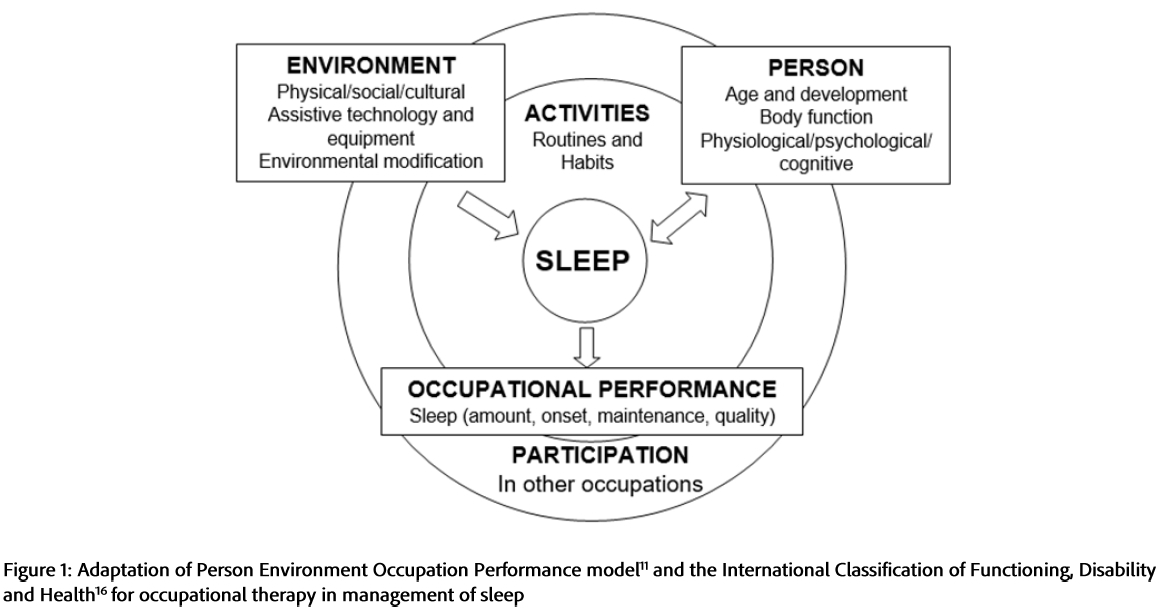
Since performance in occupations is impacted by sleep disruption it is important for occupational therapists to consider children's sleep to inform their practice and to optimise their performance capacity91315Figure 1, below) to inform the relationship of sleep to all areas of occupation and occupational therapy practice. The person in PEOP model relates to intrinsic body function, a concept supported by the International Classification of Functioning, Disability and Health (ICF)1613
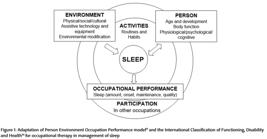
Addressing the occupation and participation in sleep using the PEOP model includes monitoring the amount, onset, maintenance and quality of sleep, supported by the concept of activities optimising participation in sleep according to the ICF. Intervention for participation in the occupation of sleep may consist of restructuring daytime activity and routines as well as including winddown routines and sleep routines as suggested by Faulkner9179
Sleep Disorders in Children
Sleep participation is particularly important for children in terms of cerebral protein production, which regulates sleep processes and assists in synaptic connection formation, otherwise known as neuroplasticity17185,19. Sleep-wake cycles occur during healthy sleep based on a circadian rhythm which regulates sleeping and waking205
Common sleep disorders include parasomnias (night terrors and sleepwalking) and dyssomnias (delayed-sleep and irregular sleep-wake patterns), which result in difficulty initiating or maintaining sleep2122237242572627
Childhood sleep disorders can also have serious implications for the health and well-being of the parents and/or caregivers. Increased anxiety, stress and depression have been reported amongst parent/s and caregivers of children with sleep disorders328
Occupational therapy for sleep disorders in children
Assessment
Sleep disorders and their effects on occupational performance and activity participation through parent- and child-based questionnaires are assessed by occupational therapists13293031321133
Intervention
Evidence to support occupational therapy treatment for sleep disorders in children in conjunction with caregivers includes family education, establishing predictable sleep routines, teaching and behavioural techniques3412353637
Currently, studies conducted on sleep disorders within developing countries focus solely on adults while the prevalence of sleep disorders and the intervention for sleep disorders in children receiving occupational therapy in South Africa remains unknown. There is also limited evidence on sleep intervention training for occupational therapists in South Africa and the effectiveness of occupational therapy may be affected by undetected and untreated sleep disruption23
METHODOLOGY
Study Design
A quantitative, descriptive, cross-sectional survey was conducted to determine which sleep interventions South African occupational therapists use for children with sleep disorders and what related training they have received.
Population and Sample
This study population included occupational therapists providing services to children, in both public and private health sectors within South Africa. A non-probability convenience sampling method was used where respondents chose to self-select to complete the questionnaire38383940
Measurement Instrument
The Occupational Therapy Health Literacy Skills for Pain and/or Sleep Disorder Survey, developed by Brown et al.2323
The Occupational Therapy Health Literacy Skills for Pain and/or Sleep Disorder survey was piloted by an advisory committee of six occupational therapy experts with more than ten years' experience in paediatrics4123
Research Procedure
Once ethical clearance was obtained from the Human Research Ethics Committee at XXX (M181053), the survey was made available on the REDCap platform to approximately 3000 respondents for three months via a membership mailing from OTASA, SAISI and RuReSA. The occupational therapists were required to indicate informed consent on the survey link after reading the approved information sheet before completing the survey. Demographic data as well as data about training received in sleep interventions were collected and respondents completed the adapted Occupational Therapy Health Literacy Skills for Pain and/or Sleep Disorder questionnaire.
Data analysis
Descriptive statistics were used to analyse the data (frequency counts and percentages)421543
RESULTS
Demographics
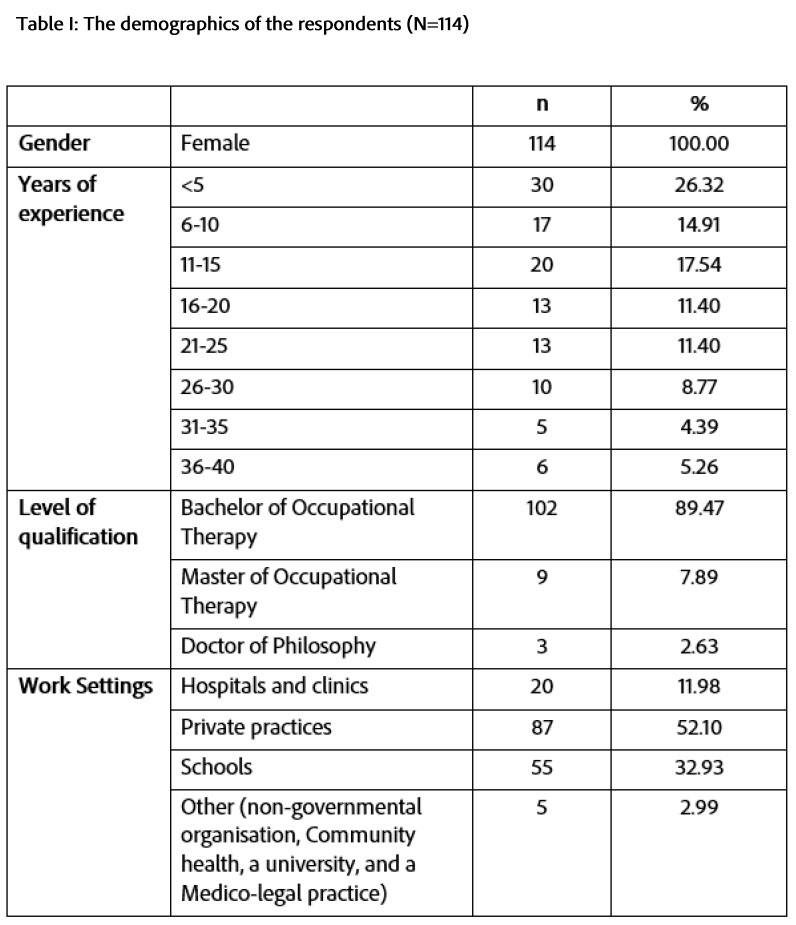
Of the 118 surveys (8% response rate) completed, 95.76 % (n=114) of respondents met the inclusion criteria. All the respondents were female, and their years of experience ranged from five years to 40 years, with approximately a quarter of respondents (26,32%) having less than 5 years' experience. (Table I, below)
Some respondents worked in more than one setting, with the highest percentage (52,10%) working in private practices. Five also worked in other facilities, namely an NGO, a community health centre, a university, a medico-legal practice, and a sub-acute rehabilitation centre. Almost a third (30,70%) of respondents studied at the University of the Witwatersrand and most lived in Gauteng (50,88%) and the Western Cape (22,81%). Slightly more than a third of the respondents in private practice, other and schools reported providing intervention for sleep, compared to 10% of respondents in hospitals and clinics. Although 35.09% (n=40) respondents reported providing sleep interventions, those in private practices and other were more likely to offer this type of intervention, with 40% of respondents treating sleep disorders. Fourteen percent of respondents reported they were the primary therapist, 16.10% of respondents provided consultation for sleep intervention, while 4.99% did not specify their role with sleep disorders.
Person
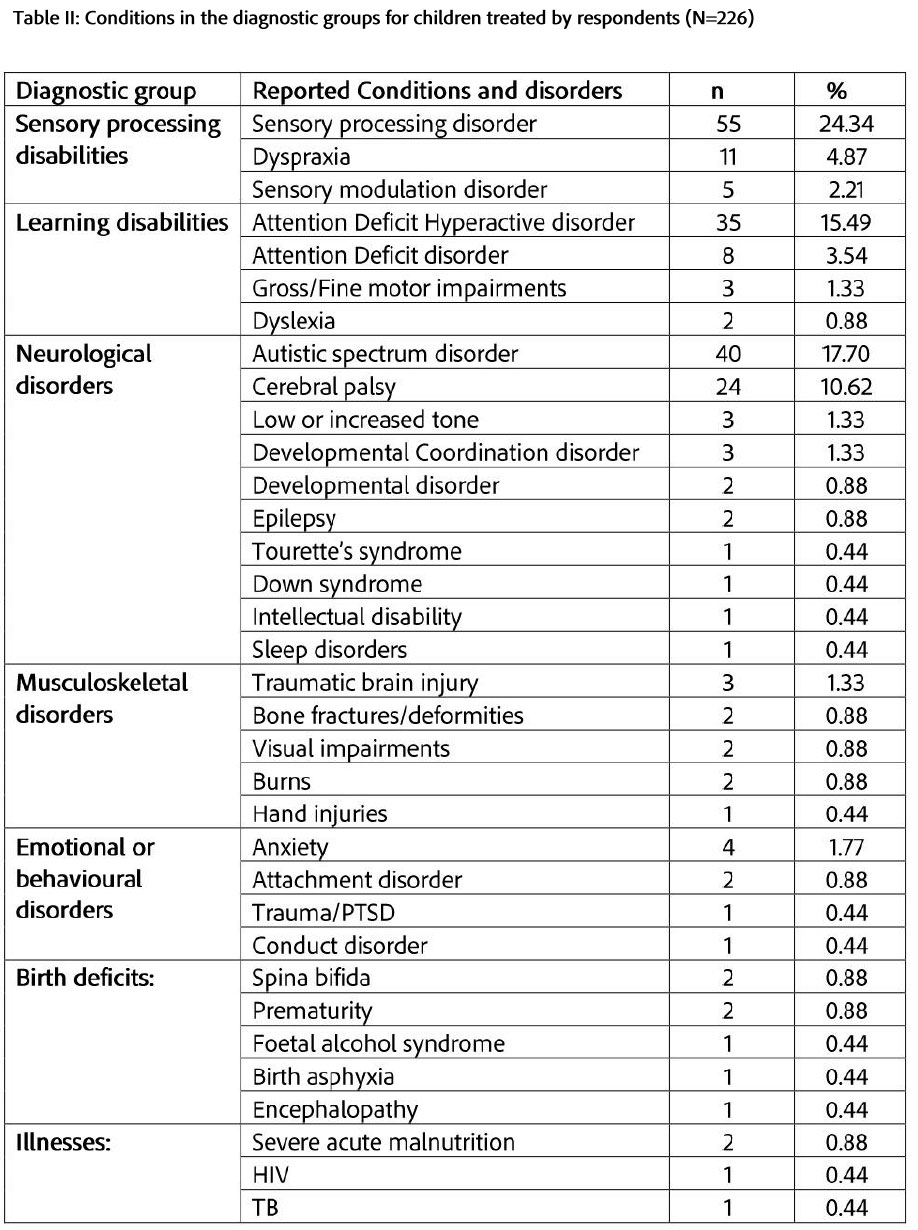
The profile of the children to whom most services were provided by the respondents within the paediatric field of practice, included children from birth to 12 years of age with four to six-year-olds being the age group most commonly treated. The most common diagnostic groups of children on the respondents' caseloads associated with sleep disorders, included learning disabilities (21.23%), sensory integration dysfunction or difficulty (31.41%), and neurological disorders (36.72%). The conditions and disorders in each diagnostic group reported represented more than 114, as respondents treat children with multiple conditions (Table II, below).
The respondents reported a mean assumed prevalence of sleep disorders in the children they treated at 35,6% with a range from 0% to 100%.
Assessment
Most respondents relied highly on caregiver reporting on whether a sleep disorder was present (77.98%) during the assessment or on the referral information from another healthcare practitioner (9.17%). Informal assessment specific to sleep included exploration of aspects such as sensory behaviours, nightmares/terrors, and what calmed or soothed the child were reported by 15.78% of respondents. Very few (3.51%) respondents reported using standardised assessments for evaluation of body functioning to determine the effects on disordered sleep. The assessments that were used included the Child Sensory Profile 2444546
Intervention
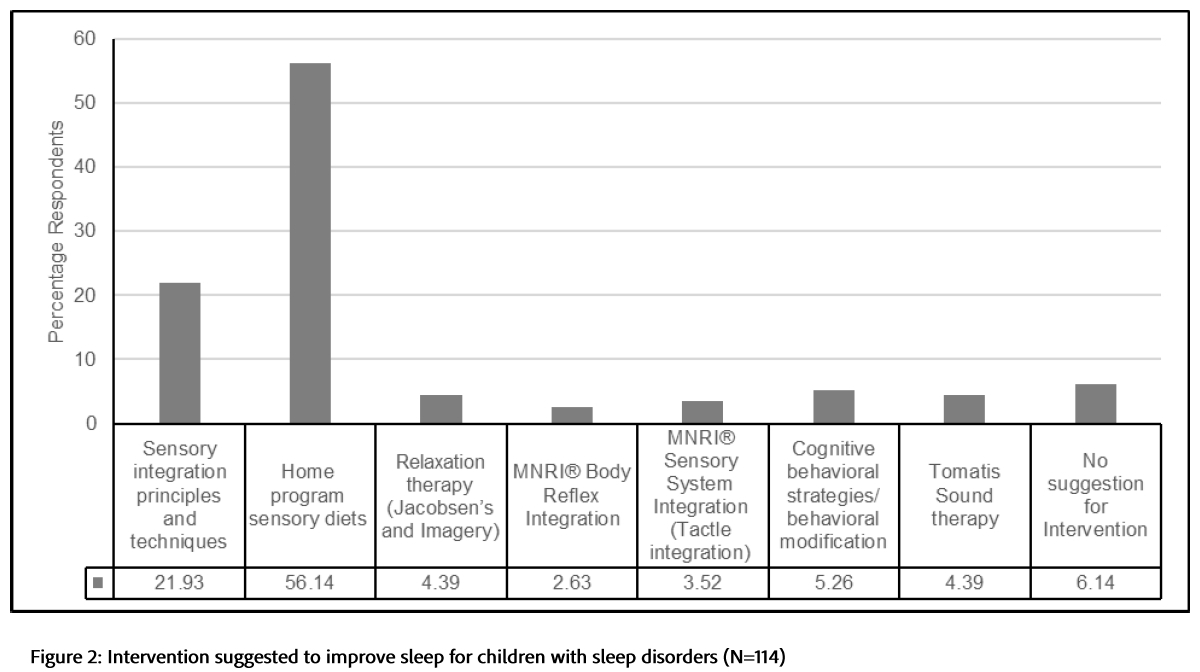
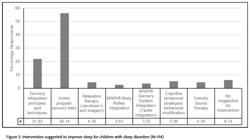
Only 40 respondents (35.08%) reported providing sleep intervention. However, over 90% respondents indicated that they were aware of at least one intervention that could be used to treat sleep disorders. These interventions included addressing body functioning such as sensory diet home programs (56.14%) or sensory integration principles and techniques (21.93%). Less than 7% of respondents considered the use of Masgutova Neurosensorimotor (MNRI®) body reflex integration therapy or sensory system tactile integration therapy47Figure 2, below)
Environment
Assessment and Intervention
Informal assessment of the sleep environment via parent report was used by just under 16% of respondents with sensory integration principles used to propose adaptions to the sleeping environment. Almost a quarter (24.56%) of respondents reported using environment adaptations as part of their intervention for sleep disorders, but the specific environmental adaptations proposed were not specified.
Occupation and performance
Assessment
When assessing sleep as an occupation, 72.80% (n= 83) respondents indicated they would use the child's background information and occupational profile to focus on bedtime and sleep routine. Only a quarter of respondents were aware of non-standardised assessment methods and two thirds of respondents (66%) relied solely on background information from various role players in the child's life such as parents, teachers and multidisciplinary team members to identify sleep disorders.
Only four (3.36%) respondents indicated the need for an occupation-based assessment in identifying sleep disorders in children. These respondents reported utilising informal assessments to assess the occupation of sleep including questionnaires such as an in-house activities clock questionnaire, electronic media viewing routines, bedtime habits as well as the presentation and consequence of disturbed sleep. Observation and sleep screening assessments were also used by these respondents. However, most respondents indicated they could identify the red flags associated with a sleep disorder through observation. These red flags were reported to include sleepiness, lethargy, fatigue, dark rings under the child's eyes, mood disturbances, low energy and motivation, poor concentration during therapy with lack of focus and "switching off" in the therapy session. Yawning and the child falling asleep during intervention were also considered a red flag.
Intervention
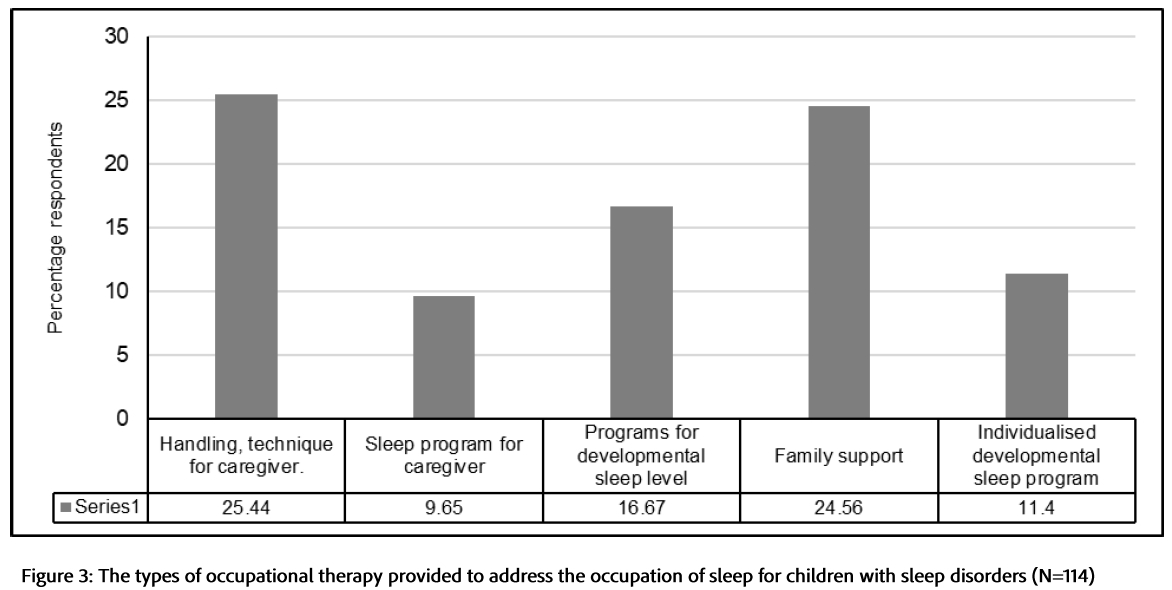
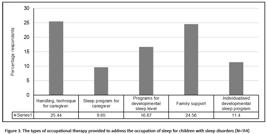
Only four respondents reported using standardised interventions and cognitive behavioural therapy (CBTi) for insomnia48Figure 3 (page 7) represents the other occupational therapy interventions provided to address the occupation of sleep in children with sleep disorders. Developmental interventions specific to the child's sleep level and individualised developmental sleep programs were provided by 16.67% and 11.40% of respondents respectively. Sleep handling techniques for caregivers to implement and family support were the interventions most commonly suggested by approximately a quarter of the respondents to address performance in sleep, while 9.65% provided sleep programs for caregivers and just over 5% indicated other interventions.
Of the 40 respondents who provided sleep intervention, most indicated spending more time educating the caregiver about the sleep techniques than the child, spending only 0-10% of their time providing sleep education to the child. When asked about effectiveness it was the respondents' perception that 91-100% of their sleep education to the child achieved positive results, whilst only 51-70% parents followed sleep education interventions. The effectiveness of sleep intervention would be determined by most respondents obtaining feedback from parents, with four indicating they would use a sleep logbook or observation of the child during intervention.
Perceived barriers and supports to implementing sleep interventions in occupational therapy
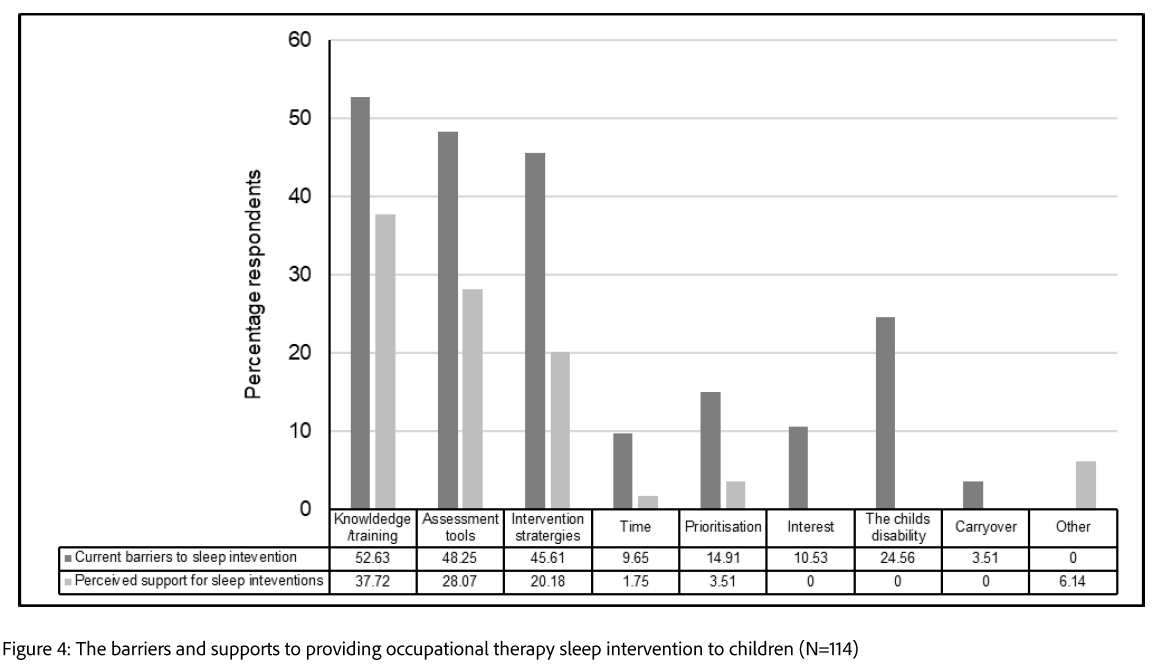
All 114 respondents identified barriers that they perceived to limit their ability to implement sleep interventions to children with sleep deficits/disorders. Sixty respondents (52.63%) highlighted insufficient knowledge and training or a lack of access to education as a barrier, so affecting their ability to offer effective intervention to children with sleep disorders. Nearly half (48.25%) of respondents reported a lack of appropriate sleep assessment tools and training in intervention strategies (45.61%) to be used with children with sleep disorders. Nearly a quarter (24.56%) of respondents included the child's physical or cognitive (dis)ability as a barrier to sleep interventions. Four respondents (3.51%) further reported poor carryover of home programs for sleep interventions as a barrier (Figure 4, below)
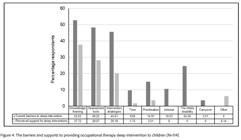
Support that would assist the delivery of more effective occupational therapy sleep interventions for children with sleep disorders was highlighted by respondents. The support required included more education on sleep and sleep intervention (37.72%) and the use of standardised assessment tools (28.07%) and intervention techniques (20.18%). Respondents reported on other strategies that would assist sleep-related outcomes within occupational therapy as monitoring medication and a need for better awareness of the impact of sleep disorders on a child's function and learning.
The training received by occupational therapists regarding sleep interventions with children
Of the 114 respondents, only 8.77% (n=10) stated that they recalled receiving undergraduate training on sleep interventions. This included self-study material on sleep and rest; information on sleep as an occupational performance area; the importance of sleep and possible interventions; sleep hygiene; routines; neurology; factors influencing sleep, sleep as part of a balanced lifestyle; as well as lectures on the benefits of good quality sleep. Only 1,75% (n=2) of respondents had received postgraduate training on sleep interventions. This training included a lecture on sleep intervention principles within the book 'Sleep Sense'49
DISCUSSION
Only a third of the respondents in the current study provided sleep intervention even though they perceived approximately a third of the children in their caseloads had sleep dysfunction. This correlates with studies10,23,50 indicate that occupational therapists underestimate the importance of sleep and the effect of disrupted sleep on the occupational performance of the children they treat. This correlates with previous research that indicate that occupational therapists underestimate the role of sleep and only a third of the respondents in the current study provided sleep intervention. This was the case even though they perceived approximately a third of the children in their caseloads had sleep dysfunction. Literature indicates a prevalence of sleep disorders in children with chronic health conditions and neurodevelopmental disorders higher51237,16,52,53. This may be related to the difficulty in clearly identifying these types of problems. Children and caregivers may have little insight into the effect of sleep disorders on daytime functioning and the family may have adapted to a child's disordered sleep54
Results mostly reflect information from occupational therapists in the private sector or in schools551055
The intervention of sleep disorders in children in the current study was considered in relation to the person, environment as well as the occupation of sleep as indicated by both the PEOP131613
Person
Sleep disorders were described as associated with specific diagnostic categories of health conditions in the respondents' caseloads. These included learning disabilities, sensory integration dysfunctions or difficulties, neurological disorders and developmental delay which are consistent with those described in a similar Canadian study235610571624,53,58. Most respondents could identify possible assessments and intervention for addressing body functions that impact sleep. The three standardised assessments (Child Sensory Profile 2444546
The current study revealed that only four occupational therapy respondents who provide intervention for sleep specifically address body functioning related to sleep amongst the children they treat. Thus, disordered sleep is not sufficiently considered in occupational therapy paediatric practice, indicating a very low priority of sleep intervention when setting therapy goals in relation to other personal or body function outcomes. The effect of sleep on body functions such as pain, involuntary movements, muscle tone and sensory functioning is viewed as a secondary problem in the child's assessment59576032
Environment
Literature indicates that adaptation or environmental modification is effective in improving sleep latency, duration and quality11
Occupation and Performance
The results of this survey indicate a lack of awareness of standardised assessment tools to explore the occupation of sleep in children, which is consistent with the results of an international survey2361,62. Although only four respondents reported using informal observation to determine sleep disorder in the current study, all the respondents, as in a Canadian study23
While 50% of respondents indicated awareness regarding the use of occupation-based intervention to address sleep disorders in children, the interventions they were aware of mostly included caregiver and family involvement. Developmental sleep programs or interventions specific to the child's sleep deficits were suggested by between 11% and 16% of respondents in preference to body functioning interventions. For addressing sleep as an occupation, the role of the occupational therapists as an educator about sleep programs was emphasised, with respondents spending more time on sleep education with the caregivers. Four respondents in the current study reported poor carryover of sleep interventions with caregivers compared to programs used directly with the children. In an international study, occupational therapists reported similar results when educating caregivers, which they reported to be just over 50% effective23
However, even though interventions with children were reported to be more effective, respondents reported spending only 10% of therapy time on sleep intervention and programs to improve sleep with the children themselves. These individualised programs included regulation of activities, routines and habits associated with preparations for sleep9172323
Barriers and perceived support for sleep intervention in children
The greatest barrier to addressing sleep in occupational therapy was a lack of education and knowledge identified by over 50% of respondents in the current study and 80% of respondents in an international study23
Limitations
The limitations included limited access to the population of occupational therapists in South Africa with only those registered on OTASA, RuReSA and SAISI being sampled. Due to the closed nature of most of the questions, respondents did not have the opportunity to provide other information about the topic through comments.
CONCLUSION
The results of this study indicate limited provision of assessment and intervention of sleep for children by South African occupational therapists providing services to children. Although most respondents could suggest intervention suited to addressing sleep disorders, these focused on body function rather than performance in the occupation of sleep. Knowledge of standardised assessments and intervention programs to address sleep participation was limited and the lack of training and knowledge of occupational therapists was seen as the greatest barrier in effectively fulfilling their role in sleep intervention in children. This study indicates that many occupational therapists in South Africa are not aware of the evidence-base for intervention in disordered sleep in children with neuro-developmental and other chronic health conditions.
Author Contributions
Denise Franzsen conceptualised the article and assisted with data analysis and interpretation. Alicia Myburgh and Olindah Silaule conceptualised the research, Alicia Myburgh collected the data and Olindah Silaule supervised the project. All listed authors contributed to and approved the final manuscript.
Conflicts of Interest
Authors had no conflict of interests to declare.
REFERENCES
LITERATURE REVIEW
-
1. Hirshkowitz M, Whiton K, Albert SM, Alessi C, Bruni O, DonCarlos L, Hazen N, Herman J, Katz ES, Kheirandish-Gozal L, et al. National sleep foundation's sleep time duration recommendations: Methodology and results summary. Sleep Health. 2015;1(1):40-43. doi:https://doi.org/10.1016/j.sleh.2014.12.010
» https://doi.org/10.1016/j.sleh.2014.12.010 -
2. Tkachenko O, Dinges DF. Interindividual variability in neurobehavioral response to sleep loss: A comprehensive review. Neuroscience and Biobehavioral Reviews. 2018;89(March):29-48. doi:https://doi.org/10.1016/j.neubiorev.2018.03.017
» https://doi.org/10.1016/j.neubiorev.2018.03.017 -
3. Leland NE, Fogelberg D, Sleight A, Mallinson T, Vigen C, Blanchard J, Carlson M, Clark F. Napping and nighttime sleep: Findings from an occupation-based intervention. American Journal of Occupational Therapy. 2016;70(4):1-7. doi:https://doi.org/10.5014/ajot.2016.017657
» https://doi.org/10.5014/ajot.2016.017657 -
4. El-Sheikh M, Buckhalt JA. Moving sleep and child development research forward: Priorities and recommendations from the SRCD-sponsored forum on sleep and child development. Monographs of the Society for Research in Child Development. 2015;80(1):15-32. doi:https://doi.org/10.1111/mono.12142
» https://doi.org/10.1111/mono.12142 -
5. Jiang F. Sleep and Early Brain Development. Annals of Nutrition and Metabolism. 2020;75(Suppl1):44-53. doi: https://doi.org/10.1159/000508055
» https://doi.org/10.1159/000508055 - 6. Brown C, Swedlove F, Berry R, Turlapati L. Occupational therapists' health literacy interventions for children with disordered sleep and/or pain. Zealand Journal of Occupational Therapy. 2012;59(2):9-17.
-
7. Belli A, Breda M, Di Maggio C, Esposito D, Marcucci L, Bruni O. Children with neurodevelopmental disorders: How do they sleep? Current Opinion in Psychiatry. 2022;35(5):345-351. doi: https://doi.org/10.1097/YCO.0000000000000790
» https://doi.org/10.1097/YCO.0000000000000790 -
8. Shelgikar AV, Durmer JS, Joynt KE, Olson EJ, Riney H, Valentine P. Multidisciplinary sleep centers: Strategies to improve care of sleep disorders patients. Journal of Clinical Sleep Medicine. 2014;10(6):693-697. doi: https://doi.org/10.5664/jcsm.3808
» https://doi.org/10.5664/jcsm.3808 -
9. Faulkner S. Sleep and occupational performance are inseparable: Why occupational therapy practice and research should consider sleep and circadian rhythm. British Journal of Occupational Therapy. 2022;85(5):305-307. doi: https://doi.org/10.1177/03080226221089846
» https://doi.org/10.1177/03080226221089846 - 10. Ip M. Sleep practice in occupational therapy: an educational program to improve sleep quality for Autistic children. 2023.
-
11. Ho ECM, Siu AMH. Occupational therapy practice in sleep management: A review of conceptual models and research evidence. Occupational Therapy International. 2018;2018:16-18. doi: https://doi.org/10.1155/2018/8637498
» https://doi.org/10.1155/2018/8637498 -
12. Gronski M. Occupational Therapy Interventions to Support Sleep in Children from Birth to Age 5 Years. American Journal of Occupational Therapy. 2022;76(5):1-6. doi: https://doi.org/10.5014/ajot.2022.049552
» https://doi.org/10.5014/ajot.2022.049552 -
13. Ho ECM, Siu AMH. Evaluation of an occupation-based sleep programme for people with Insomnia. Hong Kong Journal of Occupational Therapy. 2022;35(2):168-179. doi: https://doi.org/10.1177/15691861221136261
» https://doi.org/10.1177/15691861221136261 -
14. American Occupational Therapy Association. Occupational therapy practice framework: Domain and process (4th ed.). American Journal of Occupational Therapy. 2020;74(Suppl. 2):7412410010. doi: https://doi.org/10.5014/ajot.2020.74S2001
» https://doi.org/10.5014/ajot.2020.74S2001 - 15. Christiansen CH, Baum CM, Bass JD. The Person-Environment-Occupation-Performance (PEOP) model. In: Christiansen CH, Baum CM, Bass JD, editors. Occupational Therapy: Performance, Participation, and Well-Being. 4th ed. Thorofare, NJ: SLACK Incorporated.; 2014. p. 49-56.
-
16. Chia Z, Tan YH, Yeo TH, Teoh OH, Ng ZM. Epidemiology and risk factors for sleep disturbances in children and youth with cerebral palsy: An ICF-based approach. Sleep Medicine. 2022;96(2022):93-98. doi: https://doi.org/10.1016/j.sleep.2022.04.021
» https://doi.org/10.1016/j.sleep.2022.04.021 -
17. Leive L, Morrison R. Program to Support Child Sleep from the Occupational Therapy Perspective during the COVID-19 pandemic. Archivos Argentinos de Pediatria. 2024;122(1). doi: https://doi.org/10.5546/aap.2023-03029.eng
» https://doi.org/10.5546/aap.2023-03029.eng -
18. Guyer C, Huber R, Fontijn J, Bucher HU, Nicolai H, Werner H, Molinari L, Latal B, Jenni OG. Very preterm infants show earlier emergence of 24-hour sleep-wake rhythms compared to term infants. Early Human Development. 2015;91(1):37-42. doi: https://doi.org/10.1016/j.earlhumdev.2014.11.002
» https://doi.org/10.1016/j.earlhumdev.2014.11.002 -
19. Kapsi S, Katsantoni S, Drigas A. The Role of Sleep and Impact on Brain and Learning. International Journal of Recent Contributions from Engineering, Science & IT (iJES). 2020;8(3):59. doi: https://doi.org/10.3991/ijes.v8i3.17099
» https://doi.org/10.3991/ijes.v8i3.17099 -
20. Najjar R, Zeitzer J. Anatomy and Physiology of the Circadian System. In: Miglis M, editor. leep and Neurologic Disease. Cambridge: Academic Press Inc; 2017. p. 29-53. doi: https://doi.org/10.1016/B978-0-12-804074-4.00002-9
» https://doi.org/10.1016/B978-0-12-804074-4.00002-9 -
21. Kotagal S. Treatment of dyssomnias and parasomnias in childhood. Current Treatment Options in Neurology. 2012;14(6):630-649. doi: https://doi.org/10.1007/s11940-012-0199-0
» https://doi.org/10.1007/s11940-012-0199-0 -
22. Stores G. Aspects of sleep disorders in children and adolescents. Dialogues in Clinical Neuroscience. 2009;11(1):81-90. doi: https://doi.org/10.31887/DCNS.2009.11.1/gstores
» https://doi.org/10.31887/DCNS.2009.11.1/gstores - 23. Brown C, Swedlove F, Berry R, Turlapati L. Occupational therapists' health literacy interventions for children with disordered sleep and/or pain Occupational Therapy. New Zealand Journal of Occupational Therapy. 2012;59(2):9-17.
-
24. Imeraj L, Sonuga-Barke E, Antrop I, Roeyers H, Wiersema R, Bal S, Deboutte D. Altered circadian profiles in attention-deficit/hyperactivity disorder: An integrative review and theoretical framework for future studies. Neuroscience and Biobehavioral Reviews. 2012;36(8):1897-1919. doi: https://doi.org/10.1016/j.neubiorev.2012.04.007
» https://doi.org/10.1016/j.neubiorev.2012.04.007 -
25. Vasak M, Williamson J, Ot JG, Zwicker JG. Sensory processing and sleep in typically developing infants and toddlers. American Journal of Occupational Therapy. 2015;69(4):6904220040p1-6904220040p8. doi: https://doi.org/10.5014/ajot.2015.015891
» https://doi.org/10.5014/ajot.2015.015891 - 26. Haagensli J. Sleep problems associated with trauma and posttraumatic stress in children and adolescents. University of Oslo; 2021.
-
27. Humphreys G, King T, Jex J, Rogers M, Blake S, Thompson-Coon J, Morris C. Sleep positioning systems for children and adults with a neurodisability: A systematic review. British Journal of Occupational Therapy. 2019;82(1):5-14. doi: https://doi.org/10.1177/0308022618778254
» https://doi.org/10.1177/0308022618778254 -
28. Martin CA, Papadopoulos N, Chellew T, Rinehart NJ, Sciberras E. Associations between parenting stress, parent mental health and child sleep problems for children with ADHD and ASD: Systematic review. Research in Developmental Disabilities. 2019;93(July):103463. doi: https://doi.org/10.1016/j.ridd.2019.103463
» https://doi.org/10.1016/j.ridd.2019.103463 -
29. Spruyt K, Gozal D. Pediatric sleep questionnaires as diagnostic or epidemiological tools: A review of currently available instruments. Sleep Medicine Reviews. 2011;15(1):19-32. http://dx.doi.org/10.1016/j.smrv.2010.07.005. doi: https://doi.org/10.1016/j.smrv.2010.07.005
» http://dx.doi.org/10.1016/j.smrv.2010.07.005 -
30. Owens JA, Dalzell V. Use of the "BEARS" sleep screening tool in a pediatric residents' continuity clinic: A pilot study. Sleep Medicine. 2005;6(1):63-69. doi: https://doi.org/10.1016/j.sleep.2004.07.015
» https://doi.org/10.1016/j.sleep.2004.07.015 -
31. Mohammadi M, Amintehran E, Ghaleh-bandi MF, Ashrafi MR, Shoaee S, Ghalehbaghi B. Reliability and Validity of Persian Version of "BEARS" Pediatric Sleep Questionnaire. Indian Journal of Sleep Medicine. 2008;3(1):14-19. doi: https://doi.org/10.5005/ijsm-3-1-14
» https://doi.org/10.5005/ijsm-3-1-14 -
32. Zakorchemny T, Lashno M. Occupational Therapy and Sleep. In: Accardo J, editor. Sleep in Children with Neurodevelopmental Disabilities. New York; 2019. p. 351-359. doi: https://doi.org/10.1007/978-3-319-98414-8
» https://doi.org/10.1007/978-3-319-98414-8 -
33. Owens JA, Spirito A, McGuinn M. The Children's Sleep Habits Questionnaire (CSHQ): Psychometric properties of a survey instrument for school-aged children. Sleep. 2000;23(8):1043-1051. doi: https://doi.org/10.1093/sleep/23.8.1d
» https://doi.org/10.1093/sleep/23.8.1d -
34. Cahill SM, Beisbier S. Occupational therapy practice guidelines for children and youth ages 5-21 years. American Journal of Occupational Therapy. 2020;74(4):7404397010p1-7404397010p48. doi: https://doi.org/10.5014/ajot.2020.744001
» https://doi.org/10.5014/ajot.2020.744001 -
35. Yates CC, Mitchell AJ, Booth MY, Williams DK, Lowe LM, Hall RW. The effects of massage therapy to induce sleep in infants born preterm. Pediatric Physical Therapy. 2014;26(4):405-410. doi: https://doi.org/10.1097/PEP.0000000000000081
» https://doi.org/10.1097/PEP.0000000000000081 -
36. Roberts CA, Smith KC, Sherman AK. Comparison of Online and Face-to-Face Parent Education for Children with Autism and Sleep Problems. Journal of Autism and Developmental Disorders. 2019;49(4):1410-1422. doi: https://doi.org/10.1007/s10803-018-3832-2
» https://doi.org/10.1007/s10803-018-3832-2 -
37. Gradisar M, Jackson K, Spurrier NJ, Gibson J, Whitham J, Williams AS, Dolby R, Kennaway DJ. Behavioral interventions for infant sleep problems: A randomized controlled trial. Pediatrics. 2016;137(6):0-9. doi: https://doi.org/10.1542/peds.2015-1486
» https://doi.org/10.1542/peds.2015-1486 -
38. World Federation of Occupational Therapists. WFOT Human Resources Project 2024. WFOT. 2024. https://hr-project.wfot.org/#indicators
» https://hr-project.wfot.org/#indicators -
39. Kruger A, Strauss M, Marieta M, Nel M. Assessment of in-hand manipulation by occupational therapists in paediatric practices in South Africa. South African Journal of Occupational Therapy. 2021;51(2):11-21. doi: https://doi.org/10.17159/2310-3833/2021/vol52n2a3
» https://doi.org/10.17159/2310-3833/2021/vol52n2a3 -
40. Bartlett JE, Kotrlik JW, Higgins CC. Organizational research: Determining appropriate sample size in survey research. Information Technology, Learning, and Performance Journal. 2001;19(1):43-50. doi: https://doi.org/10.1109/LPT.2009.2020494
» https://doi.org/10.1109/LPT.2009.2020494 -
41. Polit DF, Beck CT. The content validity index: Are you sure you know what's being reported? critique and recommendations. Research in Nursing & Health. 2006;29(5):489-497. doi: https://doi.org/10.1002/nur.20147
» https://doi.org/10.1002/nur.20147 - 42. Polgar T. Introduction to research in the health sciences. Fifth edit. USA: Elsevier Ltd; 2008.
-
43. World Health Organization. International classification of functioning, disability and health: ICF. 2001. http://apps.who.int/iris/bitstream/handle/10665/42407/9241545429.pdf
» http://apps.who.int/iris/bitstream/handle/10665/42407/9241545429.pdf - 44. Dunn W. Sensory Profile 2 Manual. The Psychological Corporation; 2014.
- 45. Ayres A. Sensory Integration and Praxis Tests Manual. Torrance: Western Psychological Services; 2012.
- 46. Tomatis AA. Vers l'écoute humaine: Tome 2. Paris: ESF; 1989.
-
47. Svetlana Masgutova Educational Institute. MNRI® Programs. 3024. https://masgutovamethod.com/the-method/mnri-programs
» https://masgutovamethod.com/the-method/mnri-programs -
48. Perlis ML, Smith MT, Pigeon W. Etiology and pathophysiology of insomnia. Principles and Practice of Sleep Medicine. 2005;4(7):714-725. http://dx.doi.org/10.1331/JAPhA.2012.12051
» http://dx.doi.org/10.1331/JAPhA.2012.12051 - 49. Richardson A. Sleep Sense. Metz Press; 2007.
-
50. Benson J. School-Based Occupational Therapy Practice: Perceptions and Realities of Current Practice and the Role of Occupation. Journal of Occupational Therapy, Schools, and Early Intervention. 2013;6(2):165-178. doi: https://doi.org/10.1080/19411243.2013.811348
» https://doi.org/10.1080/19411243.2013.811348 -
51. Malow BA, Adkins KW, Reynolds A, Weiss SK, Loh A, Fawkes D, Katz T, Goldman SE, Madduri N, Hundley R, et al. Parent-based sleep education for children with autism spectrum disorders. Journal of Autism and Developmental Disorders. 2014;44(1):216-228. doi: https://doi.org/10.1007/s10803-013-1866-z
» https://doi.org/10.1007/s10803-013-1866-z -
52. Angriman M, Caravale B, Novelli L, Ferri R, Bruni O. Sleep in children with neurodevelopmental disabilities. Neuropediatrics. 2015;46(3):199-210. doi: https://doi.org/10.1055/s-0035-1550151
» https://doi.org/10.1055/s-0035-1550151 -
53. Meltzer LJ, Plaufcan MR, Thomas JH, Mindell JA. Sleep problems and sleep disorders in pediatric primary care: Treatment recommendations, persistence, and health care utilization. Journal of Clinical Sleep Medicine. 2014;10(4):421-426. doi: https://doi.org/10.5664/jcsm.3620
» https://doi.org/10.5664/jcsm.3620 -
54. Hoffman CD, Sweeney DP, Lopez-Wagner MC, Hodge D, Nam CY, Botts BH. Children With Autism: Sleep Problems and Mothers' Stress. Focus on Autism and Other Developmental Disabilities. 2008;23(3):155-165. doi:https://doi.org/10.1177/1088357608316271
» https://doi.org/10.1177/1088357608316271 -
55. Ned L, Tiwari R, Buchanan H, Van Niekerk L, Sherry K, Chikte U. Changing demographic trends among South African occupational therapists: 2002 to 2018. Human Resources for Health 2020 18:1. 2020 [accessed 2021 Sep 3];18(1):1-12. 64-3. doi: https://doi.org/10.1186/S12960-020-0464-3
» https://doi.org/10.1186/S12960-020-0464-3 -
56. Miano S, Amato N, Foderaro G, Pezzoli V, Ramelli GP, Toffolet L, Manconi M. Sleep phenotypes in attention deficit hyperactivity disorder. Sleep Medicine. 2019;60(1):123-131. doi: https://doi.org/10.1016/j.sleep.2018.08.026
» https://doi.org/10.1016/j.sleep.2018.08.026 -
57. Spira G. A sensory intervention to improve sleep behaviours and sensory processing behaviours of children with sensory processing disorders. Irish Journal of Occupational Therapy. 2021;49(1):11-20. doi: https://doi.org/10.1108/IJOT-09-2020-0014
» https://doi.org/10.1108/IJOT-09-2020-0014 - 58. Charleson J. Effectiveness of weighted blankets as an intervention for sleep problems in children with autism. Canterbury; 2014.
-
59. Tester NJ, Foss JJ. Sleep as an occupational need. American Journal of Occupational Therapy. 2018;72(1):1-4. doi: https://doi.org/10.5014/ajot.2018.020651
» https://doi.org/10.5014/ajot.2018.020651 - 60. Dunn W. Sensory Profile User's Manual. San Antonio: The Psychological Corporation; 1999.
-
61. Taylor DJ, Wilkerson AK, Pruiksma KE, Williams JM, Ruggero CJ, Hale W, Mintz J, Organek KM, Nicholson KL, Litz BT, et al. Reliability of the structured clinical interview for DSM-5 sleep disorders module. Journal of Clinical Sleep Medicine. 2018;14(3):459-464. doi: https://doi.org/10.5664/jcsm.7000
» https://doi.org/10.5664/jcsm.7000 -
62. Gruber R, Somerville G, Santisteban JA. Using Parental Report to Identify Children at Risk for Poor Sleep and Daytime Problems. Behavioral Sleep Medicine. 2020;18(4):460-476. doi: https://doi.org/10.1080/15402002.2019.1613236
» https://doi.org/10.1080/15402002.2019.1613236

Reviewed: 6 October 2025
Revised: 7 October 2025
Accepted: 9 October 2025
EDITOR: Blanche Pretorius https://orcid.org/0000-0002-3543-0743
FUNDING: No funding was received for this research