Factors influencing the utilisation of early childhood intervention services in occupational therapy
Abstract
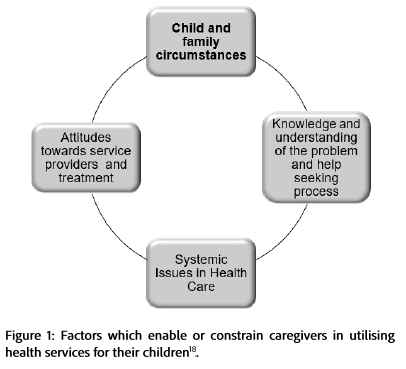
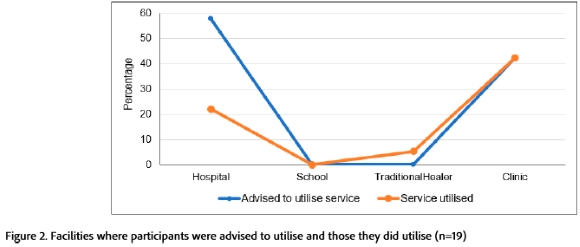
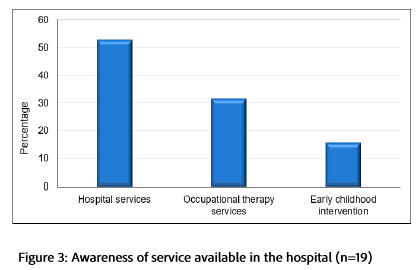
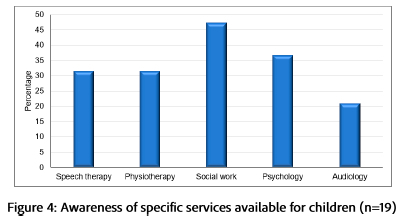
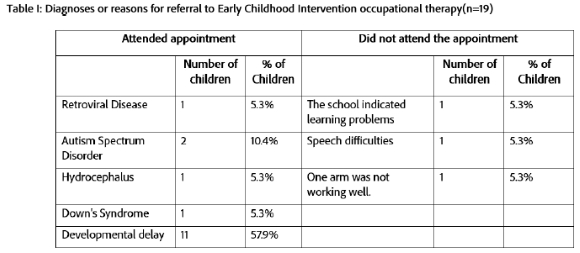
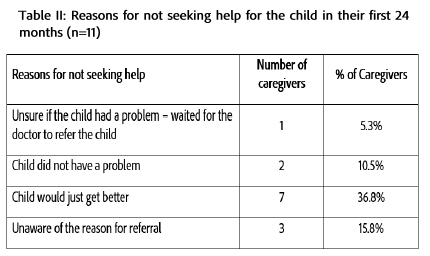
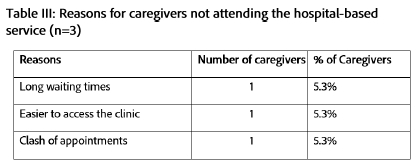
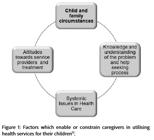
INTRODUCTION: Early identification of children with or at risk of developmental delay and disability is recommended so intervention occurs within their first 1000 days, a critical period for all aspects of development. Early childhood intervention (ECI) services are provided by health and rehabilitation professionals, including occupational therapists, to identify and address developmental delay and disability in young children in South Africa. However, there are concerns about the low rate of caregivers accessing ECI for their children identified as needing this intervention. METHODOLOGY: A survey design was used to determine the reasons caregivers did or did not utilise ECI occupational therapy services at a district hospital in Gauteng. Structured but non standardised interviews were used to collect the data from 16 caregivers who attended their appointments and three who did not. Data were analysed descriptively based on the framework by Reardon et al. in four domains: family circumstances, views and attitudes towards services, knowledge and understanding of services and treatment, as well as systemic issues in health care. RESULTS: The 19 participants were mostly women and the mother of the child. The children were mostly males, and only 8 children fell within their first 1000 days of life. Most of the participants only sought help for their children later, when the problem was more severe. Most caregivers were unsure of their child's problem and the implications of this. Most participants lived in low socioeconomic circumstances between 0 and 21 km from the hospital and used minibus taxis for transport. There was low awareness of the ECI services at the hospital, and participants were more familiar with the work of social workers and psychologists. Most ECI referrals were received from other rehabilitation professionals, with the fewest referrals from doctors. Most participants who did not attend the ECI service stated that this was due to their uncertainty about the extent of the child's problem and belief that it might resolve without treatment. CONCLUSION: The results identified more barriers to accessing the ECI service at a district hospital than facilitators based on the four domains in the framework by Reardon et al. This included a lack of understanding of their child's developmental problem, what interventions the service had to offer and the service benefits, the contribution of the various health professionals, as well as issues with the health care system being far from where they lived and there being no intersectoral collaboration with other child services. IMPLICATIONS FOR PRACTICE • Poor awareness of ECI services and caregivers' lack of understanding of their child's need to access these services early needs to be addressed. • Client centred services that acknowledge a service user as a partner in health care to enhance health literacy, understanding of the health condition and provide patient satisfaction need attention. • Multidisciplinary ECI services should be offered at the primary health care (PHC) level to improve access. • Occupational therapists promoting awareness of occupational therapy related ECI services and advocating for a defined referral pathway to ensure equitable access to ECI services • Intersectoral collaboration between ECI, infant and toddler wellness programmes and the ECD servicesshould befacilitated.
developmental delay; client centred service; hospital-based services; factors affecting service use; multidisciplinary intervention; referral pathway; good health and well-being
 Thumbnail
 Thumbnail
 Thumbnail
 Thumbnail