
 A review of The Pain-Free Mindset: 7 Steps to Taking Control and Overcoming Chronic Pain written by Dr Deepak Ravindran
Gillian Coetsee
Occupational therapist. https://orcid.org/0009-0009-7390-9315. BSC (OT), Dip Adv OT (NeuroSc) (WITS), Dip Vocational Rehabilitation (Pret), Dip Hand Therapy (Pret) PG Dip Int Pain Mgmt (UCT). Secretary of Occupational Therapy Pain Management Group (OTPMG), Council member of PainSA. Private practitioner, Johannesburg South Africa. Contact detail:
TITLE AND AUTHOR OF THE BOOK
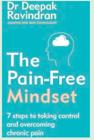
The Pain-Free Mindset: 7 Steps to Taking Control and Overcoming Chronic Pain written by Dr Deepak Ravindran
INFORMATION ON THE AUTHOR
Dr Deepak Ravindran has over 20 years of experience in helping people overcome their pain - in the NHS and in private practice. He is one of the few consultants in the UK who possesses triple certification in musculoskeletal medicine, pain medicine and lifestyle medicine. He has been a consultant in pain medicine since 2010, at the Royal Berkshire NHS Foundation Trust in the UK (rated outstanding by CQC, 2018). He is currently clinical lead for the specialist pain services for all of West Berkshire since 2015. Dr Deepak Ravindran is part of the award-winning Integrated Pain and Spinal Service (IPASS) service in 2016 and also the Multidisciplinary Circle Fibromyalgia Clinic. In 2020, he helped set up the Berkshire Long Covid Integrated service, one of 90 such clinics in the UK to look after Long Covid patients. He is passionate about educating colleagues and people living with pain, that pain management is complex and needs to be looked at from a holistic, comprehensive and integrated fashion, using a team approach that includes the person living with pain. Dr Deepak Ravindran works as a clinician, educator, researcher and speaker.
INFORMATION ON THE BOOK
Published: 04 Mar 2021
Publisher: Vermilion Penguin Random House UK
ISBN: 9781785043390
Available in Paperback: R380 (excluding delivery fees)
The book can be ordered from:
https://www.amazon.co.za/Pain-Free-Mindset-Control-Overcoming-Chronic/dp/1785043390/ref or https://www.loot.co.za/product/the-painfree-mindset/dldp-6859-ga00
Available as an eBook: Kindle ZAR240
Number of pages: 352 pages THE REVIEW
Curing pain without understanding its complexity is always going to be a hopeless exercise. The Pain-Free Mindset by Dr Deepak Ravindran seeks to improve the understanding of this complexity and provide the reader with tools to use in managing persistent pain. Mindset isn't just about changing our state of mind, but is an acronym for the 7 steps for an all inclusive toolkit, people living with chronic pain can follow to take control of pain. The book is written as if Dr Deepak Ravindran is in dialogue with a person living with pain. He uses language that is accessible, visually descriptive diagrams and his personal client experiences over his 20 years of clinical practice, to add context and lived experience.
This book is divided into 3 parts
Part 1: Your Pain Journey - provides an explanation of pain and how to assess where you are in your pain journey. He highlights what you can to to take control of your pain and where you may need a healthcare professional to assist. He notes what the acronym MINDSET stands for:
M is for Medications
I talks about any Interventions (medical procedures)
N is the Neuroscience of pain and stress
D reflects the growing role of Diet and the microbiome
S will show the importance of Sleep for pain
E is the role of physical activity and Exercise
T refers to the Therapies for the mind and body
Part 2: The Pain-Free Mindset - is comprised of 7 chapters, each devoted to a one of the letters/topics that make up his acronym MINDSET.
Chapter 3: Medicatons
"A prescription for a medicine that doesn't work is a prescription for harm: no one wants that." Dr Cathy Stannard, British pain physician and author. Understanding the difference between nociceptive, neuropathic and nociplastic pain and where medications can be helpful, is well explained in this chapter. Concepts such as Numbers Needed to Treat ( Ν NT), Numbers Needed to Harm (NNH), placebo and addiction are explained. The role and efficacy of frequently used medications, including herbal medications are discussed.
Chapter 4: Interventions
This chapter focusses on the role, benefits and risks of interventions (injections, surgery, etc) and their place in pain management.
Chapter 5: Neuroscience and Stress Management
Dr Ravindran notes that "This by far is the most important chapter for me and I hope it will be for you aswell."The neural networks, glial cell, Vagus nerve and mind-body connection are all explained in how the nervous system and immune system interact in pain and stress. "Understanding this complex relationship itself can be very helpful and often sets the stage for patients to manage and lower their stress, and thus reduce a big contributor to their worsening pain."
Chapter 6: Diet and the Microbiome
The microbiome plays a critical role in central sensitization and the immune system and factors that influence the bidirectional relationship between the gut and brain are discussed. The Heathy Diet Quiz can provide a perspective if your diet is pro or anti infammatory and there are numerous tips to use in changing this.
Chapter 7: Sleep
There are many significant ways in which sleep loss or deficit can independently cause harm."The bidirectional nature of pain and sleep, sleep physiology and strategies to improve sleep are focussed on in this chapter.
Chapter 8: Exercise and Movement
The importance of exercise in managing pain is explained and strategies are provided to improve your physical activity. Myths, fears and beliefs about the role of exercise are explored and contrasted with the benefits, in managing pain. Developing an exercise mindset with an assessment of your current level of physical activity and how to improve this is, is provided.
Chapter 9: Therapies of the Mind and Body
"In the old biomedical model, the concept that thoughts and emotions can influence pain was not accepted as scientific enough, so it was never respected". Numerous therapies are discussed, including mainstream physiotherapy, Cognitive Behavioural Therapy, Mindfulness and Relaxation to lesser know or used somatic therapies and alternative medicine approaches.The key concepts are that mind-body therapies are empowering, no one size fits all, "the patient-therapist relationship is key"and that the earlier these therapies are started, the better. The information provided in each chapter is evidence based, scientifically proven and illustrated with a person's lived experience, charts, diagrams or tables. Each chapter ends with a Summary and often has Top Tips relevant to the content ofthat chapter.
Part 3: Creating A Blueprint for your Pain - is aimed at assisting you to create a persoalised plan using the various strategies, tools and knowledge from preceding chapters, in your journey to take back control of your life. It includes flare up and relapse plans. The book concludes with a chapter on The Future, where novel and some currently being researched treatments are discussed.
Relevance to occupational therapy
It is interesting to note the limited mention of occupational therapy, despite the author noting the value and critical need to work as an interdisciplinary team. To be fair Dr Deepak Ravindran doesn't appear to have an occupational therapist as part of his team when writing the book and the role of occupational therapy within the management of pain, remains an evolving field internationally. The content of his book resonates with the role occupational therapists play in faciliating the functional improvement of people living with pain. Despite being written to the pain sufferer, the MINDSET toolkit and content of each chapter could be used in therapy. In my opinion this book dovetails beautifully with The Pain Playbook written by Helen Roome (reviewed in the previous issue of SAJOT), as the themes are similar. The Pain Playbook provides a more structured approach to integrating the strategies into daily life using a six-week programme.
Personally, I thoroughly enjoyed reading this book and acquiring tools and strategies to use with clients I work with. I think this is a book that every person working with (healthcare providers and non healthcare providers) /caring for/ living with pain, should read. It is a practical and largely accessible toolkit. It includes up to date (2021) evidence and "patient" examples to facilitate the learning. It highlights the unhelpful advise some professionals have given people living with pain, most likely from an inadequate understanding of the latest science and not appreciating the complexity of pain, motivating clinicians to remain up to date on pain science.
There has been some criticism that this book omits that pain is a social justice issue - social exclusion by poverty, gender, race, trauma, disability etc and that peoples choices for some of the tools noted are constrained by their circumstances. This is true, but could possibly be overcome by a skilled clinician assisting with culturally/context appropriate adaptation of the concepts, strategies and steps to make them more socially/economically relevant to the person's life and context.
Acknowledgement
Two sources1,2 on how to write this book review were consulted by the author and are acknowledged.
REFERENCES
-
1. Lewis, M. N. (2022). Here's a Good Book: Hints on Writing a Book Review for Academic Journals. RELC Journal, 53(1), 253-260. https://doi.org/10.1177/0033688220916239
» https://doi.org/10.1177/0033688220916239 -
2. Baig, Mukhtiar & Jawaid, Shaukat. (2018). How to write a Book Review. https://www.researchgate.net/publication/332447215 How to write aBook Review
» https://www.researchgate.net/publication/332447215
Reviewed: Not applicable
Accepted: 28 November 2024
