Community Integration Experiences of Stroke Survivors in Mangaung, Free State
INTRODUCTION: Community integration plays a vital role for stroke survivors, supporting participation in meaningful occupations and fostering connection to their environments. Yet, stroke survivors often experience barriers that hinder community integration OBJECTIVE: This study aimed to explore and describe the stroke survivors' experiences of community integration in Mangaung, Free State. The Canadian Model of Occupational Performance and Engagement (CMOP-E) guided the interpretation of their journeys METHOD: A descriptive qualitative design was used. Eight participants, who received 3-6 weeks of inpatient rehabilitation at private hospitals, were recruited and interviewed individually using an interview script. Data were analysed using Braun and Clarke's thematic analysis framework FINDINGS: Three main themes emerged from the participants' experiences: (1) Challenges with Accessibility: physical and societal barriers that limited mobility and engagement. (2) Role of Social Networks: family, friends, and community support facilitated integration. (3) Engagement in Meaningful Activities: Participation significantly contributed to their sense of belonging and recovery CONCLUSION: Rehabilitation programmes should address individual and systemic barriers, improve environmental accessibility, considering the clients' social network and opportunities for meaningful participation. These measures are essential to support community integration and the overall quality of life of stroke survivors IMPLICATIONS FOR PRACTICE: This study revealed the complex factors influencing post-stroke community integration and offers the following recommendations: •Provide holistic, client-centred therapy that addresses emotional, cognitive, physical, and spiritual needs to support identity reconstruction. •Adapt home and community environments and advocate for accessibility and inclusion. •Facilitate phased community integration through graded public exposure, normalising psychosocial challenges and assistive device use. •Involve caregivers, community members, and faith leaders to foster belonging and sustained participation. •Finally, expand professional roles to include home- and community-based support beyond discharge.
Accessibility; Stroke Support; Stroke Recovery; Rehabilitation; Meaningful Occupation; CMOP-E
Community Integration Experiences of Stroke Survivors in Mangaung, Free State
Dominique Irene le RicheI, ; Monique StraussII; Azette SwanepoelII
INurture Hillandale, Bloemfontein, Free State. https://orcid.org/0000-0003-2817-7759
IIOccupational Therapy Department, School of Health and Rehabilitation Sciences, Faculty of Health Sciences, University of the Free State. https://orcid.org/0000-0003-2342-8889; https://orcid.org/0000-0002-0939-0776
INTRODUCTION: Community integration plays a vital role for stroke survivors, supporting participation in meaningful occupations and fostering connection to their environments. Yet, stroke survivors often experience barriers that hinder community integration
OBJECTIVE: This study aimed to explore and describe the stroke survivors' experiences of community integration in Mangaung, Free State. The Canadian Model of Occupational Performance and Engagement (CMOP-E) guided the interpretation of their journeys
METHOD: A descriptive qualitative design was used. Eight participants, who received 3-6 weeks of inpatient rehabilitation at private hospitals, were recruited and interviewed individually using an interview script. Data were analysed using Braun and Clarke's thematic analysis framework
FINDINGS: Three main themes emerged from the participants' experiences: (1) Challenges with Accessibility: physical and societal barriers that limited mobility and engagement. (2) Role of Social Networks: family, friends, and community support facilitated integration. (3) Engagement in Meaningful Activities: Participation significantly contributed to their sense of belonging and recovery
CONCLUSION: Rehabilitation programmes should address individual and systemic barriers, improve environmental accessibility, considering the clients' social network and opportunities for meaningful participation. These measures are essential to support community integration and the overall quality of life of stroke survivors
IMPLICATIONS FOR PRACTICE:
This study revealed the complex factors influencing post-stroke community integration and offers the following recommendations:
•Provide holistic, client-centred therapy that addresses emotional, cognitive, physical, and spiritual needs to support identity reconstruction.
•Adapt home and community environments and advocate for accessibility and inclusion.
•Facilitate phased community integration through graded public exposure, normalising psychosocial challenges and assistive device use.
•Involve caregivers, community members, and faith leaders to foster belonging and sustained participation.
•Finally, expand professional roles to include home- and community-based support beyond discharge.
Keywords: Accessibility, Stroke Support, Stroke Recovery, Rehabilitation, Meaningful Occupation, CMOP-E.
INTRODUCTION AND LITERATURE REVIEW
Globally, it is estimated that one in four adults will suffer a stroke during their lifetime1234-6.
Community integration can be defined as the ability of individuals with disabilities to fully live and participate in their communities, including work, recreation, cultural, and social activities. This integration enables individuals to live and interact similarly to those without disabilities74,6,8.
Rehabilitation services play a vital role in helping SS regain body functions and achieve independence in mobility and daily activities, thereby improving their chances of successful community integration. However, studies have shown that many SS experience social exclusion, leading sedentary lives and remaining homebound5
SS experience a wide range of barriers to community integration. Studies from South Africa and other African countries have reported poor access to rehabilitation services, lack of transport, limited knowledge of stroke accessible environments and lack of access to assistive devices5,8-11. The severity of disability following a stroke influences the degree of community integration. Research indicates that individuals with more significant physical impairments face more substantial challenges when reintegrating into the community65
Enablers of community integration are family and caregiver support, short hospital stays, and ongoing outpatient therapy to improve body function for better long-term participation12,13. Occupational therapists help clients engage in meaningful activities by improving body functions or adapting to the environment14
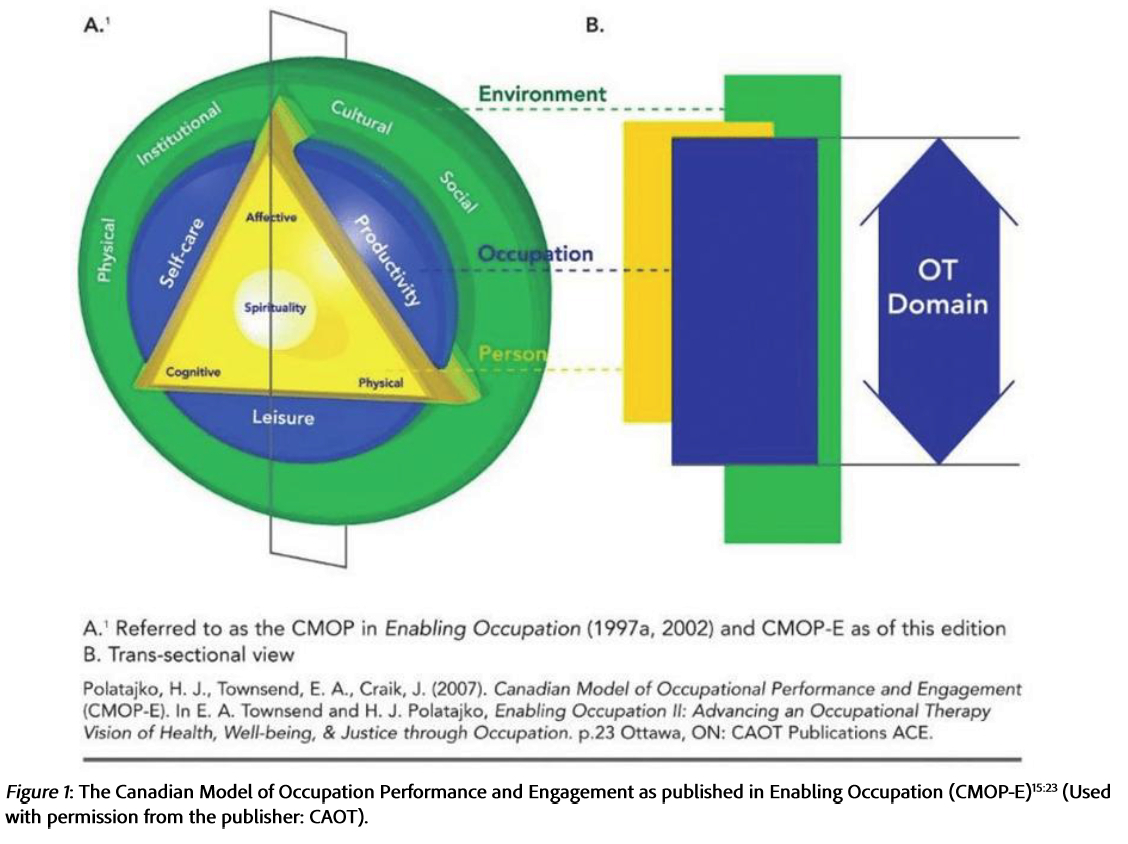
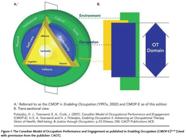
The Canadian Model of Occupational Performance and Engagement (CMOP-E), introduced in 2007, aims to foster client-centred practice in occupational therapy and illustrates the dynamic interaction between the person, occupation, and environment15Figure 1 (below) shows the CMOP-E with a triangle representing the person with three performance components: affective, cognitive, and physical, with spirituality at the core. Spirituality here extends beyond religion to encompass what motivates a person. An outer circle represents the environment, emphasising that everyone exists within a unique cultural, physical, institutional, and social context. The central circle signifies occupation, acting as the "bridge that connects the person and environment"15:23, and includes all daily tasks and activities, categorised into self-care, productivity, and leisure. In this model, the three components influence each other; changes in the person affect occupation and the environment. The CMOP-E is applicable across all ages, diagnoses, and multicultural settings15
In South Africa, research on community integration among SS has mainly focused on government healthcare settings within provinces such as the Western Cape, Gauteng, and Kwa-Zulu Natal8,10,14. The Mangaung Metropolitan Municipality (MMM), located in the Free State Province, with Bloemfontein as its central city, remains underrepresented in the existing discourse. Grounding this study in Mangaung offered a novel perspective for examining rehabilitation practices and understanding the lived experiences of SS in the region, which has seldom been explored.
Although previous studies have shed light on the challenges SS face during community reintegration, there remains a notable gap in contextual knowledge within provinces like the Free State. This study aimed to address that gap by building on prior research to explore community integration following rehabilitation within Mangaung, guided by the CMOP-E.
To achieve this aim, the study set out to:
Investigate the barriers and facilitators affecting community integration for stroke survivors in Mangaung;
Examine the role of rehabilitation services in supporting post-stroke reintegration; assess SS participation in everyday activities; and
Provide insights to inform occupational therapists and health professionals on improving rehabilitation practices to promote inclusive community living.
This article presents the findings drawn from stroke survivors' lived experiences of community integration following rehabilitation within the Mangaung Metropolitan Municipality.
METHODOLOGY
Research Design
A descriptive qualitative study using a phenomenological approach was employed. This design supported the development of an understanding of the individual experiences and meanings associated with SS's rehabilitation and community integration16
Setting
The study was conducted in Mangaung, where both private and public therapy services are available. Participants were recruited from three private and four public healthcare facilities. Although official stroke data are lacking, frequent stroke admissions suggest a significant burden. The researcher, a local clinician with neurological rehabilitation expertise, used professional networks to support recruitment.
Population
The population consisted of first-time SS admitted to Mangaung hospitals at least three months before data collection. All participants were required to reside within Mangaung and to have attended at least one therapy session during hospitalisation. Individuals with aphasia or significant cognitive impairment were excluded to protect ethical engagement and ensure high-quality data collection.
Sampling
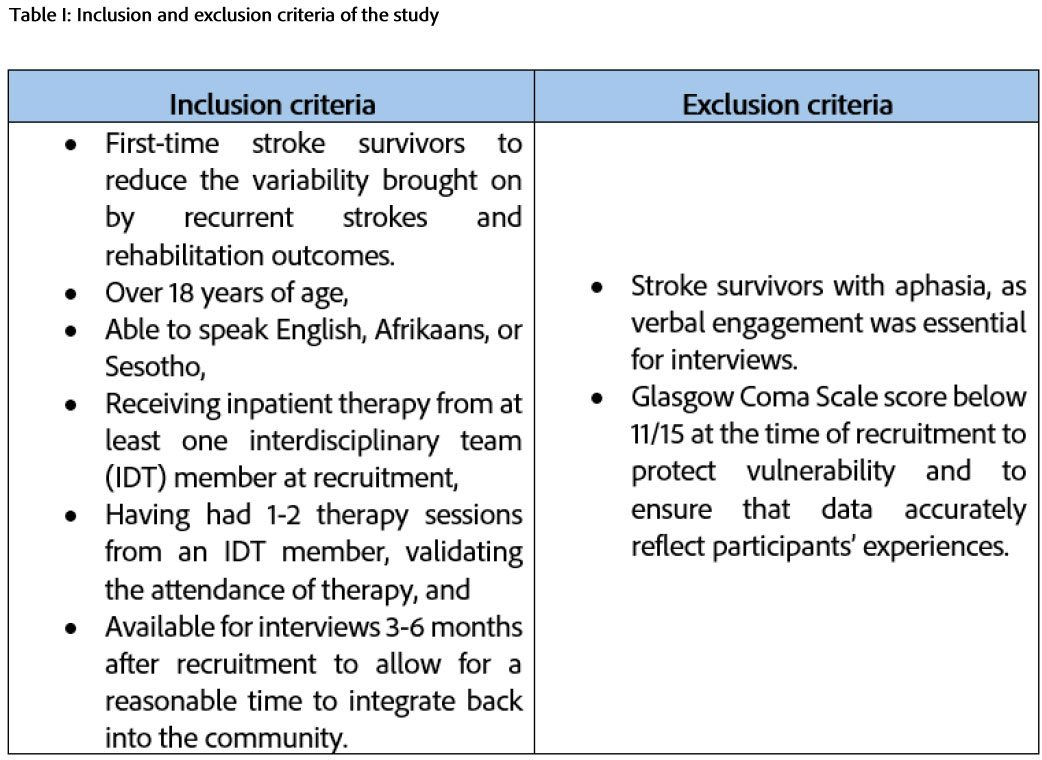
Purposive sampling was used to select participants with firsthand experience of post-stroke rehabilitation and community integration. Convenience sampling was also applied, recruiting stroke survivors receiving therapy at selected facilities. Participants were approached during sessions based on eligibility and availability, with recruitment supported by the researcher's professional network. Inclusion and exclusion criteria are outlined in Table I (below).
Recruitment
Once written permission to conduct the study had been received from hospital management, the researcher introduced the therapists at the selected hospitals to an outline of the study. Therapists, in turn, alerted the researcher to potential participants, who verbally consented to share their personal details with the researcher in compliance with the POPI Act (POPIA). Eligible participants were then contacted directly by the researcher, resulting in eight individuals consenting to participate from the initial eighteen who were identified.
Data Collection and Methods
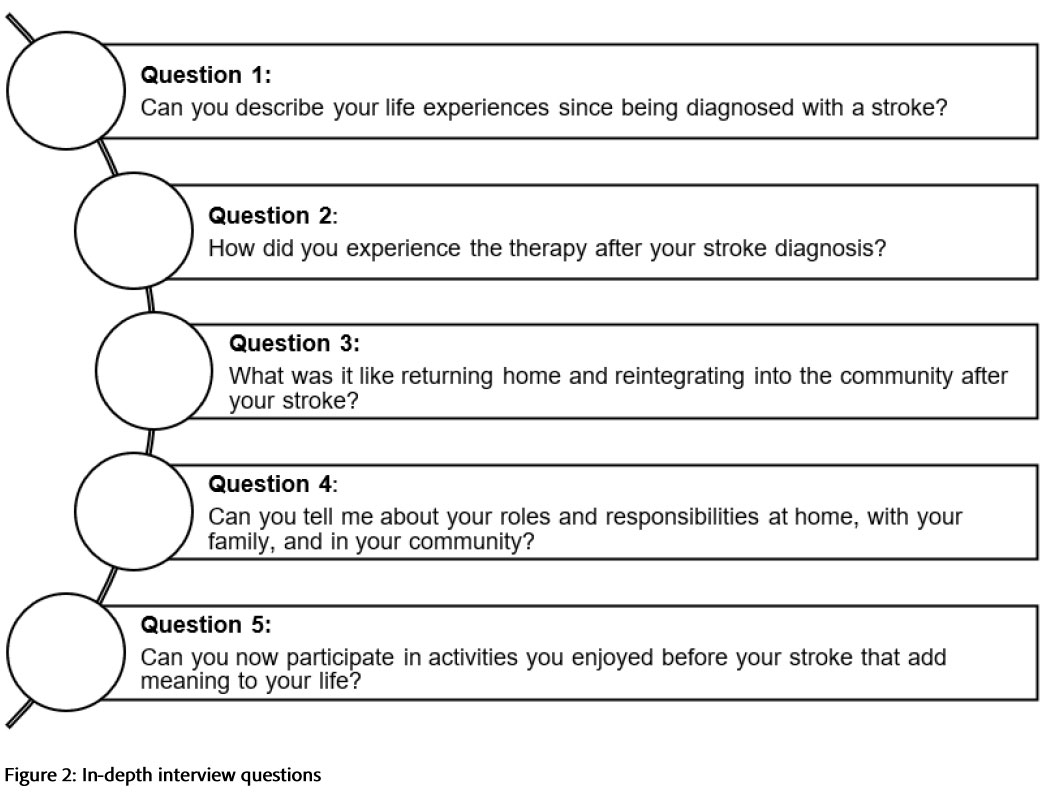
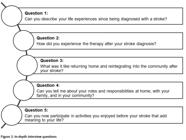
Individual, in-depth interviews17Figure 2 (below) illustrates the key probing questions used during the interviews.
Interviews were conducted in English, Afrikaans, or Sesotho, based on participant preference, and took place at their homes to ensure comfort. Beforehand, participants were informed of the study's aims, gave written consent, and were assured of voluntary participation with the option to withdraw. Rapport was established before proceeding with demographic and interview questions.
Interviews lasted 30-40 minutes, followed a script, and were audio-recorded. Non-verbal cues were noted, and post-interview insights were recorded or added to field notes. Data saturation was reached by the end of the process.
Data Analysis
All interviews were transcribed verbatim by the researcher, who also translated non-English interviews from Sesotho or Afrikaans into English. An independent fluent speaker verified the accuracy of the translations. Transcripts were anonymised using participant numbers.
Thematic analysis followed Braun and Clarke's18
Methodological Rigour
Credibility was supported by independent data analysis by the researcher and an experienced occupational therapist, with transcript accuracy verified against audio recordings. Though member checking wasn't possible, peer discussions and reflective reviews enhanced credibility. Transferability was addressed through thick descriptions of participants, context, and procedures. Dependability was ensured by consistently applying Braun and Clarke's18
Data Management
All data were securely stored on the password-protected FigShare platform, accessible only to the primary researcher. Participant information was coded to ensure confidentiality, with physical documents scanned and uploaded digitally. Access was limited to the research team, and all files were anonymised before analysis. Data will be retained for five years, then permanently deleted.
Ethical considerations
Ethical approval was obtained from the University of the Free State HSREC (UFS-HSD2022/1716/2803). Permission to conduct the study was granted by the Free State Department of Health. All procedures complied with the POPI Act, with participant anonymity maintained through assigned numbers.
Written consent was obtained, and participation was voluntary. Study information was shared in an accessible language suited to participants' comprehension levels. Given the vulnerability of stroke survivors, additional safeguards were applied. The researcher informally assessed cognitive and communication abilities during initial contact and confirmed understanding by asking participants to paraphrase the study's purpose and procedures.
FINDINGS
Eight first-time stroke survivors participated in this study. All were admitted to private hospitals in Mangaung and subsequently referred to rehabilitation units for 3 to 6 weeks. They accessed acute care via ambulance or with family assistance. While most could not recall therapy during the acute phase, they confirmed receiving occupational, physiotherapy and speech therapy in private rehabilitation units in Bloemfontein. Half of the participants (n=8) continued with outpatient therapies after discharge from the rehabilitation units, but all participants expressed overall satisfaction with rehabilitation, noting positive outcomes. Demographic details are presented in Table II (below). Thematic analysis was informed by the CMOP-E model, which facilitated interpretation of the SS experiences by looking at the dynamic interaction between person, occupation, and environment.
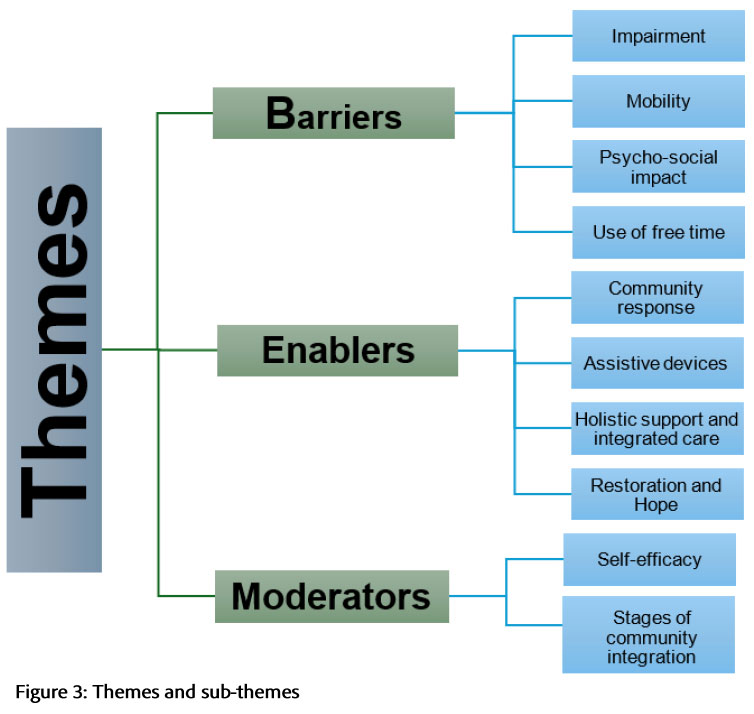
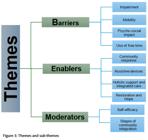
The study identified three primary themes in SS' rehabilitation experiences, each with sub-themes. The themes and sub-themes can be seen in Figure 3 (below).
Theme 1: Barriers
Barriers to community integration were evident, with many of the participants feeling that they had yet to achieve optimal community integration since the stroke. Four sub-themes were identified as limiting community integration for participants.
Sub-theme 1.1: Impairment
Participants described persistent fatigue, dizziness, and mobility difficulties limiting their ability to engage in daily roles and meaningful activities.
"I don't visit as often as I used to ... I get tired, and then I want to come to rest ... at home" (P2, male, 62)
This indicates that stroke survivors have reduced endurance, which affects social participation. Another participant explained their dizziness and head to being a helicopter not able to fly. Dizziness and impaired walking ability were further seen as hindering community integration.
"But my helicopter does not want to fly well. My head still gets a little dizzy at times." (P2, male, 62) " ... my walking is not yet there; I will attend when I'm..." (P1, female, 44) . "I can't walk on my own." (P8, male, 47)
Following the stroke, participants also experienced role loss and reversals. One participant's children now care for them instead of vice versa, though she can still fulfil some motherly duties with support.
"Sad because I'm the one who's supposed to look after them, not them looking after me. It hasn't ... if they are sick, I have to take them to the doctor. My husband is here to help ... but I do go with them." (P1, female, 47)
Functional and daily activities that provided pleasure were common losses.
"So now I can't run anymore..."(P1, female 47). "My heart is hurting, and I 'm hurting. I want to also walk outside and visit the other people, but I cannot." (P3, female, 83). I can't go out anymore to play with my little dog or work in the flower garden pulling out bushes. (P5, female, 79)
Driving, an important aspect of independence, was impossible for many due to physical and cognitive impairments.
" ... my work requires me to drive, but now I can't drive because I can only use my only one hand" (P1, female, 44)
Many participants were unable to return to work and had to take incapacity leave or early retirement. Of the working-aged participants, only two intended to return-one was limited by loss of arm function and inability to drive, while the other felt further rehabilitation was needed to regain physical ability.
"I am not at work ... I have been medically boarded by my employer." (P2, male, 62) " ... I'd like to go back to work ... but now I'm on incapacity ... " (P4, male, 60) " ... with the rehabilitation, I'll go back" (P8, male 47) " ... work requires me to drive" (P1, female, 44)
Participants expected a quicker recovery, but prolonged physical impairment became a barrier to community integration due to ongoing weakness.
"I thought that maybe after six months, I would be having movement [in the left arm], but not yet. But I know we'll get there." (P1, female, 44) . "I'm not going. I'm waiting for this hand and the feet. It's just the feet; if I can walk nicely with the feet, then I will go." (P3, female, 83) .
One participant also expressed that family and caregivers are overprotective and prevent them from injuring themselves.
"Because my left arm is weak, he also doesn't want me to work with the kettle and the hot water anymore, as he is scared, I will burn" (P6, female, 79)
All participants faced physical impairments, role reversal, and loss of function, which made community reintegration more challenging.
Sub-theme 1.2: Mobility and Accessibility
The second sub-theme refers to the accessibility of the different communities as well as the types of mobility and transport that participants use.
"It still feels very difficult because you can't even walk alone outside without somebody pushing you or taking yourself to the shops or driving." (P8, male, 47)
Participants experienced that access to community areas was not optimal and perceived this as a barrier.
"We were supposed to go hiking, but I couldn't go ... I just stayed and watched them" (P1, female, 44) . "Because there are fairly steep stairs to go up, and so on, and I'm still a bit uncertain about those stairs and with the wheelchair and all, so I told him we're waiting a while longer until I just have a little more confidence." (P5, female, 79)
Participants seem to avoid going out to places that are not accessible, such as the participant who makes sure there are elevators and avoids buildings with accessibility barriers.
"It's uncomfortable, too, because the church slopes halfway down, and then I'm afraid my wheelchair might tip over too quickly." (P5, female, 79)
Participants avoided buildings with stairs or uncomfortable seating. Fear from prolonged sitting, such as in church, led to further avoidance. One participant couldn't access holiday accommodation due to stairs and lack of wheelchair access.
" ... they had to carry me up the stairs" (P1, female, 44). "No. I do not climb them." (P3, female, 83)
Stairs and unsuitable entrances made many places inaccessible for wheelchair users or those with mobility challenges. One participant shared that their issued device was unusable at home due to a narrow driveway blocked by a parked car.
" ... outside, I was holding onto the cars in the driveway ... to get out as the driveway was too narrow to walk with the frame" (P4, male, 62)
Participants often cited the inability to drive and dependence on others for transport as barriers. One participant's wife initially prohibited him from driving after his return from rehabilitation.
"Sometimes, when I go somewhere, someone takes my car and drives me to where I want to be." (P2, male, 62) . "She didn't want me to drive" (P4, male, 60) . "You can't drive anymore" (P8, male, 47) .
Participants frequently mentioned the inability to drive and reliance on others for transport as key barriers. One participant shared that his wife initially prevented him from driving after rehabilitation.
"It's hard, but I try to do it on my own." (P3, male, 83;) "It's a bit more difficult, but I can still do it [car transfer]" (P6, female, 79)
Having adequate access to an environment due to stairs, helps community integration. Not being able to drive was a common theme in the study.
Sub-theme 1.3: Psycho-social impact
The participants expressed that having a stroke caused them to have many different emotional responses. They felt that their lives had changed a lot after the stroke.
"Not being able to do things that I usually do ... Everything changed. The emotions, everything." (P1, female, 44) . "Now I can't walk by myself, I can't wash and dress myself properly, I can't turn. It was as if life had thrown me aside" (P6, female, 79) .
Participants were, at times, depressed and felt that they had lost interest in previously meaningful things.
"I think I lost interest in most of the things." (P1, female, 44) . "Now today, I can't do anything. I cannot help. So, my heart, it gets hurt. Because I was so strong, ask my children" (P3, female, 83)
A participant felt sad about not being able to help with household chores after the stroke. Others saw him as lazy, which hurt his mood, caused resentment, and discouraged community engagement.
"The people see me as a lazy, lazy person ... Those people, I don't feel like going to them ... I'm still having the grudge on them" (P4, male, 60) .
A depressed mood made participants feel more dependent on others for community access despite their excellent physical abilities.
"I look like a baby who is looking for something and then sometimes cries so that he can get it. I feel a bit bad because I am not used to it." (P2, male, 62) . "It's very difficult. Really, it's very difficult ... you're taking some other people, but they are busy doing just to come and assist you or drive you" (P8, male, 47) .
Participants felt like burdens to their families because they needed help. Some tried to access the community, but others found shops and desired places too distant and felt self-conscious using assistive devices.
"It is far ... Mm. I am scared. I will fall." (P3, female, 83) . "One feels self-conscious in the beginning, but, but then I was happy on the one side, because I can still come there in a way, and still buy a few things by myself, and so on" (P5, female, 79)
Participants commonly feared falling and felt self-conscious using assistive devices, believing others were staring. This perceived stigma caused shame and led some to stay home, despite some achieving community integration.
"Most of the time, when you're passing people, they are looking at you. They are staring at you." (P8, male, 47)
The emotional overload and stigma from having a stroke negatively impact participants' community integration.
Sub-theme 1.4: Use of free time
Free time refers to how the participants spend their days. Many participants had poor use of free time and mostly felt that they were just sitting around at home.
"Most of the time, I am at home ... sometimes, here at home, I have to force myself to do something, but at work, I was kind of forced." (P2, male, 62)
"It's not nice because I do nothing ... It's not easy because you do nothing and sit just like a doll..." (P3, female, 83)
Participants once had structured schedules with work and home tasks. They spend much time at home, engaging in more passive activities.
" ... I am watching the TV ... The people come visit." (P3, female, 83) . "No, I sit all day and watch TV or listen to the radio." (P7, male, 65) . "We listen to the church on the radio now." (P6, female, 79)
People visited the participants at their homes and encouraged them to spend some time outside.
" ... our minister here also told me I shouldn't come too soon ... the pastor sends me the sermons, and the Bible study pieces" (P5, female, 79)
Free time was influenced by the fact that the participants spent lots of time in their homes, and a limited need to leave their homes was felt.
Theme 2: Enablers
The enablers refer to factors, resources and strategies that facilitated individuals' successful inclusion and participation within their community following the stroke.
Sub-theme 2.1: Community response/dynamics
Following the stroke, the participants received social support that enabled them to access the community and gave them the confidence to leave the house occasionally. One of the participants needed help to fulfil all the roles at home and had family members or caregivers assist with some of the tasks.
"I used to do everything for him. The cooking, and everything. But at least I've got help from my mom. ... No, my husband does it. I just write him a list." (P1, female, 44) . "It is this lady that is helping me" (P3, female, 83) . "We have carers who help me with washing and dressing in the morning." (P6, female, 79) .
Participants also experienced that people in the community were supportive and provided them with assistance to increase their accessibility to certain places within the community.
"We went after therapy, but it was just a quiet place, away from everyone ... the lady owner there was very nice. She even opened the gate so that my husband can come closer so that he can go into the place, because she saw us a little bit struggling." (P1, female, 44) .
The community members were friendly and kind, providing advice to the participants. They perceived this as a favourable factor that enhanced their community integration.
"There are a lot of people who give information. It's nice because at least I'm not the only one walking this path. Every time I see the people, they give me information that I should not stress too much and don't think too much. At least I'm better. I am better." (P2, male, 62)
The participants also received support from friends, colleagues, and family in the rehabilitation hospitals.
"Yes, and also, the people who worked with me. They gave me lots of information on strokes and sometimes brought me food" (P2, male, 62)
Another participant arrived home and saw that his wife had appointed a gardener, and he had him continue with yard work, which helped him to focus on his recovery.
"No, I found, I found the guy who's already been there when I come from the hospital. So, he has just continued." (P4, male, 60) .
The supportive caregivers assisting participants at home after leaving the hospital were resourceful and made plans to help participants find ways to access the community.
" ... Before I came out of the hospital, I got two caregivers ... they took rocks so that the wheelchair could go down easier, and then also down at the porch." (P5, female, 79)
With community members' assistance in making plans, participants found community integration more manageable and were willing to try it again.
Sub-theme 2.2: Assistive devices
During rehabilitation, assistive devices were issued to aid mobility and viewed as enablers by most participants. Devices varied by functional level. Some without devices borrowed wheelchairs to access challenging areas, such as stairs during holidays.
"They lent me a wheelchair, and then they had to carry me up the stairs" (P1, female, 44)
The wheelchair assisted participants in accessing challenging environments. While some used walking aids at home, they relied on wheelchairs to reach distant community areas.
"When I go to the Physio. Just the time when I go to the physio, yes." [Wheelchair used] (P3, female, 83)
Another participant had to plan and position the assistive devices near them, which allowed them to access the community more safely.
"Yes, when I was moving, this trainer [walking frame] must be here so that I can make use of it when I'm walking" (P4, male, 60)
Assistive devices were primarily issued in rehabilitation units, and one participant relied on technology when unable to physically visit the community and intended to continue doing so.
"I was supposed to go with the oldest to choose a dress, but I couldn't ... she managed to pick one, and she did a video call so I could help through video call." (P1, female, 44)
The availability of various assistive devices and technology-empowered participants to resume community engagement and overcome physical barriers.
Sub-theme 2.3: Holistic support and integrated care
Participants who received continued outpatient therapy and psychological support had better community integration than those who did not continue with treatment.
"Week by week, we'll get there..." (P1, female, 44). "I go to the OT about twice a month... I listened very carefully. And now I still need to hear the advice." (P2, male, 62)
Participants who continued therapy were prompted to leave home for therapy department visits, motivating their community reintegration. However, some confined their outings to the hospital, requiring full community integration. Though not attending therapy, one participant devised memory loss coping strategies, positively impacting community integration.
"In the beginning, I used to forget almost all, everything, you see ... but the thing is, uh, I've trained myself ... and making a point that if I've done something, I put it in my head, so that I could not forget it." (P4, male, 60)
Some participants had attended psychology sessions, which helped them go out again because they felt more motivated to return to the community when their mood had been addressed.
"I'm with a psychologist. Started, I think, two weeks back ... but it's helping so far." (P1, female, 44)
The participants benefit from the support networks in the community.
Sub-theme 2.4: Restoration and Hope
The participants who could retain roles and functions like they previously had were able to enter the community.
"I work in the garden and do the dishes... At home, I cook for myself, and when I have finished eating, I wash the dishes ... " (P2, male, 62)
Participants had to adapt to how they did the tasks, but they were content with needing more rest periods and were satisfied that they could still engage in cultural events or household tasks like before.
"Because before, he used to come every day, and then after a month or one and a half months, he saw me driving, and then he decided not to come every day because it's very difficult to take care of a person like that." (P4, male, 60)
As participants progressed, caregivers' assistance decreased, motivating them to attempt more tasks independently. Those making physical strides ventured into the community, hoping for further functional recovery.
"It's very frustrating, yeah. But I know one day I'll get better; I will be able to do things I used to do before." (P1, female, 44). "I can drive [my car] ... I was using a wheelchair, and this..." (P4, male, 60). "But it's getting much better now". (P5, female, 79)
As participants recover, they aim to return to their pre-stroke lives. Regained driving ability restores community freedom and purpose. Others note improved movement and integration, with reduced initial dizziness.
"A big problem. But not, not like before. Yes. Now, I can wake up, and then I can feel dizziness. A little bit of it." (P4, male, 60)
One of the participants also took on a new role at home; as he had more time, he was now assisting with the cooking tasks at home.
"Yes, I'm cooking. (P4, male, 60)
A common theme emerged: participants' faith in a higher being instilled hope for recovery and acceptance, facilitating their return to the community.
"People have said that it is part of the Lord's plan for me, so I have prayed and accepted it." (P2, male, 62)
"but now the Lord has everything in his hands, I am an instrument, and I say Thank you to him who made me what I am." (P6, female, 79)
"Yes, I will definitely get there. With the help of God, I will get there." (P1, female, 44)
Participants displayed increased internal motivation and purpose upon accepting the stroke and placing faith in a higher being. This endowed them with a goal, motivating them to pursue community integration when ready.
Theme 3: Moderators
Moderators are individual, social, and environmental factors that either help or hinder SS' community integration, with their impact varying based on personal circumstances and individual perspectives.
Sub-theme 3.1: Self-efficacy
Participants acknowledged that community integration is a gradual process, requiring patience and self-acceptance. They understood the importance of refraining from comparing their abilities to their pre-stroke functions.
"I don't know, these things take time." (P1, female, 44) . "A lot has changed ... I used to be fit, and if I remember, I was faster in all tasks. Now, I take a longer time to complete things." (P2, male, 62)
Participants found alternative meaningful activities, such as one individual transitioning from running to riding a stationary bicycle for exercise.
"Yes, I do bike. The stationary one. Yes. So that I can at least still exercise, I can still exercise." (P1, female, 44)
Problem-solving and agency had varying effects on participants' community integration. Those who accepted their situation found problem-solving easier. However, for one participant, having the church come to her house hindered integration, though it addressed her need to engage in church-related activities.
"No. I am not going to church; the church comes here to my house. No, my church is far, but I'm scared." (P3, female, 83)
This participant, being older, preferred receiving assistance and visits at home rather than leaving. This illustrates how age influenced community integration levels, with older participants more inclined to stay home while younger ones sought to return to work and engage in community engagement.
" ... I am tired and not keen to do those things anymore." (P3, female, 83)
"Very soon. With the rehabilitation, definitely, I'll go back [referring to work]" (P8, male, 47)
Accepting the diagnosis, gaining self-confidence, and solving problems enabled community integration.
"But I just decided and made up my mind; I can be grateful; very little has happened to me compared to people who can't walk at all anymore." (P5, female, 79)
"It felt like I wanted to climb the walls now, I need to get out now ... and then they put me in the wheelchair and then pushed me to the store." (P5, female, 79)
However, those who struggled to find solutions to their problems, often due to not yet accepting the stroke diagnosis, viewed these challenges as barriers to community integration.
"It's going to be a bit too stressful for me ... I told him we're waiting a while longer until I just have a little more confidence." (P5, female, 79)
Those who lived alone experienced better community integration because they had to be more independent and were driven by internal motivation to perform tasks.
Sub-theme 3.2 Stages/Graded Community Integration
Community integration is often dependent on the stage of integration and also the time that has passed since the stroke was diagnosed. The participants mostly voiced being scared to return home and remained.
"I haven't been out yet. I'm still in my yard, in my house. But my neighbours, they do come and see me. But when I go to the doctor, I do face them in the hospital ... but I stay in the car" (P1, female, 44)
Participants varied in their community integration progress. Some felt comfortable in familiar hospital environments, while others joined family outings but stayed in the car. Those living alone or near shopping centres were more active in the community, particularly older participants.
"In the case of the community, I'm not going out. (P4, male, 60) I realised now I can't; I am more housebound." (P5, female, 79)
"Well, I know on my own and with the [4-wheeled walker] I can't get to a shop by myself, so I have to go by car. I can then get out of there because otherwise, I can't." (P6, female, 79)
Participants with private transport accessed the community more efficiently, while those who accepted assistive device usage showed improved community integration.
"To the store? Hmm. With this thing ... [quadripod]." (P3, female, 83)
Some participants slowly reintegrated into the community, like those who struggled with noise levels and gradually exposed themselves until it became bearable.
"Yes. It feels good. The first time was very loud. When they sang, I had to go out to a quieter area and then return after a while. I can now stay inside for longer ... and do not need to leave due to the noise levels. That first time was difficult, and I couldn't sit still either." (P2, male, 62)
Therefore, it can be said that those who had not yet accepted their impairments and who were not happy with using assistive devices had a more difficult time in the community.
DISCUSSION
This study explored how SS in Mangaung experience community integration following rehabilitation using the CMOP-E as a theoretical lens. The CMOP-E defines occupational performance as the interaction between a person, the environment, and occupation15
Person component: Physical and Emotional Challenges
The person components referring to affective, cognitive, physical abilities and spirituality emerged as a central theme to SS reintegration efforts. Persistent physical impairments- such as fatigue, dizziness and mobility limitations - were described as barriers that limited community access and hindered re-engagement in prior roles, especially those involving independence, social interaction, and employment. These findings are consistent with previous studies5,14,19, indicating that physical impairments act as barriers to community integration for SS in the African context.
Physical impairments after stroke extend beyond physical limitations, often intensifying emotional distress. Stroke survivors (SS) commonly feel frustration, helplessness, sadness, and anxiety due to reduced abilities. These intertwined challenges highlight the emotional burden of post-stroke disability and its impact on occupational engagement, as described in the CMOP-E. Disruptions in performance affect participation in meaningful activities. The findings underscore the need for emotional support alongside physical rehabilitation, emphasising a holistic approach to enhancing occupational engagement.
Environmental Component: Accessibility, Social Support, and Stigma
The environmental component of the CMOP-E encompasses cultural, physical, social, and institutional factors that shape participation. In this study, the SS's unique environmental context shaped their opportunities for occupational engagement. The CMOP-E emphasises how such environmental factors can either support or hinder participation in meaningful activities following rehabilitation.
Emotional burdens and stigma further complicated community integration for stroke survivors (SS), directly impacting their occupational engagement, as outlined in the CMOP-E. Stigma from others and internal struggles with identity after stroke led to emotional distress, promoting inactivity and social withdrawal. These findings align with previous research, locally and internationally, which highlights the emotional and psychological challenges SS face in rejoining their communities6,20. The CMOP-E emphasises the need to address social and attitudinal barriers that hinder participation.
These findings align with previous research, locally and internationally, which highlights the emotional and psychological challenges SS face in rejoining their communities. The CMOP-E emphasises the need to address social and attitudinal barriers that hinder participation. The emotional load on SS influences how they spend their free time, linking to Wood's findings on community integration post-stroke2122,23, supporting the findings of this study. Poor use of free time may be associated with SS having to learn how to cope with the impairments they have. Personal factors are not the only barriers; the environment can often be seen as a barrier to community integration.
Physical environmental barriers such as stairs, uneven terrain, and inaccessible buildings often limited SS' ability to engage in community life. Many expressed fears of falling, particularly when climbing stairs, and felt anxious about how community members perceived them. Accessibility concerns hindered participation in meaningful activities, as also reported in a Malawian study10
Despite these challenges, social support played a crucial role in helping SS navigate their environments. In line with the CMOP-E model, participants identified immediate family and caregivers as key enablers of occupational participation. Support included assistance with mobility and reducing fear associated with environmental barriers. Consistent with findings by Mudzi et al.12
Transport challenges emerged as a significant barrier to independence and participation after stroke, particularly due to the inability to drive. However, social support played a key role in alleviating this barrier, with support networks often providing private transport. While earlier studies highlighted the difficulties stroke survivors face using public transport due to physical limitations, assistive devices, and financial constraints,24,25,26 this study found that access to private transport through caregivers and family enabled easier access to healthcare, shops, and social visits.
In addition, assistive devices complemented caregiver and community support by helping stroke survivors navigate environmental barriers and regain occupational roles. Devices such as wheelchairs, walking frames, and quadripods supported mobility, especially over longer distances. While most participants could move independently at home using walking aids, assistive devices were essential for accessing shops and therapy. One participant relied on a wheelchair indoors and outdoors to visit public spaces like malls and clinics. These devices not only facilitated movement but also enhanced confidence and independence, reinforcing the value of combined physical and social support.
Occupational Component
Continuous outpatient therapy, perceived as a meaningful activity, provided a safe and familiar environment that reduced feelings of stigma and encouraged community integration. This support motivated them to leave their homes. Those without such opportunity still found ways to engage, with support and advice from community members aiding acceptance and integration through meaningful occupations.
SS who accepted their stroke progressed further, actively planning to overcome barriers. For instance, one participant requested assistance from her gardener and caregiver to push her wheelchair to the shops, allowing her to leave her house for a while, showing how the meaning attributed to shopping encouraged community engagement.
Spirituality supported emotional acceptance and motivation. Faith in a higher being gave participants hope for full reintegration, aligning with the CMOP-E model and research linking a positive mindset to better community integration. They felt trusting this higher being would lead to full integration over time. This hope motivated them to continue striving to return to the community. This aligns with findings from a study done in Nigeria5
Limitations
All participants received private inpatient rehabilitation, limiting comparison with public sector experiences. Recruitment from public settings was hindered by outdated contacts and unfamiliarity with the researcher. Future studies should explore community integration differences between public and private healthcare in Mangaung. The qualitative findings reflect only the eight Mangaung participants and are not generalisable. The small sample size and focus on stroke survivors' experiences, excluding caregivers', further limit applicability to broader populations.
Recommendations
Future research should include a larger, more diverse sample from both public and private sectors. A longitudinal study could track community integration over time. Including caregiver and family perspectives would deepen contextual understanding. Occupational therapists should address post-rehabilitation challenges like fatigue and dizziness and support survivors with coping strategies. Emotional and mental health support should be integrated into rehabilitation to address psychosocial strain.
Rehabilitation hospitals should offer support groups for survivors and families to reduce isolation. Public awareness campaigns can reduce stigma and promote inclusion. Clinicians and policymakers must advocate for accessible environments. Survivors should be supported to engage in meaningful activities during and after rehabilitation, with community-based programs promoting ongoing participation and connection.
CONCLUSION
This study explored the lived experience of community integration of SS in Mangaung as they navigated the complex process of community integration. Physical impairments, emotional distress, and environmental barriers emerged as significant challenges to community integration. Each SS' journey was shaped by unique occupational disruptions and contextual factors. Therefore, community integration is a complex and non-linear part of the stroke recovery process. For improved outcomes, rehabilitation programs must adopt a holistic approach that incorporates personal, social, and environmental considerations. By fostering supportive environments, improving accessibility and promoting meaningful engagement, we can bridge the divide between a person and their community, ultimately improving quality of life and recovery success for stroke survivors.
Acknowledgements
We would like to thank the Ruth Watson Research Award for their financial support for this research.
REFERENCES
-
1. Akinyemi RO, Ovbiagele B, Adeniji OA, Sarfo FS, Abd-Allah F, Adoukonou T, et al. Stroke in Africa: profile, progress, prospects and priorities. Nature Reviews Neurology. 2021;17(10):634-56. https://doi.org/10.1038/s41582-021-00542-4
» https://doi.org/10.1038/s41582-021-00542-4 -
2. Tribelhorn S, Motara F, Lewis CM. Stroke: A retrospective review of the incidence and epidemiology in a South African academic hospital emergency department. South African Medical Journal. 2021;111(12):1205-10. https://doi.org/10.7196/samj.2021.v111i12.15682
» https://doi.org/10.7196/samj.2021.v111i12.15682 -
3. Maredza M, Bertram MY, Tollman SM. Disease burden of stroke in rural South Africa: An estimate of incidence, mortality and disability adjusted life years. BMC Neurology. 2015;15:1-7. https://doi.org/10.1186/s12883-015-0311-7
» https://doi.org/10.1186/s12883-015-0311-7 -
4. Dumitru A. Occupational therapy and its role in improving the quality of life. Euromentor Journal. 2021;XII(December):134-48. https://doi.org/10.5014/ajot.43.6.371
» https://doi.org/10.5014/ajot.43.6.371 -
5. Ogunlana MO, Oyewole OO, Fafolahan A, Govender P. Exploring community reintegration among Nigerian SS. South African Journal of Physiotherapy. 2023;79(1). https://doi.org/10.4102/sajp.v79i1.1857
» https://doi.org/10.4102/sajp.v79i1.1857 -
6. Darji PP, Diwan SJ. Correlation between functional independence, depression anxiety and community integration in subjects with post stroke hemiparesis. International Journal of Health Sciences and Research. 2022;12(9):97-104. https://doi.org/10.52403/ijhsr.2022091
» https://doi.org/10.52403/ijhsr.2022091 -
7. Tipnis SS, Pawar VV, Shinde RA, Kumari D, Padmashali L, Mehrotra S. Community integration among individuals with stroke: a scoping review protocol. Journal of Public Health (Germany). 2021;31(6):993-7. https://doi.org/10.1007/s10389-021-01603-0
» https://doi.org/10.1007/s10389-021-01603-0 -
8. Elloker T, Rhoda A, Arowoiya A, Lawal IU. Factors predicting community participation in patients living with stroke, in the Western Cape, South Africa. Disability and Rehabilitation. 2019;41(22):2640-7. https://doi.org/10.1080/09638288.2018.1473509
» https://doi.org/10.1080/09638288.2018.1473509 -
9. Ntsiea MV. Current stroke rehabilitation services and physiotherapy research in South Africa. South African Journal of Physiotherapy. 2019;75(1):1-10. https://doi.org/10.4102/sajp.v75i1.475
» https://doi.org/10.4102/sajp.v75i1.475 -
10. Chimatiro G, Rhoda A. Environmental barriers to reintegration experienced by stroke clients post-discharge from a rehabilitation centre in Malawi. South African Journal of Physiotherapy. 2014;70(1):18-23. https://doi.org/10.4102/sajp.v70i1.260
» https://doi.org/10.4102/sajp.v70i1.260 -
11. Nayak A, Bhave AC, Misri Z, Unnikrishnan B, Mahmood A, Joshua AM, et al. Facilitators and barriers of community reintegration among individuals with stroke: a scoping review. European Journal of Physiotherapy. 2023;25(5):291-304. https://doi.org/10.1080/21679169.2022.2156599
» https://doi.org/10.1080/21679169.2022.2156599 -
12. Mudzi W, Stewart A, Musenge E. Community participation of patients 12 months post-stroke in Johannesburg, South Africa. African Journal of Primary Health Care & Family Medicine. 2013;5(1). https://doi.org/10.4102/phcfm.v5i1.426
» https://doi.org/10.4102/phcfm.v5i1.426 -
13. Ekechukwu N, Olaleye O, Hamzat T. Clinical and psychosocial predictors of community reintegration of SS three months post in-hospital discharge. Ethiopian Journal of Health Sciences. 2017;27(1):27-34. https://doi.org/10.4314/ejhs.v27i1.5
» https://doi.org/10.4314/ejhs.v27i1.5 -
14. Mohotlhoane R, Nemakanga M. Barriers experienced by SS when participating in meaningful occupations in a rural and semi-rural community. South African Journal of Occupational Therapy. 2023;53(1):92-100. https://doi.org/10.17159/2310-3833/2023/vol53n1a10
» https://doi.org/10.17159/2310-3833/2023/vol53n1a10 - 15. Townsend, EA, Polatajko, HJ. Enabling Occupation II: Advancing an occupational therapy vision for health, well-being & justice through occupation. 2nd Edition. Ottawa, Ontario: CAOT Publications ACE, 2013.
- 16. Creswell JW. Research design: qualitative, quantitative, and mixed methods approaches. 3rd Edition. London: SAGE Publications, 2009.
- 17. Berkovic, D. Chapter 13, Interviews. In: Qualitative Research - a practical guide for health and social care researchers and practitioners. Ayton, D, Tsindos, T, Berkovic, D, Editors. Melbourne: Monash University. 2023:109-123.
-
18. Braun V, Clarke V. Using thematic analysis in psychology. Qualitative Research in Psychology. 2006;3(2):77-101. https://doi.org/10.1191/1478088706qp063oa
» https://doi.org/10.1191/1478088706qp063oa -
19. Kusambiza-Kiingi A, Maleka D, Ntsiea V. SS' levels of community reintegration, quality of life, satisfaction with the physiotherapy services and the level of caregiver strain at community health centres within the Johannesburg area. African Journal of Disability. 2017;6. https://doi.org/10.4102/ajod.v6i0.296
» https://doi.org/10.4102/ajod.v6i0.296 -
20. Plastow NA, van Niekerk L, Cloete L, Leibbrandt D. The effect of interventions to support mental health post-stroke in Africa: A systematic review. In: Louw Q, editor. Collaborative capacity development to complement stroke rehabilitation in Africa. Cape Town: AOSIS; 2020. p. 133-169. https://doi.org/10.4102/aosis.2020.BK85.04
» https://doi.org/10.4102/aosis.2020.BK85.04 -
21. Wood JP, Connelly DM, Maly MR. Getting back to real living: a qualitative study of the process of community reintegration after stroke. Clinical Rehabilitation. 2010;24(11):1045-56. https://doi.org/10.1177/0269215510375901
» https://doi.org/10.1177/0269215510375901 -
22. Fitzsimons CF, Nicholson SL, Morris J, Mead GE, Chastin S, Niven A. SS' perceptions of their sedentary behaviours three months after stroke. Disability and Rehabilitation. 2022;44(3):382-94. https://doi.org/10.1080/09638288.2020.1768304
» https://doi.org/10.1080/09638288.2020.1768304 -
23. Joseph C, Conradsson D, Hagströmer M, Lawal I, Rhoda A. Objectively assessed physical activity and associated factors of sedentary behavior among survivors of stroke living in Cape Town, South Africa. Disability and Rehabilitation. 2017;40(21):2509-15. https://doi.org/10.1080/09638288.2017.1338761
» https://doi.org/10.1080/09638288.2017.1338761 -
24. Visagie WB, Visagie SJ, Fredericks JP. Community mobility: psychosocial experiences of stroke survivors who use wheelchairs in Worcester, South Africa. South African Journal of Occupational Therapy. 2023 Apr;53(1):81-91. https://doi.org/10.17159/2310-3383/2023/vol53n1a9
» https://doi.org/10.17159/2310-3383/2023/vol53n1a9 -
25. De Beer A, Gaskin A, Robbertse A, Bardien F. A review of the communication needs of persons with stroke within the African context for application within the clinical setting. In: Louw Q, editor. Collaborative capacity development to complement stroke rehabilitation in Africa. Cape Town: AOSIS; 2020. p. 57-96. https://doi.org/10.4102/aosis.2020.BK85.02
» https://doi.org/10.4102/aosis.2020.BK85.02 -
26. Gretschel D, Visagie S, Inglis G. Community integration of adults with disabilities post discharge from an in-patient rehabilitation unit in the Western Cape. South African Journal of Physiotherapy. 2017;73(1):1-7. https://doi.org/10.4102/sajp.v73i1.361
» https://doi.org/10.4102/sajp.v73i1.361

Submitted: 11 December 2024
Reviewed: 23 April 2025
Revised: 1 August 2025
Accepted: 11 August 2025
EDITOR: Annelize Kruger, https://orcid.org/0000-0002-7947-2929
DATA AVAILABILITY: Available from the corresponding author (until 2035).
FUNDING: The study received funding from the OTASA Ruth Watson Research Award.