Exploring the Vona du Toit Model of Creative Ability: Applications, strengths, and weaknesses in occupational therapy - A systematic mapping review
Abstract
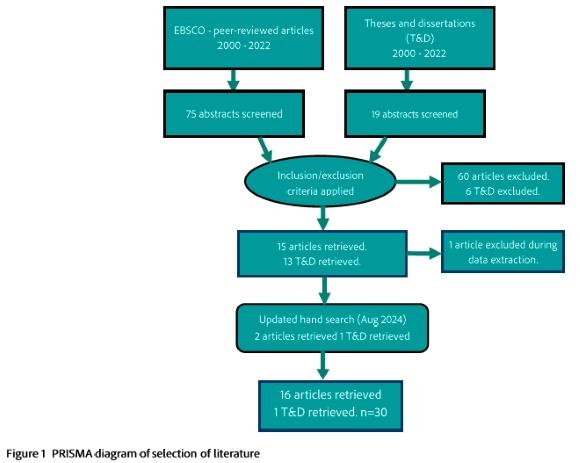
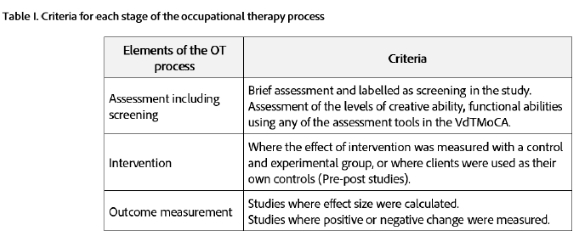
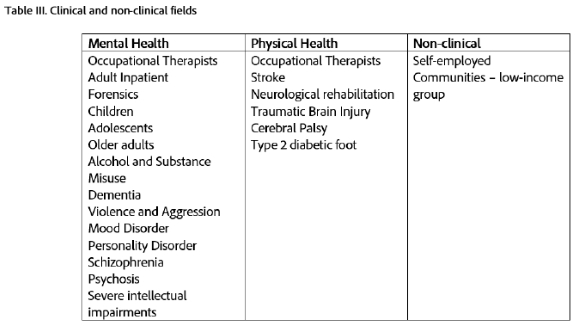
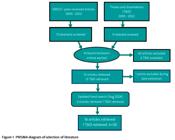
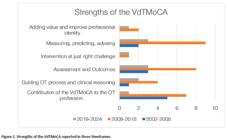
The Vona du Toit Model of Creative Ability (VdTMoCA) is an occupational therapy practice model rooted in the work of South African occupational therapist Vona du Toit in the 1960s and 1970s. While the model is increasingly applied in predominately South Africa and the UK and included in several pre-registration occupational therapy curricula, there is limited published literature exploring its use in clinical practice. To date, only one publication addresses its presence in occupational therapy education, and no comprehensive review has mapped its clinical application. This study aimed to fill that gap through a Systematic Mapping Review, which is suited to broad topics and provides an overview of existing literature without focusing on a single research question. A total of 30 papers were retrieved and charted. Findings indicate that the VdTMoCA is used across diverse clinical and non-clinical settings and supports therapists throughout the entire occupational therapy process. It offers a structured approach to assessing and treating clients with varying levels of volition, motivation, and occupational performance, particularly in complex mental health and forensic contexts. The model enhances clinical reasoning, justifies intervention choices, and strengthens professional identity. This review also highlights gaps in research that warrant further investigation to support evidence-based practice. IMPLICATIONS FOR PRACTICE • The VdTMoCA is an occupational therapy practice model that guides the entire therapy process, supporting therapists in diverse clinical and non-clinical settings. • The model demonstrates utility in addressing varying levels of motivation and action, and occupational performance among clients, enhancing assessment and outcome measurement capabilities. • By enabling therapists to justify interventions based on clinical reasoning, the VdTMoCA enhances therapists' professional value and identity, particularly in addressing neglected aspects of occupational therapy, such as engagement of and effective therapy for individuals whose volition, motivation and occupational performance is severely impaired in mental health and forensic services.
motivation and action; health and well-being; clinical reasoning; occupational therapy intervention; evidence-based practice; levels of volition; occupational performance; mental health
 Thumbnail
 Thumbnail
 Thumbnail