Factors influencing model use in occupational therapy
Abstract
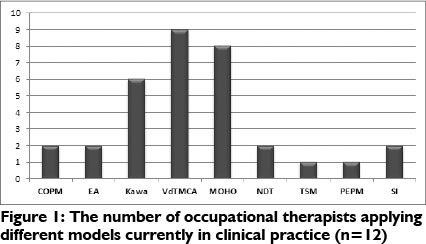
STUDY AIM: To determine which models are used by occupational therapists who attended a workshop on the Kawa Model, in their practice, the demographic factors related to the use of these models and the reasons why they use various models in their practice. METHOD: A descriptive, single case study method was used with embedded units. The research instrument consisted of a survey questionnaire with closed and some semi-structured questions. RESULTS: The characteristics of therapists influenced their use of models. This was determined by their educational background, their level of experience and exposure in the clinical field and their work setting. Time constraints and the nature of the presenting clients also played a role. The clinicians' overall attitude towards new theory and their habituated ways were highlighted as constant factors influencing model use. The use of models provides structure and assists occupational therapists to produce proper, profession-specific, scientifically-based intervention. Models taught during undergraduate studies need to be relevant to address clients' needs in their specific context.
influencing factors on model use; application of models; why we use models
 Thumbnail