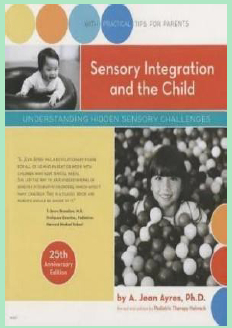
A review of Sensory integration and the child: Understanding hidden sensory challenges. 25th anniversary edition
Stefanie Kruger
Occupational therapist (BOT, UP 1997, MOccTher, UP 2019). Lecturer (University of Pretoria), and private practitioner, Gauteng, South Africa. https://orcid.org/0000-0002-7072-7243. Lecturer on Ayres Sensory Integration Theory and Intervention post-graduate training courses (South African Institute for Sensory Integration). Email:
Title of the book: Sensory integration and the child: Understanding hidden sensory challenges. 25th anniversary edition.
Published: 2005
Publisher: Western Psychological Service
ISBN number: 978-087424-437-3
Available in paperback: Ranging from ZAR 732 to ZAR 1163.89
Number of pages: 211
Dr A. Jean Ayres first published the foundational book Sensory integration and the child in 1972. It served as a definitive guide for understanding how the brain organises and processes sensory information, and how these processes affect a child's learning, behaviour, and development. The updated 25th anniversary edition is a classic handbook and a good introductory resource for anyone who is interested in the theory and application of sensory integration. Dr Ayres described sensations as food for the brain. In this book, she was able to translate core (often abstract) concepts into digestible chapters, specifically intended for parents and professionals without a background in sensory integration.
The book describes the importance and impact of a well-balanced sensory environment on development, the nature of sensory integrative disorders, the ways in which these hidden sensory challenges impact the daily lives of children and their families, and what could be done to help. This includes practical tips, checklists, and resources that can be used in different contexts. This book is a good blend of brilliant insights and practical strategies that will introduce a new way of looking at learning and behaviour. Even though the book itself provides a good overview of the topic with inspirational quotes and photos, the Appendices are also worth mentioning. Appendix A consists of chapter commentaries written by experts on each topic. Appendix B consists of an insightful literature review for further exploration of the scientific concepts. Appendix C is a description and reasoning behind the use of some of the therapeutic equipment. Appendix D consists of frequently asked parent questions with answers. The book is concluded with a glossary of terms for quick and easy clarification.
I can highly recommend this book to all occupational therapists, as well as the extended allied health professional team working with or teaching on the topic of sensory health and improving participation, learning and behaviour. Publications such as this book touch the lives of many families by promoting understanding and empathy for individuals who experience a disrupted flow of sensation in their daily lives. It is a must-have for any therapist's bookshelf.
"There is an abundance of riches to be found in these pages". (Foreword, by Florence A. Clark).
"This book explains sensory integration theory and concepts in language that is easy to understand. It is therefore a valuable resource to use, not only for the OT's own knowledge, but also to educate parents and teachers". Dr Janine van der Linde, paediatric lecturer, University of the Witwatersrand.
INFORMATION ON THE AUTHORAuthor: A. Jean Ayres, Ph.D.
With assistance from Jeff Robbins (Editor, Pediatric Therapy Network) Dr Jean Ayres was a visionary occupational therapist and psychologist who originated the theory of sensory integration in the 1950s. She was one of the first to apply the concept of sensory regulation and integration of brain mechanisms on different levels, affecting behaviour, emotions and learning. Dr Ayres recognised and described "hidden disabilities" which she later referred to as patterns of sensory integrative dysfunction. The sensory integration therapeutic framework is described as an evolving theory and laid the groundwork for modern paediatric occupational therapy. Dr Ayres revolutionised the way therapists, educators and parents view potentially misunderstood children by providing terminology and concepts to describe behaviour, plan intervention, and predict adaptive changes as a result of intervention. Dr Ayres authored various publications (including two books and over 50 scholarly articles). She also won prestigious awards for her valuable contributions in the field of occupational therapy, recognising her impact on education, research and clinical application. Although Dr Ayres passed away in 1988, her scholars continued with her work. Occupational therapy using sensory integration is currently one of the most used frames of reference in the field of paediatrics. It became necessary to trademark the term Ayres Sensory Integration (ASI®) around 2005 to 2006 to distinguish Dr Ayres' original clinical methods, theory, and assessments from other generalised, sensory-based therapies. Ayres was dedicated to the promotion of science-driven intervention strategies leading to better quality of life for people with hidden challenges and their families. Today, her legacy lives on through the continued use of ASI® therapy globally, including diverse diagnoses across the lifespan.
Declaration of bias: The author is a qualified Sensory Integration therapist and has been practising in this field for over 20 years, and has no bias to declare.