Exploring the influence of hyper-reactive responses to clothing on families of children with tactile hyper-reactivity
Abstract
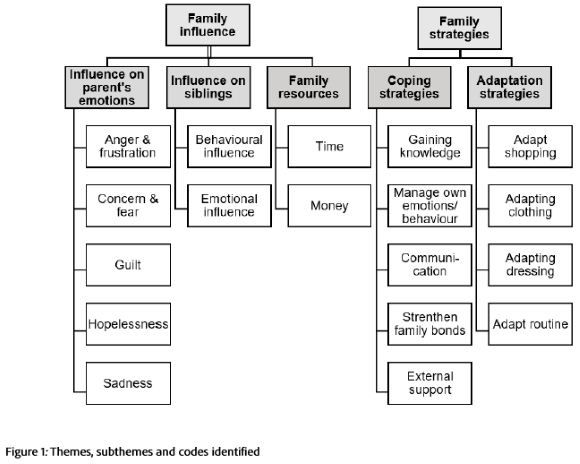
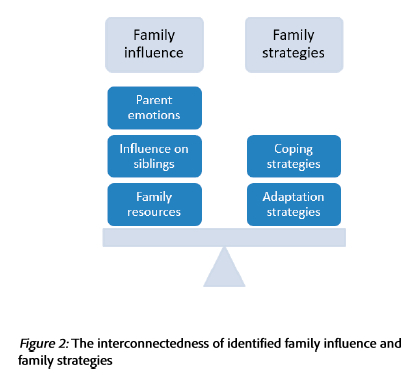
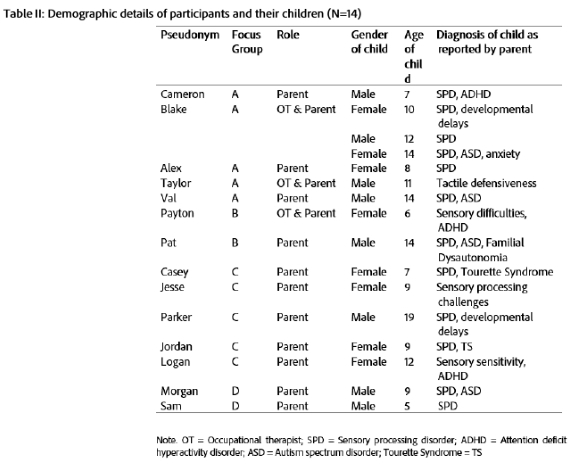
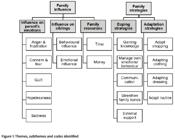
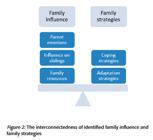
INTRODUCTION: Children with tactile hyper-reactivity may respond with aversive responses to certain clothing items, such as school uniforms. Given that families operate as interconnected systems, a child's hyperreactive responses to clothing can impact the entire family. This study aimed to explore the influence of children's hyper-reactive responses to clothing on their families and determine the strategies families use to cope with resulting challenges. METHOD: This exploratory qualitative study focused on the views of parents with children (aged 5-19 years old) with tactile hyper-reactivity. Four online focus group discussions were held with a cumulative total of 14 parents. Data analysis involved thematic analysis using Atlas.ti. Two themes with subthemes emerged. RESULTS: Theme 1 (family influence) includes the influence on the parents' emotions, the siblings, and family resources. Theme 2 (family strategies) includes the coping and adaptation strategies that families employ to prevent hyper-reactive responses and to promote their family wellness to deal with the challenges they experience. CONCLUSION: This study emphasises how children's hyper-reactive responses to clothing can influence families. Families should be guided to implement strategies that contribute to preventing hyper-reactive responses to clothing that may promote overall family wellness. IMPLICATIONS FOR PRACTICE: • The sensory hyper-reactive responses elicited by clothing influenced the families of children with tactile hyper-reactivity in multiple ways. • Occupational therapists who assist children and families of children who experience sensory hyper-reactive responses to clothing should keep the broader perspective of the child and family in mind when designing interventions. • Occupational therapists should guide families to make the adaptations required to prevent hyper-reactive responses as far as possible. • Strategies aimed at promoting family participation in wellness activities, as well as the adaptation of family routines, should be facilitated. • Purposefully adapting clothing that elicits sensory hyper-reactive responses is avaluable strategy.
clothing; family; tactile hyper-reactivity; strategies; wellness
 Thumbnail
 Thumbnail