Parents and caregivers knowledge of school readiness for children admitted to Grade R and Grade 1
Abstract
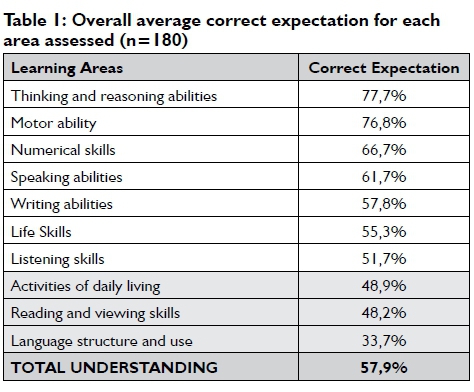
INTRODUCTION: Children with scholastic difficulties, including failure to adapt to or thrive in formal schooling, are frequently referred to occupational therapists. Assessment of these children indicates that many of them have not attained the essential school-readiness skills. Concerns have been raised that parents/caregivers often only consider school-readiness with respect to age rather than other developmental milestones. Research has found that the parents' or caregivers' understanding and ability to determine their children's development in relation to school-readiness is important if the child is to succeed academically. The purpose of this study was to explore parents' or caregivers' knowledge of school-readiness as per the expectations for formal schooling as defined by the current National Curriculum and Assessment Policy Statement (CAPS) and the Independent Schools Association of Southern Africa, (ISASA METHOD: This study used a quantitative, descriptive, cross sectional survey research design. Stratified sampling was used to select a sample of parents or caregivers of children admitted to Grade R and Grade 1 level at schools in the Gauteng Province. A self-report questionnaire, specifically designed from the literature was circulated to parents/caregivers by participating schools RESULTS: There was a 41.2% return rate, but only 180 returned questionnaires could be analysed. The results found that that 57.9% of the participants had the correct expectation of school-readiness in ten learning areas within the questionnaire. Participants viewed school-readiness most correctly in the learning areas of Thinking and reasoning (78.9%) and Motor ability (76.8%), while the learning areas of Activities of daily living (ADL) (48.9%), Reading and viewing (48.2%) and Language structure and use (33.7%) were rated with less accuracy, with both under-estimations and over-estimations reported. The mother's level of education was the single demographic factor found to have significance with respect to knowledge of variables related to school-readiness CONCLUSION: The parents/caregivers in this study had a fair understanding of some of the variables included in school-readiness, but their ability to determine others, including ADL, was limited. Occupational therapists should be cognisant of the curriculum criteria for school-readiness and should play a role in raising awareness of school-readiness criteria among parents and caregivers wherever possible, to prevent scholastic under-achievement due to lack of school-readiness
Awareness of school-readiness; activities of daily living; reading and viewing skills; language structure and use; mother's level of education
INTRODUCTION
The South African Schools Act Amendment of 2011 dictates that it is compulsory for all children aged between 5 years and those who turn 6 years before June, to enter formal schooling12334-7.
A study by Janse van Rensburg in 20 1 586
School-readiness should be viewed as a collective responsibility with schools, support structures in the community and parents/ caregivers working together to ensure the child's successful transition into, and achievement in, formal education. Parents/caregivers should be knowledgeable about their child's specific development. Since parents/caregivers are involved with the child on a daily basis, they are thought to be the best source of information regarding a child's physical skills, social skills, emotionality, and engagement in tasks - all critical in determining occupational performance at the school entry level. Associated with this is the assumption that par-ent/caregivers understand the concept of school-readiness based on the skills specified by the Department of Education29
It is not known what knowledge parents/caregivers in the South African context have in terms of developmental milestones and the expected developmental criteria required for a child's smooth transition into formal schooling. Thus, the purpose of this study was to investigate the knowledge parents/caregivers of children in Grade R and Grade 1 in schools in Johannesburg, Gauteng Province, have of school-readiness and to determine if there was an association between parents/caregivers' knowledge and demographic factors.
Research has shown that the first five years of a child's life are the building blocks to all motor, psychosocial, emotional and behavioural abilities. These first few years are filled with events, relationships and numerous experiences, which impact on a child's abilities12
Formal schools are provided with a set of curriculum criteria defined by the current National Curriculum and Assessment Policy Statements (CAPS)294,6,13.
Much research has been undertaken to determine what specific skills are implicit in school-readiness and what is necessary to predict adequate school outcomes1422,15. In the foundation phase of learning, South Africa has delineated three specific learning areas which are language, mathematics and life skills154,6,13. The areas of learning are inclusive of sub-sections which reflect the skills specified for school-readiness. In the Language learning area listening skills, speaking, reading and viewing, writing and language structure and use are associated with the socio-emotional and language development pre-requisites. Numbers, thinking and reasoning in the Mathematics learning area reflect the cognition and general knowledge pre-requisites in the form of understanding basic concepts as well as facilitating approaches to learning. Lastly, the Life Skills learning area is divided into motor abilities, life skills, activities of daily living (ADL) and emotionality. All these pre-requisites consider conceptual and functional abilities required in everyday life, as well as motor and physical abilities2
Thus, when children transition into formal schooling, they and their parents/caregivers face a challenging range of expectations and demands, in keeping with formal curriculum within the scholastic environment13131617
School-readiness is therefore a relevant outcome with longterm consequences that parents/caregivers should be made aware of18
Differences in parents' or caregivers' knowledge and awareness of criteria for school-readiness do exist in related to their level of education, parenting skills, abilities, and variations in social and economic class419
RESEARCH METHODThis study used a quantitative, descriptive, cross sectional survey design. This design was appropriate as the data were collected at a single point in time and a questionnaire used to survey the parents'/ caregivers' level of knowledge of school-readiness utilised categorical numerical data to record a description of participants' knowledge of school-readiness and the school-readiness indicators20
Stratified sampling which is a non-probability sampling technique, was used to select a sample from a population of parents/ caregivers of children admitted to the Grade R and Grade 1 level of schooling, within the Gauteng Province of South Africa20
Cochrane's formula was used to determine the sample size based on a population of 300 learners at the three schools. A sample of 196 returned questionnaires was required to be representative of the population, if the margin of error was set at 5%21
Adults who were parents or caregivers of a Grade 1 or Grade R pupil were included in the study if they were literate in English and were 18 years or older.
Research instrument
A questionnaire was specifically developed for this research based on literature related to criteria for school-readiness in South Africa2,9. The questionnaire consisted of two sections: The first section recorded demographic information of the sample, while the second included questions relating to school-readiness requirements for a child entering into a Grade 1 level of education. Section 2 had a self-report design with 104 statements related to school-readiness, which were organised into 10 sub-sections: Listening skills; Reading and viewing skills; Numerical skills; Thinking and Reasoning; Language structure and use; Motor abilities, Life Skills and Activities of Daily Living. Participants were required to answer all questions using a four-point rating scale: To be school-ready: "My child should definitely be able to do this," "My child should be able to do this sometimes," "My child is expected to learn this at school," or "Unsure."
Pilot study
A pilot study was undertaken to determine the content validity of the first draft of the questionnaire22
End-users were then asked to evaluate the questionnaire. Eight parents or caregivers with children in junior primary level of education were recruited and were asked to complete the questionnaire to determine the clarity and flow of the questions, the ease of answering all questions and the time required to complete the questionnaire22
Research procedure
The researcher gave the principals at the three schools envelopes containing an information sheet and a questionnaire to be distributed to the parents/caregivers of all Grade R and Grade 1 learners in each school. The envelopes were distributed to parent/caregivers according to the schools' letter-hand-out system in the early part of the second term of the school year. The questionnaires were collected two weeks later.
Ethical considerations
The Graduate Studies Committee of the Faculty of Health Science approved the protocol for this research study and ethical approval was obtained from the University of Witwatersrand Human Research Ethics Committee (M130349). The Gauteng Department of Education, the School boards and principals of the public and private schools gave written permission for the research. The information sheet circulated with the questionnaire to parents/caregivers detailed the research: purpose, objectives, how the data were to be collected; the time it would take to complete the questionnaire as well as confidentiality within the research procedure. No consent form was included, as consent was assumed through participants (parents or caregivers) completing and returning the questionnaires. Confidentiality was ensured as no names or personal information was requested on the questionnaire, ensuring the anonymity of all participants. All questionnaires were returned in a sealed envelope to ensure that confidentiality was maintained.
Data Analysis
Data from both the demographic (Section I) and the school-readiness (Section 2) parts of the questionnaire were analysed descriptively. The school-readiness factors were scored as correct or incorrect expectations (under or over estimation) based on the criteria set in the literature as a percentage of the sample. 'Unsure' or 'did not answer' were also recorded as a percentage of the sample. The effect of the demographic factors on the school-readiness expectations of parents/caregivers was analysed using a Kushkal Wallis ANOVA using Staistica v 13.2 software.
RESULTS
Only 210 of the 510 questionnaires distributed were returned. Thus, the return rate was 4I.2%. However only 180 questionnaires could be analysed. Some participants did not complete all demographic information (Section I) but these were still included in the data analysis. However, only questionnaires where Section 2 was fully completed were included in the results.
Demographic of participants
The ages of the just over half (52%) of parents/caregivers fell within 35-45 age group while 42% fell in the 25-35 age group, 5% were over the age of 45 years and 1% younger than 25years. The majority of participants were English speaking (51%), and the least were Zulu speaking (16.5%). Nineteen participants reported that they spoke two or more languages at home. Most participants indicated that they belonged to the African racial groups (49%), followed by the Caucasian group (37%).
Half of the mothers and fathers (53% and 49% respectively) had a degree and/or diploma. The monthly income of households varied between R12 500 and R27 000 (36 %), below R12 500 (20%), and an income of R27 000- R38000 (17%). Only thirty percent reported being single parent households. Households were reported having two children (50%) or three children (23%). The majority of the children (98%) had attended preschool, crèche and/ or nursery school.
School-readiness learning areas
Table 1 below indicates the percentages of participants who selected the correct expectation in ten categories within the questionnaire indicating that that 57.9% of the participants had the correct expectation of school-readiness.
Only the three school-readiness learning areas that fell under the 50% correct answers are considered further in the results.
Activities of daily living
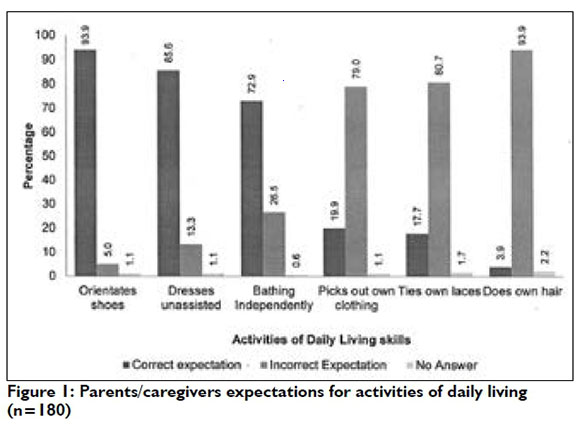
There were six variables listed under the activities of daily living learning area. Figure 1 on page 31 shows that majority of participants had correct expectations on three variables (72.9%-93.9%) and incorrect expectations for the other three of the variables (79%-93.9%).
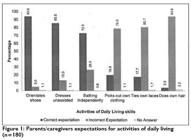
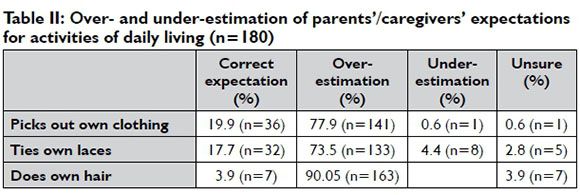
Table II below indicates that participants overestimated what their child should be able to achieve in relation to the activities of daily living criteria for school-readiness with very little underestimating what was required.
Reading and viewing learning area
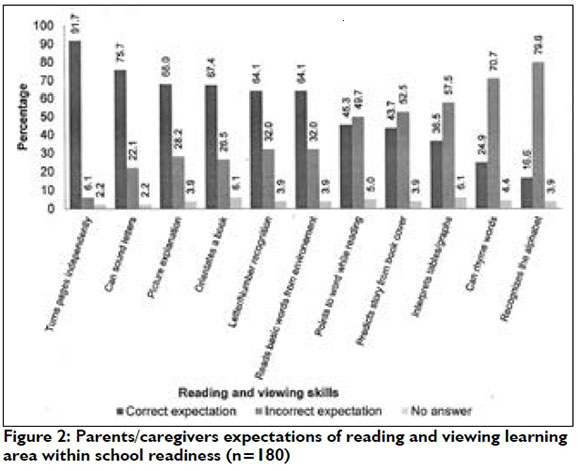
There were eleven variables in the reading and viewing learning area category. Figure 2 (below left) indicates that the majority of participants displayed the correct expectation on six of the eleven variables in this category of school-readiness expectations, (9I.7%-64.I%) with incorrect expectations for five variables (49.7%-79.5%).
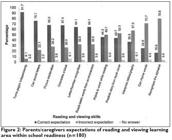
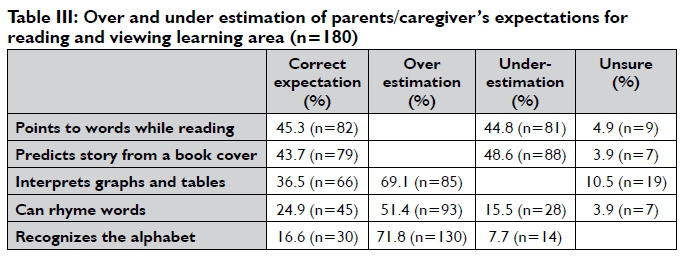
Variables within the Reading and viewing learning area where participants underestimated (44.8%-48.6%) and overestimated (51.3%-71.8%) their child's ability with regards to school-readiness are reported in Table III on page 32. For "can rhyme words" and "recognises alphabet" participants both over and underestimated the criteria their child should achieve with more participants overestimating what the child should be able to do.
Learning area of language structure and use
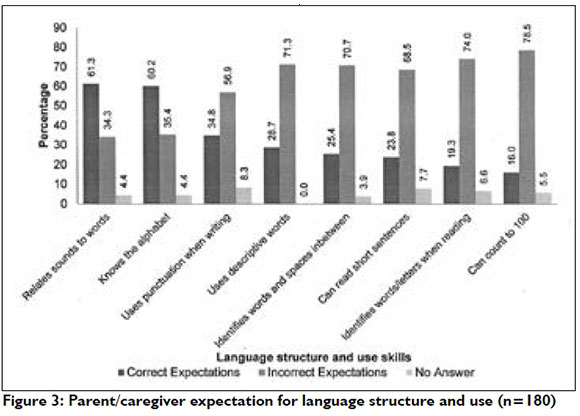
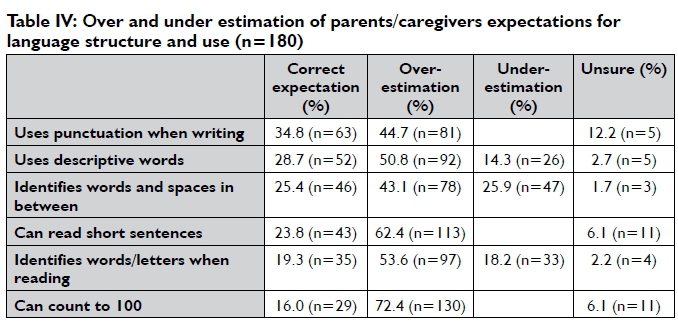
There were eight variables in the language structure and use learning area, and the participants displayed the correct expectation on only two variables (60.2%-6I.3%). The participants incorrectly rated six variables (56.9%-78.56%). Overall, 33.7% of participants had correct expectation of school-readiness expectations for language structure and use. (Figure 3 on page 32) The majority of participants reported an overestimation of a child's ability with regards to school-readiness in language structure and use (43.I%-72.4%) while some participants underestimated the "use of descriptive words", "identifies words and spaces between" and "identifies words and letters when reading" (I4.4%-26%) (Table IV on page 32).
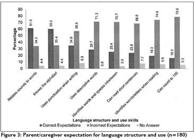
Demographic factors and the estimation of criteria for school-readiness by of parent or caregivers
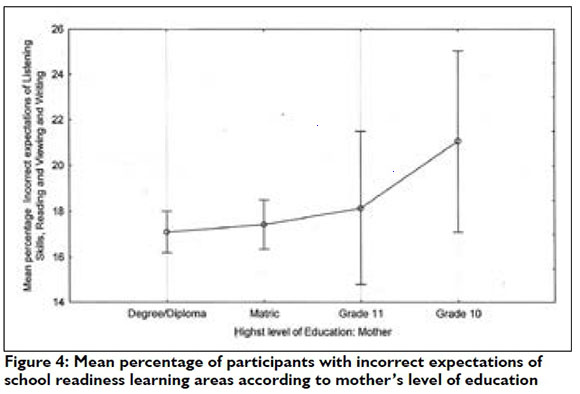
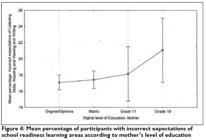
The only statistically significant difference found in this sample for the demographic factors and the incorrect estimation of school-readiness variables was between the mother's highest level of education and the Listening skills (p=0.026), reading and viewing (p = 0.030) and writing (p=0.029) school-readiness learning categories (Figure 4 on page 33).
DISCUSSION
The sample in this study represented parents/ caregivers of children attending quintile 2 and 3 fee paying schools and a private school. Approximately half the mothers and fathers in this sample had post matric education and according to Eccles2324
Participants made errors in the learning areas of school-readiness and development that were perhaps not as familiar to them. Most overestimated the milestones and skills related to language, reading and activities of daily living that their child needed in relation to school-readiness. Interestingly their expectations in terms of what activities of daily living their child should achieve when starting school were incorrect and overestimated for half the variables in this category of school-readiness. Parents/caregivers are generally directly involved in performing tasks such as tying shoe laces, doing one's own hair and picking out one's own clothing with the children on a daily basis and should be aware of what a child, who is about to start formal education, can achieve. The findings of the current study are in line with a study by Zhang et al262,9. The high expectations of parents were supported by Piotrkowski et al.27
The participants' overestimation of the language and reading skills required by their children may also be influenced by the preschool environment, since an overall increase in preschool teachers' beliefs about the importance of academic skills in recent years has been reported2829
Although the percentage was lower, the underestimation of abilities required for school were related to "pointing to words" and "predicting the story" as well as "spatial recognition in relation to words". This is of concern as Puccioni3044,31,32, ethnicity4,31, single parent households32324,33.
In the current research, only the mothers' highest level of education had a significant influence on parent or caregiver knowledge of school-readiness. The higher the mothers' level of education the smaller the margin of error for school-readiness expectations. This finding is consistent with research by Eccles2323
Limitation of the study
The 180 participants who took part in this survey fell short of the 196, which would have formed a representative sample for this study34
The self-report nature of this questionnaire demanded that parents/caregivers rate their perception of the knowledge and skills attributed to school-readiness. Rating the perception of knowledge is difficult, as defining the exact level of knowledge in relation to a brief question is complex, thus it is easy for participants to assume they have knowledge when it is not explicitly stated. Not all participants ticked all questions, deliberately or selectively not answering some of the questions. Thus, the level of knowledge of parents/caregivers about school readiness may not be reflected for those who did not answer presumably because the questions were difficult to answer or difficult to understand. Percentages of those who did not answer have been reflected separately to prevent an overestimation of parents/caregivers knowledge about school readiness.
Implications for clinical practice
In this study the participants understood 57.86% of-school-read-iness criteria. Therefore, there is a role in increasing awareness of school-readiness criteria at a Grade R level so that parents/ caregivers can refer their children for early childhood intervention, preferably before they start Grade I if they are concerned about their school-readiness. It is also important in view of the overes-timation of participants in the current study that therapists are aware, that parents/caregivers may set their expectations too high, so over referral due to these unrealistic expectations is avoided. Therefore, occupational therapists should be cognisant with the curriculum criteria for school-readiness as set out for public and private schools in South Africa.
CONCLUSION
The parents/caregivers in this study had a good understanding school-readiness and appeared to have a better understanding of developmental milestones related to motor skills, counting and speaking. In the learning areas of school-readiness where participants had poor understanding, they generally overestimated the ability their child required. Independence, reading and language use have been reported as skills that parents believe are important for school-readiness, which may account for their over-estimation of what the child should achieve prior to starting school. Some parents under-estimated the level of ability their children needed in relation to words in reading and language use. In the current study the sample which was relatively homogeneous in terms of the participant's socioeconomic status and the type of school the child attended, only the mother's level of education influenced understanding of school-readiness.
AUTHOR CONTRIBUTIONSP de Witt - supervisor of project and wrote article.
K du Toit - postgraduate student - conceptualised and completed research for project
D Franzsen - data analysis and co-wrote article.
REFERENCES
LITERATURE REVIEW
- 1. Republic of South Africa. The Education Laws Amendment Act, 2002, (Act 50 of 2002) September 19, 2002. Pretoria; Government Printer.
- 2. Department of Basic Eduction. National Curriculum Statements (NCS) Grades R - 12. 2018. Pretoria.
-
3. Lewit EM and Baker LS. School-readiness. Critical Issues for Children and Youths. 1995; 5(2): 128-139. https://psycnet.apa.org/doi/10.2307/1602361
» https://psycnet.apa.org/doi/10.2307/1602361 -
4. Baldwin CN., School Readiness: Parent Perceptions, Behaviors, and Child Ability Related to Ethnicity and SocioeconomicStatus" .Masters Theses & Specialist Projects. Paper 1049; 2011. http://digitalcommons.wku.edu/theses/1049
» http://digitalcommons.wku.edu/theses/1049 - 5. McBryde C, Ziviani J and Cuskelly M. School-readiness and factors that influence decision making. Occupational Therapy International. 2004; 11(4): 193-208.
-
6. Patrianakos-Hoobler AI, Msall ME, Huo D, et al. Predicting school-readiness from neurodevelopmental assessments at age 2 years after respiratory distress syndrome in infants born preterm. Development Medicine in Children Neurology. 2010; 52(4): 379-385. https://doi.org/10.1111/j.I469-8749.2009.03343.x
» https://doi.org/10.1111/j.I469-8749.2009.03343.x -
7. Welsh JA, Nix RL, Blair C, et al. The Development of Cognitive Skills and Gains in Academic School-readiness for Children from Low Income Families. Journal of Educational Psychology. 2010; 10(I): 43-53. https://dx.doi.org/10.1037%2Fa00I6738
» https://dx.doi.org/10.1037%2Fa00I6738 -
8. Janse van Rensburg O. The school-readiness performance of a group of Grade R learners in primary schools in the Gauteng Province of South Africa. South African Journal of Childhood Education. 2015; 5(I): 0I-23. http://dx.doi.org/10.4102/sajce.v6iI.408
» http://dx.doi.org/10.4102/sajce.v6iI.408 - 9. Independent Schools Association of Southern Africa. Admission Age. 2017. Johannesburg.
-
10. Wesley PW and Buysse V. Making meaning of school-readiness in schools and communities. Early Childhood Research Quarterly. 2003; 18(3): 351-375. https://doi.org/10.10I6/S0885-2006(03)00044-9
» https://doi.org/10.10I6/S0885-2006(03)00044-9 - 11. DeRousie RMS and Durham RE. Process and factors influencing family contributions to school-readiness. In A. Booth & A.C Crouter (Eds). Disparities in school-readiness: How families contribute to transtions into school. 2008: 299-317.
-
12. Sheridan SM, Knoche L, Edwards CP et al. Parent Engagement and School-readiness: Effects of the Getting Ready Interevntion on Preschool Children's Social-Emotional Competencies. Children, Youth, Families & Schools, Nebraska. 2010; 21(1): 125-156. https://doi.org/10.1080/104092809027835I7
» https://doi.org/10.1080/104092809027835I7 - 13. Walker AK and MacPhee D. How home gets to school: Parental control strategies predict childrens school-readiness. Early Child hood Research Quarterly. 2011; 26.
- 14. Cross AF and Conn-Powers M. A Working Paper: New Infromation abour School-readiness. 2011. Bloomington: Indiana Institute on Disability and Community, University-Bloomington.
- 15. Wilson. Curriculum and Assessment Policy Statement (CAPS). 201 1: 166.
-
16. Chien NC, Howes C, Pianta RC, et al. Children's Classroom Engagement and School-readiness Gains in Prekindergarten. Child Development. 2010; 81(5): 1534-1549. https://doi.org/10.IIM/j.I467-8624.2010.0I490.x
» https://doi.org/10.IIM/j.I467-8624.2010.0I490.x - 17. Doyle O, Cheevers C, Finnegan S, et al. Evaluation of the 'Preparing for Life' early Childhood Intervention Programme. 2009; Dublin: UCD Geary Institute.
-
18. Janus M and Offord DR. Development and Psychometric Properties of the Early Development Instrument (EDI): A Measure of Children's School Raediness. Canadian Journal of Behavioural Science. 2007: 1-22. https://psycnet.apa.org/doi/10.1037/cjbs2007001
» https://psycnet.apa.org/doi/10.1037/cjbs2007001 -
19. Barnett MA and Taylor LC. Parental recollections of school experiences and current kindergarten transition practices. Journal of Applied Developmental Psychology. 2009; 30(2): 140-148. https://doi.org.10.10I6/j.appdev.2008.M.001
» https://doi.org.10.10I6/j.appdev.2008.M.001 - 20. Creswell J. Research Design: Qualitative, Quantitative and Mixed methods approaches. Third ed. Los Angeles: Sage; 2009: 260-275.
- 21. Bartlett JE, Kotrlik JW and Higgins CC. Oragnizational Research: Deetermining Appropriate Sample SIze in Survey Research. Information Technology, Learning, and Performance Journal. 2001; 19(I):43-50.
- 22. Forsyth K and Kviz F Survey research. In: Kielhofner G (ed) Research in Occupational Therapy: Methods of Inquiry for Enhancing Practice. Philadelphia: F A Davis Company; 2006: 91-109.
-
23. Eccles JS. Studying the development of learning and task motivation. Learning and Instruction 2005; 15: 161-171. https://doi.org/10.10I6/j.learninstruc.2005.04.012
» https://doi.org/10.10I6/j.learninstruc.2005.04.012 - 24. United Nations Children's Fund. Education Budget, South Africa, 2017/2018. 2018. Pretoria.
-
25. Belfield C and Garcia E. Parental notions of school-readiness: how have they changed and has preschool made a difference? The Journal of Educational Research. 2014; 107(2): 138-151. https://doi.org/10.1080/0022067I.2012.753863
» https://doi.org/10.1080/0022067I.2012.753863 -
26. Zhang X, Sun L and Gai X. Perceptions of teachers' and parents' regarding school readiness. Frontiers of Education in China 2008; 3(3): 460-471. DOI: https://doi.org/10.1007/s11516-008-0030-6
» https://doi.org/10.1007/s11516-008-0030-6 -
27 Piotrkowski CS, Botsko M and Matthews E. Parents' and teachers' beliefs about children's school-readiness in a high-need community. Early Childhood Research Quarterly. 2000; 15(4): 537-558. https://doi.org/10.10I6/S0885-2006(01)00072-2
» https://doi.org/10.10I6/S0885-2006(01)00072-2 -
28. Bassok D and Rorem A. Is kindergarten the new first grade? The changing nature of kindergarten in the age of accountability. AERA Open. .2016; I(4): I-31. DOI: https://doi.org/10.1177/2332858415616358
» https://doi.org/10.1177/2332858415616358 - 29. Lawson-Smith L. Middle class problems: early education in South Africa. Early Child hood Review. South Africa, 2018.
-
30. Puccioni J. Parents' conceptions of school-readiness, transition practices, and children's academic achievement trajectories. The Journal of Educational Research. 2015; 108(2): 130-I47. https://doi.org/10.1080/00220671.2013.850399
» https://doi.org/10.1080/00220671.2013.850399 - 31. Coley RJ. An Uneven Start: Indicators of Inequality in School-readiness. Policy Information Report. Princeton: ETS Policy Information Center Report; 2002.
- 32. Campbell SB and von Stauffenberg C. Child characteristics and family processes that predict behavioral readiness for school. In: Booth A and Crouter A (eds) The Penn State University Family Issues Symposia Series New York: Taylor & Francis Group/Lawrence Erlbaum Associates; 2008: 225-258.
-
33. McWayne CM, Hahs-Vaughn DL, Cheung K, et al. National profiles of school-readiness skills for Head Start children: An investigation of stability and change. Early Childhood Research Quarterly 2012; 27(4): 668-683. https://doi.org/10.10I6/j.ecresq.2011.10.002
» https://doi.org/10.10I6/j.ecresq.2011.10.002 - 34. Fincham JE. Response Rates and Responsiveness for Surveys, Standards, and the Journal. Americal Journal of Pharmaceutical Education. 2008: 72(2): Article 43.