
 A review of the book "Society, Health and Disease in South Africa" by Leah Gilbert, Liz Walker, Silvie Cooper, Kezia Lewins, Rajohane Matshedisho, Lorena Nunez-Carrasco and Terry-Ann Selikow
Blanche Pretorius
South African Journal of Occupational Therapy (SAJOT) Contact: https://orcid.org/0000-0002-3543-0743
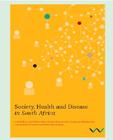
TITLE OF THE BOOK
Society, Health and Disease in South Africa
AUTHORS
Leah Gilbert, Liz Walker, Silvie Cooper, Kezia Lewins, Rajohane Matshedisho, Lorena Nunez-Carrasco and Terry-Ann Selikow
INFORMATION ON THE BOOK
Published: 2019 Publisher: Wits University Press No of pages: 443 (Paperback) Price: R520
ISBN: 978-1-77614-314-8
INFORMATION ON THE AUTHORS
Leah Gilbert is Emeritus Professor of Health Sociology in the Department of Sociology, Uni-versity of the Witwatersrand, Johannesburg, South Africa. Liz Walker is Professor of Health and Social Work in the School of Health and Social Work, University of Hull, United Kingdom. Silvie Cooper is teaching Fellow in the Department of Applied Health Research, University College, London, United Kingdom. Kezla Lewins is Lecturer in the Department of Sociology, University of the Witwatersrand, Johannesburg, South Africa. Rajohane Matshedisho is Senior Lecturer in the Department of Sociology, University of the Witwatersrand, Johannesburg, South Africa.
Lorena Nunez-Carrasco is Associate Professor in the Department of Sociology, University of the Witwatersrand, Johannesburg, South Africa.
Terry-Ann Selikow is Associate professor, Department of Sociology, University of the Witwa-tersrand, Johannesburg, South Africa
"Society, Health and Disease in South Africa" by Gilbert et al. is a is a compelling and comprehensive exploration of health issues within the South African context, delving into the intricate relationship between society, culture and health. The book is divided into four main sections:
The first section elucidates the societal factors - ranging from socio-economic disparities to political structures - that not only may, but do, influence the optimal health outcomes strived for by health professionals. In this context, occupational therapists could play a crucial role in addressing these social determinants of health by advocating for inclusive polices, facilitating access to resources, and promoting community engagement. Understanding these broader societal contexts equips us to provide a more holistic care that considers not only the health of the individuals entrusted to our care, but also the environmental and systemic influences on well-being - which is a theme central to our profession.
In the second section, the authors outline how culture and health intersect and how, through culturally sensitive interventions, occupational therapists can empower clients to navigate health challenges while respecting and more importantly, understand, their cultural identities, which enables us to deliver culturally relevant care that respects diversity and fosters trust between therapist and client. Stemming from our country's complex history and diverse, multi-cultural population, the unique health challenges in South Africa, is explored in the third section. This section deepens our understanding of the socio-political landscape and empowers us to advocate for equitable health services and enact meaningful change. In the final section, the authors translate theoretical concepts into actional strategies for healthcare professions. The authors integrate evidence-based practice such as community-based interventions and interdisciplinary collaboration, with innovative approaches to help health professionals maximise their impact on individual and community health intervention outcomes.
What I consider to be a unique and refreshing feature of this book is its inclusion of case studies and personal narratives which provide enriching stories of the lived experiences of individuals affected by a variety of health conditions. These provide a 'human face' to the statistics and humanises the research findings. It helps the reader empathise with and understand the challenges faced by those directly impacted.
Another noteworthy aspect of this book is its interdisciplinary nature and approach. The content draws on a diverse range of fields such as sociology, public health, anthropology and political science, which provide a multi-dimensional analysis of health and disease. Viewing health and disease through this multidisci-plinary lens allows the reader to gain an holistic understanding of the issues at hand, whilst also exploring the entangled relationships between politics, culture, healthcare and society.
The meticulous research and evidence-based analyses navigated through different lenses including race, historical legacies, inequality and class to shed light on the disparities and social determinants of health in South Africa, are In my opinion, one of the book's most noteworthy strengths.
Readers of this book might need a foundational knowledge of South African history, its healthcare systems and related social issues to contextualise parts of the book. In addition, some non-academic readers may find that certain sections delve too deeply in academic jargon, which potentially might hinder a wider readership.
In conclusion, Society, Health and Disease in South Africa is commendable and contributes greatly to the field of healthcare research in South Africa. The authors' thorough examination of the societal factors affecting health outcomes, combined with their interdisciplinary approach, makes this book a valuable resource for healthcare professionals, researchers, policymakers, educators, students, and anyone with a keen interest in understanding the intricate relationship between society, health and disease.
Declaration:
ChatGPT was employed to reduce this review to 600 words.
Submitted: 10 September 2024
Reviewed: N/A
Accepted: 14 October 2024
Declaration of Bias: None to declare. The reviewer has no connection to or relationship with the authors or publisher.
