Occupational therapy interventions for substance-related disorders in the public primary health care sector in the City of Johannesburg
Abstract
INTRODUCTION: The specific nature of occupational therapy interventions for substance-related disorders in South African primary health care settings remain unclear, despite these disorders posing significant intersecting health and social challenges. The 2023 Prevention of and Treatment for Substance Use Disorders Policy emphasises a shift towards collaborative care, however it remains unclear how occupational therapists enact these directives METHODS: An exploratory qualitative study explored substance-related disorder interventions provided by occupational therapists in the City of Johannesburg's public primary health care facilities. Purposive heterogeneous sampling was used to select eighteen participants consisting of occupational therapists (n=8), multidisciplinary team members (n=6) and service users (n=4). Semi-structured interviews were audio-recorded, written, transcribed verbatim and thematically analysed RESULTS: Six themes emerged: (1) individualised approaches to substance-related disorder interventions, (2) campaigns and screenings, (3) barriers to service delivery, (4) socioeconomic and contextual influences on substance use, (5) service users' experiences with occupational therapy, and (6) proposed solutions for improved substance-related disorder interventions CONCLUSION: Despite challenges in South African public health settings-such as underfunding and staff shortages-occupational therapists in primary health care settings provide numerous occupation-based interventions for substance-related disorders. These interventions address occupational performance in individual and group settings, with gardening groups being the most common form of group intervention IMPLICATIONS FOR PRACTICE: The findings suggest that occupational therapy interventions for substance-related disorders primarily focus on leisure, education, work, psychoeducation, coping skills development, and referrals to learnerships. However, health promotion and substance-related disorder prevention are often underemphasised. These findings highlight the need for occupational therapists to actively engage in health promotion, substance-related disorder prevention, and enhanced interprofessional collaboration to address these conditions more comprehensively
substance use; substance abuse; occupational therapists; public health care; community-based intervention
INTRODUCTION
The knowledge of occupational therapists and other members of the multidisciplinary team (MDT) in the management of substance abuse and substance-related disorders (SRDs)1National Drug Master Plan (NDMP) (2019-2024)1Prevention of and Treatment for Substance Use Disorders Policy (2023)12334
By addressing behaviours and lifestyles-a well-established practice3NDMP (2019-2024)156
In addition to health promotion activities such as life skills training (e.g., coping and problem-solving, stress management, and psychoeducation)7893, 6, 10. The study did not specify whether other MDT members focus on health promotion and disease prevention9National Mental Health Policy Framework and Strategic Plan (2023-2030), Ward-based PHC Outreach Teams (WBPHCOTs), particularly community health workers (CHWs), play a significant role in health promotion and disease prevention611
Occupational therapists began offering mental health services in PHC settings in 2021, following the response by the Gauteng DoH to the 2016 Life Esidimeni tragedy1113National Mental Health Policy Framework and Strategic Plan (2013-2020), which emphasises coordinating services for mental disorders and substance use disorders (SUDs), as these conditions often coexist1, 13. However, in April/May 2023, occupational therapists in PHC settings within the City of Johannesburg were integrated into a combined role encompassing both mental and physical rehabilitation, which led to the elimination of specific mental health positions. The impact of this integration on mental health interventions, particularly for SRDs, remains unclear.
The problem is that existing literature on occupational therapy interventions for SRDs in South Africa is limited-especially in PHC settings-and international studies may not always be applicable to the country's unique context. There has been research conducted in KwaZulu-Natal regarding occupational therapy in PHC settings14-18. However, no literature was found on occupational therapy interventions for SRDs in the public PHC sector in the City of Johannesburg district within Gauteng. Furthermore, the researcher's experience as an occupational therapist in a public tertiary hospital in Gauteng revealed that many individuals admitted to public psychiatric wards were using and abusing substances. This observation raised concerns regarding the adequacy of "groundwork" conducted by occupational therapists implementing SRD interventions at the PHC level.
This concern is supported by findings from a study conducted in an acute psychiatric ward at Helen Joseph Hospital, a tertiary facility in the City of Johannesburg district. Among 150 study participants, 100 were diagnosed with SRDs, while a further 23 reported SRD symptoms without a formal diagnosis1919
Substance abuse is a global issue with high prevalence. In 2021, approximately 39.5 million individuals worldwide had a drug use disorder (DUD), and 13.5 million individuals aged 15 to 16 used cannabis2021123124, 25. The COVID-19 pandemic exacerbated SRD issues by significantly impacting overall mental health, leading to increased anxiety, depression, and substance misuse2627
In South Africa, public and private healthcare systems differ significantly, with the underfunded public sector facing severe resource and staff shortages1, 14, 28. Despite a 6% increase in patient visits in PHC in 2022/232930311, 1. The DSD leads efforts to combat substance abuse, with the Central Drug Authority (CDA), overseeing the implementation of the NDMP (2019-2024)1, 32. The NDMP (2019-2024) specifies departmental responsibilities for addressing substance abuse and aims to make South Africa free of substance abuse12008 Prevention of and Treatment for Substance Abuse Act recognises occupational therapists as mental health practitioners and mandates that community-based SRD services incorporate prevention strategies and involve an MDT including social workers, professional nurses, and other mental health practitioners10
The Occupational Therapy Practice Framework (OTPF) defines occupational therapists as professionals who design occupation-based interventions by considering the transactional relationship between the service user, their meaningful occupations, and their context3333:23. The domain of occupational therapy includes five main aspects: occupations, contexts, performance patterns, performance skills, and client factors33333435363738
Additionally, the Prevention of and Treatment for Substance Use Disorders Policy (2023) emphasises involving service users and their support networks in intervention planning, integrating support groups for sobriety, and incorporating vocational rehabilitation-commonly provided by occupational therapists-into treatment and prevention services1NDMP (2019-2024) advocates for support services that prevent relapse and enhance personal development, self-sufficiency, and social interactions1317
However, the specific role of occupational therapists in SRD interventions is often not clearly defined or addressed in government policies and legislation, resulting in their function being broadly described as part of general PHC services. Furthermore, although robust guidelines, policies, and legislation for substance abuse interventions are available across the broader healthcare workforce, their practical effectiveness remains questionable. This study aimed to explore occupational therapy interventions for SRDs in the City of Johannesburg's public PHC sector. Specifically, it examined the perspectives of occupational therapists and service users, evaluated user experiences, and gathered recommendations from service users and DoH stakeholders to enhance these interventions.
METHODS
Study design
A qualitative exploratory study design was used to explore occupational therapists' practices and service users' experiences with SRD interventions in the public PHC sector. Exploratory research effectively addresses 'what' questions and is particularly useful for investigating under-researched phenomena3940
Study setting
The study was conducted in the City of Johannesburg, one of six districts in the Gauteng province, in South Africa. Gauteng is the smallest of the country's nine provinces, yet the most populous with over 15 million residents, about five million of whom live in the City of Johannesburg4120, 21.
Sampling
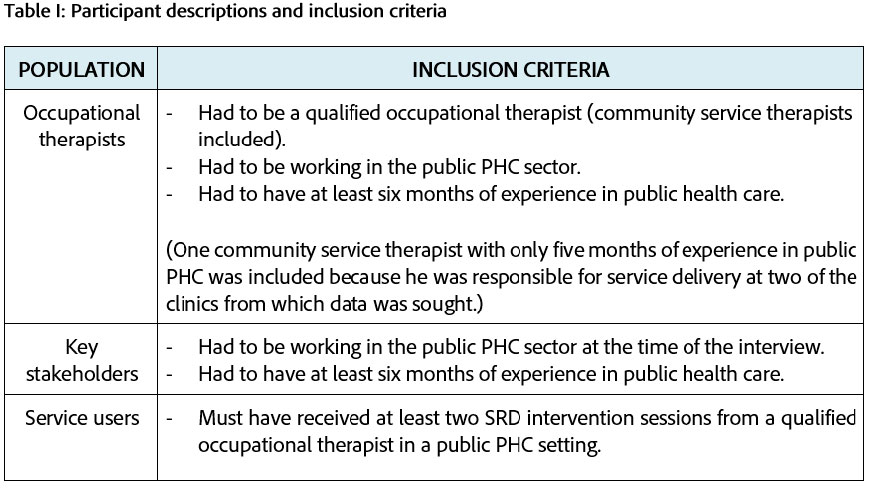
A purposive heterogenous (also called maximum variation) sampling method was used to select 18 participants based on specific criteria42Table I below). For this study, service users were defined as patients receiving SRD interventions from occupational therapists in the public PHC sector. Sampling continued until data saturation was reached, defined as the point at which no new themes or information emerged from the data43
Data collection
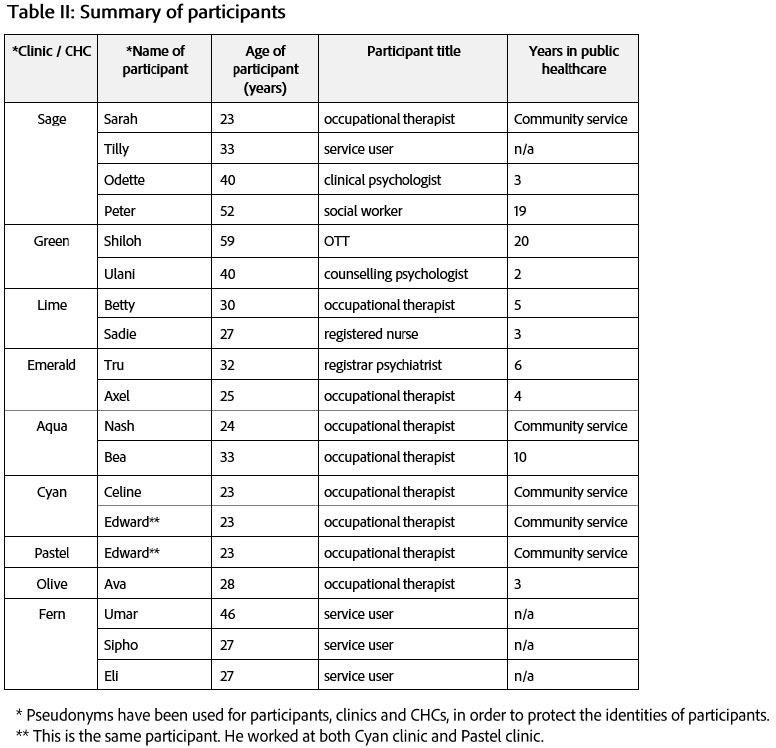
Data were collected via individual semi-structured interviews until data saturation was reached. The interview questions were developed by the researcher, guided by the literature and the research question, and refined through a pilot study to ensure clarity and relevance. The questions covered participant demographics, experiences related to substance use, barriers to care, occupational therapy interventions, and recommendations for improving services. The interviews were conducted between 27 November 2023 and 17 April 2024, in English, averaging 35 minutes. Upon arrival at each clinic and CHC, the ethical approval and permission documentation was submitted to either the matron or the HR department. The researcher then introduced the study to the occupational therapy departments and MDT members, provided information and consent forms, and collected signed consents. One service user volunteered after being informed about the study by nurses, while the other three were recruited by an occupational therapist, following a group session on their SRDs. Of the 18 interviews, 11 were conducted in-person at clinics and CHCs, with the researcher interviewing participants individually in private offices, and seven were conducted online via Zoom. Interviews were audio-recorded with consent, except for two participants who declined recording, for whom hand-written notes sufficed. All interview recordings were stored on a password-protected laptop and will be securely disposed of within five years of study completion.
Pilot study
A pilot study was conducted at Sage clinic (a pseudonym) with four participants-one occupational therapist, one service user, one clinical psychologist, and one social worker-to test the semi-structured interview questions39
Data analysis
The audio-recorded interviews were transcribed verbatim by a transcriber who signed a confidentiality agreement and were manually cross-checked by the researcher. Braun and Clarke's six-phase thematic analysis444544464849, 50 methods was used, with predetermined codes based on literature, research aims and interview questions46, 48 and new codes derived from the data5051
Ensuring trustworthiness
Credibility was established through prolonged data engagement, triangulation from multiple data sources, and supervisor debriefing52535452, 55, 56. A reflexive journal tracked thoughts, decisions, reflections5652, 53.
Ethical considerations
The study was approved by the Biomedical Research Ethics Committee (BREC) at UKZN (BREC/00006245/2023) and received gatekeeper permission from the Johannesburg District Research Committee (DRC) (NHRD reference: GP_202308_089), and the City of Johannesburg municipality. The researcher notified regional managers about the study. All participants provided informed consent, were assured they could withdraw at any time without repercussions (none chose to), and confidentiality was maintained (pseudonyms have been used for participants, clinics and CHCs).
FINDINGS
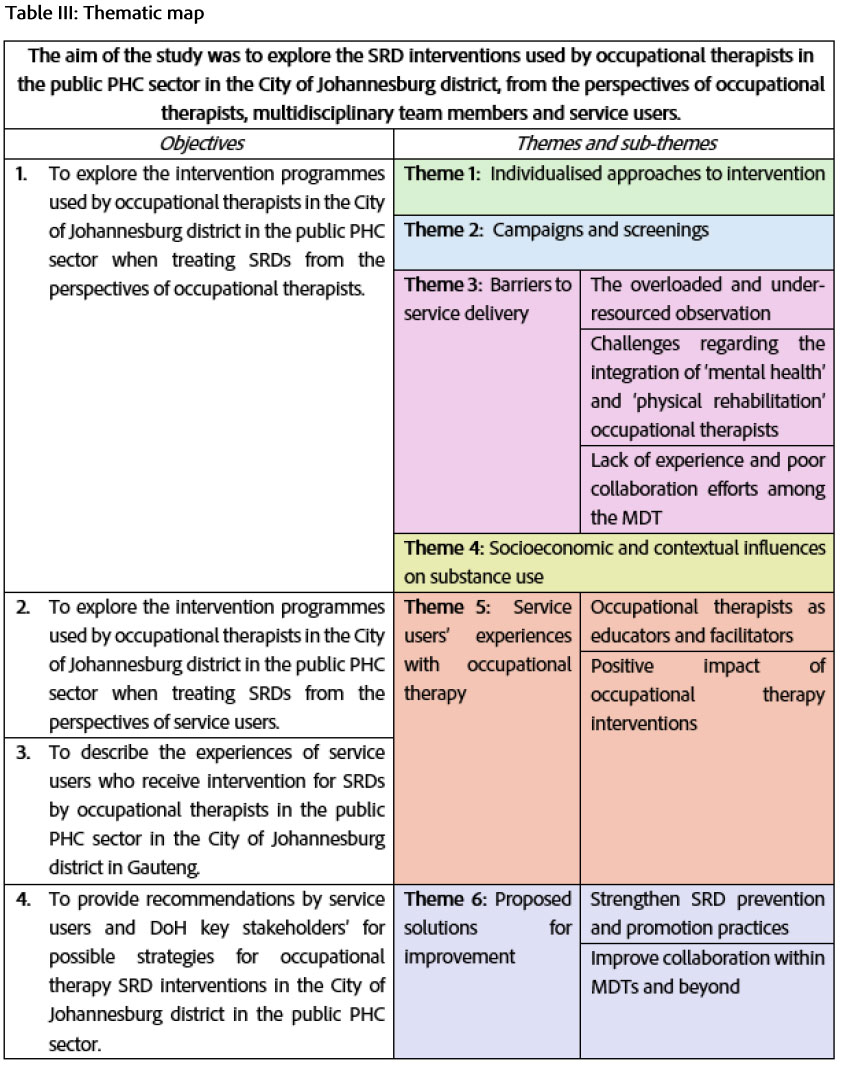
The results include a summary table of relevant demographic information for all participants (Table II below) and a thematic map illustrating the six themes related to the four study objectives (Table III page 5). The themes provide insight into occupational therapy interventions for SRDs, challenges faced in PHC settings, factors influencing substance use, service users' experiences, and recommendations for improvement. Theme one explores the factors guiding occupational therapists in their interventions, including their assessment and treatment of SRDs. Theme two focuses on the campaigns and screenings conducted by occupational therapists for SRDs. Theme three addresses the systematic challenges within PHC facilities and is further divided into three subthemes. Theme four identifies the contextual factors that enhance substance use within communities. Theme five highlights service users' experiences with occupational therapy interventions for their SRDs and includes two subthemes. Theme six is made up of two sub-themes that present solutions to improve occupational therapy interventions for SRDs.
Theme 1: Individualised approaches to SRD interventions
This theme explores the factors influencing occupational therapists' intervention choices, focusing on their assessment and treatment strategies for SRDs. The findings indicate that interventions are highly individualised, with therapists adapting their approaches to the unique needs of each client. Sarah, an occupational therapist at Sage clinic, highlighted the client-centered nature of occupational therapy:
"...it depends on the patient every time."
Study findings indicated that occupational therapists employ a range of SRD interventions, in both individual and group settings. Key factors guiding their intervention choices were also identified. As Axel, an occupational therapist at Emerald clinic, explained:
"...follow your occupational therapy process... it will differ if the patient is acute or chronic...what is important to the patient."
Another occupational therapist noted that experience guides selection of interventions:
"My studying... occupational performance areas... CBR... years of experience that I have... knowing what will work, what won't work."
(Bea, Aqua, occupational therapist)
A different occupational therapist noted that family input is a key factor:
"It is based on the patient... not all of them are able to make their own decisions, so we do need some family input."
(Betty, Lime, occupational therapist)
Standardised and non-standardised assessment tools include the SLUMS (Saint Louis University Mental Status), MoCA (Montreal Cognitive Assessment), VdTMoCA (Vona du Toit Model of Creative Ability), and the MMSE (Mini-Mental State Examination).
"...we are using the SLUMS... the MoCA...looking at creative ability..."
(Ava, Olive, occupational therapist)
"...[we] do a MMSE..."
(Edward, Cyan and Pastel, occupational therapist)
Treatment interventions often focus on vocational rehabilitation:
"...it's mostly voc... learnerships and CVs."
(Sarah, Sage, occupational therapist)
"...we look for learnerships for them."
(Ava, Olive, occupational therapist)
Another occupational therapist, Edward, stated that he focuses on "job acquisition skills", including tasks such as compiling CVs and scanning documents. He observed the following:
"...I am able to use work to target your IADLs, self-care, socialising, [managing] your medication."
(Edward, Cyan and Pastel, occupational therapist)
Referring service users to learnerships seemed to be helpful:
"...that's where we've seen a lot of progress... they got into a learnership; they're now employed."
(Tru, Emerald, registrar psychiatrist)
Leisure was also identified as an intervention goal:
"I work on leisure and recreational activities."
(Bea, Aqua, occupational therapist)
With some service users, interventions focus on ADL's, cognition or self-esteem:
"...you have to do mostly ADLs... client factors based on poor memory or poor attention... a bit of affirmation activities"
(Axel, Emerald, occupational therapist)
In addition, coping skills and healthy habits are addressed:
"...from what I do on clinic level is accessing other healthy habits, so coping mechanisms and coping skills."
(Bea, Aqua, occupational therapist)
Another occupational therapist conducts groups at her clinic:
"...group them according to their level of functioning... medication compliance... where we're trying to prevent relapse... insight [group]... gardening group...we still try to have the job seekers group."
(Ava, Olive, occupational therapist)
A different occupational therapist noted the importance of being an educator and an advocate:
"...family education... education in schools regarding substances... advocating for these patients to access specialised services."
(Bea, Aqua, occupational therapist)
Theme 2: Campaigns and screenings
This theme provides insight into the health promotion campaigns and screenings conducted by occupational therapists within clinics and CHCs. These initiatives are integral to promoting health and preventing illness within the population. It was noted that all participating clinics and CHCs engaged in such campaigns at various points throughout the year:
"...we have to either run campaigns or we have to do screenings."
(Bea, Aqua, occupational therapist)
However, although occupational therapists conduct campaigns, many of the campaigns often focus on physical ailments rather than mental health:
"Most of our campaigns were planned pre-integration, it was predominantly physical."
(Celine, Cyan, occupational therapist)
"...all the campaigns that we have done so far [have] been physically [orientated]... none of our campaigns actually shed light on how or what to do with regards to individuals who have [SRDs]." (Nash, Aqua, occupational therapist)
Another therapist noted that substance abuse campaigns and screenings are in place:
"...some of the schools will ask us to do a campaign... we'll organise SANCA to join or other stakeholders... we do a lot of campaigns here at the clinic... we mostly screen in the clinic... questionnaires like the CAGE."
(Axel, Emerald, occupational therapist)
An additional occupational therapist noted that SRD screening is a standard duty and within their portfolio:
"We have to either run campaigns or we have to do screening... it is in the job description... so every [MHCU]... if it's a new referral, they have to have that screening done."
(Bea, Aqua, occupational therapist)
Campaigns and screenings are sometimes conducted in community spaces:
"We sometimes have campaigns... screening [for] mental conditions and also substance use... it was in a [shopping] complex."
(Ava, Olive, occupational therapist)
However, it was noted that some communities are considered too unsafe for campaigns:
"We don't go into the community anymore... really it's not safe."
(Shiloh, Green, OTT)
"Not all the areas are safe... there have been incidents in the past, so we don't want to risk that."
(Betty, Lime, occupational therapist)
Time constraints were noted as an issue for conducting SRD campaigns in communities:
"...we could, we just haven't had the opportunity. Our time is very scarce."
(Sarah, Sage, occupational therapist)
Theme 3: Barriers to service delivery
This theme is organised into three sub-themes and examines the challenges encountered by occupational therapists and other health practitioners in PHC settings, emphasising the impact of contextual barriers on service delivery. Axel, an occupational therapist at Emerald clinic, noted, "It's a bigger issue that needs more hands-on deck."
Sub-theme 3.1: The overloaded and under-resourced observation
It is well established that South Africa's public healthcare sector experiences high caseloads yet is significantly under-resourced. These resource limitations often result in activities that are contextually irrelevant. Edward, an occupational therapist working at both Cyan clinic and Pastel clinic, reported that the occupational therapy department offers painting activities, even though many service users have no prior experience with painting and lack access to painting supplies once they leave the clinic or CHC.
In addition to shortages of non-human resources, human resource constraints-such as understaffing-also seemed to be a common barrier:
"I would like to put emphasis on how short staffed all of the clinics are."
(Nash, Aqua, occupational therapist)
"...so many centres around here don't have occupational therapists, so we [are] expected to do outreaches to these places, but we can't because we have to see the patients here...you just end up working with what you have... you just don't have the resources to put certain structures in place"
(Axel, Emerald, occupational therapist)
It was observed that some facilities stopped group therapy due to barriers such as compliance difficulties, limited space and understaffing. The following details were reported:
"Groups weren't sustainable... non-compliance in mental health in the clinic when it comes to therapy is a bit high."
(Bea, Aqua, occupational therapist)
The registrar psychiatrist established the range of services within a week:
"Unfortunately, I'm at three different clinics, so it does become a little bit fragmented."
(Tru, Emerald, registrar psychiatrist)
The clinical psychologist noted the issue of high caseloads:
"Our waiting lists are crazy."
(Odette, Sage, clinical psychologist)
Health practitioners are unable to conduct the services they would like to execute:
"There's not enough occupational therapists at a primary health care level to do all these things that we really want to do."
(Celine, Cyan, occupational therapist)
Understaffing also impacts services due to waiting times between appointments:
"...because of our waiting times, we're only seeing patients like every two months... it can be one month, it depends."
(Sarah, Sage, occupational therapist)
Infrastructure is lacking since health practitioners share treatment spaces:
"Space is also a problem...the day when the psychologist is at another clinic... I will plan in a group or plan in a lot of patients."
(Bea, Aqua, occupational therapist)
Additionally, it was observed that staff sometimes sought external support:
"Substance abuse then gets seen at an NGO... which is actually quite sad because it's a clinical issue."
(Ulani, Green, counselling psychologist)
An occupational therapist expressed frustrations regarding SRD interventions:
"...feels like you're going in circles... it's a bigger issue that needs more hands-on deck... different spheres of people in power."
(Axel, Emerald, occupational therapist)
In addition, access to rehabilitation services was observed as a challenge:
"We just have far too many people with substance use problems for the amount of services available."
(Tru, Emerald, registrar psychiatrist)
"...what they can afford is always full."
(Odette, Sage, clinical psychologist)
Sub-theme 3.2: Challenges regarding the integration of 'mental health' and 'physical rehabilitation' occupational therapists
The integration of roles previously held by mental health occupational therapists and physical rehabilitation occupational therapists has resulted in significant adjustments for practitioners. Additionally, due to occupational therapists only entering the mental health space in public PHC settings in Gauteng in 2021, they are facing ongoing challenges with service user compliance:
"...our mental healthcare users were not receiving any occupational therapy services before... they don't really understand why they need to come for occupational therapy...it's still a struggle..."
(Ava, Olive, occupational therapist)
Odette, the clinical psychologist at Sage clinic, mentioned that she previously co-facilitated support groups for MHCUs with the former mental health occupational therapist. However, after the therapist's resignation, these groups ceased. In addition, despite the 2023 integration, some therapists continued to focus solely on one area. For instance, Nash, a former physical rehabilitation occupational therapist from Aqua Clinic, had no exposure to SRDs as he remained focused on physical rehabilitation. Another occupational therapist exclusively treated mental health patients:
"...no, I haven't been seeing any physical patients, it's just been psychiatric for now."
(Bea, Aqua, occupational therapist)
A former mental health occupational therapist reported her experience:
"...we ended up sort of almost taking most of the load on, and we were the only ones doing both physical and psych, while previous rehab occupational therapists were just doing what they were doing before."
(Axel, Emerald, occupational therapist)
Another therapist noted her experience regarding integration challenges:
"We are struggling to find a balance... by the time they integrated I was already booking months in advance, so it was a lot more difficult for me to find time to now go see mental health patients."
(Celine, Cyan, occupational therapist)
A different therapist experienced the integration positively, despite the challenges:
"It's been tough, but more than anything... it's just made me more adaptable... I truly understand now what it means when they say you have to be holistic as an occupational therapist."
(Axel, Emerald, occupational therapist)
Sub-theme 3.3: Lack of experience and poor collaboration efforts among the MDT
Some health practitioners, particularly those completing community service, are inexperienced and lack SRD management skills, which, coupled with poor collaboration within the MDT, further complicates service delivery. Bea, an occupational therapist at Aqua clinic, notes that "treatment is very superficial," when provided by newly trained therapists, further stating:
"...they don't have the knowledge on substance abuse and how to treat it in a community [setting]... it's not really up to standard."
A different occupational therapist noted his university-based understanding of managing SRDs is limited:
"They usually only told us about leisure... I didn't know what to do... the social worker told me..."
(Edward, Cyan and Pastel, occupational therapist)
Another therapist noted her lack of experience:
"I don't have a lot of experience with substance use... I think those of us who still work in physical, [we] miss out on that."
(Betty, Lime, occupational therapist)
MDTs lack understanding of each other's roles and responsibilities, highlighting a gap in collaboration:
"I haven't collaborated with them... I would have never thought to refer a substance abuse patient to an occupational therapist... I've never referred an adult to them, I don't even know if they attend to adults."
(Ulani, Green, counselling psychologist)
The social worker observed a similar assumption:
"I don't know exactly what they do... some of the patients' children, they are born with some behavioural issues because they were using drugs, so the occupational therapists will be very helpful on that one."
(Peter, Sage, social worker)
Collaboration was limited to referrals:
"...we refer but we don't work together in a collaborative way."
(Odette, Sage, clinical psychologist)
"I work with the social worker... they usually give [service users] a referral to rehab."
(Edward, Cyan and Pastel, occupational therapist)
Theme 4: Socio-economic and contextual influences on substance use
Despite SRD interventions in clinics and CHCs, service users often return to environments that either contributed to or exacerbated their unhealthy substance use. Socioeconomic and contextual factors such as unemployment, poverty, stress, and social gatherings play a significant role in perpetuating substance abuse. Axel, an occupational therapist at Emerald clinic, notes that service users "go back to the same environment," which leads health practitioners to feel hopeless due to frequent relapses. These contextual factors often create a sense of powerlessness among health practitioners, as they feel unable to control or mitigate the recurring challenges. Odette, a clinical psychologist at Sage clinic, reported:
"...you feel a bit hopeless and a bit helpless... there's a lot going on out there that you feel like you're not in control of."
An occupational therapist also noted feelings of helplessness, attributed to environmental barriers, despite providing numerous SRD interventions:
"They go back to the same environment and then they just relapse... sometimes you feel like you're not doing enough."
(Axel, Emerald, occupational therapist)
Another therapist observed high relapse rates despite the implementation of SRD interventions:
"You can counsel, but the chance of reoccurrence is high...you don't know where to start to stop it... but we do what we can."
(Betty, Lime, occupational therapist)
Substances are readily available in communities:
"...they're also cheap, so a lot of our population resort to that because it's easy to access."
(Tru, Emerald, registrar psychiatrist)
Additionally, after receiving interventions for SRDs, service users return to environments that lack occupational choices and opportunities:
"There's nothing that keeps people busy... that is why we end up smoking and doing things that are not healthy."
(Umar, Fern, service user)
"It's those adverse social realities... lack of opportunities and employment... which makes people very vulnerable... they turn to substances as something to kind of fill up that vacuum."
(Odette, Sage, clinical psychologist)
Furthermore, service users might return to households where they lack healthy role models:
"...a lot of kids now are also being raised by parents that are substance users."
(Axel, Emerald, occupational therapist)
In addition, despite learning new coping strategies, they may still encounter stress due to unemployment:
"If people are not working... they drinking during the day... trying to relieve stress... they don't know they are adding more stress."
(Shiloh, Green, OTT)
A clinical psychologist identified substance use as a coping mechanism:
"...it's used as a way to escape."
(Odette, Sage, clinical psychologist)
Also, service users may relapse into substance use if they are unable to form healthy social connections in their environments. Service users noted their experiences of peer pressure:
"...my friends... that's how I got into substances."
(Sipho, Fern, service user)
"I was with my friends... I found them smoking weed, so they just told me to smoke with them, that was the first time I started."
(Eli, Fern, service user)
Moreover, outside of SRD interventions, community members are often misinformed about substances:
"Is weed a substance?"
(Tilly, Sage, service user)
"...when I need energy, I smoke weed and drink a coffee."
(Eli, Fern, service user)
An occupational therapist observed these misconceptions:
"...with cannabis being at the brink of being legalised, people think that it's good for you."
(Axel, Emerald, occupational therapist)
Theme 5: Service users' experiences with occupational therapy
This theme is organised into two sub-themes and explores service users' perceptions of and experiences with occupational therapy SRD interventions. The feedback received was largely positive, with Umar, a service user at Fern clinic, stating "so far I am in good hands".
Sub-theme 5.1: Occupational therapists as educators and facilitators
The service users who participated all emphasised the psychoeducational role of occupational therapists in providing information about substance use and its effects. Their reflections underscore the role of occupational therapists as educators:
"They taught us about... legal and illegal substances and how they affect us."
(Sipho, Fern, service user)
A service user reflects on the occupational therapy group session:
"We were talking about illegal and legal substances... we did an activity... we decided to ask each other how... certain drugs affect us... like having hallucinations, delusions, seeing things that are not there, hearing voices."
(Eli, Fern, service user)
Another service user referenced group activities and noted his role in achieving sobriety:
"I think they are [doing] a great job... it's only up to me now... but so far I am in good hands... they were telling us about the substances, how dangerous they are and what they do."
(Umar, Fern, service user)
Additionally, Tilly, a service user at Sage Clinic, noted that occupational therapists assist individuals with daily struggles and equip them with tools for a healthier future. She highlighted how the former mental health occupational therapist helped her with a CV and facilitated her entry into a learnership. Another service user also mentioned learnerships:
"They have just introduced me to the learnership... that's what I like most."
(Umar, Fern, service user)
Umar also noted that despite attending the gardening group, he returns to his community where "there is no garden, there is nothing," highlighting environmental barriers.
Another service user pointed out that gardening groups are a common intervention:
"Last time when I came, we were also doing gardening... most of the time we are doing gardening here at 'Fern Clinic'."
(Sipho, Fern, service user)
Sub-theme 5.2: Positive impact of occupational therapy interventions
All service users reported positive experiences with occupational therapists. Tilly, a Sage clinic service user, commended occupational therapists for their significant impact on her SRD journey, stating they were instrumental in her recovery. She highlighted the value of group therapy, explaining that her use of substances initially stemmed from a search for connection which she found in occupational therapy groups. Another service user also noted a positive social experience with groups:
"...it's good, because we meet other people, we can communicate, and we be free [sic]."
(Sipho, Fern, service user)
In addition, Eli, a Fern Clinic service user, noted that a previous learnership had a positive impact on his life. Furthermore, Umar valued his occupational therapy sessions at the clinic and felt encouraged to adopt a healthier lifestyle. He shared his experience:
"It's been a positive one... it has taught me not to behave like I used to... I used to drink a lot and do things that will put me in danger but as soon as I started to come here, I'm able to avoid those things."
(Umar, Fern, service user)
Both Umar and Eli mentioned that the occupational therapist was the only health practitioner they consulted at the clinic. Umar noted that the therapist was encouraging:
"They are doing a great job... they tell you everything that will help you, and [harm] you. So, it's up to the person, like I said I am the problem not to stop [sic], but I wish to stop, because that's what they encourage."
(Umar, Fern, service user)
Eli also shared how the occupational therapist assisted him:
"...learning how to cope... the help from occupational therapy, it helps with the mind [sic]... the practical steps that I should take is like [participating] in sports, checking for job opportunities, and having people whom you can talk with, maybe other patients."
(Eli, Fern, service user)
Another service user expressed the following:
"If you could reach me and make such a difference, you can help others too"
(Tilly, Sage, service user)
Theme 6: Proposed solutions for improved SRD interventions
Service users and MDT members provided recommendations to enhance SRD interventions within clinics and CHCs. This theme consists of two sub-themes that highlight the need for greater efforts in SRD prevention, health promotion, and collaboration.
Sub-theme 6.1: Strengthen SRD prevention and promotion practices
Occupational therapists were encouraged to intensify their efforts in health promotion and SRD prevention. For instance, the implementation of educational campaigns focused on SRDs was recommended:
"...educating families, empowering teachers as well in terms of how to identify symptoms... how to refer into our system."
(Odette, Sage, clinical psychologist)
The counselling psychologist emphasised the need for enhanced psychoeducation:
"... programmes to psycho-educate people... information of how to access help... not only the patients, but also their families."
(Ulani, Green, counselling psychologist)
Service users recommended that occupational therapists increase their community presence, lead leisure and skills groups, educate about SRDs, and share information on available resources. Tilly, a Sage Clinic service user, suggested using educational materials like pamphlets and flyers. Other recommendations, such as job creation, address broader socioeconomic issues beyond the scope of occupational therapy:
"...give out job opportunities, making sure people are going back to school, and having other activities such as sports... social development."
(Eli, Fern, service user)
Another recommendation was to offer meaningful activities for constructive use of time:
"...help other youth like me, put them out from the street... create groups so that we can do something, anything... keep people busy."
(Sipho, Fern, service user)
A different service user also recommended offering more meaningful activities:
"...maybe going to the garden, exercising..."
(Umar, Fern, service user)
Sub-theme 6.2: Improve collaboration within MDTs and beyond
Increased collaboration among MDT members was recommended to strengthen the focus on SRD prevention and health promotion activities. Tru, a registrar psychiatrist at Emerald clinic, stated that collaboration on campaigns could contribute significantly to SRD prevention:
"...come together more as a multidisciplinary team and do more educational campaigns... if we can do preventative campaigns, we're going to limit the amount of morbidity associated with substance use."
(Tru, Emerald, registrar psychiatrist)
The counselling psychologist recommended increasing mutual education among the MDT:
"...psychoeducation within ourselves... having seminars maybe to take up topics that are really prevalent in South Africa."
(Ulani, Green, counselling psychologist)
It was also suggested that newly qualified therapists collaborate with senior therapists:
"At [Sage Clinic], there's only a comm serve occupational therapist... she's limited the cases on what she can actually see... there hasn't been a senior therapist there for a while... supervision is important."
(Tru, Emerald, registrar psychiatrist)
DISCUSSION
The study explored occupational therapy interventions for SRDs in public PHC settings. It found that occupational therapists predominantly use interviews, the SLUMS, and various functional assessments as assessment tools. The most frequently addressed occupational domains were work, leisure, and education, with referrals to learnership programmes being a common intervention strategy for service users. The study also uncovered several complexities that influence intervention choices. Challenges observed include underfunding, resource limitations, space constraints, staff shortages, and resulting backlogs, which have long impacted service delivery in South Africa1, 14, 28, 29. Additionally, community environments that foster and normalise substance use pose a significant challenge and reflect a widespread issue in South Africa3, 14. Social gatherings often involve substance use driven by the need for connection, which led three of four service users to engage in unhealthy substance use. However, they reported positive social engagement in occupational therapy groups and expressed a desire for more community-based groups, likely due to the opportunity to use their time constructively and due to the universality experienced in group settings, which is recognized as one of Yalom's curative factors in group therapy57
As South Africa moves toward universal health coverage (UHC) through the implementation of National Health Insurance (NHI), the health system is being restructured to strengthen PHC and improve service delivery by 20305833
Humans are occupational beings with an innate desire to engage in various occupations to thrive, use time purposefully and find meaning in life5960224Prevention of and Treatment for Substance Use Disorders Policy (2023) recommends that community-based programmes focus on reintegrating individuals into support services resembling the labour market133353534
Despite efforts to include leisure activities in SRD interventions-to improve quality of life and provide meaning and relaxation51
Furthermore, existing literature links poor education, unemployment, poverty, and boredom to substance abuse, mental health challenges and overall poor health outcomes14, 20, 26, 30, 37, 61, 62. Participants (Odette, Ulani, Axel, Celine, and Bea) reported that service users often resort to substance abuse as a coping mechanism to escape challenging realities. The Ecology of Human Performance (EHP) framework notes that the interdependent relationship between individuals and their environment influences their occupational performance and behaviour64
Additionally, occupational therapists often act as intermediaries, facilitating access to vocational training programmes (learnerships), supporting return-to-work efforts, conducting functional assessments for South African Social Security Agency (SASSA) grant applications, and assisting in community reintegration. They also advocate for service users' admission to rehabilitation facilities, such as the South African National Council on Alcoholism and Drug Dependence (SANCA), through referrals and liaising with social workers. However, accessing public rehabilitation facilities is challenging1, 1, with only 4.17% of those in treatment for SRDs in Africa receiving rehabilitation and aftercare services231, 62 increases relapse risk65Health Sector Drug Master Plan (2019-2025) to improve access6565NDMP (2019-2024)11
However, despite expectations for adequate promotive and preventative measures20161141, 1, 13, 61, 66. Some MDT members-a social worker and counselling psychologist-were unaware that occupational therapists work with adults and are involved in SRD interventions. This highlights the need for psychoeducation regarding the roles and responsibilities within MDTs.
Furthermore, study participants (Tru and Ulani) observed that some clinics and CHCs, with only one occupational therapist, often restrict cases they are willing to handle based on diagnoses or age. The reasons for these restrictions are unclear but may stem from high caseloads or limited experience. Such limitations can exclude patients from occupational therapy and create confusion among MDT members regarding the scope of occupational therapy. A previous study also noted that MDT members often confuse occupational therapists with physiotherapists or other therapists9Prevention of and Treatment for Substance Use Disorders Policy (2023)125, 61. Thus, improved training on SRDs1, 61-beginning at the university level to enhance curricula on SRD interventions, particularly within PHC settings-and ongoing supervision31
Moreover, the study found that occupational therapists provide holistic care through various interconnected interventions. They use some CBR strategies mentioned by the WHO37
In summary, human functioning is complex, involving multiple interrelated systems that should be considered as a whole, rather than as isolated aspects33, 64. An individual's performance can be limited by contextual barriers62
Study limitations
The study was confronted with some limitations. Three of the four service users were from the same clinic, limiting diversity of perspectives. Some occupational therapists had limited experience with SRD interventions, affecting the depth of their responses. However, this is not an unusual situation in South Africa; many positions in public health care are occupied by individuals in community service, meaning that many health practitioners are still gaining experience and learning. The study findings may be generalised to Gauteng province, but further research in other provinces is recommended because healthcare settings vary across South Africa.
RECOMMENDATIONSOccupational therapy services in PHC settings
To address the identified gap in SRD interventions, the following is recommended:
• Add more group therapy to leverage positive user experiences and manage caseloads.
• Provide support groups for families of persons with SRDs.
• Engage in ongoing professional development, with emphasis on mental health and substance abuse.
• Collaborate with the DSD, the Department of Sports, Arts and Culture and community support services to develop culturally relevant prevention programmes, including skills programmes and leisure opportunities in communities, as stipulated in the NDMP (2019-2024)1
• Prioritise mental health services to ensure they are not compromised by the integration of mental and physical rehabilitation roles.
• Conduct more campaigns and routine screenings for SRDs.
Multidisciplinary teams in PHC settings
• Strengthen collaboration between MDT members, WBPHCOTs, and the DSD to enhance screening efforts and increase SRD-focused campaigns, including psychoeducation and information on how to access help.
• Enhance interprofessional collaboration through regular team meetings to clearly define roles and responsibilities, reduce service duplication, and improve the implementation of SRD prevention and health promotion strategies, guided by relevant policies1, 1.
• Ongoing training is recommended for all health practitioners involved in substance use care, as highlighted by participants and the Prevention of and Treatment for Substance Use Disorders Policy (2023)1
Occupational therapy curricula at universities
The study identified insufficient training in SRDs, particularly among newly qualified occupational therapists. Recommendations include:
• Review occupational therapy curricula to include a stronger focus on SRD interventions-as recommended in the Health Sector Drug Master Plan (2019-2025) for all training institutions65
• Increase students' exposure to mental health and SRDs to better prepare graduates for their community service year, where they are likely to encounter substance-related cases, especially if placed in PHC settings.
Gauteng Department of Health
The study identified a severe lack of resources in clinics and CHCs, affecting service delivery. With assistance from key role-players such as the National Department of Health and the DSD, recommendations include the following:
• Allocate additional funding to enhance PHC infrastructure and resources, enabling implementation of goals stipulated in the NDMP (2019-2024)1Prevention of and Treatment for Substance Use Disorders Policy (2023)1
• Increasing budget alone is insufficient; deliberate measures are also needed to improve healthcare quality and capacity, including hiring more health practitioners to manage high caseloads and implement community-based programmes.
• Ensure each clinic and CHC has a complete MDT to provide consistent, holistic care, addressing reliance on visiting staff and gaps in substance abuse services. Strengthening human resources to address substance abuse is a strategic goal outlined in the Health Sector Drug Master Plan (2019-2025)65
• Each clinic and CHC should employ a senior occupational therapist to supervise and support newly qualified therapists, enhancing their confidence and effectiveness. Where on-site supervision is not feasible, mentorship programmes involving experienced occupational therapists-particularly those with a special interest in SRDs-could provide knowledge sharing and peer support. This aligns with the Prevention of and Treatment for Substance Use Disorders Policy (2023)1
Future research
The researcher recommends the following areas for future research:
• Conduct a quantitative follow-up study to determine how many occupational therapists in the public PHC sector use the interventions identified in this study; how often, and with which service user profiles.
• Conduct a qualitative study with external stakeholders to explore how occupational therapists can strengthen partnerships with community support services and programmes.
• Conduct similar studies throughout South Africa to obtain a comprehensive view of SRD interventions nationally and identify regional differences in practice and resource availability.
• Investigate the experiences and recommendations of family members or caregivers of service users, to identify how occupational therapists can better assist these individuals.
CONCLUSION
The study examined SRD interventions by occupational therapists in the public PHC sector within the City of Johannesburg through interviews with occupational therapists, MDT members and service users. Despite the complexities related to substance abuse, community environments, and the public healthcare system, occupational therapists significantly aid individuals with SRDs by establishing coping skills and healthy behaviours. Their interventions primarily focus on occupational performance areas such as work, leisure and education, with notable emphasis on learnership referrals. The findings highlight the need for enhanced collaboration among MDT members and for improved health promotion and SRD prevention efforts, including increased screenings and campaigns. Service users generally perceive occupational therapists positively, particularly valuing the meaningful social interactions experienced in group therapy sessions.
To strengthen SRD interventions in public PHC settings, occupational therapists, policymakers and healthcare managers must prioritise interprofessional collaboration, ongoing training, and robust supervision and mentorship for newly qualified therapists, enabling the public health system to more effectively address the challenge of SRDs.
Conflict of interest
The authors declare no conflicts of interest to declare.
Author contributions
Kirsty Ferrett, a master's student at the time of the study, conducted the study under the supervision of Phakeme Zinhle Mkhize and December Mandlenkosi Mpanza from study conceptualisation through to manuscript submission and revision. Phakema Sinhle Mkhize and December Mandlekosi Mpanza contributed to the study's conceptualisation and design, refined the methodology, provided ongoing academic supervision, and were substantially involved in editing multiple drafts and critically revising the manuscript.
REFERENCES
Acknowledgements
The authors express gratitude to those who participated in the study, without whom this research would not have been possible.
LITERATURE REVIEW
-
1. Department of Social Development. National drug master plan 4th Edition 2019-2014. 2019. Available from: https://www.gov.za/sites/default/files/gcis_document/202006/drug-master-plan.pdf
» https://www.gov.za/sites/default/files/gcis_document/202006/drug-master-plan.pdf -
2. Department of Social Development. Prevention of and treatment for substance use disorders policy. 2023. Available from: https://www.gov.za/sites/default/files/gcis_document/202311/49658gon4058.pdf
» https://www.gov.za/sites/default/files/gcis_document/202311/49658gon4058.pdf -
3. Doğu SE, Özkan E. The role of occupational therapy in substance use. Nordic Studies on Alcohol and Drugs. 2023; 40(4): 406-413. doi: https://dx.doi.org/doi:10.1177/14550725221149472
» https://dx.doi.org/doi:10.1177/14550725221149472 -
4. Crouch R, Wegner L. Substance use and abuse: Intervention by a multidisciplinary approach which includes occupational therapy. Occupational therapy in psychiatry and mental health. Crouch, R and Alers, V. West Sussex: Wiley Blackwell; 2014: 446-462. doi: https://dx.doi.org/10.1002/9781118913536.ch28
» https://dx.doi.org/10.1002/9781118913536.ch28 -
5. Wasmuth S, Crabtree JL, Scott PJ. Exploring addiction-as-occupation. British journal of occupational therapy. 2014; 77(12): 605-613. doi: https://dx.doi.org/10.4276/030802214X14176260335264
» https://dx.doi.org/10.4276/030802214X14176260335264 -
6. Lefine ML, Lesunyane RA. Enablers and inhibitors to quality of life as experienced by substance abusers discharged from a rehabilitation centre in Gauteng, South Africa. South African journal of occupational therapy. 2022; 52(3): 1-11. doi: https://dx.doi.org/10.17159/2310-3833/2022/vol52n3a8
» https://dx.doi.org/10.17159/2310-3833/2022/vol52n3a8 -
7. Department of Health. The national health promotion policy and strategy 2015-2019. 2015. Available from: https://knowledgehub.health.gov.za/elibrary/national-health-promotion-policy-and-strategy-2015-2019
» https://knowledgehub.health.gov.za/elibrary/national-health-promotion-policy-and-strategy-2015-2019 -
8. HPCSA. Promoting occupational therapy. 2022. Available from: https://www.hpcsa-blogs.co.za/promoting-occupational-therapy/
» https://www.hpcsa-blogs.co.za/promoting-occupational-therapy/ -
9. Occupational Therapy Association of South Africa. OTASA position statement on occupational therapy in primary health care. South African journal of occupational therapy. 2015; 45(3): 58-59. doi: https://dx.doi.org/10.17159/2310-3833/2015/v45n3/a11.
» https://dx.doi.org/10.17159/2310-3833/2015/v45n3/a11 -
10. Naidoo D, Van Wyk J, Joubert RW. Exploring the occupational therapist's role in primary health care: Listening to voices of stakeholders. African journal of primary health care and family medicine. 2016; 8(1). 1-9. doi: https://phcfm.org/index.php/phcfm/article/view/1139
» https://phcfm.org/index.php/phcfm/article/view/1139 -
11. South African government. Prevention of and treatment for substance abuse act 2008. 2009. Available from: https://www.gov.za/documents/prevention-and-treatment-substance-abuse-act
» https://www.gov.za/documents/prevention-and-treatment-substance-abuse-act -
12. Robertson LJ, Moosa MY, Jeenah FY. Strengthening of district mental health services in Gauteng province, South Africa. South African medical journal. 2021; 111(6). 538-543. doi: https://dx.doi.org/10.7196/samj.2021.v111i6.15633
» https://dx.doi.org/10.7196/samj.2021.v111i6.15633 -
13. Durojaye E, Agaba DK. Contribution of the health ombud to accountability: The life Esidimeni tragedy in South Africa. Health and human rights journal. 2018; 20(2). 161-168. https://www.ncbi.nlm.nih.gov/pmc/articles/PMC6293341/
» https://www.ncbi.nlm.nih.gov/pmc/articles/PMC6293341/ -
14. National Department of Health. National Mental Health Policy Framework and Strategic Plan 2013-2020. 2013. Available from: https://www.safmh.org/wp-content/uploads/2020/09/National-Mental-Health-Policy-Framework-2013-2020.pdf
» https://www.safmh.org/wp-content/uploads/2020/09/National-Mental-Health-Policy-Framework-2013-2020.pdf -
15. Mpanza DM. Substance abuse and rural realities: Experiences and perceptions of service providers in northern KwaZulu-Natal, South Africa [master's thesis on the internet]. Durban: University of KwaZulu-Natal; 2014 [cited 2024] Available from: https://researchspace.ukzn.ac.za/items/b860902f-7e9d-488d-a173-0d5a5f10cf84
» https://researchspace.ukzn.ac.za/items/b860902f-7e9d-488d-a173-0d5a5f10cf84 -
16. Mpanza DM, Govender P. Rural realities in service provision for substance abuse: a qualitative study in uMkhanyakude district, KwaZulu-Natal, South Africa. South African family practice. 2017; 59(3). 111-113. doi: https://dx.doi.org/10.4102/safp.v59i3.4715
» https://dx.doi.org/10.4102/safp.v59i3.4715 -
17. Mpanza DM, Govender P, Voce A. Perspectives of service providers on aftercare service provision for persons with substance use disorders at a rural district in South Africa. Substance abuse treatment, prevention and policy. 2022; 17(1), 1-17. doi: https://dx.doi.org/10.1186/s13011-022-00471-5
» https://dx.doi.org/10.1186/s13011-022-00471-5 -
18. Naidoo D, Van Wyk J, Joubert R. 'Community stakeholders' perspectives on the role of occupational therapy in primary healthcare: Implications for practice. African journal of disability. 2017; 6, 1-12. doi: https://dx.doi.org/10.4102/ajod.v6i0.255
» https://dx.doi.org/10.4102/ajod.v6i0.255 -
19. Naidoo D, Van Wyk J. Competencies required to deliver a primary healthcare approach in the occupational therapy: a South African perspective. Occupational therapy international. 2023; 1-14. doi: https://dx.doi.org/10.1155/2023/4965740
» https://dx.doi.org/10.1155/2023/4965740 -
20. Anic A, Robertson LJ. Prevalence and clinical correlates of substance use amongst acute psychiatric inpatients in Gauteng, South Africa. South African Journal of Psychiatry. 2020; 26, 1-8. doi: https://dx.doi.org/doi:10.4102/sajpsychiatry.v26i0.1526
» https://dx.doi.org/doi:10.4102/sajpsychiatry.v26i0.1526 -
21. United Nations Office On Drugs and Crime (UNODC). World drug report 2023 executive summary. 2023. Available from: https://www.unodc.org/res/WDR-2023/WDR23_Exsum_fin_DP.pdf
» https://www.unodc.org/res/WDR-2023/WDR23_Exsum_fin_DP.pdf -
22. World Health Organisation (WHO). Global status report on alcohol and health. 2021. Available from: https://iris.who.int/bitstream/handle/10665/44499/9789241564151_eng.pdf?sequence=1
» https://iris.who.int/bitstream/handle/10665/44499/9789241564151_eng.pdf?sequence=1 -
23. Givetash L. WHO Says Africa Faces Rising Substance Abuse Post-COVID. Voice of America (VOA). 2022. Available from: https://www.voanews.com/a/who-says-africa-faces-rising-substance-abuse-post-covid/6473380.html
» https://www.voanews.com/a/who-says-africa-faces-rising-substance-abuse-post-covid/6473380.html -
24. United Nations Office On Drugs and Crime (UNODC). World drug report 2024 - drug market patterns and trends. 2024. Available from: https://www.unodc.org/unodc/en/data-and-analysis/wdr2024-drug-market-trends.html
» https://www.unodc.org/unodc/en/data-and-analysis/wdr2024-drug-market-trends.html -
25. Mohale D, Mokwena KE. Substance use amongst high school learners in the south of Johannesburg: Is this the new norm. South African Family Practice. 2020; 62(1), 1-6. doi: https://dx.doi.org/doi:10.4102/safp.v62i1.5122
» https://dx.doi.org/doi:10.4102/safp.v62i1.5122 -
26. South African Community Epidemiology Network On Drug Use (SACENDU). Monitoring alcohol, tobacco and other drug use trends (South Africa): January-June 2023. 2024. Available from: https://www.samrc.ac.za/sites/default/files/attachments/2024-03/SACENDUupdatePhase54.pdf
» https://www.samrc.ac.za/sites/default/files/attachments/2024-03/SACENDUupdatePhase54.pdf -
27. World Health Organisation (WHO) highlights urgent need to transform mental health and mental health care. 2022. Available from: https://www.who.int/news/item/17-06-2022-who-highlights-urgent-need-to-transform-mental-health-and-mental-health-care
» https://www.who.int/news/item/17-06-2022-who-highlights-urgent-need-to-transform-mental-health-and-mental-health-care -
28. Uys K, Casteleijn D, Van Niekerk K, Balbadhur R, d'Oliveira J, Msimango H. The impact of COVID-19 on occupational therapy services in Gauteng province, South Africa: a qualitative study. South African Health Review. 2022; 24, 153-162. doi: https://dx.doi.org/10.61473/001c.75322
» https://dx.doi.org/10.61473/001c.75322 -
29. Maphumulo WT, Bhengu BR. Challenges of quality improvement in the healthcare of South Africa post-apartheid: A critical review. Curationis. 2019; 42(1). 1-9. doi: https://dx.doi.org/10.4102/curationis.v42i1.1901
» https://dx.doi.org/10.4102/curationis.v42i1.1901 -
30. Gauteng Department Of Health. Annual report. 2023. Available from: https://www.gauteng.gov.za/Publications/TagPublications?tag=Annual%20Report
» https://www.gauteng.gov.za/Publications/TagPublications?tag=Annual%20Report -
31. Ned L, Tiwari R, Buchanan H, Van Niekerk L, Sherry K, Chikte U. Changing demographic trends among South African occupational therapists: 2002 to 2018. Human resources for health. 2020; 18(1). 1-12. doi: https://dx.doi.org/10.1186/s12960-020-0464-3
» https://dx.doi.org/10.1186/s12960-020-0464-3 -
32. World Health Organisation (WHO). mhGAP community toolkit: field test version. 2019. Available from: https://www.who.int/publications/i/item/the-mhgap-community-toolkit-field-test-version
» https://www.who.int/publications/i/item/the-mhgap-community-toolkit-field-test-version -
33. DSD. Statutory bodies. 2024. Available from: https://www.dsd.gov.za/index.php/about/ministry/statutory-bodies
» https://www.dsd.gov.za/index.php/about/ministry/statutory-bodies -
34. American Occupational Therapy Association (AOTA). Occupational Therapy Practice Framework (OTPF): Domain and process-Fourth edition. The American Journal of occupational therapy. 2020; 74(2). 1-87. doi: https://dx.doi.org/10.5014/ajot.2020.74s2001
» https://dx.doi.org/10.5014/ajot.2020.74s2001 -
35. Maslow AH. A theory of human motivation. Psychological Review. 1943; 50(4). 370-396. doi: https://dx.doi.org/doi:10.1037/h0054346
» https://dx.doi.org/doi:10.1037/h0054346 -
36. Ramukumba B. Economic occupations: the 'hidden key' to transformation. South African Journal of Occupational Therapy. 2015; 45(3). 4-8. doi: https://dx.doi.org/doi:10.17159/2310-3833/2015/v45n3/a2
» https://dx.doi.org/doi:10.17159/2310-3833/2015/v45n3/a2 -
37. Jansen van Vuuren J, Okyere C, Aldersey H. The role of occupational therapy in Africa: A scoping review. South African journal of occupational therapy. 2020; 50(3). 3-21. doi: https://doi.org/10.17159/2310-3833/2020/vol50no3a2
» https://doi.org/10.17159/2310-3833/2020/vol50no3a2 -
38. WHO. Community-based rehabilitation: CBR guidelines. 2010. Available from: https://www.who.int/publications/i/item/9789241548052
» https://www.who.int/publications/i/item/9789241548052 -
39. Blose S, Cobbing S, Chetty V. Community-based rehabilitation implementation for people with disabilities in South Africa: A protocol for a scoping review. Systematic Reviews. 2021; 10(1). 1-5. doi: https://dx.doi.org/10.1186/s13643-021-01839-7
» https://dx.doi.org/10.1186/s13643-021-01839-7 -
40. Fouché CB, Delport CSL. Introduction to the research process. In: de Vos AS, Strydom H, Fouché CB, Delport CSL, editors. Research at grass roots for the social sciences and human service professions. 3rd ed. Pretoria: Van Schaik publishers; 2005. 71-85. Available from: https://www.vanschaik.com/book/600814ff86488/
» https://www.vanschaik.com/book/600814ff86488/ -
41. Nieuwenhuis J. Qualitative research designs and data-gathering techniques. In: Maree K, editor. First steps in research. 3rd ed. Pretoria: Van Schaik publishers; 2019. 79-116. Available from: https://www.perlego.com/book/2420811/first-eps-in-research-3-pdf
» https://www.perlego.com/book/2420811/first-eps-in-research-3-pdf -
42. Stats SA. Census 2022 Gauteng. 2022. Available from: https://census.statssa.gov.za/#/province/7/2
» https://census.statssa.gov.za/#/province/7/2 -
43. Shantikumar S. Methods of Sampling From a Population. Health Knowledge. 2018. Available from: https://www.healthknowledge.org.uk/public-health-textbook/research-methods/1a-epidemiology/methods-of-sampling-population
» https://www.healthknowledge.org.uk/public-health-textbook/research-methods/1a-epidemiology/methods-of-sampling-population -
44. Cohen D, Crabtree B. Sampling, Qualitative research guidelines project. 2006. Available from: http://www.qualres.org/index.html
» http://www.qualres.org/index.html -
45. Braun V, Clarke V. Thematic analysis. In: Cooper H, Camic PM, D. Long LA, Panter T, Rindskopf D, Sher KJ. editors. APA handbook of research methods in psychology Vol. 2: Research designs: Quantitative, qualitative, neuropsychological, and biological. Washington DC: American Psychological Association; 2012. 57-71. doi: https://dx.doi.org/10.1037/13620-004
» https://dx.doi.org/10.1037/13620-004 -
46. Braun V, Clarke V. Reflecting on reflexive thematic analysis. Qualitative research in sport, exercise and health. 2019; 11(4). 589-597. doi: https://dx.doi.org/10.1080/2159676X.2019.1628806
» https://dx.doi.org/10.1080/2159676X.2019.1628806 -
47. Swain JA. Hybrid approach to thematic analysis in qualitative research: Using a practical example. Sage publications Ltd; 2018. doi: https://dx.doi.org/10.4135/9781526435477
» https://dx.doi.org/10.4135/9781526435477 -
48. Bingham AJ. From data management to actionable findings: A five-phase process of qualitative data analysis. International journal of qualitative methods. 2023; 2. 1-11. doi: https://doi.org/10.1177/16094069231183620
» https://doi.org/10.1177/16094069231183620 -
49. Crabtree BF, Miller WL. A template approach to text analysis: Developing and using codebooks. In: Crabtree BF, Miller WL. editors. Doing qualitative research. Newbury Park, CA: Sage Publications; 1992. 93-109. Available from: https://scholarlyworks.lvhn.org/family-medicine/44/
» https://scholarlyworks.lvhn.org/family-medicine/44/ -
50. Braun V, Clarke V. Using thematic analysis in psychology. Qualitative Research in Psychology. 2006; 3(2). 77-101. doi: https://dx.doi.org/10.1191/1478088706qp063oa
» https://dx.doi.org/10.1191/1478088706qp063oa -
51. Fereday J, Muir-Cochrane E. Demonstrating Rigor Using Thematic Analysis: A Hybrid Approach of Inductive and Deductive Coding and Theme Development. The international journal of qualitative methods. 2006; 5(1). 80-92. doi: https://dx.doi.org/10.1177/160940690600500107
» https://dx.doi.org/10.1177/160940690600500107 - 52. Bingham AJ, Witkowsky P. Deductive and inductive approaches to qualitative data analysis. In: Vanover C, Mihas P, Saldaña J. editors. Analyzing and interpreting qualitative data: After the interview. Sage Publications; 2022. 133-146.
-
53. Nowell LS, Norris JM, White DE, Moules NJ. et al. (2017) Thematic analysis: Striving to meet the trustworthiness criteria. International journal of qualitative methods. 2017; 16(1). 1-13. doi: https://researchspace.ukzn.ac.za/items/986a9e33-a37b-49b0-b8e2-a914098d2664
» https://researchspace.ukzn.ac.za/items/986a9e33-a37b-49b0-b8e2-a914098d2664 -
54. Ahmed SK. (2024) The pillars of trustworthiness in qualitative research. Journal of medicine, surgery, and public health. 2024; 2. 1-4. doi: https://dx.doi.org/10.1016/j.glmedi.2024.100051
» https://dx.doi.org/10.1016/j.glmedi.2024.100051 -
55. Hecker J, Kalpokas N. Research memos. Atlas.ti. 2024. Available from: https://atlasti.com/guides/qualitative-research-guide-part-2/research-memos
» https://atlasti.com/guides/qualitative-research-guide-part-2/research-memos - 56. Nieuwenhuis J. Analysing qualitative data. In: Maree K, editor. First steps in research. 3rd ed. Pretoria: Van Schaik publishers; 2019. 117-153.
-
57. Kakar ZUH, Rasheed R, Rashid A, Akhter S. Criteria for assessing and ensuring the trustworthiness in qualitative research. International journal of business reflections. 2023; 4(2). 150-173. doi: https://dx.doi.org/10.56249/ijbr.03.01.44
» https://dx.doi.org/10.56249/ijbr.03.01.44 -
58. Yalom ID. The theory and practice of group psychotherapy. 4th ed. New York: Basic Books; 1995. Available from: https://cmc.marmot.org/Record/.b16201565
» https://cmc.marmot.org/Record/.b16201565 -
59. Department of Health. National health insurance for South Africa. 2017. Available from: https://www.gov.za/sites/default/files/gcis_document/201707/40955gon627.pdf
» https://www.gov.za/sites/default/files/gcis_document/201707/40955gon627.pdf -
60. Wilcock A. A theory of the human need for occupation. Journal of occupational science. 1993; 1(1). 17-24. doi: https://dx.doi.org/10.1080/14427591.1993.9686375
» https://dx.doi.org/10.1080/14427591.1993.9686375 - 61. Whiteford G. When people cannot participate: Occupational deprivation. In: Christiansen C, Townsend E. editors. An introduction to occupation: The art and science of living. 2nd ed. Upper Saddle River, NJ: Prentice Hall; 2003. 221-242.
-
62. World Health Organisation (WHO). World health statistics 2024 Monitoring health for the SDGs, Sustainable Development Goals. 2024. Available from: https://iris.who.int/bitstream/handle/10665/376869/9789240094703-eng.pdf?sequence=1
» https://iris.who.int/bitstream/handle/10665/376869/9789240094703-eng.pdf?sequence=1 - 63. Mpanza DM. An integrated model of aftercare for substance use disorder clients in KwaZulu-Natal [PhD dissertation]. Durban: University of KwaZulu-Natal; 2024 [cited 2024]
-
64. Dunn W, Brown C, McGuigan A. The ecology of human performance: a framework for considering the effect of context. The American journal of occupational therapy. 1994; 48(7), 595-607. doi: https://dx.doi.org/10.5014/ajot.48.7.595
» https://dx.doi.org/10.5014/ajot.48.7.595 -
65. Isobell D, Kamaloodien K, Savahl S. A qualitative study of referring agents' perceptions of access barriers to inpatient substance abuse treatment centres in the Western Cape. Harm Reduction Journal. 2015; 12(36): 1-14. doi: http://dx.doi.org/10.1186/s12954-015-0064-z
» http://dx.doi.org/10.1186/s12954-015-0064-z -
66. DoH. Health Sector Drug Master Plan 2019-2025. 2019. Available from: https://www.health.gov.za/wp-content/uploads/2022/06/Published-Health-Sector-Drug-Master-Plan-2019-2025.pdf
» https://www.health.gov.za/wp-content/uploads/2022/06/Published-Health-Sector-Drug-Master-Plan-2019-2025.pdf -
67. Price G. Alcohol and substance abuse. 2024. Available from: https://www.gov.za/Alcoholandsubstanceabuse#:~:text=They%20contribute%20to%20violent%20crimes,with%20alcohol%20and%20substance%20abuse
» https://www.gov.za/Alcoholandsubstanceabuse#:~:text=They%20contribute%20to%20violent%20crimes,with%20alcohol%20and%20substance%20abuse

Reviewed: 19 December 2025
Revised: 1 April 2026
Accepted: 3 April 2026
First online:
EDITOR: Blanche Pretorius https://orcid.org/0000-0002-3543-0743
DATA AVAILABILITY: Upon reasonable request, from the corresponding author
FUNDING: No funding was received for this study
1 For this study, 'SRDs' and 'substance abuse' are used interchangeably.