The content validity of the Rural ADL Manual Handling Sort - a new instrument for contextual medico-legal practice in South Africa
Abstract
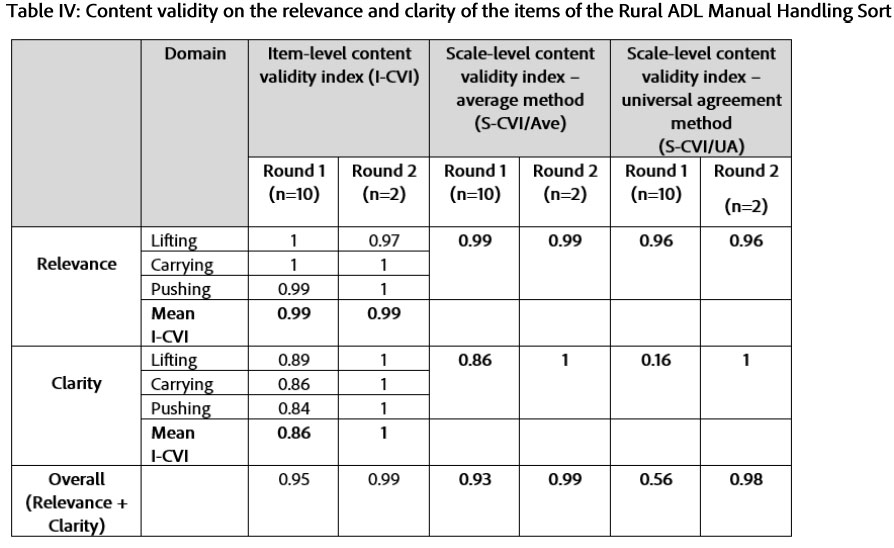
BACKGROUND: South African medico-legal occupational therapists assess claimants' performance in activities of daily living and instrumental activities of daily living (ADL and iADL) which is a prerequisite of work ability. Evaluation of rural claimants can be problematic, since existing assessment instruments do not consider the manual handling demands of iADLs such as firewood and water collection, unique to these settings. This paper reports the content validity determined by subject matter experts (SMEs) for the Rural Activities of Daily Living Manual Handling Sort (RAMS), an outcome measure developed to assess ADLs in rural areas. METHOD: A quantitative descriptive research design with purposive stratified sampling was employed to identify 12 SMEs to determine item-level content validity index (I-CVI), scale-level content validity index-average (S-CVI/Ave) and index-universal agreement (S-CVI/UA) for the RAMS. RESULTS: The results supported good content validity of the RAMS instrument. Items with a score below 0.87 were edited and after recommended changes were made, they were retained in the final RAMS version. The I-CVI scores for the lifting, carrying and pushing domains were 0.97, 1 and 0.99 respectively, while the mean I-CVI was 0.99. The Scale-level content validity index - average (S-CVI/Ave) score for relevance was 0.99. CONCLUSION: The RAMS was found to be a valid instrument for assessment of the manual handling domains of ADLs unique to rural contexts and with further field testing will enable medico-legal occupational therapists to provide realistic evidence to compensation funds. IMPLICATIONS FOR PRACTICE: There is currently no other contextual ADL or iADL instrument available for use in the medico-legal or other practice fields in South Africa. It is anticipated that the use of the RAMS in medico-legal practice will enable South African occupational therapists and those further afield to advocate for appropriate ADL and iADL accommodations for claimants who live in rural resource-scarce contexts. The RAMS is anticipated to contribute substantially to the medico-legal field of occupational therapy in South Africa and to have an impact on improving quality of life of rural claimants. Further studies involving field-testing to investigate the remainder of the psychometric properties of the RAMS, additional contextual occupations and the application of the RAMS in other settings and fields of practice are recommended.
item-level content validity index (I-CVI); scale-level content validity index-average (S-CVI/Ave); index-universal agreement (S-CVI/UA); good health and well-being; rural; activities of daily living; instrumental activities of daily living; outcome measure
INTRODUCTION
Occupational therapists in South Africa provide an essential service to claimants seeking compensation in the medico-legal industry. As a prerequisite of work ability, occupational therapists evaluate performance in activities of daily living (ADLs) and instrumental activities of daily living (iADLs) utilising a combination of objective and subjective or Patient-Reported Outcome Measures (PROMS). These assessments establish the baseline status, progress and outcomes and allow cross-reference between self-perceived abilities, observation and abilities evaluated on objective scales1,2. Assessments of ADLs in South African medico-legal settings are often subjective. Occupational therapists regularly use non-standard self-report of abilities based on patient interviews, since ADL outcome measures based on existing theoretical frameworks can be difficult to access due to costly licensure requirements or are contextually unsuitable3,4.
The current study formed part of a larger doctoral project, with earlier phases investigating and identifying household occupations typical of rural resource-scarce contexts54,6. These dwellings may not have access to piped water and adequate electricity.
Therefore, commonly used ADL outcome measures such as the Barthel Index (BI), the Katz Activities of Daily Living Index, the Lawton Instrumental Activities (IADL) of Daily Living Scale and the Functional Independence Measure (FIM), amongst others, have limitations regarding item descriptions and exclusions when utilised in rural contexts7-13. Existing ADL frameworks and assessment instruments have poor applicability in South African resource-scarce rural contexts, given that many households have to fetch water and use fire for cooking and heating water. The lack of onsite water and electricity affects the type and form of ADLs performed by individuals514,15. For this reason, it was necessary to develop an assessment instrument that includes contextual ADLs identified as typical of resource-scarce rural settings4
The Rural Activities of Daily Living Manual Handling Sort (RAMS)
The first version of the RAMS instrument was developed as a measure to be utilised in medico-legal or work practice. It is a new time-efficient outcome measure, taking the context and unique manual handling demands of rural settings in which claimants live into consideration161717-19. One SFS item depicts lifting two bags of groceries from the boot of a sedan vehicle, with the associated text "Load two 10-pound grocery bags from the trunk of an automobile"181719,20.
The Development of the Rural Activities of Daily Living Manual Handling Sort (RAMS)
The study to support the development of the RAMS took place in Limpopo Province, South Africa and allowed for collection of rich data regarding contextual ADLs4212254
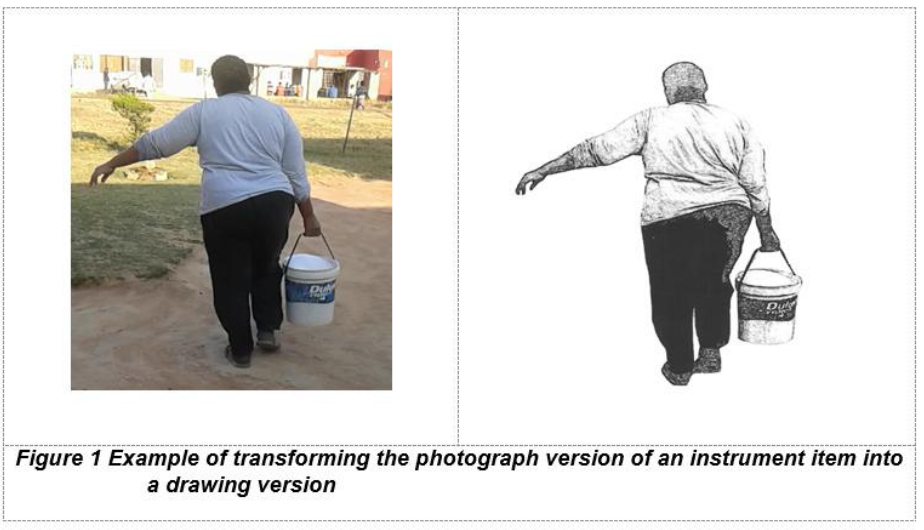
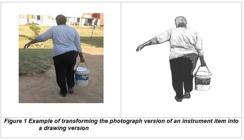
Each item of the RAMS comprised Version 1: a photograph or Version 2: a black and white drawing as illustrated in Figure 1 (below). The items in each of the three manual handling domains were sequenced according to increasing physical demand.
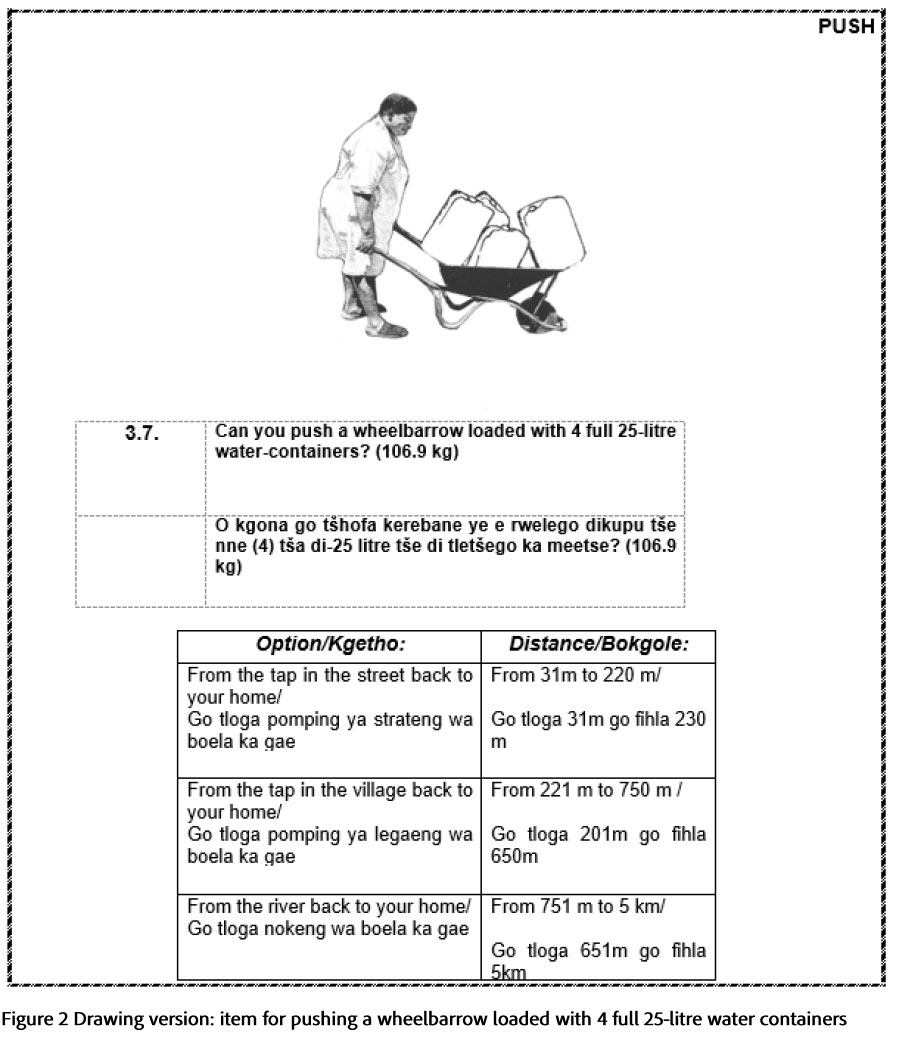
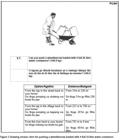
Each black and white drawing was then provided with a text question in English and Sepedi asking whether the individual can perform the contextual manual handling task as shown in Figure 2, below.
A numeric scoring scale was developed and a hard copy and electronic version of the RAMS were developed417,18,24. 1 = unable to do, 2 = has difficulty, 3 = able to do and 4 = N/A - Not done/not applicable.
For some of these assessments a category of don't know was reflected in the RAMS as Not Applicable (N/A)242524
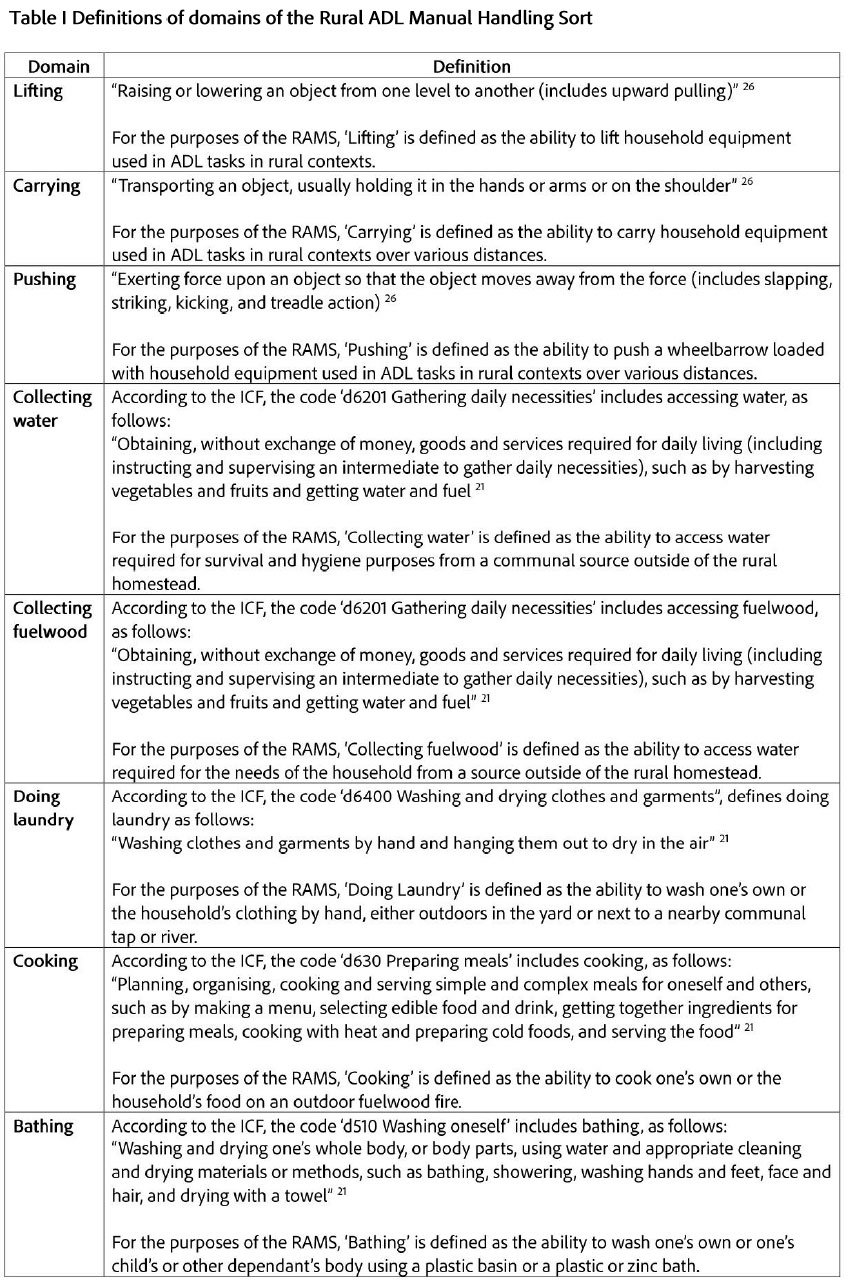
A user manual was compiled to guide occupational therapists in the use of the RAMS as part of a standard FCE assessment battery, with administration instructions to be given to the patient or caregiver completing the RAMS. The background of the origin and development of the RAMS was included. Definitions of the constructs and domains in the RAMS were presented (Table I page 4) followed by an explanation of the procedure for administering and scoring the RAMS.
The occupational therapist would complete the FCE assessment of medico-legal claimants in the usual way, utilising an interview, standardised assessments and clinical observations27,15. The RAMS should be completed as part of the battery of assessments carried out during the FCE.
Establishing content validity
Content validity is usually the psychometric property of a PROM assessment instrument that is determined during the development of the assessment as positive results for additional psychometric properties such as test-retest, concurrent validity, external validity, internal consistency and criterion validity depend on good content validity2828,30.
Content validity is determined through rating of the relevance and clarity of each item to the overall constructs of the assessment instrument by Subject Matter Experts (SMEs). The SMEs rate each item using a Likert scale and these scores are utilised to calculate the Content Validity Index (CVI). The CVI can be calculated in two ways, namely the so-called Item-CVI (I-CVI) and Scale-CVI (S-CVI). The I-CVI index refers to the individual items in a measure, whereas the S-CVI index refers to the overall measure29,30. Feedback is also ideally obtained from the SMEs regarding aspects such as the wording, structure of items and the appropriateness of the selected scoring scale, and ensuring the instrument is clear and succinct29,31.
The current article reports on the content validity study of the RAMS instrument.
METHODOLOGY
A quantitative, descriptive research design was used with SMEs to establish the content validity of the RAMS which was evaluated using the COSMIN methodology for assessing the content validity of PROMs, according to 10 pre-defined criteria29,32.
Participants
Purposive stratified sampling was used to identify Subject Matter Experts (SMEs) who were occupational therapists with medico-legal or community experts.
Inclusion criteria
Inclusion criteria were set for SMEs according to professional experience and expertise in the fields of medico-legal and community practice. The SMEs were selected according to the following inclusion criteria:
six occupational therapists with expertise in the field of Primary Healthcare and community occupational therapy service delivery
six occupational therapists who had 10 or more years' experience in vocational rehabilitation conducting medico-legal evaluations on claimants residing in rural contexts33
Occupational therapists with expertise in fields other than community and medico-legal were excluded from study and not invited to participate as SMEs. The recommended number of SMEs required to calculate the content validity index (CVI) varies between three and ten, with several authors recommending five SMEs29,30,34,35. As indicated above, twelve SMEs were approached to participate in the current content validity study to have equal representation between community and medico-legal experts.
Research instruments
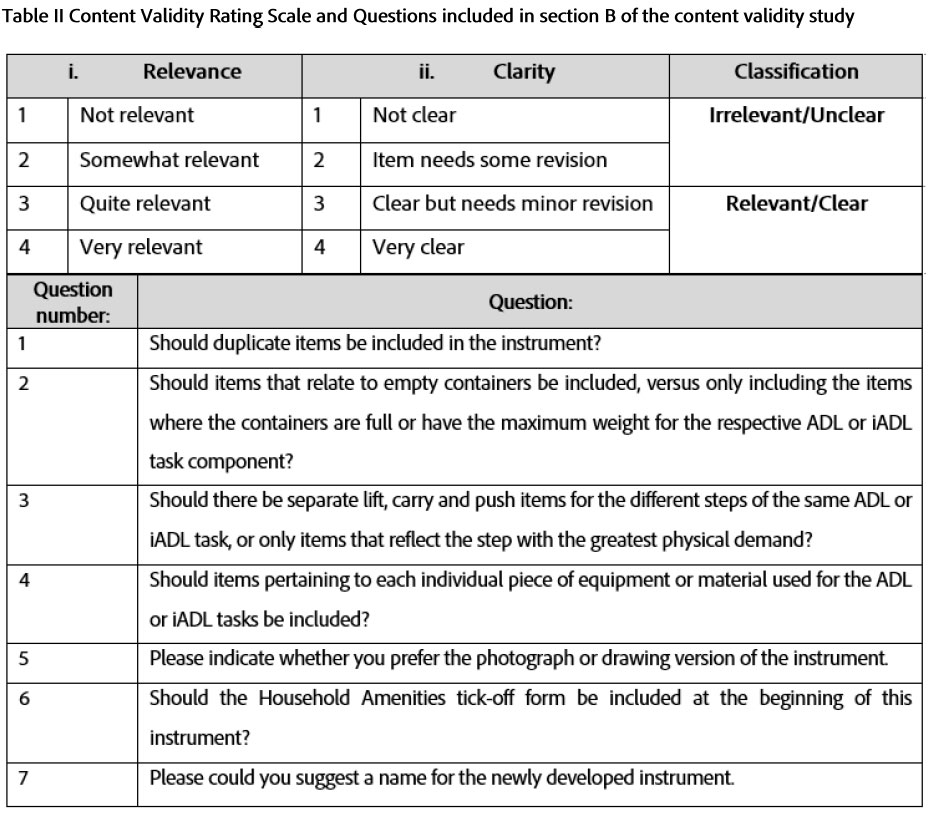
Data were collected using a biographical information sheet and a content validity record form developed by the first author. Section A of the content validity record form made provision for the SMEs to rate the validity and clarity of each of the items in the RAMS on a 4-point ordinal scale. Section B of the content validity record form included closed and Yes/No questions to elicit the SMEs' opinions regarding item composition and inclusion, as presented in Table II, below.
Research procedure
Ten SMEs were included in the first round of the content validity study. This allowed for two additional SMEs to be available for a second round should extensive revisions be necessary after the first round29,30. The purpose of the study, and the implications of their participation were explained to the SMEs in an email communication with an information sheet. The SMEs who agreed to participate in the study attended a presentation by the first author regarding the background of the study. The constructs under consideration, the procedure followed for the development of the RAMS as well as the process for determining content validity were discussed29,30. Hard copies of the content validity record form, a photographic version of the RAMS and a drawing version of the RAMS were provided for each SME. The SMEs were asked to evaluate both versions of the RAMS instrument and the individual instrument items critically and to make comments on the record form provided.
Data analysis
The data were entered into an Excel spreadsheet for analysis. Descriptive statistics were used to analyse the data of the SME's demographic factors to establish their profile. The first round of scores for the content validity was analysed using the 4-point Likert scale and converted into a dichotomous scale. Items that were given a rating of 1 and 2 were regarded as irrelevant or unclear and were edited or deleted. Items that received ratings of 3 or 4 were regarded as relevant or clear and were retained in the RAMS. The I-CVI for lifting, carrying and pushing, S-CVI/Ave and S-CVI/UA were determined for the RAMS. Once the revisions had been made to the RAMS, two remaining SMEs assessed the content validity in the second round and statistical analysis was completed.
The responses to the closed-ended questions were analysed using descriptive statistics to elicit the SMEs' opinions regarding the RAMS. The frequencies and percentages were calculated as indications of the strength of responses. The responses to the open-ended questions were coded by the first author using quantitative directed content analysis with frequencies36
Ethical considerations
Ethical clearance was obtained through the University of the Witwatersrand, University Human Research Ethics Committee to undertake this study (Certificate no. M150925). Participants who met the inclusion criteria were recruited using a written invitation in an information sheet and they provided signed informed consent. The voluntary nature of participation and the processes that were followed to maintain confidentiality throughout the research process were stressed.
RESULTS
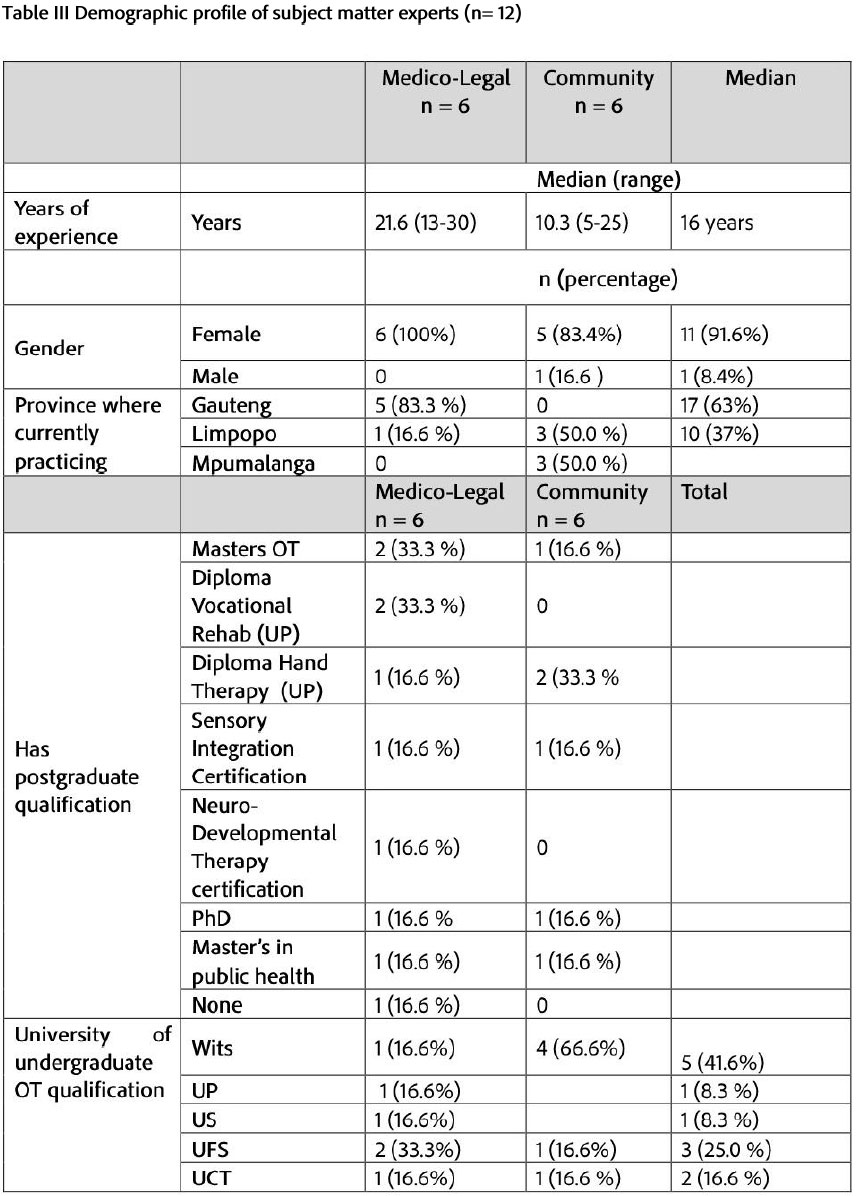
All twelve SMEs who were approached agreed to participate in the study; six SMEs worked in the medico-legal field and six in community practice. Of the SMEs who worked in medico-legal practice, all were female, one worked in Limpopo Province and five worked in Gauteng Province. Their experience varied from 13 years to 30 years, with a median of 21.6 years. They had graduated from four of the eight universities offering occupational therapy training in South Africa. All but one had a post-graduate qualification (Table III below). All but one of the SMEs who worked in the community were female, with three based in Mpumalanga Province and three based in Limpopo Province.
Content validity index
The item (I-CVI) and scale (S-CVI) content validity indices were calculated, in accordance with the recommendations made by Lynn (1986)29,30. Ten SMEs participated in the first round of the content validation five of whom were medico-legal and five were community experts respectively. The I-CVI for all three of the manual handling domains (for lifting, carrying and pushing) was above the 0.78 cut-off point (for more than nine experts), with a mean I-CVI at 0.9331Table IV, below).
The I-CVI scores for clarity were generally lower than for relevance. The weakest indices in terms of clarity were reported for items 2 (carrying a panga), 13 (carrying a load of wood in the arms - revised to carrying a load of wood) and 15 (carrying a full 'potjie' pot - revised to carrying a pot full of water), with scores of 0.7, 0.7 and 0.6 respectively. Despite these low scores, the authors opted to revise items 13 and 15, and to reject only item 2 from the draft instrument. A number of the SMEs were of the opinion that the pictorial representation of this item did not reflect the way a panga would usually be carried therefore the item was rejected on this basis.
Once the experts' suggestions had been implemented, a second round of content validation was conducted with the remaining two SMEs. The I-CVI for all three manual handling domains was above the 0.78 cut-off point, with the mean I-CVI at 0.9937
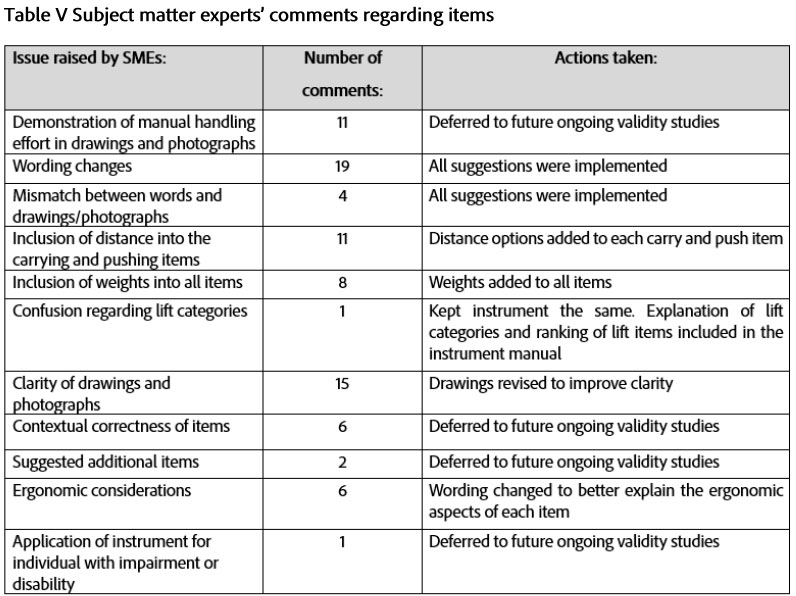
The Scale-level content validity index-universal agreement method (S-CVI/UA) score was 0.98, which also falls above the 0.78 cut-off level and indicated the item revisions had improved the content validity of the RAMS. S-CVI was judged as good in this study. The recommended changes were then retained in the final version on the basis that their clarity had been improved (Table V, below).
Nineteen suggestions regarding changes to the wording of the item text were made which included replacing the word bakkie with the word vehicle in item 8. The suggestion was accepted as the word vehicle is more generic. Similarly, four suggestions were made by SMEs regarding mismatches between the item text and drawings and were incorporated into the final version. Six comments were made regarding the need for the wording of the item text to better describe the origin and endpoint of the action being portrayed. For example, for item 5, the text Can you load wood onto a wheelbarrow? was changed to Can you load wood from the ground onto a wheelbarrow? In this way, the text clearly described a floor to knuckle lift.
The SMEs also suggested the inclusion of the weights lifted and carried, the forces pushed and the distances over which the loads were carried and pushed into each item, to enable claimants to gauge their performance more accurately. Fifteen suggestions were made by SMEs regarding improving the clarity of the drawings. The second author electronically altered the images. All changes were included onto each item in the final version of the RAMS.
Suggestions made by the SMEs which were not implemented concerned the extent to which the item drawings reflected the physical effort involved in executing the item action. Six comments were made by SMEs relating to the contextual correctness of the actions depicted in the instrument items. For example, for item 19, an expert questioned whether the 25-litre water container would be carried on the head if the individual preferred not to use a wheelbarrow. Similarly, one of the SMEs suggested the addition of an item regarding carrying water on the head, as this is a well-documented practice in many rural areas of South Africa38,39.
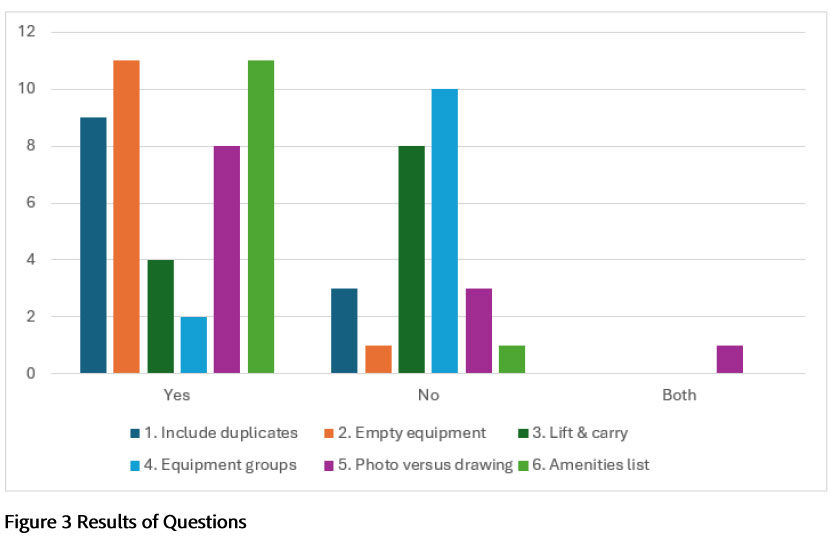
Another expert posed a question regarding the ability of Persons with Disabilities to carry out the ADL and iADL domains depicted in the instrument items. This issue was incorporated into the explanation in the user manual. Several closed-ended questions were included in section B of the content validity record form, to ascertain the SMEs' opinions on broader aspects of the development of the instrument and to add rigour to the decisions that the first author had taken during the instrument development phase of the larger study (Figure 3, below).
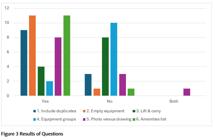
In terms of question 1: inclusion of duplicate items in the instrument was supported by 75% of the SMEs. This result affirmed the inclusion of the following duplicate instrument items in the Lifting sub-test namely:
Items 1.3 and 1.4, which both pertain to floor to knuckle lifts of fuelwood, weighing on average 2.2kg;
Items 1.13 and 1.14, which both pertain to floor to knuckle lifts of 25-litre water-containers, weighing 25kg;
Items 1.15 and 1.16, which both pertain to knuckle to shoulder lifts of 25-litre water-containers, weighing 25kg.
The results for question 2: inclusion of instrument items that pertained to the manual handling of empty containers indicated that 92% of the SMEs recommended the inclusion. The following instrument lifting or pushing items were thus not eliminated from the final version:
Item 1.1, which pertains to the lifting of an empty 25-litre water-container from the floor into a wheelbarrow;
Item 1.5, which pertains to lifting an empty bath for doing laundry;
Item 1.8, which pertains to lifting an empty potjie pot from the ground;
Item 3.2, which pertains to pushing four empty 25-litre water-containers in a wheelbarrow.
The results for question 3: the inclusion of instrument items that illustrated the element of an ADL and iADL domain involving the greatest physical demand showed that 67% of the SMEs supported the inclusion.
The results for question 4: the instrument only include items comprising the sum of the weights, as opposed to a separate item for each individual weight, when the ADL and iADL domain depicted indicated that 83% of the SMEs recommended this.
Question 5 asked the SMEs to indicate their preference between the photograph and drawing versions of the draft instrument. While most of the SMEs (67%) opted for the drawing version, 25% preferred the photograph version and one expert (8%) felt that both versions were effective, having different advantages and disadvantages.
In response to question 6, 92% of the SMEs supported the inclusion of the Household Amenities Checklist in the instrument. Reasons cited included that the checklist would provide clinicians with individualised, clear and comprehensive information regarding the particular combination of household amenities of each patient, which would enable the clinician to predict the form of the ADL and iADL domains in the patients' context.
The suggestions made by the SMEs in question 7 to name the newly developed instrument the RAMS were utilised. All the recommendations of the SMEs were incorporated into the final version of the RAMS, which was deemed ready for field testing at the conclusion of the current study.
The results from the content validity study indicate that seven of the 10 criteria had met the criteria to an excellent level with a CVI score of above 0.90 or more than 80% agreement on questions by the SMEs. Two items had agreement of below 80% by the SMEs for presentation of the domain involving the greatest physical demand and use of drawings in the questions, which were not part of the checklist but can still be considered in further psychometric testing.
No items were added based on the opinions of the SMEs in the current study, such as adding an item regarding carrying water on the head. While this method of carrying water is well-documented within the literature, it was not observed during the data collection for the development of the RAMS items, which aimed at generating relevant items based on rural daily living38,40. It is anticipated that further research during the field testing after completion of the current study will guide the possible addition of items.
COSMIN Evaluation
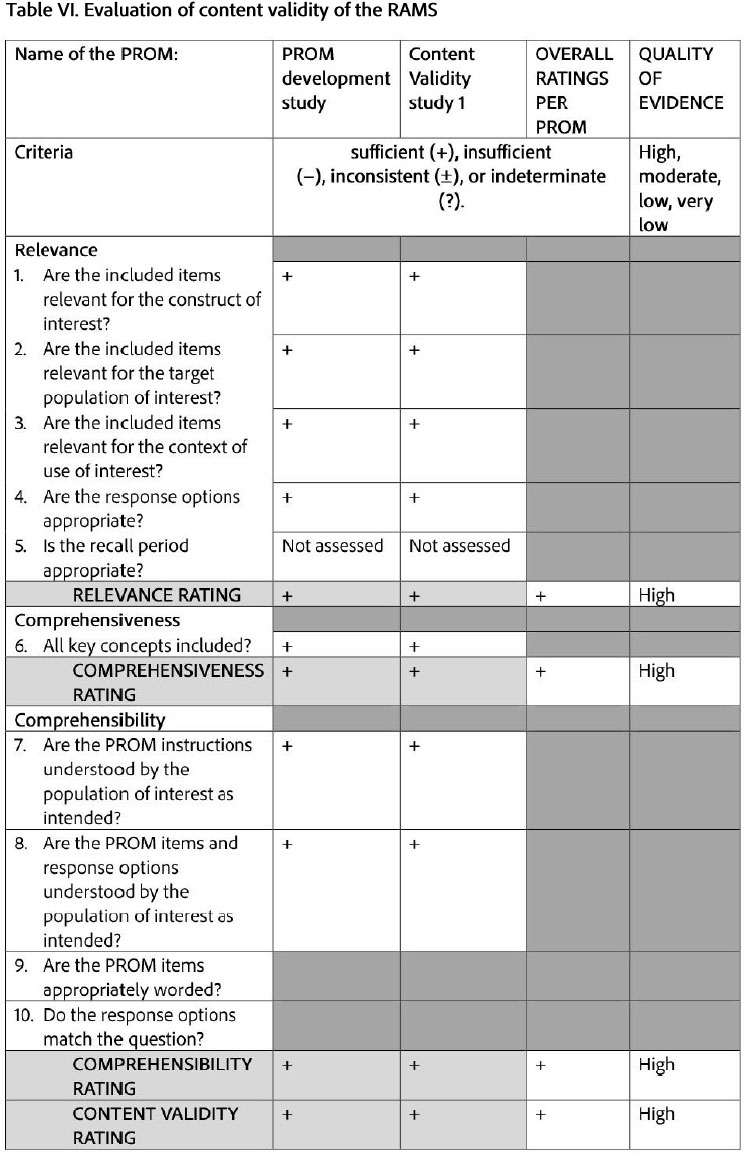
The findings above were applied to the RAMS for the ten criteria on the COSMIN methodology for assessing the content validity of PROMS (Table VI, below)28,32.
DISCUSSION
The lower I-CVI and S-CVI scores for clarity in the first round were reflective of the numerous comments by the SMEs regarding the formatting and wording of the draft RAMS. All the SMEs suggestions regarding wording of the RAMS text were implemented, along with improved descriptions of the lift heights and the addition of information depicting the weights and distances for each item. A number of issues that were unclear to the SMEs, such as the classification of lifts and the rationale used for sequencing the RAMS items were addressed in the user manual.
The participation of the SMEs in the CVI process enhanced the development of the instrument, with both medico-legal and community practice SMEs confirming the selection of the manual handling domains of lifting, carrying and pushing as its domains. Furthermore, the SMEs rated the items within each domain as highly relevant and supported the authenticity of the instrument in terms of the South African rural, resource-scarce context. The high CVI scores for the RAMS should be considered against the content validity of other ADL assessment instruments; one such instrument is the Barthel Index (BI), which is regarded globally as a gold standard instrument for ADL assessment41,42. As such, the BI has been translated and validated for implementation across numerous countries43-45. A recent such study conducted supported its validity for use in a stroke population in South Africa; nonetheless, the authors recommended that the Modified Barthel Index (MBI) was most suited to settings with household utilities including piped water4613
The positive response of the SMEs who participated in the content validity process demonstrated that the RAMS would likely be well accepted by the occupational therapy practitioners. Given the prevalence of South Africans living in households with limited amenities, the impact that climate change is already having on water and fuelwood security and the paucity of ADL instruments reflective of less resourced context, the RAMS may prove to have utility across more diverse occupational therapy populations than initially envisaged13
Limitations of the study
The current study has only included an initial study of the psychometric characteristics of the RAMS. The newly developed instrument still needs to be field-tested on a sample of medico-legal evaluations of rural claimants to establish its reliability, validity and utility.
The measurement of performance of ADL and iADL tasks with significant physical capacity and manual handling demands in rural contexts would be more comprehensive if all occupational categories had been included in the study that informed RAMS domain and item identification4
CONCLUSION
The SMEs involved in the CVI process provided input into the clarity of the instrument items, and their feedback was incorporated into the current version of the RAMS. The RAMS was found to have good content validity. The I-CVI for the manual handling domains 0.97, 1 and 0.99 respectively, while the mean I-CVI was 0.9937
Author contributions
Jennie McAdam, (post-graduate student) and Daleen Casteleijn and Denise Franszen (supervisors) conceptualised and completed the research and contributed to the writing of the article. All listed authors approved the final version of the manuscript.
Conflict of interests
The authors confirm that there were no conflicts of interest related to this study.
REFERENCES
-
1. Nielsen KT, Wæhrens EE. Occupational therapy evaluation: use of self-report and/or observation? Scandinavian Journal of Occupational Therapy. 2015 Jan 2;22(1):13-23.. doi: https://doi.org/10.3109/11038128.2014.961547
» https://doi.org/10.3109/11038128.2014.961547 -
2. Verna JL, Matheson LN, Gobbi A, Lane JG, Bruga D, Gherscovici E, Mayer J. Are Self-Reported Measures Becoming More Objective for Determination of Function and Work Capacity? Sphera Medical Journal. 2015.22.:34-39 https://www.researchgate.net/publication/289528876_Are_Self-Reported_Measures_Becoming_More_Objective_for_Determination_of_Function_and_Work_Capacity
» https://www.researchgate.net/publication/289528876_Are_Self-Reported_Measures_Becoming_More_Objective_for_Determination_of_Function_and_Work_Capacity -
3. De Klerk S, Buchanan H, Pretorius B. Occupational therapy hand assessment practices: Cause for concern?. South African Journal of Occupational Therapy. 2015;45(2):43-50.. doi: https://doi.org/10.17159/2310-3833/2015/v45n2a7
» https://doi.org/10.17159/2310-3833/2015/v45n2a7 - 4. McAdam JC. Development and validation of the Rural Activities of Daily Living Manual Handling Sort [Doctor of Philosophy]. University of the Witwatersrand; 2019
-
5. McAdam JC, Franzsen D, Casteleijn D. Identification of occupations in a South African rural less-resourced community. Journal of Occupational Science. 2019 Jul 3;26(3):379-93. doi: https://doi.org/10.1080/14427591.2019.1614476
» https://doi.org/10.1080/14427591.2019.1614476 - 6. Laldaparsad S. Urban and rural trends in South Africa. Statistics South Africa, Pretoria, RSA; 2011. p. 2.
- 7. Hamilton BB, Granger CV, Sherwin FS. Functional Independence Measure Scale: a uniform national data system for medical rehabilitation. In: Rehabilitation Outcomes: analysis and measurement. First. Baltimore: Paul H. Brookes; 1987. p. 137-47.
-
8. Dodds TA, Martin DP, Stolov WC, Deyo RA. A validation of the functional independence measurement and its performance among rehabilitation inpatients. Archives of Physical Medicine and Rehabilitation. 1993 May 1;74(5): 531-6.doi: https://doi.org/10.1016/0003-9993(93)90119-U
» https://doi.org/10.1016/0003-9993(93)90119-U -
9. Katz S, Downs TD, Cash HR, Grotz RC. Progress in Development of the Index of ADL. Gerontologist. 1970;10(1):20-30. doi: https://doi.org/10.1093/geront/10.1_Part_1.20
» https://doi.org/10.1093/geront/10.1_Part_1.20 -
10. Katz S, Ford AB, Moskowitz RW, Jackson BA, Jaffe MW. Studies of illness in the aged. The index of ADL: A standardized measure of biological and psychosocial function. Journal of American Medical Association. 1963;185(12):914-9. doi: https://doi.org/10.1001/jama.1963.03060120024016
» https://doi.org/10.1001/jama.1963.03060120024016 -
11. Lawton MP, Brody EM. Assessment of older people: Self-maintaining and instrumental activities of daily living. Gerontologist. 1969;9(3):179-86. doi: https://doi.org/10.1093/geront/9.3_Part_1.179
» https://doi.org/10.1093/geront/9.3_Part_1.179 -
12. Collin C, Wade DT, Davis S, Horne V. The Barthel ADL Index: A reliability study. Journal of International Disability Studies. 1988;10(2):61-3. doi: https://doi.org/10.3109/09638288809164103
» https://doi.org/10.3109/09638288809164103 -
13. McAdam JC, Casteleijn D, Franzsen D. Identifying the gap in Assessing Activities of Daily Living in resource-constrained rural settings: An Integrative review of existing frameworks and instruments. South African Journal of Occupational Therapy, 2024 Nov 16;54(3). doi: https://doi.org/10.17159/2310-3833/2024/vol54no3a8
» https://doi.org/10.17159/2310-3833/2024/vol54no3a8 -
14. Slabbert M, Edeling H. The Road Accident Fund and Serious Injuries: The Narrative Test. Potchefstroom Electronic Law Journal. 2012;15(2):267-90. doi: https://doi.org/10.4314/pelj.v15i2.10
» https://doi.org/10.4314/pelj.v15i2.10 -
15. van Biljon H. Opinion piece: Occupational therapists in medico-legal work - South African experiences and opinions. South African Journal of Occupational Therapy. 2013;43(2):27-33. doi: https://journals.assaf.org.za/index.php/sajot/article/view/19699
» https://journals.assaf.org.za/index.php/sajot/article/view/19699 -
16. Akinpelu AO, Odole AC, Adegoke BOA, Adeniyi AF. Development and initial validation of the Ibadan knee/hip osteoarthritis outcome measure. South African Journal of Physiotherapy. 2007;63(2):3-8. doi: https://doi.org/10.4102/sajp.v63i2.127
» https://doi.org/10.4102/sajp.v63i2.127 -
17. Mayer J, Mooney V, Matheson L, Leggett S, Verna J, Balourdas G, DeFilippo G. Reliability and validity of a new computer-administered pictorial activity and task sort. Journal of Occupational Rehabilitation. 2005 Jun;15(2):203-13.. doi: https://doi.org/10.1007/s10926-005-1219-7
» https://doi.org/10.1007/s10926-005-1219-7 - 18. Matheson LN, Matheson M. Spinal function sort. Rancho Santa Margarita, CA: Performance Assessment and Capacity Testing. 1989.
-
19. Matheson LN, Matheson ML, Grant J. Development of a measure of perceived functional ability. Journal of Occupational Rehabilitation. 1993 Mar;3(1):15-30. doi: https://psycnet.apa.org/doi/10.1007/BF01076739
» https://psycnet.apa.org/doi/10.1007/BF01076739 -
20. US Department of Labor Employment and Training Administration. Dictionary of Occupational Titles Fourth Edition, Revised 1991. 4th ed. U.S. Department of Labour; 1991. doi: https://doi.org/10.3886/ICPSR06100.v1
» https://doi.org/10.3886/ICPSR06100.v1 -
21. World Health Organization. The ICF: An Overview. 2010;1-10. https://www.cdc.gov/nchs/data/icd/icfoverview_finalforwho10sept.pdf
» https://www.cdc.gov/nchs/data/icd/icfoverview_finalforwho10sept.pdf -
22. American Occupational Therapy Association. Occupational therapy practice framework: Domain and process (4th ed.). American Journal of Occupational Therapy. 2020; 74(Suppl. 2), 7412410010. doi: https://doi.org/10.5014/ajot.2020.74S2001
» https://doi.org/10.5014/ajot.2020.74S2001 -
23. Matheson L, Mayer J, Mooney V, Sarkin A, Dreisinger T, Verna J, Leggett S. A method to provide a more efficient and reliable measure of self-report physical work capacity for patients with spinal pain. Journal of Occupational Rehabilitation. 2008 Mar;18(1):46-57. doi: https://doi.org/10.1007/s10926-007-9111-2
» https://doi.org/10.1007/s10926-007-9111-2 -
24. Matheson LN. History, design characteristics, and uses of the pictorial activity and task sorts. Journal of Occupational Rehabilitation. 2004 Sep;14(3):175-95. doi: https://doi.org/10.1023/b:joor.0000022760.71820.91
» https://doi.org/10.1023/b:joor.0000022760.71820.91 - 25. de Vos A, Strydom H, Fouché C, Delport C. Research at Grass Roots For the social sciences and human service professions. Van Schaik Publishers. 4th ed. Van Schaik; 2011. 237-412 p.
-
26. US Department of Labor. The Revised Handbook for Analyzing Jobs. In: The Revised Handbook for Analyzing Jobs [Internet]. Washington DC: U.S Government Printing Office; 1991. p. 12-1. https://skilltran.com/rhaj/rhaj10.pdf
» https://skilltran.com/rhaj/rhaj10.pdf -
27. Buys T, Van Biljon HM. Functional capacity evaluation: An essential component of South African occupational therapy work practice services. Work. 2007;29(1):35-7. doi: https://doi.org/10.3233/WOR-2007-00638
» https://doi.org/10.3233/WOR-2007-00638 -
28. Terwee CB, Prinsen CA, Chiarotto A, Westerman MJ, Patrick DL, Alonso J, Bouter LM, De Vet HC, Mokkink LB. COSMIN methodology for evaluating the content validity of patient-reported outcome measures: a Delphi study. Quality of Life Research. 2018 May;27(5):1159-70. doi: https://doi.org/10.1007/s11136-018-1829-0
» https://doi.org/10.1007/s11136-018-1829-0 -
29. Polit, D.F. and Beck, C.T., 2006. The content validity index: are you sure you know what's being reported? Critique and recommendations. Research in Nursing & Health, 29(5), pp.489-497. doi: https://doi.org/10.1002/nur.20147
» https://doi.org/10.1002/nur.20147 - 30. Lynn MR. Determination and quantification of content validity. Nursing Research. 1986 Nov 1;35(6):382-6.
-
» https://brieflands.com/journals/jme/articles/105015 -
31. Bolarinwa OA. Principles and methods of validity and reliability testing of questionnaires used in social and health science researches. Nigerian Postgraduate Medical Journal. 2015;22(4):195-201. doi: https://doi.org/10.4103/1117-1936.173959
» https://doi.org/10.4103/1117-1936.173959 -
32. Gagnier JJ, Tavares de Arruda G, Terwee CB, Mokkink LB. COSMIN reporting guideline for studies on measurement properties of patient-reported outcome measures: version 2.0. Quality of Life Research; 2025; 34(10):1901-1911. doi: https://doi.org/10.1007/s11136-025-03950-x
» https://doi.org/10.1007/s11136-025-03950-x - 33. Schell BAB, Schell JW. Clinical and professional reasoning in occupational therapy. Philadelphia: Lippincott Williams & Wilkins.; 2008.
-
34. Polit DF, Beck CT, Owen SV. Is the CVI an acceptable indicator of content validity? Appraisal and recommendations. Research in Nursing & Health. 2007 Aug;30(4):459-67. doi: https://doi.org/10.1002/nur.20199
» https://doi.org/10.1002/nur.20199 -
36. White MD, Marsh EE, Marsh EE, White MD. Content analysis: A flexible methodology. Library trends. 2006 Sep 6;55(1): 22-45.doi: https://doi.org/10.1353/lib.2006.0053
» https://doi.org/10.1353/lib.2006.0053 -
37. Yusoff MSB. ABC of content validation and content validity index calculation. Education in Medicine Journal. 2019;11(2):49-54. doi: https://doi.org/10.21315/eimj2019.11.2.6
» https://doi.org/10.21315/eimj2019.11.2.6 -
38. Wrisdale L, Mokoena MM, Mudau LS, Geere JA. Factors that impact on access to water and sanitation for older adults and people with disability in rural South Africa: An occupational justice perspective. Journal of Occupational Science. 2017 Jul 3;24(3):259-79. doi: https://doi.org/10.1080/14427591.2017.1338190
» https://doi.org/10.1080/14427591.2017.1338190 -
39. Geere JL, Hunter PR, Jagals P. Domestic water carrying and its implications for health: A review and mixed methods pilot study in Limpopo Province, South Africa. Environmental Health. 2010;9(52):1-13. doi: https://doi.org/10.1186/1476-069X-9-52
» https://doi.org/10.1186/1476-069X-9-52 -
40. Geere JA, Bartram J, Bates L, Danquah L, Evans B, Fisher MB, Groce N, Majuru B, Mokoena MM, Mukhola MS, Nguyen-Viet H. Carrying water may be a major contributor to disability from musculoskeletal disorders in low-income countries: a cross-sectional survey in South Africa, Ghana and Vietnam. Journal of Global Health. 2018 Feb 16;8(1):010406. doi: https://doi.org/10.7189/jogh.08.010406
» https://doi.org/10.7189/jogh.08.010406 - 41. Mahoney FI, Barthel DW. Functional evaluation: the Barthel Index: a simple index of independence useful in scoring improvement in the rehabilitation of the chronically ill. Maryland State Medical Journal. 1965. 14:61-65.
-
42. Hsueh IP, Lee MM, Hsieh CL. Psychometric characteristics of the Barthel activities of daily living index in stroke patients. Journal of Formosan Medical Association. 2001;100(8):526-32. https://www.fma.org.tw/jfma/PDF/2001-00/issue_8/Article_3.pdf
» https://www.fma.org.tw/jfma/PDF/2001-00/issue_8/Article_3.pdf -
43. Oveisgharan S, Shirani S, Ghorbani A, Soltanzade A, Baghaei A, Hosseini S, Sarrafzadegan N. Barthel index in a Middle-East country: translation, validity and reliability. Cerebrovascular Diseases. 2006 Nov 2;22(5-6):350-4. doi: https://doi.org/10.1159/000094850
» https://doi.org/10.1159/000094850 -
44. Leung SO, Chan CC, Shah S. Development of a Chinese version of the Modified Barthel Index-validity and reliability. Clinical Rehabilitation. 2007 Oct;21(10):912-22. doi: https://doi.org/10.1177/0269215507077286
» https://doi.org/10.1177/0269215507077286 -
45. Küçükdeveci AA, Yavuzer G, Tennant A, Süldür N, Sonel B, Arasil T. Adaptation of the modified Barthel Index for use in physical medicine and rehabilitation in Turkey. Scandinavian Journal of Rehabilitation Medicine. 2000 Jun 1;32(2):87-92. https://pubmed.ncbi.nlm.nih.gov/10853723/
» https://pubmed.ncbi.nlm.nih.gov/10853723/ -
46. Breytenbach FC, Freeme JD, de Witt PA, Franzsen D. Content validity of the modified Barthel Index for stroke patients in on African country. South African Journal of Occupational Therapy. 2023;53(3):3-12. doi: https://doi.org/10.17159/2310-3833/2023/vol53n3a2
» https://doi.org/10.17159/2310-3833/2023/vol53n3a2

Reviewed: 1st round: 12 October 2025
Revised: 17 March 2026
Reviewed: 2nd round: 18 March 2026
Accepted: 3 April 2026
First Online: 30 July 2026
DATA AVAILABILITY: The data will be available for 10 years post-publication from the corresponding author
FUNDING: No funding was received for this study