Patterns of sensory integration dysfunction in children with confirmed learning differences attending a short-term remedial school in Kwa-Zulu Natal
Abstract
INTRODUCTION: The link between sensory integration (SI) dysfunction and learning differences is well-established, highlighting its influence on academic abilities. However, limited research has investigated SI dysfunction patterns in South African children. AIM: This study investigated which patterns of SI dysfunction children attending a short-term remedial school in Kwa-Zulu Natal exhibited. METHOD: A retrospective chart review was conducted on 35 learner files, which included data from the Evaluation of Ayres Sensory Integration® (EASI), Sensory Processing Measure (SPM), and Family Life Impact Questionnaire (FLIQ). Descriptive statistics (frequencies, means, and standard deviations) were used to identify sensory integration patterns. RESULTS: Findings indicated that 71,4% of children presented with bilateral integration and sequencing difficulty, while 42.9% of children exhibited somatodyspraxia. Tactile and vestibular perception problems were present in 42.9% of the sample. This population of children displayed increased auditory, tactile and visual sensitivities, praxis difficulties, and postural control challenges in the classroom. At home, difficulties included planning, reactivity to auditory and olfactory input, with daily living, social participation, and community engagement being influenced. CONCLUSION: These findings contribute to understanding SI in children with learning differences and support intervention planning, classroom adaptations, and caregiver-teacher collaboration. IMPLICATIONS FOR PRACTICE: • A comprehensive Sensory Integration (SI) assessment is crucial for effective intervention planning, including assessing the child's sensory perception, praxis, sensory reactivity and impact on family life. • An informed understanding of the patterns of SI dysfunction enables therapists to move beyond generic approaches, allowing for the development of targeted, functionally relevant intervention strategies. • Targeted intervention planning enhances therapeutic efficacy and supports improved outcomes in daily occupational performance. • A detailed understanding of the child's reactivity to sensory input in both classroom and home environments is essential for tailoring appropriate intervention approaches. • Including daily occupations as a focus within a child's intervention plan is essential for promoting functional skills. • Understanding the patterns of SI dysfunction allows for collaboration with educators and caregivers regarding the functional impact of these challenges. It assists in incorporating adjustments such as environmental modifications and regulatory strategies. • The knowledge gained supports the design of group-based or classroom-level interventions that address commonly observed sensory challenges, therefore extending the reach of occupational therapy services and encouraging equitable support.
Ayres Sensory Integration®; learning differences; sensory integration dysfunction; EASI; patterns of sensory integration dysfunction
INTRODUCTION
The ability to process sensory input and organise sensations to produce an adaptive response efficiently, or sensory integration (SI), is fundamental for children to learn, acquire new skills, communicate effectively with others and perform daily life activities such as sleeping and eating1,2. Sensory integration dysfunction influences a child's movement2, causes delayed learning3, as well as difficulties with reading skills and other classroom tasks2. While research has shown a clear link between SI dysfunction and learning differences4,5, there is limited evidence regarding the patterns of SI dysfunction in children attending short-term remedial schools in South Africa.
Numerous factor and cluster analyses have been employed to classify SI dysfunction patterns which included identifying various groupings of test scores and behavioural features1. A deeper understanding of the variations in the patterns of dysfunction in SI enhances occupational therapy practice by refining interpretation of assessment data and guiding intervention planning with confidence6. Ayres suggests that addressing SI dysfunction enhances higher-order learning skills such as language, reading, writing and motor coordination4, thus studies exploring the patterns of SI dysfunction frequently consider children with learning differences4,5.
Comprehensive assessment of sensory, motor and praxis functions is paramount to the development of effective intervention plans. Such evaluations empower the therapist to design personalised and suitable interventions that address the impact of SI dysfunction on daily occupations, such as play, academic performance and interpersonal relationships2. Research on the newly developed Evaluation in Ayres Sensory Integration® (EASI)7, within a South African context remains scarce. Additionally, limited available studies have utilised the EASI to describe identified patterns of dysfunction in children with confirmed learning differences.
Learning Differences
Learning differences encompass a diverse range of disorders that impairs the ability to learn and use listening skills, speaking, reading, writing, reasoning, or mathematical abilities8. Central to the learning process, are both sensory integration and adaptive responses, both of which are regulated by the central nervous system (CNS)2. Consequently, disruptions in SI can lead to maladaptive behaviours that further impede academic performance2. Research consistently highlights the efficacy of Ayres Sensory Integration® (ASI®) in supporting children with learning differences, particularly those experiencing difficulties in motor planning and projected action sequences4,5,9,10,11. Beyond academic challenges, these children often experience difficulties performing everyday occupations, such as playing and personal care. Furthermore, the frequent co-occurrence of executive dysfunction often hinders their ability to complete tasks such as instrumental activities of daily living and engage in social activities12.
Sensory Integration
Sensory integration (SI) refers to the nervous system's ability to transform sensory information into meaningful action, thereby facilitating adaptive behaviour and the acquisition of complex skills4,10,12. These dynamic sensory-motor processes guide movement and encourage interaction within both social and physical environments, promoting overall development4,13. Effectively organised SI allows the child to synthesize sensations from the body and surrounding environment, resulting in efficient motor planning and execution. As proposed by Ayres, the successful integration of these environmental stimuli is a critical prerequisite for academic and functional learning4.
Sensory Integration Dysfunction
Sensory integration dysfunction arises when impaired sensory processing hinders a child's ability to participate meaningfully in daily activities. This dysfunction is closely linked to learning and behavioural challenges9, as the brain struggles to organise and process sensory input to provide accurate and efficient feedback about the environment14. Consequently, children often present with deficits in occupational participation, including sleep, eating, daily self-care, play, and school activities15,16. Parents report that these difficulties disrupt household routines, such as household chores1, and transform seemingly automatic tasks like dressing or eating into stressful and effortful experiences17.
Common indicators of SI dysfunction include excessive movement, diminished attention, fussiness, difficulties with play and family participation, and speech or language delays. Additional signs may include muscle weakness, fatigue, clumsiness, balance problems, and challenges in academic skills such as reading, writing, and arithmetic2. Research further demonstrates a correlation between SI dysfunction and learning differences1,4, specifically highlighting the relationship between praxis and handwriting abilities16. To address these challenges, studies suggest that ASI® intervention can help mitigate learning difficulties12. Assessment tools such as the Southern California Sensory Integration Tests (SCSIT), Sensory Integration and Praxis Tests (SIPT), and more recently the Evaluation of Ayres Sensory Integration® (EASI), were developed to better understand the learning and behavioural difficulties associated with SI dysfunction. By analysing standardised scores alongside clinical observations, Ayres identified distinct developmental patterns of SI functioning, which are thought to reflect subtle differences in neural processing within sensory and motor systems15.
Patterns of Sensory Integration Dysfunction
Extensive factor and cluster analyses have been performed to delineate specific patterns, or groupings of test scores, associated with SI dysfunction1. Currently, the interpretation of EASI results relies on factor and cluster analyses derived from SIPT data, as equivalent analyses for the EASI are still emerging. Consequently, it remains to be determined whether the EASI will yield comparable test associations in a tool that has been developed specifically to provide an accessible and globally relevant assessment anchored in the same foundational ASI® constructs19.
Recent classifications, including those within the South African context, identify several key patterns of SI dysfunction:1,20
Somatodyspraxia - impaired tactile and motor planning as well as high loadings on tactile and praxis tests20,21
○ Tactile perception: Localization (TP:L)
○ Tactile perception: Designs (TP:D)
○ Tactile perception: Shapes (TP:S)
○ Tactile perception: Oral (TP: O)
○ Praxis: Positions
○ Praxis: Sequences22,23
Visuodyspraxia - poor visual perception in conjunction with poor visual praxis21
○ Visual perception: Search
○ Visual praxis: Designs
○ Visual praxis: Construction22,23
At times, children present with somatodyspraxia and visual-spatial problems resulting in a pattern of visuo-somatodyspraxia2.
Vestibular, postural, bilateral integration and sequencing (BIS) - deficits in vestibular and proprioceptive processing as well as the visual system that helps anticipate the location of moving items and guides movements to these locations1
○ Vestibular: Nystagmus
○ Balance
○ Postural control
○ Ocular Motor and Praxis
○ Bilateral integration22,23
Generalised SI - characterized by consistently low performance rather than a pattern24
Tactile defensiveness - more intense and exaggerated responses to tactile sensations than what is expected by the situation15
○ Results on Sensory Processing Measure: Touch
○ Sensory reactivity - Tactile22,23
Aversive response to movement - a response to movement when a person feels uncomfortable and may experience nausea, vomiting or dizziness21
○ Results from Sensory Processing Measure: Balance and Movement22,23
Gravitational insecurity - fear of movement, including fearing moving out of upright position or having your feet off the ground2
○ Results from Sensory Processing Measure: Balance and Movement
○ Postural control22,23
Sensory discrimination - impaired ability to identify, discriminate and interpret incoming sensory information in two sensory systems or more. Typically, this pattern is observed in low scores on tactile perception tests together with low scores in one or more of the following sensory systems: proprioception, vestibular and visual perception1
○ Vestibular: vestibular nystagmus, SPM results, orientation in space
○ Proprioception: proprioception: joint position, proprioception: force, SPM results
○ Tactile: TP: L, TP:D, TP:S, TP:O, SPM results
○ Visual: Visual perception: Search, SPM results, other visual perception tests22,23
Sensory reactivity including over-responsiveness - a response to weaker sensory stimuli and a quicker reaction, for a more extended period or more intensively than what is typical, or heightened sensitisation resulting in fight, flight or freeze reaction25
○ Results from the Sensory Processing Measure (SPM) - balance, movement, touch, smell and hearing22,23
This study investigated sensory integration dysfunction patterns among children with confirmed learning differences in a short-term remedial school in KZN utilising the EASI as the primary assessment tool with the SPM used to support the sensory reactivity results. The Family Life Impact Questionnaire (FLIQ) was used to describe what aspects of daily life and functioning are impacted by children with learning differences and SI dysfunction, within the family and social environment. The findings aim to facilitate evidence-based intervention planning, teacher and parent training, and the implementation of appropriate classroom adaptations.
METHODOLOGY
Research Design
A quantitative, retrospective chart review was conducted to identify the patterns of sensory integration dysfunction children with confirmed learning differences at a short-term remedial school exhibited. Data were systematically extracted from archived clinical assessments.
Setting
The study utilised learner records from a short-term remedial school in Kwa-Zulu Natal. The school is described as a Learners with Special Educational Needs (LSEN) school catering for children with average to above average cognitive ability levels who demonstrate specific challenges in reading, spelling, written language, mathematics and non-verbal learning. Learners are enrolled for a duration of two to three years before transitioning back to mainstream education. A multi-disciplinary team onsite includes occupational and speech therapists, counsellors and remedial specialists.
Participants
Purposive sampling was employed to select participants for the study. Occupational therapists at the research site identified learners who had undergone a comprehensive EASI assessment between early 2023 and the end of 2024. While 40 learner files met the initial criteria, five caregivers declined consent for the use of their child's data in research. Consequently, a final sample of 35 assessment records were included in the analysis.
Inclusion Criteria
Learner files needed to meet the following criteria:
○ Learners aged six years to twelve years, eleven months
○ Completion of full EASI assessment
○ Informed written consent from a caregiver for research purposes
Exclusion Criteria
EASI was terminated (if the child became overstimulated or non-compliant)
Research Tools
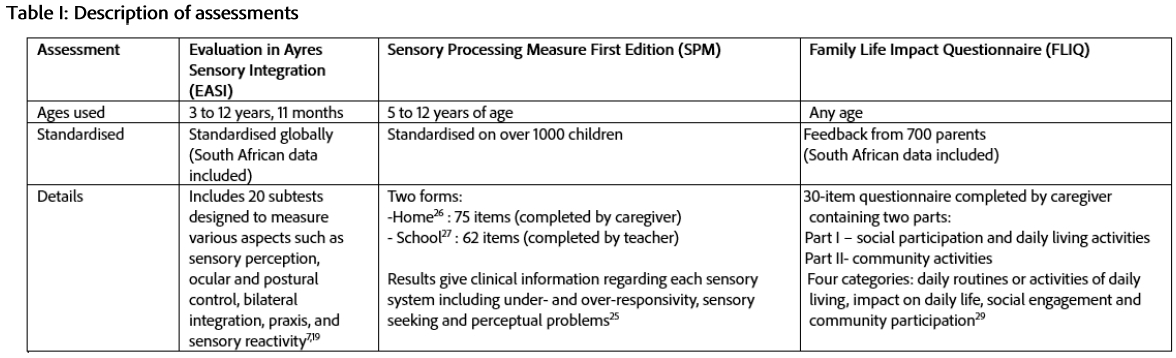
Data were gathered using a structured Microsoft Excel extraction sheet specifically developed for this study. This tool captured the participants' demographic profile (age, gender), educational profile (grade, presence of difficulties with reading, spelling or writing, repeated a grade and Intelligence Quotient (IQ)), and medical background (diagnosis, preterm birth history). Additionally, the sheet incorporated scores from the EASI7, Sensory Processing Measure- first edition (SPM) home26 and classroom27 form, and Family Life Impact Questionnaire (FLIQ)28. A single set of results was used to ensure all information was included in the extraction sheet. Detailed psychometric properties for the EASI, SPM and FLIQ, including the age ranges and standardisation data are summarised in Table I (below):
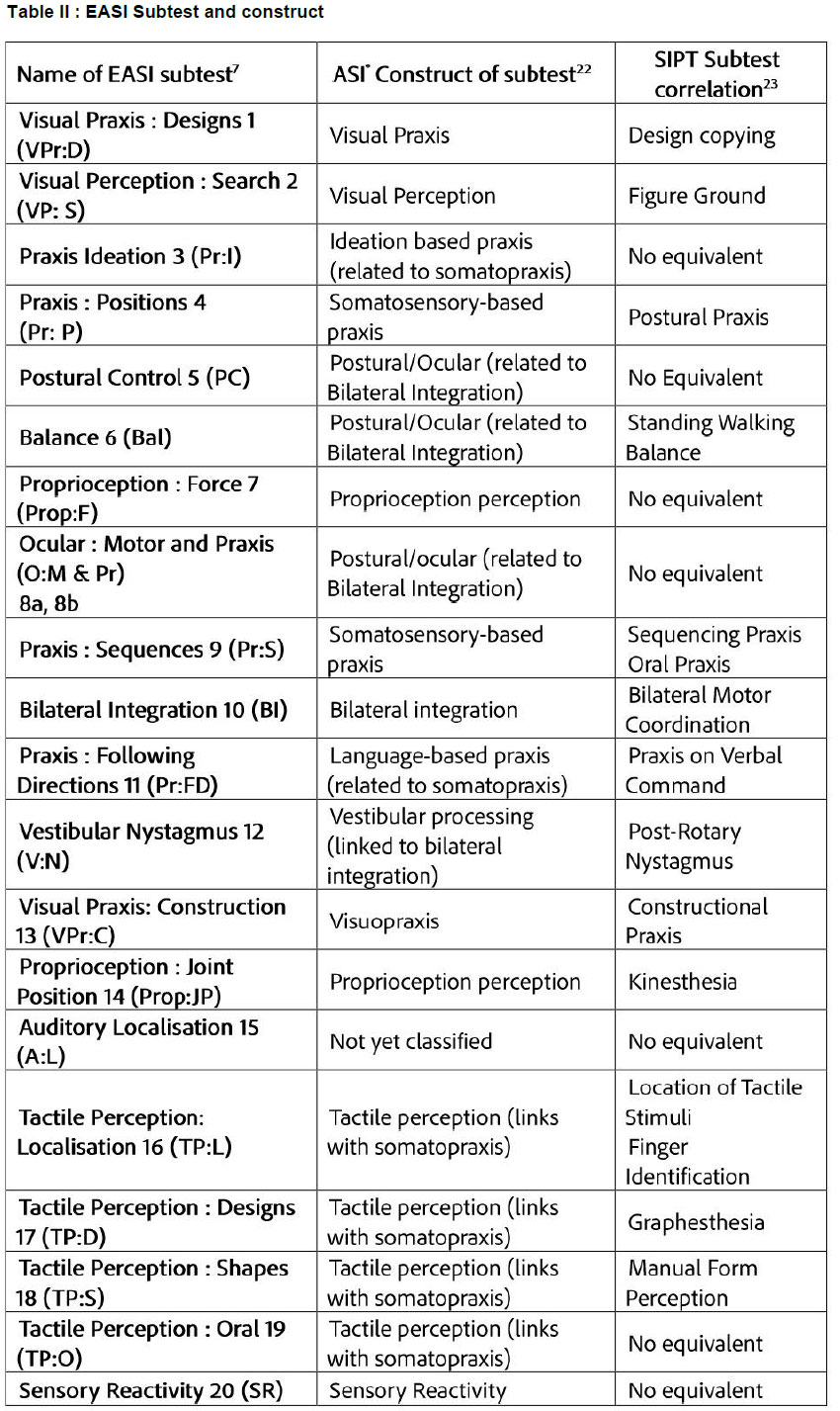
EASI subtests are interpreted using ASI® constructs and SIPT groupings of dysfunction patterns due to limited EASI-specific interpretive information; these correlations are presented in Table II (below)
Research Procedure
Ethical clearance was obtained from the Humanities and Social Sciences Research Ethics Committee (HSSREC), University of Kwa-Zulu Natal (HSSREC/00007221/2024). Due the retrospective nature of the study, risks were deemed minimal. Caregivers were notified of the study via formal correspondence and provided written informed consent for the use of their data for research purposes. To ensure confidentiality and anonymity, all data were de-identified using randomised coding systems.
Following ethical clearance from the University of Kwa-Zulu Natal, caregivers provided written informed consent for the use of learner file data. Assessments were performed by occupational therapists who are trained through the South African Institute for Sensory Integration (SAISI)30 and certified in administering the EASI. The SPM and FLIQ are routinely administered and scores recorded in the learners files.
Data Analysis
Data extracted from the children's records were transferred to a structured Microsoft Excel database and further analysed using IBM Statistical Package for Social Sciences (SPSS version 30.0.0.0). The analysis was performed by the first author in consultation with a statistician from the University of Kwa-Zulu Natal.
Descriptive statistics, including mean, median and standard deviation, were calculated to summarise demographic, medical and educational profiles, alongside the z- and t-scores obtained from the Evaluation in Ayres Sensory Integration (EASI) and Sensory Processing Measure (SPM) respectively.
EASI data were initially examined at the level of individual subtests and subsequently categorised into established patterns of dysfunction to determine the prevalence of ASI® dysfunction within the sample.
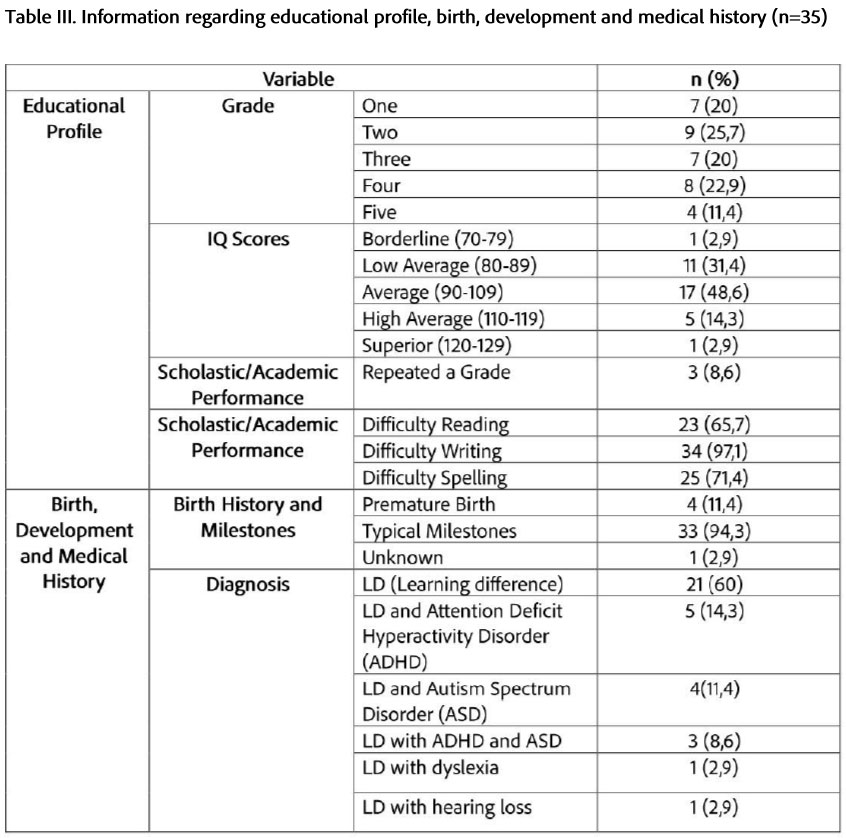
The sample comprised of learners from Grades 1 through 5, with Grade 2 students representing the largest cohort (25.7%). Regarding intellectual functioning, nearly half of the participants (48.6%) demonstrated average IQ scores, while 31.4% fell within the low average range. Three participants (8.6%) had a history of grade repetition. Academic challenges were highly prevalent, particularly in writing (97.1%), spelling (71.4%), and reading (65.7%). Regarding birth and developmental history, 11.4% were born prematurely, while 94.3% were reported to have met developmental milestones typically. Diagnostically, 60% had a primary diagnosis of learning difference (LD), without co-occurring diagnosis.
The SPM was examined across specific sensory systems (tactile, auditory, visual, planning, proprioceptive, and vestibular), with results differentiated between the home and school forms. These findings were then compared with scores obtained on the EASI Sensory Reactivity subtest. In addition, the FLIQ (Parts I and II) scores were analysed to evaluate the degree to which sensory difficulties influenced family functioning.
FINDINGS
Thirty-five caregivers consented to the use of files for this study. All children exhibited functional difficulties potentially linked to sensory integration dysfunction.
Demographic Information
The children ranged in age from six to eleven years, with a near-equal distribution of females (n=17) and males (n = 18). Information regarding the children's educational profiles, as well as birth, development and medical history is presented in Table III below.
Patterns of Sensory Integration Dysfunction
EASI Subtest results
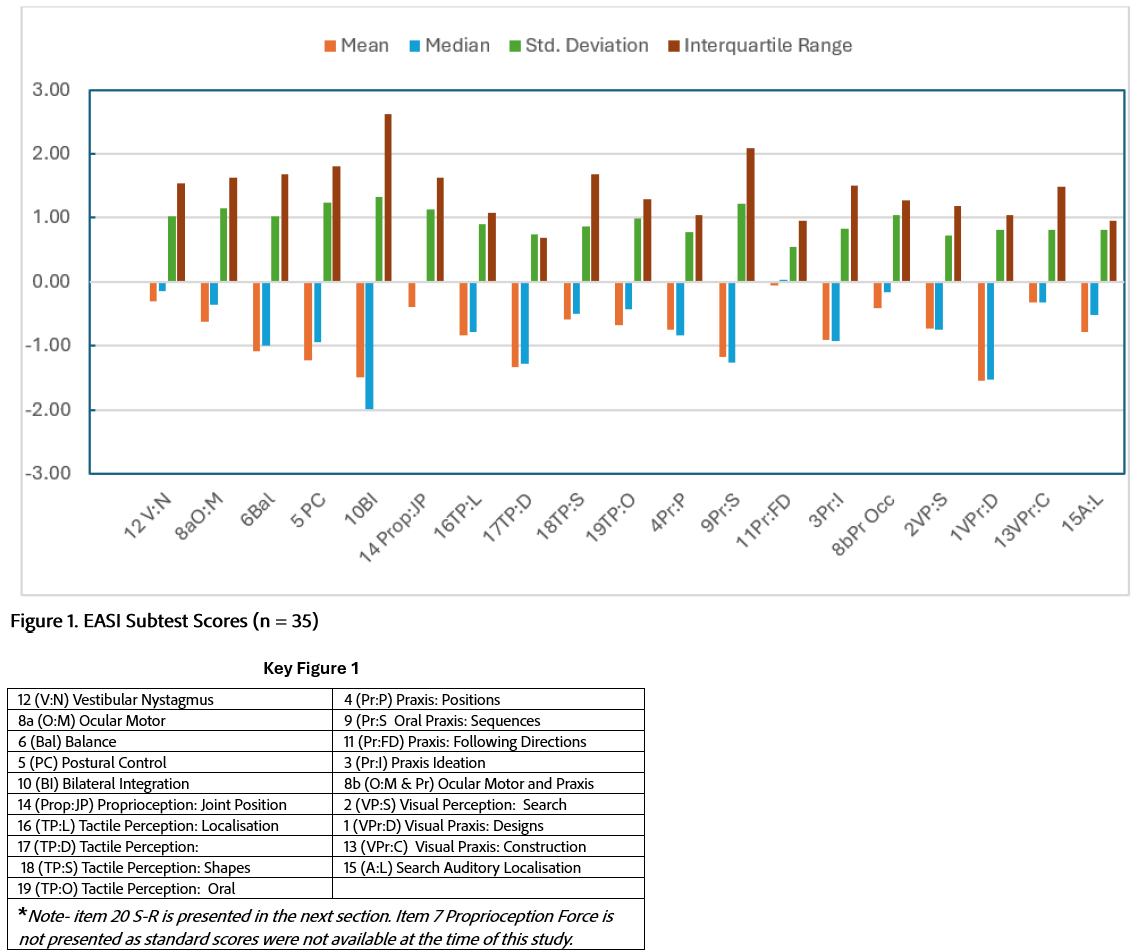
Figure 1 (page 6) presents descriptive statistics for individual EASI subtests, including mean, median, standard deviation, and interquartile range were analysed. The interquartile range characterises the data's variability by capturing the middle 50% of scores. This measure highlights the spread of scores, indicating whether performance was relatively uniform or widely dispersed across subtests, thereby reflecting consistency in either weaker or stronger performance across the different sensory integration domains.
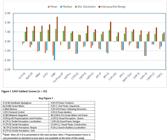
EASI results are reported as z-scores, representing the number of Standard Deviations (SD) a score deviates from the mean. The EASI is developed on constructs from ASI® theory and practice, and is continuously being refined. These constructs are influenced by studies conducted on SI and related functions, started by Ayres in 196531. According to the SIPT manual32, a typical distribution equals a mean z-score of 0,0 and a standard deviation of 1. The SIPT manual defines dysfunctional levels based on z-score ranges: severe dysfunction (-3,0 to -2,5), definite dysfunction (-2,5 to -2,0) and mild dysfunction (-1,9 to -1,0). Scores between -0.9 and +1,0 range are considered typical range. The above-average functioning range is between +1 and +2, whilst the advanced range is +2,0 to +3,0. Any score below -3,0 is shown as -3,0 and scores above +3,0 shown as a +3,032. Of particular mention is the Vestibular Nystagmus (V:N) subtest (known as Post-Rotary Nystagmus in the SIPT), where a score of -1,00 indicates a dysfunction as well as a score above +1,00. An atypically lower score on this subtest indicates low responsivity and processing of vestibular input and an atypically high score indicates insufficient Central Nervous System inhibition of the nystagmic reflex32,22. One child scored with an atypically high V:N score, with ten scoring with an atypically low score. The mean (-1,5) and median (-1,9) for subtest 10, Bilateral Integration, as well as subtest 9, Praxis Sequences (mean is -1,2 and median -1,3) is seen to be in the mild dysfunction range. The high interquartile range (BI = 2,6 ; Pr:S = 2,0) and standard deviation (BI = 1,3 ; Pr:S = 1,2) for these subtests suggest greater variability in performance across the population.
Balance resulted in a mean score of -1,0 and median of -1,0, indicative of mild dysfunction, similar to Visual Praxis Designs (mean -1,5 and median -1,5). The standard deviation (Bal = 1,0 ; VPr:D =0,8) and interquartile range (Bal = 1,7 ; VPr:D = 1,0) are of average values, indicating more consistency in the poor performance in these subtests.
Postural control, subtest 5, indicates a mild dysfunction mean (-1,1) and lower end of typical median (-0,9). A higher interquartile range and standard deviation show fluctuation in the results and greater variability. With regards to subtest 17, Tactile Perception: Designs, the results present with a mild dysfunction mean (-1,3) and median (-1,3) score. The standard deviation and interquartile range are lower, indicating more consistent weaker scores.
Sensory Perception, Somatodyspraxia, Bilateral Integration and Sequencing Pattern, Visuodyspraxia and Combination of Patterns
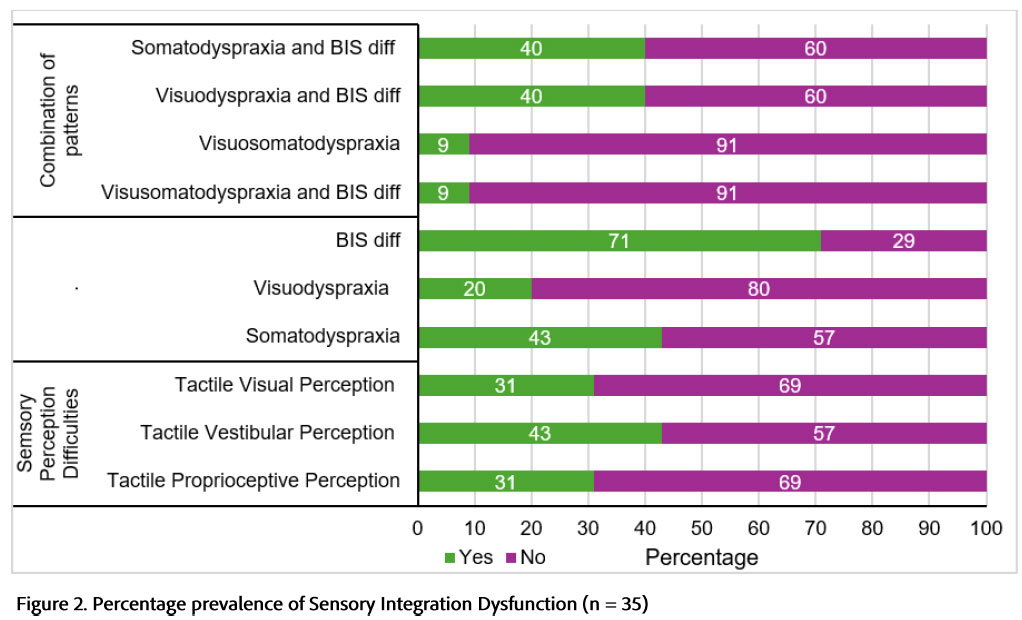
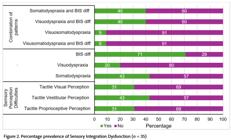
Results regarding the combination of SI patterns, bilateral integration and sequencing (BIS), visuodyspraxia, somatodyspraxia and sensory perception are presented in Figure 2 (page 7) in percentages of dysfunction being present (yes) or absent (no).
When investigating whether a child presents with somatodyspraxia, the key indicators include poor tactile perception and difficulty in specific praxis subtests, namely Praxis: Positions, Praxis: Sequences or Oral: Praxis1,22,23. The Visual Praxis: Designs and Visual Praxis: Construction tests load the highest when diagnosing visuodyspraxia1,32. Praxis: Sequences and Bilateral Integration have the highest loading on factor analysis with BIS22,23,32.
In this sample, the most prevalent pattern of dysfunction was Bilateral Integration and Sequencing (BIS) difficulties, identified in 71,4% of participants (including those presenting with co-occurring somato- and visuo-dyspraxia). This high prevalence aligns with the lower mean and median scores observed on individual EASI subtests that assess bilateral coordination (10 Bilateral Integration), sequencing and timing of movements (Praxis: Sequences), the perception of vestibular input (Balance) and Postural Control. Additionally, somatodyspraxia was present in 42,9% of the sample, whilst 20% demonstrated Visuodyspraxia.
A combination of patterns and sensory perception is split into sections. Generalised SI Dysfunction is not represented since no children (0%) presented with a generalised SI dysfunction. The majority of the population did not present with a combination of Visuosomatodyspraxia and BIS pattern, with 8,6% exhibiting this co-occurrence. Few children presented with a Visuosomatodyspraxia combination (8,6%). In contrast, a higher proportion of children demonstrated combined difficulties in combined Visuodyspraxia and BIS (40%) and combined Somatodyspraxia and BIS (40%).
Sensory perception difficulties are typically characterised by low scores in tactile perception tests alongside deficits in at least one other sensory system (e.g. vestibular, proprioception or visual perception)1. In this cohort, 42,9% of children exhibited having both tactile and vestibular discrimination difficulties. Additionally, 31,4% of the sample demonstrated tactile/proprioceptive discrimination and tactile/visual discrimination difficulties, respectively.
Sensory Reactivity
The results of the EASI subtest 20, Sensory Reactivity, are based on all 35 participants. The results are divided into categories and the percentage of children where a difficulty was present is given in brackets: tactile (22,9%), auditory (45,7%), gravity (28,6%) and olfactory (37,1%).
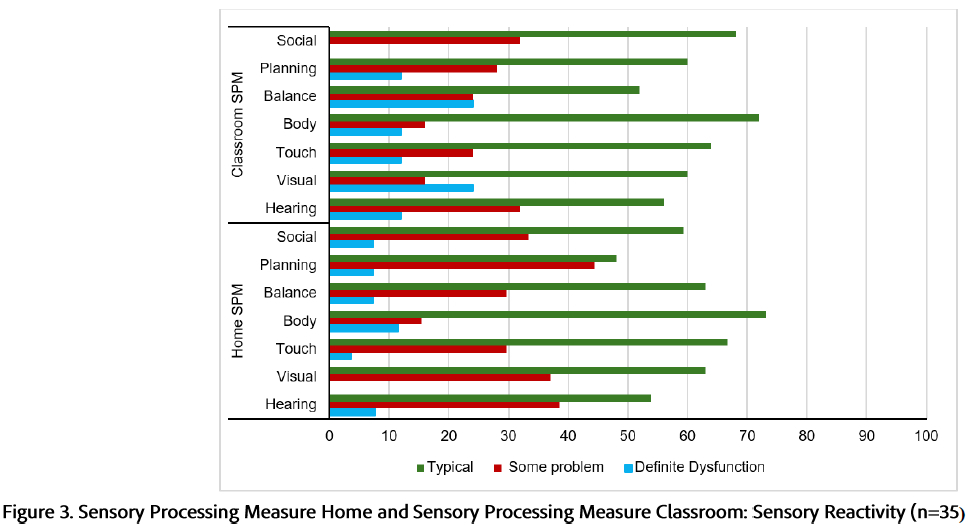
Findings from the Sensory Processing Measure Home and Classroom form are presented in Figure 3 (below) according to definite dysfunction, some problems and typical in the areas of: social, planning, balance, body, touch, visual and hearing.
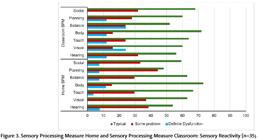
Analysis of auditory reactivity (hearing) revealed that 38,5% of children experienced some difficulty at home, with 7,7% exhibiting a definite dysfunction. Within the classroom setting, 22,9% of children experienced some difficulties, whilst 8,6% demonstrated a definite dysfunction. Visual reactivity challenges were also prevalent, while 37% of children faced difficulties at home, classroom reports showed a higher incidence of definite difficulties (25%), compared to those with minor difficulties (16%).
In contrast, tactile (touch) reactivity appeared less challenging for most children, with only 3,7% exhibiting definite dysfunction (possible tactile defensiveness) and 29,6% reporting some problems at home. In the classroom, definite differences are seen in 12% and challenges in the tactile system seen in 24%.
Regarding proprioceptive (body) input, 11,5% of children presented with a definite dysfunction, while 15,4% faced some difficulties at home. Similar trends were observed in the classroom, with 12% of children with a definite dysfunction and 16% having some problems. Vestibular processing (balance) deficits were noted in 7,4% (definite) and 29,6% (some difficulty) of children at home; however, the classroom environment saw a marked increase in definite dysfunction at 24%.
Finally, planning difficulties were highly prevalent. At home, 7,4% demonstrated a definite dysfunction and an additional 44,4% with some level of difficulty at home. In the classroom, definite dysfunction rose to 12%, while 28% experienced some problems.
At home the social domain demonstrated a 7,4% definite dysfunction whilst 33,3% had some difficulties. In the classroom no children scored as having definite dysfunction in the social aspect; however, 32% presented with some problems.
Impact on Family Life
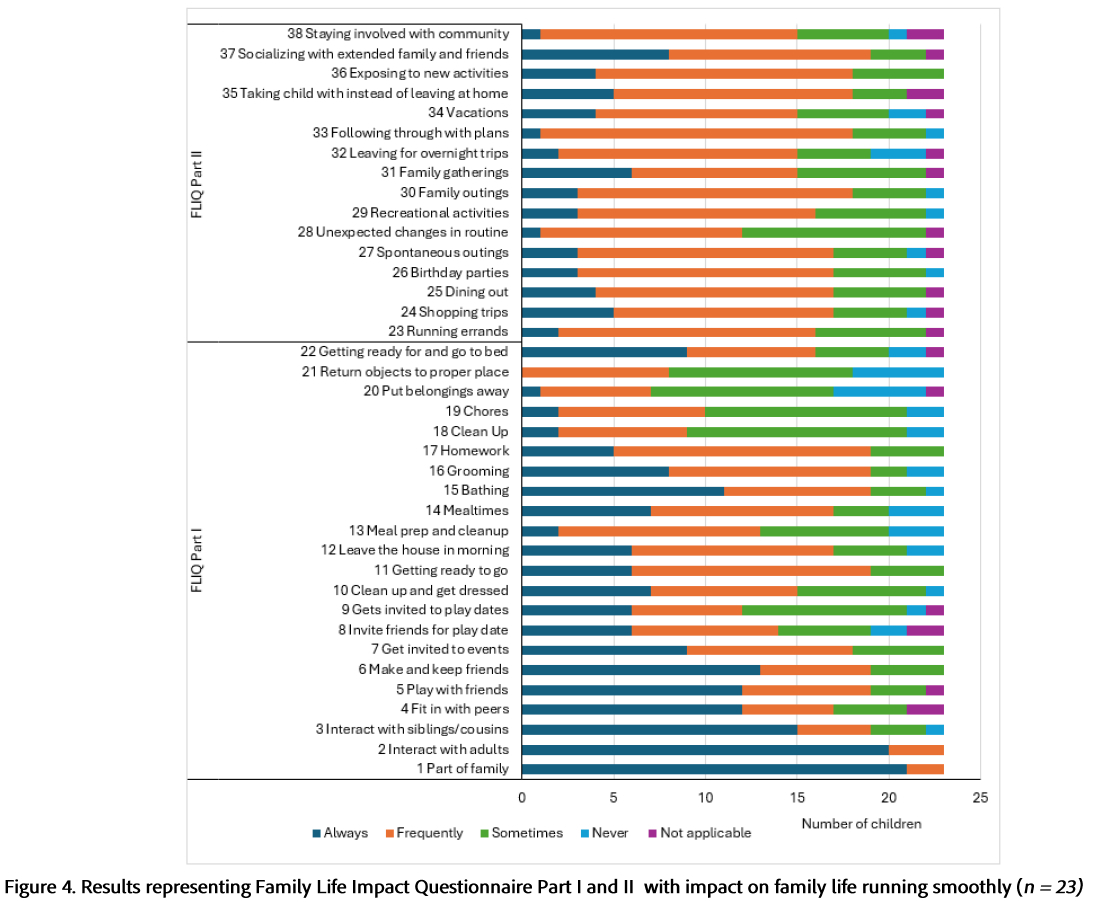
Outcomes from the Family Life Impact Questionnaire Part I and Part II are presented in Figure 4 (below), which includes information on whether an activity runs smoothly: always, frequently, sometimes, never or non-applicable.
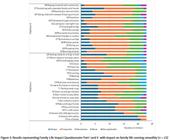
According to Part I of the FLIQ, which focuses on daily living activities and social participation29, the following areas are observed to have an impact on family life and have a higher number of sometimes or never running smoothly:
Invites friends for a play date (5 sometimes, 2 never)
Gets invited to play dates (9 sometimes, 1 never)
Cleaning up and getting dressed (7 sometimes, 1 never)
Meal preparation and clean-up (7 sometimes, 3 never)
Cleaning up (12 sometimes, 2 never)
Chores (11 sometimes, 2 never)
Putting belongings away (10 sometimes, 5 never)
Returning objects to their proper place (10 sometimes, 5 never)
According to part II of the FLIQ, which focuses on community activities29, the following areas are observed to have an impact on family life and have a higher number of sometimes or never running smoothly:
Birthday parties (5 sometimes, 1 never)
Family gatherings (7 sometimes)
Unexpected changes in routine (10 sometimes)
Leaving for overnight trips (4 sometimes, 3 never)
Staying involved with the community (5 sometimes, 1 never)
Recreational activities (6 sometimes, 1 never)
Vacations (5 sometimes, 2 never)
DISCUSSION
This study contributes to the expanding evidence base regarding sensory integration dysfunction in children with learning differences, particularly within the South African context. From an occupational therapy perspective, the identified sensory-based difficulties extend beyond discrete motor deficits; they significantly influence a child's capacity to participate meaningfully in core occupations such as classroom learning, peer engagement, and self-care15.
While based on a relatively small cohort, these findings address a critical gap in local literature and offers a nuanced look at sensory patterns within short-term remedial settings. Ultimately, this research advocates for the reorientation of intervention models in South African short-term remedial schools - toward approaches that are both evidence-based and deeply rooted in occupation-centred practice.
EASI Results
In this sample, mean and median scores fell below average across several key subtests: Bilateral Integration, Praxis Sequences, Balance, Visual Praxis Designs, Postural control and Tactile Perception Designs. Notably, the SIPT manual and SIPT/EASI crosswalk indicate the co-occurrence of low scores on Bilateral Integration, Praxis Sequences, Tactile Perception Designs and Balance, is highly indicative of a Bilateral Integration and Sequencing (BIS) pattern23,32. This finding is further strengthened by the low scores in Postural Control, which aligns with the BIS construct22. These results mirror previous South African research; including a study of 223 children that identified a similar factor for BIS within the local population20.
Visual Praxis Designs (correlated with SIPT Design Copying test) suggests difficulty with tasks that require two-dimensional space management, as seen in writing and drawing32, which aligns with the reported high percentage of children in this sample experiencing handwriting difficulties. A similar finding was found in a study analysing 33 children with and without handwriting difficulties. The results indicated that all children with handwriting difficulties result in at least one standard deviation or more below average on Praxis Sequences16.
Somatodyspraxia, Visuodyspraxia and Bilateral Integration and Sequencing Pattern
The findings of this study underscore a significant prevalence of the BIS pattern among children with learning differences, a factor recognised as influential to academic performance9. A factor analysis study using the SIPT completed in 1998 on 10,475 children (995 with a learning difference) revealed BIS as an important factor33. Similarly, children with ASD displayed problems with vestibular bilateral functions34.
Historically associated with reading difficulties9, BIS is often overlooked due to its subtle presentation compared to somatodyspraxia1,2,4. However, as a higher-level praxis disorder, its impact is profound. The neuroanatomical basis for BIS is hypothesised to involve the brain stem, the basal ganglia (crucial for movement), and the cerebellum (essential for coordinated and timed movements)2. Central Nervous System (CNS) integration is integral for constructive action, including reading, and represents higher cognitive function2.
The integration of visual fields from each eye and postural motor actions plays an important role in sensory perception2,4. The prevalence of BIS, characterised by difficulties in midline crossing, postural stability and anticipating actions involving timing and movement within space, predicts problems with learning such as reading, writing and maths ability1,4.
While somatodyspraxia and visuodyspraxia can co-occur, this is not always the case32. The higher percentage of children presenting with a BIS pattern likely contributes to the higher prevalences of combinations involving BIS, such as somatodyspraxia with BIS difficulty; and visuodyspraxia with BIS difficulty. The link between visuodyspraxia and BIS difficulty highlights the visual systems role in bilateral coordination2. Problems with bilateral integration and sequencing are characterised by difficulty with sensory and motor tests and problems when planning tasks, which is similarly seen in somatodyspraxia2. Somatodyspraxia is defined as deficits in tactile and motor planning, while BIS is defined as poor proprioception and vestibular perception, indicating overlapping underlying sensory integration challenges2. Notably, no children in this study presented with generalized sensory integration dysfunction, suggesting more specific, pattern-based deficits.
Sensory Perception
The findings of this study reveal a prevalence of tactile and vestibular perception deficits within the sample. Tactile perception serves as an essential aspect of learning and performing fine motor skills, consequently, children with these deficits often struggle with eye-hand coordination and motor planning15.
Children with difficulty with vestibular perception present with weakened postural control, impaired balance and difficulty with eye-hand coordination, aligning with the challenges observed in this population2.
These overlapping findings emphasize the necessity of a comprehensive clinical investigation into a child's vestibular and visual perception systems to better understand the root of their academic and motor challenges.
Sensory reactivity
The EASI subtest 20 (Sensory Reactivity) suggests a higher prevalence of auditory and olfactory sensitivities compared to other sensory domains. Olfactory reactivity, in particular, demonstrates a significant link to fussy eating, as children with these sensitivities may struggle to tolerate varied scents due to the olfactory system's direct connection to the limbic (emotional) system1,2.
Auditory sensitivity was also indicated in 31,5% of children (some difficulties or definite dysfunction) on the SPM first edition classroom form. Such auditory difficulties, especially in noisy environments, place learners at a higher risk of academic underachievement25,35.
Visual reactivity was equally notable, with 37% of children facing challenges (some problems) at home and 40% in the classroom (definite dysfunction and some problems combined). Sensitivities in the auditory and visual systems are seen more frequently in children diagnosed with ADHD and may relate to the presence of this diagnosis36. Research shows the processing of auditory input on a similar assessment measure was significantly different in children with learning differences than those without37. A child with sensitivity in the auditory system may avoid activities with high noise levels such as birthday parties1. Education regarding home strategies is essential for caregivers to understand their child's sensory profile better. Structure can create a more organised and predictable environment. Caregivers are also encouraged to facilitate play with simple objects and maintain realistic expectations for the child to develop praxis skills15.
Classrooms often present a space of heavily decorated backgrounds and visual input. This affects the ability to focus and learn and influences all primary school children, especially younger and developmentally less mature children38. These children may struggle to focus within visually distracting environments and avoid visually rich settings2,25. There is often a cumulative effect of sensory input within the classroom due to the increased visual, auditory and tactile stimuli, and many children present with difficulty in reducing this sensory load, emphasising the importance of environmental adaptations in the classroom39. Environmental adaptions influence a child's focus, behaviour and ability to engage in tasks46.
The balance scale indicates difficulty within the classroom, with almost half the learners presenting with some problems or definite dysfunction (48%), indicating poor postural control25. A child with definite dysfunction may present as being tired or weak, clumsy and uncoordinated25, which correlates to the below-average scores seen in the Postural Control subtest on the EASI and may be influenced by the postural demands within the classroom40.
Given that over half the sample (51%) faced planning (praxis25) challenges at home as well as 40% in the classroom, there is a clear imperative for teacher training, environmental adaptations, and the integration of movement-based learning41. The planning, or praxis, aspect relates to motor planning and ideation and is indicative of a need for further assessment using an ASI® assessment25.
Impact on family life
During the school years, a sensory integration dysfunction profoundly impacts daily life activities such as dressing, eating, self-care, morning- and daily routines42. Additionally, play skills, sporting activities and social interactions are often seen to be influenced. These children have difficulties when activity demands increase, such as with handwriting and cutting. Poor visual motor coordination, motor planning, fine motor skills, somatosensory processing and organisation or sequencing may influence their output of work2.
When a child performs an activity of daily living such as hygiene, it depends on the child's performance skills on how successful the task is. Examples of performance skills are tactile sensitivity, postural control, and sensory and motor skills. The skills taught during instrumental activities of daily living (such as putting objects away in the correct place) are essential to teach children to develop communication, cognitive and social interaction skills. Children with SI dysfunction may find it challenging to generalise these skills across different environments15.
A child's social play is influenced by their praxis skills and ability to process input from visual, touch, proprioceptive and vestibular input. Sensory integration dysfunction influences a child's play engagement, resulting in limited play preferences and restricted social interaction. One area of focus hugely impacted by sensory integration dysfunction is eating and mealtimes. There may be difficulty joining in on mealtimes due to the sensory aspect, such as loud appliances or tactile sensitivities2.
The FLIQ Part I reports that some activities such as inviting friends for a play date, getting invited for a play date sometimes or never run smoothly for the family and are, directly influenced by the child. This also applied to ADLs such as cleaning up and getting dressed in the morning, and iADLs such as meal preparation and clean-up, chores, putting personal belongings away and returning household objects to their proper place. Typically, children require minimal guidance with daily occupations such as getting dressed43. However, the results of this study indicate difficulties in these areas and a need for more caregiver guidance.
In the FLIQ Part II, community activities that sometimes or never run smoothly for the family directly and are influenced by the child are birthday parties, family gatherings (e.g. holidays, weddings and birthdays), leaving to go out for overnight trips, staying involved with the community as well as recreational activities and vacations. This is also impacted by unexpected changes in schedule or routine. A review of 35 studies by Koenig and Rudney looked at difficulties in play, leisure, social participation, ADLS, iADLS, rest and sleep and education and linked these to sensory weaknesses43. It is understandable that children with praxis difficulties have difficulties with daily occupations. Occupational therapists play a crucial role in assisting and guiding children to develop these skills through scaffolding and guidance with the help of the caregiver15.
Engagement in play encourages integration in multiple sensory and motor systems and assists in developing praxis44. Ayres Sensory Integration® intervention is seen to aid in engagement in daily occupations by developing the underlying skills required, highlighting the need for occupational therapists to take a closer look at these areas when assessing and planning interventions18. Family life benefits positively when working with an ASI® framework as strategies are created that support the whole family and allow the caregivers to better understand the child45.
Research indicates that caregivers of children with sensory integration disorders experience elevated levels of stress46, as well as a reduced quality of life, particularly among those caring for children with learning differences47. Addressing and managing this caregiver stress is considered essential for enhancing the well-being of both the caregiver and the child47. Children with autism often struggle to complete functional family routines in a smooth and predictable manner, requiring families to remain highly flexible in adapting their daily activities48. Families report difficulties in maintaining consistent participation in shared routines such as morning preparations, mealtimes, family vacations, and community engagements48.
In the South African context, parents of children with learning differences frequently report experiencing guilt, embarrassment, and feelings of inadequacy. Their social lives are also commonly affected, often accompanied by a profound sense of isolation. However, families with access to a supportive and encouraging extended family network appear better equipped to adapt to these challenges49.
Children with learning differences commonly present with difficulties in social and emotional functioning. Research highlights increased psychological stress and a higher prevalence of mental health challenges in this population. These children are frequently exposed to experiences of rejection, contributing to emotional difficulties such as loneliness, low self-esteem, anxiety, and frustration, as well as challenges in recognizing emotions in others50. Repeated failures in completing everyday tasks may lead to a persistent sense of frustration and contribute to the erosion of self-confidence14.
The above information shows the importance of including caregivers and family within the intervention plan in order to improve the daily life activities, stress of parents and social engagement as well as make use of outcomes that are meaningful to the family53. It is also important to take note of the child's affective states and to prioritise this during therapy.
CONCLUSION
The findings of this study underscore the critical need for deeper investigation into sensory integration (SI) within short-term remedial environments. The evidence suggests that professional development for occupational therapists in these settings should prioritise the enhancement of postural control, balance, perception of vestibular and tactile input as well as sensory reactivity.
Furthermore, these results serve as a guide for caregivers to better understand their children in a home environment regarding their child's planning or praxis skills, auditory and visual reactivity, and strategies to improve daily occupations. In the school setting, teacher training is essential to implement environmental modifications to manage auditory, tactile, and visual input and strategies to improve the children's postural control and planning within the classroom.
Ultimately, this research advocates for the systemic adoption of the ASI® framework in South African remedial schools. By positioning the occupational therapist as a bridge between assessment, goal setting, and stakeholder guidance, we can ensure that intervention is both evidence-based and occupation-centred.
Funding
The primary author received tuition remission through the University of Kwa-Zulu Natal, College of Health Sciences to complete postgraduate studies
Conflict of interest
The primary author received funding from the South African Institute for Sensory Integration (SAISI) to support this research. The funders had no role in the study design, data collection or interpretation.
Author contributions
Nicola van Ravenswaay conceptualised and designed the study, collected and analysed and interpreted the data, and drafted the initial version. Gina Rencken and Pragashnie Govender supervised the first author from conceptualisation to completion, provided guidance and critical review of the first draft. All listed authors approved the final version of the manuscript.
REFERENCES
Acknowledgements
Statistical support from Samuel Oduse through the University of Kwa-Zulu Natal is acknowledged.
LITERATURE REVIEW
- 1. Schaaf, R. Mailloux, Z. (2015). Clinician's Guide for Implementing Ayres Sensory Integration®: Promoting Participation for Children with Autism. United States of America: AOTA Press.
- 2. Bundy, A. Lane, S. (2020) Sensory Integration Theory and Practice. 3rd ed. Philadelphia: F.A Davis Company.
-
3. Mutsaddi, S. Sadhale, A. (2019) Prevalence of sensory processing dysfunction in children with difficulties in learning. Journal Society of Indian Physiotherapists, 3(2), pp. 38-42 http://doi.org/10.18231/j.jsip.2019.004
» http://doi.org/10.18231/j.jsip.2019.004 - 4. Ayres, A. J. (1972). Sensory Integration and Learning Disorders. California: Western Psychological Services.
-
5. Ayres, A. J. (1969). Deficits in Sensory Integration in Educationally Handicapped Children. Journal of Learning Disabilities, 2(3):160-168 https://doi.org/10.1177/002221946900200307
» https://doi.org/10.1177/002221946900200307 -
6. Van Jaarsveld, A., Mailloux, Z., Herzberg, D.S. (2012). The use of the Sensory Integration and Praxis tests with South African children. South African Journal of Occupational Therapy. 2012;42(3):12-8. https://journals.assaf.org.za/index.php/sajot/article/view/19715
» https://journals.assaf.org.za/index.php/sajot/article/view/19715 - 7. Mailloux, Z., Parham, D. Smith Roley, S. (2020) Evaluation in Ayres Sensory Integration Manual
- 8. Wedding, D. Horton, A. (2008) The Neuropsychology Handbook. New York: Springer Publishing Company.
- 9. Ayres, J. A. (1971) Sensory Integrative Processes and Learning Disorders. Los Angeles University of Southern California.
-
10. Ayres, A. J., Mailloux, Z. Wendler, C. (1987) Developmental Dyspraxia: Is it a Unitary Function? Occupational Therapy Journal of Research, 7(2):93-110 https://doi.org/10.1177/153944928700700203
» https://doi.org/10.1177/153944928700700203 -
11. Szmalec J. Sensory Integration Dysfunction in children with learning Difficulties. Prima Educatione. 2020 10(3):121-129. http://dx.doi.org/10.17151/pe.2019.3.121-129
» http://dx.doi.org/10.17151/pe.2019.3.121-129 -
12. Emaili, S.K., Mehraban, A.H., Shafaroodi, N., Yazdani, F., Masoumi, T., Zarei, M. (2019) Participation in Peer-Play Activities among children with specific learning disability: A randomized controlled trial. The American Journal of Occupational Therapy 73 (2): 7302205110p1-7302205110p9 https://doi.org/10.5014/ajot.2018.028613
» https://doi.org/10.5014/ajot.2018.028613 -
13. Davies, P. Tucker, R. (2010) Evidence Review to Investigate the Support for Subtypes of Children with difficulty processing and integrating sensory information. American Journal of Occupational Therapy, 64(3), 391-402. https://doi.org/10.5014/ajot.2010.09070
» https://doi.org/10.5014/ajot.2010.09070 - 14. Ayres, A. J., (2005). Sensory Integration and the child (25th anniversary edition). Los Angeles: Western Psychological Services.
-
15. Case-Smith, J. O'Brien, J.C. (2015) Occupational Therapy for Children and Adolescents Seventh Edition. Missouri: Elsevier Mosby https://catalog.nlm.nih.gov/permalink/01NLM_INST/1fua1rm/alma9916396313406676
» https://catalog.nlm.nih.gov/permalink/01NLM_INST/1fua1rm/alma9916396313406676 -
16. Donica, D. K., Beck, L., Mumford, K. (2025). Exploring the Relationship Between Handwriting Legibility and Praxis in Third and Fourth Grade Students. The Open Journal of Occupational Therapy, 13(1), 1-9. https://doi.org/10.15453/2168-6408.2285
» https://doi.org/10.15453/2168-6408.2285 -
17. Koenig, K. P., Rudney, S. G. (2010). Performance challenges for children and adolescents with difficulty processing and integrating sensory information: A systematic review. American Journal of Occupational Therapy, 64(3), 430-442. https://doi.org/10.5014/ajot.2010.09073
» https://doi.org/10.5014/ajot.2010.09073 -
18. Schaaf, R. C., Dumont, R. L., Arbesman, M., May-Benson, T. A. (2018). Efficacy of occupational therapy using Ayres Sensory Integration®: A systematic review. American Journal of Occupational Therapy 72(1), 7201190010p1-7201190010p10. https://doi.org/10.5014/ajot.2018.028431
» https://doi.org/10.5014/ajot.2018.028431 -
19. Mailloux, Z, Parham, L.D., Smith Roley, S., Ruzzano, L., Schaaf, R.C. (2018) Introduction to the Evaluation in Ayres Sensory Integration (EASI). American Journal of Occupational Therapy, 72(1), pp.7201195030p1-7201195030p7 https://doi.org/10.5014/ajot.2018.028241
» https://doi.org/10.5014/ajot.2018.028241 - 20. Van Jaarsveld, A. (2014). Patterns of sensory integration dysfunction in children from South Africa. South African Journal of Occupational Therapy 44(2):1-6
-
21. Mailloux, Z., Mulligan, S., Roley, S. S., Blanche, E., Cermak, S., Coleman, G. G., Bodison, S., Lane, C. J. (2011). Verification and clarification of patterns of sensory integrative dysfunction. The American Journal of Occupational Therapy, 65(2), 143-151. https://doi.org/10.5014/ajot.2011.000752
» https://doi.org/10.5014/ajot.2011.000752 - 22. South African Institute for Sensory Integration (SAISI) (2022). Interpretation sheet SIPT/EASI/ Observations
- 23. South African Institute for Sensory Integration (SAISI) (2022). SIPT/EASI Crosswalk. Interpretation Course
- 24. Ayres, A. J. (1989). Sensory Integration and Praxis Test Manual. Los Angeles: Western Psychological Services.
- 25. Parham, L.D., Ecker, C., Miller Kuhaneck, H., Henry, D.A. Glennon, T.J. (2007) Sensory Processing Measure (SPM) Manual. Los Angeles : Western Psychological Services
- 26. Parham, L.D Ecker, C. (2007) Sensory Processing Measure (SPM) Home Form. Los Angeles: Western Psychological Services
- 27. Miller Kuhaneck, H., Henry, D.A. Glennon, T.J. (2007) Sensory Processing Measure (SPM) Main Classroom Form. Los Angeles: Western Psychological Services
- 28. Smith Roley, S. Mailloux, Z. (2018) Family Life Impact Questionnaire (FLIQ)
-
29. Collaborative for Leadership in Ayres Sensory Integration (CLASI) (2025) Webinar Library: Family Life Impact Questionnaire (FLIQ). Available at: https://www.cl-asi.org/webinar-library/v/xgmah7jdw5z2bbshmh8ad56r94yw53
» https://www.cl-asi.org/webinar-library/v/xgmah7jdw5z2bbshmh8ad56r94yw53 -
30. South African Institute for Sensory Integration (SAISI) (2025) SAISI SASIC ASI® courses. Available at https://instsi.co.za/saisi-courses-2/
» https://instsi.co.za/saisi-courses-2/ -
31. Ayres, A. J. (1965). Patterns of perceptual-motor dysfunction in children: A factor analytic study. Perceptual and Motor Skills, 20(2), 335-368 https://doi.org/10.2466/pms.1965.20.2.335
» https://doi.org/10.2466/pms.1965.20.2.335 - 32. Ayres, A. J. (2007). Sensory Integration and Praxis Test Ninth Edition Manual. California: Western Psychological Services.
-
33. Mulligan, S. (1998). Patterns of sensory integration dysfunction: A confirmatory factor analysis. American Journal of Occupational Therapy, 54(4), 389-398. https://doi.org/10.5014/ajot.52.10.819
» https://doi.org/10.5014/ajot.52.10.819 -
34. Smith-Roley, S., Mailloux, Z., Parham, L.D., Schaaf, R.C., Lane, C.J., Cermak, S. (2015) Sensory Integration and Praxis Patterns in Children with Autism. The American Journal of Occupational Therapy, 61(1), 6901220010p1-8 https://doi.org/10.5014/ajot.2015.012476
» https://doi.org/10.5014/ajot.2015.012476 -
35. Ashburner, J., Ziviani, J., Rodger, S. (2008) Sensory Processing and Classroom Emotional, Behavioural and Educational Outcomes in Children with Autism Spectrum Disorder. The American Journal of Occupational Therapy. 62 (5). 564-573 https://doi.org/10.5014/ajot.62.5.564
» https://doi.org/10.5014/ajot.62.5.564 -
36. Pfeiffer, B., Daly, B. P., Nicholls, E. G., Gullo, D. F. (2015). Assessing Sensory Processing Problems in Children With and Without Attention Deficit Hyperactivity Disorder. Physical Occupational Therapy In Pediatrics, 35(1), 1-12. https://doi.org/10.3109/01942638.2014.904471
» https://doi.org/10.3109/01942638.2014.904471 -
37. Armstrong-Gallegos, S., Nicolson, R. I. (2020). Problems in Audiovisual Filtering for Children with Special Educational Needs in Perception. 2020 11(4):2041669520951816. https://doi.org/10.1177/2041669520951816
» https://doi.org/10.1177/2041669520951816 -
38. Hanley, M., Khairat, M., Taylor, K., Wilson, R., Cole-Fletcher, R., Riby, D. M. (2017). Classroom displays - Attraction or distraction? Evidence of impact on attention and learning from children with and without autism. Developmental Psychology, 53(7), 1265-1275. https://doi.org/10.1037/dev0000271
» https://doi.org/10.1037/dev0000271 -
39. Fernández-Andrés, M. I., Sanz-Cerverza, P., Salgado-Burgos, C., Tárraga-Mínguez, R., Pastor-Cerezuela, G. (2018). Comparative study of sensory modulation vulnerabilities in children with and without ASD in family and school contexts. Journal of Occupational Therapy, Schools, Early Intervention, 11(3), 318-328. https://doi.org/10.1080/19411243.2018.1432448
» https://doi.org/10.1080/19411243.2018.1432448 - 40. Domljan, D., Grbac, I., Hadina, J. (2008) Classroom Furniture Design - Correlation of Pupil and Chair Dimensions. Coll. Antropol. 32 (1) 257-265
-
41. Daly-Smith AJ, Zwolinsky S, McKenna J, Tomporowski PD, Defeyter MA, Manley A. (2018). Systematic review of acute physically active learning and classroom movement breaks on children's physical activity, cognition, academic performance and classroom behaviour: understanding critical design features. BMJ Open Sport Exercise Medicine, 4(1), e000341. https://doi.org/10.1136/bmjsem-2018-000341
» https://doi.org/10.1136/bmjsem-2018-000341 - 42. Blanche, E. Parham, L. (2001). Understanding the Nature of Sensory Integration with Diverse Populations. United States: Therapy Skill Builders.
-
43. Koenig, K.P., Rudney, S.G. (2010) Performance Challenges for Children and Adolescents with Difficulty Processing and Integrating Sensory Information: A Systematic Review. The American Journal of Occupational Therapy. 64 (3) 430-442 https://doi.org/10.5014/ajot.2010.09073
» https://doi.org/10.5014/ajot.2010.09073 - 44. Case-Smith, J., O'Brien, J.C. (2015) Occupational Therapy for Children and Adolescents Seventh Edition. Elsevier : Missouri
-
45. Piller, A., Osborne, B., McHugh Conlin, J. (2025). Perceived Impact of Sensory Integration Therapy on the Family. OTJR : occupation, participation and health, 45(4), 519-526. https://doi.org/10.1177/15394492241280039
» https://doi.org/10.1177/15394492241280039 -
46. Evatt, K.S. (2022) OTs' approach to caregiver stress in parents of children with sensory dysfunction. The American Journal of Occupational Therapy 76 (1):(Supplement_1):7610510186p1 https://doi.org/10.5014/ajot.2022.76S1-PO186
» https://doi.org/10.5014/ajot.2022.76S1-PO186 -
47. Simon, M. and Easbaradoss, V. (2015) Caregiver burden in learning disability. International Journal of Indian Psychology. 2(3) 2349-3429 https://doi.org/10.25215/0203.011
» https://doi.org/10.25215/0203.011 -
48. Schaaf, R.C., Toth-Cohen, S., Johnson, S.L., Outten, G., W. Benevides, T. (2011) The everyday routines of families of children with autism: Examining the impact of sensory processing difficulties on the family. Autism. 15 (373) https://doi.org/10.1177/1362361310386505
» https://doi.org/10.1177/1362361310386505 -
49. Sithole-Tetani, N. (2025). Supporting South African Parents of Children with Learning Difficulties: Psychological Strategies and Resources. Journal of Culture and Values in Education, 8(1), 252-266. https://doi.org/10.46303/jcve.2025.15
» https://doi.org/10.46303/jcve.2025.15 - 50. Cavioni, V., Grazzani, I., Orgnaghi, V. (2017) Social and emotional learning for children with Learning Disability: Implications for inclusion. International Journal of Emotional Education. 9 (2) pp 100-109

Reviewed: 19 September 2025
Revised: 23 February 2026
Accepted: 23 April 2026
First Online: 19 July 2026
EDITOR: Blanche Pretorius https://orcid.org/0000-0002-3543-0743
DATA AVAILABILITY: All data used in this study are included in this article and its supplementary files
FUNDNG: Fee remission from the University of KwaZulu-Natal