Digital apartheid and the effect of mobile technology during rural fieldwork
Abstract
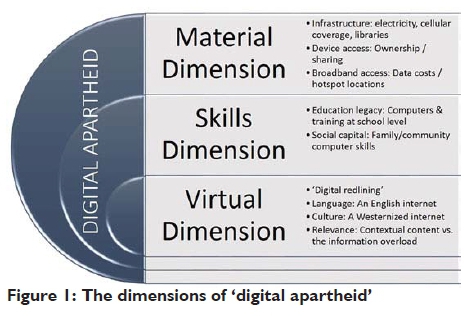
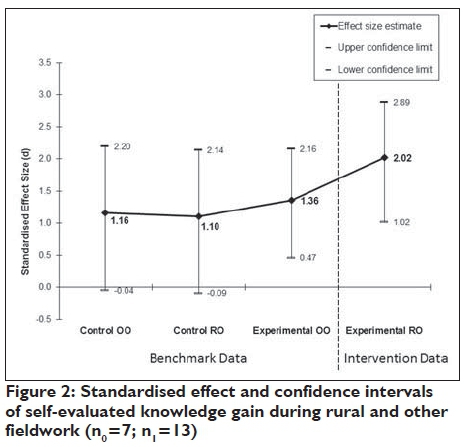
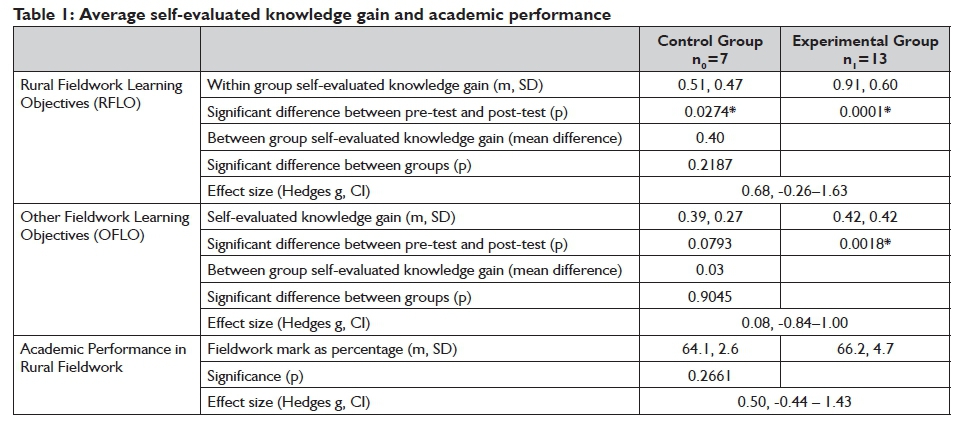
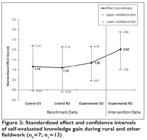
Fourth year occupational therapy students at the University of the Witwatersrand attend a three-week rural fieldwork placement. During this time, they are in a resource-limited environment with limited access to their usual Virtual Learning Environment (VLE) in a blended learning curriculum, thereby contributing to 'digital apartheid' between students from different socioeconomic backgrounds. This study investigates the effect of mobile technology during rural fieldwork to address 'digital apartheid'. A self-reporting pre-test post-test survey design was used. Students self-evaluated their understanding of fieldwork learning objectives at the start of the year and again midyear. Rural fieldwork marks were collected midyear. The experimental group (n=l3) accessed the VLE via the mobile technology, whereas the control group (n0=7) did not. Data were analysed for significance and effect size. While there was no significant difference in the student marks (p=0.27), there was a significant effect on self-evaluated knowledge gain for the experimental group's rural fieldwork learning objectives (d=2.02) which was a notably larger effect size than their other fieldwork learning objectives (d=l.36) and that of the control group's learning objectives. The use of mobile technology during rural fieldwork was a successful strategy towards 'digital democracy' by allowing students equal access to access the VLE.
Digital apartheid; mobile learning; mobile technology; occupational therapy; blended learning; rural clinical fieldwork
 Thumbnail
 Thumbnail