The experiences of individuals with schizophrenia using the Model of Occupational Self-Efficacy in enhancing work skills and returning to work in the open labour market in Western Cape, South Africa
Abstract
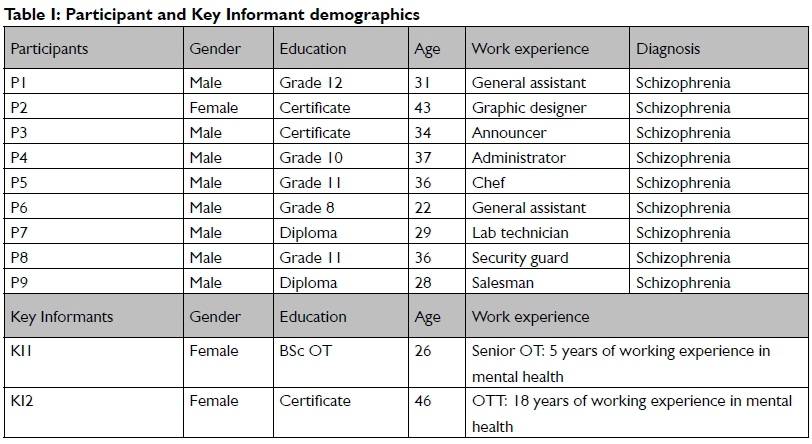
INTRODUCTION: Evidence suggests that supported employment strategies improve the rates of employment for individuals with schizophrenia. The Model of Occupational Self-Efficacy (MOOSE) is such a strategy aimed at enhancing work skills and facilitating return to work (RTW). The aim of the current study was to explore the experiences of individuals with schizophrenia about the use of the MOOSE in enhancing work skills and facilitating RTW in the open labour marketMETHOD: A qualitative research project with an interpretivist paradigm explored the experiences and perceptions of nine participants diagnosed with Schizophrenia. Two occupational therapists participated as key informants. Data were collected by means of semi-structured interviews and analysed using inductive thematic analysisRESULTS: Barriers and facilitators to the use of the MOOSE were revealed. More importantly, the MOOSE enhanced the development of worker identities and contributed to the successful adaptation of worker roles in the RTW process of individuals with schizophrenia in the open labour marketCONCLUSION: The MOOSE is an effective supported employment strategy for persons with schizophrenia. Factors such as client-centred practice, the presence of social support, and ongoing therapeutic support contributed to the participants' successful RTW experience
Schizophrenia; supported employment strategies; Model of Occupational Self-Efficacy; return to work; perception; experience