'A different ball game': responsive capacity strengthening for generalist occupational therapists delivering hand rehabilitation in the public sector
Abstract
INTRODUCTION: Generalist occupational therapists provide hand rehabilitation in challenging settings due to the scarcity of specialist hand therapists. This study aimed to describe the experiences of generalist occupational therapists in South Africa to identify their support and development needs, and propose interventions to address these. METHODS: This qualitative descriptive instrumental case study design involved six purposively sampled occupational therapists delivering hand therapy in a generalist capacity. Data from in-depth interviews and fieldnotes were analysed using reflexive thematic analysis. Within- and cross-case analysis was undertaken. FINDINGS: Vignettes illustrate within-case findings and cross-case analysis generated five themes: participants' experienced hand rehabilitation as both stressful and satisfying and engaged in a distinct learning journey. To respond to the demand for hand therapy, participants articulated various enablers, captured in rising to the challenge. traversing system and service change explains the complex and transient nature of the systems and services in which participants functioned. Finally, once upon a hand injury illustrates the lived realities of patients and the practice complexities that therapists navigate. CONCLUSION: Capacity strengthening that is responsive to generalist occupational therapists' experiences and needs should include individual-level strategies, team and human resource strategies, education, physical resources, and system and service-level strategies. IMPLICATIONS FOR PRACTICE: • Delivering hand rehabilitation as a generalist occupational therapist in the public sector is both stressful and satisfying, and a learning journey situated within a dynamic health system and influenced by the realities of patients' lives. • Capacity strengthening to support this cadre of therapists should include education, physical resources and strategies that target the individual; the team and human resources; and system and service-level strategies.
supervision and support; hand injury; low- and middle-income countries (LMIC); hand therapy; workforce development; health systems strengthening; rehabilitation services; capacity building
INTRODUCTION
The global need for rehabilitation far exceeds the availability of this essential service12234567
The burden of hand injuries in the country's public sector is substantial, making the skewing of services away from this a cause for concern. Interpersonal violence, workplace injuries and road accidents8-10 contribute to the substantial burden of hand injuries. Despite prevalence data being unavailable, sufficient data exist for hand injuries to be considered a public health priority11-14. The hand has aptly been described as 'the earning tool'151212
Many patients with hand injuries within public healthcare will not receive therapy. The therapist to patient ratio is insufficient1617181719,20. Complicated by numerous secondary complications, these circumstances challenge the generalist therapists (non-specialist clinicians providing rehabilitation) responsible for care and severely compromise outcomes. A recent open-access education project, the Open Hand Therapy initiative21
The role of the 'specialist' hand therapist (therapists with advanced competencies, postgraduate training or focused experience in hand therapy) in service delivery is an important one. The retention of therapists with expertise or advanced clinical competencies is essential to the quality and sustainability of rehabilitation services2223
'Generalism' is a concept in the literature that is increasingly popular as it relates to extending equitable access to healthcare. A generalist is a holistic and inclusive practitioner for all types of patients and varied patient problems and develops expertise in 'complex, situated and unique patient problems'24:5. Despite hand rehabilitation being considered a distinct speciality of occupational therapy and physiotherapy practice257,20. It is not known whether this experience is similar for fully registered occupational therapists who deliver hand therapy in a generalist capacity. It is anticipated that their experience may be less challenging, given that they have more experience and potentially work in better-resourced settings. In addition, no literature exists describing the experience of generalist therapists comprehensively enough to identify their support and development needs for delivering hand rehabilitation in a Global South context.
If generalist occupational therapists are essential to the delivery of hand rehabilitation services in South Africa, then their capacity needs to be enabled for this task. The aim of this study was therefore, to:
Describe the experiences of generalist occupational therapists delivering hand rehabilitation to understand their support and development needs
Identify interventions to strengthen generalist occupational therapists' capacity for hand rehabilitation.
METHODOLOGY
The COREQ (Consolidated Checklist for Reporting Qualitative Research) checklist was used to guide reporting with this study (see Supplementary File A).
Research Design
A qualitative descriptive, instrumental, multiple case study262626
Population and case selection
The research population consisted of occupational therapists working in the public sector who routinely treat patients with/at risk of hand injuries/conditions in a generalist capacity. Within the study, a generalist was defined as an occupational therapist who does not have a postgraduate ('specialist') qualification in hand therapy and/or is required to routinely treat patients within other areas of practice (e.g. psychiatry, neurology, paediatrics). Two distinct groups within this population are Community Service (CS) occupational therapists and independent practitioners who have completed their CS and choose to work in the public service as fully registered practitioners. The latter group was the focus of this study.
Case selection occurred through a nominated sample. Professional organisations (The South African Society of Hand Therapists and Rural Rehabilitation South Africa), regional hand rehabilitation interest groups and local hand rehabilitation experts were asked to recommend information-rich sources who were contacted via phone or email to explain the purpose of the study and invite their participation. South Africa has a history of economically advantaged and disadvantaged provinces and inequitable health-service delivery between rural and urban areas2728
Data Collection
The first author, who had conducted and published qualitative research as an occupational therapy academic, collected the data between June 2021 and May 2022 as part of her PhD work. Field visits were undertaken to participants' health facility, field-notes made, and in-depth individual interviews conducted (approximately 60 minutes). The latter were audio-recorded and transcribed, and uploaded along with field-notes to NVivo12 for analysis.
Analysis
Due to the multiple case study design, within-case analysis was used to produce a rich description of each case and its setting29
Braun and Clarke's (2021) reflexive thematic analysis (RTA)3024Familiarization with data) was applied by reading through the transcripts and fieldnotes, listening to the audio-recordings, and making notes. Generating codes (step 2) was done inductively in NVivo 12 and the final list of codes was applied across the data. Constructing themes (step 3) involved a process of searching for patterns in the data and grouping codes according to these patterns. Reviewing themes (step 4) involved presenting the preliminary themes to the co-authors. The naming of a number of the sub-themes required reworking to accurately reflect the content and message. The re-worked themes were then presented to participants in online member-checking meetings. The initial interview with the rural participant was interrupted by poor internet connectivity. A recording of the preliminary results was thus produced for this participant. Defining and naming themes (step 5) was done using participant feedback (see Supplementary File B) after which writing the report (step 6) was completed.
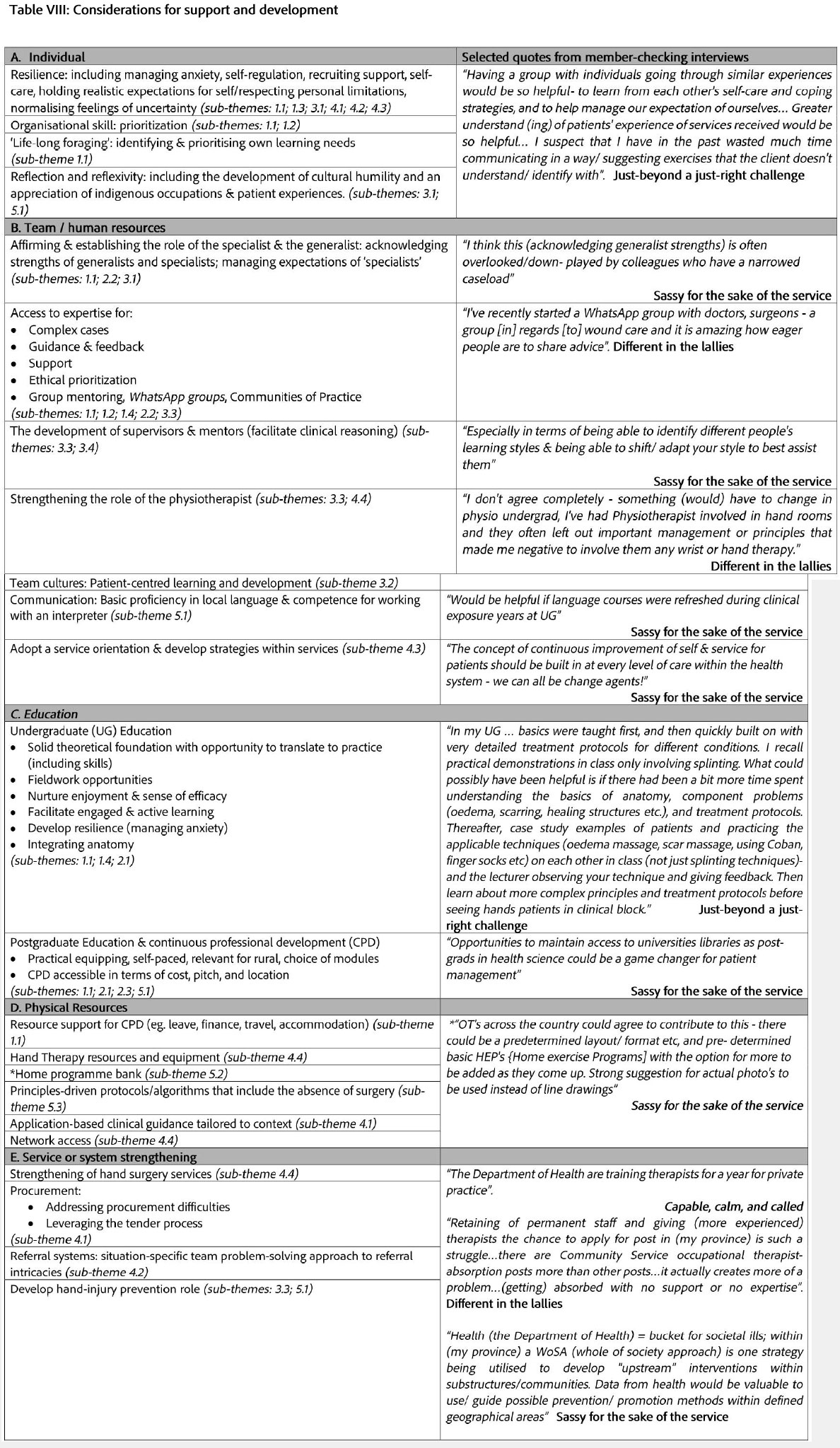
As an instrumental case study was used, the experience of participants was studied in order to gain insight into, and propose interventions to address, participants' support and development needs to render effective hand rehabilitation. These were systematically extrapolated from the findings: the first author systematically reviewed (read & made notes for) each theme and sub-theme and the experiences, needs and demands described in each; a list of recommendations or strategies to respond to these experiences was conceptualised and drafted; the list was reviewed and similar interventions were grouped together into five categories (see Table VIII, page 10). Recommendations within each category were presented to each participant in online member checking meetings. Participants provided verbal feedback and captured their ideas in a member-checking Excel document (see Supplementary File B). Revisions to recommendations were included in the reporting of these.
Trustworthiness
Trustworthiness was pursued through a number of strategies, including tracing the first author's subjectivity as the primary researcher. Reflexive thematic analysis, as a version of thematic analysis, is considered an interpretative activity that harnesses researcher subjectivity as a means to co-constructing data and results with participants313018-31.
In addition to pursuing reflexivity, a number of other trustworthiness strategies were employed. Triangulation of data sources (participants, observation during field visits, fieldnotes, interviews) and member checking interviews strengthened the credibility32323232
Permission to conduct the study was obtained from the Human Research Ethics Committee of the University of the Witwatersrand (M200235). Participants were assigned pseudonyms in reporting and identifying information was dissociated from demographic detail to protect participant confidentiality and anonymity.
FINDINGS
In this section the features of the cases are described. A presentation of the themes that were generated from cross-case analysis, interspersed by participant vignettes constructed from within-case analysis is presented. At the end of the section, the list of support and development strategies generated from themes is presented.
Features of selected cases
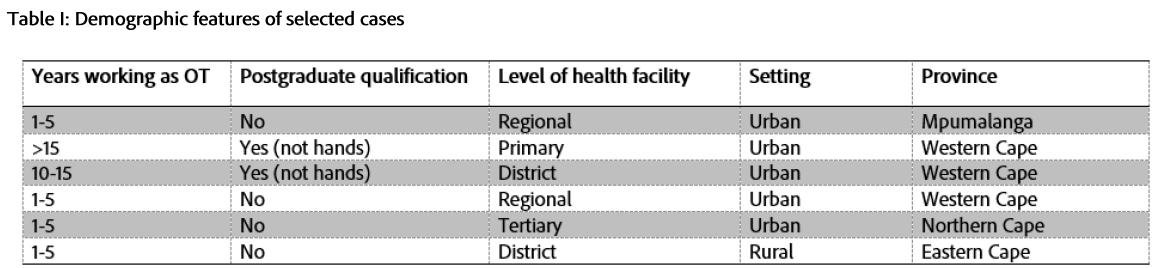
The attempt to achieve maximum variation across cases was challenged by COVID-19 restrictions that impacted ethical clearance processes. In addition, two rural-based nominated therapists appeared hesitant, with initial interest waning when data collection commenced. This meant that cases could be selected from just four of the nine South African Provinces, with half of the cases residing in the Western Cape Province (an economically advantaged province). Cases consisted of one male and five female participants. As demonstrated in Table I (page 4), four of the therapists had less than five years' experience and did not have postgraduate qualifications. Two therapists had more than ten years of experience, and both therapists had obtained postgraduate qualifications, though not within hand rehabilitation. A reasonable spread across levels of health facility was achieved, but most cases (n=5) worked in urban settings. To enable anonymity, the gender of participants and their vignettes have been disassociated from the demographic data. Two of the participants were previously acquainted with the first author.
Themes and vignettes
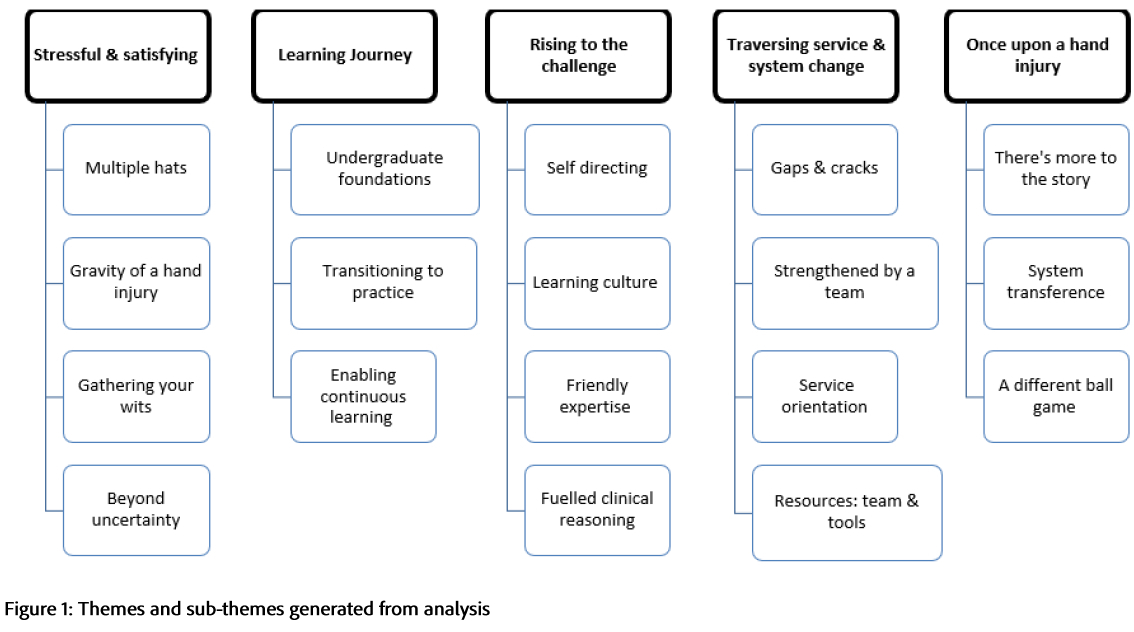
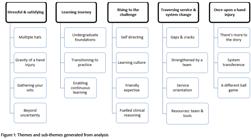
Five themes and several sub-themes were generated from thematic cross-case analysis (See Figure 1, below). Each of these themes is described below. The six vignettes are interspersed between the themes.
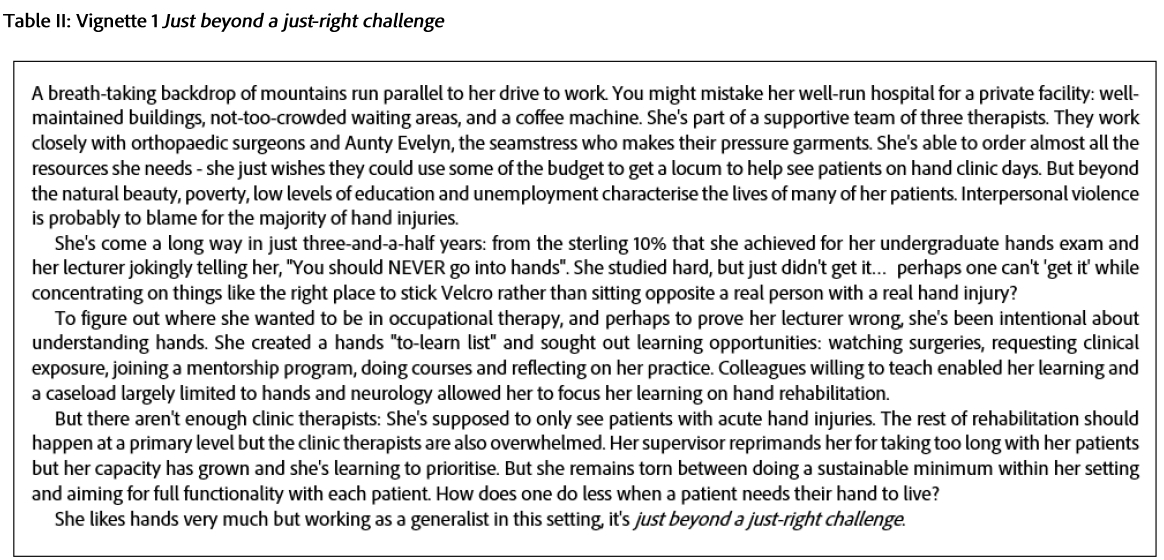
A breath-taking backdrop of mountains run parallel to her drive to work. You might mistake her well-run hospital for a private facility: well-maintained buildings, not-too-crowded waiting areas, and a coffee machine. She's part of a supportive team of three therapists. They work closely with orthopaedic surgeons and Aunty Evelyn, the seamstress who makes their pressure garments. She's able to order almost all the resources she needs - she just wishes they could use some of the budget to get a locum to help see patients on hand clinic days. But beyond the natural beauty, poverty, low levels of education and unemployment characterise the lives of many of her patients. Interpersonal violence is probably to blame for the majority of hand injuries.
She's come a long way in just three-and-a-half years: from the sterling 10% that she achieved for her undergraduate hands exam and her lecturer jokingly telling her, "You should NEVER go into hands". She studied hard, but just didn't get it... perhaps one can't 'get it' while concentrating on things like the right place to stick Velcro rather than sitting opposite a real person with a real hand injury?
To figure out where she wanted to be in occupational therapy, and perhaps to prove her lecturer wrong, she's been intentional about understanding hands. She created a hands "to-learn list" and sought out learning opportunities: watching surgeries, requesting clinical exposure, joining a mentorship program, doing courses and reflecting on her practice. Colleagues willing to teach enabled her learning and a caseload largely limited to hands and neurology allowed her to focus her learning on hand rehabilitation.
But there aren't enough clinic therapists: She's supposed to only see patients with acute hand injuries. The rest of rehabilitation should happen at a primary level but the clinic therapists are also overwhelmed. Her supervisor reprimands her for taking too long with her patients but her capacity has grown and she's learning to prioritise. But she remains torn between doing a sustainable minimum within her setting and aiming for full functionality with each patient. How does one do less when a patient needs their hand to live?
She likes hands very much but working as a generalist in this setting, it's just beyond a just-right challenge.
Theme 1: Stressful and satisfying
Vignette 1 (Table II, page 4) describes one participant's journey, reflective of the collective experience captured in Theme 1: delivering hand rehabilitation as a generalist is both stressful and satisfying. These contrasting, mutually inclusive experiences, are expressed in four subthemes:
1.1. Multiple hats
This sub-theme captures a key challenge of being a generalist: doing everything and being equipped for everything. One participant explained:
"It's challenging...you're needing to do everything and be decent at everything, it becomes very overwhelming"
Sassy-for-the-sake of the service
Doing everything, or being required to wear "multiple hats at the same time" describes the challenge of managing a diverse workload across multiple areas of occupational therapy practice. This necessitated making radical mind-shifts between patients. One participant expressed her fear around working as a generalist in her setting:
"If I do this for another two months I'm going to burn out"
Just beyond a just-right challenge
Attending to all clinical demands required organisational strategies but was also believed to facilitate a retention of a holistic approach.
Being equipped for everything, or a "jack of all trades" captures the challenge of continuous professional development (CPD) across practice areas, demanding a prioritisation of time, leave and finances for CPD activities.
1.2. Gravity of a hand injury
Perceiving the seriousness or gravity of a hand injury contributed to stress and a sense of responsibility, but also satisfaction:
"I enjoy seeing hands patients and seeing their hands fixed, because it is their livelihood for most of the patients...they need their hands to go back into forests and mines...and work. So you are basically giving them their livelihood back if you can fix their hands"
Capable, calm and called
Complex injuries were common, and therapists were cognisant of the impact of these on patients' function, as well as contextual constraints for providing the best possible care.
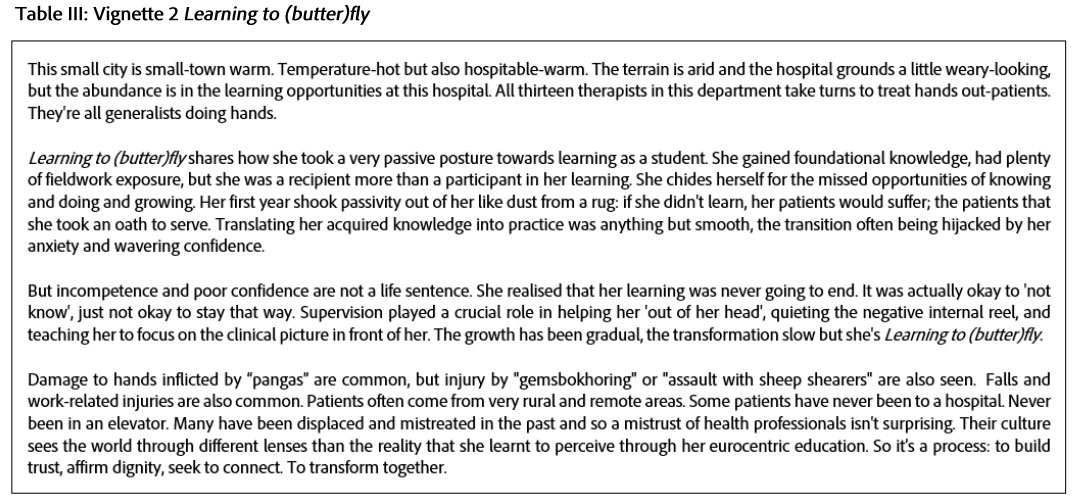
This small city is small-town warm. Temperature-hot but also hospitable-warm. The terrain is arid and the hospital grounds a little weary-looking, but the abundance is in the learning opportunities at this hospital. All thirteen therapists in this department take turns to treat hands out-patients. They're all generalists doing hands.
Learning to (butter)fly shares how she took a very passive posture towards learning as a student. She gained foundational knowledge, had plenty of fieldwork exposure, but she was a recipient more than a participant in her learning. She chides herself for the missed opportunities of knowing and doing and growing. Her first year shook passivity out of her like dust from a rug: if she didn't learn, her patients would suffer; the patients that she took an oath to serve. Translating her acquired knowledge into practice was anything but smooth, the transition often being hijacked by her anxiety and wavering confidence.
But incompetence and poor confidence are not a life sentence. She realised that her learning was never going to end. It was actually okay to 'not know', just not okay to stay that way. Supervision played a crucial role in helping her 'out of her head', quieting the negative internal reel, and teaching her to focus on the clinical picture in front of her. The growth has been gradual, the transformation slow but she's Learning to (butter)fly.
Damage to hands inflicted by "pangas" are common, but injury by "gemsbokhoring" or "assault with sheep shearers" are also seen. Falls and work-related injuries are also common. Patients often come from very rural and remote areas. Some patients have never been to a hospital. Never been in an elevator. Many have been displaced and mistreated in the past and so a mistrust of health professionals isn't surprising. Their culture sees the world through different lenses than the reality that she learnt to perceive through her eurocentric education. So it's a process: to build trust, affirm dignity, seek to connect. To transform together.
1.3. Gathering and keeping your wits
Working as a generalist while appreciating the gravity of hand injuries meant that therapists had to keep their wits about them:
"You have to multi-task and think on your feet...jy moet kop hou (you must keep your wits about you). You've got to have many thoughts...all in your head at the same time"
Just beyond a just-right challenge
Participants shared the need to manage their stress through social support, personal faith, and planning for a future outside of the job. Additional strategies included taking time to process, plan, research and reflect, and shifting focus from negative self-talk to the patient and their clinical picture:
"The supervision also helped me to ... realise...that I shouldn't be so hard on myself... the negative self-talk will affect your ability to practice... when you try and quiet those voices...and focus on the clinical picture that's in front of you...what is needed... then you are able to actually provide better care"
Learning to (butter)fly
1.4. Beyond uncertainty
This sub-theme captures participants' trajectory of growth through the stress and satisfaction of treating hand injuries. Uncertainty strongly characterised participants' early experience who expressed being "lost with hands from the beginning", "thrown in the deep end" or approaching patients with a "hope (that) I can help". This was, however, interwoven with hand rehabilitation being stimulating, satisfying and rewarding.
While uncertainty lingered, the sense of intimidation appeared to ease, impacting service provision:
"I used to refer more of my cases up to (the tertiary level hospital) ... but when I realised that we could manage them better here...it's more convenient for the patient...they do not pay... (and)...our turnout rate is probably better"
Long service specialist-of-sorts
Working against a sense of inadequacy, uncertainty and intimidation was evidenced by a growing capacity, sense of confidence and an accompanying enjoyment of hands practice.
Stress and satisfaction, as contrasting aspects of generalist's emotional experience of hand rehabilitation, intertwined with their learning journey captured in Theme 2 and alluded to in Vignette 2 (Table III, below).
Theme 2: Learning journey
Three sub-themes describe three milestones of generalist therapists' learning journey where learning was enabled or restricted.
2.1. Undergraduate foundations
Participants reflected on appropriate theoretical foundations included in their undergraduate programme. However, some believed that time spent on hand rehabilitation, hand anatomy, and opportunities to 'consolidate the basics', were insufficient. Although one participant reported having good practical exposure, others coveted fieldwork opportunities where they could apply their knowledge and develop skill:
"So ...it's challenging...the level of knowledge that you come out of university with and that's no fault of the university, there's just too much to cover...I understand things better after I've practiced it and at an undergraduate level, I never had a hands rotation...my theoretical knowledge only solidifies with practical experience".
Sassy for the sake of the services
Coverage of hand content did not automatically translate into learning. Participants related how difficulty coping, taking a passive responsibility for learning and missing learning opportunities impacted on their ability to assimilate or integrate hands knowledge. Liking or disliking hands and an experience of failure also played a role. The sub-theme suggested important aspects of an undergraduate hands module but also demonstrated that learning depended on the interaction between personal and teaching-learning factors:
"We had a very, very good lecturer...she did cover hands very well...but I wasn't always coping...I think the basics should have been covered a bit more... But I just felt...lost with hands from the beginning...I tried to answer hand questions...I tried one and felt quite good about it and it came back and I had two points out of 20...it was a disaster"
Just beyond a just-right challenge
2.2. Transitioning to practice
While a foundational hands knowledge established at university was considered essential, participants highlighted the need to translate their knowledge to practice and 'learn by doing' as they transitioned to practice. One participant highlighted the importance of guidance in supporting this transition:
"It was a big adjustment...the anxiety of it all kind of hindered my ability to...put all my theoretical knowledge into practice...but having my supervisors there...guiding my reasoning...and having protocols in place ...that will give me a step-by-step process...helped a lot".
Learning to (butter)fly
One participant believed undergraduate foundations to be important for the first year of practice, but that therapists' agency then became central to learning and establishing one's practice:
"University only plays such a small role (in) your life... after one year it's what you make of it, it's not really what the university prepared you for. So, the first year makes definitely a huge difference, after that, it's how you read up or how you are willing to learn from other people"
Different in the lallies (the rolling hills of the Transkei)
2.3. Enabling continuous learning
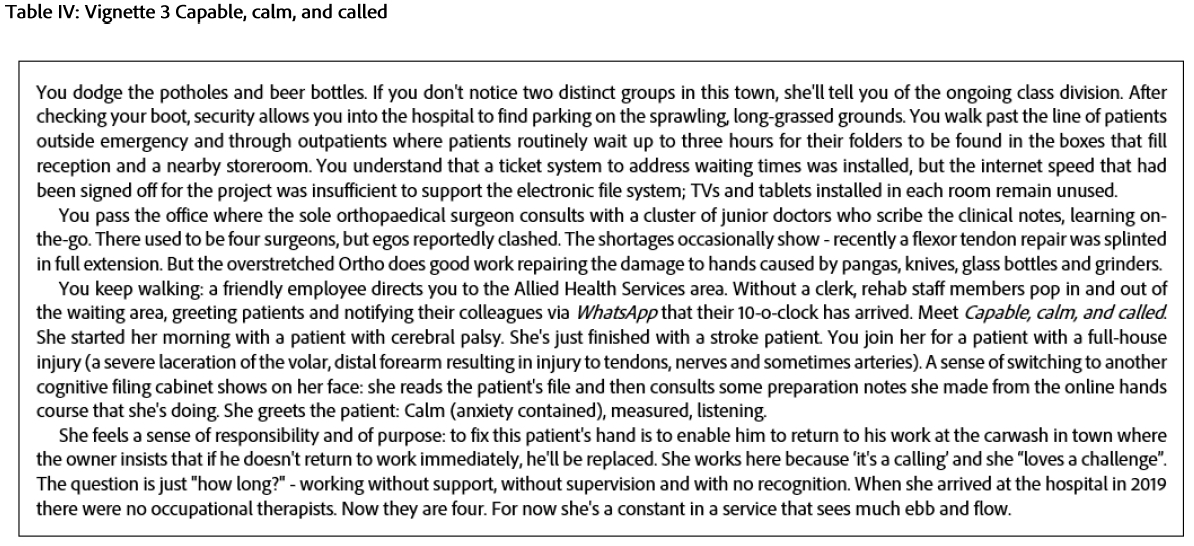
Beyond therapists' personal responsibility for learning, factors that enabled or hindered continuous professional development were described. Participants highlighted the gap left by a postgraduate hand therapy diploma that had been discontinued. Participants had a need to gain practical knowledge and skills, develop their clinical reasoning, and improve their knowledge of hand anatomy. Participants highlighted that a self-paced course with introductory, intermediate and advanced leveling would be ideal, a choice of modules advantageous, and that training should be relevant to rural practice. Funding, leave to attend courses, and courses that were easy to access would serve as enabling factors. Capable, calm, and called searched for a course with these characteristics to strengthen her capacity for hand rehabilitation in her context, an experience portrayed in Vignette 3 (Table IV, below).
You dodge the potholes and beer bottles. If you don't notice two distinct groups in this town, she'll tell you of the ongoing class division. After checking your boot, security allows you into the hospital to find parking on the sprawling, long-grassed grounds. You walk past the line of patients outside emergency and through outpatients where patients routinely wait up to three hours for their folders to be found in the boxes that fill reception and a nearby storeroom. You understand that a ticket system to address waiting times was installed, but the internet speed that had been signed off for the project was insufficient to support the electronic file system; TVs and tablets installed in each room remain unused.
You pass the office where the sole orthopaedic surgeon consults with a cluster of junior doctors who scribe the clinical notes, learning on-the-go. There used to be four surgeons, but egos reportedly clashed. The shortages occasionally show - recently a flexor tendon repair was splinted in full extension. But the overstretched Ortho does good work repairing the damage to hands caused by pangas, knives, glass bottles and grinders.
You keep walking: a friendly employee directs you to the Allied Health Services area. Without a clerk, rehab staff members pop in and out of the waiting area, greeting patients and notifying their colleagues via WhatsApp that their 10-o-clock has arrived. Capable, calm, and called. She started her morning with a patient with cerebral palsy. She's just finished with a stroke patient. You join her for a patient with a full-house injury (a severe laceration of the volar, distal forearm resulting in injury to tendons, nerves and sometimes arteries). A sense of switching to another cognitive filing cabinet shows on her face: she reads the patient's file and then consults some preparation notes she made from the online hands course that she's doing. She greets the patient: Calm (anxiety contained), measured, listening.
She feels a sense of responsibility and of purpose: to fix this patient's hand is to enable him to return to his work at the carwash in town where the owner insists that if he doesn't return to work immediately, he'll be replaced. She works here because 'it's a calling' and she "loves a challenge". The question is just "how long?" - working without support, without supervision and with no recognition. When she arrived at the hospital in 2019 there were no occupational therapists. Now they are four. For now she's a constant in a service that sees much ebb and flow.
Theme 3: Rising to the challenge
Meeting the demand for hand rehabilitation was stressful and satisfying and involved a learning journey. There were, however, various factors that seemed to enable participants to rise to the challenge of delivering this service.
3.1. Self-directing
Participants directing their own learning was clearly one enabling factor. Participants foraged for knowledge: driven by a desire to learn, they sought out and seized learning opportunities. Their maturation as learners was evident: a growing orientation to life-long learning and 'bettering oneself' was observed. This involved assessing and prioritising learning needs and setting learning objectives.
"I realize it's going to continue; you're never going to get to a point where you know everything. You're going to continuously have to learn...you need to continuously take that step forward & try and better your knowledge"
Learning to (butter)fly
In addition, participants used reflection to direct their own learning and develop insight into their limitations as therapists.
3.2. Learning culture
For one participant, rising to the challenge was fostered by a strong workplace culture of learning and patient-centred care:
"I think it's mainly my personality, but I also think there is a setting entity ...people are very work driven here... it (is) nothing funny if we're (here)...till 19:00...nobody was expected to stay but it was always people driven to help other people. To help patients because it's just overflowing...people want to learn...it's very much of a culture here"
Different in the lallies
The other participants categorically stated during member checking that they did not experience this culture in their workplace, though they would welcome a work culture orientated towards learning.
3.3. Friendly expertise
Having access to hand rehabilitation expertise was a strong enabling factor, whether colleagues at work or those that could be accessed remotely. The converse, a lack of access, had the opposite influence.
"These major cases are very difficult to treat when there is no one to ask...unless you phone and not all therapists are available immediately to consult over the phone... So you try to read up...the patient's sitting in front of you...looking for help, and you are like, "Sorry, I am just going to open my (textbook) in front of you" and that is embarrassing...like saying 'I don't know'...so then that is overwhelming".
Capable, calm, and called
The positive impact that approachable, friendly colleagues, willing to share their expertise, had on participants, was noteworthy. One participant explained the bolstering effect of a physiotherapy colleague:
"It also made a big change when we got a physiotherapist more interested in hands and more skilled in hands"
Long-service specialist-of-sorts
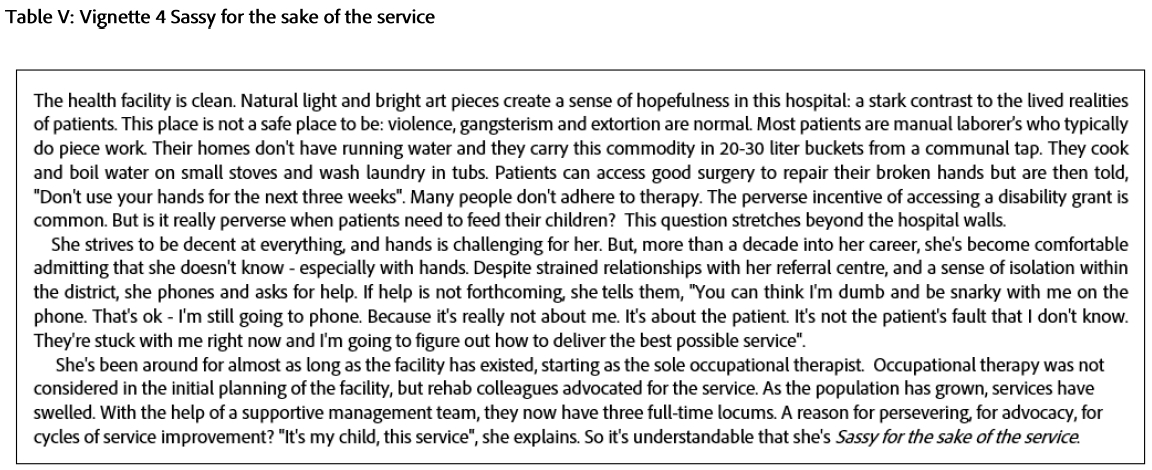
Colleagues who were not approachable made accessing expertise burdensome, as Sassy for the sake of the service relates in Vignette 4 (Table V, below).
The health facility is clean. Natural light and bright art pieces create a sense of hopefulness in this hospital: a stark contrast to the lived realities of patients. This place is not a safe place to be: violence, gangsterism and extortion are normal. Most patients are manual laborer's who typically do piece work. Their homes don't have running water and they carry this commodity in 20-30 liter buckets from a communal tap. They cook and boil water on small stoves and wash laundry in tubs. Patients can access good surgery to repair their broken hands but are then told, "Don't use your hands for the next three weeks". Many people don't adhere to therapy. The perverse incentive of accessing a disability grant is common. But is it really perverse when patients need to feed their children? This question stretches beyond the hospital walls.
She strives to be decent at everything, and hands is challenging for her. But, more than a decade into her career, she's become comfortable admitting that she doesn't know - especially with hands. Despite strained relationships with her referral centre, and a sense of isolation within the district, she phones and asks for help. If help is not forthcoming, she tells them, "You can think I'm dumb and be snarky with me on the phone. That's ok - I'm still going to phone. Because it's really not about me. It's about the patient. It's not the patient's fault that I don't know. They're stuck with me right now and I'm going to figure out how to deliver the best possible service".
She's been around for almost as long as the facility has existed, starting as the sole occupational therapist. Occupational therapy was not considered in the initial planning of the facility, but rehab colleagues advocated for the service. As the population has grown, services have swelled. With the help of a supportive management team, they now have three full-time locums. A reason for persevering, for advocacy, for cycles of service improvement? "It's my child, this service", she explains. So it's understandable that she's Sassy for the sake of the service.
3.4. Fuelled clinical reasoning
Rising to the challenge was further helped or hindered by resources (or lack thereof) to fuel clinical reasoning. Participants required both guidance for their reasoning, and feedback that affirmed the soundness of their reasoning. Although quick advice was sometimes needed, supervisors that facilitated participants' reasoning was valuable. A strong need for supervision, mentorship and support were articulated with the value of immediate support being highlighted.
In addition to human resources that fuelled clinical reasoning, one participant described the value that a clinical guidance phone application would provide,
"There's another (clinical guidance) app ... (doctors use)...if you're not sure what medication to give a patient...so they're rolling it out to...a couple of African countries...specific to that (country's) guidelines and... protocols...and I feel like, with OT being as broad as it is, to have something like this, it's not to replace anything...all of your training...but when you're in rural, 'Nowhere Springs', and you don't actually know what to do with the person in front of you, and sometimes you phone and no one answers because everyone's busy. It might be so helpful to have something like this where it really is at your (fingertips), but it's approved guidelines...that have been tried and tested".
Sassy for the sake of the service
Theme 4: Traversing service and system change
Another key characteristic of participants' experience was change: change within services and systems that required negotiation. Each participant functioned within a unique set of services, within a broader system, which placed unique demands on them.
4.1. Gaps and cracks
The services and systems in which participants worked showed signs of fragility: service planning was poor, system difficulties and failures were evident, and infrastructure strained under the effects of politics, the demand of a rapidly growing population, and COVID-19 implications. Discrepancy between strategic directions articulated at a provincial level and operational realities at a clinic level were noted by one participant. The 'red tape' around administrative processes was taxing, and though improvements were sometimes seen, procurement processes were frequently inefficient:
"It's something that has improved over time...but so much is out of our hands...we're just one cog in the wheel... a 6-9 month waiting period (for stock) is not uncommon".
Long-service specialist of sorts
4.2 Service orientation
Participants noted significant service variation. Service packages at different facilities within the same substructure differed. Although primary level care is most accessible for patients, the capacity for hand rehabilitation at this level is frequently limited. Referral difficulties within and between levels of care were also noted. To manage this considerable variation, one of the participants explained the need to look beyond one's own point of care and adopt a service orientation for strategic service delivery and improvement:
"We work at different levels, but if it impacts you, it impacts me...because we're having to pick up the slack for each other...ultimately it's going to benefit us, it's going to benefit the patient, it's extra money (for capacity strengthening) we don't have...but it will pay itself".
Sassy for the sake of the service
This sub-theme highlighted the need for capacity strengthening strategies for therapists to occur within the systems in which they practice, acknowledging variability, transiency, strengths and weaknesses characteristic of each service and system.
4.3 Strengthened by a team
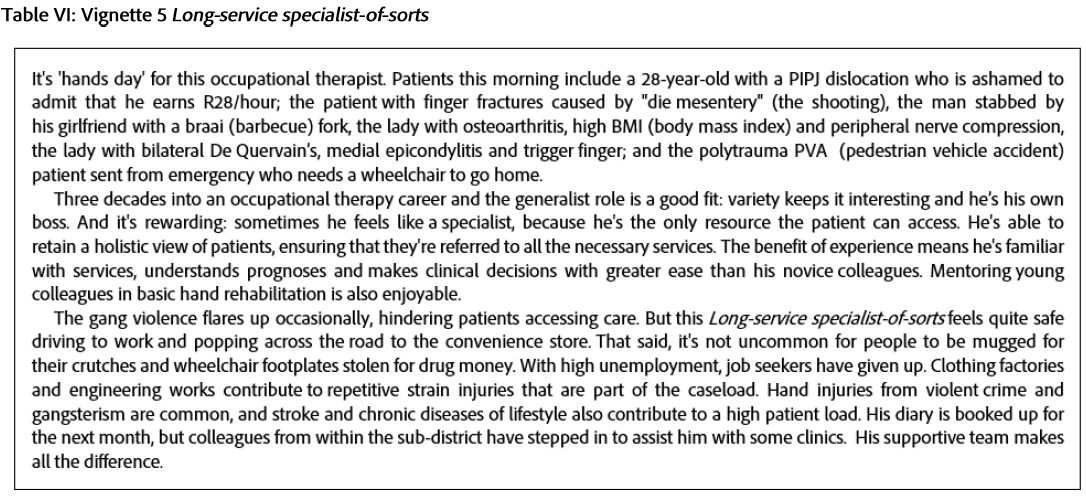
The presence (or absence) of a cohesive team, though also a transient feature of services and systems, acted as a key facilitator (or barrier). Long-service specialist of sorts in Vignette 5 highlighted the value of a supportive team (Table VI, page 9) while the negative effects of inadequate staffing and absent supervision were also highlighted:
"Well supervision, there is none. You can technically do what you want to...we do not have any chief OTs apart from...two that are appointed in the province...there is no other senior therapist at the hospital. I came here in 2019 with another therapist...we were (in our second year of practice) and there was no one else...we had to start running the OT department ...from management...to administration...to clinical duties, we had no one to ask. We asked...colleagues from other departments...we do not have a rehab manager either...there is no one to report to and no one to keep anyone accountable".
Capable, calm, and called
Poor team dynamics, a lack of support and recognition, and a sense of isolation were reported as features of dysfunctional teams. A referral centre not sharing clinical resources (e.g. clinical guidelines and home programmes) was a frustration for one participant and viewed as a form of information inequity.
In contrast to this, the presence of supportive management, multi-disciplinary support, and a sense of being valued in the team were strengthening influences of a cohesive team. Established services and a core team built over time was another enabler. Participants highlighted the importance of therapist networks and workgroups, while also acknowledging their transience.
4.4 Resources: team and tools
Participants also negotiated the absence or presence of human and physical resources within the services and system in which they worked. A limited or absent orthopaedic service, fluctuating medical management of patients, and a perpetual turnover of doctors had a constraining effect. Incorrect diagnoses and inappropriate medical or surgical management was not uncommon. By contrast, participants with an orthopaedic service and access to surgeons valued this benefit.
Inadequate staffing (including occupational therapy staff), insufficient therapists at primary care level, and limited capacity of these therapists to receive referrals for hand rehabilitation created a further barrier. The lack of a receptionist or administrative support in a department was challenging and disruptive for many participants.
While a physiotherapy colleague with hand rehabilitation expertise strengthened one participant's confidence, another participant identified limited involvement of the physiotherapist as a barrier:
"I think the physio needs to be a little more actively involved with hands...their focus is physical...they get so much more (in undergraduate studies) like joint mobs...and yet for some reason when we start working...'It's a hand injury so now it's OT'...but its range...is range is range...it doesn't matter if it's an ankle or the wrist, it's still range".
Sassy for the sake of the service
Network access and platforms for sharing and communicating with other therapists was beneficial and physical resources for delivering hand therapy were identified as important factors by both participants with good access and those with limited access to these resources. Access to a seamstress for custom pressure garment fabrication was a further enabler.
It's 'hands day' for this occupational therapist. Patients this morning include a 28-year-old with a PIPJ dislocation who is ashamed to admit that he earns R28/hour; the patient with finger fractures caused by "the mesentery" (the shooting), the man stabbed by his girlfriend with a braai (barbecue) fork, the lady with osteoarthritis, high BMI (body mass index) and peripheral nerve compression, the lady with bilateral De Quervain's, medial epicondylitis and trigger finger; and the polytrauma PVA (pedestrian vehicle accident) patient sent from emergency who needs a wheelchair to go home.
Three decades into an occupational therapy career and the generalist role is a good fit: variety keeps it interesting and he's his own boss. And it's rewarding: sometimes he feels like a specialist, because he's the only resource the patient can access. He's able to retain a holistic view of patients, ensuring that they're referred to all the necessary services. The benefit of experience means he's familiar with services, understands prognoses and makes clinical decisions with greater ease than his novice colleagues. Mentoring young colleagues in hand rehabilitation is also enjoyable.
The gang violence flares up occasionally, hindering patients accessing care. But this Long-service specialist-of-sorts feels quite safe driving to work and popping across the road to the convenience store. That said, it's not uncommon for people to be mugged for their crutches and wheelchair footplates stolen for drug money. With high unemployment, job seekers have given up. Clothing factories and engineering works contribute to repetitive strain injuries that are part of the caseload. Hand injuries from violent crime and gangsterism are common, and stroke and chronic diseases of lifestyle also contribute to a high patient load. His diary is booked up for the next month, but colleagues from within the sub-district have stepped in to assist him with some clinics. His supportive team makes all the difference.
Theme 5: Once upon a hand injury
The final theme conveys a dimension of the 'bigger picture' that contextualises the experience of sustaining a hand injury for patients and delivering hand injury care for therapists.
5.1 There's more to the story
Experiences of two participants introduce this sub-theme highlighting two aspects of the lived realities of patient: normalised violence and stigma related to injury:
"Interpersonal violence is crazy high (here), so that boy that we saw...he was stabbed by his friends...he hasn't opened a case because he's like, 'they were drinking', so he doesn't think that he should because it was an accident but he's also so scared to go and live his life. He's 16".
Sassy for the sake of the service
"I did have a patient...who said she covers up her hand when she walks around because the people are going to say that she was bad and now it's cursed...".
Just beyond a just-right challenge
Patients frequently live in unsafe communities where violence is "normal", poverty pervasive and the burden of disease (including hand injuries) high and increasing. Unemployment, poor labour and social conditions as well as alcohol misuse contribute to challenges that patients face. Therapists' knowledge of the risk factors for hand injury varied but suggested an unexplored role for hand-injury prevention.
5.2 System transference
For some (though not all) participants, patients' previous negative health service encounters led to marked mistrust that required sensitivity, cultural humility, and patience towards building trust:
"We have patients from all over (the Province)...it can become complex because sometimes you'll have patients that have never been to a hospital...a lot of times they have this...dislike for health professionals and what they represent because it's totally the opposite from their culture or from what they believe or their daily lives... so it's your responsibility to show them that you're actually not here to disrespect them or their cultures or try and hurt them...".
Learning to (butter)fly
5.3 A different ball game
The 'different' realities of participants' practice demanded adaptation: adaptation to limited or absent hand surgery intervention, poor or delayed referrals, secondary complications, and poor outcomes. One participant explained:
"They do a quick repair and they send the patient home for three weeks without referring to rehab. So it is poor referral. And suddenly the patient comes back and the protocol you normally use [is inappropriate] ... it was a hand that was immobilised for three weeks. So things like that. Those exceptional cases...they are exceptional cases but they happen quite often".
Capable, calm, and called
Participants perceived a need for protocols to guide them, but at the same time found that the features of their practice meant that they couldn't follow a protocol. This tension communicated a need for guidelines that outlined the principles of intervention (principles typically embedded in protocols) to enable adaptation to varying presentations and rehabilitation limitations.
Frequent language discordance between participants and their patients made communication challenging, particularly when the services of an interpreter were not available. Patient adherence was identified as a barrier and attending follow-up appointments was challenging for patients, highlighting a need for appropriate and accessible home programmes:
"Our attendance rate it pretty good, because we are in the community. I think that adherence is not always great. People say yes, and then they do not do their exercises. That is a big challenge, to get people to understand that their recovery depends largely on their compliance. It is quite an issue".
Long-service specialist-of-sorts
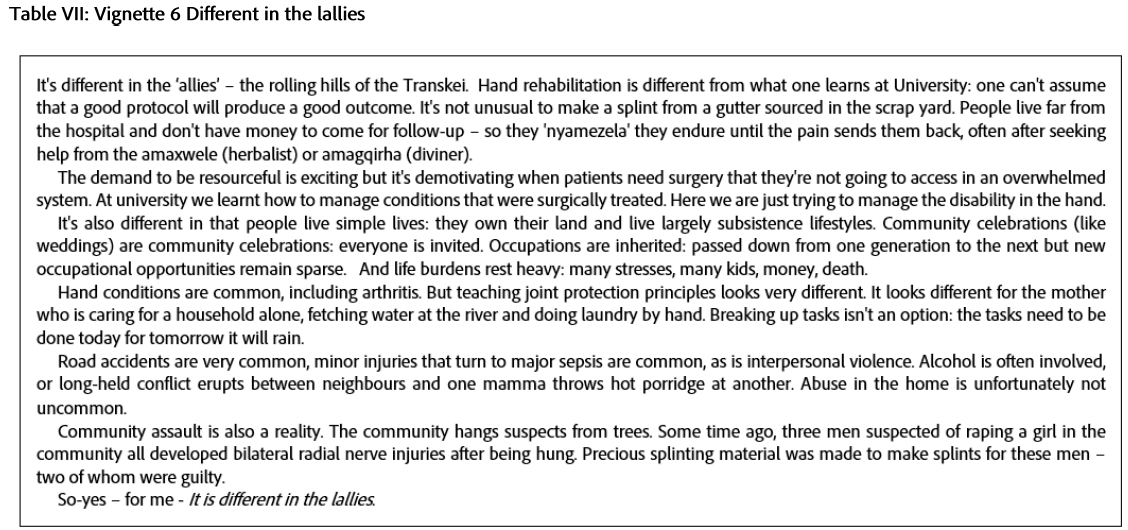
Beyond these challenges articulated by most of the participants, the final vignette, It's different in the lallies (Table VII, page 10) illustrates some of the unique contextual features of practicing hand rehabilitation as a generalist in rural South Africa that created further demand for adaptation.
It's different in the 'allies' - the rolling hills of the Transkei. Hand rehabilitation is different from what one learns at University: one can't assume that a good protocol will produce a good outcome. It's not unusual to make a splint from a gutter sourced in the scrap yard. People live far from the hospital and don't have money for follow-up - so they 'nyamezela' they endure until the pain sends them back, often after seeking help from the amaxwele (herbalist) or amaggirha (diviner).
The demand to be resourceful is exciting but it's demotivating when patients need surgery that they're not going to access in an overwhelmed system. At university we learnt how to manage conditions that were surgically treated. Here we are just trying to manage the disability in the hand.
It's also different in that people live simple lives: they own their land and live largely subsistence lifestyles. Community celebrations (like weddings) are community celebrations: everyone is invited. Occupations are inherited: passed down from one generation to the next but new occupational opportunities remain sparse. And life burdens rest heavy: many stresses, many kids, money, death.
Hand conditions are common, including arthritis. But teaching joint protection principles looks very different. It looks different for the mother who is caring for a household alone, fetching water at the river and doing laundry by hand. Breaking up tasks isn't an option: the tasks need to be done today for tomorrow it will rain.
Road accidents are very common, minor injuries that turn to major sepsis are common, as is interpersonal violence. Alcohol is often involved, or long-held conflict erupts between neighbours and one mamma throws hot porridge at another. Abuse in the home is unfortunately not uncommon.
Community assault is also a reality. The community hangs suspects from trees. Some time ago, three men suspected of raping a girl in the community all developed bilateral radial nerve injuries after being hung. Precious splinting material was made to make splints for these men - two of whom were guilty.
So-yes - for me - It is different in the lallies.
Considerations for the capacity strengthening extrapolated from study themes, and presented to participants during member-checking, are tabulated below. (Table VIII, below) The sub-themes from which each of the considerations has been derived is included in italics along with selected quotes from participant feedback during member-checking.
DISCUSSION
This instrumental multiple-case study described the experiences of generalist occupational therapists working as fully qualified practitioners in the South African public sector in order to identify their support and development needs for delivering hand therapy. An extensive list of considerations for capacity strengthening was extrapolated directed toward the individual, the team, education, physical resources and the service/system. Selected recommendations from each category are discussed in this section.
Strengthening the capacity of the individual
Participants expressed the need for opportunities to develop resilience, reflective and reflexive skill, life-long learning behaviours, and organisational skills. There are likely many other competencies for which learning spaces and support are needed that did not emerge from this data. The comment shared by Just beyond a just-right challenge suggests that a supportive group of therapists may facilitate this. Communities of practice (CoP) represent one promising mode of facilitating learning and support33343536
Strengthening the capacity of the team
A number of sub-themes highlighted the role of the physiotherapist in providing hand therapy. Hand therapy in South Africa is more frequently provided by occupational therapists than physiotherapists37
Concerns around the boundaries between physiotherapy and occupational therapy scope of practice are not uncommon in South Africa, and have been reported by occupational therapy colleagues in other contexts383940
This discussion, along with the expressed need for guidance, feedback and assistance, essentially speaks to the need to mobilise hand therapy expertise articulated in the first three themes of the study (sub-themes: 1.1; 1.2; 1.4; 2.2; 3.3). This is important geographically (in terms of service delivery and resources) but also with regards to the mobilization of needed knowledge and skills. If we consider capacity strengthening of the team alongside system and service strengthening, it is clear that improved human resourcing is critical to secure and retain therapists with expertise in the system. Therapists, however, still require the capacity and skills to provide the needed mentorship and supervision that generalist therapists need. The recommendation also shows that that the needs of these therapists' are similar to those articulated by novice generalist therapists41,42. Effective interventions to equip mentors and supervisors are urgently needed. Learning opportunities may take the format of continuous professional development activities, communities of practice or even participatory action research. However, integrating mentorship into health systems strengthening4344
In addition to improved human resourcing, it is necessary to look at how the skills and reach of the generalist can be a combined with those of the specialist to synergistically improve hand therapy services. Visagie and colleagues3945
Physical resources
Smartphone application-based clinical guidelines for hand therapy may go a long way to providing the guidance that generalist therapists need in the absence of being able to access colleagues with expertise. This resource would provide the immediate, 'real-time', guidance that these therapists need. The experience of the rural-based participant in this study highlights the need for these guidelines to be tailored to contextual realities, for example, guiding rehabilitation management when surgical services are not available. Guidelines should be downloadable to enable off-line use46
Education
There is a clear and urgent need to provide occupational therapy students with opportunities to construct hand therapy learning through practical fieldwork opportunities. Pressured undergraduate curricula and restricted capacity of the clinical fieldwork platform in South Africa necessitate innovative crafting of opportunities. A student experiential learning clinic has been piloted in the USA to facilitate student learning and provide free hand-therapy to under-insured service users4748
Strengthening service and system capacity
The need for strengthening hand surgery services was salient and is not surprising. The global need for surgery is profound, particularly in LMICs494950
Human resources, referral systems and procurement processes were also extrapolated from findings as areas requiring intervention. Challenges around these variables looked slightly different for each participant. As analysis progressed, it also became evident that a constant in each of the therapists' experiences was change: in staffing, demand for hand rehabilitation, resources, processes - sometime positive, sometimes negative. Identifying change as a constant contributed to an appreciation that the service and system within which each therapist worked presented varying strengths, weaknesses, opportunities and threats. Variability and change is therefore essential to consider when exploring capacity-strengthening recommendations to avoid inflexible, near-sighted or redundant interventions.
South African scholars3939Rehabilitation in Health Systems, the World Health Organisation's (WHO) strategy to strengthening rehabilitation, confirms the importance of a systems approach51
Dayal, a local researcher333523
So, appreciating the system weaknesses highlighted in both this study and others, what should be done to provide the support and development that generalist occupational therapists delivering hand-injury care require? Leadership and governance, one of the six health system building blocks proposed by the World Health Organisation (WHO), requires urgent attention within rehabilitation51
There is some evidence of the fruit of progressive leadership and governance. Between the time of data collection and member checking, two participants described how additional occupational therapy posts situated within a whole of society (WoS) approach were being created in one South African province. A whole of government (WoG) and WoS approach harnesses governance, action and collaboration across sectors to improve health. A WoS approach partners with a broad base of stakeholders5352
Strengths and limitations
This study is the first to report on the experience of six fully registered occupational therapists delivering hand rehabilitation in a generalist capacity in South Africa. The study is also unique in presenting proposed interventions to strengthen the capacity of these generalist therapists, which may be considered for application in other global south contexts.
The nominated sample may have introduced selection bias as nominated participants are likely those that are more visible and engaged within networks. This may have limited representation of less confident and less supported therapists who potentially experience greater challenges that those captured in this study. Data collection relied on self-report of experiences which has the potential to introduce recall or social desirability bias.
Despite attempts to maximise the variation in case selection, the racial and potential worldview demographics of participants was limited. This reflects the problematic lack of diversity of the occupational therapy profession in South Africa54
Against the backdrop of historical markers of the occupational therapy profession in South Africa, potential limitations associated with the positionality of participants, is acknowledged. Learning to (butter)fly highlighted that the occupational therapy workforce in South Africa were trained in curricula largely founded on Eurocentric norms and values. Additionally, the occupational therapy workforce is poorly representative of patient demographics. Therefore, descriptions of contexts and patient experiences may represent an 'outsider'5555
CONCLUSION
The pursuit of universal hand therapy access is a challenging one and "there are rarely single solutions to complex problems"56:46. However, understanding the experience of six generalist occupational therapists delivering hand therapy contributes to our understanding of the challenges to universal access to hand therapy in South Africa. The five themes generated from this study describe the experience of generalist occupational therapists in a Global South rural context delivering hand therapy as stressful and satisfying; and a learning journey. Rising to the challenge of delivering this rehabilitation is aided and hindered by various factors explained by participants. Traversing system and service change was a reality that participants had to negotiate; and once upon a hand injury captured aspects of patients' lived realities and some of the complexities of service delivery. Targeted capacity strengthening recommendations extrapolated from participants' experience include individual strategies, team and human resource strategies, education, physical resources, and system and service-level strategies.
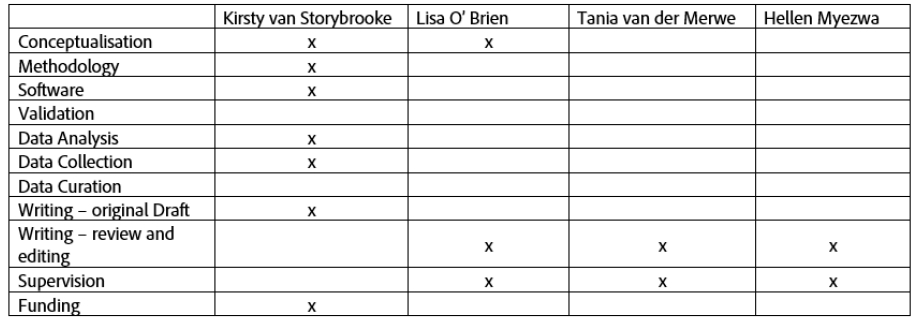
Author contributions
Conflicts of interest and bias declaration
The authors report no conflicts of interest. The first author, Kirsty van Stormbroek, was supported by the Consortium for Advanced Research Training in Africa (CARTA). CARTA is jointly led by the African Population and Health Research Centre and the University of the Witwatersrand and funded by the Carnegie Corporation of New York (Grant No. G-19-57145), Sida (Grant No: 54100113), Uppsala Monitoring Centre, Norwegian Agency for Development Cooperation (Norad), and by the Wellcome Trust [reference no. 107768/Z/15/Z] and the UK Foreign, Commonwealth & Development Office, with support from the Developing Excellence in Leadership, Training and Science in Africa (DELTAS Africa) programme. The statements made and views expressed are solely the responsibility of the Fellow.
Acknowledgements
Sincere gratitude is extended to the six therapists who generously shared their experience.
REFERENCES
-
1. World Health Organization. Rehabilitation in Health Systems: Guide for Action. 2019. https://iris.who.int/server/api/core/bitstreams/e649eeb9-4901-49ed-8ed0-d5d37a86b99b/content.
» https://iris.who.int/server/api/core/bitstreams/e649eeb9-4901-49ed-8ed0-d5d37a86b99b/content -
2. Gimigliano F, Negrini S. The World Health Organization "Rehabilitation 2030: A call for action." European Journal of Physical and Rehabilitation Medicine. 2017;53(2):155-168. doi: https://doi.org/10.23736/s1973-9087.17.04746-3
» https://doi.org/10.23736/s1973-9087.17.04746-3 -
3. Dayal H. Capacity of the SA public health sector to deliver rehabilitation services: an institutional analysis. Public Health Association of South Africa (PHASA) Newsletter, 15 November. 2012:1-4. https://repository.hsrc.ac.za/handle/20.500.11910/2974
» https://repository.hsrc.ac.za/handle/20.500.11910/2974 - 4. Department of Health Republic of South Africa. White Paper: National Health Insurance Policy - Towards Universal Health Coverage. 2017.
- 5. van Stormbroek K. Hand-care for all: towards strategic conversations. In: SASSH Congress. Drakensburg; 2015.
- 6. Mennen U, van Velze C. The Hand Book. 3rd ed. Mennen U, van Velze C, editors. Pretoria: Van Schaik; 2008.
-
7. van Stormbroek K, Buchanan H. Novice therapists in a developing context: Extending the reach of hand rehabilitation. Hand Therapy. 2017;22(4):141-152. doi: https://doi.org/10.1177/1758998317720951
» https://doi.org/10.1177/1758998317720951 -
8. Norman R, Matzopoulos R, Groenewald P, Bradshawa D. The high burden of injuries in South Africa. Bulletin of the World Health Organization. 2007;85(9):695-702. doi: https://doi.org/10.2471/blt.06.037184
» https://doi.org/10.2471/blt.06.037184 -
9. Schultz G, Mostert K, Rothmann I. Repetitive strain injury among South African employees: The relationship with burnout and work engagement. International Journal of Industrial Ergonomics. 2012;42(5):449-456. doi: https://doi.org/10.1016/j.ergon.2012.06.003
» https://doi.org/10.1016/j.ergon.2012.06.003 -
10. Jeebhay M, Jacobs B. Occupational health services in South Africa. South African Health Review. 1999;29(19):257-276. https://www.researchgate.net/publication/264129210_Occupational_Health_Services_in_South_Africa_South_African_Health_Review
» https://www.researchgate.net/publication/264129210_Occupational_Health_Services_in_South_Africa_South_African_Health_Review -
11. Beveridge M, Howard A. The Burden of Orthopaedic Disease in Developing Countries. The Journal of Bone and Joint Surgery. 2004;86(8):1819-1822. doi: https://doi.org/10.2106/00004623-200408000-00029
» https://doi.org/10.2106/00004623-200408000-00029 -
12. Siotos C, Ibrahim Z, Bai J, Payne R, Seal S, Lifchez S, Hyder A. Hand injuries in low- and middle-income countries: systematic review of existing literature and call for greater attention. Public Health. 2018 [accessed 2019 May 16];162:135-146. doi: https://doi.org/10.1016/j.puhe.2018.05.016
» https://doi.org/10.1016/j.puhe.2018.05.016 -
13. Robinson L, Sarkies M, Brown T, O'Brien L. Direct, indirect and intangible costs of acute hand and wrist injuries: A systematic review. Injury. 2016;47(12):2614-2626. doi: https://doi.org/10.1016/j.injury.2016.09.041
» https://doi.org/10.1016/j.injury.2016.09.041 -
14. McGuire D. Hand surgery in South Africa. Journal of Hand Surgery: European Volume. 2018;43(2):222-223. doi: https://doi.org/10.1177/1753193417744093
» https://doi.org/10.1177/1753193417744093 -
15. Rabiul Islam S. "Acute Occupational Hand Injuries With Their Social and Economic Aspects: A Hospital Based Cross Sectional Study." Orthoplastic Surgery & Orthopedic Care International Journal. 2017;1(1):15-18. doi: https://doi.org/10.31031/ooij.2017.01.000505
» https://doi.org/10.31031/ooij.2017.01.000505 -
16. World Federation of Occupational Therapists. 2020 Occupational Therapy Human Resources Project. 2019. https://wfot.org/resources/occupational-therapy-human-resources-project-2020-alphabetical
» https://wfot.org/resources/occupational-therapy-human-resources-project-2020-alphabetical - 17. van Biljon H. Transforming the vocational rehabilitation services of occupational therapists in Gauteng public healthcare through action learning action research. University of the Witwatersrand; 2016.
- 18. De Klerk S. Occupational Therapy Assessment of the Upper Limb: Trends in South Africa. Stellenbosch University; 2014.
- 19. Ehlers N. Working in the dark: The need for contextually responsive educational resources in hand therapy. In: Support & development of generalist OTs delivering hand therapy: A consensus development conference. Pretoria; 2023. p. 1-35.
-
20. Van Stormbroek K, Van Der Merwe T, O'Brien L, Myezwa H. Surthriving Hand Rehabilitation: Proposing Interventions to Support Novice Occupational Therapists Working in Underserved Contexts. Occupational Therapy International. 2023;2023(ID 5562025):1-14. doi: https://doi.org/10.1155/2023/5562025
» https://doi.org/10.1155/2023/5562025 -
21. The Open Hand Therapy Initiative. Open Access Hand Therapy Webinars for therapists working in resource challenged settings. [accessed 2026 May 30]. https://openhandtherapy.org/
» https://openhandtherapy.org/ - 22. World Federation of Occupational. Position statement: Specialisation and advanced occupational therapy competencies. 2014. p. 1-3.
-
23. Stegink-Jansen CW, Collins PM, Lindsey RW, Wilson JL. A geographical workforce analysis of hand therapy services in relation to US population characteristics. Journal of Hand Therapy. 2017;30(4):383-396.e1. doi: https://doi.org/10.1016/j.jht.2017.06.004
» https://doi.org/10.1016/j.jht.2017.06.004 -
24. Park S, Leedham-Green K, Cohen T. What is generalism and why is it important? In: Park S, Leedham-Green K, editors. Generalism in Clinical Practice and Education. First. London: UCL Press; 2024. p. 3-24. doi: https://doi.org/10.2307/j.ctv209511d.9
» https://doi.org/10.2307/j.ctv209511d.9 -
25. Keller JAL, Henderson JP, Landrieu KW, Dimick MP, Walsh JM. The 2019 practice analysis of hand therapy and the use of orthoses by certified hand therapists. Journal of Hand Therapy. 2022;35(4):628-640. doi: https://doi.org/10.1016/j.jht.2021.04.008
» https://doi.org/10.1016/j.jht.2021.04.008 -
26. Baxter P, Jack S. Qualitative Case Study Methodology: Study Design and Implementation for Novice Researchers. The Qualitative Report. 2008;13(4):544-559. doi: https://doi.org/10.46743/2160-3715/2008.1573
» https://doi.org/10.46743/2160-3715/2008.1573 -
27. Achoki T, Sartorius B, Watkins D, Glenn SD, Kengne AP, Oni T, Wiysonge CS, Walker A, Adetokunboh OO, Babalola TK, et al. Health trends, inequalities and opportunities in South Africa's provinces, 1990-2019: findings from the Global Burden of Disease 2019 Study. Journal of Epidemiology and Community Health. 2022;76(5):471-481. doi: https://doi.org/10.1136/jech-2021-217480
» https://doi.org/10.1136/jech-2021-217480 -
28. Villiers K De. Bridging the health inequality gap: an examination of South Africa's social innovation in health landscape. Infectious Diseases of Poverty. 2021:1-7. doi: https://doi.org/10.1186/s40249-021-00804-9
» https://doi.org/10.1186/s40249-021-00804-9 - 29. Creswell J, Poth C. Qualititative Inquiry and Research Design: Choosing Among Five Approaches. Fourth Edi. Thousand Oaks: Sage Publications; 2018.
-
30. Braun V, Clarke V. One size fits all? What counts as quality practice in (reflexive) thematic analysis? Qualitative Research in Psychology. 2021;18(3):328-352. doi: https://doi.org/10.1080/14780887.2020.1769238
» https://doi.org/10.1080/14780887.2020.1769238 -
31. Olmos-Vega FM, Stalmeijer RE, Varpio L, Kahlke R. A practical guide to reflexivity in qualitative research: AMEE Guide No. 149. Medical Teacher. 2022;0(0):1-11. doi: https://doi.org/10.1080/0142159x.2022.2057287
» https://doi.org/10.1080/0142159x.2022.2057287 -
32. Krefting L. Rigor in qualitative research: the assessment of trustworthiness. The American journal of occupational therapy.: official publication of the American Occupational Therapy Association. 1991;45(3):214-222. doi: https://doi.org/10.5014/ajot.45.3.214
» https://doi.org/10.5014/ajot.45.3.214 -
33. van Stormbroek K, O'Brien L, Rauch van der Merwe T, Myezwa H. Virtual communities of practice for novice occupational therapists: a vehicle for learning, support and professional identity strengthening? Rural and Remote Health. 2024;24(2). doi: https://doi.org/10.22605/rrh8555
» https://doi.org/10.22605/rrh8555 -
34. van Stormbroek K, van der Merwe TR. Becoming Contextually Responsive: Taking Hold of a Shared Vision for Our Profession. South African Journal of Occupational Therapy. 2021;51(4):54-60. doi: https://doi.org/10.17159/2310-3833/2021/vol51no4a8
» https://doi.org/10.17159/2310-3833/2021/vol51no4a8 -
35. Fraser S, Granta J, Mackeana T, Hunterb K, Holland A, Claphamd K, Teaguee W, Ivers R. Burn injury models of care: A review of quality and cultural safety for care of Indigenous children. Burns. 2018;44(3):665-677. https://www.sciencedirect.com/science/article/abs/pii/S0305417917305740. doi: https://doi.org/10.1016/j.burns.2017.10.013
» https://www.sciencedirect.com/science/article/abs/pii/S0305417917305740 -
36. Galvaan R, Gretschel P, Motimele M. GUEST EDITORIAL : SPECIAL EDITION Contextually Responsive Scholarship and Praxis of Human Occupation. South African Journal of Occupational Therapy. 2021;51(4):2-3. doi: https://doi.org/10.17159/2310-3833/2021/vol51n4a1
» https://doi.org/10.17159/2310-3833/2021/vol51n4a1 -
37. The South African Society of Hand Therapists. The South African Society of Hand Therapists Members Booklet. Members Booklet. 2023 [accessed 2023 Jun 6]. https://www.sasht.org.za/hand-therapists/
» https://www.sasht.org.za/hand-therapists/ -
38. Mani K. Scope of practice boundary violation in occupational therapy: An online survey of practitioners' perceptions in India. The Indian Journal of Occupational Therapy. 2021;53(1). doi: https://doi.org/10.4103/ijoth.ijoth_44_20
» https://doi.org/10.4103/ijoth.ijoth_44_20 - 39. Visagie S, Scheffleri E, Seymour N, Mji G. Assistive technology service delivery in South Africa: conceptualising a systems approach. South African Health Review. 2020:119-127.
-
40. McAndrew R, Kaskutas VK. Occupation-Centered Anatomy and Applied Biomechanics Courses: Design and Outcomes. Journal of Occupational Therapy Education. 2022;6(4). doi: https://doi.org/10.26681/jote.2022.060402
» https://doi.org/10.26681/jote.2022.060402 -
41. Struwig N, Van Stormbroek K. Support, supervision, and job satisfaction: Promising directions for preventing burnout in South African community service occupational therapists. South African Journal of Occupational Therapy. 2023;53(1):67-80. https://sajot.org.za/index.php/sajot/article/view/816. doi: https://doi.org/10.17159/2310-3383/2023/vol53n1a8
» https://sajot.org.za/index.php/sajot/article/view/816 -
42. van Stormbroek K, Buchanan H. Novice occupational therapists: Navigating complex practice contexts in South Africa. Australian Occupational Therapy Journal. 2019;66(4):469-481. doi: https://doi.org/10.1177/1758998317720951
» https://doi.org/10.1177/1758998317720951 -
43. Manzi A, Hirschhorn LR, Sherr K, Chirwa C, Baynes C, Awoonor-Williams JK, Hingora A, Mboya D, Exavery A, Tani K, et al. Mentorship and coaching to support strengthening healthcare systems: Lessons learned across the five Population Health Implementation and Training partnership projects in sub-Saharan Africa. BMC Health Services Research. 2017;17(Suppl 3). doi: https://doi.org/10.1186/s12913-017-2656-7
» https://doi.org/10.1186/s12913-017-2656-7 -
44. Charron K, Kalbarczyk A, Martin NA, Combs EA, Ward M, Leontsini E. Building blocks of global health mentorship: Motivation, expectations, and institutional support. Annals of Global Health. 2019;85(1):1-9. doi: https://doi.org/10.5334/aogh.1537
» https://doi.org/10.5334/aogh.1537 - 45. Williams S, Doherty G, Kingston G, Tynan A. The Rural Hand Therapy Project: supporting rural generalist occupational therapists to provide hand injury care. In: Support & development of generalist OTs delivering hand therapy: A consensus development conference. Pretoria; 2023.
-
46. Pokhrel R, Karmacharya T, Taylor Salisbury K, Carswell B, Kohrt B, Jordans H, Lempp G, Thornicroft G, Luitel N. Perception of healthcare workers on mobile app-based clinical guideline for the detection and treatment of mental health problems in primary care: a qualitative study in Nepal. BMC Medical Informatics and Decision Making. 2021;21:1-12. doi: https://doi.org/10.1186/s12911-021-01386-0
» https://doi.org/10.1186/s12911-021-01386-0 -
47. McAndrew R, Kaskutas V. Use of a logic model to develop an innovative hand therapy clinical to provide experiential learning for occupational therapy students. Journal of Occupational Therapy Education. 2020;4(3). doi: https://doi.org/10.26681/jote.2020.040316
» https://doi.org/10.26681/jote.2020.040316 -
48. Lipert A, Wróbel K, Spychała M, Rasmus P, Timler D, Marczak M, Kozłowski R. The effectiveness of active rehabilitation camp on physical performance of disabled people moving in wheelchairs. International Journal of Environmental Research and Public Health. 2021;18(14):1-14. doi: https://doi.org/10.3390/ijerph18147572
» https://doi.org/10.3390/ijerph18147572 -
49. Mukhopadhyay S, Ojomo K, Nyberger K, Meara JG. Lancet commission on global surgery. Iranian Journal of Pediatrics. 2017;27(4):1-7. doi: https://doi.org/10.5812/ijp.11273
» https://doi.org/10.5812/ijp.11273 -
50. Barth CA, Wladis A, Roy N, Blake C, Kolo SM, O'sullivan C. Ways to improve surgical outcomes in low-and middle-income countries. Bulletin of the World Health Organization. 2022;100(11):726-732. doi: https://doi.org/10.2471/blt.22.287950
» https://doi.org/10.2471/blt.22.287950 -
51. World Health Organization. Rehabilitation in health systems: Guide for action. Geneva; 2019. https://www.who.int/publications/i/item/9789241515986
» https://www.who.int/publications/i/item/9789241515986 -
52. The Republic of South Africa. Rehabilitation for All: National Rehabilitation Policy. 2000. http://www.doh.gov.za/docs/policy/2000/rehabpolicy.pdf
» http://www.doh.gov.za/docs/policy/2000/rehabpolicy.pdf -
53. Ortenzi F, Marten R, Valentine NB, Kwamie A, Rasanathan K. Whole of government and whole of society approaches: call for further research to improve population health and health equity. BMJ Global Health. 2022;7(7):10-13. doi: https://doi.org/10.1136/bmjgh-2022-009972
» https://doi.org/10.1136/bmjgh-2022-009972 -
54. Ned L, Tiwari R, Buchanan H, Van Niekerk L, Sherry K, Chikte U. Changing demographic trends among South African occupational therapists: 2002 to 2018. Human Resources for Health. 2020;18(1):1-12. doi: https://doi.org/10.1186/s12960-020-0464-3
» https://doi.org/10.1186/s12960-020-0464-3 -
55. Darwin Holmes AG. Researcher Positionality - A Consideration of Its Influence and Place in Qualitative Research - A New Researcher Guide. Shanlax International Journal of Education. 2020;8(4):1-10. doi: https://doi.org/10.34293/education.v8i4.3232
» https://doi.org/10.34293/education.v8i4.3232 -
56. World Health Organisation. Rehabilitation 2030 A Call For Action: Meeting Report. 2017. https://www.who.int/docs/default-source/documents/health-topics/rehabilitation/call-for-action/rehab2030meetingreport_plain_text_version.pdf
» https://www.who.int/docs/default-source/documents/health-topics/rehabilitation/call-for-action/rehab2030meetingreport_plain_text_version.pdf

Reviewed: 2 February 2026
Revised: 8 May 2026
Accepted: 10 May 2026
First Online:
DATA AVAILABILITY: The authors confirm that the data supporting the findings of this study are available within the article [and/or] its supplementary materials. The data that support the findings of this study are available from the corresponding author upon reasonable request.
FUNDING: Kirsty van Stormbroek was supported by the Consortium for Advanced Research Training in Africa (CARTA). CARTA is jointly led by the African Population and Health Research Centre and the University of the Witwatersrand and funded by the Carnegie Corporation of New York (Grant No. G-19-57145), Sida (Grant No: 54100113), Uppsala Monitoring Centre, Norwegian Agency for Development Cooperation (Norad), and by the Wellcome Trust [reference no. 107768/Z/15/Z] and the UK Foreign, Commonwealth & Development Office, with support from the Developing Excellence in Leadership, Training and Science in Africa (DELTAS Africa) programme.