Progressive muscle relaxation for pain and wellbeing of garment workers: A pre-test post-test study
Abstract
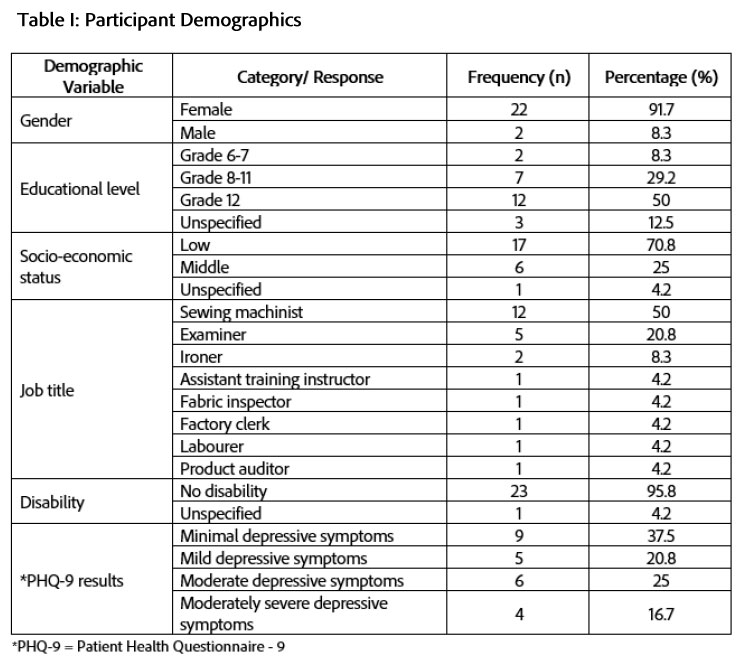
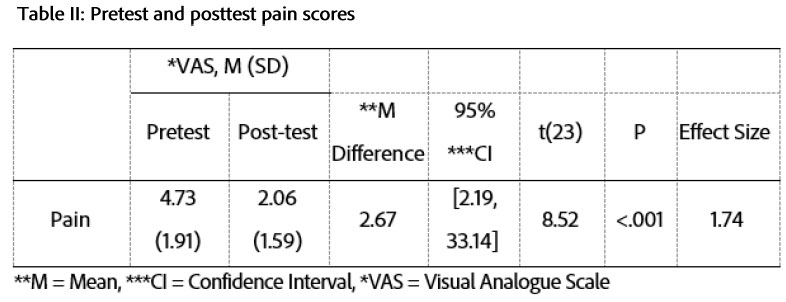
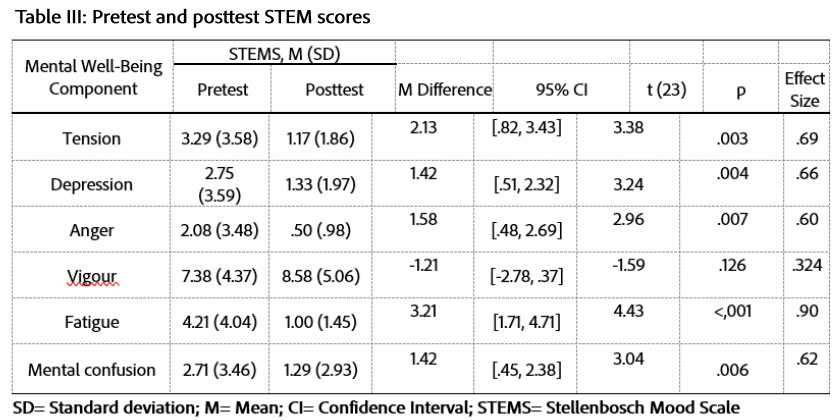
BACKGROUND: Musculoskeletal pain is common amongst garment workers due to awkward postures, and repetitive or forceful movements. Chronic pain can have a negative impact on the mental health and quality of life of workers, leading to a decrease in productivity. Progressive muscle relaxation (PMR) is a time efficient, cost-effective and simple technique that can be used by workers at their workstations to address musculoskeletal pain. OBJECTIVE: This study aimed to determine the immediate effect of PMR on the pain and well-being of garment workers with musculoskeletal pain. METHODS: A single-group pretest-posttest design was used. Data were collected in two sessions with the workers (n=24). During the first session, consent was obtained, eligibility was determined, and the Patient Health Questionnaire-9 (PHQ-9) was administered. During the second session, the pain Visual Analogue Scale (VAS) and Stellenbosch Mood Scale (STEMS) were administered before and immediately after the PMR intervention. The intervention was offered by final year occupational therapy students in Cape Town, South Africa. RESULTS: PHQ-9 scores showed more than half the participants (n=15) presented with symptoms of depression requiring monitoring or intervention. Pain VAS scores indicated that PMR substantially decreased musculoskeletal pain (m difference = 2.67, p <.001, Cohen's d = 1.74). The STEMS showed a moderate improvement in mental wellbeing immediately after the intervention (Cohen's d = 0.34 to 0.90). CONCLUSION: PMR was effective at reducing musculoskeletal pain and improving the mood of garment workers with musculoskeletal pain. PMR is potentially a feasible intervention for workers to use while at their workstations in resource-constrained environments. IMPLICATIONS FOR PRACTICE: • A single session of PMR can be used to immediately improve musculoskeletal pain and wellbeing. • PMR can be used on its own or in combination with other modalities. • PMR scripts can be shortened, translated and recorded; and then shared with clients via WhatsApp so that they can use it themselves. • This is an effective, low-resource, quick intervention that can be useful for workplaces where pain and mental distress are common.
cognitive behavioral therapy; musculoskeletal pain; chronic pain; mental health; work place rehabilitation; good health and well-being; Visual Analogue Scale (VAS); Stellenbosch Mood Scale (STEMS); Patient Health Questionnaire-9 (PHQ-9)