
 A review of the book: "Children in mind. Their mental health in today's world and what we can do to help" by Jenny Perkel
Mr Munyaradzi Chimara
Department of Occupational Therapy and Physiotherapy. School of Allied Health Sciences. University of Namibia.. 13 Jackson Kaujeua Street, Windhoek, Namibia. https://orcid.org/0000-0002-5720-3867
Title of the book: Children in mind. Their mental health in today's world and what we can do to help
Author: Jenny Perkel
Information on the book: Published: 2022
Publisher: Wits University Press
No of pages: 189
Cost of Paperback: ZAR: 362.48; USD: 20
ISBN: 978-1-77614-747-2
Information on the author
Jenny Perkel is a clinical psychologist with over 25 years of experience. She works in private practice in Cape Town offering psychotherapy to babies, children and adults, and she specializes in Parent Therapy. Jenny helps parents to understand and to handle children's psychological, emotional, developmental and behavioural problems. In addition, she has trained and supervised childcare workers for various child and adolescent mental health projects and children's homes and is involved in postgraduate teaching for child psychotherapy. She has published book chapters and academic journal articles.
THE REVIEW
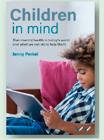
Children in mind - Their mental health in today's world and what we can do to help, is an eloquently written book that presents the mental health challenges children face in the modern world. Written from the perspectives of a clinical psychologist, Jenny brings her vast experience working with troubled children and their parents. She raises a critical question; Are children of today happier than the children of yesteryear? To answer this question the author describes the context in which the modern child exists. The book is presented in two sections: (i) the clinical picture of childhood mental distress, and (ii) the impact of modern life on child mental health. Each chapter ends with a set of valuable recommendations for the clinician to consider.
A number of theoretical frameworks applied in child mental health, such as the cognitive behavioural framework, are presented, but the author has a clear sway towards the psychoanalytic approach despite it being criticised for 'being static, unevolved and overly located in unscientifically proven intrapsychic theory which is concerned with what happens inside of the mind, as opposed to interpersonally and in the outside world' (p4). Today's digital world is posing parental challenges and testing parenting styles as children gain power and authority resulting in the emergence of the egalitarian approach to parenting.
The book highlights several potential environmental reasons a child could find herself/himself in the rooms of a child therapist and these could be 'medical, social, scholastic, interpersonal or intrapsychic' reasons (p71). Jenny further asserts that at times, all the child needs is play, a view that resonates with occupational therapists who argue that for children, 'play is work' and that play is a means of learning and developing. Due to the current exposure to technology in the modern world, some children of today have become 'couch potatoes' with electronic gadgets in their hands and they are 'so immobile that their gross motor development has been affected' (p121). Although the COVID19 pandemic enforced the meaningful use of electronic gadgets through online learning, children were restricted from play and outdoor activities such as contact sports, and this required adjustment from both the child and the parent. Indeed, 'nature, playing outdoor, adventure, space, and physical exercise are good for the emotional well-being of children' (p125).
Jenny further touches on the important topic of parenting and how it contributes to a child's mental health. She reiterates that 'somepsychological disturbances and psychiatric disorders have been linked to problems with early parenting' (p126). Unrealistic expectations from parents, attachment between children and their parents and too much discipline may contribute to a child's mental health. Single parenting, same-sex families, mixed race adoptions are some of the different forms of modern families as presented in chapter 12 of the book. Providing psychotherapy for children from modern families may require extra caution and, in some instances, 'the therapist may need to step away to avoid being used as part of the ammunition in the battle between the exes'the case in point being toxic divorce situations, (p151).
This book is written in a language accessible to other healthcare professionals, teachers and parents. Occupational therapists in particular may find this book beneficial to their clinical practice in child and adolescent mental health. In occupational therapy, play is utilized for assessment and intervention for various psychosocial dysfunctions in children. Jenny provides information with a balanced contextual background that may assist occupational therapists who work with children and their parents. This book is an interesting read, it is well backed by recent literature, and I certainly encourage occupational therapists working with children to read it.
Submitted: 21 June 2024
Reviewed: Not subject to peer review
Accepted: 29 June 2024
Contact:
Declaration of bias: The reviewer has no bias to declare.
