Novice occupational therapists' perceptions of their undergraduate management fieldwork experience
INTRODUCTION: The complexities of managing occupational therapy and rehabilitation services necessitate the strengthening of undergraduate management and leadership education. However, there is paucity of literature on experiential learning of management- and leadership competencies for occupational therapy students. This study explored the perceptions of novice occupational therapists regarding their undergraduate management fieldwork experience at a university in South Africa to determine how well it prepared them for their first year of practice. METHOD: A qualitative exploratory-descriptive research design was used. Sixteen novice occupational therapists who were trained in one occupational therapy programme in South Africa were purposefully sampled, in their community service year. Telephonic interviews were conducted, transcribed verbatim, and data were analysed inductively using Braun and Clarke's six phases of reflexive thematic analysis. RESULTS: Four themes emerged from the data: What was new / unfamiliar, gap between theory and practice, inhibitors to learning management skills, and benefits of management fieldwork. CONCLUSION: The study provided insights on unique opportunities for experiential learning of management and leadership competencies in real-life clinical setting. The fieldwork experiences prepared participants for their first year of work and promoted professional and personal development. Occupational therapy educators should adopt experiential learning as an approach to foster the development of management and leadership competencies at undergraduate level. IMPLICATIONS FOR PRACTICE • Management and leadership competencies should be viewed as equally significant to clinical competencies, and students should be equipped with these competencies for future roles as practitioners. • Experiential learning can be used to strengthen management and leadership education at an undergraduate level in preparing students for management realities during community service and beyond. • Understanding perceptions of novice occupational therapists regarding their undergraduate management fieldwork experience and how it prepared them for community service may foster the development and revision of curricula that effectively respond to the community service realities.
fieldwork education; experiential learning; management skills; leadership skills; novel pedagogy; quality education; development and revision of curricula
Novice occupational therapists' perceptions of their undergraduate management fieldwork experience
Vutivi Remember NdhlovuI, II; Hanlie PitoutIII
IAt time of study: Department of Occupational Therapy, Sedibeng District Health Services, Cnr Frikkie Meyer and Pasteur Boulevard, Vanderbijlpark, South Africa. https://orcid.org/0009-0008-8910-1866
IICurrent: Department of occupational therapy, Van Velden Hospital, C/O 3rd Avenue & Claude Wheatley Street, Arbor Park, Tzaneen, South Africa
IIIDepartment of Occupational Therapy, Sefako Makgatho Health Sciences University (SMU), Garankuwa, South Africa. https://orcid.org/0000-0001-6154-1378
INTRODUCTION: The complexities of managing occupational therapy and rehabilitation services necessitate the strengthening of undergraduate management and leadership education. However, there is paucity of literature on experiential learning of management- and leadership competencies for occupational therapy students. This study explored the perceptions of novice occupational therapists regarding their undergraduate management fieldwork experience at a university in South Africa to determine how well it prepared them for their first year of practice.
METHOD: A qualitative exploratory-descriptive research design was used. Sixteen novice occupational therapists who were trained in one occupational therapy programme in South Africa were purposefully sampled, in their community service year. Telephonic interviews were conducted, transcribed verbatim, and data were analysed inductively using Braun and Clarke's six phases of reflexive thematic analysis.
RESULTS: Four themes emerged from the data: What was new / unfamiliar, gap between theory and practice, inhibitors to learning management skills, and benefits of management fieldwork.
CONCLUSION: The study provided insights on unique opportunities for experiential learning of management and leadership competencies in real-life clinical setting. The fieldwork experiences prepared participants for their first year of work and promoted professional and personal development. Occupational therapy educators should adopt experiential learning as an approach to foster the development of management and leadership competencies at undergraduate level.
IMPLICATIONS FOR PRACTICE
• Management and leadership competencies should be viewed as equally significant to clinical competencies, and students should be equipped with these competencies for future roles as practitioners.
• Experiential learning can be used to strengthen management and leadership education at an undergraduate level in preparing students for management realities during community service and beyond.
• Understanding perceptions of novice occupational therapists regarding their undergraduate management fieldwork experience and how it prepared them for community service may foster the development and revision of curricula that effectively respond to the community service realities.
Keywords: fieldwork education, experiential learning, management skills, leadership skills, novel pedagogy, quality education, development and revision of curricula
INTRODUCTION AND LITERATURE REVIEW
Healthcare management describes attaining predetermined health-related objectives through human-, financial-, and technical resources1234
Healthcare management education and training programmes are crucial for ensuring effective leadership succession in all healthcare professions, including occupational therapy. The HPCSA minimum standards for occupational therapy education mandate undergraduate occupational therapy programmes to include management skills education and training4
Despite this mandate, the lack of uniformity in developing undergraduate health sciences training programmes remains a concern565
According to Lachance and Oxendine78
A case study of Daaleman et al.6
Management and leadership competencies are essential graduate attributes necessary for successfully completing community service. In South Africa, the community services programme for healthcare professions involves allocating new graduates, including occupational therapists, to a public health setting for a one-year mandatory paid work9
A few universities in South Africa offer a submodule on management to occupational therapy students as part of their content within a Fundamentals of Occupational Therapy module. However, this study focuses on the module offered at one particular university in Gauteng province. The module content is structured to extend from the first to the final year of undergraduate training. Students receive theoretical content in a lecture setup from first to third year, with practical applications expected in the final year during fieldwork. It introduces students to management and leadership concepts such as operational planning, implementation, and controlling occupational therapy and rehabilitation service delivery at all levels of healthcare. Furthermore, it aims to equip students with the competencies needed to practice as administrators and case managers upon graduating as occupational therapists.
Fieldwork is a platform for applying, integrating, and practicing theoretical foundations learnt in a real-world clinical setting10
The management fieldwork education offered by the university aims to empower students with management and leadership competencies through practical learning. A suitable method to achieve this is through experiential learning. In Kolb's own words: "Learning is the process whereby knowledge is created through the transformation of experience" 11;38. The management fieldwork education is guided by 'Kolb's experiential learning cycle, in which active fieldwork participation may lead to the acquisition of concrete experiences. Students are required to compile a portfolio of evidence to enable reflective observation of their learning experiences. Students are also required to compile a PowerPoint presentation that included a SWOT analysis of their fieldwork placement to enable abstract conceptualisations and extrapolate the real world of work after graduation.
There is a need to equip healthcare students with managerial and leadership competencies so that they are ready for community service. However, empirical research on the perceptions and experiences of healthcare graduates regarding management and leadership training programmes is sparse. The present study explored the perceptions of novice occupational therapists regarding their undergraduate management fieldwork experience at a university in South Africa with regards to how well it prepared them for their community service year.
METHODOLOGY
Study design
This study was guided by a qualitative phenomenological research design121314
The first author is a qualified occupational therapist in his post-community service year, working in public service. Data collection was conducted by the first author under the mentorship of the second author, who is an experienced qualitative researcher with a PhD. The primary author knew some of the participants as previous university junior students. To reduce researcher bias, authors participated in ongoing reflective sessions with each other, which assisted in establishing the researcher's positionality, examining the interviewing style, and setting aside pre-existing perspectives about the management fieldwork by recognising and appreciating participants' unique perspective15
Study population and sampling
The target population in this study was novice occupational therapists who graduated in 2023 from one university in South Africa and were in their community service year. Purposive sampling was employed to recruit 16 novice occupational therapists out of a class of 28 graduates. All 16 recruited novice occupational therapists participated, with no dropouts or refusals to participate. Participants were recruited through WhatsApp Messenger and phone calls. Participants were only eligible if they had at least five months of community service experience. Participants completed management fieldwork at various settings including in public hospitals, community health centre, private medicolegal practice, adult physical rehabilitation practices, vocational rehabilitation and hand therapy practices Thirteen participants were under the supervision of senior staff members, while three participants were responsible for managing departments in their respective community service placements.
Data collection
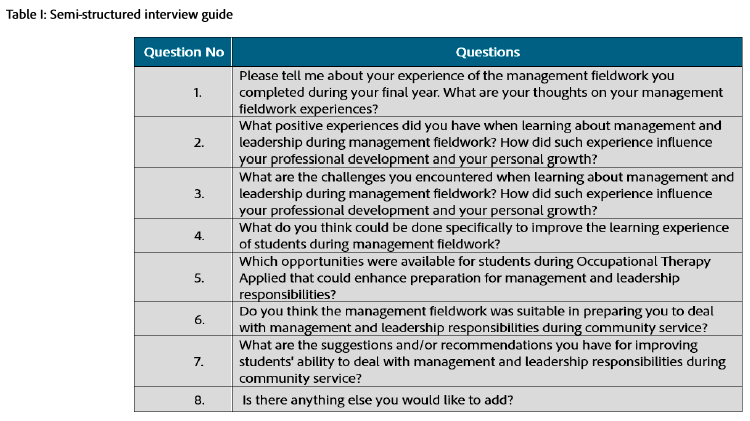
The first author initiated the data collection process by explaining the study's purpose and allowing participants to ask questions before they granted consent. Semi-structured interviews were conducted telephonically, in English, and lasted between twenty to thirty-five minutes. An interview guide (shown in Table I, below) containing predetermined open-ended questions based on the reviewed literature was used to explore novice occupational therapists' perceptions of the management fieldwork experience in preparation for their community service year. Open-ended questions were used to elicit in-depth and rich data. Data redundancy was reached when similar aspects were noted during data collection. The interviews were audio-recorded and transcribed verbatim using the dictate function of Microsoft Word. Authors read and verified data transcripts before the analysis process. Pilot interviews were conducted with 4 novice occupational therapists who graduated in 2022. The interview guide was subsequently revised to include follow-up questions on the first three main questions to elicit more responses. Data from pilot interviews were not included in the study.


Data analysis
The transcribed data were analysed using Braun and Clarke's six phases of reflexive thematic analysis1616,17. The process allowed the authors to take note of the relevant recurring data while seeking to comprehend the meaning and meaningfulness of the experiences, as well as interpret the hidden meanings from the perspectives of participants.
The authors carefully read through the data transcripts several times to gain familiarity with the contents and the embedded meanings. To generate initial codes, relevant data extracts were identified and organised into meaningful groups. Authors met weekly to reflect and deliberate on their differences to establish common understanding of each other's interpretations. The developed codes were organised into coherent and meaningful patterns and further grouped to create categories. The coded extracts were reviewed and compared to the raw data to confirm that they were consistent with the study objectives. Some categories were combined, and themes were created. The themes were defined, revised, and named accordingly. Before producing the report, the authors synthesised and integrated the themes and categories to eliminate ambiguous, unclear, and repeated phrases.
Trustworthiness
Credibility was established by listening to audio recordings and studying transcripts multiple times to develop a thorough understanding of the management fieldwork experiences from the perspective of novice occupational therapists. Confirmability was achieved through weekly peer debriefing meetings with each other to discuss and eliminate discrepancies in the interpreted findings. Audit trails and methodological documentation were used to assure dependability. To ensure transferability, the contextual background of novice occupational therapists and the purposive sampling method employed in the study were described. Thoughts were noted along with the participants' responses, ensuring reflexivity and trustworthiness, and reducing bias15
Ethical considerations
Ethical approval was granted by the Sefako Makgatho University Research Ethics Committee (SMUREC/H/76/2024:PG). Participants provided informed consent before data collection began. Researchers ensured that participation was entirely voluntary and that there were no negative repercussions. Participants were all treated with respect, fairness, and courtesy throughout the interview process. Interviews were conducted individually to guarantee privacy and confidentiality. Data were password-protected and stored securely by the Protection of Personal Information Act (POPIA) and presented anonymously using pseudonyms18
RESULTS
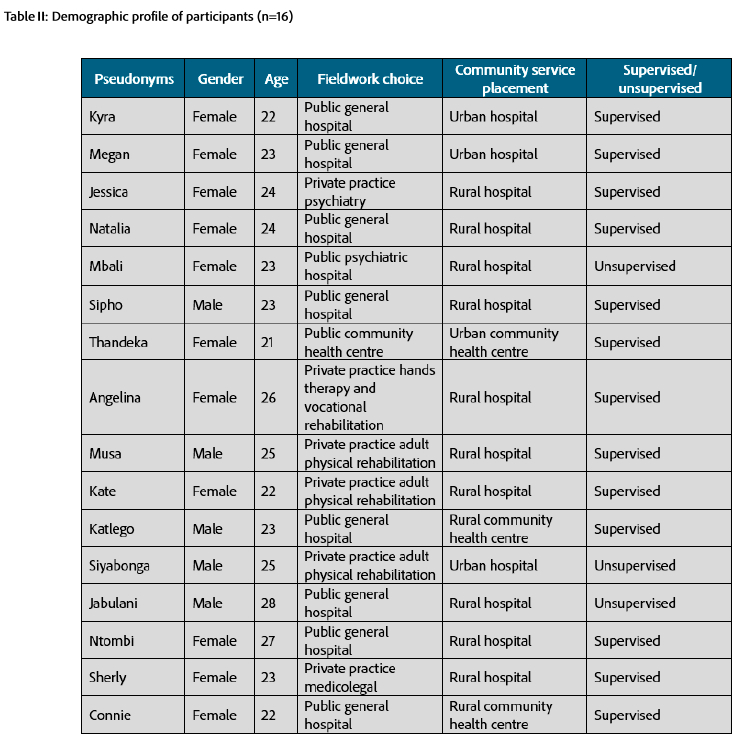
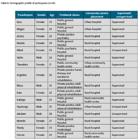
The study profiled demographic characteristics of participants in terms of gender, age, type and province of fieldwork choice, and the community service placement setting. Of the 16 novice occupational therapists, 11 were female (69%) and five were male (31%), with mean age of 23.8, as shown in Table II (below). Most participants completed their management fieldwork at public general hospitals and were placed at rural healthcare facilities.
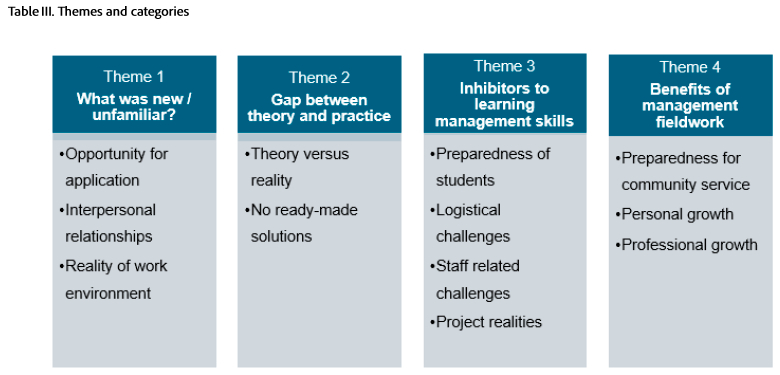
Analysis of the obtained data produced four overarching themes as shown in Table III (page 5). The identified themes are augmented by relevant categories and associated verbatim responses.
THEME 1: What was new / unfamiliar?
The first theme focused on participants' unique experiences of management fieldwork and is supported by three categories, including opportunity for application, interpersonal relationships, and the reality of the work environment.
Management fieldwork provided unique opportunities for experiential learning of management and leadership competencies that differed significantly from traditional clinical fieldwork placements. Participants pointed out that they took active roles in managing daily operations while practicing leadership skills in a real-life clinical environment:
"I had to be like proactive and be the one organising the whole project things, so the manager, she guided me on how to do so. I was the one who was to call the groundworks people, the works department at the hospital. So, for me as a student to be given such a task and to delegate...It was such a huge step to take... Because I was in the management position..." (Karabo)
Participants established relationships with fieldwork staff that differed from what they came to expect in other clinical placements, allowing them to be considered as equals. The relationships between participants and the fieldwork staff were friendly and cordial, resulting in a supportive working environment that promoted optimal experiential learning of management and leadership responsibilities:
"Like I did not go there as a student, I went there as someone who is working... " (Mbali)
The people were friendly and accommodative ...they were so natural. I wish I could work there, yeah. It was nice, the person who was supervising us... was so friendly and open." (Megan)
The diversity of fieldwork placement exposed participants to the adverse realities of the work environment. Participants became more aware of workplace dynamics in the form of interpersonal conflicts between staff in the work environment due to their focus on management and leadership. The participants could identify conflicts that arose in the workplace and understood the significance of using specific management styles to effectively address these conflicts:
"...What was clear it will be the management styles that should be put in place in certain private practises, you understand. So, there is a lot of conflicts when it comes to therapists just having an OTT [staff that assist occupational therapists] in a private practise..."(Siyabonga)
"So, it was not nice to be in an environment where the therapists do not get along." (Karabo)
THEME 2: Gap between theory and practice
The second theme elucidated the dissonance between the management theory learnt in class and the practical realities experienced during management fieldwork placements. The two identified categories associated with theme 2 were differences in expectations created by theory versus reality and no ready-made solutionsto problems. Management and leadership concepts form part of the curriculum, however opportunities to implement these theories during fieldwork placements were reported to be sparse, limiting the experiential learning of problem-solving skills.
There was a gap between management theory and practical reality which surfaced during fieldwork. Although participants were expected to apply management and leadership concepts during fieldwork placements, these possibilities were limited:
"Because during the management module at school we talk about the ordering, the project management, project proposals and everything... when we went to the affiliation visit [management fieldwork], we never really did much ofthat..." (Sherly)
Disparities in expectations between theory and practical realities were also underscored by the fact that management and leadership concepts were not fully applicable during community service. Participants shared that opportunities to practice the learnt theories were sparse because they were mainly responsible for clinical patient care while senior personnel handled management and leadership responsibilities:
"For my part, I do try some of the things that I have learnt, but at the capacity that I am at, my work is more client-based than it is paperwork-based." (Angelina)
It is imperative to address the disconnect between management theory and practice in order to equip occupational therapy graduates with the management and leadership skills required to bring about solutions in the running of occupational therapy services. Participants believed that further efforts to strengthen experiential learning of management and leadership skills are required to promote strategic thinking, service development and evaluation, coordination and resources management, effective communication, team development and problem-solving skills:
"I feel like the university is very lecture-based and... [during community service] you have to do trial and error and there is no room for that when service is ongoing..." (Angelina)
THEME 3: Inhibitors to learning management skills
The third theme focused on the factors that hampered optimal experiential learning of leadership and management skills during fieldwork. Barriers experienced were related to participants' preparedness to complete the management fieldwork. Factors such as fieldwork staff related challenges in understanding of leadership and management skills, logistical challenges, as well as project realities, were also identified as barriers to experiential learning.
Even though management fieldwork was intended to be completed on individuals' own time and students were notified months in advance, participants were underprepared. The participants' negative mindset regarding using recess time to complete management fieldwork hampered their ability to optimally learn management:
"I mean people do not take it seriously, but go there for vibes [having fun rather than learning]..." (Ntombi)
"...the students...should not view affiliation visit [management fieldwork] like it's just as a waste of time. I feel like... once you see it as that this affiliation visit [management fieldwork] is just wasting my recess time ...you don't learn much..."(Megan)
It became apparent that management and leadership concepts were not adequately integrated into all clinical fieldwork, resulting in participants focusing solely on direct clinical patient care while neglecting experiential learning of management and leadership skills:
"... We tend to neglect the management side, and we focus on occupational therapy applied [clinical subject in the curriculum] which is disadvantageous because we are at those institutions to learn not only how to treat patients, also we are there to see how to provide services how to issue assistive devices, how to procure those assistive devices...[and] how to market the department itself (Katlego)
The management fieldwork outcome of making one's own arrangements was intended to promote and measure students' independence in taking responsibility for their own learning while acquiring concrete experiences. Participants encountered several logistical challenges related to securing their own fieldwork placement, transportation funding and practicalities, which were hurdles to effective learning. Inadequate funding for transportation influenced participants' decision on the choice of their fieldwork placements and hampered participants' learning opportunities:
"Okay, so the first one was a transport issue because I was staying at campus at the time and the practise is in [town] ...and there is no bus from in the morning from campus to town. So, I had to then catch a taxi to town, and it is unpredictable. (Sherly)
"[Due to] ...financial concerns, I could only afford to go there most minimum number of days possible." (Angelina)
Participants' learning was hindered by staff related challenges such as the lack of knowledge regarding management and leadership competencies, as well as an incorrect understanding of the management fieldwork expectations. Participants outlined that fieldwork staff were uncertain about how to effectively facilitate and support participants' learning experiences. Not all students were self-directed in their learning but rather expected, as happens in other clinical blocks, that the staff will take the lead in designing the learning experience. Some fieldwork staff assigned patients to students, limiting participants' ability to learn about management and leadership responsibilities:
"They [fieldwork staff] were not knowledgeable about what 'we're there for...I 'don't think they have the knowledge, the necessary knowledge of what is expected in terms of teaching us about the management overall, and also, they tend to be all over the place trying to give us information. So, if students do not have exactly what they need from the therapists, they will not be able to get it." (Connie)
Another barrier to learning was that participants were allocated certain projects that fieldwork staff deemed appropriate, limiting participants' opportunities to learn to be innovative and problem solve:
"...I did not come up with the project ...they came with the project themselves [fieldwork staff]..." (Karabo)
THEME 4: Benefits of management fieldwork
The fourth theme shed light on the unprecedented benefits of management fieldwork outlined by novice occupational therapists. The management fieldwork experience enabled participants to better prepare for occupational therapy practice realities in their community service year. There were lessons gained through the fieldwork experience that fostered participants' personal and professional growth.
Management fieldwork experiences were essential in preparing participants for the realities of community service. Participants doing community service at facilities with no occupational therapy professionals, significantly appreciated the fieldwork experience. The participants felt that the practical hands-on experience not only improved their management and leadership skills, but it also aligned their community service expectations:
"If I was not exposed to such [management fieldwork], I wouldn't know what kind of an environment that 'I'm going to be exposed to [during community service] ...how will I manage that department on [by] myself. So, it taught me a lot especially when you are alone as a therapist..." (Siyabonga)
There were valuable lessons drawn from the fieldwork experiences, which fostered personal growth and development. Participants understood that effective time management was a crucial attribute to have as an occupational therapist and that showing up on time for meetings has a favourable impact on one's reputation:
"It is better to arrive at a meeting early than being late because that then leaves a good impression on the person... and also first impression matters if I got there in the first day, I am late it does not leave a good impression." (Sherly)
Participants who completed their fieldwork at private practice placements understood the importance of hard work. Having experienced the complexities of maintaining a private practice developed a feeling of intense dedication and utmost devotion:
"I feel like it had helped me because I have developed a character to be, to put my foot forward. If I want something to be done, I will make sure it is done... I think it pushed me to be more in control of what I want to be..." (Jessica)
The lessons gained from fieldwork experience led participants to reflect on their unique personal attributes. Participants reflected on whether they have the necessary attributes to provide effective leadership beyond their community services:
"...it made me think okay that, am I a leader? would I want to be a therapist in someone else's practise? ...if I have to reflect on my strengths and my weakness... I am nota leader, but I am a team player." (Sherly)
The fieldwork experiences provided participants with the opportunity to learn valuable lessons necessary for their professional growth.
Participants who conducted fieldwork at public institutions were exposed to the realities of how limited resources hampered service delivery. Being in resource-constrained facilities enabled participants to appreciate the value of managing resources through practical lessons on stock control measures. The exposure enhanced participants' innovation and capacity to solve problems:
"I thought everywhere OT departments are all the same. When I was in my affiliation, I got to see that in District Hospitals in Limpopo there are limited resources, like you have you come up with a lot... it requires you to think on the spot." (Natalia)
The participants were exposed to an environment where they could clearly observe team collaboration and leadership roles in the department. The practical exposure allowed participants to learn how effective leadership and collaborative ethos among team members impact departmental success in terms of meeting its strategic objectives:
"... they are a small department, but they have good leadership skills, that is teamwork. They work together which is good for the department." (Mbali)
Another reported benefit of fieldwork experience was participants' exposure to different health information systems. Participants learnt about the digital record-keeping system and perceived it to be more effective than manual record-keeping:
"They used online App...even when you are home you can get an update about your patient. So, when someone is at work, and they are writing notes they write it on thatApp" (Siyabonga)
DISCUSSION
To our knowledge, this was the first study that explored the perceptions of novice occupational therapists regarding their undergraduate management fieldwork experience in terms of how it prepared them for first year of work. There were fewer male participants than females, reflecting the demographic profile of the registered occupational therapists in South Africa19
What was new / unfamiliar?
The findings of the present study revealed that some participants had unique opportunities to implement management and leadership theories by taking active leadership positions and delegating tasks to support staff to ensure successful project execution during the fieldwork placement. Participants utilised the opportunities to gain managerial and leadership competencies through experiential learning. These findings are consistent with previous research, which has shown that leadership and managerial training programmes provide students with opportunities to practice leadership skills such as providing directions, delegating responsibilities among the team, and managing services20
Management fieldwork experience not only provided opportunities for practicing leadership and management skills but also allowed for the development of meaningful relationships marked by, from the participants point of view, unexpected friendliness and cordiality. Participants mentioned that previous fieldwork experiences sensitised them to the possibility of not necessarily having positive experiences. The positive connections between participants and fieldwork staff fostered manual respect and a conducive learning environment 212221
Participants perceived the negative workplace dynamics in the form of interpersonal conflict between two or more fieldwork staff to be an uncomfortably unfamiliar experience, mainly because they were accustomed to positive interpersonal relationships from their traditional clinical fieldwork. These findings were not surprising considering the widespread lack of manual respect and poor interpersonal relationships among healthcare professionals in the workplace23,24. The exposure enabled participants to appreciate the value of good conflict management strategies in the workplace, where conflict is a reality that they need to learn to negotiate effectively.
Gap between theory and practice
Our findings indicated a concerning gap between the learnt management and leadership theories and the practical realities encountered during fieldwork placements. The disconnect between participants' expectations and what was realistically implementable at undergraduate level brought about negative perceptions about the suitability of management fieldwork. Participants believed that some aspects of their fieldwork such as actual budgeting, operational planning and leadership were not applicable, making it difficult to satisfy some of the fieldwork learning outcomes. Previous studies have also shown that participants had negative perceptions regarding the necessity of leadership training at the undergraduate level6
The study indicated that even though, management and leadership are addressed theoretically, opportunities for practical application need to be created during clinical fieldwork. In any occupational therapy fieldwork setting where students do clinical work, specific opportunities to display management and leadership could be identified, for example, giving students opportunities for planning and execution of marketing projects. Practical exposure within the university curriculum has been found to provide new graduates with practical skills and the confidence to know what to do in the field, thus making the transition into practice less stressful25
Inhibitors to learning management skills
Students' levels of readiness can have a substantial influence on the process of knowledge and skill acquisition. The current study found that some participants had negative perceptions toward using school recess to complete their management fieldwork. Some participants attended their fieldwork for the sake of completion rather than for the intended purpose, since they considered it to be less important than clinical competencies627
One of the outcomes of the management fieldwork was that students needed to become more independent in making own arrangements and taking responsibility for their own learning. It emerged that participants experienced logistical challenges, such securing a suitable placement for their fieldwork. Participants stated that some logistical challenges were secondary to limited financial resources to cover transportation to fieldwork placements. As a result, several participants could only afford to cover their own transportation costs for the minimum number of fieldwork days. The logistical challenges, compounded by financial constraints, could have had a negative effect on 'participants' learning opportunities.
The logistical challenges identified in our study were often not reported in other fieldwork studies because the traditional fieldwork logistical arrangements are primarily the responsibility of the training institutions21,22. A revision of the curriculum with the goal of integrating management fieldwork with traditional clinical fieldwork could address these challenges. Students should also be involved in identifying suitable fieldwork placements within their communities that may provide learning opportunities that will adequately prepare them for community service realities.
Our study also revealed that participants encountered staff-related challenges, such as a poor understanding of management fieldwork expectations and management and leadership competencies. While fieldwork staff offered support, it was evident that poor understanding of the expectations resulted in fieldwork staff assigning students with patients to clinical work, thus limiting participants' experiential learning of management per se. These findings contrast with the staff-related challenges reported in a 2021 study, which found a lack of support and supervision from fieldwork staff due to busy clinical schedules2228
Another impediment to participants' learning experience was the fact that fieldwork staff allocated projects to participants that participants did not see as relevant. Ideally, the decision on the project should be done collaboratively between staff and students, based on the challenges that staff identified during operation planning. Although project allocation may have been intended to offer support to students, it also limited participants' ability to learn to be innovative and solve problems that would have surfaced during situational analysis.
Benefits of management fieldwork
The management fieldwork experience contributed to participants preparedness for the realities of community service. Participants, particularly those completing community service at rural healthcare institutions, valued their fieldwork experience and believed that it prepared them to take on current management responsibilities. The exposure also helped participants create reasonable expectations in terms of work demands and professional responsibilities awaiting them in their community service year109
The fieldwork experience allowed participants to appreciate how good time management has a significant bearing on one's reputation. Participants learnt that running occupational services is a challenging responsibility that requires not just hard work but also commitment and sacrifice. Participants were engaged in a reflective process about their own leadership potential, which facilitated both personal and professional growth8
Participants also revealed that the fieldwork experience had a substantial impact on their professional growth. It was evident that the lack of resources was a daily occurrence in most public healthcare facilities. Therefore, participants acknowledged the need to implement stock control measures to ensure service continuity. Participants learnt how a culture of teamwork and competent leadership influenced departmental success in terms of achieving strategic objectives. These findings mirrored those of Abou Hashish and Bajbeir8
CONCLUSION
Innovative andragogical approaches are necessary to enhance management and leadership education for future healthcare professionals. It was discovered that management fieldwork provided unique opportunities to apply learnt theories while developing management and leadership competencies in a supportive real-life clinical setting. Participants' experiences demonstrated a gap between the management theory and the actual workplace realities after graduation. Participants acknowledged that the complexities of managing occupational therapy services require effective management and innovative problem-solving skills.
Logistical challenges related to a lack of financial resources, poor understanding of expectations from both participants and fieldwork staff, and negative perceptions towards the timing of the fieldwork all emerged as barriers to experiential learning. These barriers could be addressed by incorporating management and leadership competencies into clinical fieldwork. The findings also brought to light how experiential learning through management fieldwork had fostered students' preparedness for management and leadership roles during community service. Management fieldwork experience has significantly contributed to participants' development, both personally and professionally. It is therefore important that occupational therapy educators employ experiential learning within an integrated fieldwork curriculum to promote the development of management and leadership competencies at undergraduate level.
Limitations of the study
Our study was limited in that it focused exclusively on the perspectives of novice occupational therapists from a single university; therefore, the findings cannot be generalised to all novice occupational therapists in South Africa and in other countries. The depth of the collected data could have been impacted by using telephonic interviews, which excluded the opportunity for the observation of possible nonverbal communication which may have enriched the data collection process and influenced the interpretation of responses. The one-time data collection method also limited the potential to capture how participants' perspective evolved over time as influenced by community service experience. In the near future, we intend to adopt a longitudinal approach with multiple data collection points to capture changes in participants' perceptions. The interpretation of the study findings should also consider potential recall bias since data were collected several months after participants completed the management fieldwork. Despite these limitations, the study findings could be used to make changes to this fieldwork design to improve the learning experiences of students in future. Insights from this study should be considered to improve management and leadership curriculum design.
Conflicts of interest
No potential competing interests, financial or otherwise.
Author contributions
Vutivi Remember Ndhlovu designed the research protocol, collected data, initiated data analysis and writing of the article. Dr Hanlie Pitout reviewed the protocol, guided data analysis and writing of the article. Each named author substantially contributed and approved the final version of the manuscript.
Acknowledgments
The authors wish to thank all participants in this study. Special thanks to Dr Marlize Cochrane-Boeyens for valuable input during the writing of this manuscript.
REFERENCES
-
1. Linnander EL, Mantopoulos JM, Allen N, Nembhard IM, Bradley EH. Professionalizing Healthcare Management: A Descriptive Case Study. International Journal of Health Policy and Management. 2017;6(10):555-60. https://doi.org/10.15171/ijhpm.2017.40
» https://doi.org/10.15171/ijhpm.2017.40 -
2. Sfantou DF, Laliotis A, Patelarou AE, Sifaki-Pistolla D, Matalliotakis M, Patelarou E. Importance of Leadership Style towards Quality of Care Measures in Healthcare Settings: A Systematic Review. Healthcare. 2017; 5(4):73. https://doi.org/10.3390/healthcare5040073
» https://doi.org/10.3390/healthcare5040073 -
3. van Diggele C, Burgess A, Roberts C, Mellis C. Leadership in Healthcare Education. BMC Medical Education. 2020:20(S2):456. https://doi.org/10.1186/s12909-020-02288-x
» https://doi.org/10.1186/s12909-020-02288-x -
4. Health Professions Council of South Africa. Professional Board for Occupational Therapy Medical Orthotists and Prosthetists and Art Therapy. Minimum Standards of Training for Occupational Therapists. 2020 [accessed 2023 Oct 20]. https://www.hpcsa.co.za/Uploads/professional_boards/ocp/guidelines/Minimum_Standards_of_OT_Training.pdf
» https://www.hpcsa.co.za/Uploads/professional_boards/ocp/guidelines/Minimum_Standards_of_OT_Training.pdf -
5. Pitout H, Adams F, Casteleijn D, du Toit SHJ. Factors to consider in planning a tailored undergraduate interprofessional education and collaborative practice curriculum: A scoping review. South African Journal of Occupational Therapy. 2022;52(1). https://doi.org/10.17159/2310-3833/2022/vol52n1a9
» https://doi.org/10.17159/2310-3833/2022/vol52n1a9 -
6. Daaleman TP, Storrie M, Beck Dallaghan G, Smithson S, Gilliland KO, Byerley JS. Medical Student Leadership Development through a Business School Partnership Model: A Case Study and Implementation Strategy. Journal of Medical Education and Curricular Development. 2021; 8:238212052110104. https://doi.org/10.1177/23821205211010479
» https://doi.org/10.1177/23821205211010479 -
7. Lachance JA, Oxendine JS. Redefining Leadership Education in Graduate Public Health Programs: Prioritization, Focus, and Guiding Principles. American Journal of Public Health. 2015;105 Suppl 1(Suppl 1): S60-S64. https://doi.org/10.2105/AJPH.2014.302463
» https://doi.org/10.2105/AJPH.2014.302463 -
8. Abou Hashish EA, Bajbeir EF. The Effect of Managerial and Leadership Training and Simulation on Senior Nursing Students' Career Planning and Self-Efficacy. SAGE Open Nursing. 2022; 8:237796082211279. https://doi.org/10.1177/23779608221127952
» https://doi.org/10.1177/23779608221127952 -
9. Naidoo D, Van Wyk J, Nat RJ. Are final year occupational therapy students adequately prepared for clinical practice? A case study in KwaZulu-Natal. South African Journal of Occupational Therapy. 2014;44(3):24-8 [accessed 2023 Aug 3]. http://www.scielo.org.za/scielo.php?script=sci_arttext&pid=S2310-38332014000300007&lng=en&tlng=en
» http://www.scielo.org.za/scielo.php?script=sci_arttext&pid=S2310-38332014000300007&lng=en&tlng=en -
10. American Occupational Therapy Association. Commission on Education (COE) Guidelines for Occupational Therapy Fieldwork Education. 2024. [accessed 2024 Dec 19]. https://www.aota.org/education/fieldwork/-/media/7f01a105e1eb4e7b80d379ab42e3b6f4.ashx
» https://www.aota.org/education/fieldwork/-/media/7f01a105e1eb4e7b80d379ab42e3b6f4.ashx - 11. Kolb DA. Experiential Learning: Experience as the Source of Learning and Development. Upper Saddle River, New Jersey: Pearson Education Inc; 1984.
- 12. Leedy PD, Ormrod JE. Practical Research: Planning and Design. Harlow, Essex: Pearson Education; 2021.
-
13. Hunter DJ, Howes D. Defining Exploratory-Descriptive Qualitative (EDQ) research and considering its application to healthcare. GSTF Journal of Nursing and Health Care (JNHC). 2019;15;4(1). [accessed 2024 Dec 11] https://eprints.gla.ac.uk/180272/7/180272.pdf
» https://eprints.gla.ac.uk/180272/7/180272.pdf -
14. Tong A, Sainsbury P, Craig J. Consolidated criteria for reporting qualitative research (COREQ): a 32-item checklist for interviews and focus groups. International Journal for Quality in Health Care. 2007; 16;19(6):349-57. https://doi.org/10.1093/intqhc/mzm042
» https://doi.org/10.1093/intqhc/mzm042 -
15. Olmos-Vega FM, Stalmeijer RE, Varpio L, Kahlke R. A Practical Guide to Reflexivity in Qualitative research: AMEE Guide no. 149. Medical Teacher. 2022 ,-45(149):1-11. https://doi.org/10.1080/0142159X.2022.2057287
» https://doi.org/10.1080/0142159X.2022.2057287 -
16. Braun V, Clarke V. Conceptual and design thinking for thematic analysis. Qualitative Psychology. 2022; 13;9(1):3-26. https://psycnet.apa.org/doi/10.1037/qup0000196
» https://psycnet.apa.org/doi/10.1037/qup0000196 -
17. Byrne D. A Worked Example of Braun and Clarke's Approach to Reflexive Thematic Analysis. Quality & Quantity. 2022; 26;56(3):1391-412. https://doi.org/10.1007/s11135-021-01182-v
» https://doi.org/10.1007/s11135-021-01182-v -
18. Adams R, Adeleke F, Anderson D, Bawa A, Branson N, Christoffels A, et al. POPIA Code of Conduct for Research. South African Journal of Science. 2021;117(5/6). https://doi.org/10.17159/sajs.2021/10933
» https://doi.org/10.17159/sajs.2021/10933 -
19. Ned L, Tiwari R, Buchanan H, Van Niekerk L, Sherry K, Chikte U. Changing demographic trends among South African occupational therapists: 2002 to 2018. Human Resources for Health. 2020;18(1). https://doi.org/10.1186/s12960-020-0464-3
» https://doi.org/10.1186/s12960-020-0464-3 -
20. Richard K, Noujaim M, Thorndyke L, Fischer M. Preparing Medical Students to Be Physician Leaders: A Leadership Training Program for Students Designed and Led by Students. MedEdPORTAL. 2019; 15:10863. https://doi.org/10.15766/mep_2374-8265.10863
» https://doi.org/10.15766/mep_2374-8265.10863 -
21. Grenier ML. Facilitators and Barriers to Learning in Occupational Therapy Fieldwork Education: Student Perspectives. American Journal of Occupational Therapy. 2015 Oct 5;69(Supplement_2):6912185070p1. https://doi.org/10.5014/ajot.2015.015180
» https://doi.org/10.5014/ajot.2015.015180 -
22. Zulu BM, du Plessis E, Koen MP. Experiences of nursing students regarding clinical placement and support in primary healthcare clinics: Strengthening resilience. Health SA Gesondheid.2021;26(26). https://doi.org/10.4102/hsag.v26i0.1615
» https://doi.org/10.4102/hsag.v26i0.1615 -
23. Saridi M, Panagiotidou A, Toska A, Panagiotidou M, Sarafis P. Workplace interpersonal conflicts among healthcare professionals: A survey on conflict solution approach at a General Hospital. International Journal of Healthcare Management. 2019,14(2):1-10. https://doi.org/10.1080/20479700.2019.1661114
» https://doi.org/10.1080/20479700.2019.1661114 -
24. Castellini G, Consonni D, Costa G. Conflicts in the workplace, negative acts and health consequences: evidence from a clinical evaluation. Industrial Health. 2022;61(1). https://doi.org/10.2486/indhealth.2021-0283
» https://doi.org/10.2486/indhealth.2021-0283 -
25. Opoku EN, Van Niekerk L, Khuabi LJ. Exploring the transition from student to health professional by the first cohort of locally trained occupational therapists in Ghana. Scandinavian Journal of Occupational Therapy. 2021 Jan 21;29(1):1-12. https://doi.org/10.1080/11038128.2020.1865448
» https://doi.org/10.1080/11038128.2020.1865448 -
26. Recigno TE, Shepherd J, Kramer P, McHugh Conlin J. Defining the future of occupational therapy: A concept analysis of leadership development. Scandinavian Journal of Occupational Therapy. 2024; 31(1). https://doi.org/10.1080/11038128.2024.2399709
» https://doi.org/10.1080/11038128.2024.2399709 -
27. Sjöberg P, Lexén A. Transitioning from an occupational therapy student to a clinically competent occupational therapist - A qualitative study. Scandinavian Journal of Occupational Therapy. 2024; 31(1). https://doi.org/10.1080/11038128.2024.2398498
» https://doi.org/10.1080/11038128.2024.2398498 -
28. Nicolaou N, Nicolaou C, Nicolaou P, Nicolaides P, Papageorgiou A. Development of a leadership and management module for the undergraduate medical curriculum. BMC Medical Education. 2024 Nov 14;24(1):1310. https://doi.org/10.1186/s12909-024-06004-x
» https://doi.org/10.1186/s12909-024-06004-x
1st Review: 7 December 2024
Revised: 20 January 2025
2nd Review: 11 April 2025
Accepted: 11 April 2025
EDITOR
Blanche Pretorius
https://orchid.org/0000-0002-3543-0743
DATA AVAILABILITY
Upon reasonable request, available from corresponding author
FUNDING
No funding was received for this study