Siblings' lived realities of Autism Spectrum Disorder
INTRODUCTION: Autism spectrum disorder (ASD) affects 1 in 54 children globally. South African estimates suggest that approximately 2% of the population has the condition. The persistent nature of ASD characteristics requires an enduring commitment of care from the entire family. Despite the positive experiences equated with raising a child with ASD, families experience stress and reduced mental and emotional well-being. Both the positive and less favourable aspects of ASD influence typically developing siblings within the family unit. This study explored the perspectives of typically developing siblings who live in the same household as their sibling with ASD. METHODS: The qualitative design allowed for the collection of in-depth data via semi-structured interviews. Participants aged seven years and older were recruited to participate in the study. The necessary permissions, consent and assents were obtained. Thematic analysis using an inductive approach was used to analyse the data. FINDINGS: The findings revealed that siblings coped with challenging behaviours from the child with ASD, communication difficulties, limited time with parents, and resource limitations regarding support and skill acquisition. However, they adapted to these challenges by developing coping strategies and being self-driven to understand ASD. CONCLUSION: Siblings are integral to the family unit. Further research into their lived experiences and needs is prudent. IMPLICATIONS FOR PRACTICE: Family-centred occupational therapy should address the unique needs of siblings in families with a child with ASD, which imposes significant challenges on family dynamics. This study provides the following insights for research and intervention: • Insights into sibling experiences and coping strategies can inform targeted interventions for siblings. • Siblings, alongside parents, may reinforce therapeutic strategies at home, enhancing intervention outcomes. • Further research is needed in culturally diverse contexts, particularly in South Africa, to optimise occupational therapy for families with autistic children.
Autism Spectrum Disorder; siblings; coping; lived experiences
Siblings' lived realities of Autism Spectrum Disorder
Gwen ReddyI, ; Thavanesi GurayahII; Deborah Leigh FewsterIII
IOccupational Therapy Department, University of KwaZulu-Natal, School of Health Sciences, Westville Campus, University Road, Westville, Durban, KwaZulu-Natal, South Africa. https://orcid.org/0000-0002-1966-2042
IIhttps://orcid.org/0000-0001-9005-6355
IIIhttps://orcid.org/0000-0002-9424-8976
INTRODUCTION: Autism spectrum disorder (ASD) affects 1 in 54 children globally. South African estimates suggest that approximately 2% of the population has the condition. The persistent nature of ASD characteristics requires an enduring commitment of care from the entire family. Despite the positive experiences equated with raising a child with ASD, families experience stress and reduced mental and emotional well-being. Both the positive and less favourable aspects of ASD influence typically developing siblings within the family unit. This study explored the perspectives of typically developing siblings who live in the same household as their sibling with ASD.
METHODS: The qualitative design allowed for the collection of in-depth data via semi-structured interviews. Participants aged seven years and older were recruited to participate in the study. The necessary permissions, consent and assents were obtained. Thematic analysis using an inductive approach was used to analyse the data.
FINDINGS: The findings revealed that siblings coped with challenging behaviours from the child with ASD, communication difficulties, limited time with parents, and resource limitations regarding support and skill acquisition. However, they adapted to these challenges by developing coping strategies and being self-driven to understand ASD.
CONCLUSION: Siblings are integral to the family unit. Further research into their lived experiences and needs is prudent.
IMPLICATIONS FOR PRACTICE:
Family-centred occupational therapy should address the unique needs of siblings in families with a child with ASD, which imposes significant challenges on family dynamics. This study provides the following insights for research and intervention:
• Insights into sibling experiences and coping strategies can inform targeted interventions for siblings.
• Siblings, alongside parents, may reinforce therapeutic strategies at home, enhancing intervention outcomes.
• Further research is needed in culturally diverse contexts, particularly in South Africa, to optimise occupational therapy for families with autistic children.
Keywords: Autism Spectrum Disorder, siblings, coping, lived experiences.
INTRODUCTION AND LITERATURE REVIEW
Autism spectrum disorder
Autism Spectrum Disorder (ASD) globally affects 1 in 54 children1. South African estimates suggest that approximately 2% of the population has ASD2. Autism Spectrum Disorder is a neurodevelopmental condition with clinical presentations that include deficits in social behaviour, communication and restricted or repetitive patterns of behaviour3. Families often face delayed diagnosis, misdiagnosis, and limited professional guidance4. The persistent nature of ASD characteristics requires an enduring commitment of care4, and the influence of ASD has far-reaching effects on family functioning5. The nature of the condition, lack of awareness, limited resources and support and continued stigma can place stress on a family4,5. Diagnostic uncertainty affects siblings' early understanding of ASD.
Siblings' lived experiences
Van der Merwe et al's study focusing on adolescent siblings found that sibling relationships can be challenging in the ASD context due to the limited understanding of ASD and insufficient information available to neurotypical siblings to increase awareness about the disorder6. Furthermore, studies have found that sibling stress increased with the challenging behaviours of the child with ASD, and difficulties in socialisation and communication7,8. Limited information and guidance from professionals hampered the siblings' interaction with the child with ASD and adaptation to ASD by siblings are consistent findings in the research6,9. Research focussing on siblings of a child with ASD found that sibling realities were altered as they encountered odd or aggressive behaviours, had limited understanding of social norms of the child with ASD, and had to navigate stigma regarding the ASD10,11.
Stigma and future concerns
Cultural and religious interpretations can often complicate families' early meaning-making as family and public beliefs sometimes attribute ASD behaviours to discipline issues or spiritual causes10,11. As a result, families often reduce social outings due to the fear of judgement, which highlights the need for increased public awareness about ASD. These protective elements are further noted in the siblings' concerns about the child with ASD's future. Further concerns include the future independence, safety, and sexuality of the child with ASD with an anticipation of lifelong caregiving responsibilities11,12.
Siblings' coping skills and strategies
Studies exploring the attitudes and perspectives of siblings found that they adapted to their unique realities by developing coping skills to manage the needs of the child with ASD to ensure positive outcomes6,9. Coping strategies undertaken by siblings are either problem or emotion-focused. Problem-focused coping included setting up structured routines and self-directed research by older siblings. Emotion-focused coping included strategies like identifying potential meltdowns, distraction, removing themselves from the situation, and talking to others8,10.
Coping skills were enhanced with access to resources and parental support13,14. Studies reflecting sibling relations also found that positive relationships evolved as siblings assumed roles that required their continued engagement with the child with ASD6,7,10, resulting in a dynamic interplay between caregiving and advocacy14,15. Siblings were protective and vigilant to the safety and comfort needs of the child with ASD, often yielding to their care needs7,10. The role of respite, including brief breaks and one-on-one parental time is noted as a coping mechanism for siblings of children with ASD13.
Positive experiences
A common theme reflected in the literature was the positive impact on personal traits of siblings emanating from their lived experience with the child with ASD9,13. Siblings described the development of positive traits like resilience, patience and empathy and felt that their life paths were impacted by the child with ASD6,7,9,16,17.
To conclude, autism spectrum disorder impacts the entire family unit with typically developing siblings playing an important role in this context. They have unique experiences and methods of coping with their sibling with ASD. This study aimed to explore the lived experiences and coping strategies used by siblings of children with ASD.
METHODOLOGY
Research design
A qualitative phenomenological approach embodied in an interpretive paradigm was adopted to explore siblings' perspectives of their experiences, by ascribing meaning to their experiences and actions18. Adopting an interpretive paradigm drawing on social constructivism allowed the authors to consider the participants' experiences and ascribe meaning to their narratives19,20. Social constructivism postulates that human beings create their own meanings by their social interpretation of daily life processes21. The reality of each sibling was defined by their subjective experiences with ASD. Consequently, the authors could understand that participants' experiences were a unique set of interactions to which they reacted according to their resources and prior knowledge.
Research objectives
The study objectives were:
(i) To explore the lived experiences and perspectives of siblings of children with ASD via semi-structured one-on-one interviews.
(ii) To explore the coping strategies used by siblings of children with ASD via semi-structured one-on-one interviews
Participant selection and recruitment
Purposeful sampling directed participant recruitment and selection. Seven prospective schools in KwaZulu-Natal for Learners with Special Education Needs were approached for permission to access participants. Invitations to participate in research, consent and assent forms were distributed to parents via these schools. Inclusion criteria required that the sibling living with the child with ASD be at least seven years old, and that the child with ASD have a confirmed diagnosis made by a medical professional.
Data collection
The data collection tool was a semi-structured interview schedule which was developed by drawing on literature and the objectives of the study. A pilot study was conducted to test the research instrument22 to identify potential flaws, refine interview skills and assess whether the instrument elicited the relevant information23. One sibling of a child with ASD was interviewed in the pilot. As the pilot required no amendments, the data from the pilot study was included in the main dataset. The instrument, methodology and sampling criteria were sufficiently robust to justify this inclusion24,25. The first author interviewed the participants in English, with the duration ranging from 30 to 60 minutes per interview.
Data analysis
Six interviews were conducted and included in the analysis process. Audio recordings were transcribed verbatim, and transcripts were scrutinised for discrepancies against recordings. Data were analysed manually using thematic analysis and an inductive approach. Inductive analysis is a process of coding the data without using a pre-existing coding or theoretical framework and allows for limited influence from the researcher's preconceived perceptions as researcher and a clinician26. Codes were assigned and themes were identified, generated and described27,28. All themes were discussed and verified by all authors. No artificial intelligence nor large language models were used in the process of this study or in the writing and editing thereof.
Trustworthiness
Trustworthiness was established through credibility, transferability, dependability, and confirmability as outlined by Guba29. This included debriefing through peer discussions, detailed "thick" descriptions of the research process, maintaining a reflective diary, and acknowledging researcher bias by bracketing29.
Ethical considerations
Ethical clearance was obtained from the Biomedical and Research Ethics Committee (BE065/16) at the University of KwaZulu-Natal and gatekeeper permission from the Department of Education to conduct the study. Ethical considerations included using age-appropriate language to inform participants about confidentiality, obtaining assent, the participants' right to withdraw, permission to audio-record interviews, and using pseudonyms to maintain anonymity30. Specific ethical considerations for children were incorporated including the creation of a safe and child-friendly environment to facilitate sharing. The vulnerability of this population, together with the sensitivity of their information was acknowledged. They were advised to share information that they felt comfortable to divulge. The researcher was cognisant of the emotional state of the participants, and took the necessary steps to ensure their well-being. Arrangements were made to provide specialised emotional support with a local psychologist, should any participant have required this during the process of data collection. Participants were contacted telephonically post interview and none required these services.
FINDINGS
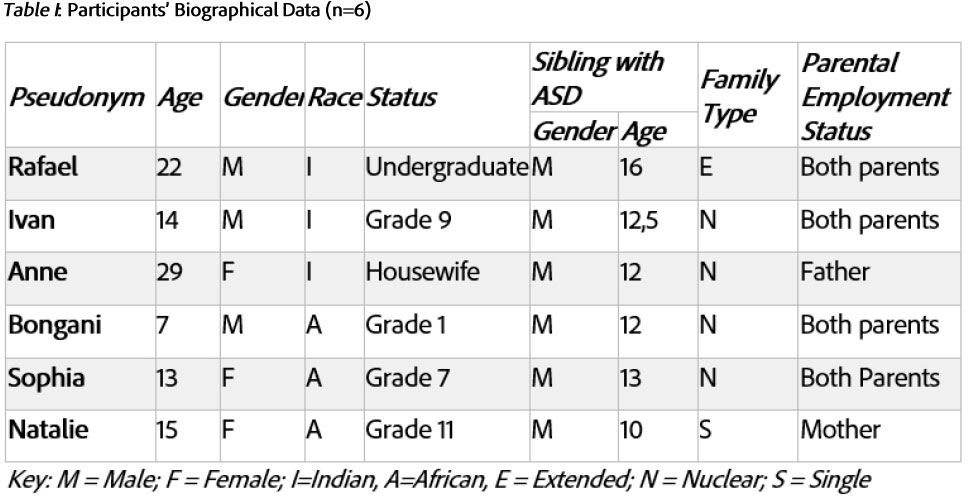
Four siblings were interviewed from nuclear families, one sibling from a single-parent family and one from an extended family. A nuclear family consists of both parents and children living together4, whilst an extended family refers to multiple generations living under one roof31.
Table I (below) summarises the biographical data of the participants, the neurotypical siblings as well as the parents' employment statuses, family type, and the age and gender of the child with ASD.
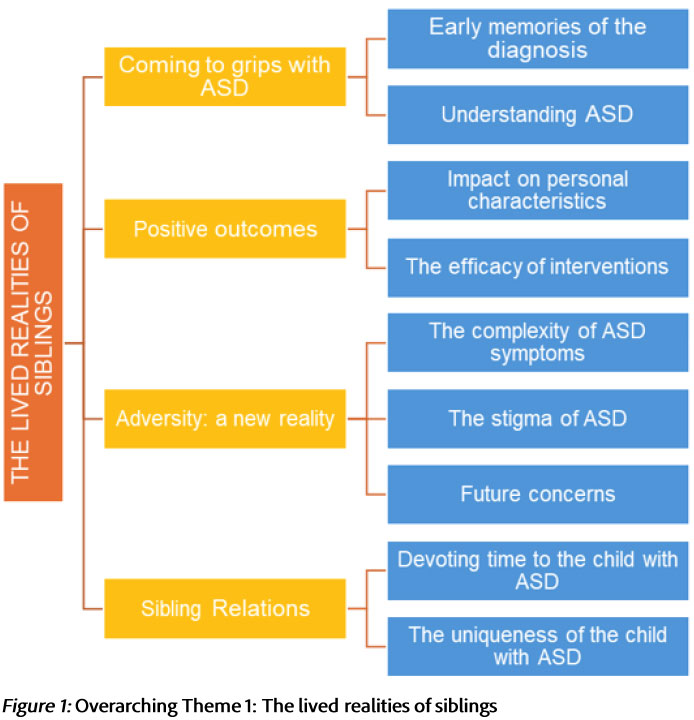
Two overarching themes were identified in the analysis, namely 'The lived realities of siblings' and 'Siblings' perspectives on coping'. The first main theme included four themes namely 'Coming to grips with ASD', 'Positive outcomes', 'Adversity: a new reality' and 'Sibling relations'.
Overarching Theme 1: The lived realities of siblings
This theme described lived experiences of siblings living with a child with ASD. Four themes emerged from the main theme and nine sub-themes emanated from these themes.
Theme 1: Coming to grips with ASD
This theme encompassed two sub-themes namely early memories of the diagnosis and understanding ASD. Four themes emerged from the main theme and nine sub-themes emanated from these themes. The overarching theme 1 is outlined in Figure 1 (below).
Sub-theme 1.1: Early memories of the diagnosis
Siblings were confused by early explanations of ASD. Prior to a formal diagnosis, the conduct of the child with ASD was rationalised as late development or misbehaviour:
"I knew there was something wrong but back then I never really thought about it. I thought he was normal...just acting up"
(Ivan, male, 14).
The diagnostic process was prolonged, creating emotional and financial stress whilst professional support was limited:
"There were misdiagnoses. Countless doctors, countless scans, thousands of rands, the stress on the family was a bit intense"
(Rafael, male, 22).
Understanding the diagnosis was complicated by religious and cultural influences, with poor discipline and parenting techniques identified as common cultural explanations for behavioural challenges:
"Indian culture states you must discipline your child. The moment he starts acting out, we must discipline"
(Anne, female, 29).
Some religious arguments endorsed the belief that evil spirits were the reason for the child's behaviour, as a religious leader told Rafael's family:
"There's a devil in this child!"
(Rafael, male, 22).
Sub-theme 1.2: Understanding ASD
As siblings began understanding ASD, they considered the child with ASD as a special child who was the same as others and did not have a disability. Symptom recognition facilitated understanding and acceptance:
"I know it interrupts their ability to make relationships, to communicate"
(Ivan, male, 14).
As siblings matured and their understanding of ASD evolved, they showed acceptance and understanding, and a positive perspective of ASD emerged:
"It's been a good experience. The good things override everything"
(Anne, female, 29).
Theme 2: Positive outcomes
This theme encompassed two sub-themes including the impact on personal characteristics and the efficacy of interventions.
Sub-theme 2.1: Impact on personal characteristics
Siblings derived positive meaning, felt blessed, compassionate, emotionally stronger, and more mature than their peers. Given their experience with ASD, siblings developed skills like calming others or helping others exposed to disabilities. Family bonds strengthened and religious faith intensified:
"I'm blessed, more mature, sometimes I deal with things differently than I would if he was normal"
(Natalie, female, 15).
Understandably, sadness arose as the chronic nature of ASD was manifested:
"He speaks about university, a girlfriend, getting married and having children. It's heart-breaking in the sense that I don't know if he's ever going to do that"
(Rafael, male, 22).
As the reality and magnitude of the situation became apparent, families sought intervention from varied sources.
Sub-theme 2.2: The efficacy of interventions
Effective intervention promoted positive adaptation for the child with ASD and the family. Schooling was a valuable activity facilitating behaviour management and communication. Professional intervention was helpful when accessed. Ivan's (male, 14) response to therapeutic benefits was:
"if it was because of the therapies that he's calmer, talks more, then definitely yes".
Negative experiences of therapy were reported as well:
"I can give you a lot of negatives, medication, anti-psychotics, stimulants, it made him overweight, sluggish"
(Rafael, male, 22).
Only one participant felt that the schooling system did not harness the potential of the child with ASD. Despite the gains of intervention, ASD was still pervasive, and difficulties were experienced daily.
Theme 3: Adversity; a new reality
This theme encompassed three sub-themes namely addressing the complexity of ASD symptoms, the stigma of ASD and future concerns.
Sub-theme 3.1: The complexity of ASD symptoms
Autism spectrum disorder engenders difficult characteristics related to behaviour, communication, and socialisation. Early behaviours included physical aggression, crying, screaming, running away and self-injury:
"Extreme, with screaming and running, dropping and breaking things"
(Anne, female, 29).
Behavioural difficulties continued to manifest in younger children, but not in the 16-year-old child with ASD. Current behaviours of the child with ASD included physical aggression and meltdowns:
"(if) he doesn't get what he wants, he breaks stuff or hits people"
(Sophia, female, 13).
Triggers for meltdowns were overstimulation or changes in the routine:
"He doesn't like a lot of people. When there's parties, the noise gets louder, he gets more sensitive, then he cries"
(Natalie, female, 15).
Consequently, family activities were structured to manage these outcomes or certain activities were avoided altogether.
Difficulties with communication included the lack of reciprocal communication, understanding conversations, and processing information. Siblings persevered with communication as Bongani (male, 7) highlighted:
"I try, but he keeps quiet. He doesn't say nothing".
Socialisation was hampered by communication and behavioural difficulties, such as poor understanding of games, odd behaviours, and physical aggression. Coupled with inadequate social and physical skills, the child with ASD was excluded from co-operative play as Natalie (female, 15) highlighted:
"He feels left out when they run, he doesn't' like running. (He) just goes into a shell".
Siblings felt hurt for the child with ASD in these instances. Exclusion was prompted by poor understanding of ASD and thereby perpetuating stigma.
Sub-theme 3.2: The stigma of ASD
Negative public reactions towards families and the child with ASD were common and elevated sibling distress. Families were accused of using a diagnosis to excuse discipline problems:
"(They say) we giving a label (is) making excuses for bad behaviour"
(Anne, female, 29).
Consequently, siblings developed negative feelings such as anger, apathy, and frustration towards the public. Ivan (male, 14) explained his feelings:
"Annoyed and angry that they can judge you when they haven't done it themselves".
Siblings stressed the need for ASD awareness to moderate stigma. Some families limited outings because of people's reactions. Sophia (female, 13) explained her experience with church:
"We used to take him; they were saying he is too noisy".
Inadequate understanding of ASD restricted support from extended families and siblings preferred not having them around:
"People don't understand him (including) our extended family. Every year we lose more of them, but we are different now, in the sense that we can't deal with their ignorance. We'd rather not have them around"
(Rafael, male, 22).
Sub-theme 3.3: Future concerns
Development of the child with ASD highlighted novel issues like future concerns regarding adolescence and sexuality:
"I'm concerned about his understanding, not that his behaviour's going to be inappropriate, but I'm worried about, his internal thoughts"
(Rafael, male, 22).
The future functional independence of the child with ASD provoked anxiety in the siblings:
"how would he cope living on his own? When he gets frustrated (or) angry, who would calm him down?
(Natalie, female, 15).
The concerns expressed by siblings demonstrated their high level of concern and care for the child with ASD.
Theme 4: Sibling relations
This theme encompassed two sub-themes namely devoting time to the child with ASD and the uniqueness of the child with ASD.
Sub-theme 4.1: Devoting time to the child with ASD
Sibling relationships were fostered by regular interactions. Normal irritations were obvious:
"We fight over the remote (and) little things irritate me"
(Natalie, female, 15).
Other aspects such as teasing, and joking were evident as Ivan (male, 14) recalled his sibling's antics:
"Once he took my brother's socks (and) threw them from the room into the toilet. He can remember events (so) he'll remind you of it. Sometimes, something happened to you, you will get annoyed. He finds it very funny".
The assumption of different roles of the siblings such as caregiver, teacher and playmate were seen in the sibling relationship:
"I have an academic programme (such as) 'how to cross the road' and 'social aspects' that he's very inappropriate at"
(Rafael, male, 22).
Anne (female, 29) spent time with her brother and assisted her parents as she explained:
"(I) take him out to get some ice cream, play in the backyard, bath him and change him".
Sub-theme 4.2: The uniqueness of the child with ASD
Siblings were fascinated by the unique characteristics and ingenuity of the child with ASD:
"When he wants me to play, he would wake me up in the middle of the night...do anything for me to actually play with him"
(Natalie, female, 15).
Qualities such as detailed memory were recalled with admiration:
"Nobody has that ability to remember every single day. He's a remarkable child"
(Rafael, male, 22).
Siblings understood the child with ASD's changing motivation to participate in tasks and happily indulged them:
"He won't play sports with you. He'll play for a few minutes. But if he asks you to play sports with him, you can be there for a few hours. So, he only does things that he wants"
(Ivan, male, 14).
Siblings demonstrated intuitive understanding of the child with ASD's uniqueness. Bongani (male, 7) offered the explanation of:
"...because he is special",
to reason out behaviours of the CASD and the associated lack of consequences.
Overarching Theme 2: Living with a sibling with ASD
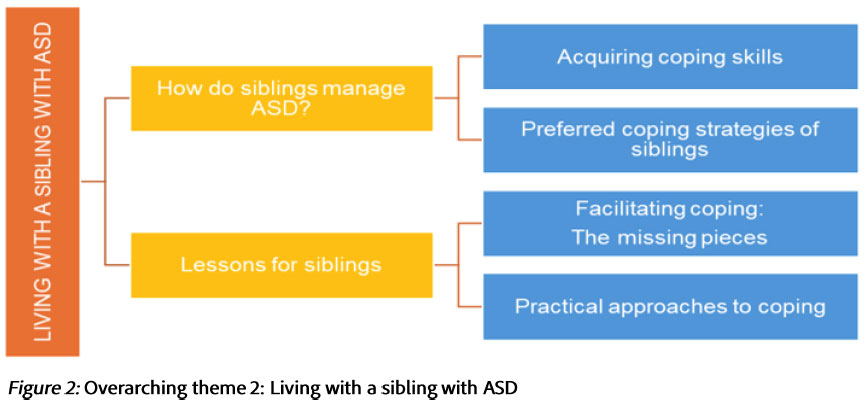
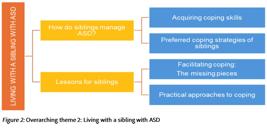
This overarching theme described coping with ASD. Two themes emerged from the main theme and four sub-themes emanated from these themes. The themes are outlined in Figure 2 (page 6).
Theme 1: How do siblings manage ASD?
This theme encompassed two sub-themes namely acquiring coping skills and preferred coping strategies of siblings.
Sub-theme 1.1: Acquiring coping skills
Siblings began accumulating information to understand and develop coping skills to mediate their experiences with ASD. Apart from parental guidance, all siblings beside the seven-year-old, gained information via internet searches and books. Sadly, siblings reported that professional guidance was limited, but trial and error and personal experience provided the greatest learning curve:
"I noticed that reacting to his bad behaviour badly (such as) shouting at him, we've learned to stop...find out what's going on around him that's stressful (and) to eliminate that"
(Anne, female, 29).
Strategies developed through experience as Bongani (male, 7), learned to remove himself from a situation as he reflected:
"I was thinking if that was a good idea. I should just step away from him when he gets a little angry and go and watch TV in the other room".
Consequently, siblings developed a repertoire of coping strategies, such as avoidance, private time, social support, distraction, and prayer through experience and acquisition of knowledge. Both genders made use of these strategies.
Sub-theme 1.2: Preferred coping strategies of siblings
Frequently used coping strategies were distraction and removing oneself from the home situation to manage frustrations:
"The peace and quiet in my bedroom helps me control myself"
(Natalie, female, 15).
This was a form of respite for siblings from the child with ASD. Bongani (male, 7), explained that:
"I watch some cartoons, it makes me feel happy",
to manage his emotions.
Distraction benefitted the sibling and redirected the child with ASD:
"If he's going to hit somebody or something, give him a game (and) he can sit and calm down"
(Ivan, male, 14).
Support from others was important to siblings. Talking allowed participants to vent and seek advice. Natalie (female, 15) felt that parental explanations about ASD facilitated understanding for the siblings:
"Explain every little thing that is happening to the person who has autism".
Finding strength in prayer and ignoring the child's behaviours were alternate ways of coping:
"We just keep quiet (and) he finally gets it that we not paying attention. Then he stops"
(Sophia, female, 13).
Theme 2: Lessons for siblings
This theme encompassed two sub-themes namely facilitating coping: the missing pieces and practical approaches to coping.
Sub-theme 2.1: Facilitating coping: the missing pieces
Siblings valued guidance and believed that information, skills training, and direction from professionals could improve their understanding. Sophia (female, 13) elaborated how learning was helpful:
"Learning activities (such as), how to treat him when he is angry, (how) to bond (and how) to calm him".
Most participants welcomed the idea of support groups to facilitate coping:
"What would have been nice was to meet other people, to chat with them and see how they cope"
(Anne, female, 29).
Siblings felt that creating awareness was important to change public perceptions and reduce stigma by facilitating understanding, tolerance, empathy, and promoting early identification:
"They (schools) don't know how to identify that there is something wrong and get proper help. That wastes a lot of time"
(Anne, female, 29).
Awareness will provide extended family support, thereby enhancing coping for families and siblings.
Some changes occurred naturally over time and improved daily experiences. Behavioural difficulties eased when the child with ASD began self-soothing, and outbursts decreased with maturity. Furthermore, siblings felt better equipped to handle situations as they gained more skills:
"He doesn't act out the way he used to. He has moments of extreme behaviour, but not that much, because we've learnt also how to deal with these behaviours"
(Anne, female, 29).
Sub-theme 2.2: Practical approaches to coping
Based on their experiences, siblings wanted to share knowledge about coping to facilitate positive experiences. They urged others to persevere, understand ASD through research, remain calm and accommodate the child with ASD. Understanding parental commitment to the child with ASD was important:
"They must not feel like all the attention is going to the sibling with autism. They just must see it as helping the child"
(Natalie, female, 15).
Siblings were urged to enhance communication and language by listening to and including the child with ASD and speaking clearly as language difficulties were present. Ivan (male, 14) elaborated:
"He doesn't say things normally, so you have to understand what he means".
This will facilitate reciprocal communication and strengthen sibling bonds. Keeping routines was important as Natalie (female, 15) stressed:
"I think it helps them (siblings) more than it helps the person with autism"
since routines moderated the quality of home life. The restructuring of family life and the commitment to the well-being of the child with ASD were important to facilitate coping.
DISCUSSION
This study provided insights from the siblings' perspectives about their lived realities with a child with ASD. International and national studies supported the findings that having a child with ASD was an arduous journey for families, laden with challenges related to accessing services, dealing with negative health professionals' behaviours, caregiver burden relating to the child with ASD, and stigma and cultural ideologies6,11,32,33,34. The stressors that evolved when managing a child with ASD had a direct impact on siblings' daily experiences.
Lived realities of siblings
The siblings lived realities included navigating the condition of ASD and the new adversities they experienced while drawing on the positives and developing a unique relationship with their sibling with ASD.
Siblings described a long and confusing diagnostic journey marked by misdiagnosis, financial strain and limited professional guidance. These experiences shaped early perceptions of ASD and echoed reports from other contexts where families struggle to access accurate information and supportive services. Cultural and religious attributions, for example, misbehaviour, discipline problems, or spiritual causes further complicated early meaning-making for siblings.
Siblings identified the severity and unpredictability of ASD-related behaviours, including meltdowns, aggression, overstimulation, and communication difficulties as major sources of family stress. These challenges shaped family routines, limited social participation and required constant vigilance.
Stigma emerged as another prominent stressor. Siblings described hurtful public reactions, accusations of poor discipline, and limited support from extended family. These experiences led some families to avoid outings entirely. The intensity of stigma reinforced siblings' calls for greater public awareness and understanding of ASD.
As siblings grew older and gained knowledge about ASD, acceptance increased. This shift from confusion to understanding mirrored a developmental pattern in which maturing siblings reinterpreted early experiences and developed a more nuanced view of ASD. In adolescence, this aligns with Erikson's stage of Identity vs Role Confusion, where adolescents begin to integrate their caregiving role into a broader sense of self, often questioning and redefining what responsibility means for them35. Moreover, as siblings' understanding improved with age, they considered the future of the child with ASD. Since mortality is unaffected by ASD7, these were valid concerns influencing future life choices of the neurotypical siblings, and underpinned their sense of responsibility towards the child with ASD. This obligation of care manifested in varying degrees, from meeting basic needs to managing outbursts and facilitating communication. Future concerns included functional independence, sexuality and adolescence. This was supported by previous studies which highlighted specific concerns around the siblings' change of role and responsibilities when the child with ASD was older7,34. The deep-seated responsibility felt by siblings may have resulted from prioritising the needs of the child with ASD, and was consistent with the literature that siblings were involved in all aspects of care, and strived to improve the quality of life of the child with ASD12.
Literature has highlighted positive6,13,34 and negative16 experiences relating to the journey of ASD. Siblings in this study focused more on the positive impact as they derived positive meaning from experiences and developed positive traits like empathy, resilience, patience, compassion, perseverance, motivation and being more mature than their peers. As the findings reflected, there were significant stressors, more especially in the early years, but siblings adjusted to their unique situations and focused on the positives as they became more adept at managing ASD.
The positive gains of the siblings correlated with acceptance, acquiring skills to manage the child with ASD, and enhancing the siblings' own coping skills. While siblings demonstrated love and concern for the child with ASD, they alluded to times of irritation and frustration. As with siblings in this study, previous research indicated that irritation resulted from behavioural challenges and the peculiarities of the child with ASD7,10.
Negative encounters did not impede the development of positive relationships between siblings, despite the additional limitations of interactions with the child with ASD. Studies have supported that there is a development of positive relationships between the typical siblings and their sibling with ASD10,17,34. Positive aspects of love, being involved in caregiving and being playmates with the child with ASD were expressed in this study and others17,34. The siblings considered the child with ASD as special and different, which manifested even in the youngest participant, who at seven years old overlooked the difficult behaviours of the child with ASD. This response is consistent with Erikson's stage of Industry vs Inferiority, during which school-aged children often express pride in being "helpful" or competent, making caregiving feel like a meaningful contribution to family life35. This characteristic and the notion of caring in younger siblings and the appreciation of the child with ASD being different has been a theme noted in ASD research7,16,36. Moreover, the focus on the child with ASD was established in families as they adapted to ASD37 and characterized the sibling relationships in this study as the needs of the child with ASD were prioritised. This correlated with past research that family life was governed by the presence of a child with ASD, and siblings were influenced by these experiences26.
Siblings coping with their lived realities
While living with a sibling with ASD, typically developing siblings developed coping mechanisms and learned lessons from the child with ASD.
A decline in the quality of life as perceived by siblings has been noted in literature38, however this study concurred with another study where siblings did not focus on their impaired quality of life, but rather on the child with ASD39. Despite the stressors noted, the siblings' quality of life was not viewed negatively, which may be attributed to the support they received from their parents and to their self-discovery of ASD. Better management skills on their part and easing of negative behaviours of the child with ASD permitted this positive view. To mediate the effects of the stressors, siblings developed a repertoire of coping skills. Parents directed these by providing access to counselling and information about the child with ASD. They were also directed by siblings who sought to assimilate information to help them understand and manage the child with ASD. Some developed skills through trial and error via daily experiences. These strategies were consistent with the national and international literature10,13 and in this study, the limited opportunities for professional support motivated the siblings to forge ahead and manage their realities.
Siblings utilised more problem-focused coping strategies directed at alleviating the stress. Information was crucial to coping, and the lack thereof was a prominent stressor in this study, prompting siblings to seek and gather information. Older siblings accessed information via the internet, and all valued their parental explanations, which alone sufficed for younger siblings. With maturity, siblings became self-seeking in their endeavours to gain knowledge about ASD. The information had a dichotomous function since it facilitated understanding and guided management of the child with ASD. Self-seeking behaviour reflects Erikson's idea that as individuals progress into adolescence and young adulthood they increasingly rely on autonomous problem-solving and internal motivation to define their roles, including their caregiving identity35. Previous studies acknowledged the importance of information to acquire skills and understand ASD16,40. The limited professional guidance prompted siblings to find their own means of coping with situations, a reflection of the siblings growing understanding of the child with ASD. Previous studies based on self-research6,38 concurred with the current study, where siblings' views were positively enhanced as their knowledge and coping skills increased. Trial and error, another problem focused strategy, was used to hone coping skills and siblings based this on their daily experiences. Even the youngest participant, at 7 years old, recognised strategies to manage behaviours of the child with ASD. It has been found that participants of the same age understood the behavioural, physical, and intellectual variations in the siblings with ASD9. The siblings resolved daily concerns through a problem-solving approach, much like Pavopoulou & Dimitriou33 found in their research.
All siblings in this study used emotion-focused techniques aimed at reducing emotional burdens. These included distraction for themselves and the child with ASD, respite from stressful situations and ignoring the problem behaviours7,10. The shared goal of managing the child with ASD strengthened family bonds in the current study, and positive adaptation was found to occur when families communicated, problem solved and supported each other4. The information gained directed sibling management of adverse behaviours, and as families developed, custom problem-focused coping strategies were evident. This confirmed the importance of family-based interventions with ASD to gain knowledge and skills to reduce stress and enhance the functioning of the child with ASD, as previously highlighted41.
All siblings cited behavioural challenges of the child with ASD as pervasive, a finding reflected in the literature7,11. Plausible explanations included disruptions of family life at home and in public, thus causing negative reactions, and the possibility of harm to the child with ASD or others. Furthermore, it dominated the social aspects of life as families sometimes restricted outings to mediate the ensuing stress. However, improvement over time was acknowledged by siblings, which concurred with international and local family42,43 and sibling studies6,40. In this study adaptation occurred naturally as the child with ASD matured and began self-soothing, and as siblings refined their coping skills which was also noted in Van der Merwe et al's cross-sectional survey where adolescent siblings completed the Lifespan Sibling Relationship Scale6. Siblings at this developmental stage possess higher cognitive ability which accounts for their adaptation to their experiences and positive acceptance6.
Poor reciprocal communication affected socialisation and relationships between siblings and the outside world. Siblings expressed dismay about the social exclusion of the child with ASD, stemming from decreased awareness and understanding of ASD by the public, noted previously by another study6. Sensitivities and triggers of the child with ASD further hindered social opportunities40 and resulted in structured home environments and regulating social outings. This problem-focused strategy of avoidance and structure aided in the management of the child with ASD, whilst serving as an emotion-focused strategy for siblings, which regulated their emotional responses. A quantitative study reported that routines enhanced family adaptation6 and in this study, routines assisted with mediating daily life stressors.
Professional support was deemed important to siblings in this study to facilitate positive daily interaction by addressing communication needs of the child with ASD and providing techniques to the family to facilitate communication. Siblings recognised the improvement in communication following school enrolment, justifying the importance of early identification to facilitate functioning. Despite limited reciprocity, siblings endeavoured to improve communication by stimulating skills and urged others to follow suit. Communication through nurturing interaction was advocated in other studies7. Sibling efforts with communication facilitated the positive relationships, and they felt that more input was needed to help families and the child with ASD manage these difficulties. Siblings felt that better communication will foster the sibling relationship. This supported the literature noting a positive relationship between verbal communication, sibling adjustment and the sibling bond8. This study found a yearning for deeper bonds between siblings and the child with ASD. The findings supported a previous study that alluded to feelings of grief and loss for the "typical" sibling relationship6. Nonetheless, siblings reported aspects of typical relationships8 and enjoyed activities with the child with ASD.
The current study acknowledged respite as a necessity, which was supported by previous studies7,35. Respite can take different forms and may be for short periods. Siblings admitted to withdrawing from a situation in this study, but opportunities for respite can include time away from the child with ASD, and particularly, time alone with parents. A means of achieving this will be to garner social support from extended family. In this study, such support was restricted because of the poor understanding of ASD. Previous studies acknowledged that social events were regulated with support from nuclear and extended families10,36, emphasizing the importance of family support to facilitate coping and family adaptation through awareness and tolerance. Therefore, creating public awareness will facilitate understanding of ASD, mediate stress on families, reduce stigma and offer respite as support becomes more accessible. Additionally, the child with ASD will have an opportunity to practice social skills with extended family10.
Awareness will cascade to influence positive change in other areas. Since awareness is thought to aid in the early identification of ASD, and it is acknowledged that early intervention will foster favourable outcomes43, the impact on family life will be tangible. Siblings recalled the stress of the diagnosis, particularly the role of educators and health professionals who did not recognise the characteristics of ASD. The need for awareness has been widely identified40 and will serve to accelerate diagnosis and thereby expedite management of the child with ASD and adaptation to the realities of ASD. Additionally, increased public awareness will afford the families social opportunities as tolerance and understanding are promoted.
Siblings believed that access to professional support and intervention was essential to facilitate skills training and provide support for the family. This assertion has been supported by previous studies35,37. Intervention will foster positive experiences and increase the family's quality of life40. Siblings' coping was a result of assimilating information and trialing techniques. They reported a lack of guidance to identify appropriate techniques, a process that can be expedited with professional support. Guidance through professional support will further serve to reduce the initial difficulties when the ASD diagnosis was introduced. Siblings expressed the need to talk to others to learn and share techniques via support groups and to have access to information. Similar studies advocated for support groups7,8. A recent study concluded that training of siblings empowered them to enable the child with ASD45 with necessary skills and manage behaviours, which resulted in positive adaptation. Empowering and enabling a sibling will have positive effects on the family's quality of life, on the child with ASD and enhance coping and adaptation for the sibling. Professionals must be cognisant of their important roles to support family's coping and support needs and should update their own skills to provide holistic services for the family. Increased professional support was stressed in the literature10,42 and siblings considered this a missing link in their experiences with ASD.
The coping strategies highlighted in the discussion seemed effective for siblings and should be noted for intervention programmes as similar strategies were cited in the literature7,10,37. Professionals should be aware of these strategies to enhance practical skills for positive adaptation. Intervention should influence siblings' coping skills with support and skills training. Whilst sibling approaches to coping should include general aspects such as stress management, specific approaches aimed at ASD, and self-care of the siblings must be included. The lifelong manifestation of ASD and the involvement of the siblings is worth considering in an integrated approach. Practical considerations such as finances and care after the parents' demise are issues that will form part of a holistic approach to intervention.
In this study, siblings were self-driven to understand ASD, which evoked positive lived realities from having a child with ASD, albeit acknowledging adversity and challenges as part of the journey.
Limitations
The study posed several limitations. These included conducting the study in an urban town setting and excluding information from rural contexts. Sibling adjustment and distress were not considered in relation to the severity of the ASD symptoms. Siblings who participated in this study did not receive professional counselling. This was an important perspective to identify the types of support beneficial to siblings, which would have allowed comparison between different types of interventions.
Recommendations
The recommendations, therefore, include future research that addresses these limitations to provide comprehensive information relevant to the South African context and to guide intervention. Future studies should include a more culturally diverse population, with data collected from more than one sibling in a household for a holistic perspective. Research aimed at understanding the experiences of specific age groups is warranted to provide specialised intervention that considers the unique characteristics of the sibling and their developmental stage.
CONCLUSION
Siblings faced with ASD coped with difficulties like challenging behaviours, communication difficulties, limited time with parents, and resource limitations regarding support and skill acquisition. Nonetheless, siblings adapted to these challenges by developing coping strategies that augmented their quality of life. Siblings were self-driven to understand ASD, thereby improving their coping strategies and management of the child with ASD. They expressed the need for awareness to mediate experiences for families by altering public perceptions of ASD, and to access appropriate professional support. Their quality of life was enhanced with support, professional services, and skills training4. Moreover, support groups and counselling were deemed valuable for siblings and families.
Conflicts of interest
None to declare.
Author contributions
All listed authors conceptualised the study and contributed to the development of the methodology. Gwen Reddy conducted the data collection and analysis under supervision, drafted the original manuscript, and completed subsequent revisions. Deborah Leigh Fewster and Thavanesi Gurayah supervised the study, provided oversight during data collection and analysis, and contributed to the review and editing of the manuscript. All authors approved the final version of the manuscript.
Acknowledgements
The authors would like to express their sincere gratitude to all the participants who generously gave their time and shared their experiences to make this study possible. Their valuable contributions are greatly appreciated.
REFERENCES
-
1. Becerra MA. Closing the diagnostic gap: early autism spectrum disorder screening for every child. Health Soc Work. 2022 May 1;47(2):87-91. https://doi.org/10.1093/hsw/hlac008
» https://doi.org/10.1093/hsw/hlac008 -
2. Adams SN. The unmasking of autism in South Africa and Nigeria. Neuropsychiatr Dis Treat. 2024 May 8;20:947-55. https://doi.org/10.2147/ndt.s461650
» https://doi.org/10.2147/ndt.s461650 -
3. Hodges H, Fealko C, Soares N. Autism spectrum disorder: definition, epidemiology, causes, and clinical evaluation. Transl Pediatr. 2020 Feb;9(Suppl 1):S55-65. https://doi.org/10.21037/tp.2019.09.09
» https://doi.org/10.21037/tp.2019.09.09 -
4. Schlebusch L, Dada S, Samuels AE. Family quality of life of South African families raising children with autism spectrum disorder. J Autism Dev Disord. 2017 Jul;47(7):1966-77. https://doi.org/10.1007/s10803-017-3102-8
» https://doi.org/10.1007/s10803-017-3102-8 -
5. Macedo Costa T, Pereira AP. The child with autism spectrum disorder: The perceptions of siblings. Support Learn. 2019 May;34(2):193-210. https://doi.org/10.1111/1467-9604.12248
» https://doi.org/10.1111/1467-9604.12248 -
6. Van der Merwe C, Bornman J, Donohue D, Harty M. The attitudes of typically developing adolescents towards their sibling with autism spectrum disorder. S Afr J Commun Disord. 2017 Jan 1;64(1):1-7. https://doi.org/10.4102/sajcd.v64i1.184
» https://doi.org/10.4102/sajcd.v64i1.184 - 7. Solarsh HM. Problem and adaptive behavior levels in children with autism spectrum disorders as predictors of sibling adjustment [dissertation]. New York: City University of New York; 2016.
-
8. Neubauer BE, Witkop CT, Varpio L. How phenomenology can help us learn from the experiences of others. Perspect Med Educ. 2019 Apr;8(2):90-7. https://doi.org/10.1007/s40037-019-0509-2
» https://doi.org/10.1007/s40037-019-0509-2 -
9. Calleja C, Agius MR. Living with a sibling who is on the autism spectrum: The siblings' perspective. Br J Healthc Med Res. 2025;12(2):213-28. https://doi.org/10.14738/bjhr.1202.18469
» https://doi.org/10.14738/bjhr.1202.18469 -
10. Leane M. Siblings caring for siblings with intellectual disabilities: naming and negotiating emotional tensions. Soc Sci Med. 2019 Jun 1;230:264-70. https://doi.org/10.1016/j.socscimed.2019.04.022
» https://doi.org/10.1016/j.socscimed.2019.04.022 -
11. Mokoena N, Kern A. Experiences of siblings to children with autism spectrum disorder. Front Psychiatry. 2022;13:959117. https://doi.org/10.3389/fpsyt.2022.959117
» https://doi.org/10.3389/fpsyt.2022.959117 -
12. Gorjy RS, Fielding A, Falkmer M. "It's better than it used to be": Perspectives of adolescent siblings of children with an autism spectrum condition. Child Fam Soc Work. 2017 Nov;22(4):1488-96. https://doi.org/10.1111/cfs.12371
» https://doi.org/10.1111/cfs.12371 -
13. Watson L, Hanna P, Jones CJ. A systematic review of the experience of being a sibling of a child with an autism spectrum disorder. Clin Child Psychol Psychiatry. 2021 Jul;26(3):734-49. https://doi.org/10.1177/13591045211007921
» https://doi.org/10.1177/13591045211007921 - 14. Sharma E, Srivastava A. A qualitative study on lived experience of sibling adjustment in families with a child diagnosed with autism spectrum disorder. Int J Indian Psychol. 2025;13(3):2912-26.
-
15. Edery C, Harvey C. Narratives of siblinghood: exploring perspectives of adult siblings of autistic individuals. Disabil Soc. 2025;40(10):2730-56. https://doi.org/10.1080/09687599.2025.2455091
» https://doi.org/10.1080/09687599.2025.2455091 -
16. Jones EA, Fiani T, Stewart JL, Sheikh R, Neil N, Fienup DM. When one sibling has autism: Adjustment and sibling relationship. J Child Fam Stud. 2019 May 1;28(5):1272-82. https://doi.org/10.1007/s10826-019-01374-z
» https://doi.org/10.1007/s10826-019-01374-z -
17. Losada-Puente L, Baña M, Asorey MJ. Family quality of life and autism spectrum disorder: Comparative diagnosis of needs and impact on family life. Res Dev Disabil. 2022 May 1;124:104211. https://doi.org/10.1016/j.ridd.2022.104211
» https://doi.org/10.1016/j.ridd.2022.104211 -
18. Siegle D. Research ethics and informed consent. Educational Research Basics by Del Siegle [Internet]. 2019 [cited 2026 Apr 7]. Available from: https://researchbasics.education.uconn.edu/ethics-and-informed-consent/
» https://researchbasics.education.uconn.edu/ethics-and-informed-consent/ - 19. McKenna H. Nursing theories and models. London: Routledge; 2005.
-
20. Thanh NC, Thi T, Thanh L. The interconnection between interpretivist paradigm and qualitative methods in education. Am J Educ Sci. 2015;1(2):24-7. http://files.aiscience.org/journal/article/html/70380008.html
» http://files.aiscience.org/journal/article/html/70380008.html - 21. Kim B. Social constructivism. In: Orey M, editor. Emerging perspectives on learning, teaching, and technology. Bloomington: Association for Educational Communications and Technology; 2001.
-
22. Van Teijlingen E, Hundley V. The importance of pilot studies. Nurs Stand. 2002;16(40):33-6. https://doi.org/10.7748/ns2002.06.16.40.33.c3214
» https://doi.org/10.7748/ns2002.06.16.40.33.c3214 - 23. Janghorban R, Latifnejad Roudsari R, Taghipour A. Pilot study in qualitative research: The roles and values. J Hayat. 2014;19(4):1-5.
-
24. Leon AC, Davis LL, Kraemer HC. The role and interpretation of pilot studies in clinical research. J Psychiatr Res. 2012;45(5):626-9. https://doi.org/10.1016/j.jpsychires.2010.10.008
» https://doi.org/10.1016/j.jpsychires.2010.10.008 -
25. Thabane L, Ma J, Chu R, Cheng J, Ismaila A, Rios LP, et al. A tutorial on pilot studies: the what, why and how. BMC Med Res Methodol. 2010;10:67. https://doi.org/10.1186/1471-2288-10-67
» https://doi.org/10.1186/1471-2288-10-67 -
26. Factor RS, Ollendick TH, Cooper LD, Dunsmore JC, Rea HM, Scarpa A. All in the family: a systematic review of the effect of caregiver-administered autism spectrum disorder interventions on family functioning and relationships. Clin Child Fam Psychol Rev. 2019 Dec;22(4):433-57. https://doi.org/10.1007/s10567-019-00297-x
» https://doi.org/10.1007/s10567-019-00297-x - 27. Braun V, Clarke V. Thematic analysis. Washington (DC): American Psychological Association; 2012.
-
28. Coser A, Sullivan M, Espeleta H. Beyond the nuclear family: a qualitative examination of extended family involvement among American Indian families. J Fam Strengths. 2020;20(2):3. https://doi.org/10.58464/2168-670X.1425
» https://doi.org/10.58464/2168-670X.1425 -
29. Gobrial E. The lived experiences of mothers of children with the autism spectrum disorders in Egypt. Soc Sci. 2018 Aug 12;7(8):133. https://doi.org/10.3390/socsci7080133
» https://doi.org/10.3390/socsci7080133 -
30. Nowell LS, Norris JM, White DE, Moules NJ. Thematic analysis: striving to meet the trustworthiness criteria. Int J Qual Methods. 2017;16(1):1609406917733847. https://doi.org/10.1177/1609406917733847
» https://doi.org/10.1177/1609406917733847 -
31. Itzik L, Walsh SD. Giving them a choice: qualitative research participants' chosen pseudonyms as a reflection of self-identity. J Cross Cult Psychol. 2023 Sep;54(6-7):705-21. https://doi.org/10.1177/00220221231193146
» https://doi.org/10.1177/00220221231193146 -
32. Ezzat O, Bayoumi M, Samarkandi OA. Quality of life and subjective burden on family caregiver of children with autism. Am J Nurs Sci. 2017;6(1):33-9. https://doi.org/10.11648/j.ajns.20170601.15
» https://doi.org/10.11648/j.ajns.20170601.15 -
33. Pavopoulou G, Dimitriou D. 'I don't live with autism; I live with my sister'. Sisters' accounts on growing up with their preverbal autistic siblings. Res Dev Disabil. 2019 May 1;88:1-5. https://doi.org/10.1016/j.ridd.2019.01.013
» https://doi.org/10.1016/j.ridd.2019.01.013 -
34. Kovshoff H, Cebula K, Tsai HW, Hastings RP. Siblings of children with autism: the siblings embedded systems framework. Curr Dev Disord Rep. 2017 Jun;4(2):37-45. https://doi.org/10.1007/s40474-017-0110-5
» https://doi.org/10.1007/s40474-017-0110-5 - 35. Santrock JW. Life-span development. 17th ed. New York: McGraw-Hill; 2019.
-
36. Fewster DL. A qualitative study to understand the experiences and coping processes of primary caregivers of children with autism spectrum disorder [master's thesis]. Durban: University of KwaZulu-Natal; 2014. https://researchspace.ukzn.ac.za/items/91907c81-2243-41f1-990f-bd6d6c052636
» https://researchspace.ukzn.ac.za/items/91907c81-2243-41f1-990f-bd6d6c052636 -
37. Lazarus RS. Coping theory and research: past, present, and future. Psychosom Med. 1993;55(3):234-47. https://doi.org/10.1097/00006842-199305000-00002
» https://doi.org/10.1097/00006842-199305000-00002 -
38. Ben-Itzchak E, Zachor DA. Toddlers to teenagers: long-term follow-up study of outcomes in autism spectrum disorder. Autism. 2020 Jan;24(1):41-50. https://doi.org/10.1177/1362361319840226
» https://doi.org/10.1177/1362361319840226 -
39. Hantman RM, Johnston EB, Tager-Flusberg H. Parental perspectives: how sensory sensitivities impact the transition to adulthood in adolescents and young adults with autism spectrum disorder. J Autism Dev Disord. 2024 Feb;54(2):544-62. https://doi.org/10.1007/s10803-022-05815-5
» https://doi.org/10.1007/s10803-022-05815-5 -
40. Carvalho MJ. Living with a sibling who has autism spectrum disorder [dissertation]. Sudbury (ON): Laurentian University of Sudbury; 2017. https://laurentian.scholaris.ca/items/a6753006-e981-4f70-863d-689c200b4dc3
» https://laurentian.scholaris.ca/items/a6753006-e981-4f70-863d-689c200b4dc3 -
41. Golden K. Sibling experiences with autism spectrum disorder and ambiguous loss: a hermeneutic phenomenological analysis [dissertation]. San Antonio (TX): St. Mary's University; 2023. https://commons.stmarytx.edu/cgi/viewcontent.cgi?article=1076&context=dissertations
» https://commons.stmarytx.edu/cgi/viewcontent.cgi?article=1076&context=dissertations -
42. Bene K, Lapina A. A meta-analysis of sibling-mediated intervention for brothers and sisters who have autism spectrum disorder. Rev J Autism Dev Disord. 2021 Jun;8(2):186-94. https://doi.org/10.1007/s40489-020-00212-z
» https://doi.org/10.1007/s40489-020-00212-z -
43. Nguyen L, Bootsma J, Ketelaar M, Di Rezze B, Jack SM, Gorter JW. Programs to prepare siblings for future roles to support their brother or sister with a neurodevelopmental disability: a scoping review. Curr Dev Disord Rep. 2023 Mar;10(1):47-79. https://doi.org/10.1007/s40474-023-00272-w
» https://doi.org/10.1007/s40474-023-00272-w

Reviewed (Round 1): 14 November 2025
Revised: 16 December 2025
Reviewed (Round 2): 23 February 2026
Revised: 7 April 2026
Accepted: 6 June 2026
First Online:
EDITOR: Annelize Kruger https://orcid.org/0000-0002-7947-2929
DATA AVAILABILITY: Data available from the corresponding author for 10 years post-publication (until 2036).
FUNDING: None to declare.