A review of occupational therapy services within an acute public tertiary hospital in KwaZulu-Natal, South Africa
Abstract
INTRODUCTION: The provision of occupational therapy services in providing a minimum essential service in public health institutions in South Africa are currently guided by a quality control measure by the National Department of Health. AIM: To review the occupational therapy services in an acute, public tertiary hospital from 2015-2019 and to compare this with the expectations of these services in a tertiary hospital to identify potential gaps in service delivery. METHOD: A single site, retrospective quantitative audit from 2015-2019 was completed at one tertiary hospital. Patient-related and occupational therapy service data were included. 18579 patient entries were captured. The analysis included descriptive and inferential statistics of mean, standard deviations, frequency tables, percentages, and ANOVA. RESULTS: Findings indicated a consistent decline in the mean values of, the number of therapists attending to patients, number of patients, assistive devices issued, total time of patient units and consultations, total time spent on ward rounds, clinics, and meeting attendance. The number of student therapists attending to patients, splints, pressure garments and issued wheelchairs showed an increase in trend across the reviewed years. CONCLUSION: Inadequate human resources and budget systems are potential gaps in occupational therapy service delivery in an acute public tertiary hospital.
quantitative audit; patient-related and occupational therapy service data; assistive devices; total time on consultations; ward rounds; clinics and meeting attendance
INTRODUCTION
The provision of occupational therapy services in public health institutions in South Africa is currently guided by the National Core Standards, which is a quality control measure implemented by the National Department of Health (NDOH)123
In South Africa, the restructuring of the health system in South Africa is anticipated through the impending introduction of a National Health Insurance Scheme (NHI) aims to include access to quality healthcare whilst minimising financial risk. Documenting a comprehensive situational analysis of service delivery will provide evidence on providing appropriate quality and quantity of occupational therapy services in line with the standards set by national health programmes4
The Occupational Therapy Practice Framework IV (OTPF): domain and process555
The South African Health Care System
South Africa has an estimated population of 54956900789
Due to the two-tiered private-public contrast in healthcare delivery and the healthcare staffing crises, access to quality and adequate occupational therapy services are limitations confounding persons with disabilities (PWD) living in South Africa10311
Rehabilitation Services
Access to appropriate rehabilitation services influences the possibility of and the ability of PWD to lead an economically independent life and actively participate in society12131314
Access to appropriate and affordable assistive devices and technology (mobility, communication, and daily living) which allow PWD to participate equally in society are also evident within the KZN public health system. These challenges are associated with constrained budgets, poor access, ineffective referral systems and poor knowledge of the prescription and issuing of assistive devices and technology1412
Occupational therapy in tertiary hospitals
Occupational therapy has been noted as the only spending category that has been shown to reduce hospital re-admissions1516171414
A skill set for acute, tertiary care is crucial for successful tertiary occupational therapy services. Currently, in South Africa, there are no documented skills and knowledge sets to define the role of occupational therapy in an acute, tertiary hospital. Furthermore, there are no speciality areas in occupational therapy recognised by the Health Professionals Council of South Africa (HPCSA), which are viewed as vital for tertiary care. Skills such as clinical reasoning, lateral thinking, time management, and further experience and support from senior therapists with specialised skills are also critical for rehabilitation services in an acute, tertiary hospital18
Occupational therapy services in the designated acute public tertiary hospital
Human Resources
Disparities in occupational therapy human resource distribution negatively impact rehabilitation service provision and equitable health and rehabilitation outcomes192014
Budget Systems
Budget restrictions influenced by medical inflation and exchange rate fluctuation cascade through all levels of service delivery2122
METHODS
This study involved a retrospective occupational therapy file audit over five years at a single site.
Setting
The location of the study is a public, acute tertiary hospital within Pietermaritzburg, uMgungundlovu district. This hospital is a referral hospital offering tertiary services to Area Two of KZN, which comprises the Western half of KZN. It includes the following five health districts: Harry Gwala, Amajuba, uMgungundlovu, uThukela, uMzinyathi, with a total population of 4.5 million623
Sampling
All hard-copy statistical data forms over five years (2015-2019) from the occupational therapy department were included in the sample. Patient-related data and occupational therapy service data were reviewed. Outreach clinic statistics were excluded due to the single occasional outreach service, which did not directly affect the study site. The years 2015 to 2019 were selected as statistical data forms were deficient in significant variables before 2015. The year 2020 was excluded due to the effects of the COVID-19 pandemic.
Data Collection, Analysis, and Data Management
A phased approach was used in the overall management of data. The duration of data collection was approximately four months. Collated documents such as hard-copy statistical forms (inpatient, outpatient, monthly summary sheets) and hard-copy wheelchair records were reviewed. These documents were stored within the occupational therapy department and were accessible to the research team. A diagnostic profile category list was compiled with various specialities of surgical, medical, orthopaedics, paediatrics, and oncology; this list included several other diagnostic profiles that were inclusive of the above specialities. The principal author captured all the data and was acquainted with the numerical key-value system and diagnostic profile sub-category list. Workbooks were compiled for patient-related and occupational therapy service data using SPSS version 21 software24Phase 1: Patient data were aggregated using SPSS software. Patient details such as hospital number, age, gender, patient status (in-patient or out-patient), patient demographics, sub-specialities and diagnostic profile categories, month visited, base hospital and district, were captured. A categorised diagnostic profile list was developed against the primary diagnoses into surgical, medical, orthopaedics, paediatrics and oncology. These variables were further analysed with descriptive statistics of mean, standard deviation, range, frequencies, and percentages.
Phase 2: Service data of occupational therapists were aggregated as cases per year from 2015 to 2019 and matched accordingly with the variables of (i) time spent on patients, meetings, and ward rounds, (ii) number of patient consults and (iii) intervention rendered with regards to splints, pressure garments, wheelchairs, and assistive devices and technology.
Analysis also included mean values, standard deviation, and minimum and maximum values on a yearly basis. The statistical differences in the means of patient-related data and occupational therapy service data were evaluated using one-way analysis of variance (ANOVA) throughout the five years of the review with the significance level set at p<0.05.
Ethical Considerations
Ethical approval was obtained from the University of KwaZulu-Natal (UKZN) Humanities and Social Sciences Research Ethics Committee HSSREC/00002364/2021. Ethical
clearance was also obtained from the Department of Health (National Health Research and Knowledge Management) NHRD Ref. KZ_202006_033 to allow access to the public acute tertiary hospital. Informed consent was obtained from the chief executive officer of the hospital and the assistant director of the occupational therapy department.
Reliability and Validity
This study's reliability and validity were ensured by having a single user (principal author) input the data according to allocated numerical coding on the SPSS system software. Having one individual input the data ensured that data collection was formed from the same set of data sources, thereby ensuring consistency, reliability, and validity of data collection25
RESULTS
A total of 18579 consecutive patient documentations occurring during 01 January 2015 and 31 December 2019 were reviewed. Of these 43.4% (n=8069) were out-patient consultations and 56.5% (n=10503) were in-patient occupational therapy treatment sessions.
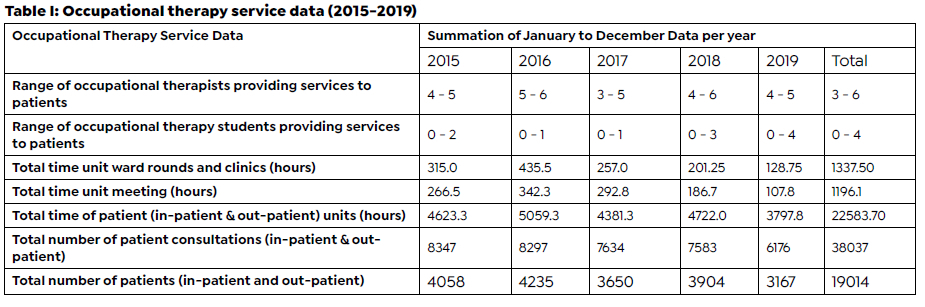
Human resources: The range of occupational therapists providing services to patients at one point in time was between three to six occupational therapists and zero to four occupational therapy students (Table I, page 19). Patient care: Patient population consisted of in-patients and out-patients. Monthly, an average of 316 patients received occupational therapy services, an average of 180 in-patients and 136 out-patients. Statistics indicate an increase in patient units in 2016 and 2018, while those from 2015 and 2016 indicated an increase in patient consults (inpatients and outpatients) (Table I, above).
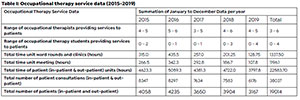
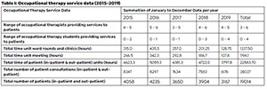
Occupational therapy service data: Statistics indicate a steady decline in time spent on ward rounds, clinics, and meetings since 2017 (Table I, above).
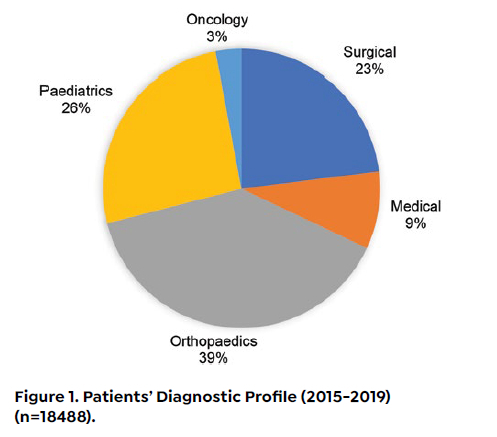
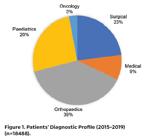
Patient Diagnostic Profile: Of patients were referred, diagnostic data for 18488 was captured and 39.2% were found to have orthopaedic conditions such as upper limb fracture, spinal conditions, tendon, nerve injuries, hand sepsis, brachial plexus injuries, hands not otherwise specified (NOS), upper limb amputations and orthopaedic NOS. Over a quarter (26.2%) of patients were paediatric, with paediatric neurology NOS, prematurity, and cerebral palsy (CP) being the most common diagnosis. Surgical patients constituted 22.5% of the patient profile, with most referrals from plastics and reconstruction and burns units. Medical patients (9.3%) included cerebrovascular accidents (CVA), neurological conditions NOS and medical conditions NOS being the most common. A small percentage (2.7%) of the patient profile was oncology (See Figure 1, adjacent). The highest percentage of patients were from Northdale hospital (NDH) (14.9%), Edendale hospital (EDH) (3.2%), Church of Scotland hospital (COSH) (4.1%) and Greytown hospital (2.7%) respectively, and the health districts with the highest percentage of referrals include uMgungundlovu (19.4%), uMzinyathi (7.9%) and uThukela (4%) (Figure 1, adjacent).
Orthoses and Assistive devices and Technology
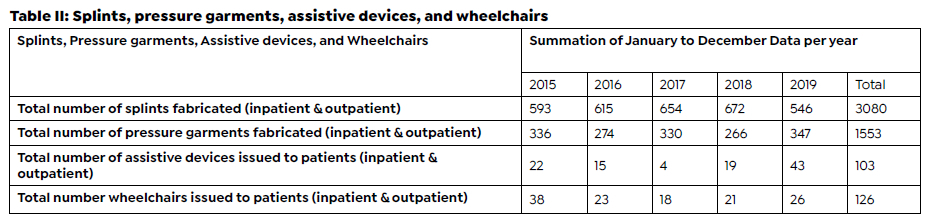
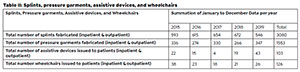
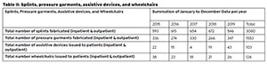
The results demonstrate a steady incline in the yearly average of splints fabricated (3080), wheelchairs issued (110), pressure garments fabricated (1553), with a steady decline of assistive devices issued (119) for the period 2015 to 2019 (Table II, above).
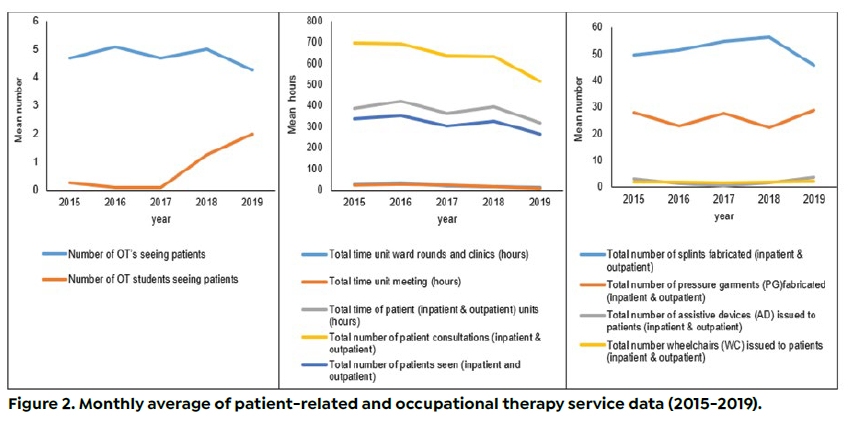
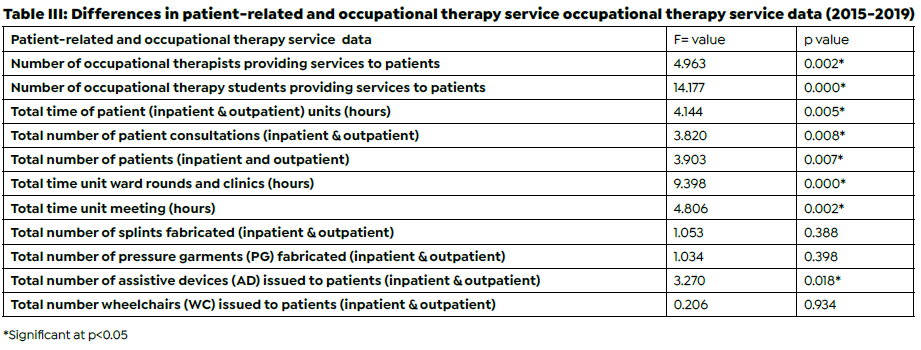
During this review, a comparison between patient-related and occupational therapy service data was made to identify trends for the five years under review (Table III, page 20). The analysis reveals statistically significant differences in the number of occupational therapists providing services to patients, the yearly number of student therapists attending to patients, the number of patients, total time of patient units and consultations, total time spent on ward rounds, clinics and meeting attendance and the total number of assistive devices issued. However, fabricated splints, pressure garments, and issued wheelchairs were not statistically significant across the reviewed years.
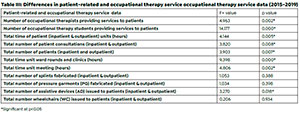
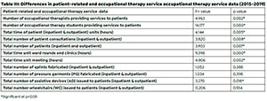
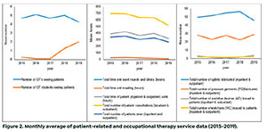
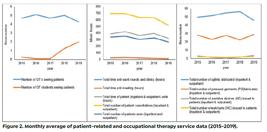
A cursory review of the yearly trends of the variables and further analysis revealed a consistent decline in the mean values of these variables from 2015 to 2019 except for variables such as the number of occupational therapy students, the number of splints, pressure garments fabricated, and wheelchairs issued. These variables portrayed an increasing yearly trend in their mean values in Figure 2, above
DISCUSSION AND IMPLICATIONS
This study reviewed the trends of services rendered by one occupational therapy department situated in a public, acute tertiary hospital in KZN and determined the potential gaps in service delivery. The implications from this study will guide the operational plans and services of the occupational therapy department at this public, acute tertiary hospital.
In terms of human resources, the occupational therapy services in KZN are widely spread, with the recommendation being one occupational therapist to 10000 head popula-tion2627
Although the United Nations Convention for Person(s) with Disabilities (UNCRPD) (2006) outlined the necessity to meet global needs for Person(s) with Disabilities, with challenges being the inequitable distribution of rehabilitation workers281314
In terms of patient care (units and consults), a recommended service ratio ranges from one occupational therapist to 100 patients29
Concerning occupational therapy service data, administrative tasks, clinical tasks, and ward rounds are pivotal in hospital-based care, enhancing the quality of care, improving communication; patient care and strengthening multi-professional training305
Considering orthoses, assistive devices, and technology, splinting maintains mobility, prevents the development of contractures, promotes the functionality of the limb, and assists with good cosmetic and functional results31325
In terms of the patient diagnostic profile, occupational therapists are involved in rehabilitation programmes for orthopaedic, medical, neurological, and paediatric patients. Services range from provision of splinting, pressure therapy, activities of daily living (ADLs), training of activities mobilisation programmes, vocational rehabilitation, therapy and education, leisure management, home visits and adaptation of home environments335
With reference to the specific diagnostic intervention, the following findings prevail:
• Occupational therapy role in Orthopaedics focuses on community resettlement, splinting and independence in ADLs34
• Occupational therapy intervention for Paediatrics promotes engagement and participation in daily life roles35
• The role of occupational therapy in Surgical involves rehabilitation, oedema management, prevention of contractures and deformities through splinting, mobilisation, scar management and ADLs31
• Occupational therapy in Medical is an imperative field of practice; neurological conditions affect performance in ADLs. Occupational therapy attempts to diminish or compensate for cognitive, perceptual, or motor deficiencies36
• Occupational therapy in Oncology is centred around supportive care and includes ADLs, lymphoedema, strength, range of motion, cognitive and perceptual intervention, pain management and palliative care376
The recommendations from this study include, policy and protocol review and implementation to guide the specific services within an acute public tertiary hospital, a further diagnostic classification category system to guide specific diagnostic profile categories, departmental influence to ensure proper documentation of statistics and further studies occupational therapy best practice guidelines that are contextually appropriate to various healthcare institutions.
Limitations of the study
Hard copies of statistical forms were consulted thus, illegible handwriting influenced data collection. Several statistical entries were incomplete for demographics, gender, and diagnostic profile categories, therefore, influencing patient-related data. Furthermore, wheelchair statistics were incorrectly recorded on the statistical forms, thus influencing assistive devices and technology data. Not all diagnostic profile categories have been included in the diagnostic profile list thus limiting and containing the diagnostic profile category for this study.
CONCLUSION
Challenges facing the healthcare system in South Africa are unequal distribution of resources, and slow progress in restructuring the healthcare system, including strategies adopted by the government to improve the quality of healthcare delivery275
Author contributions
Prashika Ghela completed this study towards a master's degree in occupational therapy degree and was responsible for the conceptualisation of the study, data collection, analysis and drafting of the original manuscript. Pragashnie Govender and Michael Olgunlana were supervisors of the study and guided the process from conceptualisation and design of the study to drafting and revision of the manuscript. All authors approved the manuscript for publication.
Conflicts of interests
The authors have no conflicts of interests to declare.
REFERENCES
LITERATURE REVIEW
- 1. Department of National Health. National Health Insurance in South Africa: A Policy. Pretoria, SA. 2011.
- 2. Whittaker S, Shaw C, Spieker N, Linegar A. Quality Standards for Health Care Establishments in South Africa. SAHR. 2011.
- 3. Robinson H, Annali Botha B. Quality management in Occupational Therapy. South African Journal of Occupational Therapy. 2013 Dec; 43(3).
- 4. Nyoni J, Gbary A, Awases M, Ndecki P, Chatora R. Policies and Plans for human resources for health, Guideline for countries in the WHO African Region. Brazzaville. 2006.
-
5. Occupational Therapy Practice Framework: Domain and Process-Fourth Edition. The American Journal of Occupational Therapy 2020 Aug 1;74(Supplement_2):7412410010p1-7412410010p87. https://doi.org/10.5014/ajot.2020.74s2001
» https://doi.org/10.5014/ajot.2020.74s2001 -
6. KwaZulu-Natal department of health. Facility specific. 2014.http://www.kznhealth.gov.za/greyshospital.htm
» http://www.kznhealth.gov.za/greyshospital.htm -
7. Statistics South Africa. Mid-year population estimates. Pretoria. 2015. www.statssa.gov.za/publications/P0302/P03022015.pdf
» www.statssa.gov.za/publications/P0302/P03022015.pdf - 8. Cullinan K. Health services in South Africa: A basic introduction. Health e-News. Health Journalism. 2006.
-
9. Naidoo S. The South African national health insurance: a revolution in healthcare delivery! Journal of Public Health; 2012 Feb 23;34(1):149-50. https://doi.org/10.1093/pubmed/fds008
» https://doi.org/10.1093/pubmed/fds008 -
10. Jejelaye A, Maseko L, Franzsen D. Occupational therapy services and perception of integration of these at Primary Healthcare Level in South Africa. South African Journal of Occupational Therapy; 2019;49(3):46-53 https://dx.doi.org/10.17159/2310-3833/2019/vol49n3a8
» https://dx.doi.org/10.17159/2310-3833/2019/vol49n3a8 -
11. Office of health standards compliance, annual performance plan. 2020 https://static.pmg.org.za/Office_of_Health_Stan-dards_Ccompliance_APP_2020_-_2021_1.pdf
» https://static.pmg.org.za/Office_of_Health_Stan-dards_Ccompliance_APP_2020_-_2021_1.pdf -
12. Department of National Health. Integrated National Disability Strategy. Pretoria. 1997. https://www.gov.za/sites/default/files/gcis_document/201409/disability2.pdf
» https://www.gov.za/sites/default/files/gcis_document/201409/disability2.pdf -
13. Department of National Health. Framework for Disability and Rehabilitation. [final draft] Pretoria. 2015. https://www.google.com/search?q=13.%09Department+of+National+Health.+Framework+for+Disability+and+Rehabilitat ion&client=firefox-b-d&ei=e6dOY8O6GpaI8gLSoICICQ&ved =0ahUKEwiD5MzY7un6AhUWhFwKHVIQAJEQ4dUDCA4&uac t=5&oq=13.%09Department+of+National+Health.+Framewor k+for+Disability+and+Rehabilitation&gs_lcp=Cgdnd3Mtd2l6-EAM6CggAEEcQ1gQQsAM6DQgAEOQCENYEELADGAFKBA hNGAFKBAhBGABKBAhGGAFQiyBYiyBg_S1oA3ABeACAAY-sCiAGLAplBAzltMZgBAKABAqABAcgBDcABAdoBBggBE-AEYCQ&sclient=gws-wiz
» https://www.google.com/search?q=13.%09Department+of+National+Health.+Framework+for+Disability+and+Rehabilitat ion& client=firefox-b-d& ei=e6dOY8O6GpaI8gLSoICICQ& ved =0ahUKEwiD5MzY7un6AhUWhFwKHVIQAJEQ4dUDCA4& uac t=5& oq=13.%09Department+of+National+Health.+Framewor k+for+Disability+and+Rehabilitation& gs_lcp=Cgdnd3Mtd2l6-EAM6CggAEEcQ1gQQsAM6DQgAEOQCENYEELADGAFKBA hNGAFKBAhBGABKBAhGGAFQiyBYiyBg_S1oA3ABeACAAY-sCiAGLAplBAzltMZgBAKABAqABAcgBDcABAdoBBggBE-AEYCQ& sclient=gws-wiz - 14. KZN Occupational Therapy Forum. KZN Occupational Therapy Report. KZN. 2019.
-
15. Rogers AT, Bai G, Lavin RA, Anderson GF. Higher Hospital Spending on Occupational Therapy Is Associated With Lower Readmission Rates. Medical Care Research and Review 2016 Sep 2;74(6):668-86. https://doi.org/10.1177/1077558716666981
» https://doi.org/10.1177/1077558716666981 -
16. College of Occupational Therapists. Reducing the pressure on hospitals, a report on the value of Occupational Therapy in England. 2016 College of Occupational Therapists. London. https://www.rcot.co.uk/file/3209/download?token=Q6kpX7Jp
» https://www.rcot.co.uk/file/3209/download?token=Q6kpX7Jp - 17. Blandford M. Occupational therapists and patient flow: important contributions and opportunities to make a difference. Occupational Therapy Now Journal. 2018; 20(4) 27-29.
-
18. Griffin SD, McConnell D. Australian occupational therapy practice in acute care settings. Occupational Therapy International 2001 Aug;8(3): 184-97. https://doi.org/10.1002/oti.145
» https://doi.org/10.1002/oti.145 -
19. Ned L, Tiwari R, Buchanan H, Van Niekerk L, Sherry K, Chikte U. Changing demographic trends among South African occupational therapists: 2002 to 2018. Human Resources for Health, 2020 Mar 20;18(1). https://doi.org/10.1186/s12960-020-0464-3
» https://doi.org/10.1186/s12960-020-0464-3 - 20. Department of National Health. Proposed organisation and post establishment. KZN. 2018.
-
21. Department of National Health. Strategic plan 2014-2019. Pretoria. 2019. https://www.knowledgehub.org.za/elibrary/south-african-ndoh-strategic-plan-2014-2019
» https://www.knowledgehub.org.za/elibrary/south-african-ndoh-strategic-plan-2014-2019 -
22. Department of National Health. Annual performance plan 2021-2024. KZN. 2021. https://www.kznhealth.gov.za/app/APP-2021-22.pdf
» https://www.kznhealth.gov.za/app/APP-2021-22.pdf - 23. Ramdas PD. Package of services at the institutional level in KwaZulu Natal. KZN Department of Health. KZN. 2003.
- 24. IBM Corp. IBM SPSS Statistics for Windows. Armonk, NY: IBM Corp; 2017.
- 25. Dixon N, Pearce M. Guide to ensuring data quality in clinical audits. Healthcare Quality Quest. 2011.
-
26. Human resources project 2020. WFOT. 2020. https://wfot.org/resources/occupational-therapy-human-resources-project-2020-alphabetical
» https://wfot.org/resources/occupational-therapy-human-resources-project-2020-alphabetical -
27. Maphumulo WT, Bhengu BR. Challenges of quality improvement in the healthcare of South Africa post-apartheid: A critical review. Curationis; 2019 29;42(1). https://doi.org/10.4102/curationis.v42i1.1901
» https://doi.org/10.4102/curationis.v42i1.1901 -
28. Jesus TS, Landry MD, Dussault G, Fronteira I. Human resources for health (and rehabilitation): Six Rehab-Workforce Challenges for the century. Human Resources for Health 2017 23;15(1). https://doi.org/10.1186/s12960-017-0244-x
» https://doi.org/10.1186/s12960-017-0244-x -
29. Fonn S, Ray S, Blaauw D. Innovation to improve health care provision and health systems in sub-Saharan Africa - Promoting agency in mid-level workers and district managers. Global Public Health 2011 Sep;6(6):657-68. https://doi.org/10.1080/17441692.2010.489905
» https://doi.org/10.1080/17441692.2010.489905 -
30. Hodgson R, Jamal A, Gayathri B. A survey of ward round practice. Psychiatric Bulletin 2005 May;29(5):171-3. https://doi.org/10.1192/pb.29.5.171
» https://doi.org/10.1192/pb.29.5.171 -
31. Rrecaj S, Hysenaj H, Martinaj M, Murtezani A, IbrahimiKa-curi D, Haxhiu B, Buja Z. Outcome of physical therapy and splinting in hand burns injury. Our last four years' experience. Materia Socio Medica. 2015; 27(6). https://doi.org/10.5455/msm.2015.27.380-382
» https://doi.org/10.5455/msm.2015.27.380-382 -
32. Anzarut A, Praby S, Rowe B, Tredget EE, Olson J. Pressure Garment Therapy After Burn Injury. Journal of Burn Care & Research 2006 Mar;27(Supplement):S119. https://doi.org/10.1097/01253092-200603001-00141
» https://doi.org/10.1097/01253092-200603001-00141 -
33. Li-Tsang C. Emerging Role of Occupational Therapy in Acute Medical Management. Hong Kong Journal of Occupational Therapy 2003;13(1):1. https://doi.org/10.1016/s1569-1861(09)70016-6
» https://doi.org/10.1016/s1569-1861(09)70016-6 -
34. Melvin JL. Roles and Functions of Occupational Therapy in Hand Rehabilitation. The American Journal of Occupational Therapy; 1985 Dec 1;39(12):795-8. https://doi.org/10.5014/ajot.39.12.795
» https://doi.org/10.5014/ajot.39.12.795 -
35. Novak, I., & Honan, I. (2019). Effectiveness of paediatric occupational therapy for children with disabilities: A systematic review. Australian Occupational Therapy Journal, 66(3), 258-273. https://doi.org/10.1111/1440-1630.12573
» https://doi.org/10.1111/1440-1630.12573 -
36. Pérez de Heredia Torres M, Cuadrado Pérez ML. Terapia ocupacional en Neurología. Revista de Neurología 2002;35(04):366. https://doi.org/10.33588/rn.3504.2001522
» https://doi.org/10.33588/rn.3504.2001522 -
37. Sleight AG, Duker LIS. Toward a Broader Role for Occupational Therapy in Supportive Oncology Care. The American Journal of Occupational Therapy. 2016 May 20;70(4):7004360030p1-7004360030p8. https://doi.org/10.5014/ajot.2016.018101
» https://doi.org/10.5014/ajot.2016.018101
Reviewed: 5 May 2022
Revised: 6 July 2022
Accepted: 13 July 2022
EDITOR: Blanche Pretorius
DATA AVAILABILITY: On request from corresponding author
FUNDING: No funding was received for this study