Factors influencing stroke survivors' reintegration into a rural community: Perspectives from a municipality in Limpopo Province, South Africa
Abstract
BACKGROUND: Stroke incidence remains high in South Africa. Access to rehabilitation services is critical for stroke survivors to successfully reintegrate back into community. This study aimed to explore the factors that influence stroke survivors' reintegration into the community to inform contextually relevant rural rehabilitation processes. METHODS: Sequential explanatory mixed-method research design was used. Quantitative data collected through a file audit of 15 participants. The qualitative data was sourced through semi-structured interviews with purposively selected 15 stroke survivors and three rehabilitation team members. The file audit data was analysed using descriptive statistics. The semi-structured interviews were analysed thematically. RESULTS: The five themes identified included stroke survivors' meaningful occupations, enablers for community reintegration, barriers for community reintegration, stroke survivors and caregivers' perceptions on rehabilitation and lastly the rehabilitation team perceptions on rehabilitation processes for improved stroke rehabilitation. Work was the most affected occupation reported, followed by socialization and the least affected was Basic Activities of Daily Living (BADL) and Instrumental Activities of Daily Living (IADL). Facilitators included accessibility of assistive devices, positive attitude and community support of the rehabilitation team. Main barriers included residual impairments and limited hospital resources. CONCLUSION: Early intervention, provision of assistive devices and continued community interventions strengthen the stroke survivors' community reintegration. Implications for practice: • Work is the most affected occupation in stroke survivors, followed by socialisation and the least affected were BADLs and lADLs. • Continued support to the stroke survivors and caregivers through support groups in the community is needed to increase awareness of stroke sequelae, caregiver relief and fostering social participation. • Occupational Therapists should assess the feasibility to return to previous work or contact employers to assess whether reasonable accommodation can be made in the acute rehabilitation phase. • Return to work rehabilitation for stroke survivors should include a routine vocational rehabilitation program that is individually structured to assist the stroke survivors to adapt to the work routine. • Occupational therapists should also initiate vocational training such as entrepreneurial skills and subsistence agriculture in collaboration with other sectors such as the Department of Agriculture to assist the stroke survivors and their caregivers to support their families.
community reintegration; occupational choice; work rehabilitation; Basic Activities of Daily Living (BADL); Instrumental Activities of Daily Living (iADL); early intervention; assistive devices; care giver relief; social participation
INTRODUCTION
Cerebrovascular accidents or Stroke occurs as a result of either an obstruction of blood flow to the brain or a ruptured blood vessel in the brain1. Stroke has been identified as a major cause of death second only to HIV in South Africa2. Every year, stroke causes 25,000 fatalities and leaves over 95,000 survivors living with disabilities3. Due to the sudden onset and persistent physical, psychological and cognitive impairments, the majority of stroke survivors continue to experience difficulty with engaging in occupations such as activities of daily living six months post-stroke4. Additionally, the sequelae of stroke might prevent or hinder the individual's ability to return to their previous roles and occupations; hence, stroke survivors are usually dependent on their families and friends for support5.
The rehabilitation team's key role is to facilitate transition of stroke survivors from in-hospital rehabilitation to community reintegration. Community reintegration aims at aiding stroke survivors to return to their previous roles despite impairments caused by stroke. Several studies in South Africa have examined factors influencing reintegration of stroke survivors into their communities in different provinces. However, there has been limited studies that evaluated factors influencing reintegration of stroke survivors into their communities in the Limpopo Province. Although Maleka et al6 examined the experience of living with stroke in low urban and rural socioeconomic areas of South Africa, including Limpopo Province as a rural area. The Maleka et al study only considered barriers experienced by stroke survivors while facilitators were not considered. Furthermore, the department of health has also confirmed that the rehabilitation services are greatly inaccessible to majority of the population living in remote rural areas7,8. Identifying factors that facilitate stroke survivor reintegration in Limpopo province, Molemole local municipality (MLM) would assist in formulating rehabilitation processes for more context-specific stroke rehabilitation in the province.
Stroke survivors' ability to reintegrate into the community depends on rehabilitation services provided to stroke survivors and the environment to which they are being discharged. Although rehabilitation services aim to reintegrate stroke survivors into their community, studies9,10 have shown there is more attention given to the functional recovery in acute rehabilitation and there is less focus on the transition to previous meaningful roles. Consequently, stroke survivors are not sufficiently prepared to go home in terms of caregiver education, coping mechanisms and advice on adaptations that need to be completed in their homes for successful community reintegration1113 hence caregivers strain, both physically and financially, were reported by other studies14,15. Rouillard et al16 found that stroke survivors were found to be independent in BADLs except for areas of lADLs and community mobility, while other researchers found that stroke survivors are not fully integrated in the spheres of work and education η15·17·18·19. Additionally, some researchers reported on impairments such as inability to mobilize, poor hand function, and cognitive impairments as hindrances for community reintegration20,1121.
Ntsiea19 attributed a lack of community integration to limited hospital stay while Rhoda et al18 attributed decreased community reintegration to personal and environmental contextual factors such as inadequate financial resources, lack of accessible rehabilitation services and inaccessible or expensive transport17. Some studies reported mobility challenges such as difficult terrains and long distances to healthcare facilities as barriers for stroke survivors in terms of accessing healthcare services22, 23, performing of ADLs and hindering community participation6. Cawood & Visagie's24 Western Cape study revealed that there was perceived lack of support from the rehabilitation workers which acted as a barrier for community reintegration. Furthermore, insufficient community outreach programmes, the absence of linked referrals to peer support groups for stroke survivors and the lack of assistive devices were factors that contributed to limited community reintegration25.
Support by family members26,27, other community members such as relatives, church members, neighbours, friends and employers' support11 were significant facilitators of community reintegration for stroke survivors. Govender et al11 Kwa-Zulu Natal study found that stroke survivors appreciated therapy offered by the occupational therapists and physiotherapists and advice from the rehabilitation team on adaptations such assistive devices and ramps which facilitated improved participation in occupations.
The literature highlighted was mainly conducted in most settings and services offered in Limpopo Province, remains a gap in the knowledge base. This study aimed to identify meaningful roles of stroke survivors in Molemole local municipality (MLM) and to identify factors affecting their reintegration in the community to inform rehabilitation intervention in the Limpopo Province.
METHODOLOGY
Study setting
The study was conducted in a rural Molemole local municipality (MLM) community. MLM is one of four municipalities in the Capricorn district and makes up 17% of the Capricorn district geographical area with a current population of 127 000 spread over 3 636.1 square kilometres, and a population density of 34.5 people per square kilometer28. MLM is served by a district hospital which has 80 bed capacity and by eight primary health care clinics. According to Municipalities SA28, the Molemole local municipality has only 9% of residents with higher education, 21.5% with only matric certificate and 20% with no schooling. Only 11% of residents have flush toilets in their homes connected to sewage and 97% have electricity28.
Study design
The study adopted sequential explanatory mixed-method research characterized by the collection and analysis of quantitative data in the first phase, followed by the collection and analysis of qualitative data in the second phase of the research, which expands on the quantitative results obtained in the first phase29. The quantitative data were collected by means of the file audit and qualitative data were collected by means of semi-structured interviews with stroke survivors, caregivers and the rehabilitation team.
Sample and recruitment strategy
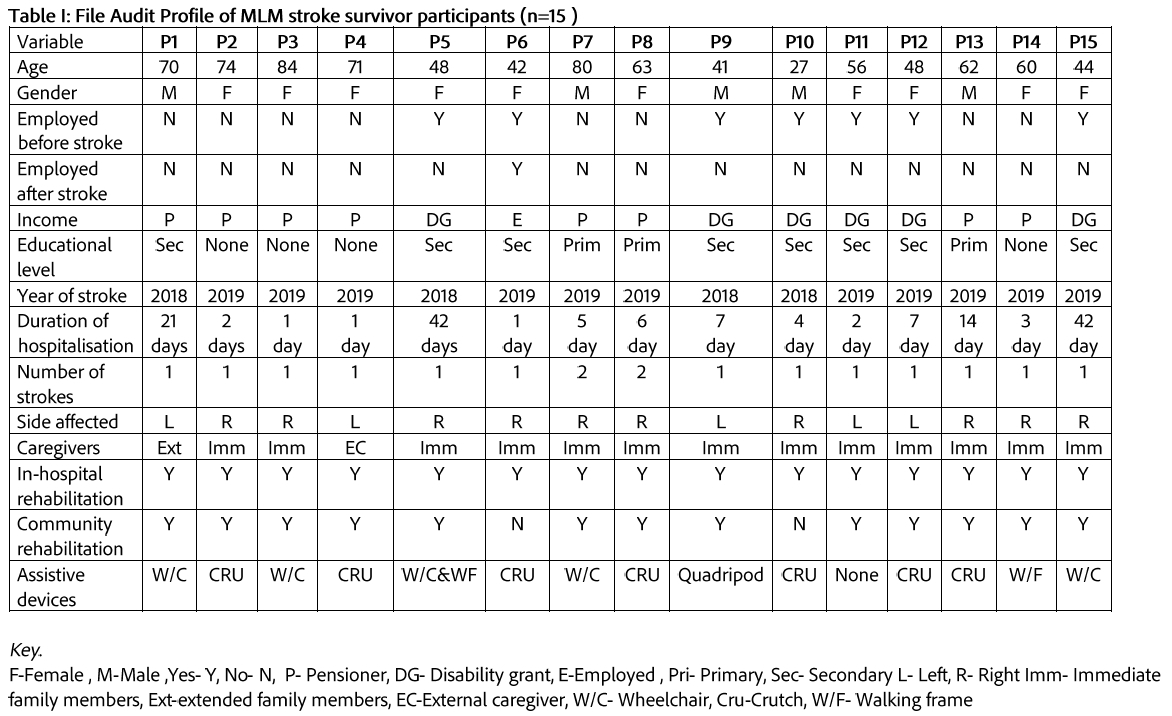
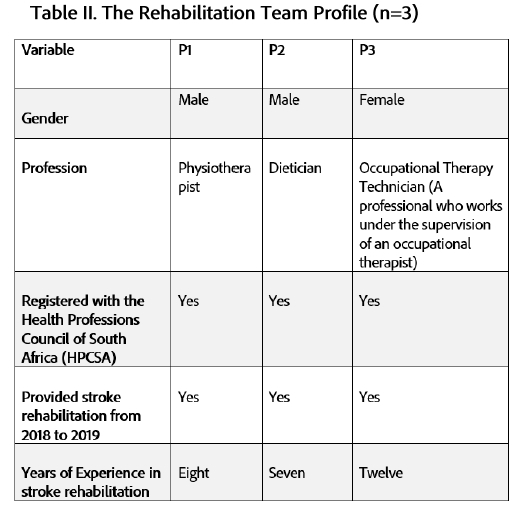
Quantitative data were collected through a file audit of 15 participants (Table I, page 5). The qualitative data were sourced through semi-structured interviews with purposively selected 15 stroke survivors and three rehabilitation team members (Table II, page 11).
Initially 30 files of the stroke survivors were audited. Of the 30 stroke survivors whose files were audited, 17% (n=5) of stroke survivors were not contactable or not found at the addresses provided to the hospital, 10% (n=3) of stroke survivors relocated to other provinces, 23% (n=7) were deceased. The remaining 15 stroke survivors (ten females and five males) who were over the age of 18 years, who had received rehabilitation in a district hospital in MLM between 2018 and 2019 were included in the qualitative interviews with the assistance from their caregivers.
Rehabilitation health professionals (occupational therapy technician working under the supervision of the occupational therapist, physiotherapist and a dietician) who provided rehabilitation for those stroke survivors and their caregivers during 2018 and 2019 and had at least two years' experience with stroke rehabilitation were sought. The stroke survivors and caregivers were interviewed during home visits and the rehabilitation team were interviewed in their offices.
Pilot study and data collection
Data were collected using a file audit and semi-structured interviews. A data extraction tool was designed for the study based on the research objective of creating a sociodemographic profile such as age, gender, education and employment history and clinical profile of the stroke survivors such as year of stroke, length of hospital stay, co-morbidities, and the rehabilitation offered. The tool was piloted on three files and adjusted to include caregiver education. This tool was used to extract data from the files of the stroke survivors.
The semi-structured interview guide consisted of open-ended questions that aimed at exploring participants' experiences on stroke reintegration in the community. The research questions for stroke survivors and caregivers were developed by the researcher in English using the theoretical framework i.e., categories from the Person-Environment-Occupation- Performance (PEOP) model30, literature and the research questions. The researcher conducted a pilot study using the semi-structured interview schedule on a stroke survivor who met the study criteria (the stroke survivor was above18 years old, received intervention for stroke between 2018 and 2019 at the district hospital and residing in MLM. The pilot study aimed to identify any ambiguity in the research questions and to review the interview schedule. Amendments to the interview schedule were made to ensure ease of understanding of the questions and the author's interviewing prompts were refined. The interview schedule was translated to Sepedi, which is the participants' home language and translated back to ensure veracity. The researcher, who is fluent in Sepedi conducted the interviews in the stroke survivors' homes and interviews were 30 to 60 minutes in duration.
The research questions, interview schedule and the interview for the rehabilitation team were in English. The interviews took approximately 45 minutes to one hour to complete. All the interviews, which were conducted by the first author after informed consent was given, were audio-recorded and transcribed verbatim after translating into English. The interview took place in a private space where the participants felt comfortable and the distress protocol was put in place to address any feelings of discomfort.
Data analysis
The variables from the data extraction tool were given codes, which the researcher entered into a Microsoft Excel 2013 spreadsheet. Descriptive statistical analysis was conducted on the file audit data. The mean of the data was used to present the data in bar charts.
To ensure veracity of the data, the data from the interviews were translated from Sepedi to English and back to Sepedi and the third party also checked the translations to strengthen the results of the study. The English transcribed data were, thereafter, analysed thematically using Braun & Clark's31 six phases thematic data analysis method. Codes were collapsed into categories, which were grouped to form themes and sub-themes.
The quantitative data from the file audit were merged with the qualitative data from the semi-structured interviews. Triangulation strategy was used to merge the data from the two phases of the study. The analysed quantitative data from the file audit worked as a foundation to the qualitative data and both the data were combined and reported as whole. Phase one of the study involved creating the profile that defined the participants who took part in phase two of the study. The data were connected to interact with one another to strengthen validity of the study.
Reliability and validity
Reliability in this study was ensured by consistently using one data extraction tool in extracting data from all the files which were audited without changing variables. The researcher complied with all the variables of the data extraction too without diverging from it.
Content validity in this study was ensured by designing a tool which encompassed all aspects of stroke rehabilitation and involving two experts in the field of stroke in designing data extraction tool. The tool was piloted to ensure that the tool extracted relevant data and similar data fields could be extracted from all the files.
Trustworthiness
Credibility of the study was ensured by using purposive sampling method whereby stroke survivors, caregivers and the rehabilitation team were known to the researcher, had knowledge on stroke rehabilitation, shown willingness to participate and fitted the criteria for the study. To minimise bias, the researcher included all the list of stroke survivors who met the criteria but other files were not found and of the files which were found, some were deceased and some were not contactable. Additionally, verbatim quotes were used to represent the participants' voices and the researcher did member checking after each interview through checking with the participants if the main points captured were true representation of their views. Dependability was ensured by means of involving the other two authors of the study in every step of the study and in the data analysis process. To ensure confirmability, the first author used an audit trail, and the data were translated, transcribed, the third person checked for accuracy and the data were reported using verbatim quotes. Data were also triangulated by integrating the two data sets from phase one and phase two to strengthen the study results. Transferability in this study is not well established since the results cannot be applied to any setting because the experiences vary in different contexts.
Ethical considerations
The researcher obtained ethical clearance from the University Biomedical Research Ethics Committee (BREC/00004146/2022) and Limpopo National Health Research Database (LP-2022-09-022) before commencing with data collection. Gatekeeper permission was received from the district level hospital head of institution, three tribal authorities in Molemole local municipality and ward councillors within the wards where participants resided. Participation in the study was voluntary and written consent was obtained from all the participants. Information on benefits, risks and the right to withdraw from the study was given to all participants to make an informed decision to participate. The interviews were conducted in a comfortable space to minimise harm. Privacy and confidentiality were maintained throughout the study by allocating numbers to each transcript rather than names to ensure that the transcripts were anonymous.
RESULTS
File audit demographic profile of stroke survivors (n=15)
Stroke survivors who participated in this study comprised 67% (n=10) females and 33% (n=5) males. Participants had a diverse age range with 7% (n=1) between the ages of 20-39 years, 33% (n=5) between ages of 40-59 years, 47% (n=7) between the ages of 60-79 years and 13% (n=2) of participants were between the ages of 80-99 years during the time of stroke. Stroke survivors who were employed prior to stroke comprised 46,7% (n=7) and only 7% (n=1) of participants were still employed post stroke, 40% (n=6) were on disability grant and 53% (n=8) were on old age pension. The majority of the participants (53%; n=8) had secondary education while 27% (n=4) had primary education and 20% (n=3) of participants had no formal education. The majority of the participants (67%; n=10) had survived their stroke in 2019 while 33% (n=5) survived stroke in 2018. Eighty percent (n=12) had experienced only one stroke and 20% (n=3) had experienced two strokes. Most of the participants (60%; n=9) had a right-side hemiplegia and 40% (n=6) had a left side hemiplegia. Most of the participants (86%; n=13) were residing with their immediate families while 7% (n=1) resided with their extended families. In some households 7% (n=1) resided with the external caregiver.
Co-Morbidities
Hypertension (HPT) was the predominant co-morbidity with 40% (n=6) of participants diagnosed with HPT. Several participants had HPT in addition to another co-morbidity, including 20% (n=3) having diabetes mellitus, 13% (n=2) having HIV, 13% (n=2) had osteoarthritis, 7% (n=1) had cardiac diseases. Only one participant (7%; n=1) had no comorbidities
THEME 1: Meaningful occupations
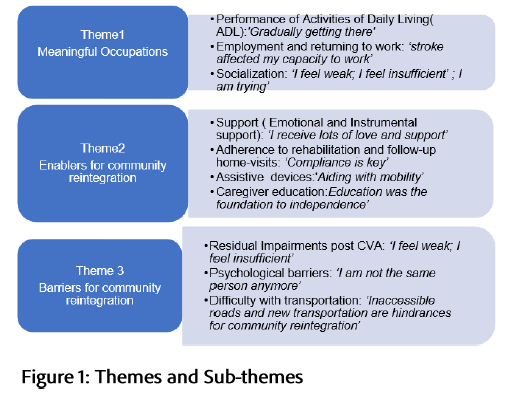
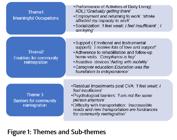
The impact of stroke on meaningful occupations profoundly affects survivors' daily lived experiences. This theme explores the multifaceted challenges that stroke survivors encounter in performing daily activities, maintaining employment, and sustaining social interactions. Sub-theme 1 examines the performance of activities of daily living (ADL), highlighting survivors' gradual progress and adaptive strategies. Sub-theme 2 addresses employment challenges, revealing how stroke fundamentally disrupts the ability to work and generate income. Sub-theme 3 explores socialization, uncovering the emotional and social barriers that emerge post-stroke. These participants quote how stroke transforms not just physical capabilities but also an individual's sense of identity, independence, and social belonging.
Sub-Theme 1: Performance of activities of daily living (ADL): 'Gradually getting there.'
The majority of the participants (40%; n=6) received intervention on sitting and standing balance (SB & STB), ADL and mobility retraining (MoR), 13% (n=2) received interventions on sitting balance and ADL, 13% (n=2) received interventions on standing balance, ADL and mobility retraining, 13% (n=2) participants received interventions on sitting and standing balance and ADL, 7% (n=1) received interventions on standing balance and mobility retraining, 7% (n=1) participants received interventions on facial exercises (FE) and hand functioning (HF) exercises and 7% (n=1) received interventions on orientation (OR), facial exercises, sitting balance and ADL as illustrated in Figure 1, (above).

Most of the stroke survivors reported that they could participate in basic and instrumental ADL independently:
I pour water in the kettle and prepare myself some breakfast. After having some breakfast, I wash some dishes, clean the house... I also cook for my family'. (Interview- Stroke survivor P5).
A few stroke survivors still had difficulties performing ADL and were extremely dependent on their caregivers.
We assist her to wake from her mattress, bath her, dress her, carry her into and out of her wheelchair, turn her put her to bed. She can't do much on her own because her arm is no longer working. She cannot even sit without support'. (Interview, Caregiver-P3)
Some stroke survivors adapted ways of participating in ADLs or used assistive devices to engage maximally in ADLs.
...I have come up with the techniques to cook and do other chores. When I cook, I only use the back plates to prevent the pot from tipping and I stir from front to back to prevent spillages.' (Interview- Stroke survivor P10)
Sub-theme 2: Employment and returning to work: 'stroke affected my capacity to work'
One (7%) of the seven participants who were employed prior to their stroke returned to their previous work after stroke, while the other six participants were no longer employed and depended on disability grant. The stroke survivors reported to have lost the capacity to work following the stroke and had not reintegrated into the community due to loss of income.
I could say that the stroke affected my work, work is the main occupation to me, stroke deeply affected me and how I take care of my children. (Interview- Stroke survivor P9)
I used to fetch firewood from the bushes with a wheelbarrow and sell it to the community members' "... make traditional beer and sell it. I am unable to do ...work now (Interview- Stroke survivor PI)
I used to work for myself... I was building houses; installing fiber; painting and making Mag wheels. Being a laborer has taught me many jobs but now I can't even do one. (Interview- Stroke survivor P10).
Sub-theme 3: Socialisation: Ί feel that I do not belong anymore; I am trying.'
Some stroke survivors expressed interaction with other community members as meaningful to them and engaged in community gatherings such as social clubs and tribal meetings. Some stroke survivors lacked social participation due to their insecurities and discomfort of being around other people.
...At times I do not have confidence to go and attend those (tribal) meetings because I feel that people have a different opinion about me since my stroke', '...some [community members] are distant, and they feel that I am no longer within their league after this stroke. They no longer take a few minutes to talk to me like they used to, they just greet me in passing. (Interview-Stroke survivor PI3).
/í hasn't been bad after the stroke because I was not that noticeable, and I tried by all means to interact with people to avoid loneliness. (Interview- Stroke survivor Ρ11).
THEME 2: Enablers for community reintegration
Stroke survivors' journey towards community reintegration is complex and involves supportive enablers that facilitate recovery and social participation. This theme explores four enablers: Sub-theme 1 examines Support (Emotional and Instrumental Support), highlighting how family and community networks contribute to rehabilitation. Sub-theme 2 addresses Adherence to Rehabilitation and Follow-up Home Visits, revealing the importance of consistent therapeutic engagement. Sub-theme 3 explores Assistive Devices and their role in mobility, while Sub-theme 4 focuses on Caregiver Education as a foundational strategy for survivor independence. These interconnected enablers demonstrate the multi-faceted approach that needs to be implemented to support stroke survivors' transition back into meaningful community participation.
Sub-theme 1: Support (Emotional and instrumental support): Ί receive lots of love and support.'
The majority of the participants - 86% (n=13), were staying with their immediate families and 7% (n=1) were staying with their extended families while 7% (n=1) were staying with an external caregiver. Stroke survivors reported to have received support mostly from their immediate family members while other stroke survivors received support from the community members. The support received aided in reintegrating the stroke survivor into the community and with their recovery to some extent. The following are remarks of the way survivors felt and their experiences:
Yes, my mom, she came and stayed with us to assist me with cleaning, laundry, cooking so that my husband gets some relief...' (Interview- Stroke survivor P6)
My sister played a very big role because she is the one who built this house and made sure that I was comfortable'. (Interview-Stroke survivor P5)
...My neighbour offered to drive me around with that [daughter's] car... They [neighbours] used to take turns to assist with my exercises. (Interview- Stroke survivor P7)
Sub-Theme 2: Adherence to rehabilitation and follow-up home visits: 'Compliance is key.'
The majority (n=13) of the stroke survivors reported to have had follow-up home visits from the rehabilitation team, but two reported to have not received follow-up home visits post discharge. Follow-up home visits were reported to have positively impacted stroke survivors' reintegration into the community. Rehabilitation team home visits yielded positive results in mobility retraining.
They [rehabilitation people] have done enough forme. They came here several times until I was able to use this crutch. (Interview- Stroke survivor P4)
Trust in the rehabilitation team and the participant's personal motivation aided in adherence to rehabilitation as expressed by some stroke survivors.
...I was very much compliant to the exercises they gave me at the hospital'...therapy assisted me a lot and I trusted you because you knew better, so I had to comply to reach recovery. (Interview- Stroke survivor P6).
Sub-Theme 3: Assistive devices 'Aiding with mobility.'
Assistive devices allocated to stroke survivors were reported as enablers for community reintegration as they assisted with mobility within home and the community.
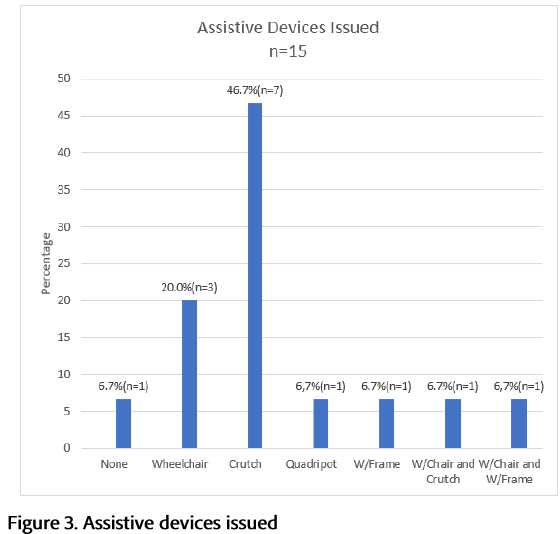
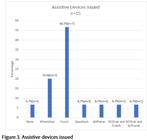
Figure 3 (above) shows a collective of 93.3% (n=14) participants who were issued assistive devices and 6.7% (n=1) of the participants were not issued any device as they were able to mobilise without support.
I used to have a walking frame, they exchanged it for a quadripod and after I got better, they exchanged the quadripod fora crutch... (Interview- Stroke survivor Ρ12).
During their [rehabilitation team] first visit they brought me a wheelchair and they came again to check my progress. The assessed my ability to stand and I was still finding it difficult to stand. During their next visit, they brought me a walking frame to assist me with walking. (Interview- Stroke survivor P5).
Sub-Theme 4: Caregiver Education: 'Education was the foundation to independence.'
Caregiver education assisted caregivers and stroke survivors to understand about stroke, home programmes and enabled the stroke survivor to learn alternative methods to participate in meaningful occupations.
What I liked the most is how therapy people spoke to us about stroke. They gave us education and we were satisfied and felt no need to seek the second opinion. (Interview- Stroke survivor P3).
I liked the fact that they taught me to do all the activities of daily living, how to do them and taught me alternatives to go about doing some activities. They even taught me to walk again at therapy...We did all the exercises and trained him to stand and walk as you had directed [added the caregiver]. Guys, I was very sick and you assisted me a lot. (Interview- Stroke survivor P7)
THEME 3: Barriers for community reintegration
This theme explores the multiple barriers that hinder stroke survivors' ability to reconnect with their social and physical environments. The three barriers hindering stroke survivors' ability to reconnect with their social and physical environments include "Residual Impairments post CVA", "Psychological Barriers", and "Difficulty with Transportation". Survivors face challenges, including physical weakness, speech difficulties, and fatigue that limit daily activities. Psychological struggles such as low self-esteem and reduced motivation, coupled with transportation and infrastructure barriers, negatively impact stroke survivors' ability to reintegrate into community life and regain independence effectively.
Sub-theme 1: Residual Impairments post CVA: Ί feel weak; I feel insufficient'
Stroke survivors reported residual impairments such as weakness, fatigue, pain, inability to use the affected limbs as barriers that affected their participation in meaningful occupations such as fetching water.
Pushing the wheelbarrow to fetch some water is very, very difficult for me because it needs two hands and the other hand is still weak to push the wheelbarrow.(Interview- Stroke survivor Ρ11)
Memory challenges led to irritability and lack of functioning as reported by the caregivers.
...He forgets things and becomes irritable easily. (Interview-Caregiver P7)
Speech difficulties were also barriers for socialisation within the family and in the community.
Sometimes I feel that I am not audible enough to submit my opinion because this stroke has affected my speech...(Interview- Stroke survivor Ρ13)
Sub-theme 2: Psychological barriers: 7 am not the same person anymore.'
Psychological barriers such as low mood, low self-esteem, lack of insight into stroke and lack of motivation were some of the sequelae experienced by participants. The loss of their previous roles and their low self-esteem contributed toward low mood and a lack of motivation to engage in occupations, to socialise and to venture into the community.
I constantly ask myself why I am like this. My motivation has even decreased; I am no longer eager to initiate some activities at home... This stroke has affected my mind a lot (Interview- Stroke survivor P13)
Some participants felt rejected as the family members believed that they were bewitched:
I do go to the family meetings but my ideas are not valuable to them and I feel rejected by them'... They [close relatives] believe that I was not attacked by stroke but I was bewitched... (Interview- Stroke survivor P12).
The psychological barriers resulted in lack of adherence to the home-programmes which hindered rehabilitation progress and that impacted negatively on activity participation.
I also used to sweep, cook and do laundry before the stroke now I am very miserable on my wheelchair and often wish I could help out with chores such as dishes. (Interview- Stroke survivor P3)
Some caregivers reported that they feel burdened by taking care of the stroke survivors as they were not prepared for the added responsibility. They expressed feelings of irritability and inability to cope when caring for the stroke survivors.
...my sister and I are drained by taking care of him and we will discuss the issue of taking him to the care home with his children because they do not feel a burden that we are feeling at all, they seldom come home. (Interview- Caregiver, ΡΊ)
Sub-Theme 3: Difficulty with Transportation: 'Inaccessible roads and new transportation are hindrances for community reintegration.'
Inaccessible roads were reported as a barrier by some stroke survivors who reported that uneven roads made it difficult for them to exercise or travel within the community. Some stroke survivors and caregivers reported using new methods of transportation post stroke, for example, hiring a private transport to run their errands due to residual impairments such as weakness, fatigue, pain and their inability to cope with stigma. New methods were financially burdening as most of them depended on disability and old age grant.
...The roads here are not that user friendly because they are not even. I once went to some lady who is staying around here and it took me long to reach her place due to the slopes that I had to go through. I never went back there... I always have to hire a car to take me to the clinic and hospital... Going to the hospital costs R200 and going to the clinic costs RWO which is expensive for us because we use social grant to pay. (Interview-Stroke survivor P8)
THEME 4: Stroke survivors' and caregivers' perceptions on rehabilitation intervention
The rehabilitation journey for stroke survivors is complex and is shaped by multiple factors. This theme explores three aspects of rehabilitation intervention: "Effective Rehabilitation", "Positive Attitude and Good Communication Skills of Rehabilitation Team", and "Stroke Survivors and Caregivers' Recommendations". The subthemes draw attention to how rehabilitation strategies impact stroke survivors' recovery, highlighting the importance of goal-oriented interventions, compassionate communication, and comprehensive support. Participants shared insights into the effectiveness of therapeutic approaches and the essential role of healthcare professionals' attitudes and included recommendations for improving rehabilitation services to enhance recovery and community reintegration.
Sub-theme 1: Effective rehabilitation: 'They worked towards achieving my goal.'
Stroke survivors and caregivers described rehabilitation intervention as effective and worked towards improving their ability to mobilise and participate in ADLs as evidenced by:
They did exercises, shoulder therapy, holding cups, dressing and trained me to be able to stand and walk... (Interview- Stroke survivor P7)
Yes, they taught me how to sit from lying, bathing, dressing and now I am able to turn, relieve pressure and turn. (Interview- Stroke survivor P15)
Sub-Theme 2: Positive attitude and good communication skills of rehabilitation team: 'They made me feel at home; I felt save around them.'
Most of the stroke survivors and caregivers viewed the positive attitude and good communication skills of the rehabilitation team as enablers that drove their motivation to adhere to rehabilitation and effectively reintegrate into the community. They felt safe, loved and encouraged to participate in therapy.
The way therapy people treated me was outstanding. They have positive attitude towards their clients. I didn't wait for a long time to get treated and I liked their attitude towards me....I also like the way they carry themselves. They speak in a polite manner to people... (Interview- Stroke survivor PI3)
Sub-Theme 3: Stroke survivors and caregivers' recommendations to the rehabilitation team
Stroke survivors and caregivers expressed the need for regular home visits for continued support and relieving caregiver burden. They recommended special visits to assist with self-care activities.
...I think coming here twice a month will be more beneficial and the stiffness will be reduced a bit. (Interview- Caregiver, Ρ1)
.... I also would like therapy people to send someone at times to bath her so that we take a break'. (Interview-Caregiver, Ρ 3)
Due to non-adherence to the home programme, some stroke survivors had deteriorated and recommended that the rehabilitation team re-initiate the rehabilitation programme so that they can optimally participate in daily activities.
... I started deteriorating after coming back at home...I would like you to train me again, I would also like you to help with my tongue and mouth. (Interview- Stroke survivor P8)
The need for ongoing access to assistive devices to relieve fatigue and assist with mobility was also highlighted by some stroke survivors.
...Sometimes I feel that I still need the crutches because at times I just wake up with a numb lower limb and I am unable to walk So, during those days I really need it to balance myself...' (Interview- Stroke survivor P6)
Stroke survivors support groups in the community was recommended by some stroke survivors to aid with coping strategies.
I feel that there is a need for a support group where people with stroke can gather or do walks to improve their progresses. (Interview- Stroke survivor Ρ13)
Some stroke survivors expressed that the hospital therapy area was not sufficient for effective rehabilitation and recommended that a large rehabilitation area would be more effective to implement rehabilitation processes.
If you can be provided with a huge space to do your exercises especially to train those who are at early stages of recovery. When you provide therapy, you should not bump against the walls or other things in your treatment area. You don't really have enough space to work in your therapy area... (Interview- Stroke survivor P6)
Education on the condition was also highlighted as crucial to effective rehabilitation by some participants above all the therapy that is provided by the rehabilitation team.
One thing that I would like therapy personnel to keep doing is to keep explaining the condition to the patients and do counselling before starting with exercises.... (Interview- Stroke survivor Ρ12)
THEME 5: rehabilitation team views on rehabilitation processes for improved stroke rehabilitation
This theme explores the rehabilitation team's perspectives through two subthemes, namely: "Enablers for Effective Rehabilitation" and "Barriers for Effective Rehabilitation". Despite significant obstacles such as staff shortages, limited infrastructure, and resource constraints, rehabilitation professionals strive to achieve successful outcomes. The participants highlight the factors that facilitate patient recovery and the systemic challenges that hinder comprehensive care. The insights reveal the factors that should be considered to enable potential success despite existing limitations in stroke rehabilitation processes.
Sub-Theme 1: Enablers for effective rehabilitation: 'Success outcomes of rehabilitation.'
The rehabilitation team voiced success outcomes of stroke rehabilitation processes that are implemented for stroke rehabilitation despite the challenges relating to staff shortage, inadequate equipment and poor infrastructure. Determination cultivated the success outcomes such as the ability to mobilise, use of limbs, caregiver education and community reintegration.
I was very happy with the patients who were able to use both upper and lower limbs and I am very happy about the success. Being able to climb the stairs, mobilising even though they are still having minor disabilities. (Interview-Rehabilitation team PI)
They (stroke survivors) initially can't do any activities; they can't chew but after some time with rehabilitation you will see them progressing. (Interview-Rehabilitation team P2)
Sub- Theme 2: Barriers for effective rehabilitation: 'Rehabilitation bottlenecks.'
The rehabilitation team reported delays in referrals, at times, for initiation of rehabilitation which delayed the rehabilitation process. Referrals depended on referrer knowledge of stroke rehabilitation.
Sometimes we get the referrals quickly and sometimes there are delays with referrals, which delay the initiation of the rehabilitation processes. (Interview -Rehabilitation team P3)
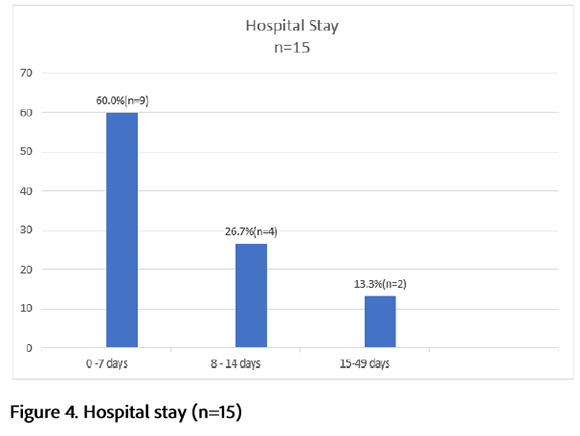
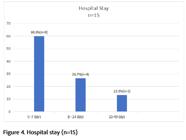
Limited hospital stay was also reported as a barrier as the restricted time as an in-patient reduced the time that could be used to implement the rehabilitation process. A High number of stroke survivors spent seven days or less at the hospital, allowing the rehabilitation team less time to implement rehabilitation process. See Figure 4 below.
It just depends on who is managing the referrals at the given time, based on the knowledge of stroke and if they understand the role of the rehabilitation team... Looking at the level of our hospital, hospital stay is not enough. Some patients are not having the care they need from the caregivers. We want the patient to be able to do most of the basic staff before discharge so that they can assist themselves even if they are staying alone. (Interview- Rehabilitation team P1)
Poor infrastructure, lack of equipment, and insufficient staff were reported as barriers for effective stroke rehabilitation. Poor infrastructure denied stroke survivors privacy during rehabilitation and having limited rehabilitation staff limited the staffs' ability to complete regular home visits for stroke survivors post discharge.
We need privacy [there are not enough screens] when working with the patients as they feel uncomfortable because of other patients starring... We also do not have enough staff. At times you find that the hospital is operating with only one therapist who has to do in hospital and outreach services. (Interview-Rehabilitation team P3).
Food supplements were reported to be adequate for providing stroke survivors in need, although some participants raised assistive devices backlog as a barrier that hindered effective rehabilitation.
There are backlog challenges... We wait for a long time for suppliers to deliver assistive devices. (Interview-Rehabilitation team P1).
Despite rehabilitation processes (both in-hospital and community) being implemented, effective reintegration depended on stroke survivor and caregiver compliance to home programmes post discharge. Non-compliance to home programmes was also reported by some participants as a barrier for effective rehabilitation. Sometimes [the] home program is effective and at times not, depending on the family engagement. Some caregivers comply and others don't. (Interview- Rehabilitation P3).
The lack of a dedicated rehabilitation centre and difficulty locating houses of stroke survivors for continued support in the community was reported as a barrier for effective community reintegration, whereas a rehabilitation centre would assist in continued support post discharge.
If we could have a rehabilitation centre so that we can refer our stroke survivors and they occupy themselves therapeutically unlike sitting at home doing nothing. (Interview- Rehabilitation team P3)
DISCUSSION
This study was aimed at understanding factors affecting community reintegration of Molemole local municipality (MLM) stroke survivors to generate processes for improved community reintegration post- stroke. Five themes that were identified in the study: stroke survivors' meaningful occupations, enablers for community reintegration, barriers for community reintegration, stroke survivors and caregivers' perceptions on rehabilitation and the rehabilitation team's perceptions on rehabilitation processes for improved stroke rehabilitation. The study resonated with literature indicating that community reintegration varies from area to area, depending on rehabilitation strategies such as policies, resources and demographics of the specific population32,18, 33
Meaningful post-stroke activities highlighted by participants in this study indicated basic activities such as self-care, care of immediate environment, meal preparation, mobility, care of the loved ones (children, grand-children, siblings, partners and parents), attending community gatherings and work. Some participants' remunerative work included collecting firewood, making traditional beer and selling vegetables. The Limpopo study6 similarly revealed that some stroke survivors lost the ability to perform occupations such as collecting firewood which affected their livelihood. The Inability to go back to work post stroke led to feelings of low mood since most of the participants were the breadwinners. Similar to other South African study findings, only one participant in this study was able to go back to work post-stroke33,19.
Residual impairments such as weakness, fatigue, pain, inability to use the affected limbs, memory loss and speech difficulties limited participants' performance of meaningful occupations. This corresponds to other research34,35,33,36,37 where most stroke survivors have decreased ability to perform meaningful occupations due to residual impairments. Some stroke survivors required maximum assistance from their caregivers and others developed new ways of participating in previous occupations. Stroke survivors who required maximum assistance required a full-time caregiver which in some instances led to caregiver burden. Caregiver burden was also identified across several other studies13,14,19 as a barrier to reintegration.
Some stroke survivors experienced memory loss which led to their increased frustration. Increased frustration might affect family relations and lead to decreased motivation to support the stroke survivor emotionally or with participation of ADLs. Participants revealed that regular therapy sessions, such as an out-patient rehabilitation or home visit, led to the stroke survivors improving gradually and finding ways to cope with some occupations. Some stroke survivors were socially integrated, however the study highlighted feelings of fatigue, insecurities and discomfort around other community members as barriers to social participation. They even succumbed to financial strain of hiring expensive transport to do shopping, accessing medical services and attending community gatherings. In some cases, stroke survivors felt isolated due to some community members viewing stroke as a spell rather than a medical condition.
There were those stroke survivors who felt that community members rejected and devalued them post-stroke, especially as their appearance and abilities had changed. This led to their isolation rather than being accepted in participating in community activities. Similarly, two international studies38,39 and a South African (SA) study27 revealed that lack of social support and insight into stroke by some community members can be a barrier for community reintegration. Some participants confirmed previous study findings that some of the community roads were in poor condition and difficult to use which contributed to the stroke survivors being unable to leave their home, thereby resulting in further isolation and inability to improve in mobility6,23,27.
Adherence to rehabilitation, home visits, assistive devices, caregiver education and emotional support received from the caregivers, extended families and community members were the enablers for community reintegration identified. Emotional support assisted in raising the mood and motivation to participate in meaningful occupation and socialisation. Prior research5,11 also revealed social support and participation as enablers for participation in leisure activities and work. Environmental support such as ramps, having nearby toilets and adding more stairs to improve mobility was also evident in this study and provided stroke survivors with comfort and a sense of being accepted in the family.
The rehabilitation team home visits enabled continuity of therapy to ensure proper reintegration and created support throughout the rehabilitation process. However, inability to locate some houses (due to a lack of house numbering or relocation) when conducting home visits and lack of stroke survivor support groups in the community were reported as barriers and impacted on continuity of support to other stroke survivors. Positive attitudes of the rehabilitation team elevated the moods of stroke survivors and aided in adherence to rehabilitation, however, the rehabilitation team revealed that some stroke survivors did not adhere to given rehabilitation processes. Non-adherence to treatment impacted negatively on their functioning, hence, some participants requested for re-initiation of rehabilitation to improve their functional abilities.
The study highlighted that barrier for community reintegration included residual impairments post stroke, psychological barriers and difficulty with transportation. Having lost the ability to participate in meaningful occupations independently, some stroke survivors developed emotional sequelae, feelings of low self- esteem and low mood that led to them feeling demotivated to participate in occupations. Due to emotional sequelae, low mood and lack of motivation, some stroke survivors had deteriorated in functioning and felt the need to re-initiate therapy to be able to be independent again in some areas of self-care and use of the affected limbs. Stroke survivors may experience sequelae that can affect their self-concept and hinder their ability for social role functioning42. Similarly, researchers.32, 4i 11 reported that altered mood state negatively impacted on community reintegration.
Stroke survivors and caregivers viewed rehabilitation services as effective to community reintegration. The ability to do self-care activities, being able to use the affected limbs and getting to mobilize again were achievements to most stroke survivors and caregivers, however they felt the need for more regular home visits for caregiver relief. A lack of assistive devices affected mobility for some stroke survivors who reported to have residual impairments such as fatigue though they were able to mobilize on their own. Due to financial limitations the province is facing, the rehabilitation team gathers and refurbishes assistive equipment that are no longer needed by other stroke survivors in order to re-distribute them to those who are in greater need.
Although Department of Health7 indicated that provision of rehabilitation at community level is core to community reintegration, this study revealed that there are limited community structures aiming at community reintegration. Home visits conducted by the rehabilitation team are the only support provided to stroke survivors in the community. Support groups for stroke survivors and caregivers were deemed beneficial to community participation by the stroke survivors as they might reduce caregiver burden, improve education and motivate stroke survivors. Naidoo et al.23 study also suggested that services for stroke survivors are required at a primary healthcare level. Furthermore, the rehabilitation team voiced limited or lack of a rehabilitation centre as a barrier for community reintegration as stroke survivors are discharged home before they are fully functional. Others16, 38, 24 affirmed that support like targeted community programs can improve the level of participation such as community mobility.
Short hospital stay was reported as a barrier to stroke rehabilitation by the rehabilitation team as they had limited time to implement intervention processes and prepare stroke survivors for discharge. Studies conducted by the SA authors revealed that late referrals25 and limited length of stay11,19 in the hospital leads to less favourable functional outcomes to acute stroke survivors discharged from the hospital without receiving rehabilitation from the trained rehabilitation team41. However, some stroke survivors and the rehabilitation team identified hospital rehabilitation area as insufficient for proper rehabilitation. The limited acute rehabilitation service was further compounded by lack of referral to the clinic or outpatients where the stroke survivor could receive further services thus limiting continuity of care. The National Framework and Strategy for Disability and Rehabilitation8 also highlighted some of the factors that hinder rehabilitation services as lack of coordination between service levels.
Insufficient assistive devices such as wheelchairs, crutches, walking frames and ADL equipment was reported as a barrier by the rehabilitation team. Insufficient and delay in provision of assistive devices impacted on stroke survivors' ability to function in the community as the assistive devices aid with travelling around the community and running crucial errands. This study yielded the same results as the SA studies conducted in Kwa-Zulu Natal and Northern Cape which revealed that a lack of resources such as assistive devices act as a barrier for community reintegration23,25. A lack of human resources was also reported by the rehabilitation team as a barrier and contributed to poor implementation of community rehabilitation. This is despite the emphasis in the National Framework and Strategy for Disability and Rehabilitation that emphasises the need for rehabilitation to be at a primary healthcare level8.
CONCLUSION
Stroke burden is increasing and there are still gaps that are yet to be filled in terms of stroke reintegration in the province. The study has confirmed that partial implementation of the national rehabilitation policy, limited length of stay, improper rehabilitation facilities, insufficient budget allocated for rehabilitation services, inadequate number of rehabilitation staff, insufficient assistive devices and lack of implementation of stroke rehabilitation at a primary health care level negatively affect stroke survivors' functional outcomes. Early intervention and continued community interventions strengthen the stroke survivor's capacity to reintegrate into the community. However, there are no coordinated referrals for the community-based intervention therefore many stroke survivors do not receive continued services after discharge from the acute hospital.
This study has found that the occupation that is most affected in stroke survivors is work, followed by socialisation and the least affected were BADLs and lADLs. Continued support to the stroke survivors and caregivers through support groups in the community is needed to aim at increasing awareness of stroke sequalae, caregiver relief and fostering social participation. This study further suggests that occupational therapists should assess the feasibility to return to previous work or contact employers to look at whether reasonable accommodation can be made in the acute rehabilitation phase. In preparation for return to work, the stroke survivors should be engaged in a routine vocational rehabilitation program that is individually structured to assist the stroke survivors to get used to the work routine. Occupational therapists should also initiate vocational training such as entrepreneurial skills and subsistence agriculture in collaboration with other sectors such as the Department of Agriculture to assist the stroke survivors and their caregivers to support their families.
In implementing proper community- based rehabilitation to stroke survivors, there is a need for increased human resources to enable proper dissemination of services in the community. Early referrals of stroke survivors in the hospital are critical to allow the rehabilitation team time to undertake early intervention for provision of the best holistic stroke care possible. Having sufficient assistive devices, improvement of rehabilitation facilities for in and outpatient hospital care, continued community support for stroke survivors and caregivers and initiation of vocational rehabilitation and training were the key recommendations that emerged from the study.
Limitations of the study
File audit phase had some limitations due to the missing files of some stroke survivors. In this study, seventeen files of stroke survivors were missing from the medical records. Stroke reintegration's context-dependent nature and resource disparities limit generalizability. Furthermore, the study's sample size, confined to a single South African province sub-district, restricts broader applicability, despite potential relevance to similar rural settings.
Author contributions
Ms Mashapa conceptualised the study and conducted the data collection and initial data analysis. Associate Professor Naidoo and Ms Mkhize assisted in the conceptualisation the study and the refinement of the data analysis. Associate Professor Naidoo and Ms Mkhize were critical reviewers of the manuscript and contributed to writing of the final draft of the manuscript.
REFERENCES
Acknowledgements
The first author would like to acknowledge the University of X for tuition remission towards a master's degree as well as the G Local Municipality study participants.
Literature review
-
1. Proffitt R, Boone A, Hunter EG, Schaffer O, Strickland M, Wolf TJ. Interventions to Improve Social Participation, Work, and Leisure Among Adults Poststroke: A Systematic Review. The American Journal of Occupational Therapy. 2022 Sep 1,76(5):7605205120. DOI: 10.5014/ajot.2022.049305
» https://doi.org/10.5014/ajot.2022.049305 -
2. Tribelhorn S, Motara F, Lewis CM. Stroke: A retrospective review of the incidence and epidemiology in a South African academic hospital emergency department. South African Medical Journal. 2021 Dec 1;111(12):1205-10. DOI:https://doi:10.7196/SAMJ.2021.v111i12.15682
» https://doi:10.7196/SAMJ.2021.v111i12.15682 -
3. Gawulayo S, Erasmus CJ, Rhoda AJ. Family functioning and stroke: Family members' perspectives. African Journal of Disability (Online). 2021;10:1-1. DOI: https://doi.org/10.4102/ajod.v10i0.801
» https://doi.org/10.4102/ajod.v10i0.801 -
4. Lewis NA, Brazeau H, Hill PL. Adjusting after stroke: Changes in sense of purpose in life and the role of social support, relationship strain, and time. Journal of Health Psychology. 2020 Oct;25(12):1831-41. DOI: https://doi.org.10.1177/1359105318772656
» https://doi.org.10.1177/1359105318772656 -
5. Elloker Τ, Rhoda AJ. The relationship between social support and participation in stroke: a systematic review. African Journal of Disability. 2018 Jan 1;7(1):1-9. DOI: https://10.4102/ajod.v7i0.357
» https://10.4102/ajod.v7i0.357 -
6. Maleka M, Stewart AS, Hale L. The experience of living with stroke in low urban and rural socioeconomic areas of South Africa. South African Journal of Physiotherapy. 2012 Dec 11;68(3):25-9. DOI: https://doi.org/10.4102/sajp.v68i3.21
» https://doi.org/10.4102/sajp.v68i3.21 - 7. Department of Health. National rehabilitation policy. Pretoria: Government Publications; 2000.
- 8. National Department of Health. Framework and strategy for disability and rehabilitation services in South Africa 2015--2020. Pretoria: Government Printers; 2015.
-
9. Cott CA, Wiles R, Devitt R. Continuity, transition and participation: preparing clients for life in the community post-stroke. Disability and Rehabilitation. 2007 Jan 1;29(20-21):1566-74. DOI: https://10.1080/09638280701618588
» https://10.1080/09638280701618588 - 10. Ystaas A, Raymond K. Addressing role transitions in young and middle-aged adults post-stroke in the inpatient rehabilitation setting: an in-service for occupational therapists. Occupational Therapy Capstones. 2019;428.
-
11. Govender P, Bricknell K, Naidoo D, Message H, Njoko S, Ayob Z. 'No one prepared me to go home': Cerebrovascular accident survivors' experiences of community reintegration in a peri-urban context. African Journal of Primary Health Care and Family Medicine. 2019 Jan 1,11(1):1-8. DOI: https://doi.org/10.4102/phcfm.v11i1.1806
» https://doi.org/10.4102/phcfm.v11i1.1806 -
12. Gustafsson L, McKenna K. Is there a role for meaningful activity in stroke rehabilitation? Topics in Stroke Rehabilitation. 2010 Mar 1;17(2):108-18. DOI: https://doi.org/10.1310/tsr1702-108
» https://doi.org/10.1310/tsr1702-108 -
13. Muthucumarana WM, Samarasinghe K, Elgán C. Caring for stroke survivors: experiences of family caregivers in Sri Lanka~a qualitative study. Topics in Stroke Rehabilitation. 2018 Aug 18,-25(6):397-402. DOI: https://doi.org/10.1080/10749357.2018.1481353
» https://doi.org/10.1080/10749357.2018.1481353 -
14. Kusambiza-Kiingi A, Maleka D, Ntsiea V. Stroke survivors' levels of community reintegration, quality of life, satisfaction with the physiotherapy services and the level of caregiver strain at community health centres within the Johannesburg area. African Journal of Disability. 2017 Jan 1;6(1):1-8. DOI: https://doi.org/10.4102/ajod.v6i0.296
» https://doi.org/10.4102/ajod.v6i0.296 -
15. Ntsiea MV, Van Aswegen H, Lord S, Olorunju SS. The effect of a workplace intervention programme on return to work after stroke: a randomised controlled trial. Clinical Rehabilitation. 2015 Jul;29(7):663-73. DOI: https://doi.org/10.1177/0269215514554241
» https://doi.org/10.1177/0269215514554241 -
16. Rouillard S, Jelsma J, De Weerdt W, De Wit L. Functioning at 6 months post stroke following discharge from inpatient rehabilitation. South African Medical Journal. 2012 Jun 1;102(6):545-8. DOI: https://doi.org/10.7196/samj.5488
» https://doi.org/10.7196/samj.5488 -
17. Gretschel D, Visagie S, Inglis G. Community integration of adults with disabilities post discharge from an in-patient rehabilitation unit in the Western Cape. The South African Journal of Physiotherapy. 2017;73(1). DOI: https://doi.org/10.4102/sajp.v73i1.361
» https://doi.org/10.4102/sajp.v73i1.361 -
18. Rhoda A, Cunningham N, Azaria S, Urimubenshi G. Provision of inpatient rehabilitation and challenges experienced with participation post discharge: quantitative and qualitative inquiry of African stroke patients. BMC Health Services Research. 2015 Jun;15:1-9. DOI: https://doi.org/10.1186/s12913-015-1057-z
» https://doi.org/10.1186/s12913-015-1057-z -
19. Ntsiea MV. Current stroke rehabilitation services and physiotherapy research in South Africa. South African Journal of Physiotherapy. 2019 Jan 1;75(1):1-0. DOI: https://doi.org/10.4102/sajp.v75i1.475
» https://doi.org/10.4102/sajp.v75i1.475 -
20. Walsh ME, Galvin R, Loughnane C, Macey C, Horgan NF. Factors associated with community reintegration in the first year after stroke: a qualitative meta-synthesis. Disability and Rehabilitation. 2015 Aug 28,-37(18):1599-608. DOI: https://doi.org/10.3109/09638288.2014974834
» https://doi.org/10.3109/09638288.2014974834 -
21. Mayo NE, Anderson S, Barclay R, Cameron JI, Desrosiers J, Eng JJ, et al. Getting on with the rest of your life following stroke: a randomized trial of a complex intervention aimed at enhancing life participation post stroke. Clinical Rehabilitation. 2015 Dec;29(12):1198-211. DOI: https://doi.org/10.1177/0269215514565396
» https://doi.org/10.1177/0269215514565396 -
22. Mkhize PZ, Phehlukwayo SM, Mpanza DM. Health seeking pathways for stroke survivors in a rural setting: optimising early intervention for stroke rehabilitation in occupational therapy. South African Journal of Occupational Therapy. 2022 Apr;52(1):24-33. DOI: https://doi.org/10.17159/2310-3833/2022/vol52n1a4
» https://doi.org/10.17159/2310-3833/2022/vol52n1a4 -
23. Naidoo D, Van WykJJoubert R. Community stakeholders' perspectives on the role of occupational therapy in primary healthcare: implications for practice. African Journal of Disability. 2017 Jan 1;6(1):1-2. DOI: https://doi.org/10.4102/ajod.v6i0.255
» https://doi.org/10.4102/ajod.v6i0.255 -
24. Cawood J, Visagie S. Stroke management and functional outcomes of stroke survivors in an urban Western Cape Province setting. South African Journal of Occupational Therapy. 2016 Dec;46(3):21-6. DOI: https://doi.org/https://doi.org/10.17159/2310-3833/2016/v46n3a5
» https://doi.org/https://doi.org/10.17159/2310-3833/2016/v46n3a5 -
25. Visagie S, Swartz L. Rural South Africans' rehabilitation experiences: case studies from the Northern Cape Province. South African Journal of Physiotherapy. 2016 Jan 1,72(1):1-8. DOI: https://doi.org/10.4102/sajp.v72i1.298
» https://doi.org/10.4102/sajp.v72i1.298 -
26. Mudzi W, Stewart A, Musenge E. Community participation of patients 12 months post-stroke in Johannesburg, South Africa. African Journal of Primary Health Care and Family Medicine. 2013 Jan 1;5(1):1-9. DOI: https://doi.org/10.4102/phcfm.v5i1.426
» https://doi.org/10.4102/phcfm.v5i1.426 -
27. Cawood J, Visagie S. Environmental factors influencing participation of stroke survivors in a Western Cape setting. African Journal of Disability. 2015 Jan 1;4(1):1-9. DOI: https://doi.org/10.4102/ajod.v4i1.198
» https://doi.org/10.4102/ajod.v4i1.198 - 28. Municipalities of South Africa. Limpopo, Molemole Local Municipality (LIM353) Demographics. Municipalities; 2022.
- 29. Creswell JW, Creswell JD. Research design: Qualitative, quantitative, and mixed methods approaches. Sage publications; 2017 Nov 27.
- 30. Bass J, Baum C, Christiansen C. Person-Environment-Occupation- Performance (PEOP): An occupation-based framework for practice. Perspectives on human occupation: theories underlying practice. 2nd ed. Philadelphia (PA): FA Davis; 2017:161.
-
31. Braun V, Clarke V. Using thematic analysis in psychology. Qualitative Research in Psychology. 2006 Jan 1;3(2):77-101. DOI: https://doi.org/10.1191/1478088706qp063oa
» https://doi.org/10.1191/1478088706qp063oa -
32. Elloker T, Rhoda A, Arowoiya A, Lawal IU. Factors predicting community participation in patients living with stroke, in the Western Cape, South Africa. Disability and Rehabilitation. 2018 Oct 23;41 (22):2640-7. DOI: https://doi.org/10.1080/09638288.2018.1473509
» https://doi.org/10.1080/09638288.2018.1473509 -
33. Chimatiro GL, Rhoda AI. Scoping review of acute stroke care management and rehabilitation in low and middle-income countries. BMC Health Services Research. 2019 Dec;19:1-5. DOI: https://doi.Org/1.10.1186/s12913-019-4654-4
» https://doi.Org/1.10.1186/s12913-019-4654-4 -
34. Jorgensen HS, Nakayama H, Raaschou HO, Olsen TS. Stroke: neurologic and functional recovery the Copenhagen Stroke Study. Physical Medicine and Rehabilitation Clinics of North America. 1999 Nov 1;10(4):887-906. DOI: https://doi.org/1.10.1016/S1047-9651(18)30169-4
» https://doi.org/1.10.1016/S1047-9651(18)30169-4 -
35. Wolf TJ, Chuh A, Floyd T, Mclnnis K, Williams E. Effectiveness of occupation-based interventions to improve areas of occupation and social participation after stroke: an evidence-based review. The American Journal of Occupational Therapy. 2015 Jan 1;69(1):6901180060p1-1. DOI: https://doi.org/10.5014/ajot.2015.012195
» https://doi.org/10.5014/ajot.2015.012195 -
36. Mamabolo MV, Mudzi W, Stewart AS, Olorunju S, Singh A. A study to determine post discharge functional improvements in patients with stroke. South African Journal of Occupational Therapy. 2009 May;39(1):15-8. DOI: https://doi.org/10.4102/sajp.v75i1.475
» https://doi.org/10.4102/sajp.v75i1.475 -
37. Hall J, Morton S, Fitzsimons CF, Hall JF, Corepal R, English C, et al. Factors influencing sedentary behaviours after stroke: findings from qualitative observations and interviews with stroke survivors and their caregivers. BMC Public Health. 2020 Dec;20:1-5. DOI: https://doi.org/10.1186/s12889-020-09113-6
» https://doi.org/10.1186/s12889-020-09113-6 -
38. Magwood GS, Ellis C, Nichols M, Burns SP, Jenkins C, Woodbury M, et al. Barriers and facilitators of stroke recovery: perspectives from African Americans with stroke, caregivers and healthcare professionals. Journal of Stroke and Cerebrovascular Diseases. 2019 Sep 1;28(9):2506-16. DOI: https://doi.Org/10.1016/j.jstrokecerebrovasdis.2019.06.012
» https://doi.Org/10.1016/j.jstrokecerebrovasdis.2019.06.012 -
39. Nanninga CS, Meijering L, Schönherr MC, Postema Κ, Lettinga AT. Place attachment in stroke rehabilitation: a transdisciplinary encounter between cultural geography, environmental psychology and rehabilitation medicine. Disability and Rehabilitation. 2015 Jun 19,-37(13):1125-34. DOI: https://doi.org/10.3109/09638288.2014.955136
» https://doi.org/10.3109/09638288.2014.955136 -
40. Ogunlana MO, Oyewole 00, Nwosu IB, Govender P. Exploring the life experiences of stroke survivors in Nigeria using the interpretive phenomenological analysis. Bulletin of Faculty of Physical Therapy. 2023 Dec;28(1):1-2. DOI: https://doi.org/10.1186/s43161-023-00123-0
» https://doi.org/10.1186/s43161-023-00123-0 - 41. Wasserman S, De Villiers L, Bryer A. Community-based care of stroke patients in a rural African setting. South African Medical Journal. 2009;99(8):579-83.
1st Review: 18 February 2024
2nd Review: 21 March 2024
Revised: 15 April 2024
Accepted: 18 April 2024
EDITOR
Hester M. van Biljon https://orcid.org/0000-0003-4433-6457
DATA AVAILABILITY
Data can be made available on request.
FUNDING
No funding was received for the study.