The effect of caregiver training in increasing social interaction and contact time with children living in residential care facilities
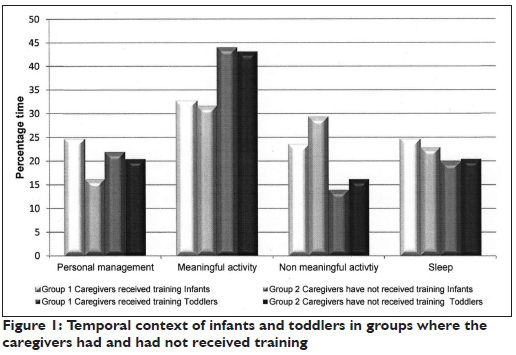
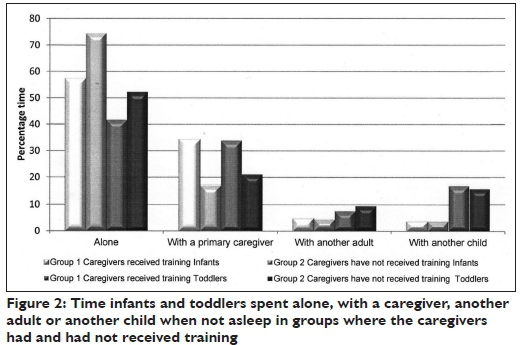
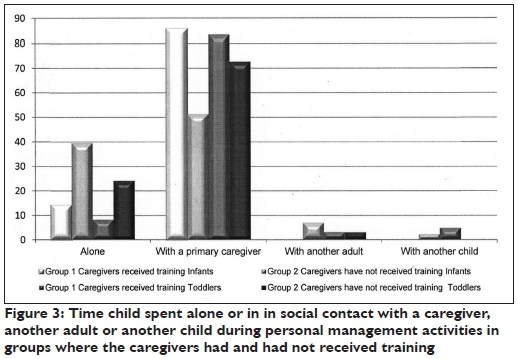
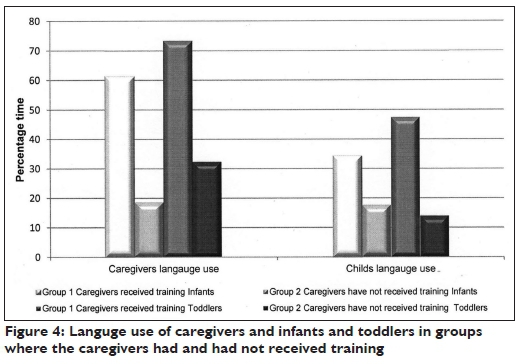
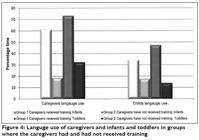
Infants and toddlers living in residential care facilities are at risk of developmental delay. Environmental factors contributing to this risk are the temporal context (how children spend their time) and social context (how and when caregivers interact with the children). This study compared time-use patterns of children living in residential care facilities where caregiver training had previously taken place versus those in facilities where caregiver training had not taken place using a non-experimental, cross sectional static group comparison study design. Spot observations were used to estimate time-use patterns of infants and toddlers living in residential care facilities in Johannesburg. Results show that caregiver training positively changed the quantity of the time that infants spent with their caregivers (temporal context) and the quality of time toddlers spent with their caregivers (social context). Thus caregiver training has the potential to improve the environment in residential care facilities and can be used as an intervention strategy by occupational therapists.
Residential care facilities; time-use patterns; caregiver training; quantity of time spent caregiving; quality of time spent caregiving
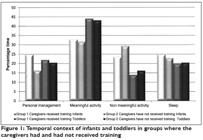 Thumbnail
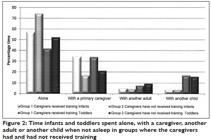 Thumbnail
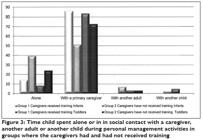 Thumbnail
 Thumbnail